
What Is 91H on a Tire? Speed & Load Rating Explained
91H on a tire means the tire’s load index is 91 and its speed rating is H. That means each tire can support up to 615 kg (1,356 lbs) when properly inflated, and it’s approved for sustained speeds up to 210 km/h (130 mph). You should match both numbers to your vehicle’s needs, because the wrong rating can affect safety and handling. Keep going to see how to decode the full sidewall code.
Key Takeaways
- 91H means a tire’s load index is 91 and its speed rating is H.
- Load index 91 supports up to 615 kg (1,356 lbs) per tire when properly inflated.
- Speed rating H means the tire is designed for sustained speeds up to 210 km/h (130 mph).
- Always match both ratings to your vehicle’s weight and top speed for safe handling and performance.
- Check the tire sidewall, owner’s manual, and door jamb placard before buying replacements.
What Does 91H Mean on a Tire?
The code 91H on a tire tells you two key things at a glance: 91 is the load index, meaning the tire can carry up to 615 kg (1,356 lbs), and H is the speed rating, meaning it’s safe for speeds up to 210 km/h (130 mph). When you read 91H, you’re reading part of your tire specifications, and that helps you match the tire to your vehicle’s needs. The load index shows the tire’s maximum load capacity, while the speed rating shows how fast it can operate safely. If either value doesn’t fit your vehicle, you could face handling problems, reduced stability, or even tire failure. You don’t have to guess; you can check the sidewall, compare the numbers, and choose with confidence. Understanding 91H gives you practical control over safety, performance, and the freedom to drive without unnecessary risk. Additionally, choosing the right tire, like those from the Fullway HP108 series, can enhance your vehicle’s overall performance.
How Much Weight Can 91H Carry?
A 91 load index means the tire can carry up to 615 kg (1,356 lbs) when it’s properly inflated, so you need to keep that limit in mind for each tire on your vehicle. On a 91H tire, that load index sets the maximum load for one tire, and it’s the number you should use when checking weight capacity. If you run tires beyond that rating, you risk faster wear, heat buildup, tire failure, and weaker handling. You also need to count passengers, fuel, and cargo, then divide the total across all tires to see whether your setup can handle it. Don’t guess or assume the speed rating changes the load limit; it doesn’t. Instead, match the tire’s specified capacity to your vehicle’s real-world needs so you can drive with confidence and keep your setup safe, stable, and ready for the road. Choosing tires with high UTQG ratings can enhance your vehicle’s performance and longevity.
What Speed Rating Is 91H?
When you see 91H, the “H” tells you the tire’s speed rating, meaning it’s built for sustained speeds up to 210 km/h, or 130 mph. That rating comes from controlled testing, so you can trust it to handle heat and stress safely at that speed. You should always match the tire’s speed rating to your vehicle’s needs, especially if you drive a sports sedan or performance model. Additionally, it’s crucial to consider the tire’s overall performance characteristics to ensure safety and efficiency during your drives.
Decode 91H Meaning
91H on a tire breaks down into two parts: “91” is the load index, which means the tire can support up to 615 kg (1,356 lbs), while “H” is the speed rating, showing it’s designed for speeds up to 210 km/h (130 mph). When you decode 91H, you see how load index and speed rating work together to shape tire performance. This code helps you choose tires that fit your vehicle’s needs without guesswork. If your driving demands are higher, match the speed rating to your car’s capabilities so you stay safe and free to move with confidence. In short, 91H tells you the tire’s maximum speed and load capacity in one clear mark.
H Speed Limit
The H in 91H tells you the tire’s speed limit: up to 130 mph (210 km/h). That speed rating means the tire has passed testing for stability and control at that maximum speed. You’ll often see H-rated tires on sports cars, sports sedans, and coupes because they deliver confident grip when you drive faster. If your vehicle calls for 91H, keep that rating in place for safety and handling. A lower-rated tire can’t always manage the same stress, and that can reduce control when the road opens up. So, when you read 91H, think performance with limits: enough speed capability for spirited driving, while still protecting your freedom to move with confidence.
Match Vehicle Needs
To make sure 91H is the right fit, you need to match both the load index and speed rating to your vehicle’s requirements. The **91 load index** means each tire can carry up to 1,356 pounds, so check that this supports your vehicle’s weight. The **H speed rating tells you the tire can handle a maximum speed of 130 mph, which suits many high-performance cars. You should always choose a tire whose speed rating meets or exceeds what your vehicle can do. If it’s lower than what the manufacturer recommends, you risk instability, heat buildup, and tire failure. For confident driving and real safety**, verify both numbers before you buy. That simple check helps you keep control, protect your tires, and move with ease.
How to Read the Full Tire Code
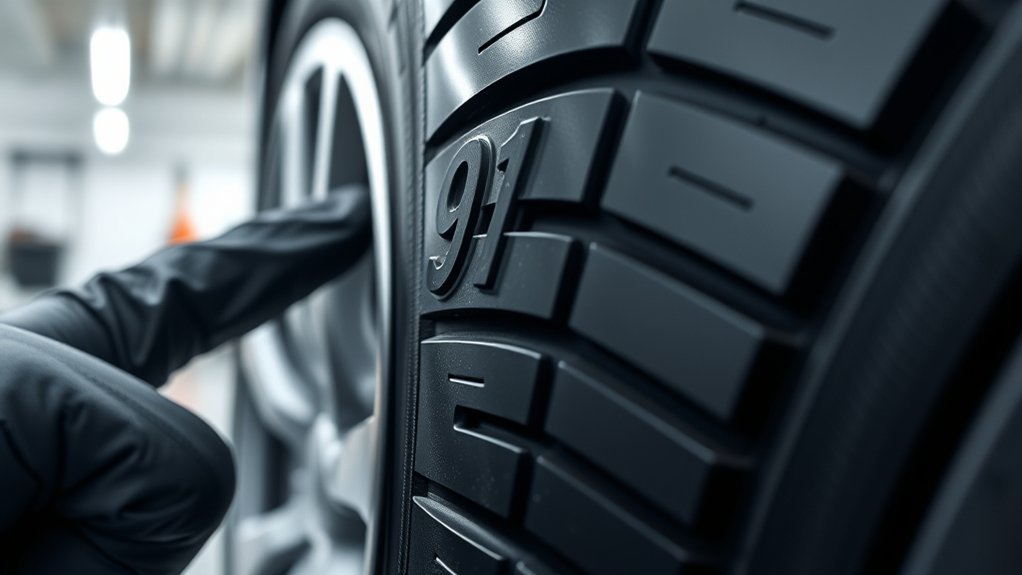
To read the full tire code, you’ll first identify the tire size, then check the load index and speed rating. The load index tells you how much weight the tire can safely carry, and the speed rating shows the maximum speed it’s designed to handle. Once you understand each part, you can choose tires that match your vehicle’s needs and stay within safe limits. Additionally, consider the UTQG rating to gauge the tire’s overall durability and performance over time.
Decoding Tire Size
When you decode a tire size, you can quickly see how well it fits your vehicle and how it performs. Start with the tire code: the first number shows width in millimeters, then the aspect ratio tells you the sidewall height as a percentage of that width. Next, the letter R means radial construction, which you’ll find on most passenger cars. After that, 91H combines tire speed ratings and load index details. The load index 91 gives a maximum load capacity of 615 kg, or 1,356 lbs, while speed rating H means the tire can handle up to 210 km/h, or 130 mph. Reading each part helps you choose confidently and protect your freedom on the road.
Reading Load And Speed
| Mark | Meaning |
|---|---|
| 91 | Maximum load of 615 kg (1356 lbs) |
| H | Safe up to 210 km/h (130 mph) |
Use this guide to check fitment fast. The load index tells you whether the tire can carry your vehicle’s weight without strain, and the speed rating shows the top speed it can handle safely. If you misread either, you risk poor handling, shorter tire life, and unsafe driving.
Compare 91H with the rest of the code—width, aspect ratio, and rim diameter—so you choose tires that support your freedom on the road.
Where to Find the Tire Speed Rating
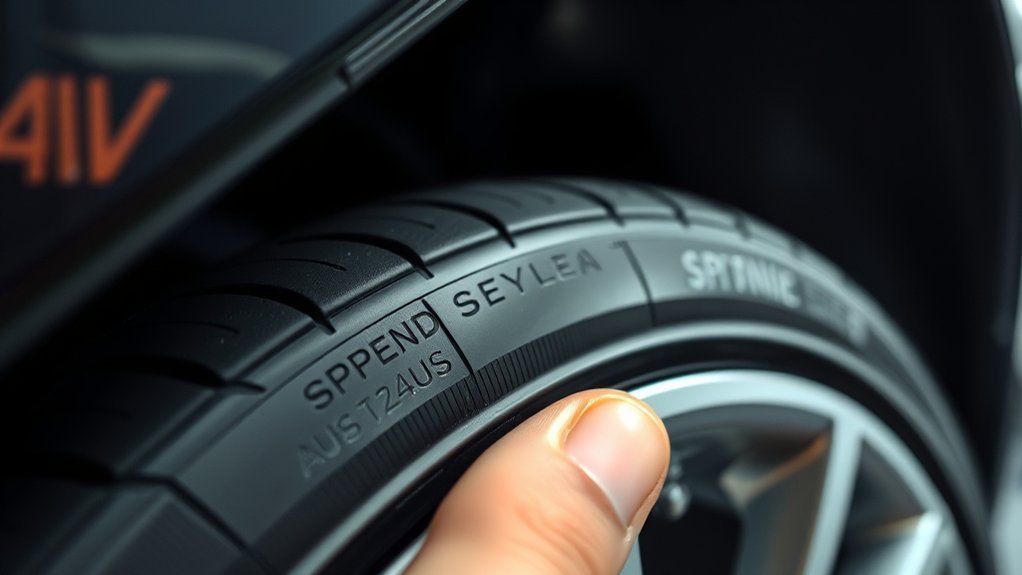
You’ll usually find the tire speed rating on the tire’s sidewall, where it appears after the load index in the size code—for example, in “P205/60R16 91H,” the “H” tells you the tire can handle speeds up to 130 mph (210 km/h). Check the tire’s sidewall on each tire, and read the tire speed rating as the letter that follows the load index. Many tire sizes assigned numerical codes, so you can spot the rating once you know the pattern. Additionally, understanding the treadwear warranty can help you gauge the expected longevity of your tires. If you want a second source, open your owner’s manual and follow the manufacturer’s recommendations for your vehicle. You can also check the driver’s side door jamb, gas tank hatch, or glove box for tire information that matches factory specs. When you locate the rating, you’re choosing with more freedom and less guesswork. That simple step helps you pick tires that fit your car’s demands and keep you moving with confidence.
Why Load Index and Speed Rating Matter
The load index and speed rating work together to show whether a tire can safely support your vehicle and handle the speeds it may reach. With 91, the load index tells you the tire carries a maximum load of 615 kg, or 1,356 lbs, helping you keep control under passengers, cargo, and daily demands. The H speed rating means the tire can handle up to 210 km/h, so you get the performance your vehicle was built for without guesswork. When you read 91H correctly, you choose tires that match your vehicle’s needs and protect safety, ride quality, and longevity. If you ignore the load index, you can create uneven wear, poor handling, or tire failure. By checking both ratings, you make a clear, informed choice that supports freedom on the road and keeps your driving experience strong, stable, and dependable. Additionally, understanding UTQG ratings can further enhance your tire selection process, ensuring you choose options that align with your driving requirements.
Can You Use a Different Speed Rating?
Can you use a different speed rating on your tires? You can, but it isn’t a free pass. If you choose a tire with a lower speed rating than your vehicle calls for, you reduce the maximum speed capability of the whole set to that tire’s limit. That can hurt vehicle safety, especially at highway speeds, where instability and blowout risk rise. Mixing speed-rated tires with different ratings also throws off handling and overall vehicle dynamics, so it’s not recommended. Keep the load index in mind too, because both ratings work together to support safe performance. For the best results, fit all four tires with the same speed rating and matched specs, especially if you drive a high-performance vehicle. Your vehicle manufacturer’s recommendations should guide every decision, because they protect you from guesswork and keep your ride responsive, stable, and ready for the road ahead. Additionally, consider tire tread life since it directly impacts both safety and performance.
How to Choose the Right Replacement Tire
Choosing the right replacement tire starts with matching your vehicle’s original specifications, not just picking a tire that fits the wheel. Check your manual or the sidewall so you know the needed 91 load index and speed rating H before you buy. A 91 load index supports up to 1,356 lbs per tire, and speed rating H handles speeds up to 130 mph. If you drive hard or at highway speeds, those numbers matter.
- Match the original equipment specifications exactly.
- Confirm load index and speed rating together.
- Avoid lower ratings that can hurt stability.
- Choose a replacement tire for your driving habits.
- Ask a tire professional if you’re unsure.
When you stay within spec, you protect handling, safety, and freedom on the road. It’s not about compromise; it’s about choosing with confidence and keeping your vehicle ready for the miles ahead. Additionally, ensure the tire you select provides reliable wet traction, as it’s essential for safety in various weather conditions.
Frequently Asked Questions
Which Is Better, 91H or 91V?
91V’s better if you need higher-speed tire performance; 91H works fine for everyday driving conditions. Both share the same load capacity, so you won’t gain extra carrying strength with either. Choose 91V for more stability, sharper handling, and a tread design that supports faster travel. Pick 91H if you want a practical, usually cheaper option that can help fuel efficiency and still meet your vehicle’s needs.
Is Speed Rating T or H Better?
H’s better than T if you want stronger performance. H handles up to 130 mph, while T tops out at 118 mph, so your speed rating comparison favors H for extra grip and stability. Your tire performance factors and driving conditions impact matter too. Check tire selection tips and understanding load index before buying. If you drive a family sedan, T may still suit you, but H gives you more freedom.
Which Is Better, S or H Speed Rating?
H is better if you want stronger tire performance, better handling, and more tire safety at higher speeds. You’ll get a higher speed rating than S, so H suits faster driving conditions and vehicles that push harder in corners and on highways. S can still work if you drive slower and want comfort or longer tread life. Always match your load capacity to your vehicle’s needs, not just speed.
What’s the Difference Between 89H and 91H Tires?
89H and 91H tires mainly differ in load capacity: 89H supports 580 kg, while 91H carries 615 kg. You’ll get the same H speed ratings, so top speed stays the same. If you drive heavier vehicles or carry more weight, 91H improves tire performance and tire longevity. For lighter loads, 89H can work. Match your choice to your driving conditions to stay safe and keep control.
Conclusion
So, when you see 91H on your tire, you know it tells you both how much weight your tire can safely carry and how fast it’s rated to go. If you match the right load index and speed rating, you help keep your vehicle safe and performing as it should. Don’t guess—read your tire code carefully. As the saying goes, “Better safe than sorry,” and that’s especially true when choosing tires.

Related Articles
What Does Uhp Tire Mean? Full Explanation & Practical Guide
Need to know what a UHP tire really means and whether it’s right for your car?
Read More
What Does 97H Mean on a Tire? Load, Speed & Rating Guide
I explain what 97H means on a tire, uncovering load and speed ratings so you can see if it’s the right fit.
Read More
What Does 102V Mean on a Tire? Load, Speed & Rating Guide
Perfect for decoding tire markings, this guide on 102V reveals load and speed ratings that could change how your vehicle performs.
Read More