
Why Is There Chalk on My Tire? What It Means at the Dealership

If you see chalk on your tire after a dealership visit, you’re usually looking at a temporary service mark, not tire damage. Dealership staff may use chalk to track inspection steps, tire rotation, tire pressure checks, alignment checks, inventory movement, or test-drive status. The mark should wipe or wash off, but it’s still smart to ask what it meant before you leave.
Quick Answer
Chalk on your tire at a dealership usually means a technician or lot attendant marked the tire for a service check, tire rotation, pressure check, alignment check, or vehicle tracking. It’s usually harmless and temporary. If the mark appears with uneven wear, low tread, or a repair recommendation, ask the service advisor what they found.
Key Takeaways
- Dealership tire chalk is usually a temporary tracking mark for service, inspections, rotation, pressure checks, or lot organization.
- It is not the same as parking enforcement chalk, which some officers use to track how long a vehicle stays parked.
- A chalk mark alone does not prove your tire has damage, uneven wear, or low pressure.
- Ask the service advisor what the mark meant if it appears after alignment, rotation, tire replacement, or a safety inspection.
- Remove chalk with warm water, mild soap, and a soft cloth. Avoid abrasive scrubbers and harsh cleaners.
At a Glance
| Most Common Meaning | A temporary service, inspection, tire rotation, pressure, alignment, or inventory tracking mark. |
| Risk Level | Low, unless the dealership also found tire damage, low tread, low pressure, or uneven wear. |
| What To Do | Ask the service advisor what the chalk meant and whether any tire service was recommended. |
| Safe Removal | Use warm water, mild soap, and a soft cloth. Rinse well and let the tire dry. |
Why Is There Tire Chalk on My Tire?

If you noticed chalk on your tire at a dealership, the shop likely used it as a quick visual note. A technician may mark a tire before a rotation, after a pressure check, during an alignment check, or while moving vehicles through inspection. Lot staff may also use tire chalk to confirm whether a vehicle moved after a test drive or after being parked in a service lane.
The mark itself does not mean the tire is bad. It simply tells staff that someone checked, moved, measured, or flagged that tire. Since each dealership can use its own system, the best move is simple: ask the service advisor, “What did this chalk mark mean on my tire?”
Note: A chalk mark is not a diagnosis by itself. Treat it as a clue. The service paperwork, tire measurements, pressure readings, or technician notes matter more than the mark.
[Products Worth Considering]

Accurately measure tire tread depth with a calibrated gauge marked from 0 to 1 inch in 1/32 inch increments. The color-coded bar helps you quickly identify tread condition ranges, supporting safe driving for trucks, motorcycles, automobiles, and passenger vehicles.

Measure tire tread depth quickly and accurately with this LUMITECO dial gauge that reads in 1/32" increments up to 14/32". The color-coded green/yellow/red zones make it easy to judge tire wear and know when replacement is needed. A rugged, compact design with a protective pouch helps keep the gauge ready for use on cars, trucks, motorcycles, and more.

The SAFELIFE dial tire tread depth gauge measures tread depth in 1/32 inch increments with clear, easy-to-read 2-inch dial face. Color zones using a traffic light system help you quickly judge whether tread is low, marginal, or ample for safer driving. Built with a durable zinc cast body and a metal detect probe for precise, comfortable use across cars, motorcycles, trucks, and buses.
Why Dealerships Use Tire Chalk
Dealerships handle many vehicles at once, so a simple visible mark can prevent confusion. Tire chalk gives technicians a fast way to track which tires need attention and which steps are already done. That can matter during inspections, tire rotations, balancing checks, alignments, used-car reconditioning, and pre-delivery inspections.
For example, a technician may mark the tire position before rotation, then confirm the tire moved to the correct corner. Another technician may use a chalk line during a tire-pressure or contact-patch check. Staff may also mark a vehicle on the lot so they can see whether it moved during a test drive or after a customer visit.
Routine tire maintenance still matters after the chalk comes off. The National Highway Traffic Safety Administration recommends checking tire pressure, tread, tire damage, rotation, balancing, and alignment as part of regular tire care.
What Tire Chalk Can Reveal
Tire chalk can reveal what the dealership was trying to track, but the exact meaning depends on the shop. You may see a line across the tread, a circle on the sidewall, a small check mark, a number, or a color-coded mark. None of these markings has one universal meaning across every dealership.
| Chalk Mark | Possible Meaning | What You Should Ask |
|---|---|---|
| Line across tread | Pressure, contact patch, rotation, or movement check | “Was this part of a pressure or alignment check?” |
| Number or letter | Internal service code, tire position, or inventory note | “Does this match anything on my repair order?” |
| Mark on one tire only | Single tire inspection, repair, pressure check, or wear concern | “Did you find anything wrong with this tire?” |
| Marks on all four tires | Rotation, inspection, lot tracking, or reconditioning step | “Was this routine, or did the tires need service?” |
Is Tire Chalk on a Car Normal?
Yes, tire chalk on a car is normal at many dealerships and service centers. You may notice it after a test drive, inspection, oil change, tire rotation, alignment, or used-car check. In most cases, the dealership used the mark to keep work organized, not to warn you about hidden damage.
You should pay closer attention if the chalk mark appears with a service recommendation, vibration, pulling, tire-pressure warning light, visible sidewall damage, or uneven tread wear. NHTSA says tire balancing helps prevent shaking, alignment helps prevent pulling and uneven wear, and rotation can reduce irregular wear when your vehicle manufacturer recommends it.
Pro Tip: Before you leave the dealership, compare the chalk mark with your repair order. If the paperwork mentions tire pressure, rotation, alignment, tread depth, or tire replacement, ask the advisor to connect the mark to the service note.
Is Tire Chalk the Same as Parking Enforcement Chalk?

No, dealership tire chalk and parking enforcement chalk serve different purposes. Dealership chalk usually supports service work, inspections, or lot organization. Parking enforcement chalk is used in some places to track how long a vehicle stays parked in a time-limited space.
That difference matters because dealership chalk is a private service workflow issue, while parking enforcement chalk involves a government action. In Taylor v. City of Saginaw, the Sixth Circuit held that Saginaw’s tire chalking practice counted as a Fourth Amendment search and rejected the city’s community-caretaker argument on those facts. That does not mean every chalking practice is illegal everywhere, so you should check local rules if a parking officer marked your tire.
Note: This article gives general information, not legal advice. Parking enforcement rules and court rulings vary by city, state, province, and federal circuit.
Parking Enforcement Marks
Parking enforcement chalk usually means an officer or parking employee marked a tire to track whether the vehicle moved before a posted time limit expired. If the same chalk mark stays in the same place after the allowed parking period, the officer may issue a citation under local parking rules.
| Marking Method | What It Usually Means |
|---|---|
| Tire chalk near curb | Parking-time tracking in a regulated space |
| Same mark after time limit | Possible evidence that the vehicle did not move |
You can reduce problems by reading nearby parking signs, checking time limits, keeping payment receipts, and asking the local parking office about its policy if you receive a ticket.
Dealership Tire Chalking
At a dealership, that little chalk mark is usually a service tool, not a ticketing tactic. Technicians may use it to track vehicle movement, tire position, inspection status, tire pressure checks, or alignment work. The mark helps them confirm that a tire was checked, moved, or repositioned correctly.
Unlike parking enforcement chalk, dealership chalk usually has nothing to do with fines or time limits. It supports internal service steps and should wipe off without damaging the tire. If you spot it after service, ask the dealership to explain the mark in plain language.
Chalk Test Differences
A chalk test can also refer to a tire-contact check. In that case, someone draws a line across the tread, rolls the vehicle, and looks at how the chalk wears off. The result can give a rough visual clue about tire contact, but it should not replace a proper pressure reading from a tire gauge or the manufacturer’s recommended pressure on the vehicle placard.
For tire pressure, follow the vehicle manufacturer’s cold inflation pressure listed on the driver-side door label or in the owner’s manual. NHTSA specifically warns that the correct pressure is the vehicle manufacturer’s recommended pressure, not the maximum pressure printed on the tire sidewall.
When Tire Chalk Means Something’s Wrong
Most tire chalk is harmless, but you should ask follow-up questions if the mark appears with another warning sign. A chalk mark after a tire inspection may simply show which tire the technician checked. It may also point to a tire the shop wants to discuss with you.
[Products Worth Considering]

Measure tyre tread depth precisely with a digital gauge that reads in both MM and inches, helping you monitor safe driving conditions. The large LCD screen is easy to operate, and the compact tool fits for cars, trucks, and motorcycles. It provides high accuracy with a 0-25.4mm range and includes a 1-year warranty for added peace of mind.

Monitor tire tread wear with a smart, color-coded depth gauge that shows clear condition ranges at a glance. The bar is range marked for fast, easy readings, helping you maintain safer traction and performance. Each gauge is portable with a pocket clip, and the set includes 20 units for daily use and sharing.

Steelman white tire marking crayons provide high-contrast, semi-permanent marks for repairing and inspecting tires and equipment. They write on wet or dry, smooth or coarse surfaces including rubber, metal, glass, and wood, making them ideal for puncture location and damage outlining. The lead- and zinc-free crayons resist weather and fading yet wipe away when you no longer need the marks.
Safety Check Marks
A safety-check mark may appear during a tire inspection, used-car inspection, or service write-up. Ask whether the technician measured tread depth, checked pressure, found a puncture, saw sidewall damage, or noticed uneven wear. NHTSA recommends checking tread at least once a month when you check tire pressure, and it notes that tires have built-in treadwear indicators.
- Ask for the tread-depth measurements for all four tires.
- Ask whether the tire pressure was adjusted when the tires were cold or warm.
- Ask whether the vehicle needs balancing or alignment.
- Ask whether uneven wear points to rotation, suspension, or alignment concerns.
- Ask whether the chalk mark connects to a written repair recommendation.
Service Inspection Indicator
If the dealership marked one tire more heavily than the others, ask whether that tire was inspected for a specific reason. The mark may relate to a rotation pattern, a slow leak, a tire-pressure check, or a wear concern. It may also mean nothing more than “this tire was already checked.”
Warning: Do not ignore chalk if you also see bulges, exposed cords, deep cracks, a tire-pressure warning light, strong vibration, pulling, or rapid air loss. Ask the dealership to inspect the tire before you drive far.
What to Ask the Dealership Before You Leave
You do not need to guess what the tire chalk means. A service advisor or technician should be able to explain the mark and connect it to your repair order. Use direct questions so you get a clear answer.
- “Why did you mark this tire?”
- “Was the mark related to rotation, alignment, pressure, tread depth, or balancing?”
- “Did the technician find uneven wear or damage?”
- “Can you show me the tread-depth and pressure readings?”
- “Do I need any tire service now, or was this only a tracking mark?”
- “Can you remove the chalk before I leave?”
If the dealership recommends new tires, rotation, alignment, or suspension work, ask for measurements and a written explanation. That helps you separate routine shop marking from a real tire issue.
How to Remove Tire Chalk Safely
To remove tire chalk safely, start with the gentlest method. Use warm water, mild soap, and a soft cloth. Wipe the mark lightly, rinse the tire with clean water, and let it dry. Most service chalk should come off with basic cleaning.
| Method | Best Use | Caution |
|---|---|---|
| Warm water | Fresh chalk marks | Use gentle pressure. |
| Mild soap | Normal tire cleaning | Rinse away all residue. |
| Soft cloth or sponge | Protecting tire sidewall and lettering | Avoid stiff wire brushes. |
| Dedicated tire cleaner | Stubborn residue | Follow the product label and test a small area first. |
Avoid abrasive pads, harsh solvents, and aggressive scrubbing. If the mark will not come off, ask the dealership what type of marker they used. They may be able to clean it safely or confirm that it will fade after normal driving and washing.
Frequently Asked Questions
How do you get rid of chalk on tires?
Use warm water, mild soap, and a soft cloth first. Wipe gently, rinse the tire, and let it dry. If chalk remains, use a dedicated tire cleaner and follow the label. Avoid abrasive pads, wire brushes, and harsh solvents because they can scuff the tire surface.
Can police mark your tires with chalk?
Police or parking enforcement staff may still use tire chalk in some places, but local rules and court decisions vary. In the Sixth Circuit’s Saginaw case, the court treated the city’s parking chalking as a Fourth Amendment search under those facts. If you received a ticket, check the local ordinance or ask a qualified legal professional.
Why is chalking tires illegal in some places?
Chalking can raise legal issues when a government worker physically marks a vehicle to collect information for a parking citation. Courts may analyze that under the Fourth Amendment’s search rules. That does not create one simple nationwide answer, so the result depends on the facts, location, and controlling court decisions.
Is chalking tires a violation of the Fourth Amendment?
It can be, depending on the jurisdiction and facts. The Sixth Circuit held that Saginaw’s parking chalking practice was a Fourth Amendment search and rejected the city’s community-caretaker argument. Other places may handle parking enforcement differently, so do not assume the same rule applies everywhere.
Should I worry if a dealership leaves chalk on my tire?
Usually, no. Dealership chalk is commonly a temporary service or tracking mark. You should ask questions if the mark appears with uneven tread wear, a tire-pressure warning light, vibration, pulling, visible damage, or a repair recommendation.
Conclusion
If you spot chalk on your tire after a dealership visit, do not panic. In most cases, it is a temporary mark used for service tracking, tire rotation, pressure checks, alignment checks, or lot organization. It should wash off with warm water, mild soap, and a soft cloth.
Still, you should not ignore the context. Ask the dealership what the mark meant, especially if the service paperwork mentions tread depth, tire pressure, alignment, balancing, or tire replacement. A simple question can tell you whether the chalk was routine or connected to a real tire concern.
Sources
- NHTSA TireWise — supports tire pressure, tread, rotation, balancing, alignment, and tire safety guidance.
- U.S. Court of Appeals for the Sixth Circuit, Taylor v. City of Saginaw — supports the parking enforcement chalking and Fourth Amendment discussion.
- Cornell Law School Legal Information Institute, Fourth Amendment — supports the general Fourth Amendment context and warrantless-search caveat.
[Products Worth Considering]

The VEHLIVE SU-50448 II TPMS relearn tool provides a fast activation reset to restore accurate tire pressure monitoring after sensor replacement or tire rotation. It supports 315 MHz and 433 MHz GM series sensors and helps clear dashboard pressure warnings. With simple two-button operation and horn-confirmed relearning order, you can reprogram sensors conveniently at home.
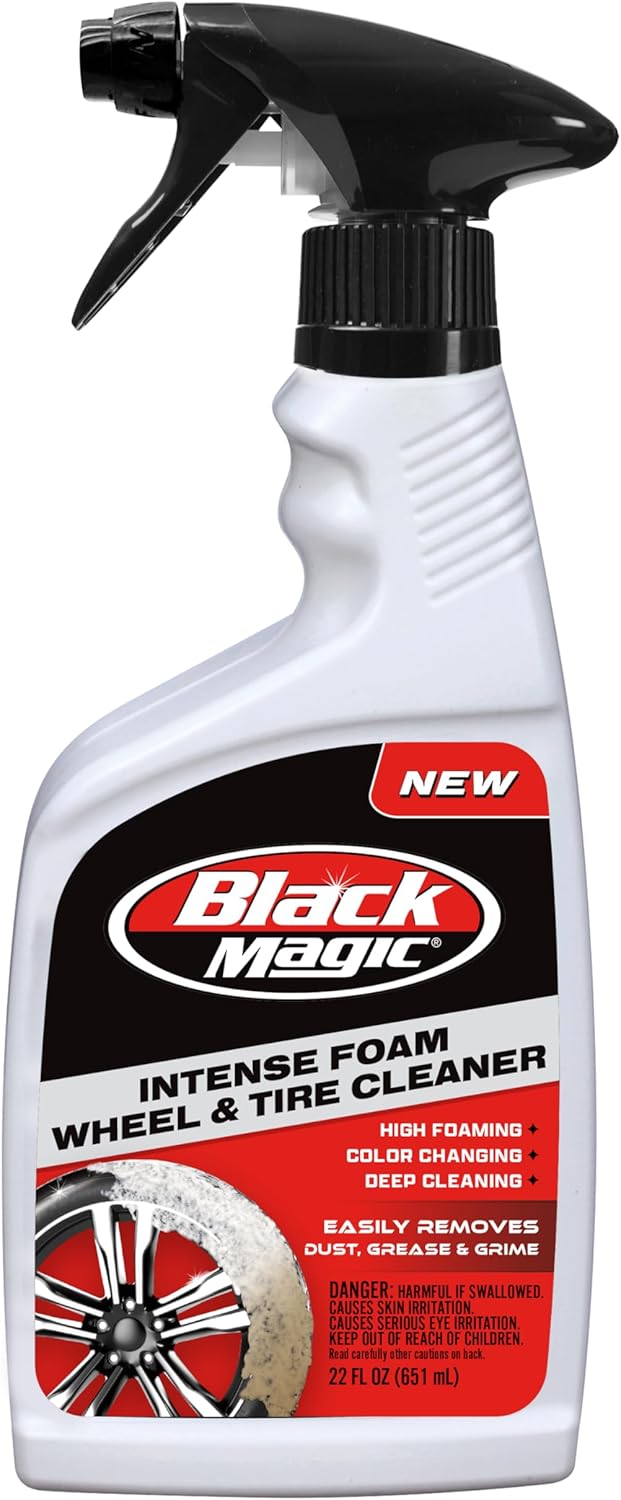
Black Magic Intense Foam Wheel & Tire Cleaner uses a high-foaming action to lift away dirt, grime, and brake dust without scrubbing. The color-changing formula helps show contaminants being dissolved as foam turns from white to brown. Safe for all wheel types and even wheel wells, it leaves a like-new, slick finish with a fresh cherry scent.

This TPMS relearn tool helps you quickly activate, match, and reset GM tire pressure sensors to keep the vehicle monitoring system working properly. It clears tire pressure alarms and dashboard warning lights after sensor replacement or tire rotation, and supports learning for common 315/433 MHz TPMS sensors. Designed for simple one-button operation, it can help you avoid unnecessary trips to repair shops.

Related Articles

AWD Tire Rotation Pattern: How Often and How to Do It
W**ondering the right AWD tire rotation pattern and timing? Discover the simple method, ideal schedule, and mistakes to avoid before your tires wear unevenly.
Read More
Wheel Damage: Types, Repair Options, and Costs
Many wheel damages look minor, but some hide costly safety risks—learn which repairs are worth it and when replacement is smarter.
Read More
Tire Balancing Weights: Types, Cost, and Why You Need Them
Precisely chosen tire balancing weights reduce vibration and wear, but which type fits your wheels and what it really costs may surprise you.
Read More