
RAV4 Spare Tire: How to Install It Safely
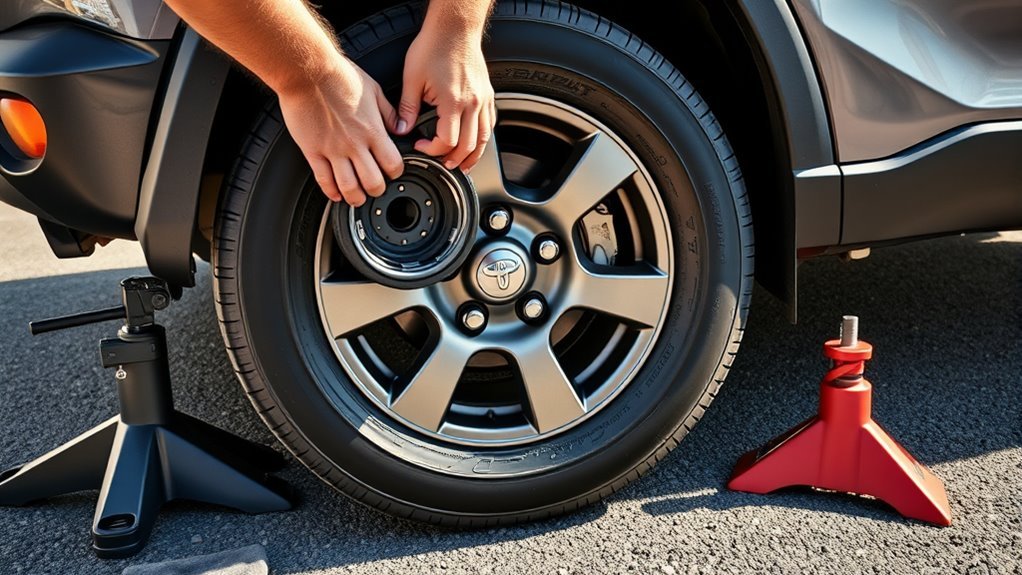
A flat tire can turn a normal drive into a stressful roadside stop. You can change a Toyota RAV4 spare tire safely when you park well, use the right tools, and tighten the lug nuts correctly. This guide walks you through the setup, tools, steps, safety checks, and storage tips you need before you drive again.
Quick Answer
To install a spare tire on your Toyota RAV4, park on level ground away from traffic, set the parking brake, and get the spare tire, jack, and lug wrench from the cargo area. Loosen the lug nuts before lifting the vehicle, remove the flat tire, mount the spare with the valve stem facing outward, and tighten the lug nuts in a crisscross pattern. Lower the RAV4, tighten the lug nuts again, then drive slowly and follow the limits listed in your owner’s manual.
Key Takeaways
- Park on firm, level ground and set the parking brake before you start.
- Loosen the lug nuts before you raise the vehicle with the jack.
- Mount the spare tire with the valve stem facing outward.
- Tighten the lug nuts in a crisscross pattern for even pressure.
- Check your owner’s manual for your RAV4 model’s spare tire limits and torque specs.
Understanding Your Toyota RAV4 Spare Tire Setup

Before you install a spare tire on your Toyota RAV4, learn where Toyota stores the spare tire and tools in your model. Most RAV4 setups keep the spare tire, jack, and lug nut wrench in or near the cargo area, so you can reach them from the rear of the vehicle.
The spare tire kit helps you handle a flat tire without special equipment. When you mount the spare, keep the valve stem facing outward so you can check and add air if needed.
If your RAV4 uses a compact temporary spare, follow the speed and distance limits printed on the tire or listed in your owner’s manual. Many temporary spares have lower limits than regular tires, so treat them as short-term emergency tires only.
Warning: Never crawl under a vehicle supported only by a jack, and do not change a tire where traffic can strike you.
Essential Tools for Changing Your Spare Tire
To change a spare tire on your Toyota RAV4, you’ll need the spare tire, a jack, a jack handle, and a lug nut wrench. The lug nut wrench loosens and tightens the lug nuts, while the jack raises the vehicle enough to remove the flat tire.
Before you start, make sure the wrench fits your RAV4’s lug nuts. Place the jack only at the jacking point listed in your owner’s manual, since the wrong spot can damage the vehicle or make it unstable.
Keep gloves, a flashlight, and wheel chocks in your vehicle if you drive often at night or on busy roads. These items make a tire change safer and easier, even though they may not come with the factory kit.
Essential Preparations Before Changing Your Tire
Start by moving your Toyota RAV4 to a safe, level area away from traffic. Turn on your hazard lights, set the parking brake, and place the transmission in Park.
Open the cargo area and remove the spare tire cover if your RAV4 has one. Check the spare tire kit for the lug wrench, jack, and jack handle before you loosen anything.
Check the spare tire pressure before installation if you have a gauge available. A low spare can fail quickly, so use roadside assistance instead if the spare looks damaged, cracked, or badly underinflated.
Safely Removing the Flat Tire From Your RAV4
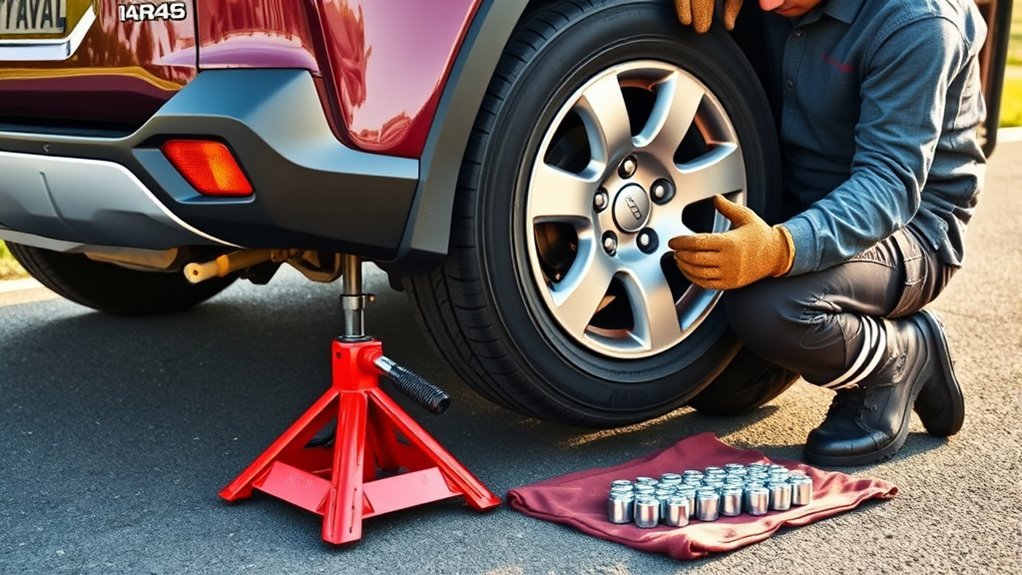
Before you lift the vehicle, loosen each lug nut while the flat tire still touches the ground. Turn the wrench counterclockwise and break each lug nut loose, but do not remove the nuts yet.
Place the jack under the correct jacking point, then raise the RAV4 until the flat tire clears the ground. Keep your hands and feet away from the underside of the vehicle during this step.
- Remove the lug nuts fully and place them somewhere clean and easy to reach.
- Pull the flat tire straight toward you until it clears the wheel studs.
- Lay the flat tire flat on the ground so it cannot roll away.
If the wheel sticks, push gently at the tire sidewall from opposite sides. Avoid kicking the tire hard, since sudden movement can shift the vehicle on the jack.
How to Properly Install a Spare Tire
Lift the spare tire onto the wheel studs and align the holes with the hub. Make sure the valve stem faces outward before you install the lug nuts.
Thread each lug nut by hand first. This helps you avoid cross-threading, which can damage the studs and make the wheel unsafe.
Tighten the lug nuts lightly in a crisscross pattern while the RAV4 remains raised. Lower the vehicle until the tire touches the ground, then tighten the lug nuts again in the same pattern.
Proper Tire Alignment
Proper alignment helps the spare tire sit flat against the wheel hub. Match the spare wheel holes to the wheel studs before you push the tire into place.
- Align the spare wheel with the lug holes and keep the valve stem facing outward.
- Thread each lug nut by hand until it turns smoothly and sits straight.
- Use the lug wrench in a crisscross pattern so the wheel seats evenly.
After you lower the vehicle, check that the spare tire sits flush against the hub. If you see a gap or feel wobble, stop and reinstall the tire.
Secure Lug Nut Installation
Secure lug nut installation keeps the spare tire from shifting while you drive. Start each lug nut by hand, and stop if one feels rough or angled.
Use the lug wrench to tighten the nuts in a star or crisscross pattern. This spreads pressure across the wheel and helps the spare seat evenly.
Check your owner’s manual for the correct torque specification for your RAV4 model year. If you do not have a torque wrench, drive carefully to a tire shop or service center so a technician can torque the lug nuts correctly.
Secure Your Spare Tire With Lug Nuts
Once you align the spare tire with the wheel lugs, secure it with the lug nuts. Use steady pressure on the lug wrench, and tighten the nuts in a crisscross pattern instead of moving around the wheel in a circle.
Lower the RAV4 fully after you snug the lug nuts. Then tighten each lug nut again while the tire rests on the ground.
Proper Lug Nut Tightening
Proper tightening helps prevent wheel vibration, loose lug nuts, and unsafe driving. Follow these steps after the spare tire sits on the wheel studs:
- Hand-tighten each lug nut until it sits flat against the wheel.
- Use the lug wrench to tighten the lug nuts in a crisscross pattern.
- Check the owner’s manual for your RAV4’s torque specification, then torque the lug nuts as soon as possible.
After you drive a short distance, stop in a safe place and check the lug nuts again. Retighten them if any feel loose.
Ensuring Correct Alignment
Correct alignment starts before you tighten the lug nuts. Keep the valve stem facing outward, then slide the spare wheel straight onto the lugs.
Use this quick checklist before you drive:
| Step | Action |
|---|---|
| 1. Valve Stem Position | Face it outward for easy pressure checks |
| 2. Wheel Alignment | Make sure the wheel sits flat on the hub |
| 3. Lug Nut Tightening | Use a crisscross pattern |
| 4. Torque Check | Follow your owner’s manual |
| 5. Tire Inspection | Check for cracks, low pressure, or wobble |
Do not drive if the tire does not sit flush or if any lug nut will not tighten smoothly.
Checking for Secure Fit
A secure fit helps the spare tire stay stable while you drive. Check the wheel, lug nuts, and tire position before you pack away the tools.
- Look for gaps between the spare tire wheel and the hub.
- Push the tire gently from the side and check for wobble.
- Confirm that each lug nut feels tight and sits straight.
Listen for vibration, thumping, or scraping when you start driving. Pull over safely and recheck the spare if anything feels wrong.
Ensure Your Spare Tire Fits Right
Your spare tire must match your Toyota RAV4’s requirements. Check the tire size, wheel fit, and pressure information on the spare tire label and in your owner’s manual.
Compact temporary spares serve as emergency tires only. Full-size spares usually allow more normal driving, but you should still inspect the tire and confirm it matches your vehicle.
Use this quick guide as a general reference, then follow your RAV4’s tire label and manual for exact details:
| Tire Type | Typical Use | What to Check |
|---|---|---|
| Full-size | Longer temporary use | Size, tread, and pressure |
| Compact spare | Short emergency trips | Speed and distance limits |
| Temporary spare | Limited driving only | Pressure and warning label |
| Off-road spare | Special tire setups | Vehicle and wheel compatibility |
| Regular tire | Normal replacement use | Matching size and load rating |
Note: The tire sidewall and driver-side door placard give you key pressure, size, and load information.
What to Do After You Install the Spare Tire
After you install the spare tire, pack the flat tire and tools before you drive. Make sure nothing loose can roll around in the cargo area.
Drive at a cautious speed and avoid hard braking, sharp turns, and long highway trips if you use a compact spare. Schedule tire repair or replacement as soon as you can.
Many spare tires do not match the grip, size, or wear of your regular tires. The sooner you repair the flat, the sooner your RAV4 returns to normal handling.
Reattach the Tire Cover: Steps You Need to Know

To reattach the tire cover, place the zipper at the top of the spare tire so the cover lines up correctly. This position makes the cover easier to close and remove later.
- Slide the bottom of the cover over the tire and pull it around the edges.
- Zip the cover from the top down and keep the fabric aligned.
- Check the zipper and tabs so the cover stays secure.
A secure tire cover helps protect the spare from dirt, rain, and road debris. Replace the cover if the zipper fails or the fabric tears badly.
Store Your Tools and Tire Cover Properly
After you finish the tire change, put the jack, lug wrench, and jack handle back in their storage spots. Secure each tool so it cannot shift, rattle, or damage the cargo area while you drive.
Store the flat tire or spare tire cover so it does not block your view or move during a sudden stop. If the flat tire smells hot, leaks sealant, or has sharp damage, handle it with care.
Proper Tool Storage
Good tool storage helps you find everything fast during the next roadside problem. Keep the tire tools clean, dry, and easy to reach.
- Store the jack, lug nut wrench, and jack handle in their assigned compartments.
- Secure the tool bag or straps so the tools do not move while driving.
- Check the tire cover and tools during routine cargo-area cleaning.
Secure Tire Cover
Secure the tire cover after you place it over the spare tire. Keep the zipper at the top, pull the cover evenly over the tire, and close it without forcing the zipper.
Lock the tabs or fasteners if your cover includes them. A tight cover helps protect the spare tire from dirt and moisture.
Easy Access Locations
Store tire tools where you can reach them quickly. Good cargo-area organization saves time and keeps you safer during a roadside stop.
- Keep the lug nut wrench and jack handle in their factory storage points.
- Place the spare tire with the valve stem easy to reach when possible.
- Check the spare tire and tools before long trips.
Maintain Your Spare Tire and Tools Effectively
Check your spare tire pressure during normal tire checks and before long trips. A spare that looks fine can still lose air over time.
Inspect the tire for cracks, bulges, punctures, and worn tread. Replace the spare if it looks unsafe or if a tire professional recommends replacement.
Keep the jack and lug wrench clean and dry to reduce rust. Review your owner’s manual before an emergency so you know the jacking points and storage layout for your RAV4.
Common Mistakes to Avoid When Changing a RAV4 Spare Tire
Small mistakes can make a tire change unsafe. Avoid loosening lug nuts after the vehicle is already in the air, because the wheel can spin and the vehicle can shift.
Do not place the jack under plastic trim, suspension parts, or any point not listed in the owner’s manual. Also avoid driving normally on a compact spare, since it changes braking, steering, and traction.
Do not ignore the flat tire after you install the spare. Repair or replace the damaged tire soon so your spare goes back into emergency use.
Frequently Asked Questions
Can I Put a Spare Tire on Myself?
Yes, you can put on a spare tire yourself if you have the right tools and a safe place to work. Park on level ground, loosen the lug nuts before lifting, and tighten them in a crisscross pattern after installation.
How fast can you drive on a RAV4 spare tire?
Follow the speed limit printed on the spare tire or listed in your owner’s manual. Compact temporary spares often require slower driving than regular tires.
How long can you drive on a RAV4 spare tire?
Use a compact spare only long enough to reach a tire shop or safe repair location. Check the tire label and owner’s manual for the exact distance limit for your model.
Should a compact spare go on the front or rear?
Your owner’s manual gives the correct placement for your RAV4 model. Some vehicles handle better when a compact spare stays off the drive wheels, so follow Toyota’s guidance before you drive far.
Conclusion
Changing a Toyota RAV4 spare tire comes down to safe parking, correct jack placement, careful lug nut tightening, and smart driving afterward. Before your next trip, check that your spare tire, jack, and lug wrench sit where they belong and work as they should.
Once you install the spare, drive cautiously and get the damaged tire repaired or replaced soon. A well-kept spare tire turns a flat tire from a crisis into a manageable stop.

Related Articles

Toyota RAV4 TPMS Reset: Easy Steps That Work
Unlock the secrets to resetting your Toyota RAV4's TPMS effortlessly—discover the essential steps to ensure your tires are always safe.
Read More
Toyota RAV4 Tire Rotation: DIY Steps & Pattern
Take control of your Toyota RAV4's tire maintenance with our simple DIY rotation guide—discover the best steps for optimal performance and longevity!
Read More
Mix Tire Brands on a Toyota RAV4? Expert Guide
Keeping your RAV4 safe? Learn when mixing tire brands risks traction, ABS/TCS and AWD damage — and what exact matches you must insist on.
Read More