
How to Change a Tire on a Toyota RAV4 Safely

How to Change a Tire on a Toyota RAV4
A flat tire can turn a normal drive in your Toyota RAV4 into a stressful roadside stop. To change it safely, move to firm, level ground first, set the parking brake, loosen the lug nuts before lifting, use the jack point shown in your RAV4 owner’s manual, and tighten the spare in a star pattern before driving away.
Last updated: July 7, 2026.
Quick Answer
To change a tire on your Toyota RAV4, park on firm, level ground, set the parking brake, and loosen the lug nuts before lifting the vehicle. Raise the RAV4 only at the approved jack point, remove the flat tire, mount the spare, and tighten the lug nuts in a star pattern. Lower the vehicle, recheck lug tightness, confirm spare pressure, and drive carefully to a tire shop for repair or replacement.
Key Takeaways
- Park on a flat, stable surface away from traffic before you start.
- Loosen the lug nuts slightly before you lift the vehicle with the jack.
- Use the correct jack point listed in your Toyota RAV4 owner’s manual.
- Tighten the lug nuts in a star pattern so the wheel seats evenly.
- Drive slowly on a temporary spare and replace the damaged tire soon.
Quick RAV4 Tire Change Safety Checklist
Use this checklist before you touch the jack. A tire change is only worth doing yourself when the vehicle, ground, traffic, and tools are all under control.
| Check | Safe choice | Call for help if… |
|---|---|---|
| Location | Firm, level ground away from traffic | You are on a slope, curve, narrow shoulder, or soft dirt |
| Visibility | Hazard lights on, reflective triangles if available | Drivers cannot see you early enough |
| Tools | Spare tire, jack, lug wrench, wheel wedges, manual | The jack, wrench, wheel lock key, or spare is missing |
| Spare tire | Inflated, undamaged, and correct for temporary use | The spare is flat, cracked, bulged, or visibly damaged |
Find a Safe Spot to Change Your Tire

Before you change a tire on your Toyota RAV4, move to the safest place you can reach. Look for a flat, straight area with a wide shoulder, parking lot, or driveway. Avoid curves, hills, soft ground, and narrow shoulders where passing drivers may not see you.
Set the parking brake, turn on your hazard lights, and keep passengers away from traffic. If you have reflective triangles or warning signs, place them behind your vehicle where other drivers can see them. If you can’t find a safe place, call roadside assistance or arrange a tow instead of taking a roadside risk.
Warning: Never place any part of your body under a vehicle held up only by a tire-changing jack.
What Tools Do You Need to Change a RAV4 Tire?
Gather your tools before you start so you don’t have to search while the vehicle sits lifted. Your Toyota RAV4 should include the basic tire-changing tools, but the exact storage spot can vary by model year and trim. Check your Toyota owner’s manual if you can’t find them.
You will need:
- A properly inflated spare tire
- A lug wrench
- A vehicle jack
- Your Toyota RAV4 owner’s manual
- A wheel lock key, if your RAV4 uses locking lug nuts
- Wheel wedges, if available
- A tire pressure gauge
- Gloves and a flashlight, if needed
- A sturdy wood board for jack support on slightly uneven firm ground
Do not use a jack on soft dirt, loose gravel, or a steep slope. The jack needs firm support to hold the vehicle steady while you work.
[Products Worth Considering]

This spare tire tool kit is designed for the 2004 to 2018 Ford F-150 to help you loosen and tighten wheel lug nuts and manage the spare tire and provided jack functions from underneath the vehicle. It includes the lug nut wrench and extension pieces plus a convenient storage carrying case for organized transport. The jack itself is not included.

Universal magnetic jack pad with aluminum grooved design to protect vehicle pinch welds during lifting. Durable nylon pad inserts are upgraded and secured with screws to resist damage and keep in place. Designed to fit most single vehicle pinpoint welds for safer, stable jacking when changing tires, repairs, or performing oil changes.

Camco Trailer Aid Plus tandem tire ramp lifts your trailer for quick, safe tire changes with ample clearance from its 5 1/2-inch lift. It helps you change a flat tire without unloading cargo, making roadside and routine maintenance more efficient. The heavy-duty, waterproof and rustproof polymer design supports up to 15,000 lb and is built for easy portability and storage.
Before You Begin: Check the Spare and Jack Points
Check the spare tire before you lift the vehicle. A low or damaged spare can leave you stuck even after you remove the flat tire. Look for cracks, bulges, deep cuts, or obvious tread damage. You should also check the spare’s pressure with a gauge, because a tire can look usable while still being underinflated.
Find the correct lifting point in your Toyota RAV4 owner’s manual. Jack placement matters because the wrong spot can damage the vehicle or make it unstable. If the jack does not sit squarely under the lift point, stop and reposition it. Do not lift from suspension arms, plastic trim, underbody panels, or any point that Toyota does not approve.
Estimated Time to Change a RAV4 Tire
Plan on about 20 to 30 minutes if you have the right tools and a safe work area. Bad weather, stuck lug nuts, low light, or heavy traffic can make the job take longer. Give yourself enough time to work carefully instead of rushing.
How to Remove a Flat Tire
Follow these steps in order to remove the flat tire safely:
- Park safely. Stop on firm, level ground, set the parking brake, and turn on the hazard lights.
- Secure the vehicle. Place wheel wedges around the tires that stay on the ground, if you have them.
- Loosen the lug nuts. Turn each lug nut counterclockwise about one-quarter to one-half turn while the tire still touches the ground.
- Position the jack. Place the jack under the approved lifting point listed in your owner’s manual.
- Raise the vehicle. Lift the RAV4 until the flat tire clears the ground.
- Remove the lug nuts. Fully unscrew each lug nut and place them somewhere safe.
- Pull off the flat tire. Grip the tire firmly and pull it straight away from the wheel hub.
Inspect the wheel hub area for debris before you install the spare. Keep all lug nuts together so none roll under the vehicle or into traffic.
Securely Install Your Spare Tire
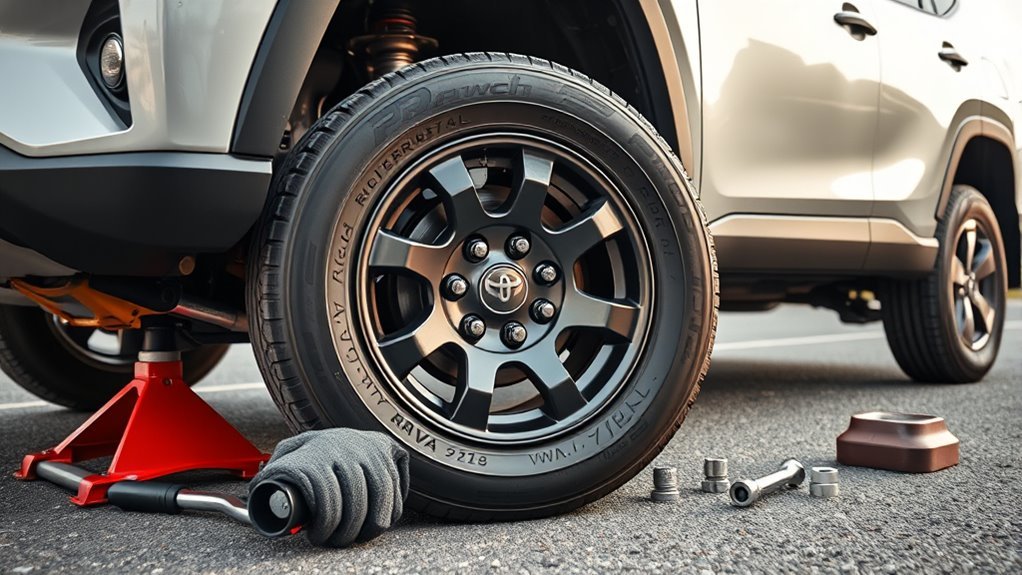
Align the spare tire with the wheel hub so the rim holes match the lug bolts. Push the spare straight onto the hub until it sits flat. Hand-tighten each lug nut first so you don’t cross-thread the bolts.
Tighten the lug nuts in a star pattern to help the wheel seat evenly. Use the lug wrench to snug them while the tire remains off the ground, but save the final tightening for after you lower the vehicle. Lower the RAV4 until the spare tire touches the ground, then tighten the lug nuts again in the same star pattern.
If you have a torque wrench, tighten the lug nuts to the specification in your owner’s manual. If you don’t have one, have a technician check the torque as soon as possible. Store the flat tire, jack, and tools securely before you drive.
Pro tip: After driving a short distance, stop in a safe place and recheck the lug nuts for tightness.
Perform Key Checks After Changing Your Tire
Before you drive away, check that the spare tire sits flush against the hub and that every lug nut feels tight. Check the spare tire pressure if you have a gauge. NHTSA recommends checking all tires, including the spare, at least once a month when cold, and your RAV4’s correct pressure is listed on the doorjamb label or in the owner’s manual.
Make sure your tools, jack, and flat tire can’t move around inside the vehicle. Loose tools can become hazards during a sudden stop. If your RAV4 has a tire pressure monitoring system, expect the warning light to stay on until you repair or replace the tire and restore proper pressure.
Drive carefully on a temporary spare. Many temporary spares carry speed and distance limits printed on the tire sidewall or listed in the owner’s manual. Replace or repair the damaged tire as soon as you can.
When Should You Call Roadside Assistance Instead?
Call roadside assistance if the tire fails on a busy highway, the shoulder is narrow, the ground is soft, or you cannot position the jack safely. Also call for help if a lug nut will not loosen with steady pressure, the spare is damaged, or the wheel looks bent after the flat. The safest tire change is the one you can complete without fighting traffic, unstable ground, or damaged parts.
[Products Worth Considering]
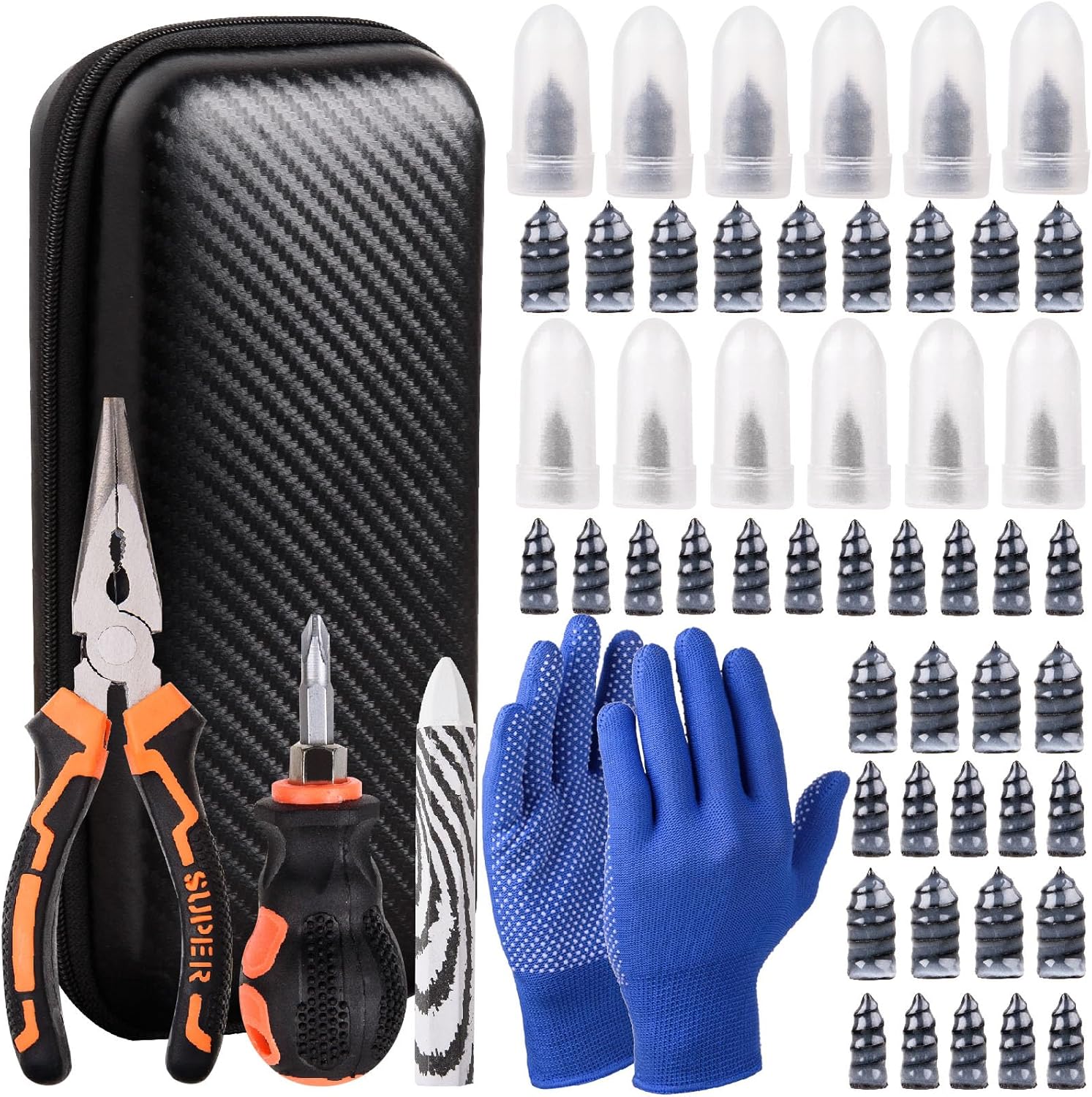
This tire sidewall puncture repair kit fixes flats fast without removing the tire, helping you get back on the road in minutes. It includes self-tapping repair nails, essential tools, gloves, and a portable storage bag for convenient roadside use. Designed for tubeless tires, it helps create a tight, leak-resistant seal for cars, motorcycles, trucks, SUVs, and ATVs.

This 100-piece tire repair screw plug kit provides a fast, self-service solution for punctures on the road. Choose the correct plug size, insert it into the break, and screw it in to help seal the puncture and temporarily restore tire pressure. Thickened threads and rubber-wrapped plugs improve bite and sealing while remaining compact and easy to carry.

5T Electric Jack: Powered by a 12V motor, connects via cigarette lighter or car power. One-button operation lifts most vehicles under 5 tons to max. height 17.7 inches in 2 minutes. Built-in air pump for fast inflation and easy tire changes
Common Mistakes to Avoid When Changing a Tire
Small mistakes can make a tire change unsafe. Avoid lifting the vehicle before you loosen the lug nuts, because the wheel may spin in the air. Don’t place the jack under trim, suspension parts, or any point not approved by Toyota.
Never drive far or fast on a temporary spare. The spare helps you reach a repair shop, not replace a standard tire for normal driving. Don’t ignore damaged lug nuts, bent wheel parts, unusual noise, or vibration after the tire change.
[Products Worth Considering]


Wrench Size:The Socket Size is 21mm,pls kindly confirm if the size is the same before order.
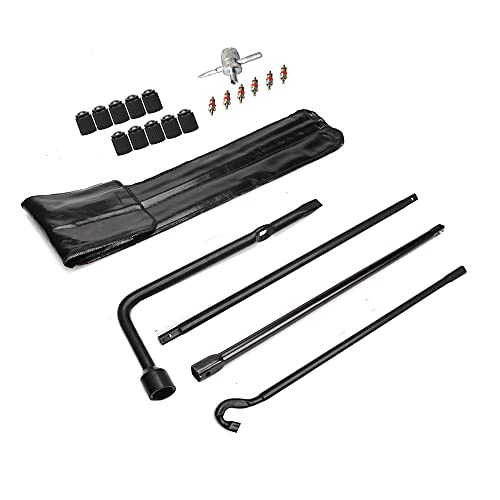
Premium OEM Upgraded Quality Spare tire tool: Stable strong rustproof automotive grade steel,tubing instead of soil designed made it more light,not only stong but also convenient.
How to Maintain Your Spare Tire for Safety
Check your spare tire regularly so it’s ready when you need it. Look for cracks, cuts, bulges, and uneven wear. Check the spare tire pressure at least once a month and before long trips.
Store the spare in its proper compartment and keep it secure. Moisture, dirt, and loose storage can shorten its useful life. If the spare looks old, damaged, or unsafe, ask a tire professional to inspect it.
Frequently Asked Questions
How Do I Know When to Replace My Spare Tire?
Replace your spare tire if it shows cracks, bulges, deep cuts, or other visible damage. You should also ask a tire professional to inspect an older spare, even if it still looks unused. Rubber ages over time, and age can reduce tire safety.
Can I Drive on a Flat Tire for a Short Distance?
Do not drive on a flat tire unless you must move a very short distance to reach safety. Driving on a flat can damage the wheel, suspension, and tire beyond repair. Pull over safely or call roadside assistance if the vehicle feels unstable.
What Should I Do if My Lug Nuts Are Stuck?
Use steady pressure on the lug wrench and make sure you turn counterclockwise. Do not jump on the wrench, because you can slip, fall, or damage the hardware. If the lug nuts still won’t move, call roadside assistance.
Is It Safe to Change a Tire on a Slope?
A slope makes a tire change much more dangerous because the vehicle can shift while raised. Move to level ground if you can do so safely. If you can’t reach a flat area, call for help instead of lifting the vehicle.
How Often Should I Check My Tire Pressure?
Check tire pressure at least once a month and before long trips. Include the spare tire in that routine. Proper pressure helps your tires last longer and gives you better control on the road.
How Fast Can I Drive on a RAV4 Temporary Spare?
Follow the speed and distance limits printed on the temporary spare or listed in your Toyota RAV4 owner’s manual. Many compact spares are limited to short, low-speed emergency use only. Drive directly to a tire shop instead of treating the spare like a normal tire.
Where Are the RAV4 Jack Points?
The approved jack points are shown in your RAV4 owner’s manual. Use that diagram before lifting the vehicle, because jack locations can vary by model year. Do not lift from suspension parts, plastic trim, or any unmarked underbody area.
Safety Disclaimer: This article is for informational purposes only and does not replace your Toyota RAV4 owner’s manual or professional roadside help. If the location, weather, tools, or vehicle condition feels unsafe, call roadside assistance or a qualified technician.
Conclusion
Changing a tire on your Toyota RAV4 comes down to safety, proper jack placement, and careful lug nut tightening. Start by moving away from traffic, then follow the steps in order without rushing. After you install the spare, drive slowly and head to a tire shop for a lasting repair. With the right preparation, you’ll handle a flat tire with more confidence and less stress.

Related Articles

Toyota RAV4 TPMS Reset: Easy Steps That Work
Unlock the secrets to resetting your Toyota RAV4's TPMS effortlessly—discover the essential steps to ensure your tires are always safe.
Read More
Toyota RAV4 Tire Rotation: DIY Steps & Pattern
Take control of your Toyota RAV4's tire maintenance with our simple DIY rotation guide—discover the best steps for optimal performance and longevity!
Read More
Mix Tire Brands on a Toyota RAV4? Expert Guide
Keeping your RAV4 safe? Learn when mixing tire brands risks traction, ABS/TCS and AWD damage — and what exact matches you must insist on.
Read More