
Do Tire Marks on a Driveway Go Away? Removal Tips & Treatments
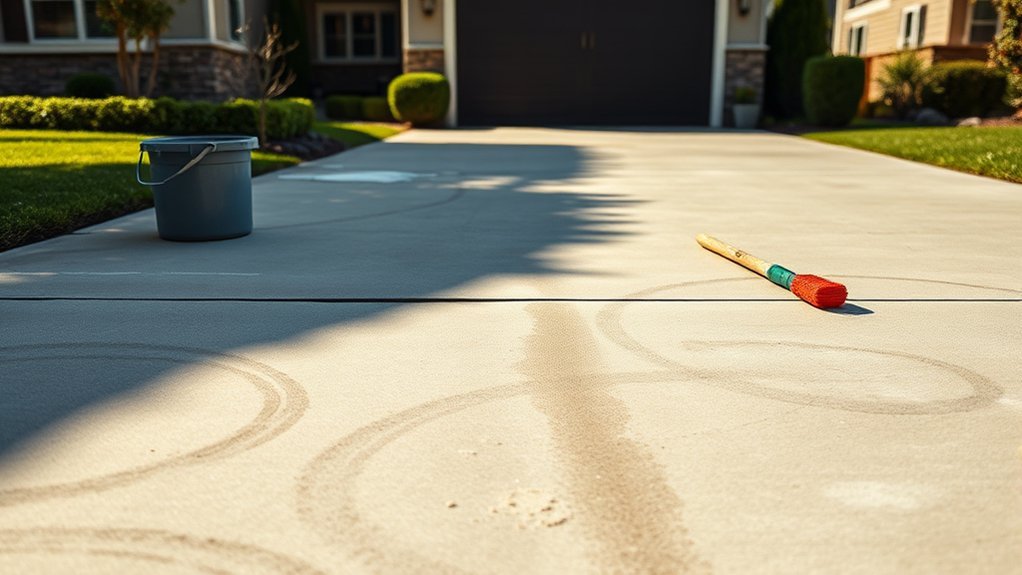
Black tire marks on a driveway can look permanent, but many are only surface residue. The right fix depends on what the mark is sitting on: bare concrete, sealed concrete, fresh asphalt sealer, or a garage-style coating. Light rubber marks often fade or wash off. Dark marks inside a soft sealer may need deeper cleaning, stripping, or resealing.
Quick Answer
Yes, tire marks on driveways often fade, especially if they are light rubber residue on older concrete or asphalt. Fresh sealer and soft coatings can hold marks longer. Start with cleaner, dwell time, scrubbing, and rinsing. If the mark is inside the sealer, you may need stripping or resealing.
Key Takeaways
- Light tire marks usually fade or clean off, but deep hot-tire staining may not disappear on its own.
- Fresh asphalt sealer and film-forming concrete sealers are most likely to show hot tire pickup.
- Wait until new sealer is fully cured before driving on it. Follow the product label and wait longer in heat, humidity, or shade.
- Use a concrete-safe cleaner, short dwell time, scrubbing, and a full rinse before trying pressure washing.
- For prevention, use thin sealer coats, seal in proper weather, avoid sharp tire turns, and choose a sealer made for your surface.
At a Glance
| Time Required | 15 to 45 minutes for light marks; several hours or more if stripping or resealing is needed |
| Difficulty | Easy for surface residue; moderate for old stains or damaged sealer |
| Tools Needed | Garden hose, bucket, concrete-safe cleaner, stiff nylon brush, gloves, eye protection, optional pressure washer |
| Cost | About $5 to $40 for cleaner and brushes; more if renting equipment or hiring a pro |
Do Tire Marks on Driveways Go Away?
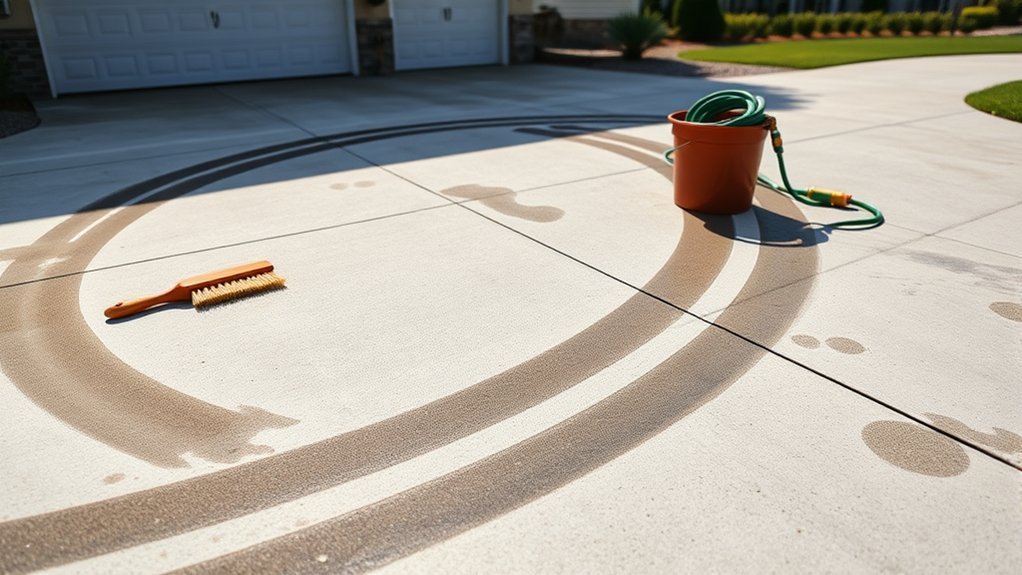
Some tire marks do go away. Faint gray or black marks on older concrete or asphalt often lighten with sunlight, rain, foot traffic, and regular rinsing. Fresh rubber residue is usually the easiest to remove because it has not had much time to bond to the pores, sealer, or coating.
Stubborn marks are different. If hot tires softened a sealer or pushed rubber compounds into a film-forming coating, the stain can sit inside the finish instead of on top of it. In that case, washing may only lighten the mark. You may need a stronger cleaner, sealer-safe stripping, spot repair, or resealing.
Note: Do not judge a new sealed driveway too soon. Many sealers darken, cure, and harden over time. Follow the sealer label before cleaning, parking, or pressure washing.
Use this quick guide to decide what you are dealing with:
| Surface | What the mark may be | Best first step |
| Bare concrete | Rubber residue in surface pores | Concrete cleaner, nylon brush, rinse |
| Sealed concrete | Hot-tire marking in the sealer film | pH-neutral or sealer-safe cleaner, test spot first |
| Fresh asphalt sealer | Tracking, scuffing, or softened sealer | Let it cure fully before cleaning |
| Garage floor coating | Rubber transfer or coating discoloration | Coating-safe cleaner and soft or medium brush |
[Products Worth Considering]

The Chemical Guys Gerbil Wheel & Rim Brush is designed to safely clean wheels, rims, exhaust tips, tires, and engine bay components without scratching delicate finishes. Its soft natural bristles help lift brake dust, grime, and buildup while conforming to tight spaces and intricate contours. A comfort grip handle delivers control for extended detailing sessions.

RecDec pressure washer shower nozzle tips deliver a quick-connect misting spray for car washing, outdoor cleaning, and gentle watering tasks. The stainless steel adapter features instant plug-and-play installation with a 1/4 inch quick connect for compatibility with most high-pressure washers. Choose from multiple screen hole sizes for different spray intensities and easily attach or remove as needed.

Steelman white tire marking crayons provide high-contrast, semi-permanent marks for repairing and inspecting tires and equipment. They write on wet or dry, smooth or coarse surfaces including rubber, metal, glass, and wood, making them ideal for puncture location and damage outlining. The lead- and zinc-free crayons resist weather and fading yet wipe away when you no longer need the marks.
Why Hot Tires Leave Marks
Hot tires leave marks because heat, rubber, pressure, and surface condition all work together. After a drive, your tires can be warm enough to soften rubber compounds. When the tire sits on concrete sealer or turns sharply on fresh asphalt sealer, some residue can transfer to the surface.
On sealed concrete, this is often called plasticizer migration. Plasticizers help make rubber more flexible. When hot tires sit on certain sealers or coatings, these compounds can migrate into the finish and discolor it. This is why a mark may not wipe away like ordinary dirt.
Freshly sealed asphalt has a different risk. The sealer film may still be soft during early curing. If you park too soon, turn the steering wheel while stopped, or drive a heavy vehicle across it in hot weather, the tires can scuff, track, or imprint the surface.
The most common causes are:
- Parking right after a long drive when the tires are still hot
- Turning the steering wheel while the car is stopped
- Hard braking, tight turns, or wheel spin on the driveway
- Fresh sealer that has not fully cured
- Thick sealer coats that stay soft longer
- Heavy vehicles parked on warm or newly sealed surfaces
- Film-forming coatings that react with rubber compounds
How to Remove Tire Marks From Driveways
Start with the gentlest method that can work. You can always repeat cleaning, but you cannot undo etched concrete, lifted asphalt sealer, or damaged coatings. If the driveway was sealed recently, wait until the sealer has cured according to the label before you scrub or pressure wash.
Step 1: Rinse and Check the Surface
Rinse the tire marks with a garden hose to remove dust, grit, and loose dirt. Let the surface drain, then look closely. If the mark lightens right away, it is likely surface residue. If it stays dark and looks embedded in a glossy or colored film, it may be inside the sealer.
Step 2: Test a Small Area
Before you clean the whole stain, test a small hidden area. This matters most on stamped concrete, colored concrete, decorative coatings, and fresh sealer. A test spot helps you avoid fading, whitening, softening, or lifting the finish.
Pro Tip: Use a stiff nylon brush, not a wire brush. Wire bristles can break off, rust, and leave new stains on concrete.
Step 3: Apply a Driveway-Safe Cleaner
Use a concrete-safe cleaner, citrus cleaner, or commercial tire-mark cleaner. For a common driveway cleaner, Simple Green recommends a 5 to 7 minute dwell time for its concrete and driveway cleaner and says not to let the solution dry before rinsing. SUNDEK also recommends applying a cleaner, letting it sit for a few minutes, scrubbing, and rinsing for tire marks on concrete.
Work in small sections. If the cleaner dries on the driveway, it can leave residue and may become harder to rinse clean.
Step 4: Scrub and Rinse
Scrub the mark with firm pressure using a stiff nylon brush. Rinse well with a garden hose. If the stain lightens but does not disappear, repeat the cleaner, dwell, scrub, and rinse cycle one more time.
Step 5: Use Pressure Washing Carefully
Pressure washing can help with stubborn rubber residue on sturdy, fully cured surfaces. Use a wide fan tip, keep the nozzle moving, and avoid getting too close. Do not use a zero-degree nozzle. Do not pressure wash fresh sealer, loose sealer, crumbling asphalt, or damaged concrete.
Warning: A pressure washer is a power tool. The CDC warns that high-pressure spray can cause serious wounds, throw objects, create electric shock risk, and cause carbon monoxide danger when gasoline-powered units are used in enclosed areas. Keep children away and follow the owner’s manual.
Step 6: Handle Marks That Will Not Lift
If the mark will not lift after repeated cleaning, the problem may be below the surface. On sealed concrete, the tire compounds may have discolored the sealer. On fresh asphalt sealer, the tire may have scuffed or pulled the coating. At that point, more scrubbing may not help.
For deep sealer discoloration, ask a concrete or driveway professional about stripping and resealing the affected area. For damaged asphalt sealer, you may need to let the surface cure, clean the area, and apply a thin touch-up coat according to the sealer instructions.
How to Prevent Hot Tire Pickup
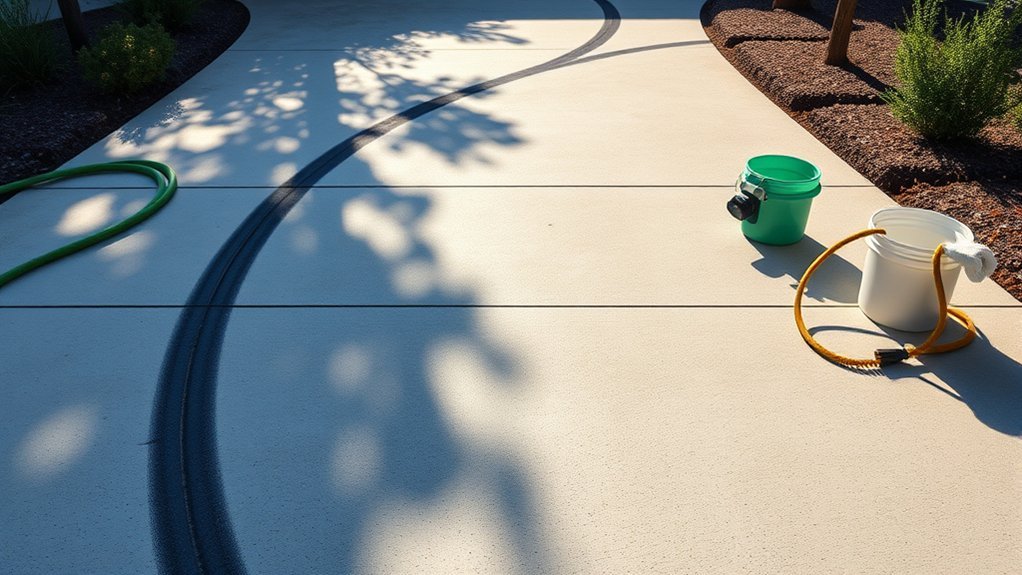
The best way to prevent hot tire pickup is to control curing, coating thickness, tire movement, and surface prep. Most driveway marks happen because the surface is soft, dirty, overapplied, or exposed to hot tires too soon.
Follow these steps:
- Let new asphalt cure before sealing. Some sealer manufacturers advise that newly paved asphalt should cure for a full season before sealing. Always follow the product label.
- Seal in the right weather. Avoid extreme heat, rain, cold ground, heavy shade, and late-day application if the product label warns against it.
- Clean and degrease first. Dirt, oil, and old residue weaken adhesion and can trap stains under the sealer.
- Apply thin, even coats. Latexite warns that thick coats can cause tracking and curing problems. Two thin coats are usually safer than one heavy coat when the product calls for two coats.
- Respect vehicle wait times. SealBest says to allow sealer to cure 24 to 48 hours before vehicle traffic. Some products list a minimum of 24 hours under normal conditions, but heat, humidity, shade, and heavy vehicles can require more time.
- Avoid dry steering. Do not turn the wheels while the vehicle is stopped on new sealer. Pull in and out straight when possible.
- Let tires cool. After highway driving, park on the street or another cured surface for a short time before using a fresh sealed driveway.
- Keep the driveway clean. Hose off dirt and residue before it builds up and becomes harder to remove.
Note: Be careful with rubber-backed mats or rugs on sealed concrete. Rubber materials can also cause plasticizer migration on some sealers and coatings. Use only mats approved for your surface, and test first.
Best Sealers for Fewer Tire Marks
No sealer can promise a driveway that never gets tire marks. The goal is to choose a product that fits your surface and cures hard enough to handle warm tires, turning, and regular traffic.
[Products Worth Considering]
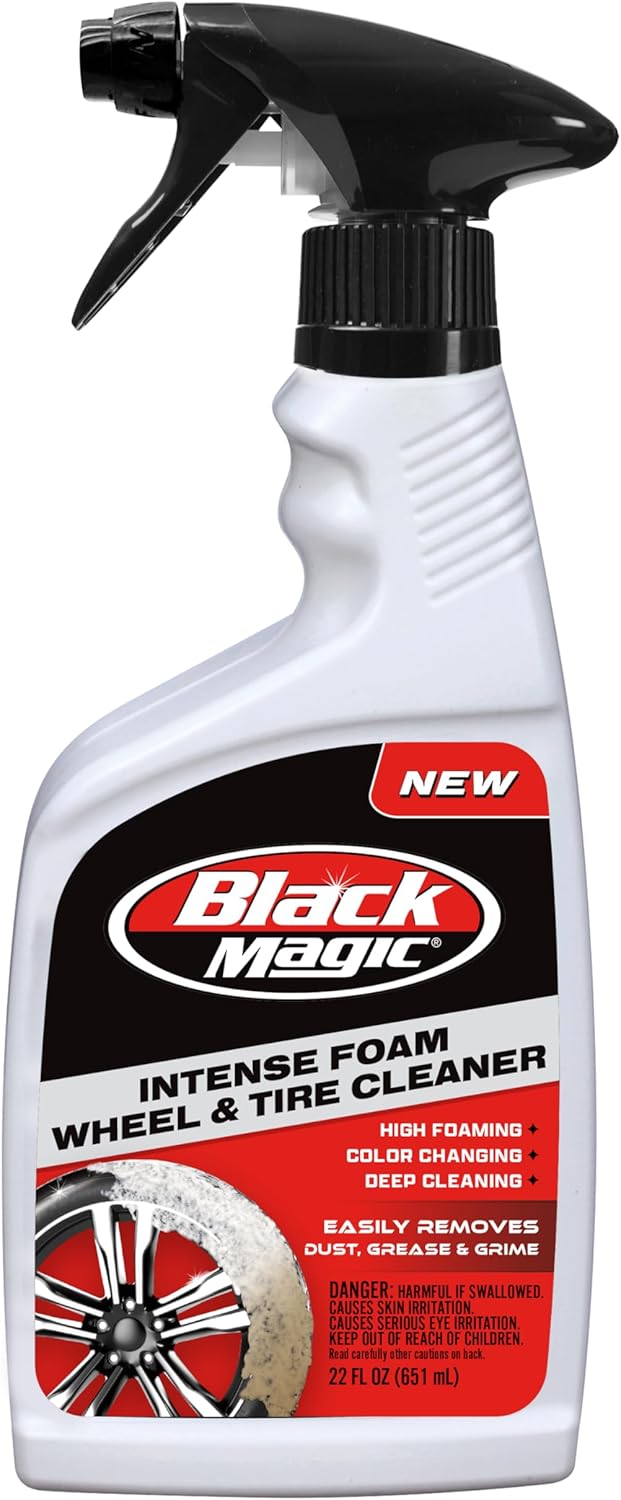
Black Magic Intense Foam Wheel & Tire Cleaner uses a high-foaming action to lift away dirt, grime, and brake dust without scrubbing. The color-changing formula helps show contaminants being dissolved as foam turns from white to brown. Safe for all wheel types and even wheel wells, it leaves a like-new, slick finish with a fresh cherry scent.
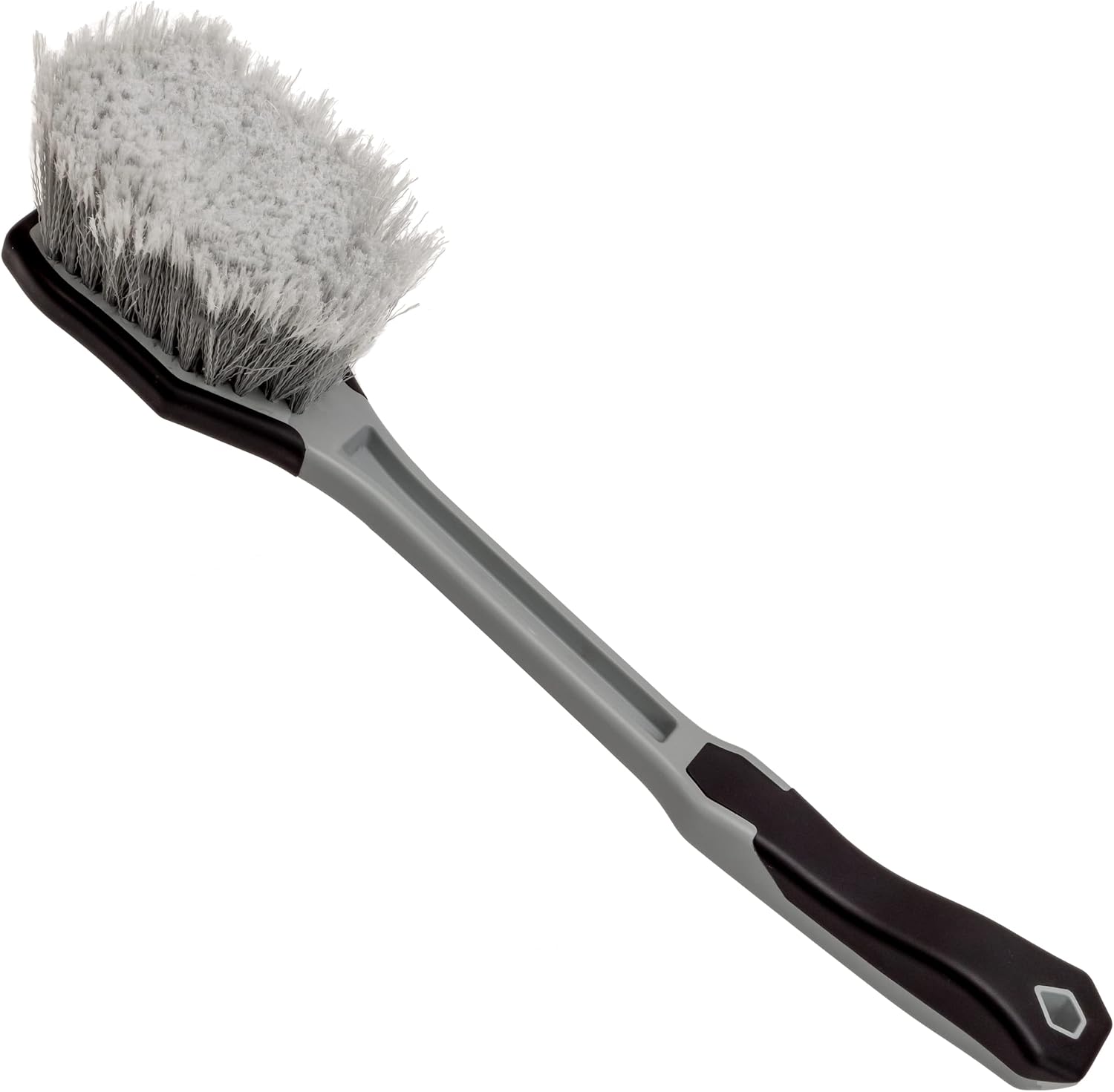
Clean grills, fenders, fender flares, bumpers, and wheel wells with a long-handled brush built for detailed car washing. The soft, triple-flagged bristles and dense scrub coverage help lift dirt gently while making coverage fast and easy. Use it with your favorite car wash soap for tires and exterior surfaces, and it also works for bike, motorcycle, boat, or RV cleaning.

This 3-piece wheel and tire brush set makes it easy to clean light, medium, and heavy dirt from wheels, rims, tires, and exterior surfaces. It includes both soft and stiff bristle options for gentle scrubbing and tough grime removal, helping lift brake dust and road buildup. The long-handle design supports comfortable cleaning across cars, trucks, SUVs, RVs, motorcycles, and more, with simple care instructions to restore brush shape.
For Exterior Concrete Driveways
For outdoor concrete, be careful with thick film-forming coatings. Euclid Chemical notes that epoxy and urethane coatings are more crosslinked and less likely to show tire marking, but it also says they are not recommended for outdoor concrete because of moisture, sunlight, weathering, and freeze-thaw exposure. For exterior concrete where tire marking is a concern, a penetrating silane or siloxane sealer may be a better fit because it does not leave a surface film that reacts with tire plasticizers.
If you use an acrylic or decorative concrete sealer outdoors, choose a product made for driveway traffic, apply it at the correct coverage rate, and allow it to cure fully before parking.
For Asphalt Driveways
For asphalt, use a driveway sealer made for asphalt pavement, not a concrete coating. A polymer-modified asphalt emulsion sealer can protect the surface when applied correctly. Thin coats, proper weather, clean pavement, and full cure time matter more than using extra product.
Do not seal new asphalt too soon. If the asphalt is newly paved, follow the sealer manufacturer’s waiting period before coating it. Sealing too early can trap oils and slow curing.
For Garage Floors
Garage floors are different from outdoor driveways. Interior epoxy, urethane, or polyaspartic coatings can resist hot tire pickup when the concrete is properly prepared and the coating fully cures. These systems can fail if the slab is damp, poorly etched, dusty, or returned to service too soon.
When to Call a Professional
Call a driveway, concrete, or coating professional if the tire marks are deep, sticky, glossy, peeling, or spreading. You should also get help if the surface is decorative, stamped, colored, or newly sealed and you are not sure what cleaner is safe.
Professional repair may include:
- Sealer-safe deep cleaning
- Mechanical stripping
- Solvent stripping where allowed and appropriate
- Spot resealing
- Full resealing
- Concrete resurfacing or asphalt sealer touch-up
Frequently Asked Questions
Will tire marks come out of the driveway?
Yes, many tire marks come out with cleaner, scrubbing, and rinsing. Light rubber residue is usually easier to remove than dark marks that have migrated into a sealer or coating. If cleaning only lightens the mark, the sealer may need stripping, spot repair, or resealing.
How do you get rubber marks off a driveway?
Rinse the area, apply a driveway-safe cleaner, let it sit for a few minutes, scrub with a stiff nylon brush, and rinse well. Repeat once if needed. Use pressure washing only on a fully cured, sturdy surface, and test first to avoid damage.
How do you fix tire marks in a driveway?
For surface marks, clean with a concrete-safe or driveway-safe cleaner, scrub, and rinse. For marks inside a sealer, stop heavy scrubbing and check whether the finish has softened, peeled, or discolored. Deep hot-tire pickup may need stripping and resealing.
How long does it take for tire marks to go away?
Light marks may fade over days or weeks with sun, rain, and regular rinsing. Marks on fresh sealer can last longer, especially if the sealer was soft when the tires touched it. If the mark is still dark after cleaning, it may not fade without repair.
Can I drive on a newly sealed driveway after 24 hours?
Maybe, but only if the product label allows it and drying conditions are good. Some sealers list a 24-hour minimum, while others call for 24 to 48 hours or longer. Heat, humidity, shade, cool weather, thick coats, and heavy vehicles can extend the wait.
Can bleach remove tire marks from concrete?
Bleach is not the best first choice for tire marks because rubber residue is not just a color stain. Use a driveway cleaner, degreaser, or citrus cleaner instead. Do not run bleach through a pressure washer unless the pressure washer manual and cleaner label both allow it.
Conclusion
Tire marks on your driveway may fade, but the result depends on the surface and how deep the mark goes. Light rubber marks often clean off with a driveway-safe cleaner, scrubbing, and rinsing. Hot-tire pickup inside a sealer can be harder and may need professional repair. For the best prevention, let sealer cure fully, apply thin coats, avoid sharp tire turns, and choose the right sealer for concrete, asphalt, or garage floors.
Sources
- Euclid Chemical Technical Bulletin CP-22 — explains tire marking, plasticizer migration, coating limits, and exterior concrete sealer considerations.
- SUNDEK: How to Remove Tire Marks from Concrete — supports cleaner, dwell, scrub, rinse, and repeat steps for concrete tire marks.
- Simple Green Driveway Cleaning Directions — supports driveway cleaner use, dwell time, manual cleaning, pressure washer use, and rinsing guidance.
- SealBest Blacktop Driveway Sealing How-To — supports thin application rates, two-coat guidance, and 24 to 48 hour vehicle cure time.
- Latexite Ultra Shield Technical Data Sheet — supports surface prep, thin coats, weather limits, and curing guidance for asphalt sealer.
- CDC Pressure Washer Safety — supports pressure washer injury, electric shock, thrown-object, and carbon monoxide safety warnings.
[Products Worth Considering]

The Mothers wheel and fender brush is designed for gentle, scratch-free scrubbing to remove road grime and brake dust. Its ergonomic shape and soft triple-flagged bristles deliver maximum coverage, including hard-to-reach wheel wells and undercarriage areas. With rubberized gripping and a protective rubber bumper, it helps clean safely while protecting delicate finishes on wheels, fenders, and bumpers.
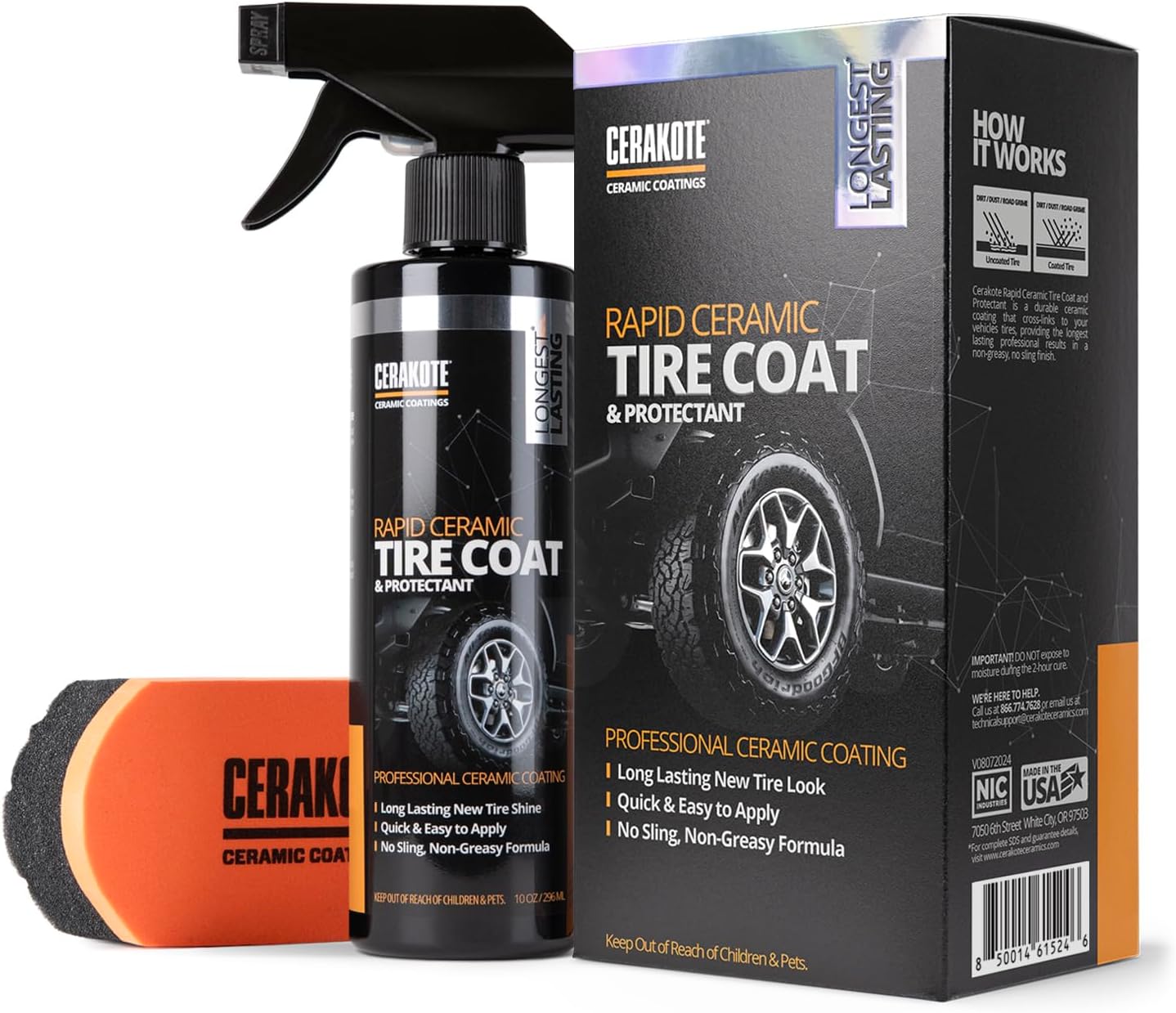
CERAKOTE Rapid Ceramic Tire Coat delivers true ceramic protection that restores a clean, dark factory-black look with a natural satin finish. It cures dry to the touch for a low-sling appearance that helps resist slinging onto paint while defending tires from UV rays and road grime. Apply to clean, dry tires with the included foam applicator for long-lasting results and satisfaction guaranteed.

This 4-pack wheel brush kit is designed for thorough cleaning of rims, tire tread, and hard-to-reach areas. It includes ultra-soft plush brushes for wheel faces and cracks, a soft brush for lug nut cavities, and a stiff brush for tire cleaning. The scratch-free, metal-free brush heads minimize rim damage, while bendable bristles reach into tight spots for faster grime removal.

Related Articles
AWD Tire Rotation Pattern: How Often and How to Do It
W**ondering the right AWD tire rotation pattern and timing? Discover the simple method, ideal schedule, and mistakes to avoid before your tires wear unevenly.
Read More
Wheel Damage: Types, Repair Options, and Costs
Many wheel damages look minor, but some hide costly safety risks—learn which repairs are worth it and when replacement is smarter.
Read More
Tire Balancing Weights: Types, Cost, and Why You Need Them
Precisely chosen tire balancing weights reduce vibration and wear, but which type fits your wheels and what it really costs may surprise you.
Read More