
How to Measure Tire Tread Wear on Your Toyota RAV4
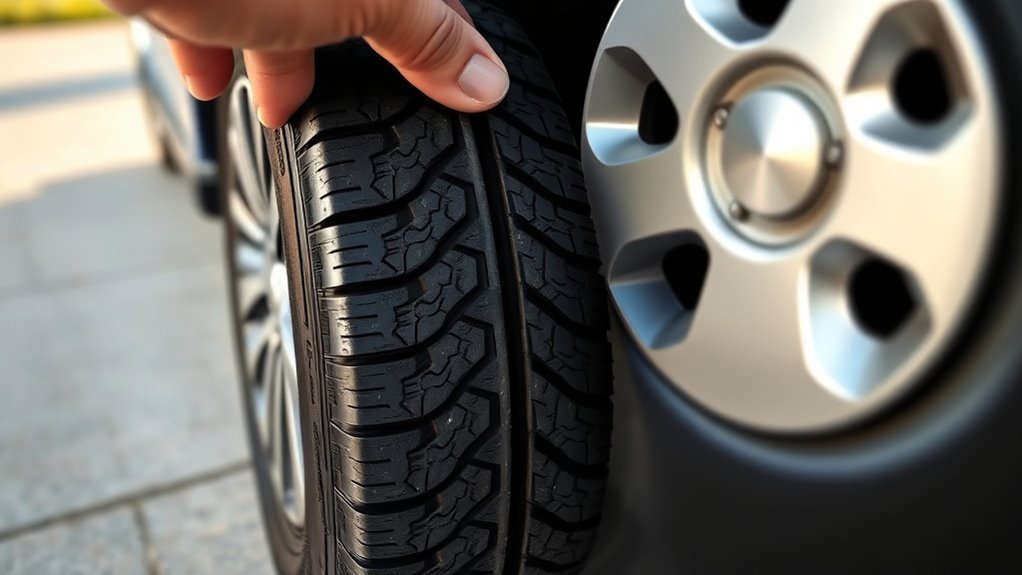
To measure tire tread wear on your Toyota RAV4, use the penny test: insert a penny with Lincoln’s head facing down into the tread. If you can see the entire head, it’s time for new tires. For precise measurements, consider using a tread depth gauge. Regular checks are essential for safety and performance. Additionally, watch for signs like uneven wear or cracks. Keep exploring best practices to guarantee your tires last longer and perform better.
Understanding the Importance of Tire Tread Depth
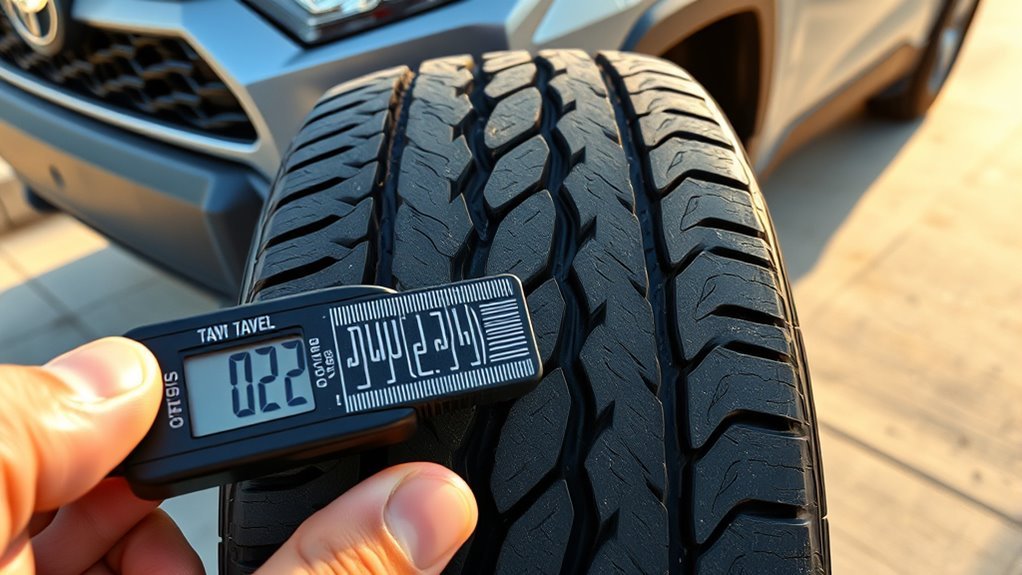
To enhance your driving security, regularly check your tire tread depth. The recommended minimum is 2/32 of an inch, but many experts advise replacing tires at 3/32 of an inch for ideal performance. Utilizing simple methods like the penny test or a tread depth gauge will help you accurately assess your tire’s condition. By staying proactive about tread wear, you not only improve your vehicle’s performance but also guarantee a safer experience for yourself and your passengers.
Identifying Signs of Tread Wear
While driving, it’s crucial to recognize the signs of tire tread wear to maintain safety and performance. Regularly inspect your tires for visible issues like cracks, bumps, or bulges, which can indicate structural damage. Uneven tread patterns often suggest alignment or inflation issues, directly impacting your vehicle’s performance. Keep an eye out for tread wear indicator bars; if they’re flush with the tread, your tires have reached 2/32 of an inch and need replacement. Use the penny test as a quick check: insert a penny into the tread groove with Lincoln’s head facing down. If you see the entire head, it’s time for new tires. Finally, check the DOT stamp; tires over six years old should be inspected for deterioration, regardless of tread depth. These tire maintenance tips will help you understand tread wear causes and guarantee your RAV4 remains safe on the road.
Checking Tire Tread Depth on Your RAV4
Understanding how to check tire tread depth on your RAV4 is vital for maintaining safety and performance. You can use the penny test: insert a penny into the tread groove with Lincoln’s head facing down. If his head is visible, it’s time for new tires. Alternatively, a tread depth gauge provides precise measurements. Regular checks are important, especially for peak traction in wet conditions where inadequate tread can cause hydroplaning.
| Tread Depth (inches) | Action Needed |
|---|---|
| Below 2/32 | Replace tires ASAP |
| 2/32 to 3/32 | Monitor closely |
| Above 3/32 | Safe for tire rotation |
| Cracks | replace tires asap |
| Bumps | replace tires asap |
| Or bulges | replace tires asap |
| Which can indicate structural damage | replace tires asap |
Most RAV4 tires feature built-in tread wear bars that indicate when it’s time for replacement. By staying proactive, you enhance your driving experience and safety.
[Products Worth Considering]

This digital tire pressure gauge combines a sturdy pistol grip inflator with a backlit 0.1 PSI display for quick, accurate readings in any lighting condition. Its 360° swivel gauge and 20" rubber hose make it easy to use and store, while the integrated inflate/deflate trigger and ¼" NPT air inlet provide fast, reliable tire maintenance.

The WORKPRO digital tire pressure gauge with inflator offers precise 0.1 PSI resolution and ±1% accuracy for reliable tire inflation across vehicles and inflatables. Built with heavy‑duty aluminum alloy, brass, and rubber, it resists rust and drops while delivering deflation, inflation, and pressure checking functions. The kit includes valve caps, adapters, a twist‑on chuck, screwdriver, nozzles, needle, seal tape, and a storage bag with batteries, making it a versatile, portable solution for on‑the‑go tire maintenance.

The Milton 507KIT delivers fast, accurate tire inflation, deflation and pressure measurement with a backlit LCD gauge and 14" rubber hose. Its 3‑in‑1 design meets ANSI/ASME standards and provides readings from 0‑250 PSI with 0.1 PSI resolution. The ergonomic pistol‑grip body and brass lock‑on chuck make one‑handed operation effortless, while the auto‑off feature conserves battery life.
Easy Ways to Measure Tire Tread Depth
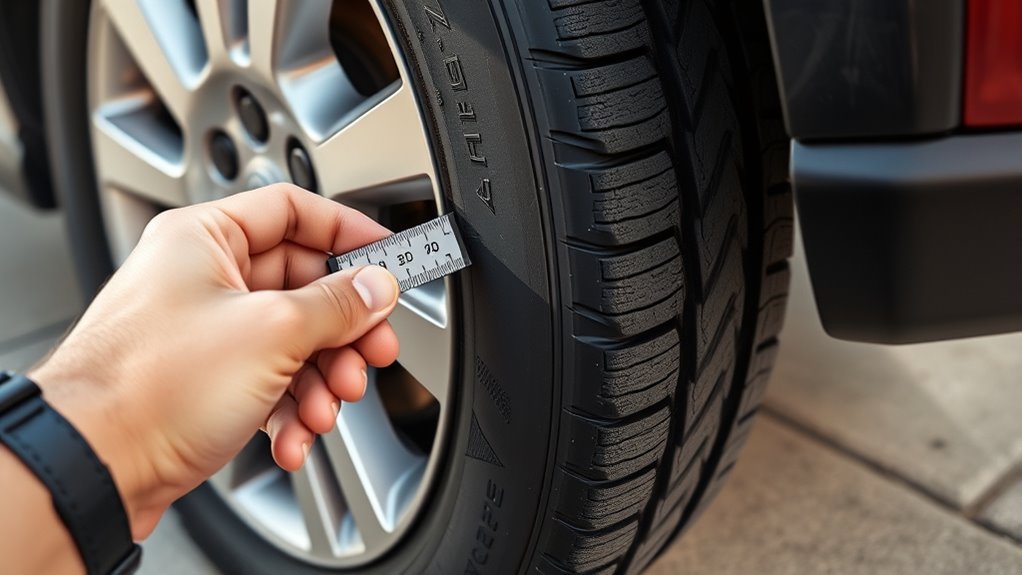
Measuring tire tread depth is essential for guaranteeing your vehicle’s safety and performance. You can easily assess tread depth using a couple of straightforward methods. First, try the penny test: insert a penny into the tread groove with Lincoln’s head facing down. If you can see his head, your tread depth is 2/32 inches or less, and it’s time for new tires. Alternatively, use the quarter test; insert a quarter with Washington’s head down. If his head stays covered, you have more than 4/32 inches of tread remaining.
For a more precise measurement, consider a tire tread depth gauge. Simply insert the probe into the tread groove and read the measurement against the gauge’s markings. Also, check for tread wear bars; if they’re flush with the tread, you’ve reached the minimum depth of 2/32 inches and should replace the tires. Regular checks guarantee peak performance and safety.
[Products Worth Considering]

The GERCHWAY tire inflator combines a durable rubber‑protected gauge with a 360° swivel air chuck for hands‑free operation and reliable sealing on any valve. Its 100 PSI range delivers ±2 PSI accuracy, making it ideal for most passenger and light‑truck tires. The battery‑free design ensures you can measure, inflate, or deflate without worrying about power loss, while the universal ¼ NPT connection fits any standard compressor.

1.Accurate and Efficient: Different colors on the bar represents different scopes, the red range on bar: 0 - 3/ 32; Yellow range on bar: 3/ 32 - 6/ 32; Green range on bar: 6/ 32 - 32/ 32, allowing you easy and fast to read and calibrated

1. Accurately measures tire tread depth gauge, Calibrated from 0 to 1 inch in 1/32 inch
Best Practices for Maintaining Tire Tread Depth and Longevity
To maintain ideal tire tread depth and longevity, it’s vital to adopt a proactive approach to tire care. Regularly check your tire tread depth using methods like the penny test; if Lincoln’s head is fully visible, your tread is worn to 2/32 inches or less, signaling that replacement is necessary. Rotate your tires every 8,000 to 10,000 kilometers to promote even wear and extend their lifespan.
Proper pressure maintenance is critical—follow your manufacturer’s recommendations, as underinflation or overinflation can lead to uneven wear and reduced fuel efficiency. Additionally, inspect your tires for visible signs of wear, such as cracks, bulges, or uneven tread patterns, to catch potential issues early. Investing in a tire tread depth gauge provides precise measurements, allowing you to monitor wear accurately and know when replacements are needed. By following these practices, you’ll guarantee a safer, more efficient driving experience.
[Products Worth Considering]

1. Accurately measures tire tread depth gauge tool, Calibrated from 0 to 1 inch in 1/32 inch

Accurate measures tire tread depth gauge tool

Accurate and precise tire tread depth readings in 1/32 inch increments (1/128 inch resolution)
Frequently Asked Questions
How Many Miles Is a 700 Treadwear Tire Good For?
A 700 treadwear tire’s good for about 70,000 miles under ideal conditions. However, monitor tread depth regularly; maintaining proper alignment and rotating tires can enhance longevity and guarantee safety throughout their lifespan.
What Does a 2/32 Tread Look Like?
A 2/32 tread depth shows minimal rubber, often revealing Lincoln’s head completely in the penny test. This worn state compromises tire safety, greatly reducing traction and increasing the risk of hydroplaning in wet conditions.
Conclusion
Maintaining proper tire tread depth is like keeping a well-tuned engine; both are essential for your Toyota RAV4’s performance and safety. Regularly checking your tire tread guarantees maximum traction and fuel efficiency, preventing potential hazards on the road. By understanding the signs of wear and using simple measuring techniques, you can extend your tires’ lifespan. Stay proactive, and you’ll not only enhance your driving experience but also secure a smoother ride for every journey ahead.

Related Articles

Toyota RAV4 TPMS Reset: Easy Steps That Work
Unlock the secrets to resetting your Toyota RAV4's TPMS effortlessly—discover the essential steps to ensure your tires are always safe.
Read More
Toyota RAV4 Tire Rotation: DIY Steps & Pattern
Take control of your Toyota RAV4's tire maintenance with our simple DIY rotation guide—discover the best steps for optimal performance and longevity!
Read More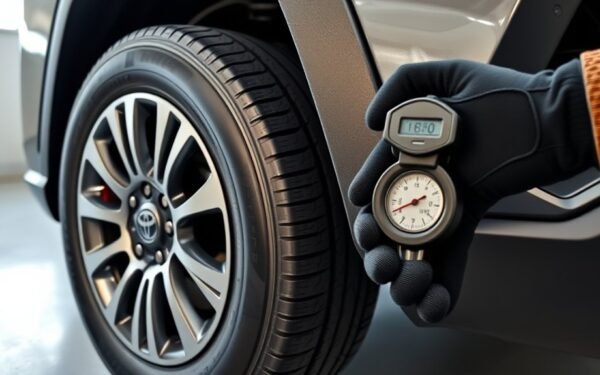
Mix Tire Brands on a Toyota RAV4? Expert Guide
Keeping your RAV4 safe? Learn when mixing tire brands risks traction, ABS/TCS and AWD damage — and what exact matches you must insist on.
Read More