What Does 94W Mean on a Tire? Load, Speed & Rating Guide
A 94W tire means you’re looking at a load index of 94 and a W speed rating. That load index lets each tire carry up to 1,477 pounds, while W means it’s rated for speeds up to 168 mph. You should match both ratings to your vehicle’s manual and driving needs, since proper fit affects safety, handling, and wear. If you keep going, you’ll see how to verify fit and legality.
Key Takeaways
- 94W means a tire load index of 94 and a W speed rating.
- Load index 94 supports up to 1,477 lbs per tire.
- Speed rating W allows sustained speeds up to 168 mph.
- The tire must match your vehicle’s owner manual for load, speed, and size requirements.
- Inspect tread, pressure, and condition regularly, since wear and weather affect safety and performance.
What Does 94W Mean on a Tire?
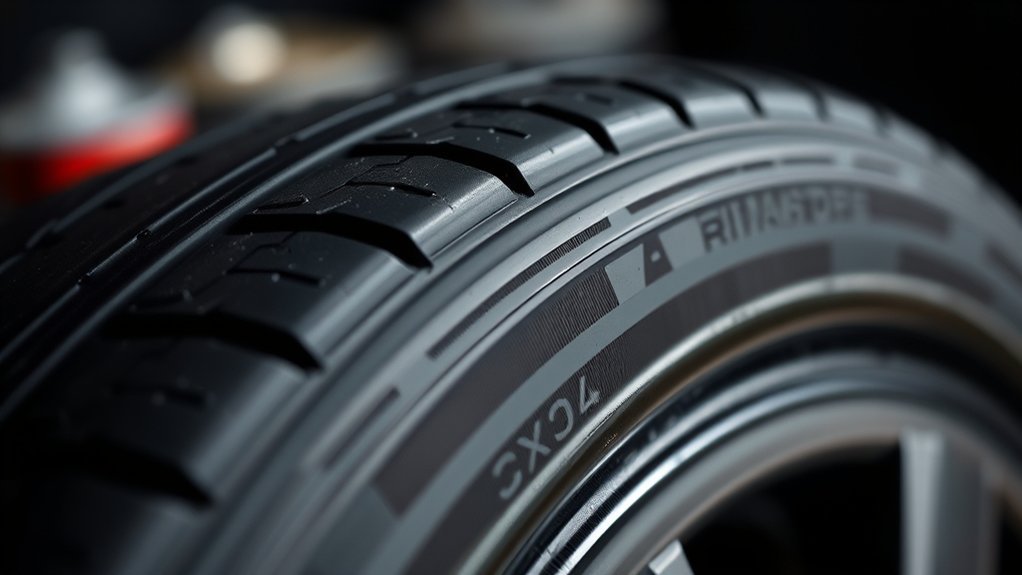
You should match both values to your vehicle’s specifications, not guess. If you fit a tire with the wrong rating, you can compromise handling, stability, and safety. Overloading a tire or pushing past its speed rating can cause failure, which puts you and others at risk. Check the sidewall, compare it with your owner’s manual, and choose equipment that supports your freedom to drive confidently and safely. Additionally, understanding UTQG ratings can help you select tires that offer the best performance for your driving needs.
What Does the 94 Load Index Mean?
The number 94 in a tire’s load index means each tire can safely support up to 1,477 lbs when properly inflated and used within its rated limits. Your load index tells you the maximum weight a tire can carry without strain, so you don’t guess at capacity. A 94 load index helps you match tire strength to your vehicle’s needs and maintain stable handling.
A 94 load index supports up to 1,477 lbs per tire, helping match capacity to your vehicle safely.
- Prevents overload-related tire damage
- Supports safe vehicle weight distribution
- Helps you meet manufacturer specs
If you exceed the load index, you raise heat buildup, sidewall stress, and failure risk. That can compromise braking, cornering, and overall control. You should always check your owner’s manual to confirm the required load index before you buy tires. When you choose the right rating, you protect performance, safety, and your freedom to drive with confidence. Additionally, selecting tires with appropriate tread patterns can further enhance wet-weather traction and overall handling.
What Does the W Speed Rating Mean?
A W speed rating means the tire can safely handle speeds up to 168 mph (270 km/h), which makes it a fit for high-performance vehicles and sports cars. When you see the W speed rating, you’re looking at a tire built for sustained high-speed operation, not just brief bursts. That matters if you drive a performance car and want to match the tire to the vehicle’s capability. Don’t exceed this rating, because going past it can cause tire failure and put you and your passengers at risk. You should also pair the W-rated tire with the correct load index so it can support your vehicle’s weight properly. A tire that’s fast but underloaded isn’t safe. Inspect your W-rated tires regularly for wear, pressure, and damage, because high-speed performance depends on condition as much as rating. Reliable traction in both wet and dry conditions is essential for maintaining control at high speeds. Choose precisely, drive freely, and keep control.
What 94W Tires Mean for Handling

With a 94W tire, handling improves because the tire is built to carry up to 1,477 lbs per tire while also supporting speeds up to 168 mph. You get a strong balance of load index and speed rating, so your car stays composed when you push harder. That means less flex, sharper steering response, and more predictable grip in corners.
A 94W tire balances load and speed for sharper steering, better grip, and more composed handling.
- Stability stays higher under braking and acceleration
- Responsiveness improves during lane changes and quick inputs
- Tire structure resists distortion at high speed
When you match 94W tires to your vehicle’s needs, you help it track straighter and react faster. You’re not just buying capacity; you’re buying control. If your driving demands precision, this rating supports that freedom by keeping the tire planted under weight and speed stress. Properly chosen 94W tires can make your vehicle feel tighter, calmer, and more confident on the road. Additionally, the right tires can enhance overall traction in wet conditions, ensuring a safe driving experience even in adverse weather.
Can You Use 94W Tires in Portland?
Yes, you can use 94W tires in Portland if they match your vehicle’s load and speed requirements, since each tire supports up to 1,477 lbs and can handle speeds up to 168 mph. For many drivers, that makes 94W tires a solid fit. Portland’s roads reward control, but your choice still has to respect the city’s rain, cold snaps, and occasional ice.
Because these tires favor performance, you should judge them by more than the rating alone. If you drive mainly in wet conditions, verify that your tread stays deep enough to move water effectively. That’s essential for grip and braking when the pavement turns slick.
You don’t need to accept compromise blindly. Use 94W tires when their load index and speed rating suit your vehicle, but make sure they align with your real-world driving demands. In Portland, freedom comes from matching equipment to conditions, not from chasing specs alone.
How to Check Tire Size and Ratings
To confirm that a 94W tire matches your vehicle, check the tire’s sidewall, where the size and rating are printed together in a code such as 94W. That’s where you’ll verify tire size and ratings without guesswork. Read the full size code, like P215/65R15, to identify width, aspect ratio, and rim diameter. Then inspect the load index and speed rating so you know what the tire can carry and how fast it’s certified to run.
- 94 = load index, up to 1,477 lbs per tire
- W = speed rating, up to 168 mph
- Owner manual = your vehicle’s exact specification reference
Use these markings to match your tire choice to your vehicle’s demands. The sidewall gives you the hard data you need to drive with confidence and control. If you want freedom on the road, start with accurate tire size and ratings, then verify them against your owner manual before you buy or install anything. Additionally, understanding tire performance characteristics can help you choose the best option for your driving style.
When 94W Tires Don’t Match Your Car
Even though a 94W tire offers a load index of 1,477 lbs and a speed rating of 168 mph, it may still be the wrong choice for your car if your owner’s manual calls for different ratings. You need to match the manufacturer’s load and speed specs, not just pick a higher number. If your vehicle calls for a lower load index, you can overload the tire structure and compromise safety. If it expects a different speed rating, you may see handling changes, uneven wear, or tire failure under sustained stress. A 94W tire can also be overkill for daily commuting, since its top-speed capability isn’t useful in most city or suburban driving. In wet or icy places like Portland, Oregon, you should also consider tread design and weather traction, because rating alone doesn’t guarantee grip. Choose the tire that frees your car to perform as engineered. Additionally, understanding treadwear ratings can help you select the best tire for your specific driving needs.
How to Check Tire Safety and Legal Fit
Check your owner’s manual and tire placard first to confirm the required load index, speed rating, and any legal fit limits for your vehicle. Inspect tread depth and overall tire condition next, since worn, damaged, or uneven tires can reduce safety even if the 94W rating is correct. Then confirm the tire matches your local weather conditions, because a performance tire that’s legal and spec-compliant still may not grip well on wet or icy roads. Additionally, consider selecting dedicated winter tires for optimal performance in severe winter driving conditions.
Verify Vehicle Requirements
Before you buy or install a tire marked 94W, verify that it fits your vehicle’s requirements by checking the owner’s manual for the recommended load index and speed rating. Match the load index first: 94 must meet or exceed the axle load your vehicle carries. Then confirm the W speed rating suits your normal driving and any legal top-speed capability.
- Check the placard and manual for exact specs.
- Compare tire markings with factory requirements.
- Ask a tire professional if anything conflicts.
Don’t guess. A correct 94W tire gives you freedom to drive confidently, but only if it’s legally and mechanically approved for your setup. When you align the numbers with your vehicle, you protect handling, compliance, and safety without sacrificing performance.
Inspect Tread And Condition
Start with a quick tread-and-condition inspection to confirm that a 94W tire is not only properly rated, but still safe to use. Measure tread depth; many places require at least 2/32 inch, though deeper tread gives stronger grip and control. Use the penny test: place Lincoln head-down in the grooves; if you see his full head, the tire is worn and needs replacement. Check sidewalls closely for cracks, bulges, or punctures, since these defects can trigger sudden failure. Verify pressure, too, because underinflated or overinflated tires alter handling and wear patterns. Rotate and align your tires on schedule to keep wear even. When these checks pass, your tire can safely support daily driving.
Confirm Weather Suitability
To confirm a 94W tire is fit for your climate, match its performance to the weather you actually drive in, especially if you face frequent rain, cold, or icy roads. Check that the tread still measures at least 2/32 inch for wet safety, and inspect for cracks, bulges, or uneven wear. In wet, wintry regions like Portland, you can’t ignore climate-rated traction.
- Verify the tire suits local weather
- Confirm load index and speed rating in your owner’s manual
- Record inspections to support legal compliance
If your tire doesn’t meet these standards, replace it before you lose control or violate safety rules. Keep maintenance logs, because they help you prove the tire’s legal fit and prevent failures.
Frequently Asked Questions
Which Is Better, H or V Rated Tires?
Neither is universally better; you should choose the tire that matches your Tire Performance needs. If you drive hard, carry high speeds, or want sharper handling, V-rated tires usually serve you better. If you prioritize comfort, lower road noise, and longer tread life for daily use, H-rated tires often make more sense. You’re free to optimize for your actual driving, not marketing, and that’s the practical choice.
What Is the Difference Between 94Y and 94W Tires?
94Y tires let you drive like the road’s begging for mercy. You’ll get the same load index as 94W, so both support 1,477 lbs per tire. The difference is speed: 94W tops out at 168 mph, while 94Y reaches 186 mph. For Tire Performance, choose 94Y if you need higher speed capability; pick 94W if your vehicle doesn’t demand it. Always inspect tires regularly.
What’s the Difference Between 94V and 94W on Tires?
94V and 94W tires carry the same load index, so you’re getting the same 1,477-lb capacity per tire. The difference is speed: 94V is rated to 149 mph, while 94W reaches 168 mph. You should choose 94W if your vehicle and driving style demand higher Tire Performance at speed. If you don’t need that margin, 94V can save you money without sacrificing load support.
What’s the Difference Between 91W and 94W Tires?
91W tires carry 1,356 lbs each, while 94W tires carry 1,477 lbs; both reach 168 mph. Like a stronger bridge under load, the 94W gives you more margin when you haul passengers or cargo. You’ll get better Tire Performance, stability, and safety if your vehicle needs the extra capacity. Check your owner’s manual, and don’t choose a lower load index than required.
Conclusion
In the end, 94W tells you a tire can safely carry a set load and handle higher speeds when it’s properly matched to your vehicle. You should always confirm the load index, speed rating, and size before you buy or install. Don’t assume one tire fits all; as the saying goes, “measure twice, cut once.” If you check your owner’s manual and sidewall specs, you’ll choose tires that’re safe, legal, and performance-ready.

Related Articles
Is a 275 Tire the Same as a 33-Inch? Metric Comparison Guide
A 275 tire isn’t always 33 inches—discover which sizes actually match and what hidden differences could affect your setup.
Read More
How to Become a Tire Dealer: Steps, Licensing & Business Tips
Start your tire dealership journey with essential licensing steps, business tips, and compliance requirements that could make or break your opening.
Read More
How Tall Is a 285 75R16 Tire? Exact Height, Width & Dimensions
Knowing how tall a 285 75R16 tire really is could change your fitment plans—discover the exact dimensions before you buy.
Read More