
What Do Tire Sensors Look Like: Complete Guide, Tips & Expert Advice
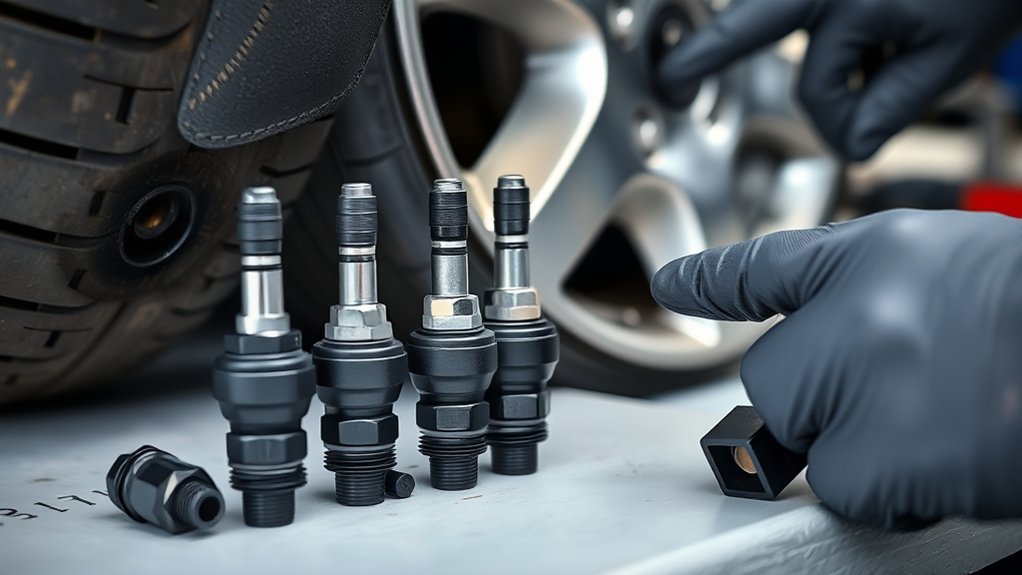
Tire sensors, also called TPMS sensors, are usually small valve-stem assemblies hidden inside the wheel. From the outside, you may only see a normal-looking rubber or metal valve stem. The actual sensor body sits inside the tire, where it measures pressure and sends a warning when pressure drops too low.
Quick Answer
Direct tire sensors look like compact black, gray, or metal TPMS modules attached to the inside end of the valve stem. Snap-in sensors resemble rubber valve stems from the outside, while clamp-in sensors usually have a metal stem and retaining nut. Indirect TPMS has no visible in-tire sensor.
Key Takeaways
- Most direct TPMS sensors are mounted inside the wheel at the valve stem, so you usually cannot see the sensor body without removing the tire.
- Rubber snap-in sensors look like standard rubber valve stems from the outside; clamp-in sensors usually use a metal valve stem, seal, washer, and nut.
- Indirect TPMS does not use a visible pressure sensor inside each tire; it estimates low pressure using wheel-speed and vehicle sensor data.
- A solid TPMS light usually means low tire pressure, while a light that flashes for about a minute and then stays on usually points to a TPMS malfunction.
- TPMS is helpful, but it does not replace monthly cold-pressure checks with a reliable tire pressure gauge.
At a Glance
| Time Required | 2–5 minutes to identify the valve type; 5–10 minutes to check pressure; longer for sensor replacement because the tire must be serviced. |
| Difficulty | Easy for visual checks and pressure checks; moderate to professional-level for direct TPMS replacement and relearn. |
| Tools Needed | Tire pressure gauge, tread-depth gauge or penny, air compressor, owner’s manual, and for replacement: tire machine, TPMS service kit, torque tools, and relearn/programming tool. |
| Cost | Pressure checks are free if you own a gauge. Sensor replacement cost varies by vehicle, sensor type, programming, and local labor, so ask for an installed out-the-door quote. |
What Do Tire Sensors Look Like?
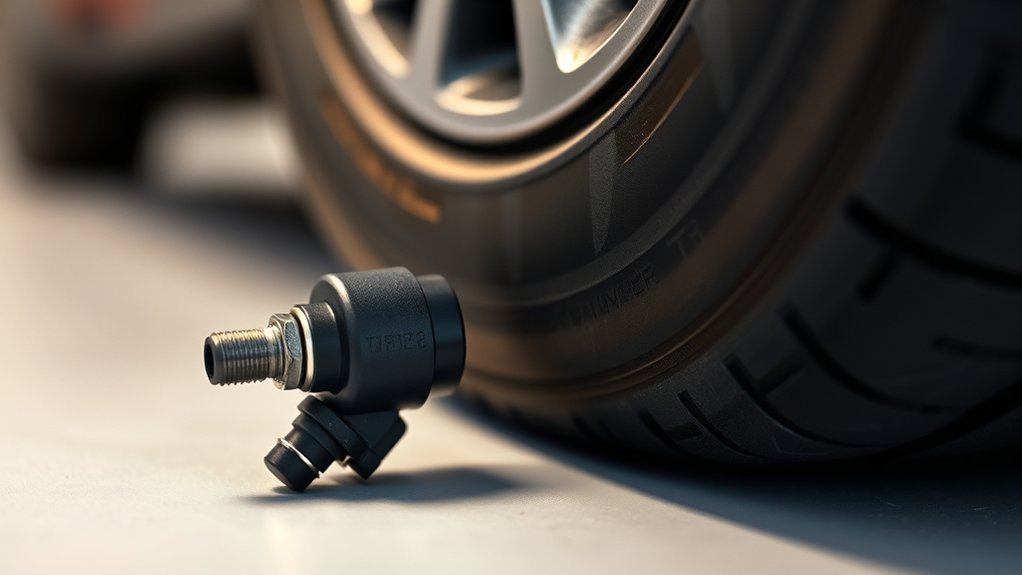
Direct TPMS sensors usually look like small electronic modules attached to the valve stem inside the wheel. The sensor body is commonly black, gray, or metal-colored plastic, and it may be rectangular, rounded, or slightly curved to sit close to the rim.
From outside the tire, you usually see only the valve stem. That is why many drivers think the sensor is missing. In reality, the larger sensor body is inside the tire, mounted behind the rim opening.
- Snap-in TPMS sensors: These look like rubber valve stems from the outside. The sensor body is attached inside the wheel.
- Clamp-in TPMS sensors: These usually have a metal valve stem, a sealing grommet, washer, and retaining nut visible at the wheel.
- Valve-mounted sensors: These are the most common direct TPMS style. The sensor is built onto, or bolted to, the inside end of the valve stem.
- Indirect TPMS systems: These do not have a visible pressure sensor inside each tire. They estimate low pressure from wheel-speed and other vehicle sensor data.
Note: A normal-looking valve stem does not prove the wheel has no TPMS. Many direct sensors hide the electronics inside the tire, while only the valve stem is visible outside.
[Products Worth Considering]
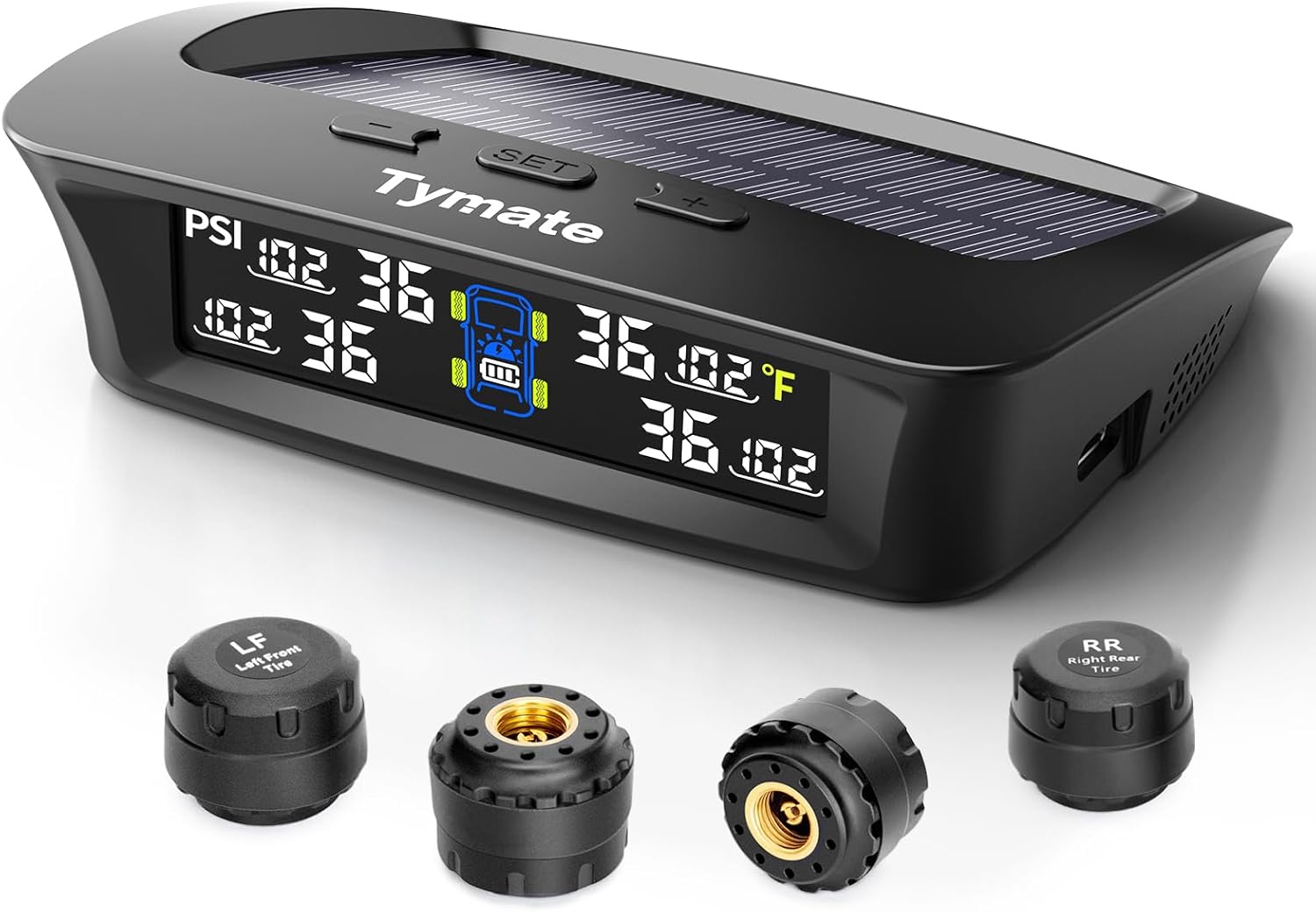
The Tymate TM3 RV TPMS delivers real-time tire pressure monitoring from 0 to 144 PSI with accurate readings and dependable wireless communication. It includes four external sensors with pre-pairing, six alarm modes for rapid leak, pressure extremes, temperature, and signal loss, plus an easy-reference setup for alert thresholds. Solar and USB-C charging help keep the display powered, while the color LCD and adaptive backlight improve visibility for safer driving and towing.

EVOULTES heavy duty tire inflator with an integrated gauge delivers accurate pressure readings from 10–120 PSI, helping you inflate, deflate, and check tires in one tool. The 16.5-inch extended dual-head air chuck with swivel base reaches hard-to-access dual wheel valves on trucks and RVs. A brass trigger core and side-mounted air release valve make operation smooth, with standard 1/4" NPT threading and quick-connect compatibility for easy setup.

The JACO FlowPro Tire Inflator measures, inflates, and airs down tires up to 100 PSI with battery-free operation and ±2% accuracy after calibration. It features a glowing pressure dial for night visibility, a heavy-duty steel build with a hybrid hose, and a precision push-to-inflate thumb trigger. The patented Lightning Air Chuck locks on for a secure seal, and the kit includes quick-connect hardware for easy inline use with your air compressor.
How Direct and Indirect TPMS Sensors Work
There are two main TPMS designs: direct TPMS and indirect TPMS. The National Highway Traffic Safety Administration describes direct systems as using sensors located in the tires, while indirect systems use wheel-speed and other vehicle sensor data to detect a likely pressure problem.
| System Type | What It Uses | What You’ll Notice |
| Direct TPMS | A pressure sensor inside each monitored wheel. | The valve stem may look rubber or metal. Some vehicles show individual tire pressures on the dash. |
| Indirect TPMS | ABS wheel-speed data and other vehicle data. | There is no in-tire pressure sensor to see. The system usually needs recalibration after pressure changes, tire rotation, or tire replacement. |
Under U.S. 49 CFR §571.138, a compliant TPMS must warn the driver when one or more tires is significantly underinflated. The federal rule ties the warning threshold to 25% below the vehicle manufacturer’s recommended cold inflation pressure or a specified minimum pressure, whichever is higher.
Signs Your TPMS Sensor Is Failing
A TPMS warning does not always mean the sensor itself is bad. First, check the actual tire pressure when the tires are cold. If pressure is correct and the light keeps coming back, then you can start looking for a sensor, relearn, or system problem.
- Solid TPMS light: Usually means at least one tire is significantly underinflated. Check all tires as soon as possible.
- Flashing light, then solid light: Usually means the TPMS has detected a malfunction, such as a failed sensor, dead sensor battery, incompatible wheel, or lost sensor signal.
- One missing tire-pressure reading: Often points to a sensor that is not transmitting or has not been relearned to the vehicle.
- Pressure readings that jump or disagree with a gauge: Could mean a sensor problem, but also check the gauge, tire temperature, and recent inflation changes.
- Air leaking at the valve stem: May point to a damaged seal, corroded stem, loose retaining nut, or old service kit.
Warning: Do not ignore a TPMS light. If a tire is significantly underinflated, driving can overheat the tire, damage the sidewall, reduce handling, and increase the risk of tire failure.
Where TPMS Sensors Are Mounted
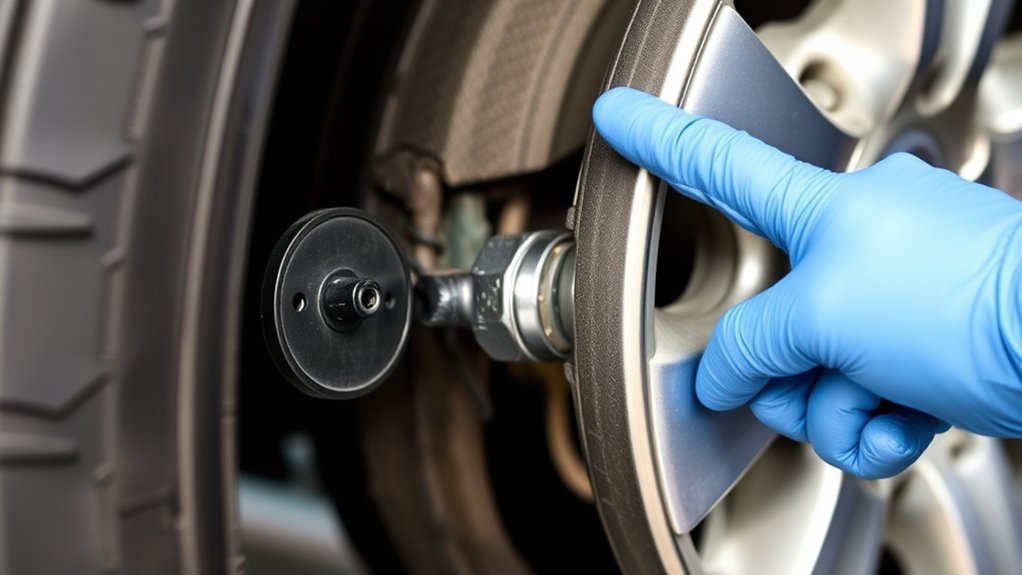
Direct TPMS sensors are usually mounted inside the tire, near the wheel rim, where they can measure air pressure from inside the tire cavity. Most are attached to the valve stem, although some older or specialty designs may use a band or different mounting system.
Sensor Mounting Locations
The most common mounting point is the valve stem hole in the wheel. The sensor body sits inside the wheel, and the valve stem passes through the rim so you can inflate the tire. This location lets the sensor measure the tire’s internal air pressure and transmit the data to the vehicle.
Because the sensor is inside the wheel, tire removal is normally required for direct TPMS replacement. That also means the tire should be balanced again after service if the work changes the wheel-and-tire assembly.
Valve Stem Placement
The valve stem is the small protrusion where air enters the tire. On many direct TPMS systems, the sensor is attached to the inside end of that stem. A rubber snap-in stem can look almost identical to a regular valve stem, while a metal clamp-in stem often has a visible nut at the wheel face.
Use the correct valve core, cap, seal, washer, and nut for the sensor style. Mixing the wrong hardware can cause leaks, corrosion, poor fitment, or sensor damage. If you are comparing replacement TPMS sensor options, match the sensor frequency, protocol, stem type, and vehicle fitment before buying.
What You Need to Install a TPMS Sensor
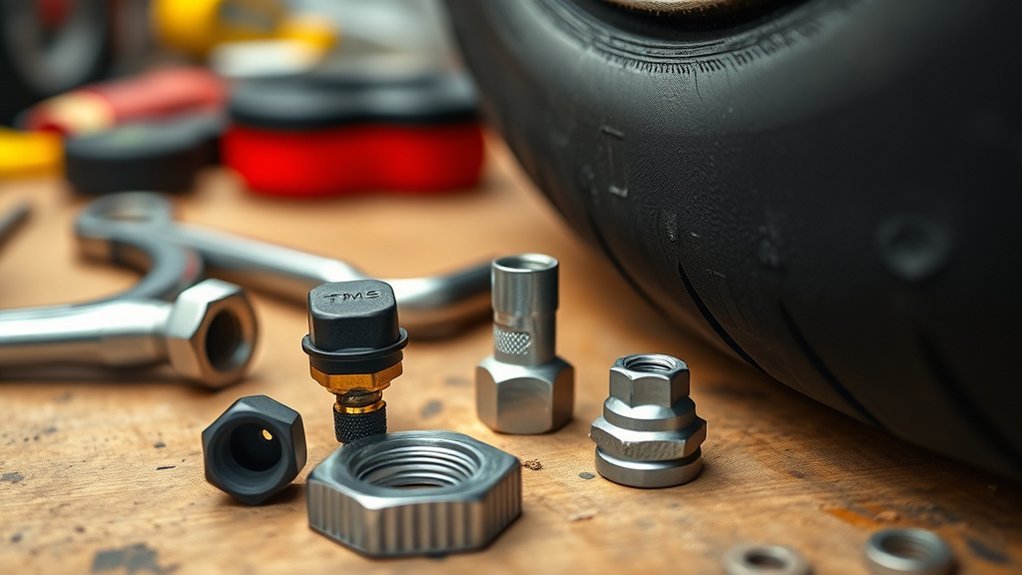
Installing a direct TPMS sensor is not the same as screwing on a valve cap. The tire must usually be removed from the wheel, the correct sensor must be installed with new sealing parts, and the sensor may need to be programmed or relearned to the vehicle.
Required Installation Tools
| Tool or Part | Purpose | Important Note |
| Tire machine | Breaks the bead and removes the tire safely. | Avoid prying near the sensor body. |
| TPMS service kit | Replaces seals, grommets, valve cores, caps, washers, or nuts as needed. | Use the kit made for that sensor style. |
| Inch-pound torque tool | Tightens the sensor hardware to specification. | Follow the vehicle or sensor manufacturer’s exact torque value. |
| TPMS scan or relearn tool | Activates, programs, or registers the sensor ID. | Some vehicles use a dash-menu relearn, while others require a tool. |
Key Setup Steps
- Confirm whether the vehicle uses direct or indirect TPMS.
- Match the replacement sensor to the vehicle, wheel style, frequency, and programming requirements.
- Demount the tire carefully so the sensor is not hit by the tire bead or tool head.
- Install the correct service kit and tighten hardware only to the specified torque.
- Inflate the tire to the cold pressure shown on the driver-door placard or owner’s manual.
- Perform the required TPMS relearn or programming procedure.
- Check for leaks at the valve stem and confirm the TPMS warning light stays off.
Pro Tip: If one direct TPMS sensor fails because of age, ask the shop to check the age and signal strength of the others. Replacing all sensors can make sense when they are the same age and already near the end of battery life, but it is not always required.
How Long TPMS Sensors Last
Direct TPMS sensors are sealed electronic parts with internal batteries. Those batteries are not normally replaceable, so a dead battery usually means the whole sensor must be replaced.
Many direct TPMS sensors last for several years, and it is common to see them fail as a vehicle gets older, especially after repeated tire changes, corrosion, road impact, or long exposure to heat and cold. A sensor can also fail early if the valve stem is damaged, the wrong valve core is installed, or the sensor is struck during tire service.
If your TPMS light appears soon after buying replacement tires, the issue may not be the tires themselves. It may be a sensor that was damaged, not relearned, or already near the end of its battery life.
[Products Worth Considering]

This roadside assistance kit helps drivers and passengers in urgent situations after an accident or breakdown, providing practical support while waiting for help. It includes a lightweight, compact tire inflator for fast inflation of standard vehicle tires, plus reinforced jumper cable protection for safer handling. Ideal for winter weather, road trips, camping, and travel, with everything stowed neatly in a trunk bag.

The AstroAI 2 pack air chucks provide a heavy-duty, closed-flow locking design that helps keep air flowing during inflation while securely attaching to the valve stem. Built with 250 PSI rated brass components and compatible with Schrader valves, they feature 1/4" female NPT threads for a wide fit with common inflators. The straight tip and locking clip make filling tires and monitoring pressure more convenient.
How to Check Tire Pressure and Tread
TPMS is an early warning system, not a replacement for basic tire maintenance. NHTSA recommends checking all tires, including the spare, at least once a month when the tires are cold. “Cold” means the vehicle has not been driven for at least three hours.
- Find the correct pressure on the Tire and Loading Information Label on the driver’s side door edge or doorjamb, or in the owner’s manual.
- Remove the valve cap and press a tire pressure gauge squarely onto the valve stem.
- Compare the reading to the vehicle placard, not the maximum pressure printed on the tire sidewall.
- Add air if the tire is low, then recheck the pressure with the gauge.
- Replace the valve cap to help keep dirt and moisture out of the valve core.
- Check tread depth at the same time. Tires are not safe and should be replaced when tread is worn to 2/32 inch.
A tread-depth gauge is the most accurate tool. The penny test can also help: place a penny into the tread with Lincoln’s head upside down and facing you. If you can see the top of Lincoln’s head, the tire should be replaced. If you drive often in rain or snow, you may want to plan replacement before reaching the legal minimum, especially if traction feels weak. Choosing the right tire for your driving conditions matters as much as choosing the right sensor, so compare all-season tire options and dependable all-season performance before replacing a set.
How to Reset a TPMS Light
Before resetting a TPMS light, make sure the pressure is correct in all tires. Do not reset the system to hide a low-pressure warning. That teaches some vehicles the wrong baseline and can delay the next warning.
- Check all tires cold and inflate them to the vehicle placard pressure.
- Check the spare tire too, especially if your vehicle monitors the spare.
- Start the vehicle and see whether the light turns off after a short drive.
- If the light stays on, follow the owner’s manual reset or calibration procedure.
- For indirect TPMS, use the reset button or vehicle menu only after all tires are correctly inflated.
- For direct TPMS, use the required relearn process if a sensor was replaced, wheels were swapped, or sensor positions changed.
- If the light flashes for about a minute and then stays on, treat it as a malfunction and schedule diagnosis.
Note: A reset button is not always under the steering wheel. Some vehicles use a dashboard menu, infotainment setting, scan tool, or automatic relearn drive cycle. The owner’s manual is the safest source for the exact reset procedure.
Why TPMS Sensors Matter for Safety
TPMS matters because low tire pressure affects braking, handling, tire life, and fuel use. According to NHTSA TireWise, newer vehicles have TPMS, but drivers should still perform monthly tire pressure checks because the system only warns when a tire is significantly underinflated.
NHTSA reports that 511 people died in tire-related crashes in 2024, which is why tire pressure, tread depth, and TPMS warnings deserve quick attention.
The legal background also matters. The TREAD Act required a rulemaking for a warning system in new motor vehicles to alert drivers when a tire is significantly underinflated. The later federal TPMS standard requires compliant systems to warn drivers of significant underinflation and to indicate certain malfunctions.
That does not mean the TPMS can catch every tire problem. It will not reliably warn you about bald tread, sidewall cuts, impact bubbles, old tires, or every sudden blowout. Pair the warning system with regular pressure checks, tread inspections, tire rotations, and good tire selection, whether you are shopping BFGoodrich tire options, best-selling tire choices, or Goodyear tire options.
Warning: Be careful with emergency tire sealants. Use only a product labeled as TPMS-safe, follow the tire and vehicle instructions, and tell the tire shop sealant was used. Some sealants can make sensor service messier or affect sensor operation if the wheel is not cleaned properly. For planned repairs, compare tire sealant options carefully instead of assuming every can is sensor-safe.
Frequently Asked Questions
What do sensors look like on tires?
On direct TPMS, the visible part often looks like a rubber or metal valve stem. The actual sensor is a small electronic module attached to the inside end of that stem, hidden inside the tire near the rim. Indirect TPMS has no visible in-tire pressure sensor.
Can I replace my TPMS sensors myself?
You can replace direct TPMS sensors yourself only if you have the correct tire equipment, service parts, torque tools, and relearn or programming procedure. Because the tire normally has to be demounted and resealed, many drivers should use a tire shop for safer installation and leak testing.
Can I still drive my car if the TPMS light is on?
You can usually drive a short distance to a safe place, but you should check tire pressure as soon as possible. If a tire is very low, do not keep driving on it. Inflate it, install the spare if needed, or call for roadside help to avoid tire failure or wheel damage.
What is the average cost to replace TPMS sensors?
The cost varies by vehicle, sensor type, labor rate, programming, and whether you replace one sensor or a full set. Ask for an installed price that includes the sensor, service kit, tire labor, programming or relearn, balancing if needed, and leak check.
Why does my TPMS light flash and then stay on?
A TPMS light that flashes for about 60 to 90 seconds and then stays on usually indicates a TPMS malfunction. Common causes include a dead sensor battery, missing sensor ID, damaged sensor, incompatible replacement wheel, or a relearn that was not completed.
Does the spare tire have a TPMS sensor?
Some spare tires have TPMS sensors, and some do not. Full-size spares are more likely to be monitored than temporary compact spares, but the exact setup depends on the vehicle. Check the owner’s manual and keep the spare inflated to the listed pressure even if it is not monitored.
Conclusion
Tire sensors are usually small TPMS modules hidden inside the wheel, most often attached to the valve stem. A rubber or metal valve stem may be the only part you can see from outside the tire. Direct TPMS uses in-wheel sensors, while indirect TPMS uses vehicle sensor data instead of a visible pressure sensor. When the TPMS light comes on, check tire pressure first, then look for sensor, reset, or relearn issues if the pressure is correct.
Sources
- NHTSA TireWise — tire pressure, tread depth, TPMS warnings, model year 2008+ TPMS coverage, and tire-related crash safety data.
- 49 CFR §571.138 — Tire Pressure Monitoring Systems — federal TPMS performance requirements, warning thresholds, and malfunction indicator behavior.
- Public Law 106-414, TREAD Act — legal background requiring a tire-pressure warning rulemaking for significantly underinflated tires.

Related Articles

Slashed Tire or Blowout? How to Tell the Difference
A slashed tire or blowout? Spot the clues fast, but one subtle sign could change everything.
Read More
How to Break a Car Window in an Emergency Safely
After an emergency, a few simple moves can break a car window safely—but one crucial choice could change everything.
Read More
How to Buy Car Insurance: Coverage Guide for Beginners
Choose the right car insurance coverage and compare smarter to avoid costly gaps—discover the key details beginners often miss.
Read More