
Is a 285 Tire the Same as a 33-Inch? Complete Size Comparison
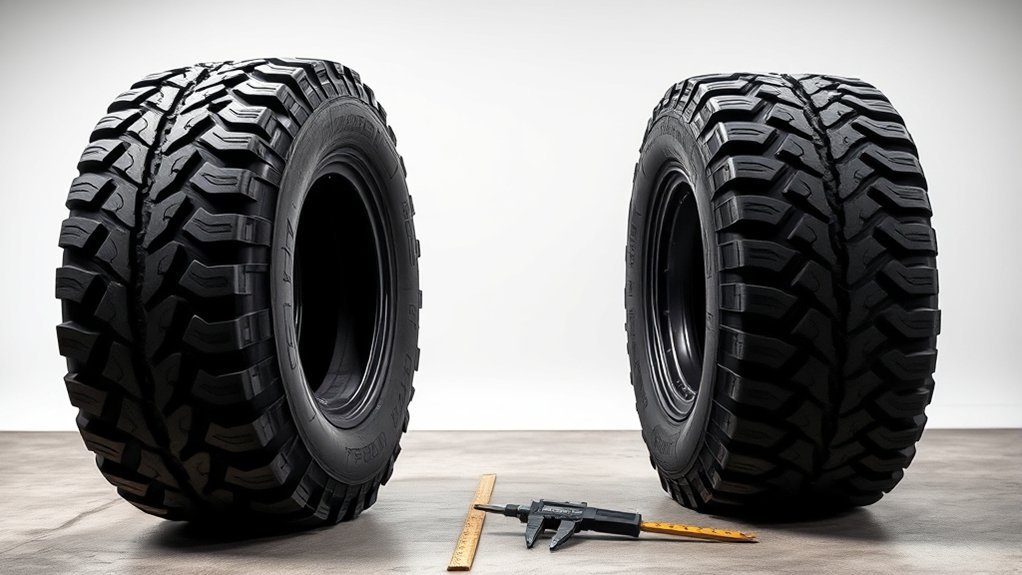
No, a 285 tire isn’t exactly the same as a 33-inch tire. A common 285/70R17 measures about 32.7 inches tall, so you’re close to a true 33, but not identical. A 33×12.50R17 is taller and much wider, which changes fitment, gearing, speedometer accuracy, and clearance. If you want a near-match with fewer modifications, 285s are often the better daily-driver choice, and there’s more to compare below.
Key Takeaways
- A 285/70R17 is not exactly a 33-inch tire; its diameter is about 32.7 inches.
- A true 33-inch tire is slightly taller and usually wider than a 285 tire.
- Common 285 alternatives include 295/70R17 and 33×10.50R17 for near-33 sizing.
- Fitment may require lift, trimming, or offset changes to avoid rubbing with 285 or 33-inch tires.
- Switching to 33-inch tires can affect speedometer accuracy, gearing, fuel economy, and handling.
What Is a 285 Tire, Really?
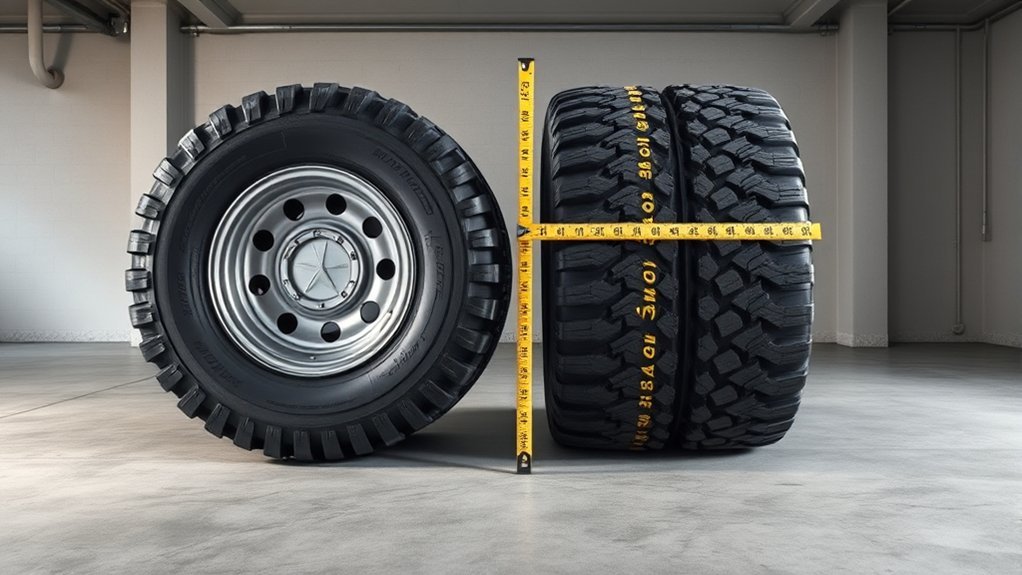
A 285 tire, specifically a 285/70R17, is not a true 33-inch tire; its 285 mm width and 70% aspect ratio produce a sidewall height of about 7.85 inches and an overall diameter of roughly 32.71 inches. You’re looking at a radial tire, and the “R” tells you the carcass uses radial construction, which can improve grip and fuel economy. In casual use, you may hear it called a “33,” but the metric spec gives you a more exact figure. If you’re fitting a JEEP WRANGLER, don’t guess—use a size calculator to check real dimensions and clearance. Manufacturers can vary slightly, so one 285 tire may measure differently from another. That small difference matters when you want precise fitment and the freedom to choose a setup that works without forcing compromise. Additionally, the importance of selecting the right winter tires ensures optimal performance in severe weather conditions.
How 285/70R17 Compares to 33-Inch Tires
Now that you know a 285/70R17 measures about 32.71 inches overall, the comparison to a true 33-inch tire becomes straightforward. You’re not looking at identical size; you’re comparing a slightly shorter, narrower tire size against a 33×12.50R17. The 285 tire measures 11.22 inches wide, while the 33-inch option is 12.52 inches wide, an 11.6% increase. That extra width changes how wider tires fill the wheel well and how the vehicle tracks on pavement and dirt. Circumference also differs: 102.76 inches versus 103.75 inches, so your speedometer can read a bit off and driveline behavior can shift. The sidewall is 7.85 inches tall, compared with 8.01 inches on the 33-inch tire, which slightly affects ground contact and off-road flex. If you want the freedom of a larger stance, remember that moving up may require speedometer recalibration and suspension attention.
What Are the Closest 285 Tire Equivalents?
If you’re looking for the closest equivalents to a 285/70R17, the best matches stay near its 32.71-inch diameter while balancing width and fitment. The tightest alternative is 305/65R17 at 32.61 inches, which stays within the 3% rule and preserves predictable gearing, steering, and fuel economy. Next, 33×10.50R17 measures 32.98 inches, offering a near-identical overall size with a slightly narrower footprint. If you want a marginally taller option, 295/70R17 reaches 33.26 inches and keeps performance changes modest. By contrast, 285/75R17 jumps to 33.83 inches, so it moves beyond a close match. You should also compare section width: a 285 tire’s 11.22-inch width feels different from a 33×12.50R17, which adds more tread width and mass. For the closest technical substitute, choose the size that keeps diameter, width, and fuel economy in the most controlled range. Additionally, consider tire performance features to ensure optimal handling and safety in various driving conditions.
How 285 Tires Affect Fitment and Clearance
A 285 tire, like a 285/70R17, measures about 32.71 inches in diameter and 11.22 inches wide, so you’ll usually have tighter wheel well clearance than with a true 33-inch tire. On stock suspension, you may need a lift or fender trimming to prevent contact during compression and steering. Wheel offset also matters, because the wrong setup can increase rub against fenders, liners, or suspension parts. Additionally, proper tire maintenance is crucial to ensure optimal performance and longevity of your tires.
Wheel Well Clearance
Wheel well clearance becomes a key fitment check with 285/70R17 tires, since their roughly 32.7-inch diameter is close to a true 33-inch and can still contact suspension parts or inner fenders during full steering lock or suspension compression. You need to evaluate clearance concerns before you buy, because small differences in wheel offset, tire width, and chassis design change suspension compatibility. On many stock setups, 285s fit cleanly, but you should verify your exact model and year. If you see interference, trimming options like minor fender work or bump stop adjustment can restore safe space without compromising control. The goal is freedom from rubbing, not guesswork. Compare your available room at ride height and under load, then choose a setup that clears confidently and performs predictably.
Lift And Trim Needs
Although 285/70R17 tires measure about 32.71 inches tall, they can still need a lift, trimming, or both to clear fenders and suspension components during full lock or compression. You’re making a tire height adjustment, not a simple cosmetic swap, because the extra section width changes how the wheel travels under load. Lift kits usually supply the needed clearance, but your exact setup depends on vehicle geometry and stock suspension limits.
- Lift height: add enough space for articulation.
- Suspension modifications: tune bump stops or related components.
- Fender trimming: remove only what interferes, keeping structure intact.
Compared with a true 33-inch tire, 285s sit slightly shorter, yet they can still demand precise fitment work.
Offset And Rub Issues
Offset plays a major role in whether 285 tires clear the fender wells or rub under load, because a 285/70R17 measures about 32.7 inches tall, not a true 33-inch, and its 11.22-inch width can shift the tire’s path closer to suspension parts and bodywork. You need the right tire offset to preserve suspension compatibility and keep rubbing issues in check. A +25 offset usually pulls the tread inward enough to reduce contact at the fender lip, while a negative offset pushes the tire outward and raises the risk of interference. On stock suspension, you may still need trimming or minor fender mods. Check bump stops, steering lock, and full suspension travel so articulation doesn’t trap your tire.
How 285-to-33 Swaps Change Performance
When you move from a 285/70R17 to a 33×12.50R17, you’ll change the effective gearing and speedometer calibration, and the truck may read about 7% slow. The wider 33-inch tire also increases contact patch area, so you’ll usually gain traction but lose some steering precision and fuel economy. Compared with the narrower 285, the 33 tends to feel more planted on loose surfaces while asking more from your suspension and drivetrain. Additionally, tire selection should consider balance between daily use and off-road performance, ensuring optimal handling and durability.
Speedometer And Gear Changes
Swapping from a 285/70R17 to a 33×12.50R17 changes the effective gearing, so your speedometer will read about 7% slower than your actual road speed because the 33-inch tire’s 33.03-inch diameter is slightly larger than the 285/70R17’s 32.71 inches. You’ll need speedometer calibration to keep your readings truthful and preserve the gear ratio you expect. This small diameter increase still has a measurable performance impact.
- Your odometer will undercount miles, which can skew maintenance intervals.
- Your fuel economy will usually drop 5-10% because the drivetrain works harder.
- Your stability and traction systems may need reprogramming to stay aligned.
If you want accurate data and uncompromised control, treat the swap as a precision change, not just a cosmetic upgrade.
Traction And Ride Feel
Moving from a 285/70R17 to a 33×12.50R17 changes more than stance; it changes how the tire contacts the road and terrain. You gain a wider footprint, so traction differences show up fast in mud, sand, and deep snow, where the 12.52-inch tire floats better and claws harder. On slick pavement, the 285’s narrower 11.22-inch section usually tracks cleaner and resists wandering. That gives you better steering precision and ride comfort for daily driving. The 33-inch tire can feel firmer and follow road irregularities more closely, but it also improves off road performance when you need grip and a broader contact patch. Because the 285 is slightly shorter, it often feels more composed; the 33 lets you trade some refinement for liberation.
When a 285 Makes More Sense Than 33s
If you want a setup that’s easier to live with on the street, 285/70R17s often make more sense than true 33s. You’re getting about 32.7 inches of diameter, so you sacrifice little ground clearance while gaining practical efficiency. The smaller footprint can free your drivetrain from extra drag and reduce fitment stress.
- Fuel efficiency benefits: You can see about 5-10% better economy because 285s create less rolling resistance than wider 33×12.50s.
- Handling advantages: Their 11.22-inch width gives you sharper on-road stability and less wander on pavement, especially at speed.
- Comfort improvements: You’ll usually feel fewer road grooves and irregularities on highways, which makes long drives calmer.
If you want to avoid lifts, trimming, or other major changes, 285s are the cleaner choice. They let you move with more freedom, keep the build simple, and still look substantial without the compromises true 33s can demand. Additionally, the all-season performance of tires like the Fullway HP108 can enhance your driving experience in various conditions.
Frequently Asked Questions
How Much Bigger Is a 33 Than a 285?
A 33-inch tire is about 0.3 inches taller than a 285, so you’re looking at a small but real Tire diameter differences. The 33×12.50R17 also runs about 1.3 inches wider, which can improve Off road performance and ground contact. With Metric tire conversions, you can see the 285/70R17 sits near 32.7 inches, while the 33 measures about 33.0. You gain a bit more clearance, not a dramatic change.
Are 285s 33s or 35s?
285s are 33s, not 35s—though the truth’s a little more subtle. In metric vs imperial terms, a 285/70R17 measures about 32.7 inches tall, so you’re right on the edge of a 33. A tire width comparison shows they’re narrower than a 33×12.50R17, which can slightly change off road performance. You’ll gain clearance and freedom from guesswork, but they aren’t true 35s.
What Tire Size Is Equal to 33?
A 33-inch tire is usually a 33×12.50R17 in tire conversions, or a metric size like 295/70R17. If you want something closer in diameter, 285/75R17 measures about 33.8 inches, while 33×10.50R17 sits near 33.0. You’ll keep better fitment if you stay within 3% difference. Choose based on your clearance, gearing, and off road performance goals, not just the label.
Is a 285 Close to a 33?
Yes—you’re nearly there: a 285 is close to a 33. Your tire dimensions matter, though; a 285/70R17 measures about 32.7 inches, so it’s roughly 1.3 inches short of a true 33-inch tire. In size conversions, that’s about a 3% difference. For off road performance, you’ll usually get compatible clearance and confident capability, but you shouldn’t call it a full 33.
Conclusion
So, is a 285 tire the same as a 33-inch tire? Not exactly. A 285/70R17 is usually a bit shorter, but it’s close enough that many setups treat it as a 33-inch equivalent. You should compare actual diameter, width, and sidewall before you decide. If you want tighter fitment and better clearance, 285s can be the smarter choice. Think of tire sizing like tuning a machine: small changes still shift the whole system.

Related Articles
How Wide Is a 235 Tire? Exact Width & Fitment Guide
Mysteriously, a 235 tire’s true width and ideal fitment may surprise you—discover the exact numbers before choosing the wrong wheel.
Read More
How Wide Is a 225 Tire? Exact Width & Fitment Guide
Worried about tire fitment? Discover the exact width of a 225 tire, why rim choice matters, and what could change your setup.
Read More
How to Select the Right Tire: What to Look for When Buying
Learn how to choose the right tire by decoding size, ratings, and tread clues—before a small mistake costs you comfort, safety, or money.
Read More