
How Wide Is a 245 Tire? Exact Width & Fitment Guide
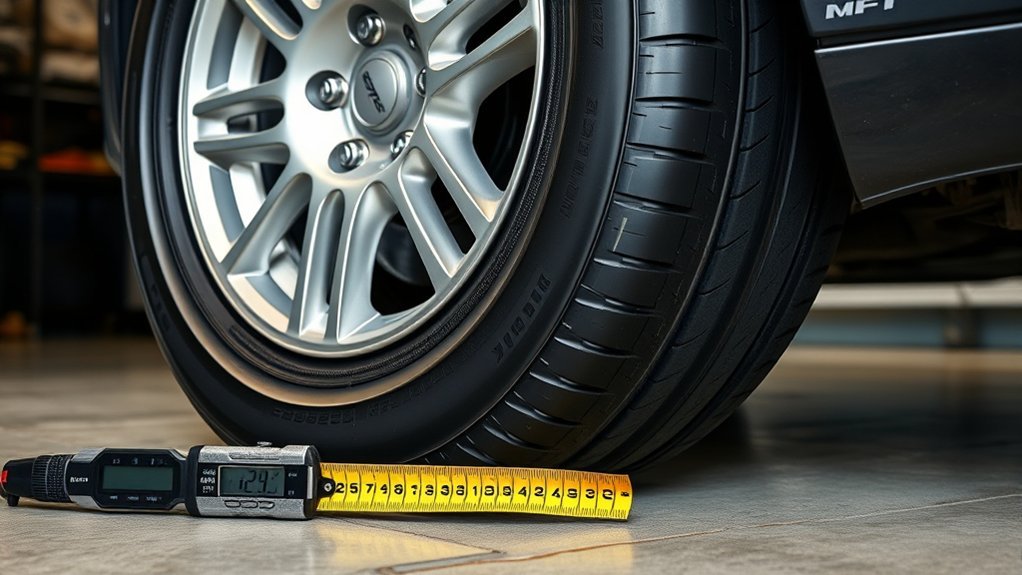
A 245 tire is about 245 millimeters wide at its nominal section width, which converts to roughly 9.65 inches. That number helps you compare tire width, but it does not tell the whole fitment story. The aspect ratio, wheel diameter, approved rim-width range, offset, load index, speed rating, and vehicle clearance all decide whether a 245 tire will actually fit your car safely.
Last updated: July 7, 2026 · Reviewed against Michelin, NHTSA, USTMA, Tire Industry Association, and Tire Rack references.
Quick Answer
A 245 tire has a nominal section width of 245 mm, or about 9.65 inches. It is wider than a 235 by 10 mm and wider than a 225 by 20 mm. For safe fitment, check the exact tire’s approved rim-width range, your vehicle placard, and wheel-well clearance before installing it.
Key Takeaways
- A 245 tire is 245 mm wide at the nominal section width, which equals about 9.65 inches.
- The 245 number is not the exact tread width or guaranteed contact-patch width; tread width varies by tire model and rim width.
- There is no single universal rim width for every 245 tire. Many 245 passenger/SUV sizes fall around the 7- to 9.5-inch range, but the tire manufacturer’s spec sheet is the final source.
- A 245 is 10 mm wider than a 235, 20 mm wider than a 225, and 10 mm narrower than a 255.
- Before upgrading, confirm load index, speed rating, wheel width, offset, overall diameter, tire pressure, and clearance at full steering lock.
How Wide Is a 245 Tire?
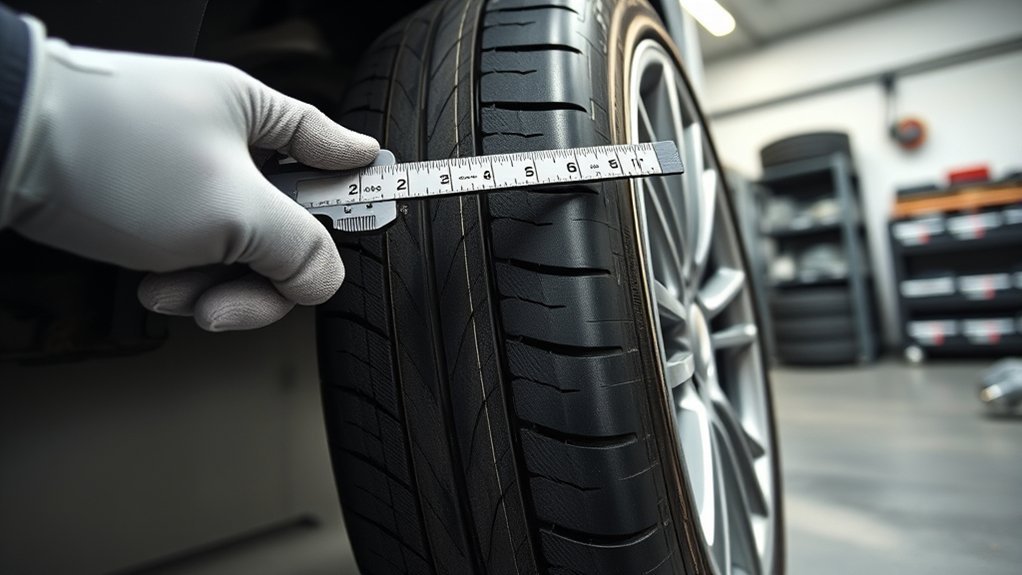
A 245 tire is listed as 245 millimeters wide. In inches, the conversion is simple:
245 mm ÷ 25.4 = 9.65 inches
The important detail is that 245 refers to the tire’s nominal section width, which is the widest sidewall-to-sidewall measurement when the tire is mounted on its measuring rim. It is not the same as tread width. The tread that touches the road can be narrower, and the real contact patch changes with tire pressure, load, alignment, tire compound, tread design, and rim width.
That means a 245 tire usually gives you a wider footprint than a 235 tire in the same tire family, but you should not assume every 245 tire has the same tread width or behaves the same way. A touring all-season 245, a summer performance 245, and an all-terrain 245 can feel very different even when the size code starts with the same number.
[Products Worth Considering]
This ball pump needles kit includes brass ball needles for inflating footballs, soccer balls, basketballs, and volleyballs, plus conical nozzles for air mattresses, exercise...
What Does 245 Mean on a Tire Size?
In a size like 245/45R18, the first number is only one part of the code. Tire makers use the full code to describe width, sidewall profile, construction, and wheel diameter. Michelin explains tire markings as a combination of section width, aspect ratio, construction type, rim diameter, load index, and speed rating.
| Example Code | What It Means |
|---|---|
| 245 | Nominal section width in millimeters |
| 45 | Aspect ratio; sidewall height is 45% of 245 mm |
| R | Radial construction |
| 18 | Wheel diameter in inches |
Note: Two tires can both be “245” wide but have different sidewall heights, diameters, load ratings, and approved rim widths. Always read the complete size code, not just the first number.
What Is a 245 Tire in Inches and Millimeters?
A 245 tire is 245 mm across its nominal section width, or about 9.65 inches. The tire’s overall height depends on the second number in the size code, called the aspect ratio.
Use this formula to estimate sidewall height and overall diameter:
- Sidewall height in mm: section width × aspect ratio
- Sidewall height in inches: sidewall height in mm ÷ 25.4
- Overall tire diameter: wheel diameter + two sidewalls
| Tire Size | Approx. Section Width | Approx. Sidewall Height | Approx. Overall Diameter |
|---|---|---|---|
| 245/40R18 | 9.65 in | 3.86 in | 25.7 in |
| 245/45R18 | 9.65 in | 4.34 in | 26.7 in |
| 245/50R18 | 9.65 in | 4.82 in | 27.6 in |
| 245/60R18 | 9.65 in | 5.79 in | 29.6 in |
These are calculated estimates. Actual specs can vary slightly by tire model, measuring rim, construction, and manufacturer data.
What Wheel Width Fits a 245 Tire?
A 245 tire does not have one universal wheel-width answer. The right wheel width depends on the full tire size and the tire manufacturer’s approved rim-width range. As a practical starting point, many 245 passenger and SUV sizes land somewhere around 7 to 9.5 inches, but the exact range can be narrower or wider.
For example, a 245/45R18 Bridgestone WeatherPeak spec listing shows an approved rim-width range of 7.5 to 9 inches. A different 245 size, such as 245/40R18 or 245/60R18, may use a different approved range. That is why you should search by the exact size and tire model, not just “245 tire.”
Warning: Do not mount a tire on a wheel outside the tire maker’s approved rim-width range. A rim that is too narrow can pinch the tire; a rim that is too wide can stretch the sidewall. Either case can hurt handling, wear, bead seating, and safety.
What Rim Size Fits a 245 Tire?
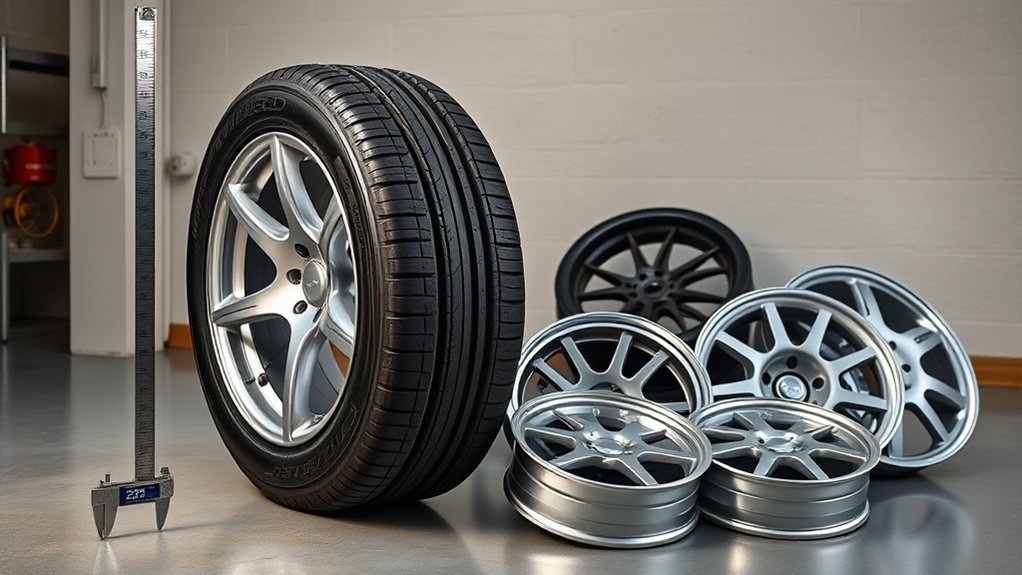
Rim size has two separate parts: diameter and width. The diameter must match the tire code exactly. A 245/45R18 tire must go on an 18-inch wheel. A 245/45R19 tire must go on a 19-inch wheel. You cannot safely mix tire bead diameter and wheel diameter.
Wheel width is more flexible, but only within the tire’s approved range. A 245 tire often works on a wider rim than a 225 or 235, but the exact width depends on sidewall height and tire construction. Lower-profile performance 245s often need wider wheels than taller-profile SUV 245s.
Pro Tip: When checking fitment online, search the full tire size and model, such as “245/45R18 [tire model] specs,” then look for “approved rim width,” “measured rim width,” “section width,” “overall diameter,” “load index,” and “revolutions per mile.”
How to Check If 245 Tires Fit Your Car
Use this quick workflow before buying or installing 245 tires. It takes a few minutes and can prevent rubbing, incorrect speedometer readings, and unsafe load-capacity mistakes.
At a Glance
| Time Required | 10–20 minutes before ordering; longer if test-fitting wheels |
| Difficulty | Easy for basic checks; professional help recommended for non-OE sizes |
| Tools Needed | Owner’s manual, tire placard, tire spec sheet, tape measure, tire-pressure gauge |
| Cost | Free for research; possible shop fee for professional test fitment or alignment check |
- Check the tire placard and owner’s manual. NHTSA recommends using the original tire size or another size recommended by the vehicle manufacturer.
- Match the wheel diameter exactly. An R18 tire needs an 18-inch wheel. An R17 tire needs a 17-inch wheel.
- Confirm approved rim width. Use the tire manufacturer’s spec sheet for the exact tire size and model.
- Compare overall diameter. A larger or smaller diameter can affect speedometer reading, ABS, traction control, gearing, and fender clearance.
- Check load index and speed rating. Tire Industry Association guidance says not to install a tire with a lower load index than the original equipment tire listed on the placard or owner’s manual.
- Measure clearance. Check inner suspension clearance, fender clearance, brake clearance, and clearance at full steering lock.
- Account for wheel offset. A wider tire on the wrong offset can rub the strut, fender liner, or outer fender even if the tire diameter looks close.
- Keep AWD/4WD systems matched. On many AWD and 4WD vehicles, mismatched tire diameter or tread depth can stress the drivetrain. Follow your owner’s manual.
- Set cold tire pressure correctly. Use the vehicle placard or the updated pressure recommendation from a qualified tire professional if the tire size changes.
How Do 245 Tires Compare to 235 Tires?
A 245 tire is 10 mm wider than a 235 tire. That is about 0.39 inches. If both tires are from the same model line and have the same wheel diameter and similar aspect ratio, the 245 will usually have a wider section width and may give stronger dry grip. The tradeoff can be more weight, more rolling resistance, higher road noise, and a greater chance of rubbing.
| Comparison | Width Difference | Practical Meaning |
|---|---|---|
| 245 vs 225 | 245 is 20 mm wider | Bigger jump; clearance and wheel-width checks matter more |
| 245 vs 235 | 245 is 10 mm wider | Moderate increase; often considered when upgrading grip |
| 245 vs 255 | 245 is 10 mm narrower | Slightly less width; may help clearance and efficiency |
Width and Fitment
Moving from 235 to 245 can work well when the wheel width, offset, load rating, and overall diameter stay within a safe range. Still, 10 mm can matter if your current tire already sits close to the fender liner, strut, control arm, or suspension components.
Performance Differences
With the same tire model and compound, a 245 can feel more planted than a 235 during dry cornering because it usually offers a wider casing and potentially a wider tread. But tire compound, tread pattern, temperature, and road surface often matter more than width alone. A high-quality 235 can outperform a poor 245.
How Do 245 Tires Affect Handling?
245 tires can improve handling when they are properly matched to the wheel and vehicle. The potential benefits include stronger dry grip, a more stable feel in corners, and sharper steering response. That is why 245 sizes are common on sport sedans, performance coupes, crossovers, and some SUVs.
The downside is that wider tires can also follow road grooves more, feel heavier at the steering wheel, and create more road noise. If the wheel is too narrow, too wide, or has the wrong offset, handling can get worse instead of better.
Note: Wider is not automatically better in rain, snow, or standing water. Tire design, tread depth, compound, and siping are critical. In some winter conditions, a narrower tire can cut through slush and snow more effectively.
How Do 245 Tires Affect Fuel Economy?
A 245 tire can reduce fuel economy compared with a narrower tire, but the exact change is not a fixed number. The effect depends on tire weight, rolling resistance, tread compound, tread pattern, inflation pressure, vehicle alignment, wheel weight, and driving speed.
NHTSA explains that tire design influences fuel efficiency and that lower rolling resistance can improve fuel economy. So, a low-rolling-resistance 245 tire may use less fuel than a heavy, aggressive, high-rolling-resistance 235 tire. Width matters, but it is only one part of the fuel-economy picture.
Rolling Resistance Impact
Rolling resistance is the energy a tire loses as it rolls and flexes. A wider tire can add rolling resistance if it is heavier or has a larger, stickier tread. However, modern tire design can reduce rolling resistance through casing design, tread compound, and tread pattern.
MPG Trade-Offs
Instead of assuming a 1–4 MPG loss, treat MPG as a vehicle-specific result. A small sedan, heavy SUV, hybrid, EV, or performance car can respond differently to a 245 tire. If efficiency is a priority, compare the exact tire model’s weight, rolling-resistance positioning, UTQG rating, and owner-tested fuel economy reports before buying.
Driving Conditions Effect
Fuel-economy changes show up most when you drive at steady speeds, accelerate often, or use heavier wheels and tires. Poor tire pressure can make the loss worse. NHTSA recommends checking tire pressure when tires are cold and using the pressure listed on the vehicle label or owner’s manual.
Will 245 Tires Fit Your Car?
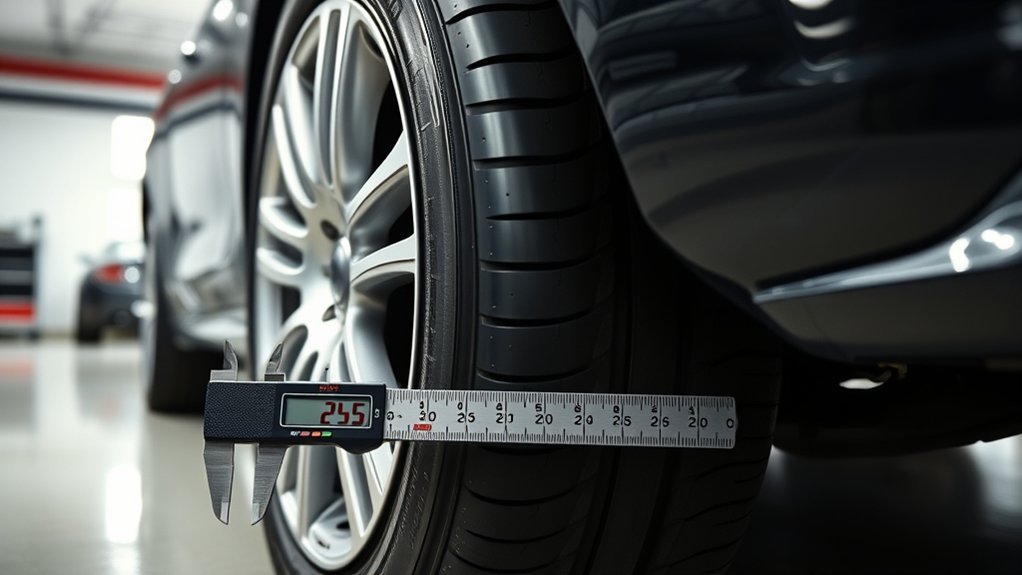
245 tires may fit your car if the complete size, wheel width, wheel offset, load index, speed rating, and overall diameter match your vehicle’s requirements. The fastest first check is the tire placard on the driver’s door jamb and the owner’s manual. USTMA advises drivers not to guess when replacing tires and to use the vehicle’s tire specifications, owner’s manual, and a local tire professional when needed.
| Check | What to Confirm |
|---|---|
| Vehicle placard | Original size, pressure, load index, and speed rating |
| Wheel diameter | Must match the tire code exactly, such as R18 on an 18-inch wheel |
| Wheel width | Must fall within the exact tire’s approved rim-width range |
| Offset and clearance | No rubbing at fender, strut, control arm, brake parts, or liner |
| Overall diameter | Close enough to avoid speedometer, ABS, gearing, or AWD issues |
If your car barely clears its current tires, a 245 can rub even if it looks close on paper. Measure carefully and test for interference before driving normally.
Frequently Asked Questions
How much wider is a 245 tire than a 225?
A 245 tire is 20 mm wider than a 225 tire, which is about 0.79 inches. That is a noticeable width increase, so check wheel width, offset, fender clearance, and overall diameter before upgrading.
Are 245 tires considered wide?
Yes, 245 tires are generally considered moderately wide for passenger cars and many crossovers. They are not extreme, but they are wide enough that rim width, offset, and clearance need to be checked carefully.
Which tire is wider, 245 or 255?
A 255 tire is wider than a 245 tire by 10 mm, or about 0.39 inches. The 255 may add grip in some setups, but it also needs more clearance and may create more rolling resistance or rubbing risk.
Which tire is wider, a 235 or a 245?
A 245 tire is wider than a 235 tire by 10 mm. That is a small but meaningful change for fitment, especially if your current tires already sit close to the fender liner or suspension.
Is 245 the tread width?
No. The 245 number is the tire’s nominal section width in millimeters, measured sidewall to sidewall. Tread width is the rubber area across the tread face and can vary between tire models even when the section width is the same.
What rim width do I need for 245 tires?
Many 245 tire sizes use wheels somewhere around 7 to 9.5 inches wide, but there is no single answer for every 245 tire. Check the approved rim-width range for your exact size and tire model before mounting.
Can I replace 235 tires with 245 tires?
Sometimes, yes, but only if the 245 size matches your wheel width, load index, speed rating, overall diameter, and clearance needs. Check your owner’s manual and tire placard first, then confirm fitment with a tire professional.
Will 245 tires hurt fuel economy?
They can, but not always. A wider or heavier 245 tire may increase rolling resistance, while a low-rolling-resistance 245 may perform better than a heavier narrow tire. Tire design, pressure, alignment, and driving style all affect MPG.
Will 245 tires fit on an 8-inch wheel?
Often, but not always. An 8-inch wheel falls inside the published rim-width range for many 245 sizes, including some 245/40R18, 245/45R18, and 245/60R18 tires. Still, you must check the exact tire model’s approved rim-width range before mounting.
How tall is a 245/45R18 tire?
A 245/45R18 tire is about 26.7 inches tall by formula. The sidewall is about 4.34 inches, and the 18-inch wheel diameter adds to both sidewalls. Actual published diameter can vary slightly by tire model.
Conclusion
A 245 tire is 245 mm wide at its nominal section width, or about 9.65 inches. That makes it wider than a 235 and narrower than a 255, but width alone does not guarantee fitment. To choose safely, read the full tire size, confirm the exact approved rim-width range, match or exceed the required load index and speed rating, compare overall diameter, and check clearance before driving. If you are moving away from the size listed on your vehicle placard, have the fitment reviewed by a qualified tire professional.
Sources
- Michelin — Tire markings explained — backs up section width, aspect ratio, rim diameter, load rating, and speed rating definitions.
- NHTSA Tire Safety Brochure — backs up using the vehicle placard, owner’s manual, and manufacturer-recommended replacement tire sizes.
- USTMA — Replacing Tires — backs up checking vehicle tire specifications and consulting a tire professional.
- Tire Industry Association — Tire Replacement — backs up load-index and tire-placard safety guidance.
- NHTSA TireWise — backs up tire pressure, fuel efficiency, and rolling-resistance guidance.
- Tire Rack — Bridgestone WeatherPeak specs — example of a 245/45R18 tire’s approved rim-width range and size-specific specifications.

Related Articles

What Is a Fat Tire? Complete Guide & Best Options
I’ll show you what makes fat tires different, which setups work best, and why the right choice could change your ride.
Read More
What Does W Mean on a Tire? Load, Speed & Rating Guide
Huh, what does W on a tire really mean, and why could choosing the wrong rating affect your safety and performance?
Read More
What Does Tire Flipping Work? Muscles, Benefits & Workout Guide
Strong tire flips hammer your entire body, but which muscles and benefits matter most?
Read More