Tire Construction Types: Radial vs. Bias Ply for Your Toyota RAV4
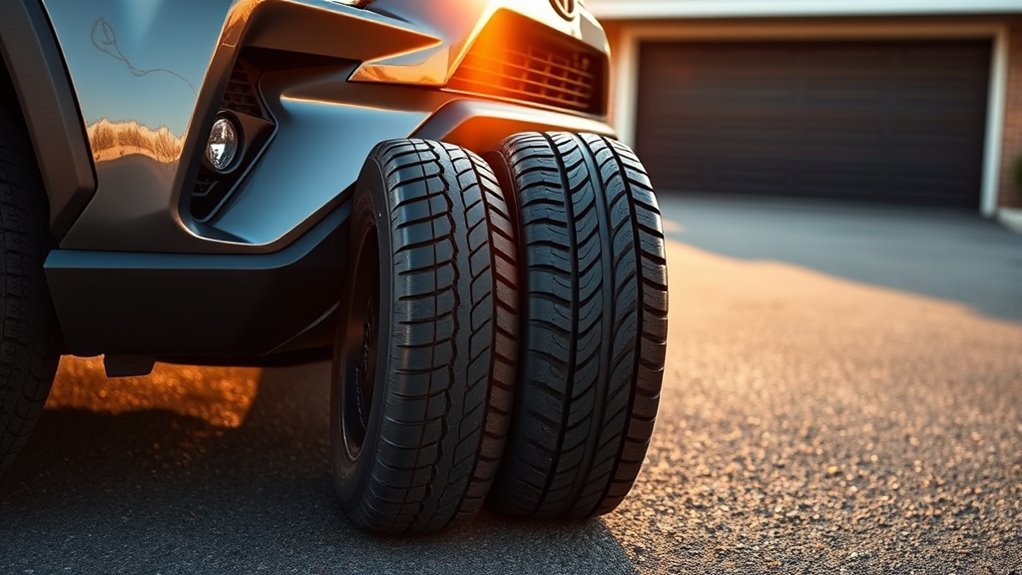
Choosing between bias ply and radial tires for a Toyota RAV4 is not really a coin toss. For normal RAV4 driving, radial tires are the correct choice because they match modern SUV design, highway speeds, fuel economy needs, and everyday comfort. Bias ply tires still have a place in specialty off-road, agricultural, trailer, and vintage applications, but they are usually not the right fit for a modern RAV4.
Quick Answer
For a Toyota RAV4, choose radial tires in the size, load rating, and speed rating listed in your owner’s manual or on the driver-side Tire and Loading Information Label. Bias ply tires are mainly for specialty uses and should not be mixed with radial tires on the same vehicle.
Key Takeaways
- Radial tires are best for most Toyota RAV4 owners because they provide smoother ride quality, better highway stability, cooler running, and more even tread wear.
- Bias ply tires use diagonal crisscrossed plies and are better suited to low-speed specialty work, vintage restorations, some trailers, and rugged off-road equipment.
- Never mix radial and bias ply tires on your RAV4, because the different sidewall behavior can hurt handling and stability.
- Always match the tire size, load index, speed rating, and inflation pressure recommended by Toyota, not just the tire construction type.
At a Glance
| Best Choice for Most RAV4 Drivers | Radial tires |
| Check Before Buying | Tire size, load index, speed rating, UTQG rating, and Toyota’s inflation pressure |
| Tools Needed | Owner’s manual, driver-side doorjamb label, tire pressure gauge |
| Main Safety Rule | Do not mix radial and bias ply tires |
Understanding Bias Ply Tires and Their Benefits
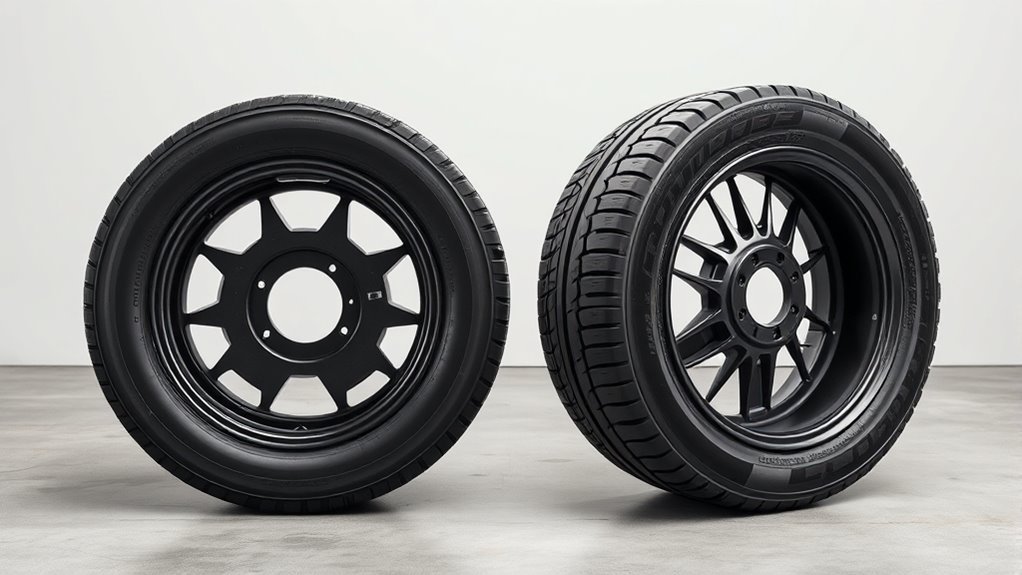
A bias ply tire is built with ply cords that run diagonally across the tire from bead to bead. The next layer runs in the opposite diagonal direction, creating a crisscross structure. The official federal definition describes bias ply tire cords as being laid at alternate angles substantially less than 90 degrees to the centerline of the tread.
This construction makes the sidewall and tread work more like one connected structure. That can be useful in certain low-speed or high-impact situations, especially where a stiff casing and sidewall cut resistance matter more than highway comfort.
Bias ply tires can still make sense for:
- Classic vehicle restorations where the owner wants period-correct tire appearance and behavior.
- Some trailers and farm equipment that operate at lower speeds and need stiff sidewalls.
- Dedicated off-road or specialty vehicles where rugged sidewall behavior is more important than smooth highway handling.
- Short-distance work applications where cost and impact resistance matter more than tread life or fuel economy.
For a Toyota RAV4, though, those benefits usually do not match the way the vehicle is designed to be driven. The RAV4 is a modern crossover SUV built for radial passenger or light-truck-style tires that meet the correct size, load, and speed specifications.
Warning: Do not install trailer-only, agricultural, racing, or off-road-only bias ply tires on a Toyota RAV4 for normal road use. Use tires approved for passenger vehicles and match Toyota’s tire size and load requirements.
Discover the Construction and Advantages of Radial Ply Tires
A radial tire uses ply cords that run at about 90 degrees to the centerline of the tread. Most modern passenger and SUV radial tires also use belt layers under the tread to help stabilize the contact patch. This design lets the sidewall flex while the tread area stays more stable on the road.
That separation between sidewall movement and tread movement is why radial tires are the normal choice for modern vehicles like the Toyota RAV4. They are better suited to highway speeds, daily commuting, long trips, wet-road grip, and predictable steering response.
Enhanced Flexibility Features
Radial tires are flexible where they need to be and stable where it matters most. The sidewalls can absorb bumps, while the belted tread area keeps a flatter footprint on the pavement. For a RAV4 driver, that means better ride comfort, more controlled cornering, and steadier handling on highways and city streets.
Superior Heat Management
Heat is one of the biggest enemies of tire life. Radial construction generally runs cooler than bias ply construction during sustained road use because it creates less internal friction. Better heat control helps reduce tread wear, supports highway stability, and can improve fuel efficiency through lower rolling resistance.
For most RAV4 owners, the best tire is not simply “radial” — it is a radial tire that matches Toyota’s required size, load rating, speed rating, and recommended cold inflation pressure.
Bias Ply vs. Radial Tires: Key Differences
When comparing bias ply vs. radial tires for a Toyota RAV4, the most important difference is how each tire’s internal cords are arranged. That construction affects ride comfort, heat, tread wear, stability, and how the tire behaves when steering or braking.
| Feature | Radial Tires | Bias Ply Tires |
|---|---|---|
| Cord angle | About 90 degrees to the tread centerline | Diagonal crisscross pattern |
| Ride comfort | Smoother and more controlled | Firmer and rougher on pavement |
| Highway stability | Strong choice for daily driving and long trips | Less suitable for sustained highway use |
| Heat buildup | Runs cooler under normal road use | Can build more internal heat at speed |
| Best use | Modern cars, SUVs, crossovers, highway driving | Specialty off-road, vintage, trailer, farm, and low-speed uses |
| Best fit for Toyota RAV4? | Yes, for nearly all drivers | Usually no |
[Products Worth Considering]

This digital tire pressure gauge combines a sturdy pistol grip inflator with a backlit 0.1 PSI display for quick, accurate readings in any lighting condition. Its 360° swivel gauge and 20" rubber hose make it easy to use and store, while the integrated inflate/deflate trigger and ¼" NPT air inlet provide fast, reliable tire maintenance.

The GERCHWAY tire inflator combines a durable rubber‑protected gauge with a 360° swivel air chuck for hands‑free operation and reliable sealing on any valve. Its 100 PSI range delivers ±2 PSI accuracy, making it ideal for most passenger and light‑truck tires. The battery‑free design ensures you can measure, inflate, or deflate without worrying about power loss, while the universal ¼ NPT connection fits any standard compressor.

The WORKPRO digital tire pressure gauge with inflator offers precise 0.1 PSI resolution and ±1% accuracy for reliable tire inflation across vehicles and inflatables. Built with heavy‑duty aluminum alloy, brass, and rubber, it resists rust and drops while delivering deflation, inflation, and pressure checking functions. The kit includes valve caps, adapters, a twist‑on chuck, screwdriver, nozzles, needle, seal tape, and a storage bag with batteries, making it a versatile, portable solution for on‑the‑go tire maintenance.
Construction Differences
Radial tire cords run outward from bead to bead at about a right angle to the tread. The tread belt area helps keep the contact patch stable. Bias ply cords run diagonally and cross over one another, which makes the whole tire casing act as one more unified structure.
This is why radial tires feel more planted on pavement. When you turn a RAV4 on a highway ramp or brake on a wet road, you want the tread to stay stable and evenly planted. Radial construction supports that better than bias ply construction.
Performance Characteristics
For daily RAV4 driving, radial tires usually win in the areas that matter most: comfort, predictable handling, wet traction, heat control, tread life, and fuel efficiency. Bias ply tires can be tougher in some specialty environments, but that toughness comes with trade-offs on paved roads.
Note: “Radial” alone does not guarantee a good tire. Compare treadwear, traction, temperature rating, warranty, road noise, snow rating, and the type of driving you do most often.
How Tire Construction Affects Performance in Your RAV4
Tire construction directly affects how your Toyota RAV4 feels on the road. It changes how the tire flexes, how much heat it produces, how evenly the tread wears, and how confidently the vehicle responds to steering input.
- Ride comfort: Radial tires let the sidewall absorb bumps while the tread stays stable, giving your RAV4 a smoother ride on highways and rough city streets.
- Traction and stability: A radial tire’s flatter contact patch helps maintain grip during braking, cornering, and wet-weather driving.
- Fuel efficiency: Radial tires usually have lower rolling resistance than bias ply tires, which can help reduce wasted energy.
- Tread wear: Radials typically wear more evenly when properly inflated, rotated, and aligned.
- Heat control: Radial construction is better suited to sustained highway driving because it generally manages heat more effectively.
Bias ply tires may feel strong and rugged at low speeds, but they are not usually ideal for a RAV4 that spends most of its time commuting, running errands, carrying family, or driving long distances.
[Products Worth Considering]

The Milton 555e digital tire inflator delivers fast, accurate pressure readings with a backlit display and multiple unit options, making tire inflation quick and easy. Its durable 20" EPDM rubber hose and grip‑head chuck provide reliable connection, while the ±1 PSI accuracy ensures precise inflation for cars, bikes, and trucks.

The Milton 507KIT delivers fast, accurate tire inflation, deflation and pressure measurement with a backlit LCD gauge and 14" rubber hose. Its 3‑in‑1 design meets ANSI/ASME standards and provides readings from 0‑250 PSI with 0.1 PSI resolution. The ergonomic pistol‑grip body and brass lock‑on chuck make one‑handed operation effortless, while the auto‑off feature conserves battery life.

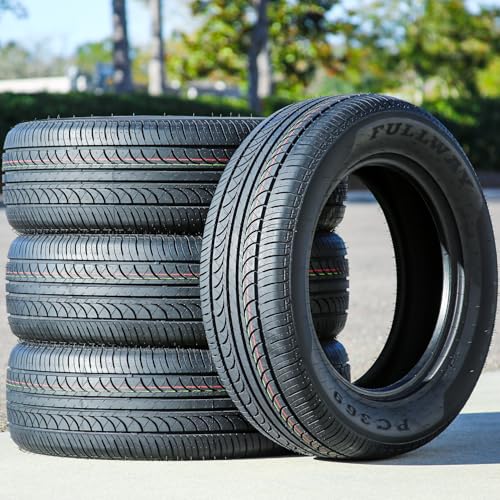
Size: 225/60R17, Tire Only - Wheel/Rim Not Included. We offer a complimentary Road Hazard Warranty for each of our tires--Coverage applies to specific failures such as bulges, air leaks, or blowouts occurring within 3 years of purchase and and within the first 4/32nds of an inch of tread wear (Since October 1, 2025).
How to Pick the Perfect Tire for Your Driving Style
Start with Toyota’s requirements before comparing brands or tread patterns. The correct tire for your RAV4 must match the size and ratings listed in your owner’s manual or on the driver-side Tire and Loading Information Label. The sidewall maximum pressure is not the same thing as Toyota’s recommended cold tire pressure.
[Products Worth Considering]

Start With the Sidewall Code
Most modern RAV4 tires will include an “R” in the tire size, such as a format similar to 225/65R17. The “R” means radial construction. A bias ply tire may use a dash, “D,” or “B” depending on the tire type and application, but those markings are not what most RAV4 owners should be shopping for.
Match Your Driving Conditions
Once the tire size and rating match Toyota’s requirements, choose the tire category that fits your driving:
- Mostly commuting and errands: Choose a touring or all-season radial tire with good ride comfort and low noise.
- Rainy climate: Prioritize wet traction ratings and tread design.
- Snow and ice: Consider dedicated winter radial tires marked with the three-peak mountain snowflake symbol.
- Light trails and gravel roads: Choose an all-terrain radial tire that is approved for road use and available in the correct RAV4 size and rating.
- Long highway trips: Focus on heat resistance, comfort, treadwear warranty, and proper inflation.
Check Load Index and Speed Rating
Do not choose tires by size alone. Your RAV4 also needs the correct load index and speed rating. A tire with the wrong load rating can be unsafe even if it physically fits the wheel. When in doubt, use the factory specification or ask a qualified tire professional to confirm fitment.
Pro Tip: If you are replacing only two tires, ask the tire shop where they should be installed for your RAV4’s drivetrain and tire condition. Many tire makers recommend placing the newest tires on the rear axle to help reduce oversteer risk in wet conditions.
Can You Mix Bias Ply and Radial Tires on a RAV4?
No. You should not mix bias ply and radial tires on a Toyota RAV4. The two constructions flex and respond differently, especially during braking, cornering, emergency lane changes, and wet-weather driving. That mismatch can make the vehicle feel unstable and unpredictable.
For best results, use four matching radial tires with the same size, load index, speed rating, and general tread category. This is especially important on all-wheel-drive RAV4 models, where mismatched tire circumference or tread depth can add stress to drivetrain components.
Warning: Avoid mixing tire construction, tire sizes, worn and new tires, or different tread categories unless your owner’s manual specifically allows it. A mismatched tire set can reduce traction and make emergency handling worse.
Essential Maintenance Tips for Bias Ply and Radial Tires
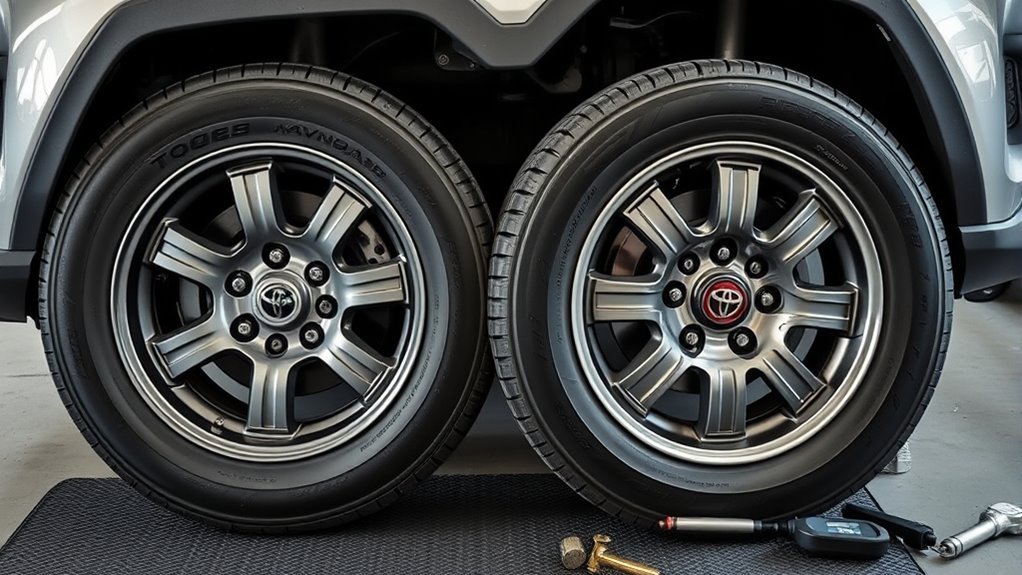
Even the right tire will perform poorly if it is neglected. Tire pressure, rotation, alignment, and tread checks matter more than many drivers realize.
- Check cold tire pressure monthly: Use the pressure listed on the RAV4’s Tire and Loading Information Label or owner’s manual. Check pressure when the tires are cold, before driving or after the vehicle has been parked for several hours.
- Inspect tread depth and wear: Look for treadwear indicators, uneven shoulders, cupping, cracks, bulges, punctures, and exposed cords.
- Rotate on schedule: Follow Toyota’s maintenance guide. Many Toyota maintenance schedules include tire rotation around 5,000-mile intervals, but your exact schedule can vary by model year, tire type, and driving conditions.
- Keep the alignment in check: Uneven wear, pulling, or a crooked steering wheel can point to alignment problems.
- Balance when needed: Vibration at speed can come from wheel balance issues, tire damage, or wheel problems.
- Reset or initialize TPMS when required: After rotation, replacement, or pressure adjustment, follow the owner’s manual instructions for the tire pressure monitoring system if your RAV4 requires it.
Bias ply tires also need pressure checks and inspection, but because they are less common on modern passenger vehicles, you should follow the specific tire maker’s instructions for any specialty application.
Debunking Common Myths About Bias Ply and Radial Tires
There is a lot of outdated advice about tire construction. Here are the myths RAV4 owners should ignore.
Myth 1: Bias Ply Tires Are Always Stronger
Bias ply tires can be tough in certain specialty applications, but “stronger” depends on the job. For highway driving, heat resistance, steering response, and tread stability are just as important as sidewall stiffness. A quality radial tire is the better match for a modern RAV4.
Myth 2: Radial Tires Are Only for Highways
Radial tires are used in many categories, including all-season, winter, performance, highway, and all-terrain tires. A road-approved all-terrain radial can handle gravel, light trails, and bad weather while still driving safely on pavement.
Myth 3: All RAV4 Tires Are Basically the Same
Two tires can share the same size and still behave very differently. Tread compound, tread pattern, load rating, speed rating, UTQG grade, snow rating, and sidewall design all affect performance.
Myth 4: TPMS Means You Do Not Need to Check Pressure
The tire pressure monitoring system is a warning system, not a replacement for routine pressure checks. Check pressure manually at least once a month and before long trips.
FAQs: Bias Ply and Radial Tires for Your Toyota RAV4
Here are quick answers to the most common questions RAV4 owners ask when comparing bias ply and radial tires.
What’s better for daily driving?
Radial tires are better for daily driving in a Toyota RAV4. They provide better comfort, heat control, highway stability, and tread wear for normal pavement use.
Can I mix tire types?
No. Mixing radial and bias ply tires can make handling unpredictable. Use a matching set of radial tires that meets Toyota’s specifications.
Are bias ply tires ever a good choice?
Yes, but usually not for a modern RAV4. Bias ply tires can make sense for some trailers, vintage vehicles, farm equipment, and dedicated specialty off-road uses.
How do I know if my current tires are radial?
Look at the tire size on the sidewall. If it includes an “R,” such as 225/65R17, it is a radial tire.
Frequently Asked Questions
Which tire construction gives a Toyota RAV4 the smoothest ride?
Radial tire construction gives a Toyota RAV4 the smoothest ride in normal driving. Radial sidewalls can flex over bumps while the tread remains stable, which improves comfort and highway control.
What year did manufacturers stop making bias ply tires?
Bias ply tires were not completely discontinued. They became uncommon on modern passenger vehicles as radial tires became the standard, especially by the late 1970s and early 1980s. Bias ply tires are still made for some specialty, trailer, agricultural, vintage, and off-road uses.
Do radial tires last longer than bias ply tires?
In normal road use, radial tires usually last longer because they run cooler, keep a more stable tread footprint, and wear more evenly when properly inflated and rotated. Actual tire life still depends on alignment, driving style, road conditions, tire compound, and maintenance.
Are all Toyota RAV4 tires radial?
The tires normally fitted to modern Toyota RAV4 models are radial tires. You can confirm this by checking the sidewall size code for the letter “R” and comparing the size to the Tire and Loading Information Label on the driver-side doorjamb.
Are bias ply tires good for RAV4 off-roading?
For a RAV4, a road-approved all-terrain radial tire is usually a better off-road choice than a bias ply tire. Bias ply tires may be useful on dedicated trail rigs, but they are not ideal for a crossover SUV that also drives on highways.
What should I check before buying replacement RAV4 tires?
Check the tire size, load index, speed rating, seasonal category, UTQG rating, warranty, and Toyota’s recommended cold inflation pressure. Also confirm whether your RAV4 is front-wheel drive or all-wheel drive, because matching tread depth is especially important on AWD models.
Conclusion
For a Toyota RAV4, radial tires are the smart choice for nearly every driver. They match the vehicle’s modern suspension, highway use, safety needs, and comfort expectations. Bias ply tires still have value in specialty situations, but they are not the best match for daily RAV4 driving.
The best tire decision is simple: choose a high-quality radial tire that matches Toyota’s size, load, speed, and inflation requirements. Keep it properly inflated, rotate it on schedule, inspect it often, and avoid mixing tire types. That combination will give your RAV4 the safest and most comfortable performance.
Sources
- NHTSA TireWise — tire pressure, treadwear, tire ratings, and tire safety maintenance guidance.
- 49 CFR § 571.139 — federal definitions for radial ply and bias ply tire construction.
- Toyota Owners Manuals and Warranties — official RAV4 owner information and maintenance resources.
- 2025 Toyota RAV4 Warranty & Maintenance Guide — Toyota maintenance schedule reference for tire rotation and inspections.
- Firestone Commercial Tires: Understanding the Anatomy of a Tire — radial and bias tire construction differences.
- Michelin: Radial or Bias Tires — explanation of bias and radial tire carcass construction.

Related Articles

Toyota RAV4 TPMS Reset: Easy Steps That Work
Unlock the secrets to resetting your Toyota RAV4's TPMS effortlessly—discover the essential steps to ensure your tires are always safe.
Read More
Toyota RAV4 Tire Rotation: DIY Steps & Pattern
Take control of your Toyota RAV4's tire maintenance with our simple DIY rotation guide—discover the best steps for optimal performance and longevity!
Read More
Mix Tire Brands on a Toyota RAV4? Expert Guide
Keeping your RAV4 safe? Learn when mixing tire brands risks traction, ABS/TCS and AWD damage — and what exact matches you must insist on.
Read More