How Wide Is a 255 Tire? Exact Width & Fitment Guide
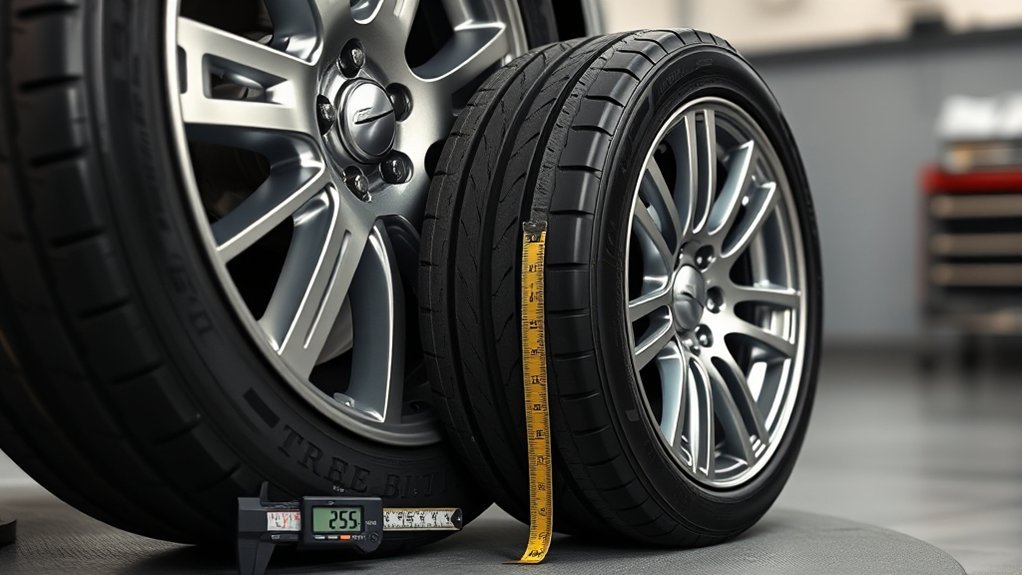
A 255 tire is nominally 255 mm wide, or about 10.0 inches, though actual section and tread width can vary by brand and aspect ratio. You’ll usually want a 7.5 to 9.5 inch rim, with 8.5 inches ideal for balanced fitment. It fits 18×9.5 and 18×10 wheels well, but offset and clearance matter. Compared with a 245, you gain more grip, stability, and a wider contact patch.
Key Takeaways
- A 255 tire is about 255 mm wide, or roughly 10.04 inches, though actual tread width can vary slightly.
- The recommended rim width for a 255 tire is 7.5 to 9.5 inches, with 8.5 inches ideal for balanced fitment.
- A 255 tire fits well on 18×9.5 and 18×10 wheels, with 18×9.5 giving a mild stretch and 18×10 a wider stance.
- Clearance and offset matter because the tire is wide, so check inner, outer, and fender space before mounting.
- Compared with a 245 tire, a 255 offers more grip, better cornering stability, and stronger dry-track traction.
What Does a 255 Tire Measure?
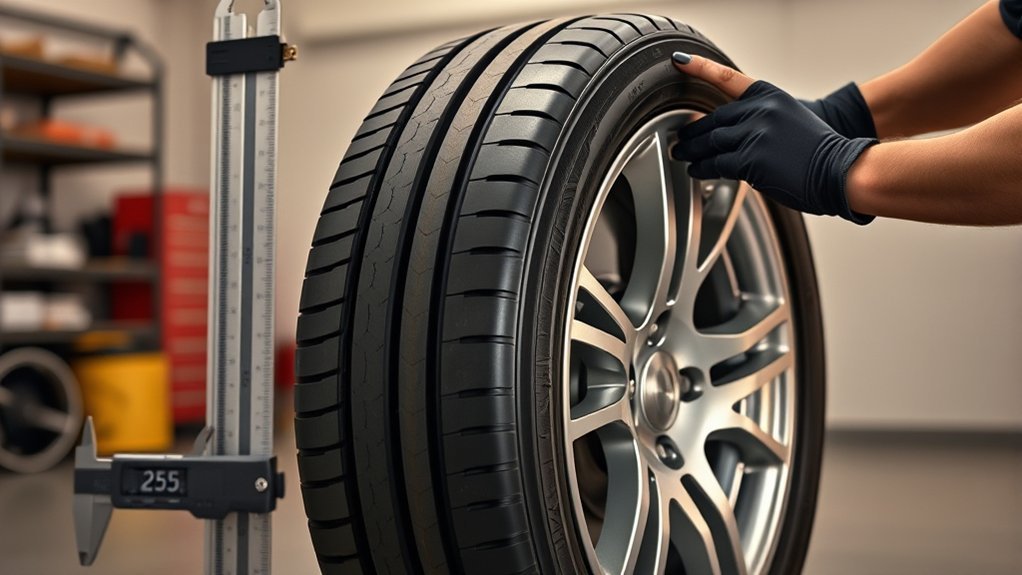
A 255 tire measures 255 millimeters wide, which is about 10.04 inches. That’s the Tire Width you use for fitment checks, clearance planning, and performance comparisons. The number 255 refers only to width; the aspect ratio after the slash changes sidewall height, not width. When you inspect the actual tread, you’ll often see a slightly smaller footprint, around 9.5 inches, because design and manufacturer choices affect the contact area. On a compatible rim, you can usually mount this tire on widths from 7.5 to 9.5 inches. That range helps you match the tire to your wheel without guesswork. A wider 255 can improve grip and handling, but it may also add road noise and reduce fuel efficiency compared with narrower options. You get more traction, yet you should weigh that against daily comfort and economy. Additionally, considering all-season adaptability can further enhance your driving experience across various conditions.
How Wide Is a 255 Tire?
How wide is a 255 tire? You’re looking at a nominal tire width of 255 millimeters, or about 10.04 inches. In real-world use, the exact section width can shift a bit by brand and model, usually landing between 10 and 10.5 inches. That variation matters because you want fitment that lets you move hard without rubbing or vague steering. On a standard rim, a 255 tire often shows a tread width near 9.5 inches, which supports strong grip and predictable cornering. This size is common on performance vehicles because it balances traction and handling without excess bulk. To keep your setup free and functional, check rim compatibility before you mount it. Most 255 tires work on rims 7.5 to 9.5 inches wide, so you can choose a wheel that fits your build and driving goals. Additionally, understanding the wet grip and light-snow handling capabilities of your tires is crucial for maintaining performance in varied conditions.
How Tire Size Numbers Define a 255
The “255” in a tire size like 255/40R18 tells you the tire’s section width, measured sidewall to sidewall when it’s mounted and inflated, and that width is 255 millimeters, or about 10.0 inches. In the size code, you read the numbers from left to right: the first number gives you Tire Width, the next number gives aspect ratio, and the letter-plus-rim number defines fit on the wheel. That means you can decode a 255 without guesswork.
- 255 = section width
- 40 = sidewall height percentage
- R = radial construction
- 18 = wheel diameter in inches
You’ll also see tread width close to 9.5 inches, which can vary by brand and model. Use the code to verify fit, compare options, and choose with confidence. Knowing the numbers gives you control, precision, and the freedom to spec your setup on your terms. Additionally, the tread design can impact wet traction performance, which is crucial for safety and handling.
What Rim Width Fits a 255 Tire Best?
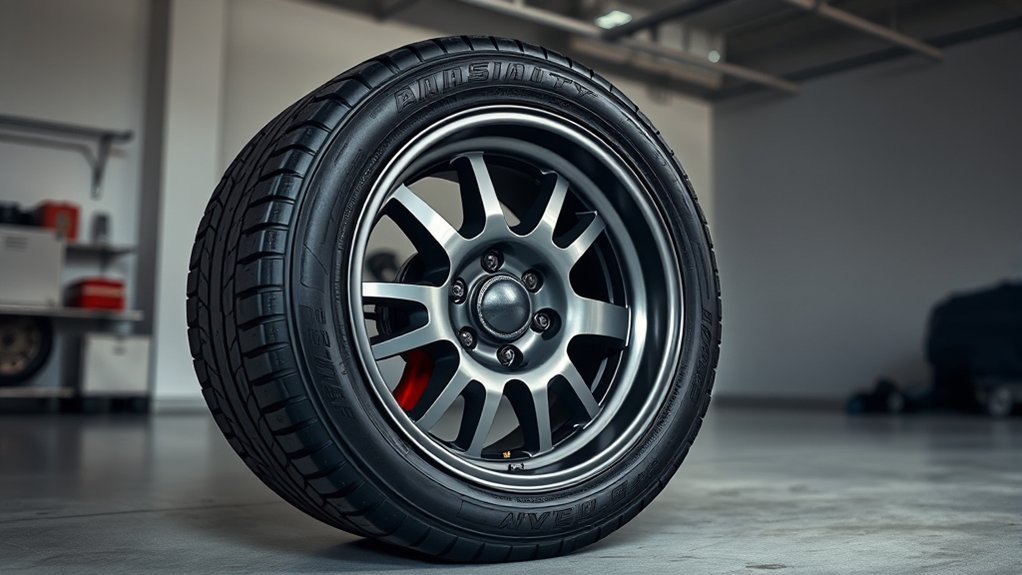
For a 255 tire, you’ll usually want a rim width between 7.5 and 9.5 inches, with about 8.5 inches being the sweet spot for balanced fitment and handling. That range supports the Tire Width so you keep the contact patch stable without distorting the sidewall. If you go below 7.5 inches, the tire can bulge more than you want, which may soften steering response and reduce grip. If you go above 9.5 inches, the tire can stretch, and that can alter handling in ways you probably don’t want on the road or track. For practical fitment, aim near 8.5 inches first, then verify clearances and load needs. Your best move is to check the tire maker’s specs, because approved rim widths can vary by model and construction. Additionally, optimal tire performance relies on selecting the right rim width to ensure proper handling and stability. You’re not guessing here; you’re choosing the width that lets the tire work as designed.
Does a 255 Tire Fit 18×9.5 or 18×10 Wheels?
A 255 tire fits well on an 18×9.5 wheel, giving you a balanced sidewall shape and solid performance within the recommended width range. It also works on an 18×10 wheel, where you’ll get a slightly wider stance that can improve grip and stability. Before you choose 18×10, make sure your suspension and fender clearance can handle the extra width without rubbing. Additionally, understanding tire selection criteria can help you choose the best fit for your driving needs.
18×9.5 Wheel Fitment
Yes, a 255 tire can fit both 18×9.5 and 18×10 wheels, since its section width is about 10.04 inches and the recommended rim width range is 8.5 to 10 inches. On 18×9.5, your Tire Width sits with a mild stretch, which can sharpen response and keep the setup precise.
- Measure wheel well clearance.
- Verify suspension travel.
- Inspect fender and liner space.
- Confirm offset before mounting.
You’ll want to stay within the rim-width window for proper seating and performance. If you’re building for control and freedom on the road, the 18×9.5 fitment gives you a balanced, technical setup without forcing the tire beyond its safe range. Check rubbing points before you commit.
18×10 Wheel Fitment
An 18×10 wheel can fit a 255 tire, and so can an 18×9.5, as long as the rim width and vehicle clearance stay within spec. Your Tire Width is about 255 mm, or 10.04 inches, so both wheels sit in the recommended 8.5–10.5 inch range.
| Wheel | Fitment |
|---|---|
| 18×9.5 | Safe, slightly stretched |
| 18×10 | Safe, broader contact patch |
| Check clearance | Verify suspension and fender space |
On an 18×10, you’ll often gain a wider contact patch, which can improve grip and high-speed stability. But don’t assume fitment is automatic—inspect offset, suspension travel, and fender room. If you want freedom from rubbing and handling surprises, measure first, then mount.
255 Tire Clearance and Offset Issues
A 255 tire is about 10 inches wide, so clearance becomes a real fitment check rather than a guess when you’re dealing with suspension parts, inner liners, and fender lips. With tire sizes this wide, you need to map the wheel well before you buy. Offset matters: a positive offset tucks the tire inward, while a negative offset pushes it outward and can trigger rub. Keep your rim width between 7.5 and 9.5 inches for proper support.
- Measure inner clearance at lock and compression.
- Check outer fender space with the car loaded.
- Verify offset against your current wheel setup.
- Mock up the tire before final purchase.
If you chase a wider stance, remember offsets beyond 2 inches can stress bearings and dull durability. Measure first, then choose freely. That’s how you keep fitment sharp without sacrificing handling or reliability. Additionally, tires like the Falken Wildpeak can provide strong traction on various terrains, ensuring you have the grip needed for diverse driving conditions.
255 Vs 245 on Track
On track, a 255 tire gives you about 10 mm more section width than a 245, so you’ll usually see more grip and better cornering stability. You’ll need to confirm wheel width and chassis clearance, since the 255 can rub if the fitment’s too tight. That added contact patch can trim lap times, but the gain depends on suspension setup, tire compound, and how well the tire stays in its ideal operating range. Additionally, the tread design plays a crucial role in optimizing performance across different terrains.
Track Grip Difference
Compared with a 245, a 255 tire gives you about 0.39 inch more section width, which usually means a larger contact patch and better grip on track. That extra Tire Width can free up more cornering confidence.
- You’ll feel stronger bite in high-speed turns.
- You’ll usually get better dry-track traction and stability.
- You can push harder before the tire starts to slide.
- You may see slightly higher rolling resistance than a 245.
In practice, the 255 often helps you carry speed and shave lap time, but results depend on the specific tire model and tread design. If you’re chasing control and traction, the wider tire can be a smart move.
Wheel Width Fitment
That extra grip from a 255 only pays off if your wheel package can support it, so you need to check fitment before you bolt it on for track use. On most setups, a 255 tire’s roughly 10.0-inch section width works on 8.5- to 10-inch rims, but your wheel width still has to leave room for sidewall shape and suspension clearance. A 245 is about 9.6 inches wide, so the jump isn’t huge, yet it can still change poke, rubbing risk, and steering feel. You should measure inner and outer clearance at full lock and compression, then confirm your speedometer and suspension geometry won’t get pushed outside safe limits. If class rules allow it, the wider option can free up more front-end bite.
Lap Time Impact
A 255 tire can trim lap times versus a 245 on track because its roughly 0.4-inch wider section usually gives you a larger contact patch, more cornering stability, and better traction in dry conditions. You’ll feel sharper steering and stronger feedback, so you can push harder with less hesitation. Tire Width matters because the extra grip changes how the car loads in fast bends. 1. Better dry-corner exit grip. 2. More stable high-speed turn-in. 3. Slightly slower in standing water. 4. Modest fuel economy loss in endurance runs. In rain, the 245 may resist hydroplaning better and keep your laps more consistent. If you want the quickest dry lap, the 255 often gives you more freedom to attack.
255 Vs 265 Tires
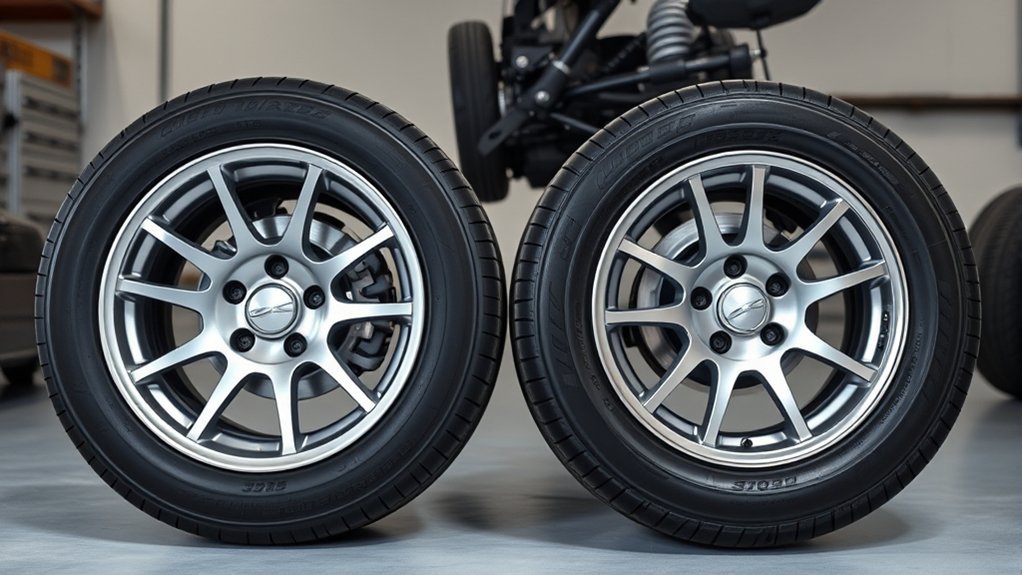
A 255 tire measures 255 millimeters in width, while a 265 tire is 10 millimeters wider, or about 0.39 inches more tread width. That extra tire width changes your tire size feel more than its overall diameter, which usually stays close unless you alter sidewall height. In practice, the 265’s larger contact patch can boost grip and cornering stability, especially on dry pavement. You’ll often notice sharper turn-in, but you may also give up some rolling resistance, so fuel efficiency can dip versus a 255. Fitment matters too: a 265 can mount on a rim made for a 255 if the rim width matches, yet clearance issues can still show up in tight wheel wells. Additionally, selecting the right tire size compatibility is crucial to ensure optimal performance for your vehicle. If you’re weighing cost, the 255 typically runs 15-30% cheaper, so you can save cash without sacrificing much everyday control.
Best Applications for 255 Tires
If you need a tire size that balances grip, comfort, and everyday usability, 255 tires are a strong fit for sports cars, performance sedans, and many SUVs. Their 255 mm width, about 10.04 inches, gives you a wider contact patch for better dry-road traction and sharper steering.
- Sports cars: you get stronger cornering stability and faster response.
- Performance sedans: you keep ride comfort while adding control.
- SUVs: you gain confident handling without extreme harshness.
- Fast highway use: you benefit from stable tracking at speed.
To get the most from this tire size, match it to rims between 7.5 and 9.5 inches wide. That fitment helps the tread work properly and keeps the car free to move with precision. Just know that wider rubber can hydroplane more easily in heavy rain, so you should stay attentive in wet conditions. Additionally, consider the tire performance in rain and snow to ensure you are prepared for various driving conditions.
Frequently Asked Questions
Which Tire Is Wider, 255 or 265?
265 is wider than 255. In this Tire Comparison, you’re looking at a 10 mm difference, so the 265 tire gives you a larger contact patch and more grip. You’ll usually notice better cornering stability and slightly less sidewall flex too. If you’re choosing between them, check your rim width and clearance first, because the wider tire can rub if your setup’s tight or poorly matched.
Which Is Wider, 255 or 275?
275 is wider than 255 by 20 mm, so you get more contact patch and grip. Tire Comparison? You’ll notice the extra width in cornering stability, but you may need wider rims and more clearance. Picture your vehicle planted harder into the pavement—doesn’t that feel freer? You’ll trade a bit of fuel efficiency and ride softness for stronger handling and a more aggressive stance.
Is a 255 Wider Than a 245 Tire?
Yes—your 255 tire’s wider than a 245 by 10 mm, or about 0.39 inches. In this Tire Comparison, you’ll get a broader contact patch, which can improve grip, cornering stability, and dry-road handling. You’ll also want to verify clearance, since the 255 may need more room around suspension and bodywork. Both sizes can often fit the same rim width, but you should check your vehicle’s fitment specs.
Is a 255 Tire a 33?
No, you can’t call a 255 tire a 33. You’re looking at two different measurements: 255 means about 10.04 inches of width, while 33 means about 33 inches of diameter. Think of it like a ruler beside a ladder—they measure different things. For Tire Compatibility, you’ll need to match diameter, width, and rim specs. Check load rating, clearance, and gearing before you choose.
Conclusion
A 255 tire gives you a solid, balanced footprint: wide enough for grip, narrow enough for fitment. You get sharper cornering, steadier braking, and a cleaner stance when your wheel width and offset are right. Choose the proper rim, check clearance, and you’ll avoid rubbing, stretch, and wasted tire contact. Whether you’re tracking, street driving, or upgrading for confidence, a 255 can deliver predictable handling, reliable traction, and a practical fit.

Related Articles

What Does R Mean on a Tire? Load, Speed & Rating Guide
Meaning of “R” on a tire unlocks load, speed, and rating clues you need—discover what they reveal before choosing the wrong fit.
Read More
Is a 285 Tire the Same as a 33-Inch? Size Conversion Guide
Bigger than it sounds, a 285 isn’t quite a true 33-inch tire—discover the key differences before choosing the wrong fit.
Read More
How Wide Is a 315 Tire? Exact Width & Fitment Guide
K**nowing how wide a 315 tire really is can save you fitment headaches, but the exact width may surprise you.
Read More