
How Tall Is a 275 70R18 Tire? Exact Height, Width & Dimensions
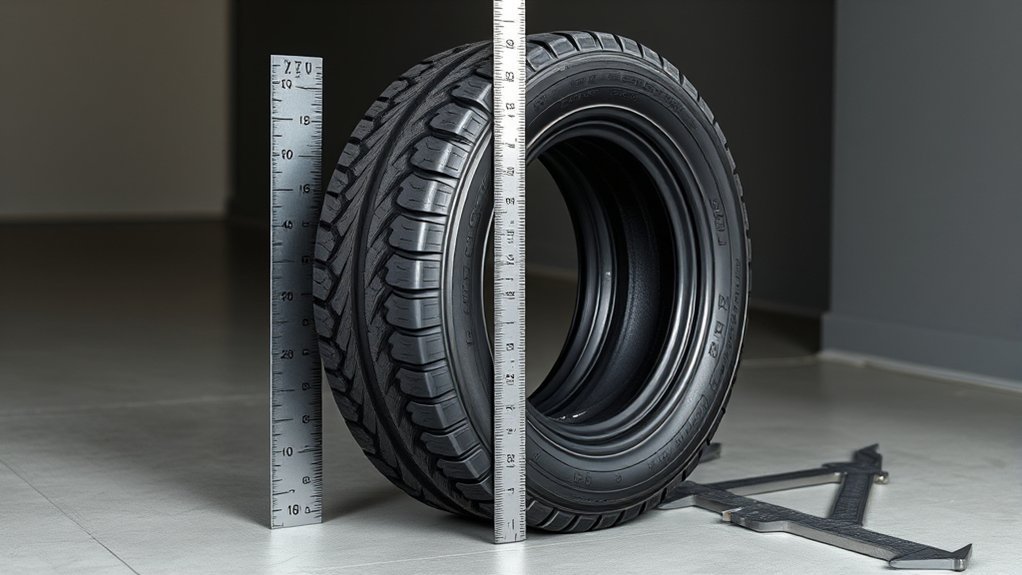
A 275/70R18 tire is about 33.2 inches tall overall, with a section width of 275 mm, or 10.83 inches. You get a sidewall height of about 7.6 inches, based on the 70% aspect ratio, and an approximate circumference of 104.2 inches. It’s roughly equivalent to a 33-inch tire, so it can affect clearance, gearing, and speedometer accuracy. If you want the fitment details and comparisons, there’s more to know ahead.
Key Takeaways
- A 275/70R18 tire is about 33.2 inches tall overall, or 843 mm in diameter.
- Its section width is 275 mm, which equals about 10.8 inches.
- The sidewall height is about 7.6 inches, based on the 70% aspect ratio.
- Its circumference is approximately 104.2 inches, affecting gearing and speedometer accuracy.
- It fits best on 7.0- to 9.0-inch-wide rims and is roughly equivalent to a 33-inch tire.
How Tall Is a 275/70R18 Tire?
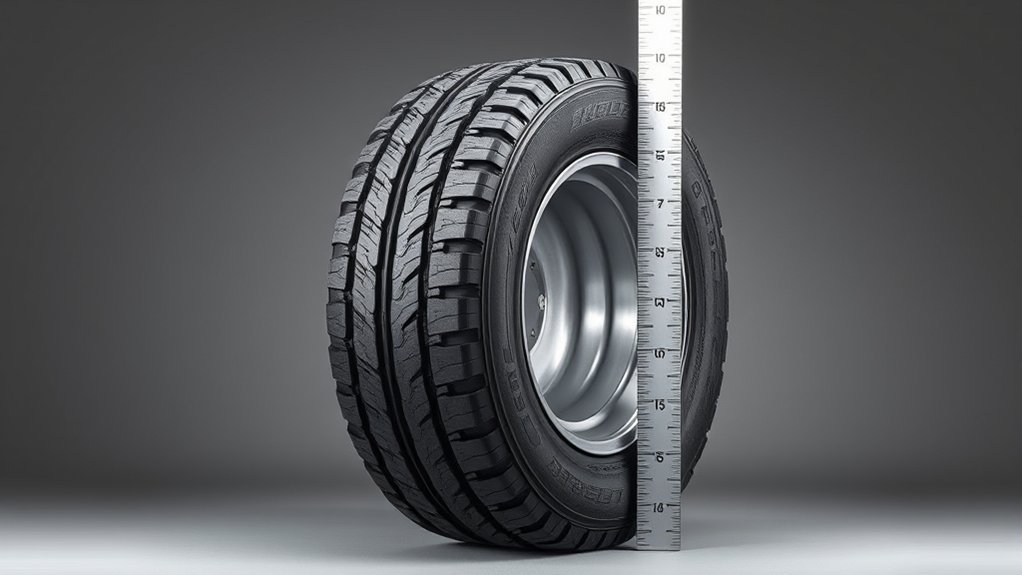
A 275/70R18 tire is about 33.2 inches tall overall, or 843 mm, so you can use that figure as the tire’s true outer diameter. That tire size gives you a clear baseline for fitment, gearing, and clearance calculations. You’re looking at a common tire for trucks and SUVs, where a larger diameter can improve stance, ground clearance, and load-carrying confidence. The overall diameter comes from the rim plus the sidewall height on both ends, so you don’t need guesswork; you can compare this measurement directly against wheel well space. Because you control the spec, you can judge whether the tire supports your build, towing needs, or off-road goals without surrendering precision. A taller profile can also shift fuel economy slightly, so you should evaluate your use case before you choose it. In short, the 275/70R18’s overall diameter defines its height exactly for practical, technical decision-making. Additionally, consider how all-season tires can enhance your driving experience across various conditions.
275/70R18 Width, Sidewall, and Circumference
The 275/70R18 tire gives you a section width of 275 mm, or about 10.83 inches, so you can judge fitment against your wheel and suspension clearances with precision. In tire size means, the first number defines width, and that figure works with the aspect ratio to shape the sidewall. Here, the 70% aspect ratio produces a 7.6-inch sidewall, or 193 mm, giving you substantial air volume and load support. That geometry creates a tire diameter of about 33.2 inches when mounted and inflated. You also get a circumference near 104.2 inches, which equals roughly 608 revolutions per mile. If you’re comparing a larger tire option, these numbers help you predict handling, gearing effect, and clearance margins. You should also check rim width, because this size fits best on 7.0 to 9.0-inch wheels. That range lets you preserve profile accuracy and maintain predictable road behavior. Additionally, regular rotation of your tires is recommended for maximizing mileage and performance.
Is a 275/70R18 the Same as a 33-Inch Tire?
Yes—roughly speaking, a 275/70R18 is a 33-inch tire because its overall diameter is about 33.2 inches when mounted and inflated. That diameter of 33.2 inches puts it in the same functional class as other 33-inch tire sizes. You’re looking at a 275/70R18 with a 275 mm section width, a 70% aspect ratio, and a sidewall around 7.6 Inches, all of which build the overall diameter. In practical terms, the size affects clearance, gearing, and speedometer error, so you should verify fitment before you buy. If your vehicle was designed to meet 33-inch tire sizes, this can be a safe replacement. Still, don’t treat every label as identical: a listed 33-inch tire may vary slightly by brand, tread, or construction. For most applications, though, the 275/70R18 and a 33-inch designation are effectively equivalent, and the 275/70R18 gives you a larger diameter without changing the tire class.
275/70R18 vs. 285/70R18 and Other Sizes
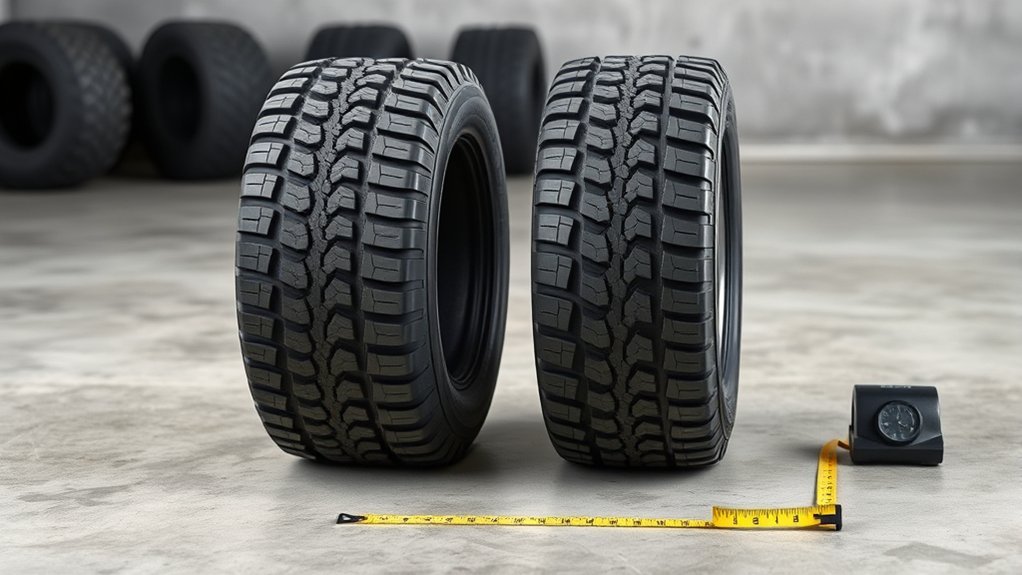
Compared with a 285/70R18, a 275/70R18 is slightly smaller, measuring about 33.2 inches in diameter versus roughly 33.7 inches for the 285, so you get about 0.5 inches less height and a narrower 10.8-inch tread width. Use a Size Calculator if you want the diameter compared in exact dimensions in inches, because tire construction and section width shift how each size fits your setup. You’ll notice the 285’s increased width gives a larger contact patch and can deliver better traction, while the 275’s slimmer profile often lowers rolling resistance and keeps steering feel a bit cleaner. If you’re chasing ground clearance, the 285 gains a slight edge. If you want something closer to a true 33-inch tire, the 275/70R18 sits right in that zone. Compared with a 275/65R18, it’s also about 1.08 inches taller, so your choice changes stance, articulation, and trail-clearance balance. Additionally, selecting the right tires, such as all-terrain options, can significantly enhance traction performance in off-road conditions.
How Does a 275/70R18 Change Speedometer and MPG?
Because a 275/70R18 is about 33.2 inches tall, it can throw off your speedometer and mpg slightly if it’s larger than the stock tire size. With a taller sidewall and the same wheel diameter, the overall diameter grows, so your speedometer will read low: you may be moving 2-3 mph faster than indicated at highway speeds. If your smaller factory tire was near the 3% limit, that offset can be enough to matter for accurate speedometer readings and handling. The larger contact patch and extra rubber can raise rolling resistance, which usually means a fuel economy reduction of about 0.5-1 mpg. You may also feel a mild change in gearing, as the taller tire acts like a slightly taller final drive and can soften acceleration. To stay liberated from guesswork, compare diameters before you swap. Additionally, be aware that using all-season tires can influence your vehicle’s handling and performance in various conditions.
Frequently Asked Questions
What Is the Difference Between 285 70 18 and 275 70 18?
You’ll find the 285/70R18 is 10 mm wider and about 0.6 inches taller than the 275/70R18, so you get more sidewall height, a broader tread, and often better grip. Your tire specifications show small changes in driving performance, terrain compatibility, load capacity, and fuel efficiency, with slight price differences too. This size comparison usually stays within acceptable limits, so you can choose based on your liberation, ride feel, and goals.
Is a 275 70 18 the Same as a 33 Inch Tire?
Yes, a 275/70R18 isn’t exactly a 33-inch tire, but you’ll usually treat it as one. Your tire height is about 33.2 inches, while tire width is 275 mm, or 10.83 inches. The 70 aspect ratio gives you a 7.6-inch sidewall. Check tire compatibility, speed rating, tread pattern, inflation pressure, load capacity, and off road performance before you choose it for your vehicle.
What Size Is a 33 Inch Tire on an 18 Inch Rim?
A 33-inch tire on an 18-inch rim is typically a 275/70R18. You’ll see tire specifications close to 33.2 inches tall, 10.83 inches wide, and a 70 aspect ratio, so your height calculation stays near target. Check rim compatibility, load capacity, tread pattern, performance factors, and inflation pressure, since they shape real-world fit and behavior. You’re choosing measurement, not myth, and that precision supports freedom on the road.
How Much Bigger Is a 275 70 18 Than a 265 65 18?
The 275/70R18 tire is about 1.6 inches taller and 10 mm wider than the 265/65R18, so you get more ground clearance and a larger footprint. With the same wheel diameter, the higher aspect ratio adds about 0.7 inches of sidewall, improving off road performance and traction rating. Check load index and tire pressure, because the bigger tire can slightly reduce fuel efficiency and alter tread pattern behavior.
Conclusion
In the end, a 275/70R18 tire gives you a clear, measurable size: about 33.2 inches tall, 10.8 inches wide, and a 7.6-inch sidewall. You can use that data to judge fitment, ride height, and gearing with confidence. If you’re comparing it to a true 33-inch tire, you’re close, but not exact. When you size things up, the numbers don’t lie, so you can make a smart, precise choice.

Related Articles

How Tall Is a 275 65R18 Tire? Exact Height, Width & Dimensions
Precise 275/65R18 tire dimensions reveal why it’s nearly a 33-inch tire—and the surprising fitment and speedometer effects may change your setup.
Read More
How Tall Is a 265 75R16 Tire? Exact Height, Width & Dimensions
How tall is a 265 75R16 tire, and what else changes when you compare its exact dimensions?
Read More
How Much Does a Truck Tire Weigh? Exact Weight Guide
How much does a truck tire weigh? Discover the exact factors behind the surprising range and why the answer isn’t as simple as you think.
Read More