
How Much Does a Truck Tire Weigh? Exact Weight Guide
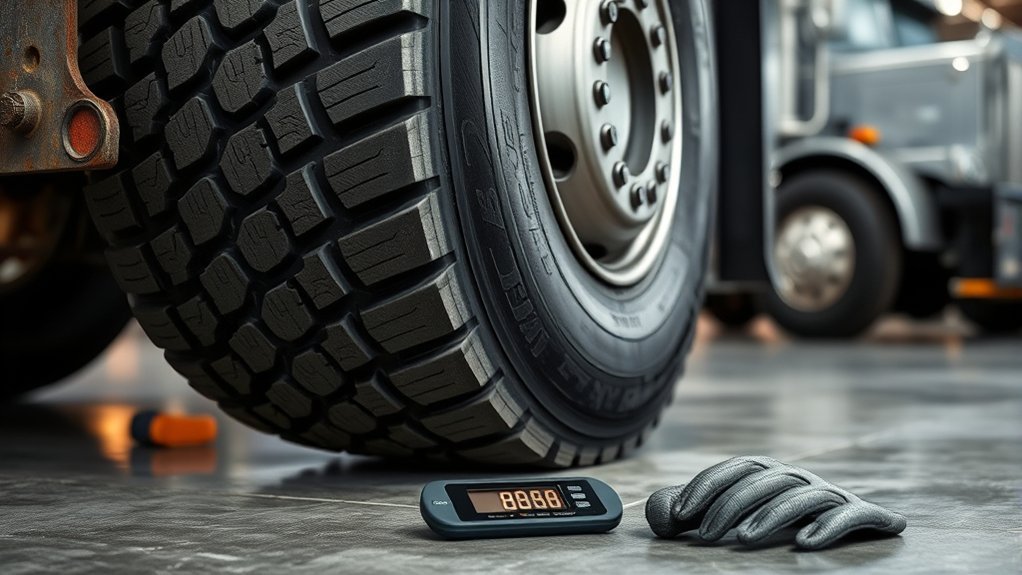
A truck tire usually weighs 100 to 250 pounds, depending on size, load rating, and construction. If you’re looking at a semi-truck tire, you’ll often see about 110 pounds, while light truck and SUV tires may fall between 45 and 100 pounds. Larger or specialty tires can weigh more than 300 pounds. The wheel adds extra mass, too. That weight affects payload, fuel use, and handling, and the details get more specific fast.
Key Takeaways
- A truck tire typically weighs between 100 and 250 pounds, depending on size and application.
- Semi-truck tires usually weigh about 110 pounds each.
- Light truck and SUV tires generally weigh 45 to 100 pounds.
- Specialty tires for agriculture or mining can exceed 300 pounds.
- Tire weight affects payload, fuel use, and overall vehicle performance.
How Much Does a Truck Tire Weigh?
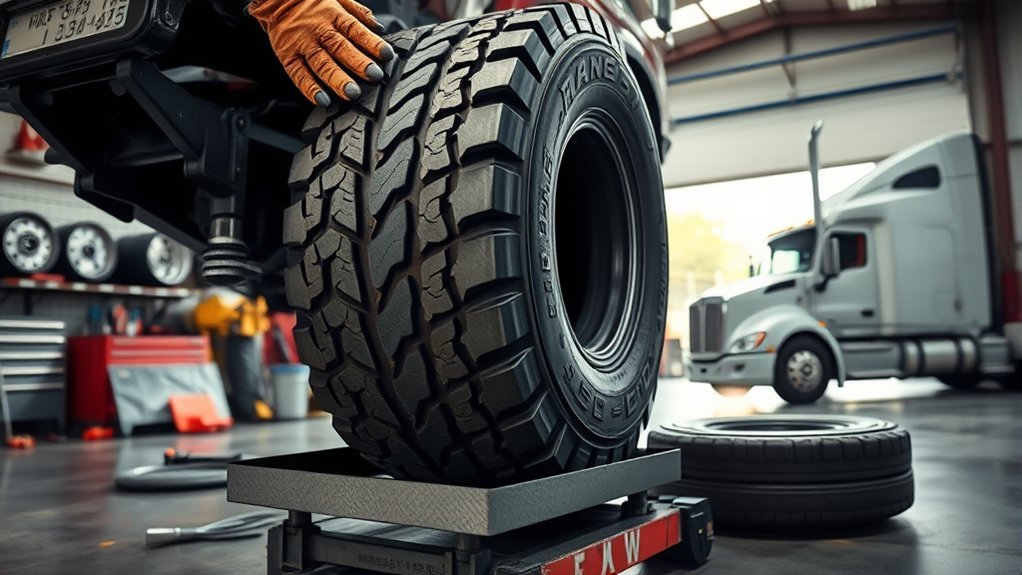
A truck tire typically weighs between 100 and 250 pounds, depending on its design and intended application. You can treat that truck tire weight as a key engineering variable, not a trivial detail. In this weight range, semi-truck tires often average about 110 pounds, and they support heavy loads while preserving stability under stress. When you compare tire weights with passenger car tires, which usually weigh 15 to 25 pounds, the mass difference is obvious and mechanically significant. You should also note that fuel consumption changes as rolling mass rises, so heavier tires can increase operating demand. Specialty designs for agriculture or mining may exceed 300 pounds because reinforcement adds material and durability. If you evaluate tire weights carefully, you’ll make clearer decisions about performance, safety, and resource use, and you’ll keep more control over the forces that move your vehicle. Additionally, tire performance is greatly influenced by the chosen weight, affecting driving dynamics and fuel efficiency.
Truck Tire Weights by Size and Type
Truck tire weights vary sharply by size and type, so you need to match the tire’s mass to its job. A typical truck tire weighs 100 to 250 pounds, and your selection should reflect load, duty cycle, and road conditions. Semi truck tires usually average about 110 pounds, giving you a durable option for highway freight without excess mass. Light truck and SUV tires usually fall between 45 and 100 pounds, so you get a balance of strength and maneuverability. Passenger car tires stay far lighter, around 15 to 25 pounds, because they carry lower loads. Specialty tire types for agriculture or mining can weigh far more, since reinforced carcasses and heavy-duty compounds add material. When you compare truck tires, always check application first; weight can vary by construction, tread depth, and reinforcement, but size and service class set the baseline.
What Changes Truck Tire Weight?
What changes truck tire weight comes down to size, materials, and intended service, and those factors can shift a commercial tire from about 100 to 250 pounds or more. You’ll see the biggest swing in width and diameter: wider casings need more rubber, and larger diameters usually add more metallic components. That directly raises the tire’s weight. You also need to evaluate tire construction methods, because reinforced belts, plies, and sidewall packages increase mass while improving load stability and durability. For demanding jobs, heavier designs support agriculture, mining, and other high-stress service where standard trucks and SUVs wouldn’t face the same loads. Modern tire technology tries to cut excess mass without sacrificing strength, using advanced compounds and optimized structures. For instance, tread life ratings can indicate how well a tire performs under load, which is crucial for heavy-duty applications. If you’re comparing options, look at what the tire must do, not just its size on paper. That’s how you judge weight with precision and keep your equipment free from unnecessary bulk.
How Truck Tire Weight Affects Payload and Fuel Use
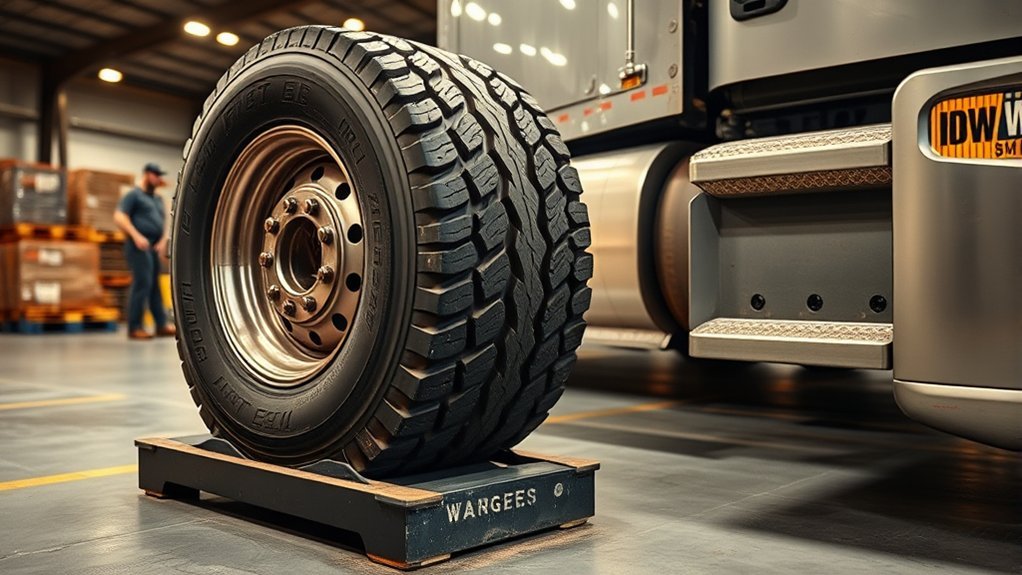
Heavier truck tires directly reduce your payload capacity because every extra pound on the axle subtracts from the cargo mass you can legally carry. They also raise fuel use by increasing rolling resistance and rotational inertia, so your engine needs more energy to get the truck moving and keep it moving. When you choose tire weight, you’re balancing payload limits against efficiency losses and compliance risk. Choosing the right tires, such as those with a 10-ply construction, can enhance durability without excessively increasing weight.
Payload Capacity Impact
Because truck tire weight sits directly on the vehicle’s mass budget, it can materially reduce payload capacity and raise operating costs. When your Tires weigh 100 to 250 pounds each, the added weight subtracts from the load you can legally carry. On a tractor-trailer, tire mass alone can approach 1,587 pounds before you even count wheels, so your gross combination weight rises while usable payload capacity falls. Heavier tires also add rotational inertia, so your truck needs more energy to start and stop. That extra demand can hurt fuel economy and fleet efficiency. If you choose lighter, well-engineered tires, you keep more capacity for revenue cargo and more control over operating costs.
Fuel Economy Effects
When truck tires weigh 100 to 250 pounds each, their mass increases rotational inertia and forces the engine to expend more energy during acceleration and braking, which can raise fuel consumption. You also add substantial dead weight: a tractor-trailer with 12 tires can carry about 1,585 pounds in tire mass alone, before wheels. That tire weight cuts payload and raises operating cost per mile. Lighter tires can reduce rolling resistance, and EU studies show fuel efficiency gains of up to 5%. You gain more control over your truck’s economics when you specify lower-mass tires that still meet load ratings. By treating tire weight as a performance variable, you can protect fuel budget, preserve payload, and move freight with less waste.
Rotational Weight Tradeoffs
Truck tire weight creates a direct tradeoff between payload, fuel use, and drivability: a typical tire can weigh 100 to 250 pounds, and that mass adds to gross combination weight while increasing rotational inertia and rolling resistance. During tire weighing, you’ll see how rotational weight and unsprung mass eat into payload and can lift fuel consumption by as much as 5%.
| Factor | Effect | Operational result |
|---|---|---|
| Heavier tire | Higher inertia | Slower acceleration |
| More unsprung mass | Greater load transfer | Softer control response |
| Increased rolling resistance | More energy demand | Higher fuel use |
| Added mass | Lower payload | Less freight capacity |
| Weight reduction | Lower drag | Better efficiency |
If you choose lighter wheels, you reclaim control, improve braking, and reduce emissions without surrendering performance.
How to Weigh a Truck Tire and Wheel
To weigh a truck tire and wheel accurately, you’ll need a heavy-duty scale rated for the load, since commercial assemblies commonly fall between 110 and 300 pounds. Place the truck tire and wheel on the scale, confirm it’s calibrated, and read the total mass. If you need component data, separate the tire from the rim and weigh each part individually. A truck tire often weighs 100 to 250 pounds alone, while steel wheels typically add 30 to 40 pounds; aluminum wheels usually add about 23 pounds. Use the heavy-duty scale’s highest safe range so you don’t distort the result or damage the equipment. Record each measurement immediately, then compare it with the manufacturer’s specifications to verify compliance and control inventory. This method lets you assess loads with precision, reduce uncertainty, and manage every truck tire on your terms. Additionally, selecting the right tire can enhance traction and handling, optimizing your truck’s performance on various terrains.
Truck Tire Weight by Semi Size
When you compare truck tire weight by semi size, you’ll usually find semi tires in the 100 to 250 pound range, with many standard commercial tires near 110 pounds. You’ll also see that larger or heavier-duty tires can push the total tire-and-wheel load to about 176 to 242 pounds per corner on modern European trucks. Tire construction, load rating, and intended use all shift the weight, especially when you move into agriculture or mining applications. Additionally, tires with a Load Range E rating are designed to support heavier loads, making them ideal for high-capacity applications.
Semi Tire Weight Ranges
Semi truck tire weights usually fall between 100 and 250 pounds, with the average coming in around 110 pounds for standard heavy-duty applications. When you evaluate semi truck tires, you’ll see that weight reflects load capacity and intended use, not guesswork. Standard commercial units often stay near the 110-pound mark, while heavier builds support agriculture and mining work. You can expect the range to shift with size and construction materials, but the core pattern stays consistent: more reinforcement means more mass. That added weight can improve durability under heavy-duty use, yet you still need regular maintenance to keep performance safe and efficient. By tracking tire weight precisely, you protect uptime, preserve control, and keep your rig operating with maximum freedom.
Factors Affecting Tire Weight
Tire weight changes mainly with size and construction, so a larger semi tire usually carries more material and weighs more. You’ll see a truck tire shift from about 100 to 250 pounds, depending on the types of vehicles it serves and the load it must control.
- 22.5-inch rims often weigh 132 to 154 pounds
- Bigger casings add steel, rubber, and ply mass
- Agriculture tires prioritize durability, not lightness
- Construction tires need higher load-bearing capacity
- Wheel-plus-tire assemblies can reach 176 to 242 pounds
That extra weight affects payload limits and fuel efficiency, so you should compare each tire’s use case before you choose. If you want control over transport costs, read the sidewall specs closely and match the tire to the job, not the other way around.
Retreads and Recycling for Truck Tires
Retreaded truck tires offer a practical way to cut waste and lower operating costs, because they’re made with roughly 75% recycled materials and use about 7 gallons of oil per tire during retreading, versus about 22 gallons for manufacturing a new tire. You gain sustainability and reduce tire costs without sacrificing utility. Retreaded tires serve school buses, commercial fleets, and airplanes, so you can trust them in demanding service. Additionally, many drivers prefer all-season performance tires for their versatility across different weather conditions.
| Metric | Retreaded | New |
|---|---|---|
| Recycled content | 75% | 2% |
| Oil used per tire | 7 gal | 22 gal |
| Cost savings | 30-50% | Baseline |
You also support a system where nearly 80% of U.S. scrap tires get recycled, often into retreads, which eases landfill pressure and conserves materials. If you manage vehicles, choosing retreaded tires helps you reclaim value from waste and align performance with resource freedom.
Frequently Asked Questions
How Much Does a 22.5 Truck Tire Weigh?
A 22.5 truck tire usually weighs 55 to 70 kilograms, or 121 to 154 pounds. You’ll see variation from tire weight factors like tread depth, sidewall reinforcement, tire construction types, and tire load ratings. If you’re managing a fleet, that mass affects fuel use and payload freedom. Use tire maintenance tips to monitor pressure, wear, and heat, because neglected tires can add drag and reduce performance.
How Heavy Is an 18 Wheeler Tire?
An 18-wheeler tire usually weighs 100 to 250 pounds, so it’s heavier than you might expect. You can’t ignore that mass, but tire maintenance and correct weight distribution keep your rig stable and efficient. Different tire types change the exact figure, and load capacity drives the design. You’ll get the best performance when you match the tire to the axle, pressure, and duty cycle, not just the price.
How Heavy Is a Truck Tire in Kg?
A truck tire usually weighs 45 to 100 kg, and you’ll often see 60 to 70 kg for a standard semi-truck tire. You’ll get higher weight from stronger tire materials, larger load capacity, and deeper tread patterns. When you handle tire maintenance, you’ll also manage the wheel assembly, which can reach 80 to 110 kg. That weight affects rolling resistance, fuel use, and your fleet’s operational freedom.
How Many Tires Equal 1 Ton?
You’d need about 8 to 20 truck tires to equal 1 ton, depending on each tire’s mass. One interesting statistic: a monster-truck tire can weigh 800 to 900 pounds, so just 2 or 3 can match a ton. Your tire weight comparison should account for tire load capacity, tire material types, and tire lifespan factors. You can use this analysis to choose equipment that fits your work and freedom.
Conclusion
Truck tire weight varies with size, construction, and wheel setup, so you should always verify the exact spec before loading or replacing one. A heavier tire reduces available payload and can slightly increase fuel use, while the wrong match can distort handling and wear. Think of tire weight as the truck’s hidden ballast: small changes add up fast. When you weigh both tire and wheel, you’ll make safer, more efficient decisions.

Related Articles

Are Tire Valve Caps Universal? What Fits All Cars Explained
Are tire valve caps universal, and which ones fit all cars? Discover the answer before you buy the wrong cap.
Read More
What Holds a Tire on a Car? Full Wheel & Hub Assembly Guide
Just how does a tire stay securely attached to your car? Discover the wheel, hub, and lug nut system that keeps it all in place.
Read More
How Wide Is a 265 Tire? Width in Inches, MM & Fitment Guide
How wide is a 265 tire? Discover inches, millimeters, and fitment tips before you choose the wrong wheel size.
Read More