How Wide Is a 295 Tire? Exact Width & Fitment Guide
A 295 tire is about 11.6 inches wide, or 295 mm, with an overall diameter near 35.1 inches on a typical 65-series setup. You’ll usually want a 9- to 10-inch rim for the best fit, though some 8-inch wheels can work with caution. Make sure you’ve got enough fender, frame, and suspension clearance, especially at full lock and compression. The right setup can improve grip and stance, and there’s more to check.
Key Takeaways
- A 295 tire is about 11.6 inches wide, or 295 mm, measured from sidewall to sidewall.
- Its typical overall diameter is around 35.1 inches, depending on the exact tire size and brand.
- Compared with a 275 tire, a 295 is roughly 3/4 inch wider and about 3% taller in diameter.
- It fits best on 9- to 10-inch rims, with 8-inch rims being acceptable but slightly pinched.
- Clearance matters: allow space for fenders, frame, and suspension, especially at full lock and compression.
295 Tire Size in Inches and Millimeters
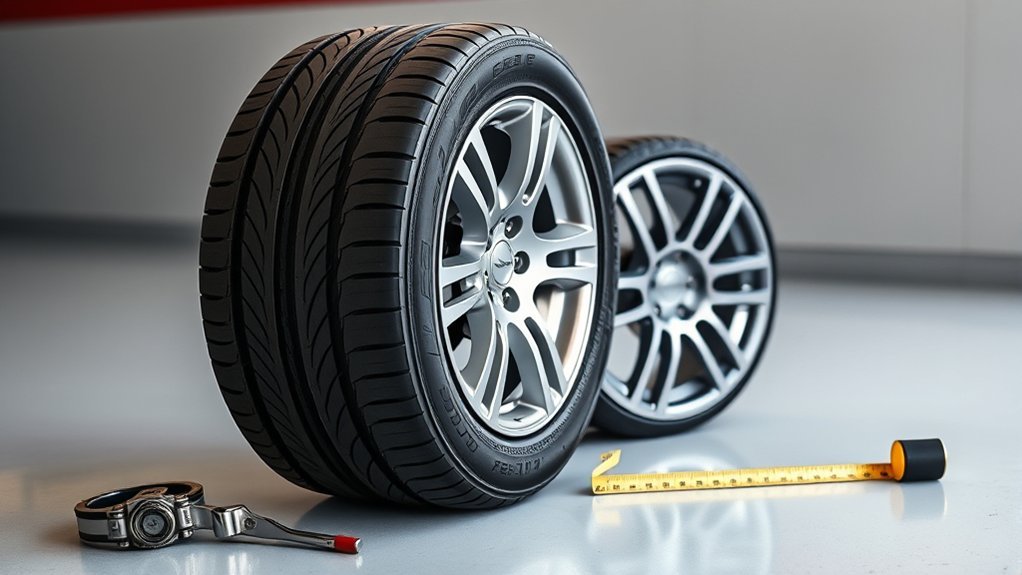
A 295 tire measures about 11.6 inches wide, or 295 mm, from sidewall to sidewall. When you compare tire sizes, that width gives you a clear reference for fitment, clearance, and handling. With a typical 65-series profile, you’ll see a sidewall height of roughly 7.5 inches, or 190.5 mm, which helps you estimate ride height and wheel well space. The tire’s overall diameter reaches about 35.1 inches, or 890 mm, so you gain more ground clearance without guessing. On the right rim, a 295 usually fits best on 9- to 10-inch widths, which keeps the carcass supported and the contact patch stable. Compared with a 275 tire, you’re adding about 3/4 inch of width, and that extra footprint can improve planted feel and control. If you want freedom through informed setup, this measurement matters. Additionally, choosing the right tires, like all-season options, can significantly enhance your driving experience.
How Wide Is a 295 Tire?
A 295 tire is about 11.6 inches wide, or 295 mm, so you’re working with a considerably wider footprint than a 275. You should match it to a 9- to 10-inch rim for best fitment, though an 8-inch rim can work if needed. Before you install it, check wheel well, suspension, and fender clearance because the extra width can affect rubbing and turning space. Additionally, consider the all-season adaptability of the tire to ensure optimal performance across various conditions.
295 Tire Width
When you ask how wide a 295 tire is, the key measurement is its section width: about 295 mm, or roughly 11.6 inches. That tire width gives you a noticeably larger contact area than a 275, adding about 20 mm, or 0.8 inches, of extra width. In practice, you get better lateral grip, stronger stability, and a more planted feel under load. The tire’s overall diameter can reach about 35.1 inches on a 295/65R20, while the sidewall sits near 7.5 inches, so you keep useful compliance without losing control. You’re choosing a dimension that supports performance and confidence, not compromise. On the right setup, this width helps you drive with more freedom, more traction, and less struggle.
Rim Fitment Range
For rim fitment, a 295 tire usually works best on a 9- to 10-inch wheel, though it can still fit an 8-inch rim if the setup allows it. You’re matching a roughly 11.6-inch section width to the wheel so the tread seats correctly and the sidewall supports the load. On a 10-inch rim, the tire can spread to about 12.4 inches, which sharpens stability and response. Check: 1. rim diameter compatibility 2. rim width 3. backspacing, around 5.5 inches minimum 4. fender space, at least 1 inch. That’s the practical path to a freer, cleaner fit. If you stay within this range, you keep performance predictable and avoid forcing the carcass.
Clearance Considerations
Because a 295 tire measures about 11.6 inches wide, you need to check more than just rim size before fitment. You should treat clearance measurements as nonnegotiable data, not guesswork. A 295 is roughly 20 mm wider than a 275, so it can crowd the fender, inner frame rail, or suspension. Aim for at least 1 inch between the tire edge and the fender lip, plus enough inner space to prevent contact at full lock and compression. Backspacing should be about 5.5 inches or more. If your chassis is tight, you may need spacers or inner fender adjustments. With the right measurements, you can fit a wider tire confidently, keep the wheel path free, and reclaim performance without rubbing.
What Rim Width Fits a 295 Tire?
A 295 tire, which measures about 11.6 inches wide, typically fits best on a 9- to 10-inch rim, though an 8-inch wheel can also work in some setups. You want the right rim width because it shapes the tire, affects contact patch, and controls how confidently you drive.
- 8-inch rim width: acceptable for some fitments, but it can pinch the tread.
- 9-inch rim width: a balanced choice for daily use and solid handling.
- 10-inch rim width: often preferable if you want a flatter profile and stronger grip.
- Wider than 10 inches: use caution, because the tire may lose its ideal shape.
If you’re tuning for stability and traction, match the rim width to the tire’s intended performance. A proper match helps you move with precision and keep the vehicle composed. Skip guesswork; choose the wheel that lets the 295 tire work as designed, and you’ll get a cleaner, more capable setup.
295 Tire Fitment, Backspacing, and Clearance
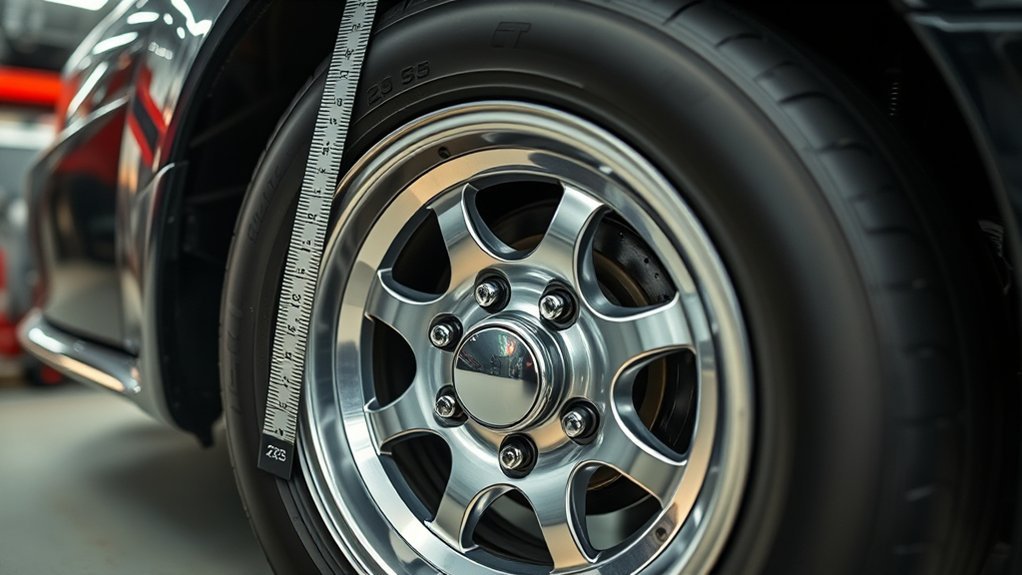
When you fit a 295 tire, you need to account for more than width alone: it measures about 11.6 inches across, so backspacing and clearance determine whether it will run cleanly or rub. For proper tire fitment, target at least 5.5 inches of backspacing so the tire clears suspension parts and inner bodywork. You should also verify space at both edges: leave about 1 inch between the sidewall and the fender lip, and keep roughly 1.5 inches to the inner frame rail for real-world movement. Mount the tire on a 9- to 10-inch rim to support the tread and keep handling stable. If inner clearance falls short, spacers can move the wheel outward and free up room. That adjustment can help when your vehicle already wears larger tires or has tighter packaging. Measure everything at ride height, because loaded suspension changes the available space. Additionally, consider using tires like the Haida Mud Champ for enhanced off-road traction and durability, which can complement the fitment process.
295 Tire Vs 275 and 35-Inch Tires
A 295 tire measures about 11.6 inches wide, so you get roughly 20 mm more section width and about 3/4 inch more contact area than a 275, which can improve traction and stability. Compared with a 35-inch tire, a 295/65R20 is nearly the same overall diameter at about 35.1 inches, but it’s narrower at 11.6 inches versus 12.5 inches, so you trade some footprint for a more compact profile. That width difference can change fitment and clearance, especially if you’re trying to match your truck or SUV to heavier-duty street use or off-road ground clearance. Additionally, selecting the right tires can significantly enhance braking, fuel efficiency, and ride comfort.
Width Difference Explained
Compared with a 275, a 295 tire is about 20 mm wider, or roughly 3/4 inch overall, with the section width typically measuring about 1.2 to 1.5 inches more depending on the tire model and rim width. That extra width changes how you feel the road and your vehicle’s width stance.
- You gain about 11.6 inches of tire width.
- Each side can sit about 3/8 inch farther out.
- You may need to check fender clearance.
- A 9 to 10-inch rim keeps the width working well.
You’ll notice better stability and grip, especially on a properly matched wheel. Keep the fitment tight, and you keep control.
35-Inch Comparison
A 295/65R20 measures about 35.1 inches tall, so it gives you nearly the same overall diameter as a 35/12.5R20 at 35.02 inches while staying narrower at 11.6 inches versus 12.5 inches. Compared with a 275/65R20, you gain about 3% more diameter and roughly 3/4 inch more section width, which also means more tread width and a 7.5-inch sidewall.
| Tire | Diameter | Width |
|---|---|---|
| 275/65R20 | 34.0 in | 10.8 in |
| 295/65R20 | 35.1 in | 11.6 in |
You get 35-inch presence without the extra bulk of a true 12.5-inch tire. That lets you move with more freedom while keeping handling predictable.
Fitment And Clearance
When you move from a 275 to a 295 tire, you’re adding about 20 mm of section width, so fitment gets tighter even though the overall diameter stays close to some 35-inch options at roughly 35.1 inches. Your fitment must account for width, backspacing, and suspension travel.
- Expect about 11.6 inches of section width.
- Keep at least 5.5 inches of backspacing.
- Watch for fender, frame, and control-arm contact.
- Use spacers or wheel changes if needed.
Compared with a 275, the 295 gives you more stability and grip, but it also demands more clearance. If you’re swapping from narrower factory tires, measure twice and test at full lock and compression. That’s how you keep your setup free, functional, and safe.
Best Vehicles for 295 Tires
Several full-size trucks and SUVs are the best candidates for 295 tires because their wheel wells, suspension setup, and load requirements can support the wider footprint. When you’re choosing the best vehicles for 295 tires, start with heavy-duty pickups like the Ford F-250, Chevrolet Silverado 2500 HD, and Ram 2500. Their chassis can handle the added tire width and the load capacity you need for towing, hauling, and rough use. You can also spec 295s on SUVs such as the Chevrolet Tahoe and Ford Expedition, especially if you want more ground clearance, stronger off-road bite, and stable highway manners. A 295 tire is about 11.6 inches wide, so it typically fits best on 9- to 10-inch wheels. Aftermarket wheels and mild lifts often help you achieve proper clearance, reduce rub, and keep your build free and capable in mud, snow, and rock. Additionally, consider all-terrain tires like the Travelstar Ecopath for improved performance in various conditions.
Frequently Asked Questions
Is 295 the Same as 35 Inch Tires?
No, you shouldn’t treat 295 tires and 35-inch tires as exactly the same. With Tire Conversion, you’ll see a 295 tire usually measures about 35.1 inches in diameter, but many 35-inch tires vary in width and height. You need to check section width, rim size, and clearance before you swap. That keeps you free from fitment surprises and helps you choose a setup that works precisely for your vehicle.
Is a 295 Wider Than a 285?
Yes, a 295’s wider than a 285, though the road may pretend otherwise. In this Tire Comparison, you’ll see a 295 tire measures about 11.6 inches wide versus 11.2 inches for a 285, so you gain roughly 0.4 inches overall. That means about 0.2 inches more on each side. You’ll usually fit similar rims, but a slightly wider wheel can improve traction, stability, and control.
Will a 295 Fit on a 9 Inch Rim?
Yes, you can fit a 295 tire on a 9-inch rim, and that’s within Tire Compatibility guidelines. You’ll keep a proper sidewall profile, solid handling, and good road contact. A 295 typically measures about 11.6 inches wide, and the ideal rim range is 9 to 10 inches. You should still check clearance, backspacing, and suspension travel so you don’t get rubbing or hidden fitment issues.
Is a 295 Tire Equivalent to a 33?
No, you shouldn’t treat a 295 as a true 33. In Tire Conversion terms, you’re looking at a tire that’s about 35.1 inches tall, not 33 inches. You’ll gain roughly 2 inches of diameter and a slightly narrower tread than a 33×12.5. That means your fitment, gearing, and clearance change. If you want freedom from guesswork, measure the exact spec, not just the label.
Conclusion
A 295 tire is about 11.6 inches wide, but actual section width can vary by brand, wheel width, and tire design. On a proper rim, you get the best balance of traction, sidewall support, and clearance. One useful stat: a 295/70R17 measures about 34.3 inches tall, so it’s much closer to a “35” than many expect. Before you buy, check backspacing, fender space, and suspension travel so you don’t run into rubbing.

Related Articles
How Tall Is a 285 70 17 Tire? Exact Height, Width & Dimensions
Need the exact dimensions of a 285/70R17 tire? Discover the surprising height, width, and fit details before you choose.
Read More
What Does BSW Mean on a Tire? Load, Speed & Rating Guide
Plain black sidewalls can hide important tire ratings—discover what BSW means and how load, speed, and size affect your next tire choice.
Read More
How Wide Is a 285 Tire? Exact Width & Fitment Guide
Keen to know how wide a 285 tire really is—and whether it’ll fit your rig? Find the exact width, ideal rims, and key fitment factors.
Read More