
What Does Service Tire Mobility Kit Mean? How to Use It
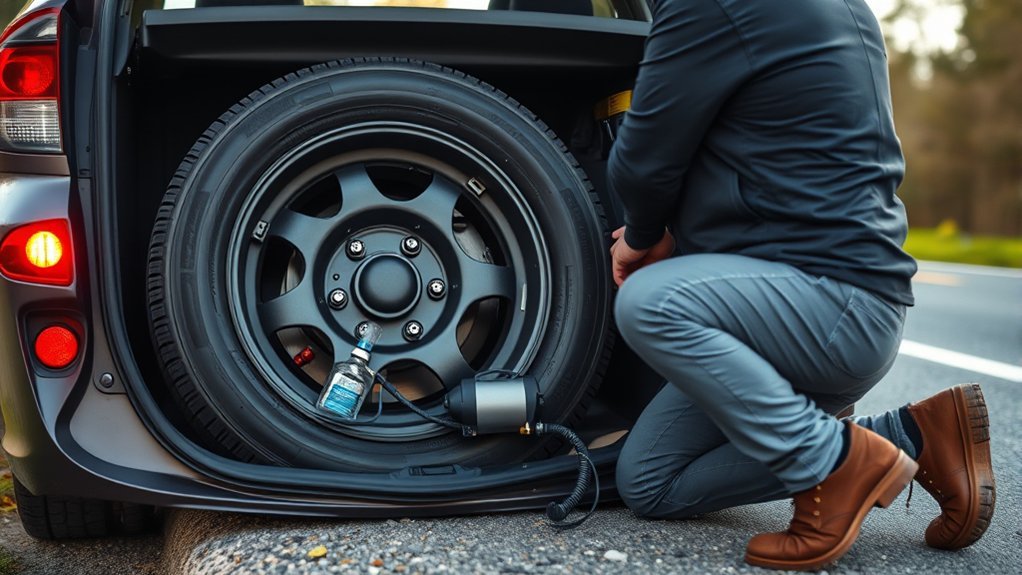
“Service Tire Mobility Kit” means your Mustang’s temporary tire sealant and compressor system needs inspection, replacement, or reset. You use it only for small punctures: locate the kit under the trunk floor, attach the sealant bottle and hose, connect to the valve, inflate to the recommended PSI, then drive briefly at low speed so the sealant spreads. It won’t restore full tire strength, so head to a repair shop for details on reset, limits, and maintenance.
Key Takeaways
- The Service Tire Mobility Kit is an emergency tire repair kit with sealant, compressor, hose, and gauge for temporary puncture fixes.
- It is usually stored under the trunk floor panel, so check its location and condition before long drives.
- To use it, attach the sealant bottle and hose, connect to the tire valve, then inflate the tire to the recommended pressure.
- After sealing, drive immediately at moderate speed, avoiding hard braking or acceleration, and go straight to a repair shop.
- The sealant expires in about four years, so service or replace the kit when warnings appear or maintenance is due.
What Does the Service Tire Mobility Kit Warning Mean?

The Service Tire Mobility Kit warning means the kit’s sealant or components need maintenance or replacement, usually because the sealant has expired after about four years. In your Ford, especially a Mustang without a spare tire, this alert tells you the kit may not work when you need it. You should treat the Service Tire Mobility Kit as critical emergency equipment, not an optional accessory. If the warning appears, you’ll likely need fresh sealant from a dealer or authorized source. Check the kit’s condition regularly so you’re not caught unprepared during a tire failure. A functional kit helps you keep moving without relying on a traditional spare, which supports your control over the road and your time. Don’t ignore the message; it’s a maintenance notice tied to the kit’s usable life. Additionally, using a reliable spare tire kit can provide peace of mind during your travels.
How Do You Reset the Tire Mobility Kit Alert?
| Step | Action | Result |
|---|---|---|
| 1 | Open settings | Reach the alert controls |
| 2 | Change reminder | Clear the scheduled warning |
| 3 | Restart vehicle | Confirm reset status |
After you save the change, switch the vehicle off, open the door, and let the system fully shut down. Then restart and check that the alert no longer appears. If the message remains, repeat the process and verify the reminder interval. You may need to reset the service again after a battery disconnect or if the warning returns periodically. This keeps your system aligned with your maintenance schedule and helps you stay in command. Additionally, ensuring your tires are compatible with your vehicle’s specifications is crucial for tire selection and performance.
Where Is the Tire Mobility Kit in a Mustang?
Typically, you’ll find the tire mobility kit beneath the trunk floor panel in a Mustang, where it’s stowed for quick access during a roadside emergency. You lift the panel, and the tire kit sits in a dedicated compartment, kept out of the way but ready when your tire loses pressure. Most Mustang models don’t carry a spare, so this setup lets you stay mobile without hauling extra weight. Before you drive long distances, check the kit’s location and condition so you know it’s available and intact. That quick inspection gives you control and keeps you from being stranded by a flat. If you need it, the kit is designed to help you make a temporary repair and reach a professional shop. In practice, you’re not searching through the cabin or cargo area; you’re accessing a purpose-built emergency solution that supports freedom on the road. Additionally, the compact design allows for easy storage in your vehicle, ensuring you’re always prepared for unexpected tire issues.
What’s Inside a Tire Mobility Kit?
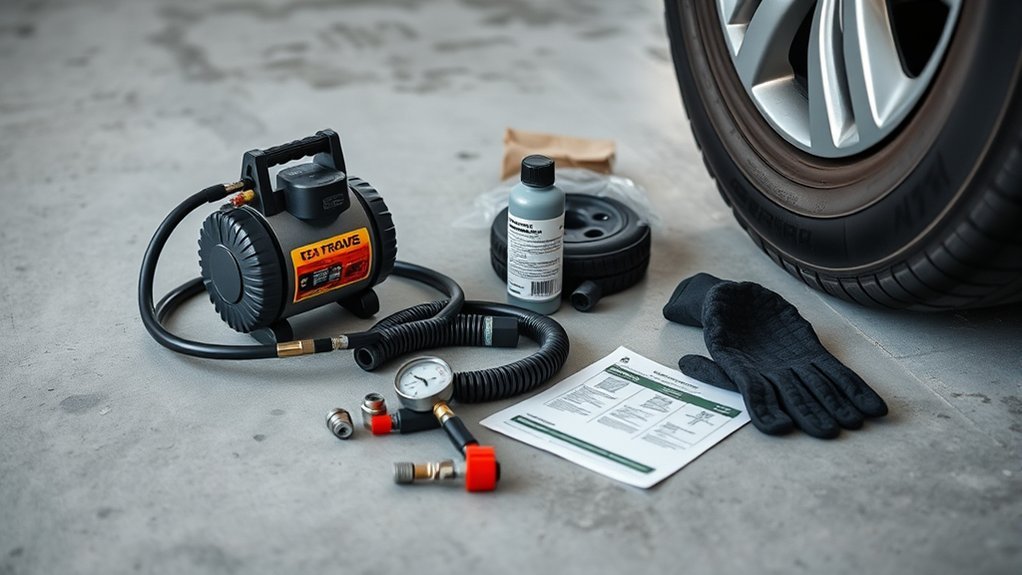
A tire mobility kit usually includes an air compressor, sealant, hose, connectors, and a pressure gauge. You use the compressor to inflate the tire and the sealant to temporarily close small punctures so you can reach a repair shop. Check the kit’s contents and condition regularly, since sealant expires and components can vary by manufacturer. Additionally, having portable tire inflators on hand ensures you’re prepared for various roadside emergencies.
Kit Components
Inside a tire mobility kit, you’ll usually find an air compressor, a sealant, a hose, connectors, and a pressure gauge for temporary tire repairs. These kit components let you respond fast without waiting for roadside control. You use the compressor to restore tire pressure after the sealant does its job, while the gauge helps you verify the reading accurately. The hose and connectors create the link between the kit and your tire valve. Because manufacturers can vary the contents, you should check your vehicle’s specific kit before an emergency. Review the instructions now, not later, and confirm the sealant hasn’t expired. That way, you keep your mobility, protect your time, and stay ready to move on your terms when a puncture interrupts your route.
Sealant And Compressor
When a puncture is small, the sealant in a tire mobility kit can inflate and seal the leak long enough for you to keep driving to a repair shop. You apply the sealant through the hose and connector, then use the compressor to add air and restore usable pressure. This setup gives you a temporary repair, not a permanent fix, so you still need professional service. Check the sealant’s shelf life; most formulas last about four years before replacement. If it’s expired, it may not seal properly. Because kit contents vary by manufacturer, read your vehicle’s instructions before trouble hits. Knowing how the sealant and compressor work lets you act fast, stay mobile, and keep control when the road throws you a flat.
How Do You Use the Tire Mobility Kit?
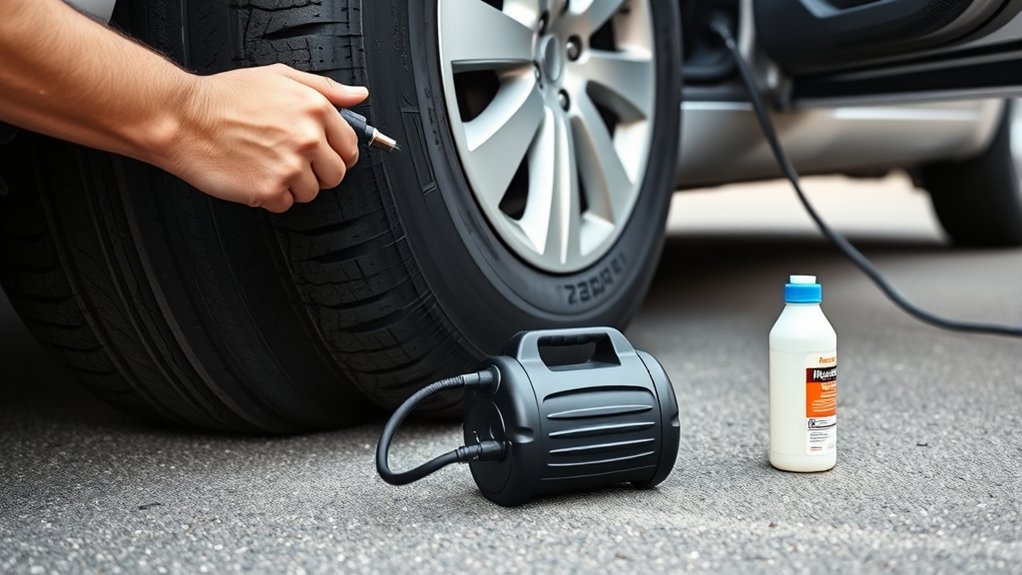
To use the tire mobility kit, first locate the air compressor and sealant bottle, usually stored in the trunk beneath the floor panel. If you’re asking how do you use the tire mobility kit?, start by clearing debris from the puncture so the sealant can flow freely. Attach the sealant bottle to the hose and lock it in place. Connect the hose to the tire valve, then switch on the compressor and watch the pressure gauge closely. Inflate until you reach the recommended PSI, usually 29 to 35 PSI, but follow your vehicle’s label. Once inflated, drive immediately for a short distance, up to 5 miles, so the sealant spreads and seals the hole. Keep your movements deliberate and controlled. This setup gives you freedom to move again, but it’s only temporary. Afterward, go to a professional repair shop as soon as possible for a permanent tire repair. Remember that using a tire mobility kit can be a practical solution in emergencies, but regular maintenance of your tires is essential for optimal performance.
Can You Drive After Using Tire Sealant?
Yes, you can drive after using tire sealant, but only as a temporary measure and within strict limits. Keep your speed between 12 and 50 mph, monitor tire pressure closely, and stop if it drops below 29 PSI or you feel vibrations or hear unusual noises. Drive straight to a repair shop as soon as possible, because the sealant isn’t a permanent fix and some damage can’t be repaired at all. Remember, this is especially important for small tread punctures, which are the type of damage the sealant is designed to address.
Temporary Driving Limits
After you use tire sealant from a mobility kit, you can drive only long enough to reach a repair shop for a professional repair, since the sealant is a temporary fix. These temporary driving limits give you just enough mobility to regain control and keep moving without delay. Keep tire pressure above 29 PSI, and keep your speed between 12 and 50 mph to reduce extra stress on the patched tire. Treat every mile as provisional, not permanent. If you hear unusual noises or feel vibrations, pull over immediately and get assistance. The sealant’s effectiveness drops over time, so don’t stretch the trip or gamble with safety. Go straight to service, complete the repair, and return your tire to full strength.
Safe Speed Range
You can drive on tire sealant only within a safe speed range of 12 to 50 mph, and only long enough to reach a repair shop for inspection and a permanent repair. This safe speed range helps you preserve control, reduce heat buildup, and limit further tire damage.
- Keep speed steady; avoid hard braking or rapid acceleration.
- Watch tire pressure; if it drops below 29 PSI, stop.
- Listen for noise or vibration; pull over if conditions change.
- Expect TPS risk; sealant can affect sensors and accuracy.
Use the kit as a temporary mobility tool, not a substitute for proper service. You stay independent when you respect the limits, follow the safe speed range, and get professional repair without delay.
Shop Repair Urgency
Even though tire sealant can get you moving again, it’s only a temporary fix, so you should drive straight to a repair shop for a professional inspection and permanent repair. Your shop repair urgency is real: sealant doesn’t restore full tire integrity, and delaying service increases the risk of hidden internal damage. Keep your speed between 12 and 50 mph, and if pressure drops below 29 PSI, stop driving immediately. Any noise, shake, or pull means you need to pull over and call for help. Don’t assume every shop will repair a sealant-treated tire; some won’t, which can force a replacement. Acting fast protects your freedom to keep moving, reduces the chance of a blowout, and can save you money.
How Fast and Far Can You Drive?
How fast can you drive after using a tire mobility kit? You can usually travel at 12 to 50 mph, but you should treat that range as a temporary operating envelope, not a normal Speed Rating. Your goal is to regain mobility, not to stretch the repair.
- Keep tire pressure above 29 PSI at all times.
- Drive directly to a repair shop for inspection and permanent repair.
- Expect the temporary fix to cover about 100 miles, not more.
- Stop immediately if you notice vibration or unusual noise.
When you ask how fast and far can you drive, use the answer that preserves control and freedom: only as far as the nearest professional service point. If pressure drops below 29 PSI, don’t continue. The kit gives you enough range to leave danger behind and reach proper help, but it isn’t a substitute for a real tire repair. Additionally, ensure that your tire’s load index and speed rating are appropriate for safe driving after using the kit.
What Are the Limits of Tire Sealant Repair?
Sealant can get a small puncture sealed enough to let you drive, but its limits are strict: it won’t fix larger holes, sidewall cuts, or tears in the tire. You should treat tire sealant as a temporary field repair, not a full restoration. It may hold air long enough for you to reach help, but it can’t rebuild damaged rubber or restore structural integrity. If the puncture exceeds the sealant’s range, the tire stays unsafe and unusable. Tire sealant also ages; after about four years, it can lose effectiveness and needs replacement. It can leave residue that complicates service, and some shops won’t repair a tire after sealant use. You should also know it may affect tire pressure sensors, adding cost and friction. For real safety and freedom on the road, use tire sealant only as an emergency bridge to immediate professional inspection. Additionally, it’s crucial to understand that temporary field repairs like sealant should never replace proper tire maintenance and inspection.
What Should You Do After Using the Kit?
After using the tire mobility kit, your next step is to drive straight to a professional repair shop for a permanent fix, since the kit is only a temporary solution. If you’re asking what should you do after using the kit?, treat the repaired tire as limited-service equipment, not a full restore. Keep speed between 12 and 50 mph, and monitor pressure so it stays above 29 PSI.
Drive straight to a repair shop; the kit is temporary, and the tire remains limited-service only.
- Check the gauge before each trip.
- Watch for noise or vibration.
- Pull over immediately if handling changes.
- Replace the kit sealant every four years.
It’s important to recognize that this kit provides a practical solution for temporary repairs, allowing you to extend the life of your tires until a professional can assess the damage.
You’re maintaining control, not surrendering it. A patched tire can carry you forward, but only within strict operating limits. Use the shortest practical route, avoid abrupt maneuvers, and schedule inspection quickly. That’s how you protect the tire, your vehicle, and your freedom of movement without risking a breakdown.
Why Does the Tire Mobility Kit Warning Keep Coming Back?
The Service Tire Mobility Kit warning often comes back because the system uses a default reminder interval, typically every four years, to prompt you to inspect the kit. If you disconnect the vehicle’s battery, you may trigger the warning again and need to reset it in the dashboard settings. You can manage it by checking Advanced Settings and adjusting the Tire Mobility Kit reminder. Regular maintenance and tire sealant effectiveness are crucial to ensure your vehicle remains ready for any unexpected tire issues.
Default Reminder Interval
If your Service Tire Mobility Kit warning keeps returning, it’s usually because the default reminder interval is set to about four years, which prompts you to inspect the kit, check the sealant expiration, and verify overall condition. That default reminder interval protects you by forcing a scheduled review instead of letting degraded sealant sit unnoticed. Use it as a maintenance checkpoint, not a nuisance.
- Confirm the kit’s physical condition.
- Check the sealant date and integrity.
- Review the vehicle settings menu.
- Adjust the reminder duration if needed.
When you stay aware of the kit’s status, you reduce surprise warnings, avoid unnecessary service visits, and keep your vehicle ready for independent action.
Reset After Battery Disconnect
When a battery disconnect resets the vehicle’s memory, the Service Tire Mobility Kit warning can come back because the reminder settings may revert to their default state. After any reset after battery disconnect, you should enter the vehicle settings and verify the Tire Mobility Kit reminder duration. Most systems use a four-year interval, but you can change it if your maintenance plan differs. If the warning returns, don’t ignore it; treat it as a prompt to check the kit’s condition and confirm the timer. You can clear recurring alerts by resetting the reminder after service or battery work. This keeps you informed, prevents false alarms, and avoids unnecessary shop visits. Knowing the menu path gives you control over the system.
Frequently Asked Questions
What Does Service Tire Mobility Kit Warning Mean?
It means your tire mobility kit needs maintenance, usually because the sealant has expired or lost effectiveness. You should check your Tire Maintenance schedule, then replace the sealant at a dealer and reset the reminder in your vehicle settings. Don’t ignore it; an ineffective kit can fail during a flat. This alert helps you stay prepared, keep control, and move freely without relying on unsafe equipment in an emergency.
How Long Can You Drive With a Tire Mobility Kit?
You can drive about 100 miles max with a tire mobility kit patch. That’s the key Tire Repair limit, and it’s temporary, not freedom from service. Keep your speed between 12 and 50 mph, and if pressure drops below 29 PSI, stop immediately. If you notice vibrations or noise, pull over. You should head to a repair shop as soon as possible to prevent failure.
Is It Okay to Drive With the Service Tire Monitor System On?
No, you shouldn’t keep driving with the service tire monitor system on if you can avoid it. You may have a low Tire Pressure issue, expired sealant, or a patched tire that’s failing. Check your tires immediately and verify the kit’s condition. If pressure drops below 29 PSI, stop driving and get help. You’ll reduce damage, preserve control, and keep your mobility safer and more autonomous.
Is the Service Tire Mobility Kit Urgent?
No, it’s not a flashing red fire alarm, but you shouldn’t let it drift. You need to service the tire mobility kit soon, because its sealant can expire and the system can fail when you need it. Check the kit, confirm the sealant date, and reset the alert if your manual allows. If you drive long, treat it like Tire Replacement prep: practical, disciplined, and on your terms.
Conclusion
In short, your service tire mobility kit warning means your car detects a tire sealant or compressor issue, or it’s reminding you that the kit needs attention. You should use the kit only for small punctures in the tread, then drive cautiously to a repair shop. Notably, sealant kits can often get you moving in under 10 minutes, but they’re only temporary. Check your kit, reset the alert if needed, and replace expired sealant promptly.

Related Articles

What Does a Slashed Tire Look Like? Identifying Vandalism
I’ll help you spot the telltale signs of a slashed tire—clean cuts, exposed cords, and hidden clues—but is it vandalism?
Read More
What Does 115T Mean on a Tire? Load, Speed & Rating Guide
Please decode 115T on a tire before buying—discover what the load and speed ratings really mean for your vehicle and safety.
Read More
What Causes a Bubble in a Tire? Causes, Risks & Next Steps
I explain what causes a tire bubble, the hidden risks, and the urgent next steps you should know before it becomes dangerous.
Read More