
How to Tell If Your Tire Is Bad: 7 Warning Signs to Check
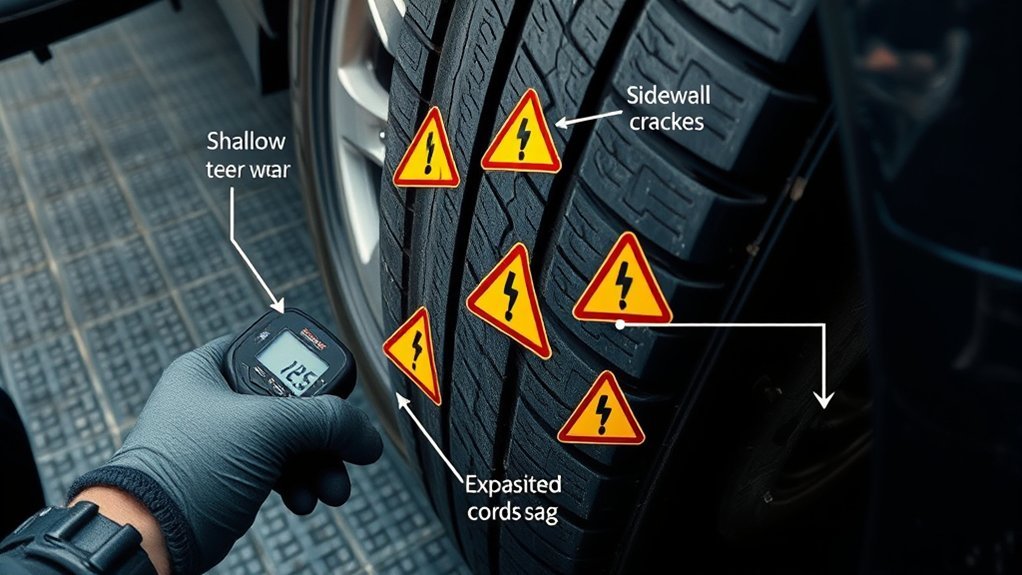
You can tell your tire is bad by checking for low tread, exposed wear bars, cracks, cuts, bulges, uneven wear, vibration, and unusual thumping. If tread depth is below 2/32 inch, or Lincoln’s head shows in the penny test, it’s time to replace it. Also check tire age and pressure, since old or underinflated tires can fail faster. Catching these warning signs early can keep you safer and show you what to inspect next.
Key Takeaways
- Check for cracks, cuts, bulges, blisters, or exposed wires on the tire sidewall.
- Look for bald spots, uneven tread wear, or tread depth below 2/32 inch.
- Use the penny test or tread wear bars to confirm when tread is too low.
- Watch for vibrations, steering wheel shaking, or rhythmic thumping while driving.
- Replace tires that are over 6–10 years old or show persistent damage or underinflation.
Signs Your Tire Is Bad
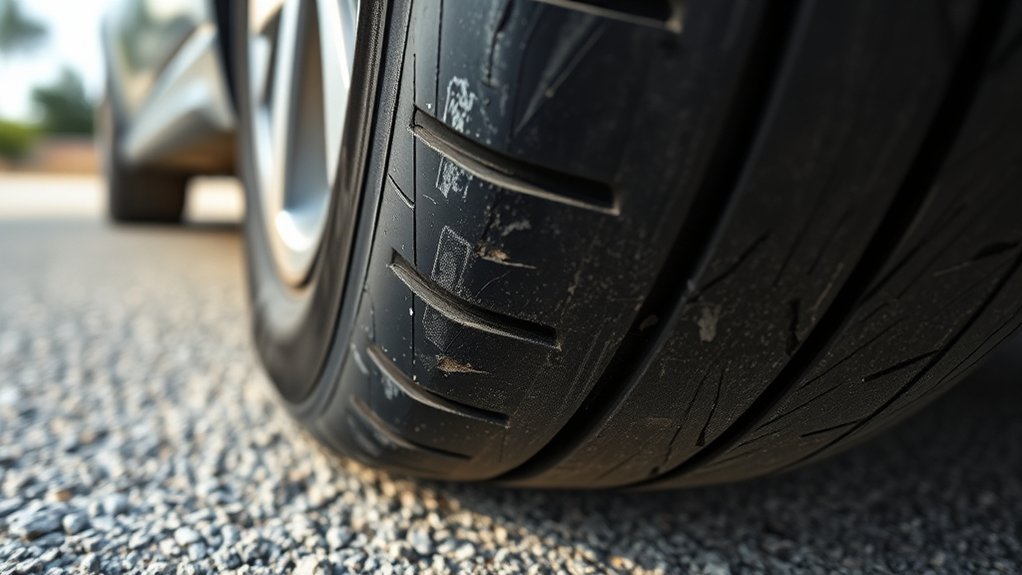
If you notice cracks, cuts, bulges, or visible wires on the sidewalls, your tire may be structurally weak and at risk of blowing out. You should inspect your tires right away, because these are clear signs you need new tires. Look for worn areas, bald spots, and uneven wear across the tread and shoulders; these patterns often point to inflation, alignment, or suspension problems that won’t fix themselves. Check tread depth regularly, and treat anything below 2/32 inch as unsafe. If you drive with damaged tires, you raise the chance of tire failure and lose control when you need stability most. Listen for unusual noises or vibrations, since they can signal internal damage that isn’t visible yet. Additionally, understanding UTQG ratings can help you assess the expected lifespan of your tires. Don’t wait for a roadside emergency. Act early, replace compromised tires, and keep your vehicle ready to move freely, safely, and on your terms.
Check Tread Depth and Wear Bars
Tread depth is one of the clearest indicators of tire safety, especially on wet roads, because shallow tread reduces grip and increases hydroplaning risk. You should inspect your tire tread regularly and treat 2/32 of an inch as the minimum safe tread depth. Use the penny test: place a penny into the groove with Lincoln’s head down; if you can see the top of his head, your tread is too low. Most tires also have tread wear indicator bars molded into the grooves. When those bars sit flush with the tread, it’s time to replace the tire. Watch for uneven tread wear, too, since it often points to incorrect tire pressure or misalignment. These warning signs can help you catch problems early, keep control in bad weather, and protect your freedom to drive with confidence, especially considering the importance of regular tire rotation for maximizing mileage and tread life.
Look for Cracks, Cuts, and Bulges
Inspect your tire sidewalls for cracks and cuts, since they can signal weakened rubber and structural damage. Check for any bulges or blisters, because they show the tire’s internal structure is failing. If you see either issue, replace the tire right away to avoid a blowout. Additionally, consider the tire’s UTQG rating to assess its durability and tread life, as it can provide insight into potential wear issues.
Cracks And Cuts
Cracks, cuts, and bulges are warning signs that your tire’s structure may be failing. You need to inspect for cracks and cuts often, because even minor damage can weaken tire integrity and trigger tire failure. Aging rubber, UV exposure, heat, and harsh weather cause wear and tear, so check closely if you drive in extreme climates. Look at the tread, shoulder, and sidewall damage with a sharp eye. Any cut, scrape, or split can open the door to a blowout. If you spot bulges or blisters, treat them as immediate replacement signals; they show internal weakness and uneven pressure. Don’t gamble with compromised rubber. Replace the tire now and keep control, safety, and mobility in your hands.
Sidewall Bulges
Sidewall bulges are a serious warning sign that your tire has a weak spot, often from uneven air pressure or internal damage. You should inspect the sidewall for visible damage, including cracks, cuts, blisters, or sidewall bulges, because any of them can compromise tire integrity. When you see this structural weakness, don’t keep driving and hoping it’ll hold. A bulge can grow fast and trigger sudden tire failure, especially at speed, turning your freedom on the road into a safety risk. Replace the tire immediately if you spot a bulge or blister. Then have a tire professional evaluate the rest of the tire and any matching tire set. Regular checks help you catch damage early, stay mobile, and avoid accidents.
Watch for Vibration and Thumping
Feel for unusual vibration or a rhythmic thumping while you drive, especially around 40 to 50 mph. That vibration often points to unbalanced or misaligned tires, and it needs immediate inspection before the problem grows. If the steering wheel or seats shake persistently, you’re dealing with tire issues that can compromise control and strain suspension parts. A thumping sound usually signals a flat spot or internal damage inside the tire, so don’t ignore it. Get prompt evaluation to confirm the cause and prevent a sudden failure. You don’t have to accept rough driving as normal; steady motion is a sign your tires are doing their job. Check how the vehicle feels on different roads, and note any new shaking. Quick action protects handling, reduces wear on other components, and keeps you moving with confidence. If the vibration gets stronger, stop driving and have the tires inspected by a professional right away. Additionally, keep in mind that tread life is crucial for safe driving, as it affects traction and overall performance.
Spot Uneven Wear and Poor Traction
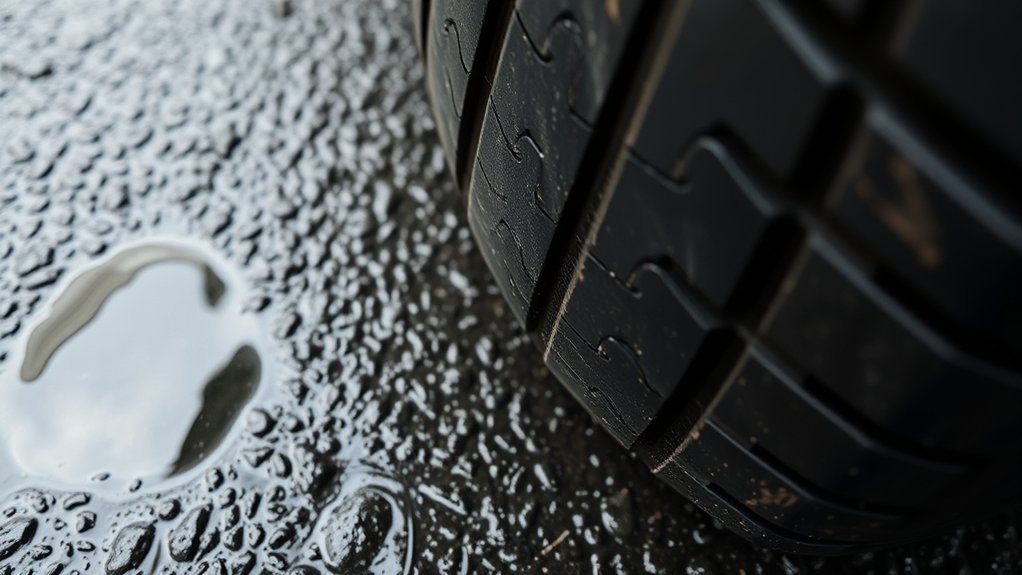
Uneven tread wear is a clear warning sign that your tires need attention, especially if one side is losing rubber faster than the other. Inspect your tire tread for uneven wear across the inner, center, and outer edges. That pattern often points to a mechanical problem that needs immediate inspection. If tread depth drops below 2/32 inch, you’re at higher risk of hydroplaning and losing control in wet roads. Watch for poor traction: sliding, delayed cornering response, or longer stopping distances all show that your tires can’t grip properly. Check the tread wear indicators in the grooves; once they’re flush with the tread, it’s time to replace your tires. Look for signs of excessive wear on isolated spots, too. Those hot spots can signal failing suspension parts, which can compromise stability and make the vehicle harder to steer. Staying alert here keeps you moving with more control and less risk. Additionally, consider how tire quality affects performance to ensure optimal handling and safety on the road.
Check Tire Age and Tire Pressure
Check the tire date code on the sidewall, because tires should usually be replaced after 6 to 10 years even if the tread still looks acceptable. You should also monitor tire pressure monthly, using the automaker’s recommended cold inflation pressure for accurate readings. If a tire is aging and consistently underinflated, replace it before handling, wear, and safety start to degrade. Additionally, consider the treadwear warranty offered by your tires, as it can provide insights into their longevity and performance.
Check Tire Date Code
A tire’s date code, usually printed on the sidewall, tells you when it was made, and any tire older than 6 to 10 years should be replaced even if the tread still looks good. Read the tire date code before you trust tread wear alone, because older tires can fail from age, not just damage. When you check your tires, use a tire gauge and compare the reading with your vehicle owner’s manual, not the sidewall maximum. Check pressure when the tire’s cold for accuracy. Don’t ignore the spare; it can lose air too. If the tire age is past the safe limit, it need to be replaced. Tracking tire pressure and age keeps you safer, cuts waste, and helps you take control of your ride.
Monitor Monthly Tire Pressure
Once you’ve confirmed the tire’s age, keep tabs on pressure every month, because tires can lose up to 1 psi over that time even without a visible leak. You should monitor tire pressure when the tires are cold, since driving heat skews readings. Use the vehicle owner manual or tire placard for the correct target; don’t rely on the sidewall maximum. Low readings can point to underinflated tires, one of the earliest warning signs of trouble. Check tread depth at the same time, and note that 2/32 inch is the minimum for safe performance. Tire manufacturers also recommend tracking age; most tires need to replace after 6 to 10 years, even if tread looks acceptable. This routine keeps you informed, mobile, and in control.
Replace Aging Underinflated Tires
If your tire is both aging and underinflated, replace it rather than trying to stretch its service life. Check the sidewall date code; once a tire reaches 6 to 10 years, age matters even if tread wear looks acceptable. Use a gauge on cold tires and keep tire pressure at the automaker’s spec, not the sidewall max. Underinflated tires flex more, build heat, and can damage the internal tire structure, raising blowout risk. Inspect monthly, including the spare, because tires can lose about 1 psi per month. Watch for warning signs like uneven wear, a bulge or blister, and sluggish handling. If you find these problems, don’t delay: replace the tire and protect your freedom to drive safely.
Replace a Tire Before It Fails
Replace a tire before it fails by checking for cracks, bulges, exposed wires, or other visible damage that can lead to a blowout. You should inspect tire tread and sidewalls often, because warning signs like cuts or uneven tread wear mean it’s time to replace tires. Use the penny test: insert a penny into the tread, and if Lincoln’s head shows, the tread is too shallow. Also watch treadwear indicators; when they’re flush with the surface, the tire has reached the 2/32-inch minimum and needs replacement. Don’t wait for failure if you see signs of wear on damaged tires. Check tire pressure monthly and keep it at the manufacturer’s recommended level, since low pressure accelerates wear and weakens handling. If a tire is 6 to 10 years old, replace it even if tread looks acceptable, because rubber degrades with age. Acting early keeps you safer and keeps your mobility under your control. Additionally, consider the UTQG rating of your tires, as it indicates their durability and performance over time.
Frequently Asked Questions
What Are the Warning Signs of a Failing Tire?
You’ll spot a failing tire by checking tire tread, sidewall bulges, and uneven wear first. If you see low pressure, cracks, or cuts, you’ve got a safety problem. Notice vibration issues or rising noise levels while you drive, since they can mean internal damage or misalignment. Also watch for age deterioration; old rubber loses strength even if tread looks okay. Replace suspect tires quickly to keep your vehicle free.
Is a 7 on Tires Good?
Yes, a 7’s decent, but you shouldn’t treat it as new. Your tire tread still has usable depth, yet you need to watch air pressure, uneven wear, and sidewall bulges. Check age factors and road conditions, because wet roads reduce grip at about 4/32 inch. Use practical maintenance tips: rotate, inspect, and replace soon if cracking or vibration shows. Stay ready; your safety deserves control, not compromise.
What Are the Three Major Indicators of Tire Failure?
You’re looking for three major indicators of tire failure: tire tread below safe depth, sidewall bulges or cracks, and uneven wear that points to air pressure or alignment issues. Check whether the theory that road conditions alone ruin tires; often age deterioration matters too. If you spot any of these, you need immediate inspection and replacement. Don’t wait for a blowout—your safety and freedom depend on reliable grip.
What Are Four Common Symptoms of Tire Problems?
Four common symptoms of tire problems are Tread wear, Sidewall damage, Vibration issues, and low Air pressure. You’ll also want to watch for Uneven wear, rising Noise levels, and changes from Seasonal changes. Check your tires regularly, because these signs can point to misalignment, punctures, or internal failure. If you catch them early, you keep control, protect your freedom to travel, and avoid a roadside breakdown.
Conclusion
If you’re checking whether your tire is bad, don’t ignore the warning signs. Use the penny test, inspect for cracks or bulges, and pay attention to vibration, uneven wear, and low pressure. Remember, about 11% of passenger vehicles have at least one underinflated tire, which can shorten tire life and reduce safety. If your tread is low or damage is visible, replace the tire now before it fails on the road.

Related Articles
Can You Drive With a Nail in Your Tire? Safety Guide & Risks
Potentially safe for a short drive, but a nail in your tire can turn risky fast—learn the warning signs before it leaves you stranded.
Read More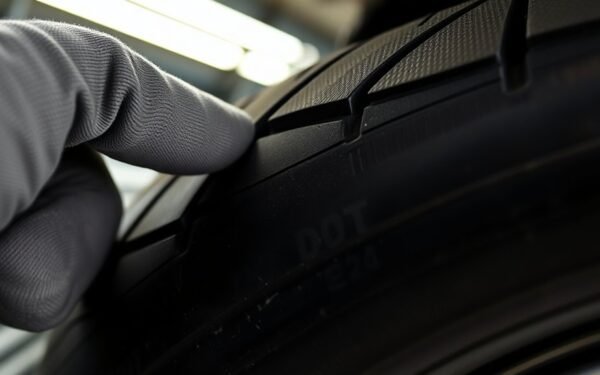
How to Tell the Age of a Tire: Reading the DOT Code Explained
Begin with the DOT code to uncover your tire’s hidden age, but beware—what the numbers reveal may change everything about its safety.
Read More
Can You Drive on a Flat Tire? Risks, Distance Limits & What to Do
Lost on a flat tire? Learn the real risks, how far you can go, and the critical next step before disaster strikes.
Read More