When to Replace Toyota Camry Tires: Tread Depth, Age & Warning Signs

Your Toyota Camry tires should be replaced when tread depth reaches 2/32 inch, the wear bars are flush with the tread, or you see unsafe damage such as sidewall cracks, cuts, bulges, blisters, exposed cords, repeated pressure loss, or severe uneven wear. Mileage matters, but tire condition matters more. A tire can be unsafe before it looks bald, especially in rain, heat, or after a hard pothole hit.
Quick Answer
Replace Toyota Camry tires immediately at 2/32 inch tread depth, when wear bars are level with the tread, or when you find bulges, exposed cords, deep sidewall cracks, cuts, or vibration from suspected tire damage. Start shopping around 4/32 inch if you drive often in rain.
Key Takeaways
- The legal minimum tread depth for passenger tires is 2/32 inch, but wet-weather performance can drop before that point.
- Use a tread-depth gauge for the best reading; use the penny test for 2/32 inch and the quarter test as an early wet-weather warning around 4/32 inch.
- Replace any Camry tire with a bulge, blister, exposed cord, serious sidewall crack, or repeated air-pressure loss.
- Check tire pressure monthly when the tires are cold, using the pressure listed on the driver-door placard or owner’s manual.
- Check tire age with the DOT date code and follow the tire manufacturer’s age limit, even if the tread still looks usable.
At a Glance
| Time Required | 5–10 minutes for a basic home inspection |
| Difficulty | Easy for inspection; professional help recommended for vibration, bulges, alignment, or pressure loss |
| Tools Needed | Tread-depth gauge, penny, quarter, tire-pressure gauge, flashlight |
| Cost | Inspection is usually free at home; replacement cost depends on tire size, brand, installation, balancing, valve stems, and alignment needs |
How Long Camry Tires Last

Toyota Camry tire life varies by tire model, driving habits, climate, road surfaces, alignment, inflation pressure, and rotation history. Do not replace tires by mileage alone. A set that still has tread can be unsafe because of age or damage, while a well-maintained set can last longer before reaching the wear indicators.
To get the most life from your tires, follow your Camry’s maintenance schedule, rotate the tires as recommended, keep the cold pressure at the number on the driver-door Tire and Loading Information label, and correct alignment or balance problems quickly. The National Highway Traffic Safety Administration recommends monthly pressure and tread checks, and it notes that rotation, balance, and alignment help tires last longer.
Pro Tip: Write down tread depth for each tire every time you rotate them. If one tire loses tread much faster than the others, you can catch pressure, alignment, suspension, or balance problems before they ruin the next set.
[Products Worth Considering]

This portable cordless tire inflator delivers up to 160 PSI with fast 17 L/min airflow to help you quickly top up tires and get back on the road. It features dual power mode, running on a 21V rechargeable battery or a 12V DC adapter for convenient roadside use. An automatic shut-off with digital pressure gauge helps prevent overinflation, and a built-in LED light improves visibility in low-light conditions.

EVOULTES heavy duty tire inflator with an integrated gauge delivers accurate pressure readings from 10–120 PSI, helping you inflate, deflate, and check tires in one tool. The 16.5-inch extended dual-head air chuck with swivel base reaches hard-to-access dual wheel valves on trucks and RVs. A brass trigger core and side-mounted air release valve make operation smooth, with standard 1/4" NPT threading and quick-connect compatibility for easy setup.

The JACO FlowPro Tire Inflator measures, inflates, and airs down tires up to 100 PSI with battery-free operation and ±2% accuracy after calibration. It features a glowing pressure dial for night visibility, a heavy-duty steel build with a hybrid hose, and a precision push-to-inflate thumb trigger. The patented Lightning Air Chuck locks on for a secure seal, and the kit includes quick-connect hardware for easy inline use with your air compressor.
Check Camry Tire Tread Depth First
Start with tread depth because it controls how well your Camry can grip, brake, and channel water away from the contact patch. The legal wear-out point for U.S. passenger-car tires is 2/32 inch, but wet-weather traction can become noticeably worse before that. The safest approach is to measure with a tread-depth gauge, then use coin tests as quick backup checks.
| Tread Reading | What It Means | What to Do |
|---|---|---|
| 6/32 inch or more | Usually usable if wear is even and there is no damage | Keep checking monthly and before long trips |
| 4/32 inch | Wet braking and hydroplaning resistance are reduced | Start shopping, especially if you drive in rain |
| 3/32 inch | Very little wet-weather margin remains | Replace soon; avoid delaying through rainy seasons |
| 2/32 inch or lower | Tire is worn out by the common U.S. passenger-tire minimum | Replace immediately |
Measure Tread Depth
Use a tread-depth gauge in the main grooves of each tire. Check the inner, center, and outer tread ribs because a Camry tire can wear unevenly across the width. Measure several spots around the tire, not just the easiest spot to reach.
If you do not have a gauge, use coins as quick screens. The penny test checks the 2/32-inch replacement point. The quarter test is more conservative for rainy driving because it gives an early warning around the 4/32-inch shopping point.
Use The Penny Test
Place a penny upside down into a main tread groove with Lincoln’s head pointing down. If you can see all of Lincoln’s head, the tread is at or below the common 2/32-inch replacement point and the tire should be replaced. Repeat this check across several grooves and on all four tires.
- Check the most worn-looking grooves first.
- Use the same coin position on every tire.
- Test inner and outer tread areas, not only the center.
- Repeat monthly and before long trips.
- Use a tread-depth gauge if the result is close.
Watch Wear Indicator Bars
Newer passenger tires have treadwear indicators, often called wear bars, molded into the grooves. The Toyota Camry owner’s manual tells owners to check whether the treadwear indicators are showing and to replace tires when the indicators are showing on a tire. You can also find the indicator locations by looking for “TWI” or a small triangle mark on the sidewall.
When the surrounding tread wears down level with the bars, the tire has reached its wear-out point. Do not wait for every groove to look bald. If any major groove reaches the wear bars, plan replacement.
AAA testing found that Toyota Camry tires worn to 4/32 inch took 42% longer to stop on wet pavement than new tires in the same test conditions.
Spot Camry Tire Wear Bars
- Look inside the main tread grooves for small raised bars.
- Use the “TWI” or triangle marks on the sidewall to find them faster.
- Compare each bar with the surrounding tread blocks.
- Replace the tire when the tread is level with the wear bar.
- Check all four tires because front and rear tires may wear differently.
Wear bars are simple, but they are not the only check. If a tire has a bulge, exposed cord, deep sidewall cut, repeated pressure loss, or severe vibration, replace or inspect it immediately even if the tread is still above the bars.
Look for Sidewall Cracks and Cuts

Inspect your Camry tire sidewalls in good light. Look for cracks, cuts, grooves, abrasions, missing chunks, exposed cords, and any spot that looks swollen or distorted. Sidewalls flex constantly, so damage here is more serious than a small tread-area nail that a tire shop may be able to repair.
Inspect Sidewall Damage
Run your eyes slowly around both sidewalls of each tire. If you recently hit a pothole, curb, or road debris, inspect the tire before highway driving. Sidewall impact damage can weaken the tire internally even when the outside mark looks small.
- Scan for scuffs after curb contact.
- Check for cuts from road debris.
- Look for cracks that continue around the sidewall.
- Inspect both the outer and inner sidewalls when possible.
- Have a professional inspect any damage you cannot judge confidently.
Replace for Visible Cracks
Small surface checking can happen as rubber ages, but deep cracks, splits, exposed cords, or sidewall cuts are not normal wear. Replace the tire or have it inspected before continuing to drive. The federal tire inspection standard rejects tires with exposed cords or belting material and tires with bulges that show separation.
Warning: Do not keep driving on a Camry tire with a sidewall bulge, exposed cord, deep cut, or blister. Put on the spare if your vehicle has one, call roadside assistance, or drive only as directed by a tire professional.
Watch for Bulges and Blisters
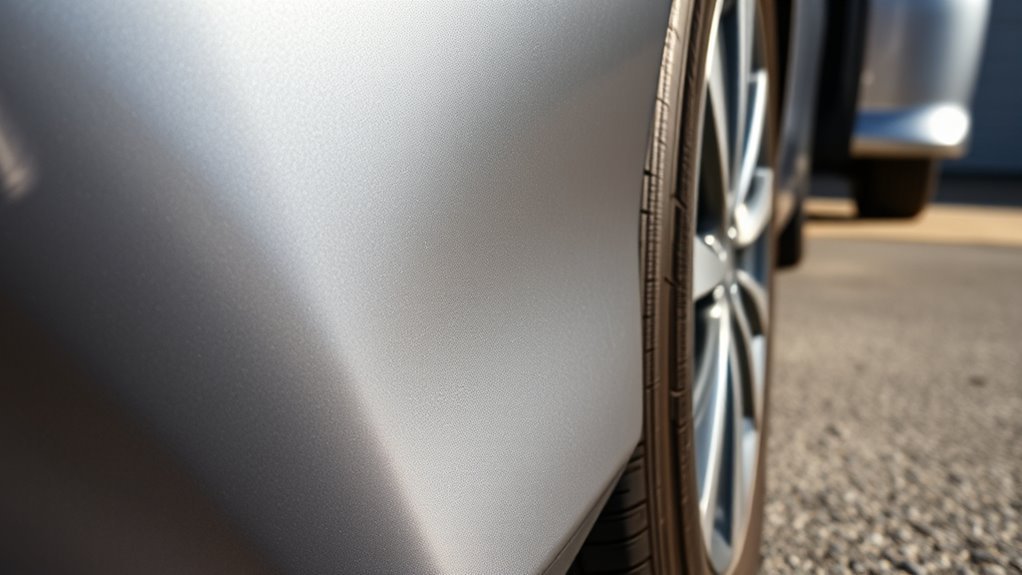
Bulges and blisters are urgent replacement signs. They often mean the internal tire structure has been damaged by impact, underinflation, overloading, or separation inside the casing. A patch cannot restore that structure.
- Check the sidewalls and tread shoulders in bright light.
- Look for rounded swelling, bubbles, or raised spots.
- Compare all four tires for abnormal shapes.
- Inspect after striking a curb, pothole, or road debris.
- Replace the tire before high-speed or highway driving.
Why Camry Tires Cause Vibration
If your Toyota Camry shakes at certain speeds, the tires are one of the first places to check. Common tire-related causes include imbalance, uneven wear, a bent wheel, a separated belt, flat-spotting after hard braking, incorrect pressure, or damage from a pothole.
A steady highway-speed shake often points to balance or tire uniformity. A pull to one side can point to alignment, uneven pressure, or uneven wear. A thumping feel that gets worse with speed can mean internal tire damage and should be inspected quickly. NHTSA advises drivers to consult a tire service professional when they notice tire performance changes such as noise or vibration.
Read Uneven Tire Wear Patterns
Uneven wear tells you why a tire may need replacement early. It also helps prevent the same problem from ruining your next set.
| Wear Pattern | Likely Cause | Fix Before New Tires |
|---|---|---|
| Center worn faster | Overinflation or frequent high-speed center wear | Set cold pressure to the door placard |
| Both shoulders worn | Underinflation or heavy cornering | Check for leaks and correct pressure |
| One edge worn | Alignment problem or worn suspension part | Get an alignment and suspension inspection |
| Cupping or scalloping | Imbalance, worn shocks/struts, or suspension wear | Balance tires and inspect suspension |
| Patchy or diagonal wear | Rotation neglect, alignment, or mechanical wear | Rotate on schedule and inspect alignment |
Check Tire Pressure and TPMS
Low or high pressure can shorten tire life, cause uneven wear, reduce fuel economy, and increase heat buildup. Check all four tires when they are cold, meaning the car has been parked for at least three hours. Use the pressure listed on the Camry’s driver-door Tire and Loading Information label or in the owner’s manual, not the maximum pressure molded into the tire sidewall.
Do not rely only on the tire pressure monitoring system. TPMS warns when pressure is significantly low, but it is not a replacement for monthly checks with a gauge. Also check the spare tire if your Camry has one, because a spare may not have a TPMS sensor.
Note: Tire pressure changes with temperature. If the first cold snap turns on the TPMS light, check the pressure with a gauge and adjust it to the placard number.
[Products Worth Considering]

This portable tire inflator delivers fast, efficient inflation with a maximum 150 PSI rating and accurate pressure control for cars, motorcycles, bikes, and more. It features preset modes with automatic shutoff to help prevent overinflation, plus a real-time digital gauge and bright LED light for roadside use. Powered by a rechargeable 6000mAh battery with Type-C charging and a USB output, it’s also useful as an emergency power source for devices.

This portable cordless tire inflator delivers fast, efficient inflation for cars, motorcycles, bikes, and sports balls with a digital pressure gauge. Use the one-click PSI preset with auto shut-off for accurate, hands-free topping to your target pressure up to 150 PSI. It’s compact and rechargeable with a built-in emergency LED light plus valve adapters and accessories for quick, ready-to-go use.
When Camry Tire Age Means Replacement
Tire age can make a Camry tire unsafe even when the tread still looks acceptable. Rubber and internal materials change over time because of heat, sunlight, storage conditions, load, speed, and maintenance history. That is why older tires need more than a quick tread check.
Find the DOT Tire Identification Number on the sidewall. The last four digits show the week and year of manufacture. For example, “2519” means the tire was made in the 25th week of 2019. NHTSA says some vehicle and tire manufacturers recommend replacing tires that are six to 10 years old regardless of treadwear, so check your tire manufacturer’s service-life guidance and your Camry owner materials.
- Check the DOT date code on all four tires.
- Check the spare tire date if your Camry has a spare.
- Have older tires inspected by a professional, especially after five to six years.
- Replace sooner if you see cracking, stiffness, bulges, pressure loss, or vibration.
- Do not keep any tire beyond the tire manufacturer’s maximum service-life guidance.
Choose the Right Replacement Tires
When your Camry needs tires, match the tire size, load index, and speed rating shown on the Tire and Loading Information label, the owner’s manual, or the current tire sidewall if it matches the original specification. If you want a different size or performance category, confirm it with a qualified tire dealer before buying.
For best handling, replace all four tires together when possible. If you replace only two tires, ask the tire professional where they should be installed for your exact Camry, tire type, and drivetrain. Many tire makers and safety groups recommend installing the newer pair on the rear axle to help reduce oversteer risk on wet roads, but your vehicle setup and tire design still matter.
After You Replace Camry Tires
New tires should be installed carefully, balanced, inflated to the correct cold pressure, and checked for proper fitment. Ask the shop whether an alignment is recommended, especially if the old tires had edge wear, cupping, vibration, or the car pulled to one side.
- Confirm tire size, load index, and speed rating before installation.
- Have the new tires balanced.
- Set cold pressure to the driver-door placard.
- Check whether TPMS sensors need service, registration, or reset.
- Schedule an alignment check if the old tires wore unevenly.
- Recheck lug nut torque if your tire shop recommends it after a short drive.
Inspect Your Camry Tires Often
Inspect your Camry tires at least monthly and before long trips. Measure tread depth, check pressure cold, read the wear bars, and inspect each sidewall for cracks, cuts, grooves, bulges, or blisters. Look for uneven tread wear and changes in how the car drives, such as vibration, pulling, noise, or pressure loss.
Regular inspections help you replace tires before they compromise braking, handling, wet traction, and stability. They also help you catch the underlying problem before it damages the next set.
Frequently Asked Questions
Should I replace my Camry tires at 4/32 or 3/32?
Start shopping at 4/32 inch if you drive in rain because wet braking and hydroplaning resistance are already reduced. At 3/32 inch, replacement should be treated as urgent, especially before rainy weather or a long trip. At 2/32 inch, replace immediately.
Is the penny test enough for Toyota Camry tires?
The penny test is useful for checking the 2/32-inch replacement point, but a tread-depth gauge is better. Use the quarter test if you want an earlier wet-weather warning around 4/32 inch.
Do I need to replace all four Camry tires at once?
Replacing all four is best for even handling and consistent traction. If you replace only two, ask the tire professional where the new pair should go for your Camry’s drivetrain and tire type. Also make sure the remaining tires are the same size, compatible construction, and safe tread depth.
Can I drive on a Camry tire with a small sidewall bubble?
No. A sidewall bubble or blister can signal internal structural damage. Replace the tire before highway driving, and use roadside assistance or a spare if the tire looks unsafe.
Where do I find the correct tire pressure for a Toyota Camry?
Use the Tire and Loading Information label on the driver-door edge or doorjamb, or check the owner’s manual. Do not use the maximum pressure printed on the tire sidewall as your normal inflation target.
Conclusion
Your Camry’s tires do not need guesswork; they need a regular, simple inspection. Replace them at 2/32 inch, when the wear bars are flush, or any time you find serious cracks, cuts, bulges, blisters, exposed cords, repeated pressure loss, or vibration from suspected tire damage. Start shopping around 4/32 inch if you drive often on wet roads. Check pressure monthly, read the DOT date code, and fix alignment or balance issues before they shorten the life of your next set.
Sources
- NHTSA TireWise tire safety guidance — backs monthly pressure checks, tread-depth replacement, penny test, tire aging, vibration, and damage guidance.
- 49 CFR § 570.9 Tires — backs the 2/32-inch tread-depth minimum and rejection conditions for bulges, exposed cords, and tire damage.
- Toyota 2025 Camry Hybrid Owner’s Manual: Tires — backs Camry treadwear-indicator and tire-check guidance.
- Toyota 2025 Camry Hybrid Owner’s Manual: Maintenance — backs following Toyota’s maintenance schedule and bringing problems to a qualified service shop.
- U.S. Tire Manufacturers Association Tire Care Essentials — backs cold pressure checks, spare checks, tread depth, wear bars, penny test, and rotation basics.
- AAA worn-tire wet-weather testing — backs the 4/32-inch wet-weather shopping recommendation and reduced wet stopping performance.

Related Articles

Toyota Camry All-Season Tires Explained: What They Can and Can’t Do
In exploring Toyota Camry all-season tires, discover their benefits and limitations—are they really the right choice for your driving needs?
Read More
Toyota Camry Tire Traction in Ice and Snow: A Practical Winter Driving Guide
Learn essential tips for maximizing tire traction on ice and snow in your Toyota Camry, ensuring your winter driving is safe and confident. Discover more now!
Read More
Do Toyota Camry Tires Need Snow Chains? When They Help and When They Don’t
How do snow chains enhance your Toyota Camry's winter driving safety, and when should you avoid using them? Discover the essential details inside!
Read More