
What Does Ply Rating Mean for Toyota RAV4 Tires?
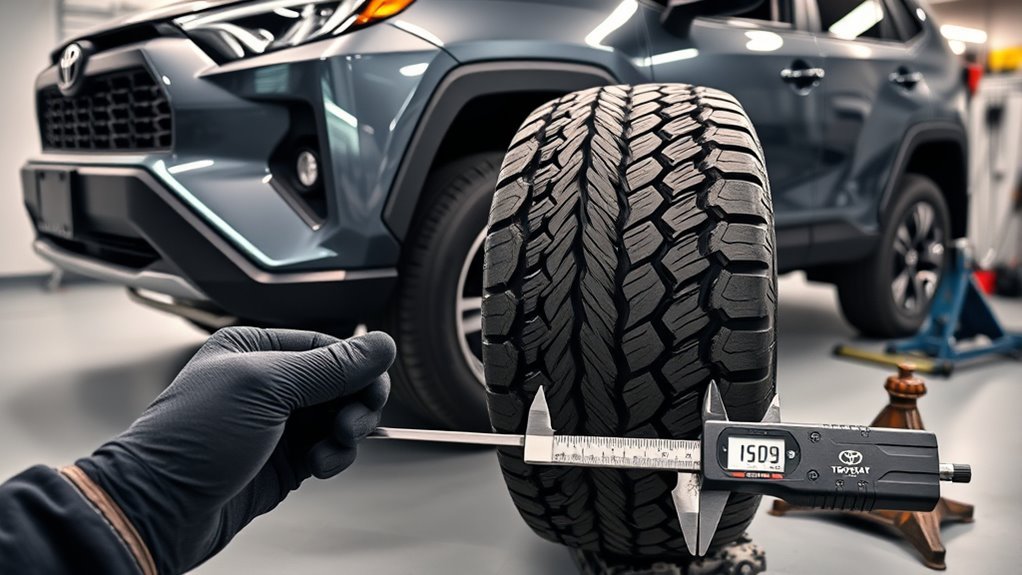
Your RAV4’s ply rating is a strength clue, but it is not the best number to shop by on modern tires. For a Toyota RAV4, the safer way to choose replacement tires is to match the tire size, load index, speed rating, and load range shown on the tire sidewall and on the Tire and Loading Information label on the driver-side door area.
Quick Answer
For a RAV4, do not choose tires by ply rating alone. Choose tires that meet or exceed Toyota’s original tire size, load index, speed rating, and load range. A higher ply or load range can help with heavy cargo, rough roads, or light towing, but it can also make the ride firmer and should not replace Toyota’s load and inflation guidance.
Key Takeaways
- Load index matters more than old ply wording because it gives the tire’s actual maximum load rating.
- The tire’s max PSI is not the recommended PSI. Use the RAV4 door placard or owner’s manual for normal cold tire pressure.
- Never install a lower-rated tire than the original equipment tire for size, load index, or speed rating.
- Higher load range can be useful for heavy cargo, rough roads, or towing within the RAV4’s rated limits, but it may reduce comfort and fuel economy.
At a Glance
| Time Required | 5–10 minutes |
| Difficulty | Easy |
| Tools Needed | Tire pressure gauge, phone camera, owner’s manual or door placard |
| Cost | Free, or about $5–$20 for a basic tire gauge |
RAV4 Ply Rating: The Practical Answer
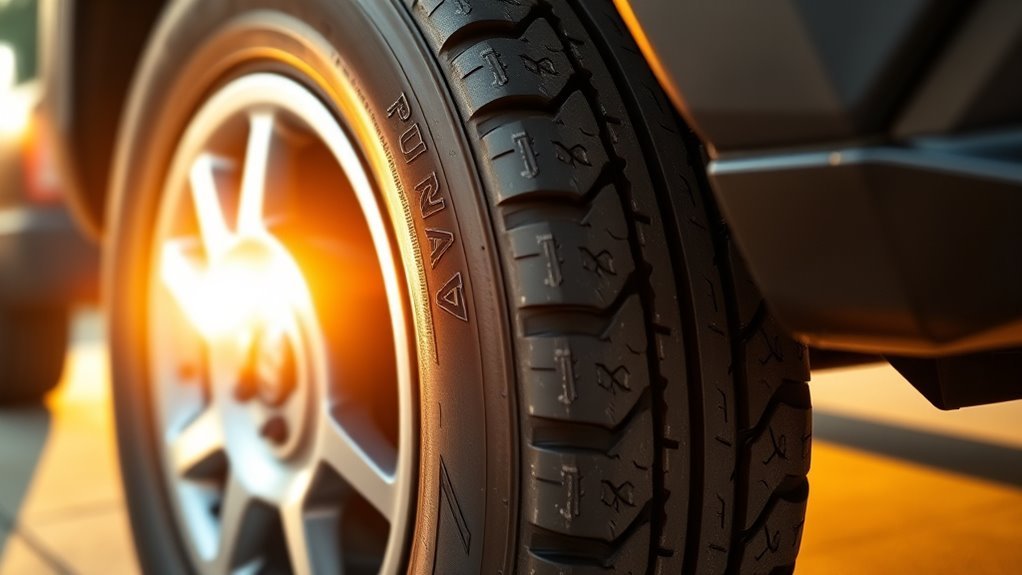
Traditional ply rating came from older tire construction, when the number of fabric plies helped describe tire strength. Modern radial tires are different. They often use fewer physical layers with stronger materials, so “4-ply,” “6-ply,” or “10-ply” is usually a strength equivalent, not a literal layer count.
Most RAV4 owners should focus on these four markings instead:
| Marking | Where You’ll See It | What It Means | RAV4 Takeaway |
|---|---|---|---|
| Tire size | Example: 225/65R17 | Width, sidewall ratio, construction, and wheel size | Match the size listed on your RAV4 placard unless Toyota or a qualified tire professional approves a different size. |
| Load index | Example: 102H, where 102 is the load index | Maximum weight the tire can carry at its rated pressure | Use a load index equal to or higher than the original tire. |
| Speed rating | Example: 102H, where H is the speed rating | Maximum speed capability under rated conditions | Do not downgrade the speed rating unless the tire maker and vehicle guidance allow it. |
| Load range | SL, XL, C, D, E, or similar | Strength and inflation category | SL or XL is common for passenger-style crossover tires; LT load ranges are heavier-duty and need careful pressure matching. |
Warning: A tire with a higher ply rating does not let you exceed your RAV4’s GVWR, payload rating, axle ratings, towing limit, wheel rating, or trailer tongue-weight limit. The weakest rated part of the vehicle, tire, wheel, or trailer setup still controls the safe limit.
[Products Worth Considering]

Keep RV, trailer, or truck dual-axle tires protected with waterproof, UV-resistant covers that help guard against sunlight, snow, rust, and dirt. The dual tire covers are easy to install with a rope/bungee fastener for a stable fit that won’t easily slip. Designed for 27–30 inch diameter wheels, they help maintain tire condition through harsh weather.
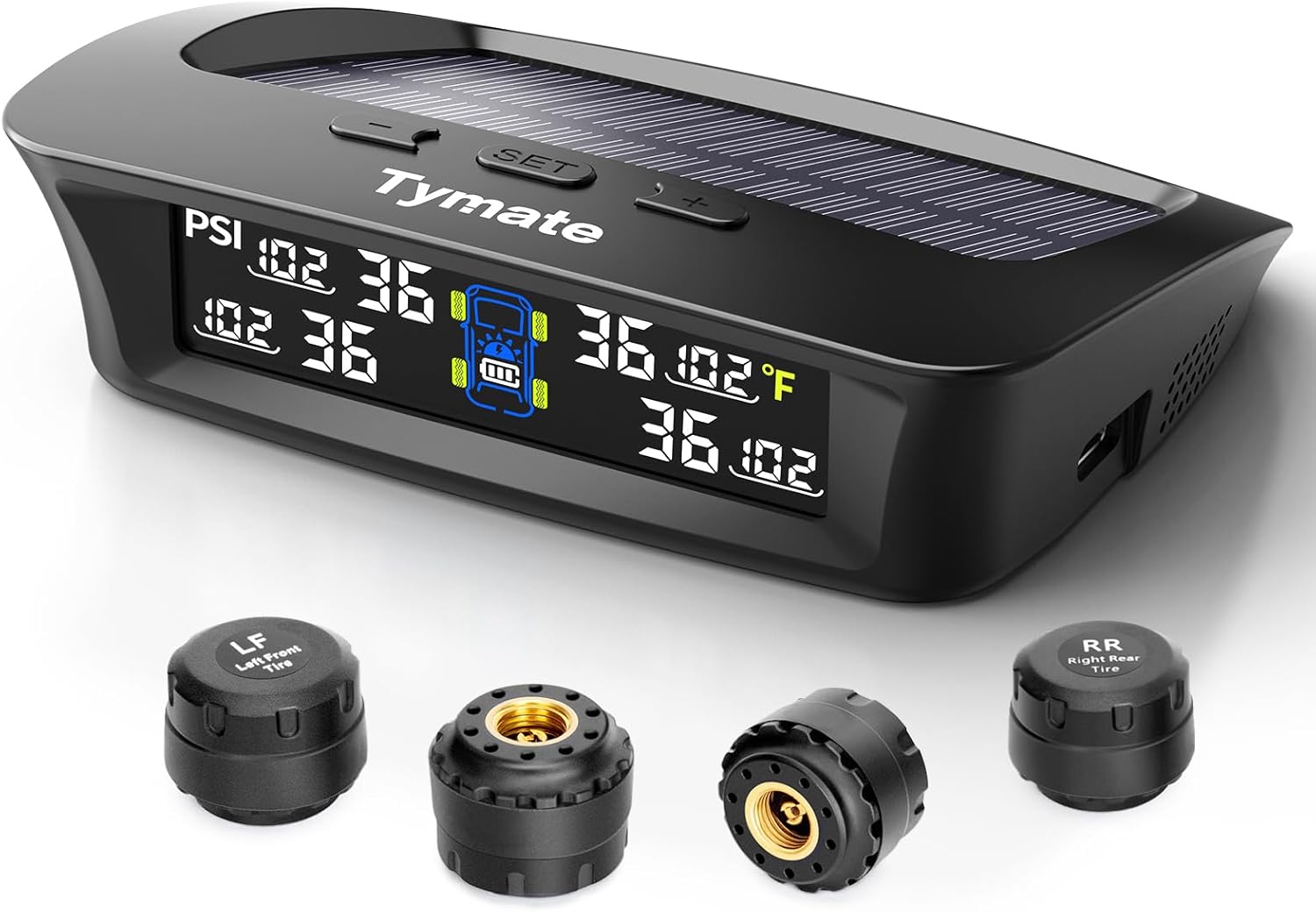
The Tymate TM3 RV TPMS delivers real-time tire pressure monitoring from 0 to 144 PSI with accurate readings and dependable wireless communication. It includes four external sensors with pre-pairing, six alarm modes for rapid leak, pressure extremes, temperature, and signal loss, plus an easy-reference setup for alert thresholds. Solar and USB-C charging help keep the display powered, while the color LCD and adaptive backlight improve visibility for safer driving and towing.

EVOULTES heavy duty tire inflator with an integrated gauge delivers accurate pressure readings from 10–120 PSI, helping you inflate, deflate, and check tires in one tool. The 16.5-inch extended dual-head air chuck with swivel base reaches hard-to-access dual wheel valves on trucks and RVs. A brass trigger core and side-mounted air release valve make operation smooth, with standard 1/4" NPT threading and quick-connect compatibility for easy setup.
What Ply Rating Means for RAV4 Load Capacity
Ply rating is a quick way to talk about tire strength, but load capacity comes from the tire’s actual load index, load range, size, and approved inflation pressure. Federal tire rules define load rating as the maximum load a tire can carry for a given inflation pressure, and maximum load rating as the load rating at the tire’s maximum permissible inflation pressure. You can read those definitions in 49 CFR 571.139.
Load Index Is the Number to Trust
The load index is usually a two- or three-digit number in the tire’s service description. In a marking such as 225/65R17 102H, the 102 is the load index and the H is the speed rating. A tire shop or tire manufacturer’s chart can convert that load index into pounds or kilograms.
For a RAV4, the rule is simple: choose a replacement tire with a load index that is equal to or greater than the original equipment requirement for your exact year, trim, wheel size, and tire type.
Inflation and Capacity Work Together
A tire only carries its rated load when it is used at the correct pressure for that application. Toyota says the recommended cold tire inflation pressure and tire size are shown on the Tire and Loading Information label, and Toyota recommends checking tire inflation pressure every two weeks in the RAV4 owner’s manual guidance for tire inflation pressure. You can confirm that in Toyota’s official RAV4 manual page on tire inflation pressure.
The NHTSA tire safety guide also makes the same key point: the correct pressure is the vehicle manufacturer’s recommended cold pressure on the tire information placard or in the owner’s manual, not the pressure molded on the tire sidewall.
Note: The sidewall’s “Max Press” marking is a tire limit, not a daily target. For normal driving on the original tire size and type, start with the cold PSI on the RAV4 placard.
Matching Ply or Load Range to Use
For normal commuting, highway driving, and school-run use, the best RAV4 tire is usually the one that matches the original size, load index, speed rating, and load range. A higher load range is not automatically better.
Consider a stronger load range only when your use actually demands it:
- You often carry passengers, tools, camping gear, or cargo near the RAV4’s rated payload limit.
- You tow within Toyota’s rated towing limit and need a tire with better heat and load margin.
- You drive gravel, construction roads, or rocky trails where stronger sidewalls may help resist damage.
- You have repeated sidewall damage, impact damage, or pressure-loss problems and a tire professional confirms load range is part of the solution.
How to Read Ply, Load Index, and Max Inflation on Your RAV4 Tires
You do not need special equipment to read your tire rating. Park safely, turn the front wheel outward if needed, and inspect the sidewall in good light.
Step 1: Find the Tire Size
Look for a size such as 225/65R17, 235/55R19, or another size listed for your RAV4. The size must match your wheel and vehicle clearance. If your tire size is different from the door placard, make sure the alternate size is approved for your vehicle and wheel.
Step 2: Find the Service Description
After the size, look for a number and letter combination such as 102H. The number is the load index; the letter is the speed rating. This is one of the most important markings when replacing RAV4 tires.
Step 3: Look for Load Range or Extra Load
Passenger-style crossover tires may show SL for Standard Load or XL for Extra Load. Light-truck tires may show Load Range C, D, or E. A RAV4 does not automatically need an LT tire just because it is an SUV. In many cases, an LT tire is heavier, stiffer, and requires a different inflation approach to carry the same load.
Step 4: Read Max Load and Max Pressure
The tire sidewall also lists a maximum load and maximum cold inflation pressure. These are upper tire limits, not instructions to inflate every RAV4 tire to that number. Use them to verify that the tire is suitable, then use Toyota’s placard and tire-manufacturer guidance for the correct operating pressure.
Pro Tip: Take a clear photo of your RAV4 door placard and one photo of each tire sidewall before shopping. That makes it easier to compare size, load index, speed rating, load range, DOT date code, and max pressure at the counter or online.
How Ply Rating Affects Recommended Tire Pressure
Ply rating does not directly set your recommended RAV4 tire pressure. The correct pressure depends on the vehicle, tire size, tire type, load, and tire manufacturer’s load-inflation data.
For the original tire size and type, use the cold PSI on the RAV4’s Tire and Loading Information label. For a different tire construction, such as switching from a passenger tire to an LT tire, do not guess. The U.S. Tire Manufacturers Association tire care manual warns that replacement tires should have equal or greater load-carrying capacity and that LT replacements may require different inflation pressure and wheel checks.
Use this pressure checklist:
- Check pressure cold. A cold tire has not been driven for several hours or has only been driven a short distance at low speed.
- Use the door placard first for original-equipment tire size and type.
- Do not use sidewall max PSI as the normal target unless the tire maker and vehicle application specifically call for it.
- Recheck after heavy loading, towing setup changes, or tire replacement.
- Ask a tire professional if changing size, load range, or passenger-to-LT construction.
When RAV4 Owners Should Upgrade Ply or Load Range
You should think about upgrading load range only when your current tires are the right size and pressure but still do not match your use. A higher-rated tire can add strength, but it will not fix overloading, poor alignment, underinflation, worn suspension, or an overloaded trailer.
Upgrade tire load range only when the tire’s job has changed. Daily driving, rough-road exploring, heavy cargo, and towing all place different demands on a RAV4 tire.
[Products Worth Considering]

This portable cordless tire inflator delivers fast, efficient inflation for cars, motorcycles, bikes, and sports balls with a digital pressure gauge. Use the one-click PSI preset with auto shut-off for accurate, hands-free topping to your target pressure up to 150 PSI. It’s compact and rechargeable with a built-in emergency LED light plus valve adapters and accessories for quick, ready-to-go use.

The JACO FlowPro Tire Inflator measures, inflates, and airs down tires up to 100 PSI with battery-free operation and ±2% accuracy after calibration. It features a glowing pressure dial for night visibility, a heavy-duty steel build with a hybrid hose, and a precision push-to-inflate thumb trigger. The patented Lightning Air Chuck locks on for a secure seal, and the kit includes quick-connect hardware for easy inline use with your air compressor.
Upgrade May Make Sense If You Tow
If you tow with your RAV4, stay within Toyota’s rated towing limit for your exact model and trim. Remember that trailer tongue weight adds load to the vehicle. A tire with a higher load index or XL rating may be helpful, but it does not increase the RAV4’s legal or mechanical towing capacity.
Upgrade May Help for Rough Roads
If you drive on gravel, job sites, forest roads, or rocky tracks, a tire with stronger sidewalls may resist cuts and impacts better than a comfort-focused highway tire. For many RAV4 owners, an all-terrain tire with the correct load index is a better fit than jumping straight to a heavy LT tire.
Upgrade Is Not Always Better for Commuting
For daily commuting, a heavier and stiffer tire can make the RAV4 feel less comfortable. It may also add rolling resistance, increase road noise, and slightly reduce fuel economy. If you do not carry heavy loads or drive harsh roads, matching the original rating is usually the better choice.
Safety, Ride, and Maintenance Trade-Offs of Higher-Ply Tires
Higher-ply or higher-load-range tires can improve durability in the right situation, but they also change how the vehicle feels.
| Benefit | Possible Trade-Off | What to Do |
|---|---|---|
| More load margin when properly selected | Does not raise the vehicle payload rating | Stay within the RAV4 door-label payload and Toyota towing limits. |
| Stronger sidewalls for rough roads | Firmer ride and more road feel | Choose an all-terrain or XL tire only if your road conditions justify it. |
| Better resistance to some impacts and cuts | More tire weight and possible fuel-economy loss | Compare tire weight, tread type, and load index before buying. |
| Higher maximum inflation capability on some tires | Wrong pressure can cause poor handling or uneven wear | Use the placard, tire maker data, and a qualified installer for pressure guidance. |
Common RAV4 Tire Rating Mistakes to Avoid
Mistake 1: Buying by Ply Rating Only
A tire advertised as “8-ply” or “10-ply” may not be the right tire for your RAV4. Always compare the full size, load index, speed rating, load range, and approved rim width.
Mistake 2: Assuming SUV Means LT Tire
The RAV4 is a crossover SUV, and many RAV4 models are designed around passenger-style tires. LT tires can be useful for some severe-duty uses, but they are not automatically safer or better for everyday RAV4 driving.
Mistake 3: Inflating to the Sidewall Maximum
The sidewall maximum is the tire’s upper cold pressure limit. The correct daily pressure for original-equipment tire sizes is the cold pressure listed by Toyota, not the tire’s maximum pressure.
Mistake 4: Dropping Below the Original Load Index
Never choose a tire with a lower load index than the original requirement just because it is cheaper or available. A lower load index can reduce load margin and affect handling, heat buildup, and tire life.
Mistake 5: Ignoring Wheels and Clearance
A stronger tire still needs the correct wheel size, rim width, load rating, and body clearance. This matters even more if you move to a wider tire, taller all-terrain tire, or LT construction.
Frequently Asked Questions
Which is better for a RAV4: 4-ply or 8-ply tires?
Neither is automatically better. For normal RAV4 driving, a standard-load passenger tire with the correct size, load index, and speed rating can be the better choice because it rides smoother and weighs less. An 8-ply-equivalent or higher-load-range tire may be useful for heavier cargo, rough roads, or towing within Toyota’s limits, but it can make the ride stiffer.
Are 4-ply tires good for SUVs?
Yes, they can be good for many crossover SUVs if the tire meets the vehicle’s required load index, speed rating, tire size, and load range. The RAV4 is not a heavy-duty truck, so a higher ply rating is not always needed. The key is matching Toyota’s original requirements, not chasing the highest ply number.
What load index does a Toyota RAV4 need?
It depends on the RAV4 year, trim, wheel size, and original tire. Check the Tire and Loading Information label on the driver-side door area and match or exceed the original load index. If the sidewall shows something like 102H, the number 102 is the load index.
Do higher-ply RAV4 tires need more air pressure?
Not automatically. A higher-load-range tire may be capable of higher pressure, but the correct operating pressure depends on the tire size, tire construction, vehicle load, and approved load-inflation data. For original tire size and type, use Toyota’s cold PSI on the door placard.
Can I put 10-ply tires on a RAV4?
You may be able to fit a 10-ply-equivalent or Load Range E tire only if the size, rim fitment, load rating, clearance, and pressure requirements are correct, but it is usually unnecessary for everyday RAV4 use. It may ride harder, weigh more, and require different inflation guidance. Ask a qualified tire installer before switching to LT or Load Range E tires.
Conclusion
For a RAV4, ply rating is only one piece of the tire-rating puzzle. The safer choice is to match the original tire size, load index, speed rating, and load range, then inflate the tires to Toyota’s recommended cold pressure for your setup. Upgrade load range only when your real driving conditions call for it, such as heavier cargo, towing within rated limits, or rough-road use. When in doubt, use the RAV4 door placard, owner’s manual, and a qualified tire professional instead of guessing from the ply number alone.
Sources
- Toyota RAV4 Owner’s Manual: Tire Inflation Pressure — supports Toyota’s guidance to use the Tire and Loading Information label and check tire pressure regularly.
- NHTSA Tire Safety Ratings and Awareness — supports checking cold tire pressure and using the vehicle placard rather than the sidewall maximum as the recommended PSI.
- 49 CFR 571.139: New Pneumatic Radial Tires for Light Vehicles — supports definitions for tire load rating, maximum load rating, maximum permissible inflation pressure, and tire construction terms.
- U.S. Tire Manufacturers Association: Care and Service of Passenger and Light Truck Tires — supports replacement-tire guidance for size, load capacity, inflation pressure capability, speed rating, and passenger-to-LT tire considerations.

Related Articles

Toyota RAV4 TPMS Reset: Easy Steps That Work
Unlock the secrets to resetting your Toyota RAV4's TPMS effortlessly—discover the essential steps to ensure your tires are always safe.
Read More
Toyota RAV4 Tire Rotation: DIY Steps & Pattern
Take control of your Toyota RAV4's tire maintenance with our simple DIY rotation guide—discover the best steps for optimal performance and longevity!
Read More
Mix Tire Brands on a Toyota RAV4? Expert Guide
Keeping your RAV4 safe? Learn when mixing tire brands risks traction, ABS/TCS and AWD damage — and what exact matches you must insist on.
Read More