
Latex vs TPU Tubes: Best Performance Guide
Last updated: August 18, 2026
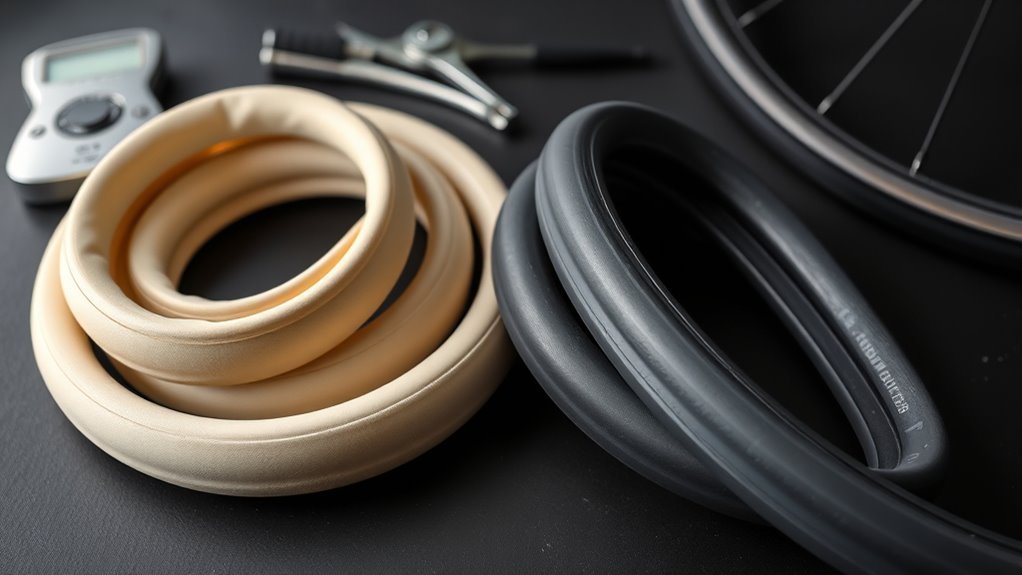
Latex vs TPU inner tubes comes down to efficiency versus weight and convenience. Choose latex if your main goal is the lowest rolling resistance. Modern TPU tubes can get extremely close in current laboratory testing while weighing far less and packing much smaller. TPU repair, puncture, sealant, valve, and brake compatibility vary by model, so do not buy on material alone. Choose the material that fits your priority, then verify the exact tube against your tire width, rim, valve length, brake system, and repair plan.
Editorial/testing note: This comparison synthesizes published laboratory tests and manufacturer guidance; it does not claim first-hand testing. [VERIFY: add the real author/byline, relevant credentials, and genuine first-hand ride or bench-test observations before publishing.]
Latex vs TPU Inner Tubes: Quick Decision
For pure road efficiency, latex remains the safest choice. For the lowest weight and smallest spare, TPU has the advantage. The important change from older latex-vs-TPU advice is that modern TPU performance varies widely by product: some models prioritize ultralight racing, while others prioritize puncture protection, heat resistance, or everyday durability.
| Decision factor | Latex | TPU | Best choice |
|---|---|---|---|
| Rolling resistance | Still the lowest in current independent comparison testing | Best modern models can be extremely close | Latex for marginal-gain speed |
| Weight | A Vittoria 700×25/28c Competition Latex tube is listed at 85 g | Road models in current testing range from roughly 20–45 g | TPU |
| Air retention | Loses pressure relatively quickly and commonly needs frequent checks | Often retains pressure longer, but performance varies by product | TPU for convenience |
| Roadside repair | Use a latex-compatible repair method | Usually needs the patch or adhesive system approved by the tube maker | Model-specific |
| Sealant / repair spray | Some products are specifically approved for latex | Highly model-specific; some TPU makers prohibit sealant | Check the exact manufacturer |
| Rim-brake compatibility | Check the tube and rim maker’s heat limits | Some models are explicitly approved for rim brakes; others may have different restrictions | Model-specific |
| Spare-tube size | Compact compared with many butyl tubes | Usually exceptionally compact | TPU |
| Best fit | Racing and riders chasing minimum rolling resistance | Weight-conscious riders, compact spares, and riders wanting lower maintenance than latex | Depends on priority |
Key takeaways:
- Choose latex when minimum rolling resistance matters more than frequent inflation and extra tube weight.
- Choose TPU when low weight, compact storage, and better pressure retention are the priorities.
- Do not assume every TPU tube has better puncture protection, works with sealant, or accepts the same patch.
- For an everyday alternative where cost and simple maintenance matter more than marginal gains, compare butyl vs latex inner tubes before buying.
[Products Worth Considering]

Convert Presta bicycle valves to accept standard Schrader pump nozzles for fast, hassle-free inflation. This kit includes durable brass adapters with leak-resistant connections, plus sports inflation needles and protective valve caps for convenient use on bikes and ball sports equipment.

This 4-pack kit converts Presta bike valves to standard Schrader valves so you can inflate with any regular pump or air compressor. The solid brass adapters include an O-ring for a tight, leak-proof seal and provide a simple screw-on setup. Compatible with road bikes, mountain bikes, e-bikes, and e-scooters, it’s designed for convenient, everyday carry readiness.

This PXZBLG bike repair kit helps you tackle common tire and on-the-ride issues with a compact, ride-ready tool collection. It includes a mini tire pump supporting both Presta and Schrader valves, a 16-in-1 bike multitool, tire levers, glueless patches with a plastic box, plus 4mm and 5mm Allen wrenches. A convenient bike bag stores everything so you can mount it on your road bike or mountain bike for lightweight, portable preparedness.
Rolling Resistance & Weight: Tests, Math, Real Gains
Current independent testing confirms that latex still leads on rolling resistance, but the fastest TPU tubes are now very close. In Bicycle Rolling Resistance’s January 2026 TPU comparison, the Vittoria Latex 25/28 averaged 10.8 W at 80 psi across three road tires. The fastest TPU result at that pressure, the Pirelli P Zero SmarTube RS, averaged 10.9 W. At 100 psi, the same latex tube measured 9.5 W versus 9.7 W for that TPU model.
Those results are more useful than treating “latex saves 7.1 W” or “TPU saves 5.6 W” as universal numbers. An earlier AeroCoach inner-tube test used a 25 mm Continental GP5000 at 90 psi and modeled performance at higher road speed. Its fastest latex option saved more than 7 W for a pair of wheels compared with a standard Continental Race butyl tube at 45 km/h. The exact gain therefore depends on the tire, tube model, pressure, speed, and test method.
Weight and rolling resistance are not interchangeable. AeroCoach modeled a 164 g tube-weight reduction as worth only about 0.8 W while climbing at 16 km/h on a 10% gradient. That helps explain why a heavier latex tube can remain faster overall despite TPU’s large mass advantage.
There is also no universal gradient where TPU suddenly becomes faster than latex. In AeroCoach’s specific comparison between a 25 g Revoloop Ultra Race tube and a 53 g Vredestein Superlite latex tube, the modeled crossover occurred at roughly a 15% gradient. Change the tubes, rider mass, pressure, speed, or tire and that crossover changes too.
The practical decision is simple: choose latex when every fraction of rolling resistance matters. Choose TPU when saving tens of grams per wheel and carrying a very compact spare matters more than a small rolling-resistance difference.
Punctures, Sealant & Repairs: What Actually Works
Do not treat puncture resistance as a property of TPU alone. TPU tubes can be engineered for very high puncture or pinch-flat resistance, but wall thickness and intended use matter. An ultralight racing TPU tube is not equivalent to a reinforced all-road or gravel model. Schwalbe, for example, reports strong Aerothan performance in its manufacturer plunger and snake-bite testing, while other TPU products are optimized primarily for minimum weight.
Repair instructions are also brand-specific. Schwalbe’s Aerothan guidance specifies its glueless patches and says the tube surface should be clean before application. Tubolito specifies its dedicated Tubo-Patch-Kit and warns that repair kits made for butyl rubber are not compatible with Tubolito tubes.
Sealant compatibility is not universal either. Schwalbe says sealing liquid and repair sprays do not seal Aerothan effectively and recommends using Aerothan without sealing liquid. Tubolito permits specified sealants and repair sprays only with certain Schrader/AV-valve products because their Presta/SV valve arrangement differs. Never assume a generic sealant will work inside a TPU tube.
Latex also needs a compatible repair method. Vittoria’s Pit Stop product, for example, is specifically described by the manufacturer as compatible with latex tubes, but that does not mean every patch, adhesive, or repair spray is suitable for every latex product.
For long rides, the safest spare strategy is to carry a complete replacement tube plus the repair product approved for your installed tube. A TPU spare is especially attractive because it occupies very little bag space. If your main concern is self-sealing puncture protection on rough gravel, compare a compatible tubeless setup as well rather than assuming a different inner-tube material will provide the same function as tubeless sealant.
[Products Worth Considering]

Tiakia’s mini high-pressure frame pump delivers up to 260 PSI for faster, more efficient inflations with an optimized intake volume. It features a double-head valve design compatible with Schrader and Presta, plus a conversion for Donlop, making it versatile for bikes and many inflatables. The lightweight anodized aluminum build includes a mounting bracket for convenient carry, while the flexible high-pressure hose and IPX4 waterproof body support outdoor use.
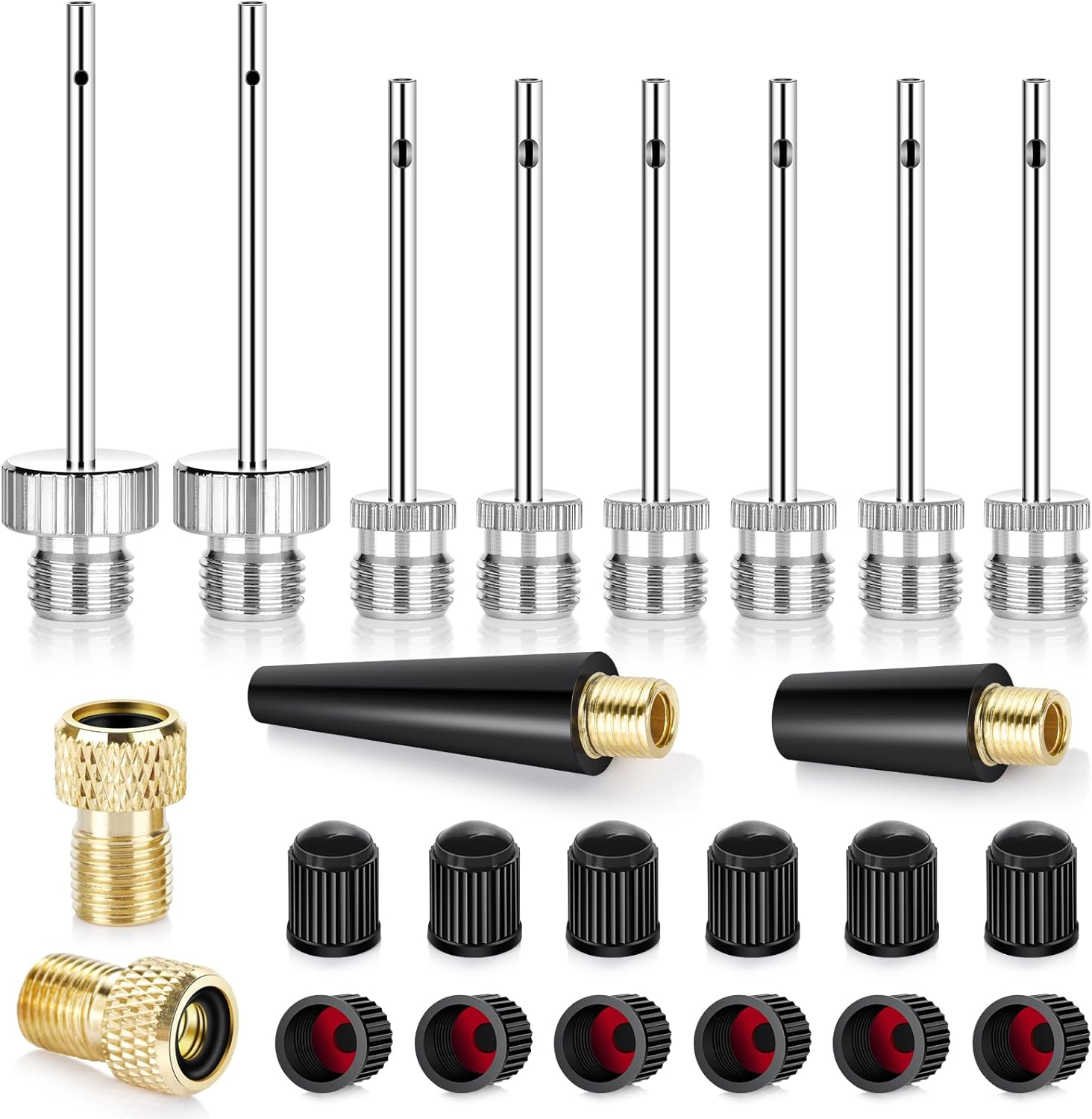
This ball pump needles kit includes brass ball needles for inflating footballs, soccer balls, basketballs, and volleyballs, plus conical nozzles for air mattresses, exercise balls, balloons, and swim rings. It also offers Presta to Schrader valve adapters for easy use with compatible bikes and rideables. The set includes sealed valve caps and a storage case, helping keep your equipment organized and ready to inflate quickly.

Don't let a flat ruin your day, let Slime's tube sealant protect your tires and get you back on the road quickly and easily when you get a flat.
Climbs, Rough Roads & Temperature: Real-World Tradeoffs
TPU’s lower mass becomes most relevant when the road gets very steep, but lighter does not automatically mean faster. The rolling-resistance advantage of latex can outweigh a tube-weight difference on ordinary road gradients. In AeroCoach’s specific modeling, an ultralight TPU option only overtook its latex comparison at roughly a 15% gradient.
For rough roads, choose the specific tube design, not simply the material. Look for a model rated for your tire width and intended riding category. A reinforced TPU tube designed for all-road or gravel use has different priorities from a 20–30 g race tube.
Temperature and brake-heat compatibility are product-specific. Schwalbe states that Aerothan is temperature-stable from -50°C to +70°C and approves its Aerothan tubes for rim brakes and carbon rims. That manufacturer approval should not be generalized to every TPU tube. Before using either latex or TPU with rim brakes, especially on carbon wheels, confirm that both the tube and wheel manufacturers approve the combination.
If you ride far from support, prioritize predictable installation, a proven spare, and a repair system you already know how to use. The small performance difference between good latex and modern TPU matters less when a roadside repair fails because the patch, valve, tire, or rim is incompatible.
Buying & Setup for Latex vs TPU (Valves, Rims, Pressures, Spares)
Before buying either material, match the tube to the tire’s diameter and width range. If you are unsure how to read the markings, use this inner-tube size guide. Also check the tube, valve, rim, and tire relationship before installation.
Use this setup checklist:
- Tire size: The tube’s approved width and diameter must cover the tire you are using.
- Wheel and tire compatibility: A tubeless-ready tire can often be used with a tube when the wheel and tire makers allow it. Hookless systems still require an approved tubeless/tubeless-ready tire and adherence to pressure limits.
- Valve length: Choose enough exposed valve for your pump head. Tubolito’s published rule is a useful example: valve length minus rim height should leave at least 15 mm.
- Valve extensions: Do not apply a blanket “never use extensions” rule. Some tubes, including compatible Aerothan configurations, allow approved extensions when fitted according to the manufacturer’s instructions.
- Pressure: Follow the tire and rim maker’s pressure limits. The tube itself does not override a lower tire or rim maximum.
- Inflation before installation: TPU manufacturers commonly impose very low limits when the tube is outside the tire. Schwalbe specifies a maximum of 0.3 bar for Aerothan outside the tire, while Tubolito publishes its own limit. Check the exact product.
- Brake system: Confirm rim-brake or carbon-rim approval for the exact tube. Do not infer compatibility from the word “TPU.”
- Repair kit: Carry patches, adhesive, or repair spray only if the tube manufacturer approves that method.
For a spare, TPU’s small packed size is one of its clearest advantages. A TPU tube can save space in a saddle bag even when you prefer latex for your installed tubes. Keep the spare protected from sharp tools and check its condition before long rides.
Latex requires more frequent pressure checks because the material is more permeable. Vittoria’s technical guidance notes that latex loses air faster than butyl, and AeroCoach similarly recommends pumping latex tubes before riding. TPU often offers better day-to-day air retention, although the exact loss rate still varies by tube and setup.
[Products Worth Considering]
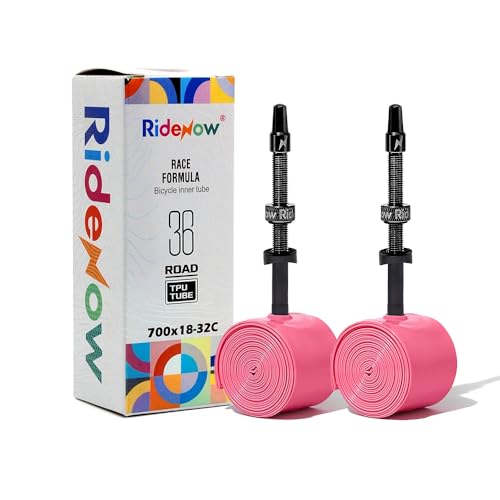
Versatile Size Range: The ultra-light road bike inner tube fits a range of tire sizes, including 700x18-32C, ensuring compatibility with various road bike tire sizes.

LIGHTWEIGHT DESIGN: TPU inner tube significantly reduces weight and accelerates more sensitively, giving you a light feedback every time you step on it
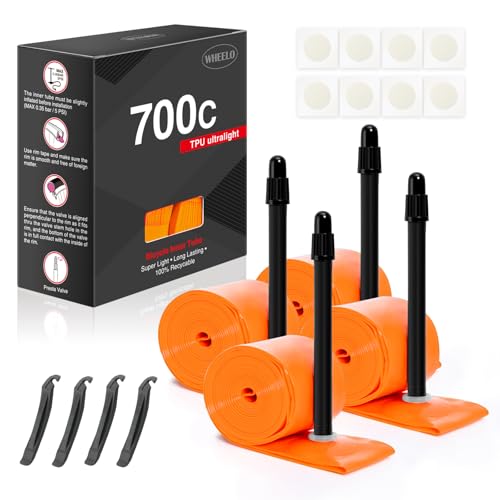
[Featherweight and Durable]: Crafted using advanced Thermoplastic Polyurethane (TPU) technology, these tubes weigh a mere 35g, striking the perfect balance between durability and lightweight design.
Frequently Asked Questions
Can Latex or TPU Tubes Be Used With Tubeless-Ready Tires?
Usually, yes, if the wheel and tire manufacturer allows a tube in that system. Hookless rims still require a hookless-approved tubeless or tubeless-ready tire, and pressure limits remain in force. Zipp, for example, states that a tube may be used with a compatible tubeless/tubeless-ready tire on its TSS hookless rims. Always follow the wheel and tire maker’s compatibility instructions.
Which Is Faster: Latex or TPU Inner Tubes?
In current laboratory comparisons, latex is still the safest choice for the lowest rolling resistance. Bicycle Rolling Resistance’s January 2026 data put Vittoria Latex at 10.8 W at 80 psi versus 10.9 W for the fastest TPU tube in that comparison. The gap is small enough that tire choice, pressure, road surface, and total system weight can matter more than the tube material alone.
Can TPU Inner Tubes Be Repaired?
Yes, many TPU tubes are repairable, but use the repair system approved for that tube. Schwalbe specifies its glueless patches for Aerothan, while Tubolito specifies the Tubo-Patch-Kit and says butyl repair kits are not compatible. Do not assume one patch type works on every TPU tube.
Can You Use Sealant in TPU Inner Tubes?
Do not assume TPU works with sealant. Schwalbe says sealing liquid and repair sprays do not seal Aerothan and recommends using it without sealing liquid. Tubolito permits sealant or repair spray only on certain Schrader-valve products. Check the exact tube maker before adding sealant.
Do Latex or TPU Tubes Need Daily Inflation?
Latex normally needs more frequent pressure checks because it is more permeable. Vittoria states that latex loses air faster than butyl, and AeroCoach notes that latex tubes may need pumping before a ride. TPU is often chosen for better air retention, but the exact loss rate depends on the product and setup.
Are TPU Tubes Safe With Rim Brakes and Carbon Rims?
Only use a tube with rim brakes if that exact model is approved for the wheel and braking system. Schwalbe approves all Aerothan tubes for rim brakes and carbon rims, but that does not make every TPU or latex tube universally compatible. Follow both the tube and wheel manufacturer’s heat and pressure limits.
What Valve Length Do I Need for Aero Rims?
Choose a valve that clears the rim enough for your pump head. Tubolito’s guidance is to leave at least 15 mm of valve above the rim, so valve length minus rim height should be at least 15 mm. Some manufacturers also allow approved valve extensions, so a blanket rule to avoid extensions is not correct.
Is TPU More Puncture-Resistant Than Latex?
Not automatically. TPU can be engineered for high puncture or pinch-flat resistance, and Schwalbe reports strong Aerothan results in its own plunger and snake-bite tests. But TPU products vary in wall thickness and intended use, so an ultralight race tube should not be treated the same as a reinforced all-road or gravel tube. Compare the specific model, not just the material.
Conclusion
Choose latex when minimum rolling resistance is the main goal. Choose TPU when very low weight, compact storage, and better day-to-day air retention matter more. Do not assume TPU automatically means better puncture protection, sealant compatibility, or easier repairs. After choosing a material, verify the exact model for tire width, valve length, rim and brake compatibility, pressure limits, and repair method. That final compatibility check matters more than chasing a few grams or tenths of a watt.

Related Articles

Are Expensive Tires Worth It? Cost vs Performance
More than just price, expensive tires can change safety, grip, and long-term value in surprising ways.
Read More
Why Do EV Tires Wear Out Faster?
I reveal why EV tires wear out faster, from instant torque to extra weight, and show what’s secretly chewing through your tread.
Read More
What Are Run-Flat Tires and How Do They Work?
Need a tire that keeps you moving after a puncture? Discover how run-flat tires work and why their hidden limits matter.
Read More
One Comment