
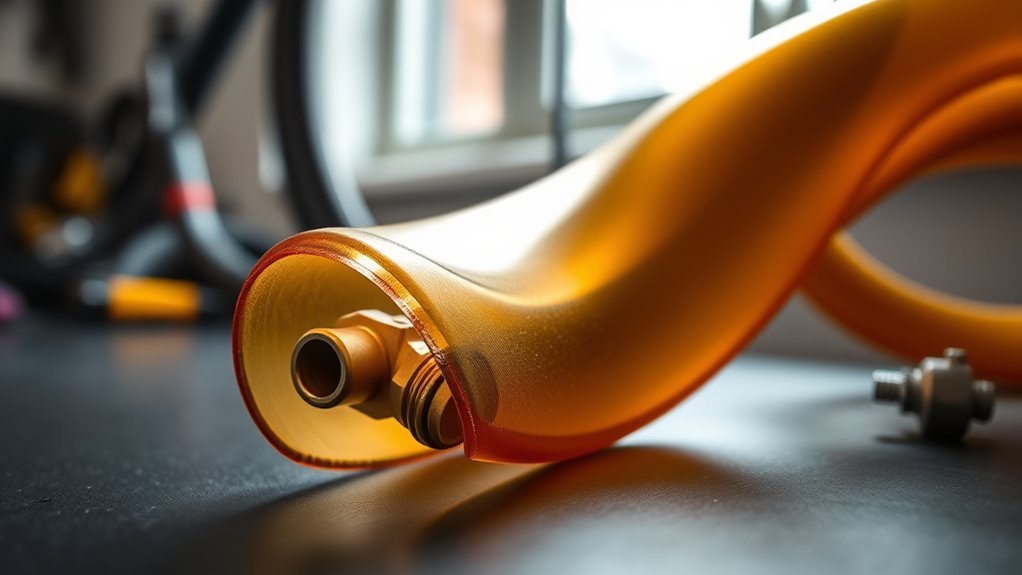
A TPU inner tube is a thermoplastic polyurethane tube that replaces heavy butyl to cut 60-80% of rotating weight, lower rolling resistance, and deliver better elasticity and puncture resistance for fast road or gravel riding. It holds pressure far better than latex, tolerates higher peak pressures, and absorbs micro-impacts for improved comfort and grip. Repairs need TPU-specific kits, and valves must match ETRTO sizing. Keep reading for sizing, repair steps, and use-case guidance.
Quick Answer
- TPU tubes weigh 20-40 g compared to 100-160 g for butyl, saving roughly 70% of tube weight per wheel.
- They roll faster than butyl (close to latex speeds) and hold air far better than latex, so you pump up less often.
- Expect to pay $15-$40 per tube, two to four times the cost of butyl. Budget options start lower.
- You need a TPU-specific patch kit for repairs, and some brands restrict use to disc-brake wheels only.
- Best for road racing, climbing, and gravel. For MTB, tubeless is still the better choice.
What Is a TPU Inner Tube and Why It Matters
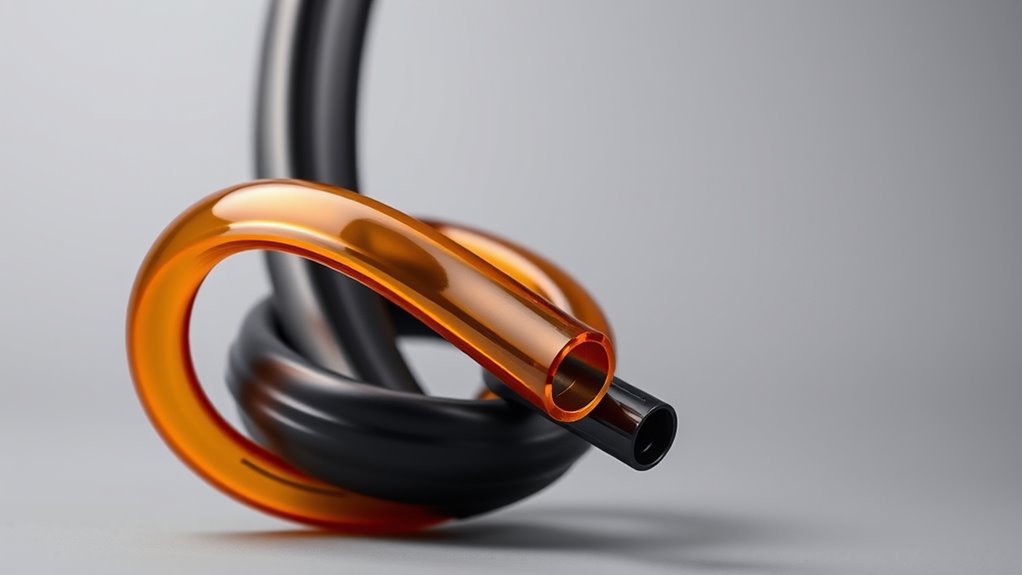
Made from thermoplastic polyurethane (TPU), this inner tube shaves weight and improves ride efficiency. TPU tubes can weigh as little as 20 g, cut rolling resistance through superior elasticity, and offer higher puncture resistance than butyl thanks to greater material strength and impact absorption. You’ll see roughly a 70% weight reduction versus butyl and a much smaller packed volume, so carrying a spare adds almost no bulk.
TPU tube benefits include improved rolling efficiency, increased puncture resilience, and a durable service life that suits road and gravel use. TPU tube applications center on lightweight race setups and long-distance packs where performance per gram counts. Repairs need specific patch kits, and unit cost is higher, typically $15-$40 depending on the brand and model.
TPU vs Butyl and Latex: What Actually Changes
There are clear trade-offs across weight and rolling resistance, with TPU matching latex for low drag while shaving significant grams versus butyl. Air retention and elasticity differ too: butyl holds pressure longest, TPU offers high elasticity with better puncture resistance, and latex is the most elastic but leaks faster. Repairability and cost vary as well. TPU needs specific patches and sits between latex and butyl on price, while butyl is easiest to fix on the roadside.
[Products Worth Considering]

Ride with added confidence using Blackburn inner tubes featuring anti-puncture technology and a 20% thicker tube to help prevent flats. Each set includes two tire levers to make removal and installation easier. Designed for compatible mountain and cruiser bikes with Presta valves.

Upgrade your road bike with this 2-pack of 700c inner tubes sized for 700 x 28–32c tires and a 60mm Presta valve. Built from durable butyl rubber for strong air retention and reliable performance, it helps you stay ready for rides. The set includes two tire levers to make flat repairs faster and easier.

Ultraverse 700c inner tubes are built for 700x28C to 32C tires and feature a 48mm Presta valve for accurate, secure inflation. The high-elasticity butyl rubber construction helps seal air tightly, resist pressure loss, and absorb road vibrations for a smoother ride. A reinforced valve base and thick walls add durability and puncture resistance for reliable everyday performance on road, gravel, and city routes.
Weight and Rolling Resistance
One clear change you’ll notice switching to a TPU inner tube is the drastic drop in rotating mass. TPU tubes typically weigh 20-40 g versus 100-160 g for standard butyl tubes, cutting tube weight by up to 70% and shrinking packed volume to about 30% of a standard butyl tube. That lower mass shifts weight distribution toward the hub and frame, reducing rotational inertia and improving acceleration.
TPU’s reduced rolling resistance translates to measurable speed and energy savings, especially on repeated accelerations and attacks. Vittoria, for example, claims up to 14% lower rolling resistance for its Ultra Light Speed tubes compared to butyl. Independent testing by Bicycle Rolling Resistance confirms that the fastest TPU tubes approach latex-level speed. Compared with latex, TPU matches lightweight performance without extreme air loss, keeping a practical balance between durability, convenience, and low rolling drag.
Air Retention and Elasticity
TPU changes the practical tradeoffs between air retention and elasticity. It holds pressure far better than latex, which can lose around 10 psi per day, while remaining more compliant and impact-absorbing than stiff butyl. You’ll get stable pressure on long rides, lower puncture risk versus butyl, and reduced rolling resistance that benefits cycling performance.
- Air retention: TPU advantages show in multi-day pressure stability, so you won’t constantly top off before a race or brevet.
- Elasticity: TPU’s compliance absorbs micro-impacts, improving comfort and tire contact patch dynamics without the rapid leakage of latex.
- Performance weight tradeoff: at roughly 25 g, TPU combines lightweight gains with predictable pressure behavior for competitive cyclists.
Repairability and Cost
TPU demands a different patching approach and costs more up front, so weigh repair convenience against performance gains. TPU offers better durability and air retention, but introduces repair challenges.
You’ll pay $15-$40 for TPU versus $5-$12 for butyl. That upfront gap matters if you ride casually or carry spares. TPU needs a specific patch kit, and patch kit availability is lower than for standard butyl kits, so field repairs can be less convenient. Both tube types are repairable, yet butyl’s widespread kits and flexible sizing simplify roadside fixes. If you prioritize puncture resistance and longevity, TPU justifies the cost for performance-focused rides. Otherwise, butyl remains a practical, cost-effective choice.
| Attribute | Implication |
|---|---|
| Cost | TPU higher |
| Repairability | TPU specialized |
| Patch kit accessibility | Limited for TPU |
| Durability | TPU superior |
| Sizing | Butyl more flexible |
Performance: Weight, Rolling Resistance, and Air Retention
You’ll notice immediate benefits from TPU’s weight savings: at 20-40 g versus 100-160 g for butyl, less rotating mass improves acceleration and climbing efficiency. You’ll also gain practical air-retention advantages, since TPU holds pressure far better than latex and requires fewer top-ups on multi-day rides. Together, reduced mass and superior sealing translate to measurable performance and less maintenance on long or competitive outings.
[Products Worth Considering]

This 2-pack bicycle inner tube set is designed for kids, road, and MTB bikes with 20-inch tires in the 1.75 to 2.125 width range, using a 32mm AV Schrader valve. Each tube includes two tire levers for easier installation and safer handling while swapping tubes. Butyl rubber delivers reliable air retention, elasticity, and comfort for everyday rides.

Switch to tubeless with this Muc-Off rim tape designed to create an airtight seal for smooth-running setups. The pressure-sensitive adhesive offers the right stretch for strength and durability, while the semi-transparent material helps you locate the valve hole quickly. It includes four seal patches for a secure finishing seal after wrapping.

The Park Tool TL-1.2 tire lever set is narrow, strong, smooth, and versatile for easy tire removal and reliable work on bike tires. It includes a spoke hook design to help when multiple levers are needed. With Park Tool’s industry-standard reputation, this set is ideal for fast flat-fix repairs.
Weight Savings Impact
Savings in rotating mass matter. Swapping butyl for a TPU inner tube can cut roughly 80-130 g per wheel, and that reduction directly improves acceleration and climbing performance. You’ll feel a tangible performance enhancement because less rotational mass lowers inertial losses, boosting cycling efficiency during sprints and sustained efforts. TPU’s lower mass also reduces rolling resistance, so you spend less energy to maintain speed.
- Reduced rotational inertia: quicker spin-up, better acceleration.
- Lower rolling resistance: improved cruising speed for the same power.
- Practical weight savings: lighter setup without sacrificing durability.
TPU tubes give you a measurable edge in dynamic riding scenarios. Choose them when you prioritize responsiveness and sustained climbing performance.
Air Retention Benefits
Beyond the rotational mass savings, TPU tubes also hold air far longer than butyl and dramatically better than latex, which can bleed off as much as 10 psi per day. You’ll maintain target air pressure for longer, spending less time topping up and more time riding. TPU’s low permeability means minimal daily loss compared to butyl’s roughly 1 psi per day and latex’s large bleed-off.
| Metric | Effect |
|---|---|
| Air retention | Superior, minimal leakage |
| Rolling resistance | Reduced, improves acceleration |
This stability supports consistent ride feel, predictable handling, and sustained speed. For distance riders or racers, TPU’s retention reduces pit stops and helps you maintain ideal tire pressure for efficiency and performance.
Durability & Punctures: Real-World Riding Conditions
On varied terrain, TPU inner tubes cut flats and pressure loss thanks to their high elasticity and material strength. You get measurable puncture resistance and improved real-world performance: TPU tolerates higher-than-recommended peak pressures, holds air longer than latex, and resists cuts that would flat a butyl tube. That means fewer roadside fixes and more consistent handling.
- Impact and cut resistance: TPU’s tensile strength reduces penetration from thorns and glass, improving durability on mixed surfaces.
- Pressure stability: TPU tolerates pressure spikes without structural failure, maintaining ride height and responsiveness.
- Weight vs. longevity: at 20-40 g, TPU adds negligible mass while extending service intervals compared with standard tubes. This is useful for competitive and adventure riding.
Brake Compatibility and CO2 Use
Not all TPU tubes work with every brake type. Some brands, including Vittoria and Continental, restrict their TPU tubes to disc brakes only because rim braking can generate enough heat to weaken the material. Others, like Schwalbe, Tubolito, Pirelli, and Rene Herse, approve their tubes for both rim and disc brakes. Always check the manufacturer’s specifications before buying.
CO2 inflators are another area to watch. Several brands advise against CO2 because the rapid expansion creates extreme cold that can make TPU brittle and risk cracking the tube. If you rely on CO2 cartridges for roadside inflation, confirm your chosen tube is rated for it, or switch to a mini pump.
How to Size TPU Tubes for Your Rim and Tyre (ETRTO Guide)
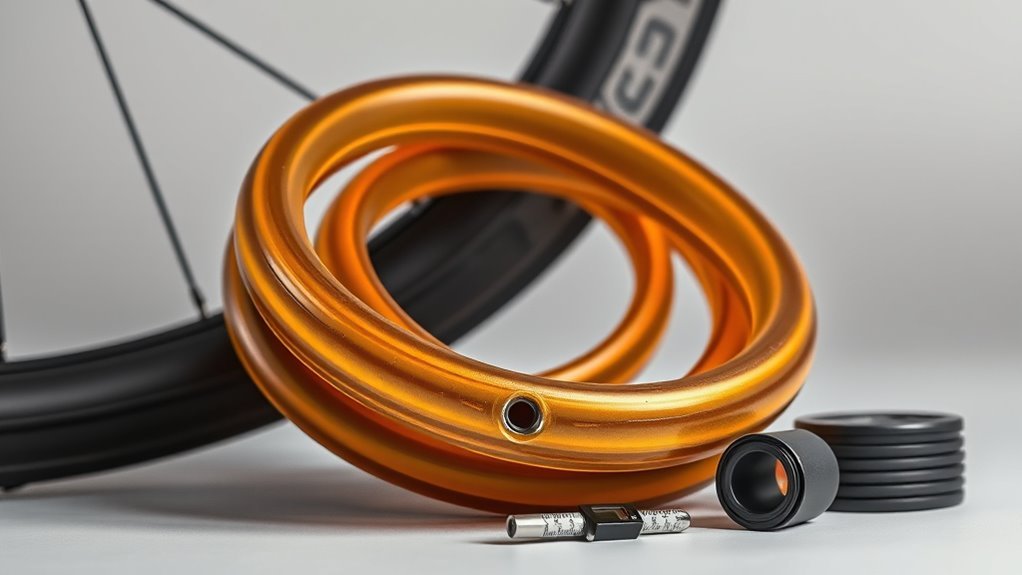
For accurate TPU tube sizing, follow ETRTO compatibility: read the tire marking (ETRTO mm rim diameter x tire width). Measure the tire’s diameter and width. For example, 700x25c equals 622 mm rim diameter and 25 mm width. Select a TPU tube whose stated range includes your ETRTO numbers or is slightly larger in width to allow proper inflation and seating without slack. Avoid undersized tubes that cause pinch flats or overstretched tubes that degrade performance.
Verify valve type and length for your rim. Deep-section rims need longer valve stems (60 mm or 80 mm), while standard rims work fine with 42-50 mm valves. Consult the TPU tube manufacturer’s sizing guide to confirm exact ETRTO compatibility before purchase. TPU sizing is stricter than butyl, so a precise match matters more.
Repair TPU Tubes: Patch Kits and Maintenance Tips
Although TPU tubes resist punctures better than butyl or latex, you still need a dedicated patch kit and a clear maintenance routine to keep them reliable. Carry a TPU-compatible patch kit because standard vulcanizing kits won’t bond properly. Many brands ship a patch with the tube, and self-adhesive options like the Park Tool GP-2 are widely used for TPU repairs. Brand-specific kits from Rene Herse, Schwalbe, and others are also available.
Clean the area thoroughly with an alcohol wipe, then apply the self-adhesive patch per the kit’s instructions. Inspect tubes regularly. TPU elasticity can hide slow leaks, so set a practical maintenance schedule: a pre-ride visual check and weekly pressure checks for stored spares. In emergencies, patching is a valid stopgap before replacement.
- Carry: a TPU-compatible patch kit (brand-specific or Park Tool GP-2).
- Prep: clean with alcohol, apply self-adhesive patch per instructions.
- Inspect: pre-ride and weekly checks. Track maintenance frequency.
[Products Worth Considering]

This Hycline 2-pack mountain bike tire set delivers durable, puncture-resistant performance with a high-grip, aggressive tread designed for traction on hard surfaces and confident handling through mud and soil. Includes matching inner tubes and tire levers for easier everyday maintenance and quicker installation after folding storage. Built for a range of riding conditions with reinforced rubber and nylon cord for wear-resistant reliability.

Two-pack 26" bicycle inner tubes for tires sized 1.75 to 2.125, built with a 35mm AV Schrader valve for easy compatibility. The thicker inner wall and premium butyl rubber help absorb bumps and vibrations while improving durability and air retention. Includes two upgraded tire levers for simpler installation and reduced risk of breakage.

Ride with confidence using these fat tire inner tubes designed for 26-inch e-bikes and bikes. The butyl rubber construction delivers good airtightness, durability, and shock absorption for a smoother ride. Each tube fits 26x3.5 to 4.0 tires with an AV 32mm Schrader valve, and the kit includes tire levers for easier installation.
When to Use TPU Tubes: Road, Gravel, MTB, and Spares
One clear rule helps decide: pick TPU tubes for road and gravel if you prioritize weight savings, lower rolling resistance, and better air retention. They’re especially useful for long rides or racing, since they cut roughly 80-130 g per wheel versus butyl and pack into spares at about 30% of the volume. TPU advantages: lighter system mass, lower rolling resistance, improved elasticity and air retention. TPU disadvantages: not ideal for MTB where tubeless dominates, and they cost more.
| Use case | Recommendation |
|---|---|
| Road (racing/long rides) | Use TPU for performance gains |
| Gravel | Use TPU when speed and packability matter |
| MTB | Avoid TPU; prefer tubeless |
| Spares | Carry TPU for compactness and weight savings |
Choose based on your riding goals and repair strategy.
Cost, Availability, and Environmental Impact
Price matters. TPU tubes typically cost $15-$40 each, so you’ll pay roughly two to four times the price of a standard butyl tube. Budget brands like RideNow start lower, while premium options from Tubolito, SILCA, and Vittoria sit at the top. Factor that into replacement and spare strategies. The higher upfront expense is offset by lower rolling resistance, improved puncture resistance, and significant weight savings that boost efficiency.
- Availability: TPU stock has improved as most major tire brands now offer their own TPU tubes, but local shops may still stock butyl and latex first. Plan purchases or order online.
- Lifecycle: TPU’s designed recyclability reduces landfill impact versus butyl, which gets downcycled into lower-grade products.
- Practical tradeoffs: weigh performance gains and environmental benefits against higher unit cost when budgeting for spares and replacements.
Switching to TPU Tubes: Practical Steps and Checklist
Start by confirming exact wheel and tire sizing. TPU needs precise fits (width and diameter) to perform well and avoid issues like pinching or poor seating. Verify TPU tube compatibility with your rim inner width and tire bead profile. Measure and cross-check manufacturer charts.
Budget for higher unit costs ($15-$40) and factor in spare tubes. Carry a TPU-compatible patch kit and practice the repair method before you ride. Check brake compatibility: if you use rim brakes, confirm the tube is rated for them. Avoid CO2 inflators unless the manufacturer approves their use.
Assess suitability through your own cycling performance needs. Focus on weight savings (20-40 g), lower rolling resistance, and intended terrain (road and gravel preferred). Final checklist: correct size, compatible valves, TPU patch kit, spares, pressure ranges, brake compatibility confirmed, and confirmation that your riding style benefits from TPU advantages.
Frequently Asked Questions
What Is the Advantage of TPU Inner Tube?
You get superior puncture resistance and flexibility, cutting weight about 70%, lowering rolling resistance for faster acceleration, reducing air loss, and packing much smaller. The cost is higher, but TPU is ideal for performance-focused cyclists.
Are There Any Disadvantages to TPU Tubes?
There are real downsides. TPU durability varies by brand, sizing is strict, repairs need special kits, availability can be limited, and higher cost may not justify the switch for casual riders. Some TPU tubes are also restricted to disc brakes only.
Are TPU Inner Tubes Lighter?
Yes. TPU tubes typically weigh 20-40 g versus 100-160 g for butyl, improving acceleration, ride feel, and packability while offering rolling resistance close to latex for competitive riding.
Are TPU Tubes Better Than Rubber?
You’ll get superior TPU performance in weight, rolling resistance, puncture resistance, and recyclability. But you’ll trade some of butyl’s simpler repairs, easier sizing, and casual convenience. Choose based on performance priorities versus practical reliability.
Can I Use TPU Tubes with Rim Brakes?
It depends on the brand. Some manufacturers (Vittoria, Continental) restrict their TPU tubes to disc brakes because rim braking generates heat that can weaken the material. Others (Schwalbe, Tubolito, Pirelli, Rene Herse) approve use with both rim and disc brakes. Always check the packaging or manufacturer’s website before buying.


1 thought on “TPU Inner Tubes Explained: Weight, Performance, and When They’re Worth It”