
433MHz TPMS Sensor Review
Disclosure: As an Amazon Associate, we earn from qualifying purchases. If you click a link on this page and make a purchase, we may receive a small commission at no extra cost to you.
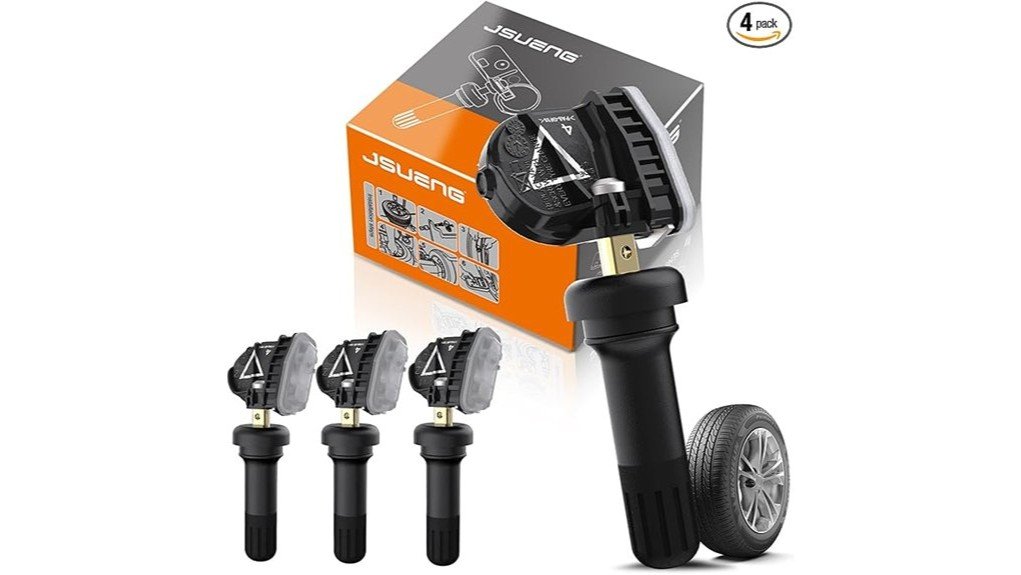
A failed TPMS sensor can leave you with a warning light, missing pressure data, or an inspection problem, but ordering the wrong replacement can create a second headache. The Jsueng 433MHz GM TPMS Sensor is a four-sensor replacement set for selected Buick, Cadillac, Chevrolet, and GMC vehicles that use compatible OE numbers such as 13598773. Its strongest points are broad seller-listed fitment, pre-programmed sensor electronics, and a lower-cost four-pack format. The main limitation is that pre-programmed does not mean plug-and-play, so you still need exact vehicle verification, tire installation, and a relearn procedure.
Quick Verdict
Rating: 8/10, recommended with compatibility caveats
Best For: GM owners replacing several compatible 433MHz valve-stem sensors at the same time
Bottom Line: This four-pack offers practical value when its 433MHz frequency and OE numbers match your vehicle. It is not a universal GM sensor, and installation plus relearning may require a tire shop or compatible TPMS tool.
| Specification | Detail |
|---|---|
| Brand | Jsueng |
| Model | GM TPMS Sensor, item model 13598773 TPMS Sensor |
| Manufacturer part number | US6195-4 |
| Product type | Direct tire pressure monitoring system replacement sensor |
| Frequency | 433MHz |
| Package count | 4 sensors |
| Listed OE numbers | 13598773, 13512347, 13540606, 13522629, 13544442, 13594222, 13545366, 13589601 |
| Programming | Pre-programmed, but vehicle relearn or pairing is still required |
| Seller-listed operating range | -40°C to 125°C |
| Seller-listed pressure rating | Up to 900 kPa, about 130.5 psi |
| Claimed service life | Up to 5 to 8 years under normal use |
| Seller guarantee | 1 year |
| Package dimensions | 4.25 x 3.54 x 2.44 inches |
| Listed item weight | 4.9 ounces |
Before You Buy: Match the 433MHz frequency, OE number, vehicle year, trim, market, and valve-stem style before ordering. GM vehicles can use different sensor frequencies and relearn methods, so a model name alone is not enough to confirm fitment.
Key Takeaways
- This listing is for a Jsueng four-pack of 433MHz direct TPMS replacement sensors.
- The sensors are pre-programmed, but they still need to be paired or relearned after installation.
- Fitment depends on the exact GM model year, trim, frequency, OE number, and sensor mounting style.
- The seller lists a -40°C to 125°C operating range, a 900 kPa pressure rating, and up to 5 to 8 years of service.
- The set makes the most sense when you need several matching sensors, not when you need only one or have not confirmed compatibility.
[Products Worth Considering]
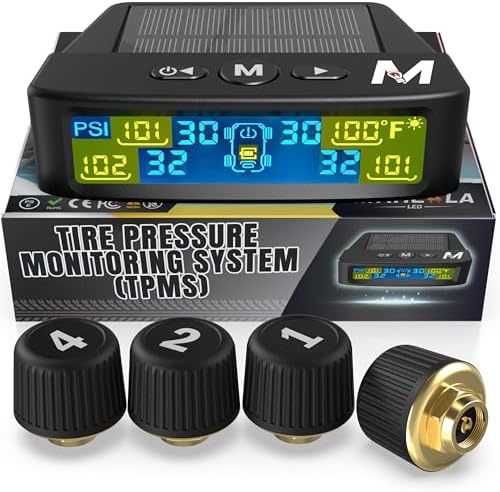
Marcala’s TPMS set of four sensors helps you monitor tire pressure and temperature in real time while driving, with updates every second. The bright color LCD uses auto-dimming for easy viewing, powered by dual solar and USB charging, and offers six alarm modes. Built for trailers, RVs, campers, trucks, and towing setups, the sensors support monitoring 1-4 wheels up to 98 PSI with IP67 waterproof protection.
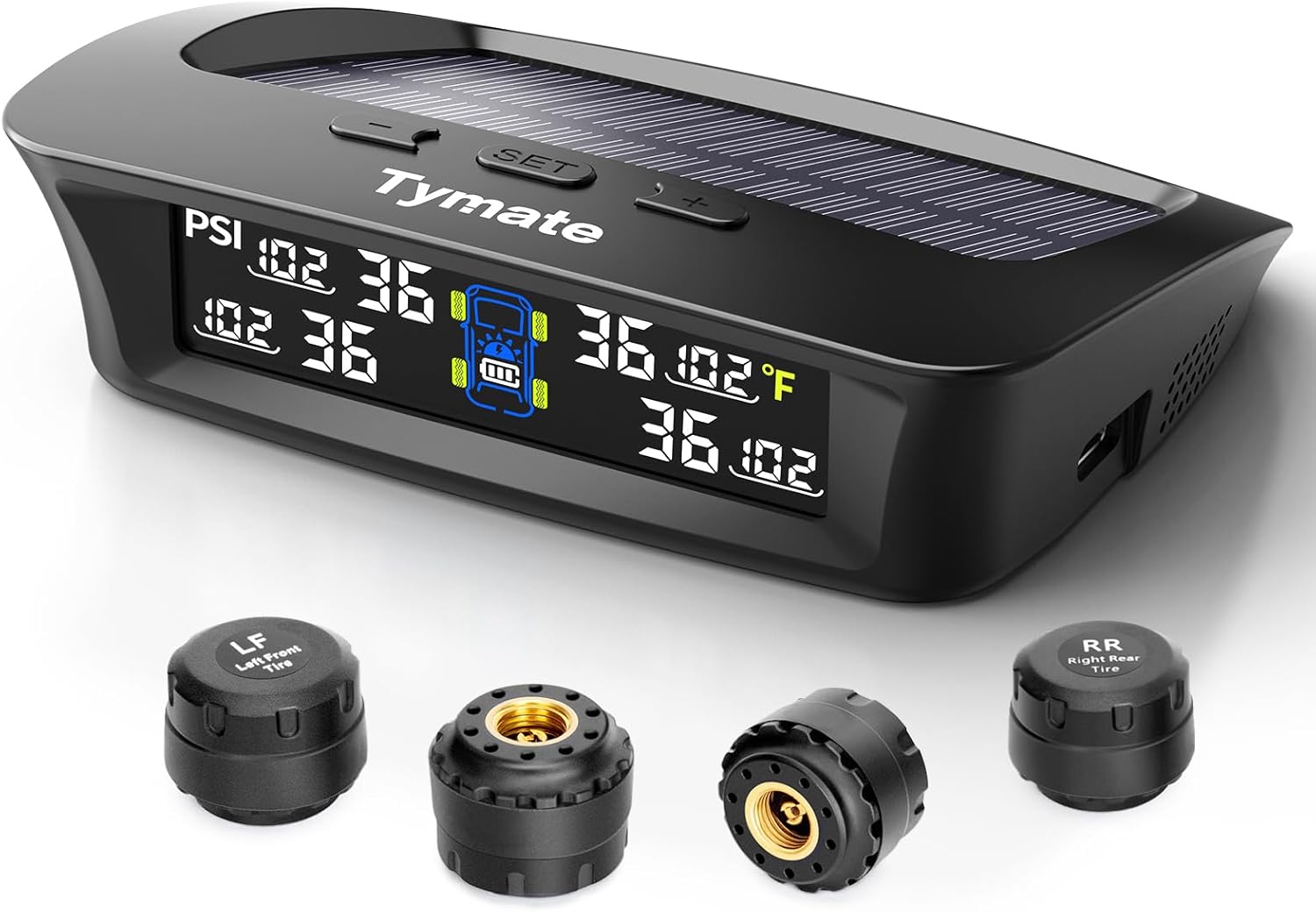
The Tymate TM3 RV TPMS delivers real-time tire pressure monitoring from 0 to 144 PSI with accurate readings and dependable wireless communication. It includes four external sensors with pre-pairing, six alarm modes for rapid leak, pressure extremes, temperature, and signal loss, plus an easy-reference setup for alert thresholds. Solar and USB-C charging help keep the display powered, while the color LCD and adaptive backlight improve visibility for safer driving and towing.
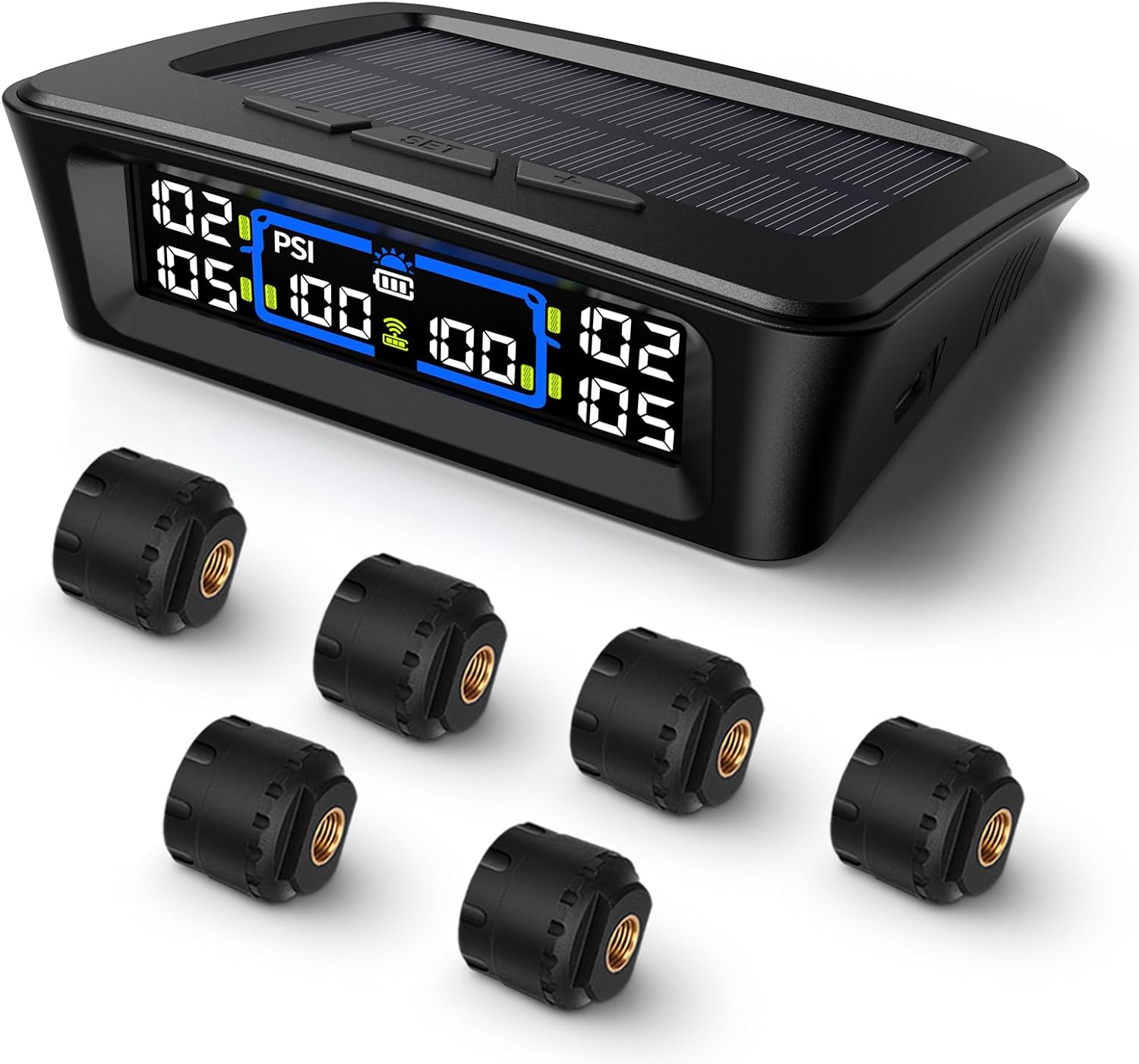
The Tymate TM12 RV TPMS delivers real-time tire pressure and temperature monitoring with a stable 433Hz display for safer long-distance driving. It supports simultaneous monitoring across vehicle and trailer zones, includes six alarm modes for pressure, temperature, leakage, battery, and signal loss, and features easy DIY installation with auto calibration. Power is supplied via USB-C charging or solar recharging, with a wide 0–144 PSI range and up to 50 ft signal coverage for RVs and towable trailers.
What Is the Jsueng 433MHz GM TPMS Sensor?
The Jsueng sensor is a direct TPMS replacement that mounts at the wheel and transmits tire-pressure information to a compatible vehicle receiver. This listing contains four sensors, so it can cover a full set of road wheels when all four positions use the same compatible part.
The product is sold as a replacement for several GM OE numbers, led by 13598773. The seller lists applications across selected Buick, Cadillac, Chevrolet, and GMC vehicles, including certain LaCrosse, Regal, XT5, Camaro, Cruze, Malibu, Silverado, and Sierra model years. That list is broad, but it is not permission to skip a VIN, OE-number, or fitment check.
This review is based on the current product listing, seller-supported specifications, and standard TPMS use requirements. It does not treat the listed durability claims as independent laboratory results.
Who Should Buy It?
Best For
- Owners of verified 433MHz GM applications that cross-reference to a listed OE number
- Drivers replacing several aging sensors during a tire change or wheel service
- Buyers who have access to a compatible activation tool, OBDII TPMS tool, or professional installer
Skip If
- Your vehicle requires a 315MHz sensor or a different OE number
- You expect pre-programmed sensors to pair automatically without relearning
- You need a confirmed genuine GM part or a sensor with documented third-party certification
Fit and Compatibility for GM Vehicles
Compatibility is the deciding factor. The listing identifies 433MHz operation and replacement OE numbers including 13598773, 13512347, 13540606, 13522629, 13544442, 13594222, 13545366, and 13589601. A match on one number is helpful, but you should still confirm the vehicle year and installed sensor type.
The seller lists selected applications such as 2016 to 2024 Buick LaCrosse, 2017 to 2025 Buick Regal, 2016 to 2024 Cadillac XT5, 2010 to 2022 Chevrolet Camaro, and 2016 to 2019 Chevrolet Cruze. Other Buick, Cadillac, Chevrolet, and GMC applications also appear in the listing. Fitment can vary within a model line, especially across redesigns, regional markets, wheel packages, and production dates.
Check the OE number from the old sensor, a parts catalog tied to your VIN, or a professional scan-tool lookup. Also confirm that the valve and mounting design suit your wheel. Buying by vehicle badge alone is the most common avoidable mistake with aftermarket TPMS sensors.
Build, Battery, and Durability
These are compact valve-stem sensor assemblies designed to operate inside the tire, where heat, cold, moisture, vibration, and centrifugal force are routine. The seller lists an operating range from -40°C to 125°C and a maximum pressure rating of 900 kPa, or about 130.5 psi. Those figures provide ample listed headroom for normal passenger-car and light-truck tire pressures, provided the sensor is approved for the specific vehicle and wheel.
The seller claims a normal service life of 5 to 8 years and a one-year guarantee. Actual battery life depends on storage time, driving, temperature cycles, transmission activity, and manufacturing variation. TPMS batteries are generally sealed into the sensor, so the usual repair is sensor replacement rather than battery replacement.
The listing is inconsistent about the exact battery cell type: the feature text names a CR2032, while the technical-details field names a CR2. Because of that conflict, the exact cell designation should not be a deciding purchase factor unless Jsueng confirms it directly.
Installation and Relearn Process
Installing an internal TPMS sensor requires breaking the tire bead or removing the tire from the wheel. The sensor and valve assembly must be installed without damaging the wheel, tire bead, or sensor body. Correct valve hardware and torque matter, so professional installation is the safer choice unless you have tire-service equipment and the correct specifications.
Pre-programmed means the sensor electronics are prepared for compatible applications. It does not mean the vehicle already knows each new sensor ID. After installation, your vehicle must learn the sensor IDs and wheel positions using the procedure specified in the owner’s manual or service information.
The seller describes an OBDII relearn sequence: set all tires to the door-placard pressure, activate each sensor near the valve stem in the tool’s requested wheel order, connect the OBDII interface, switch the ignition on, transfer the sensor IDs to the vehicle, cycle the ignition, and complete the requested drive. The listing mentions driving for at least five minutes at about 28 mph, but you should use that step only when it matches your vehicle and tool instructions.
Pro Tip: Before the tire is mounted, scan or trigger every new sensor and label its wheel position. Finding a dead or incompatible sensor is much easier before the bead is seated.
How It Performs in Real Use
Replacing a Full Set of Aging Sensors
The four-pack format is most useful when several original sensors are near the same age. Replacing all four during a tire installation can reduce the chance of paying another mount-and-balance charge when the next old sensor battery fails. The tradeoff is that replacing functioning sensors early may not be necessary if only one has failed.
During a Tire or Wheel Change
A tire change gives the installer direct access to the sensor, so it is a practical time to inspect valve hardware and replace damaged or expired units. The Jsueng set can lower the per-wheel replacement cost, but only when all wheels use the same 433MHz specification and compatible mounting design.
After Seasonal Wheel Swaps
If you use separate seasonal wheel sets, each wheel set needs compatible sensors and may require a relearn when installed. These sensors may work for that purpose on a verified vehicle, but your relearn tool and vehicle must support the chosen process. Some vehicles remember more than one wheel set, while others require pairing after each swap.
For Long-Term Ownership
The claimed 5 to 8-year service window is reasonable as a seller estimate, not a guaranteed replacement interval. Heat, cold, mileage, storage age, and transmission frequency can shorten sensor life. A flashing TPMS lamp followed by steady illumination often points to a system fault, while a steady low-pressure warning may simply mean a tire needs attention.
Compatibility and Safety Notes
A TPMS sensor supports tire maintenance, but it does not replace a pressure gauge or a visual tire inspection. Check pressures when the tires are cold and use the inflation value on the driver-door placard or in the owner’s manual, not the maximum pressure molded into the tire sidewall.
Do not ignore a low-pressure warning after installation. Confirm actual tire pressure first, then troubleshoot pairing, damaged valve hardware, a leaking tire, or an incompatible sensor. If the warning lamp flashes for roughly a minute and then stays on, the vehicle may be reporting a TPMS malfunction rather than only low pressure.
Have a tire professional inspect any leaking valve stem, damaged wheel, torn bead, or sensor that will not trigger. A correct electronic match does not fix a physical air leak.
Pros and Cons
Pros
- Four sensors can cover a complete wheel set
- 433MHz design replaces several seller-listed GM OE numbers
- Pre-programmed electronics reduce programming work before relearn
- Wide seller-listed temperature and pressure operating limits
- One-year seller guarantee adds basic purchase protection
Cons
- Not universal across GM vehicles, frequencies, trims, or model years
- Requires tire installation and a manual or OBDII relearn process
- Listing metadata conflicts on the exact battery cell type
Is It Worth the Price?
This Jsueng set is positioned as a budget-friendly alternative to buying four genuine OE sensors separately. It offers the strongest value when you need a full set, have confirmed the listed OE number and frequency, and can combine installation with new tires or planned wheel service.
The value becomes weaker if you need only one sensor, must pay twice because fitment was not checked, or prefer a genuine GM part with dealer-backed documentation. Installation and relearn costs also belong in the total price, since the sensor pack alone does not complete the repair.
How It Compares to Alternatives
A genuine GM sensor is the safer comparison when OE traceability, dealer support, and exact factory specification matter more than purchase price. An A-Premium 433MHz GM-compatible four-pack offers a similar aftermarket approach, while an Autel MX-Sensor can be attractive for shops that already own the required Autel programming equipment.
The Jsueng set makes the most sense when its listed OE cross-reference matches your vehicle and you want four pre-programmed 433MHz sensors without paying genuine-OE pricing. Choose an alternative when you need dual-frequency flexibility, confirmed factory branding, or a programming ecosystem your shop already uses.
Frequently Asked Questions
How do I know whether my GM vehicle uses a 433MHz sensor?
Check the OE number on the installed sensor, a VIN-based parts catalog, your service information, or a professional TPMS scan. Do not rely only on the model name because the required frequency can change by year, trim, market, and production date.
Are these Jsueng sensors ready to use out of the box?
They are sold as pre-programmed for compatible applications, but they are not automatically paired to your vehicle. You still need physical installation and a relearn or ID-registration process.
Do I need a specific TPMS tool?
You need a tool and procedure that support your vehicle’s relearn method. Some applications allow a manual position-learning process with an activation tool, while others need an OBDII TPMS tool that writes sensor IDs to the vehicle.
Can I mix these sensors with older sensors?
You can mix sensor ages or brands only when every sensor meets the vehicle’s required frequency, protocol, valve style, and fitment. Replacing one failed sensor is common, but a full set may be more practical when the remaining original sensors are the same age.
What are the signs of a failing TPMS sensor?
Common signs include a sensor that will not trigger, missing pressure data, intermittent readings, or a TPMS malfunction light that flashes and then remains on. Confirm tire pressure and inspect for leaks before assuming the sensor itself has failed.
Can I install the sensors without removing the tires?
Internal valve-stem sensors require access inside the wheel, so the tire bead must be broken or the tire removed. A tire shop can install the sensor, inspect the valve seal, balance the wheel if needed, and complete or verify the relearn.
Does TPMS replace monthly pressure checks?
No. TPMS warns when pressure is significantly low or when the system detects a fault, but it is not a substitute for checking cold tire pressure with an accurate gauge and inspecting the tires for damage.
Who should skip this four-pack?
Skip it when your vehicle needs 315MHz sensors, a different OE number, or a different valve design. It is also a poor fit when you require a genuine GM sensor or cannot verify compatibility before tire installation.
The Bottom Line
The Jsueng 433MHz GM TPMS Sensor four-pack is a sensible value choice for owners who have confirmed a matching GM application and need several sensors at once. Its main strengths are broad listed OE cross-references, pre-programmed electronics, and full-set packaging, while its main limitation is strict fitment and relearn dependence. Skip it when your frequency, valve design, OE number, or installation plan is uncertain.
Ready to Buy?
Check the latest product details and confirm vehicle fitment before you decide.

Related Articles
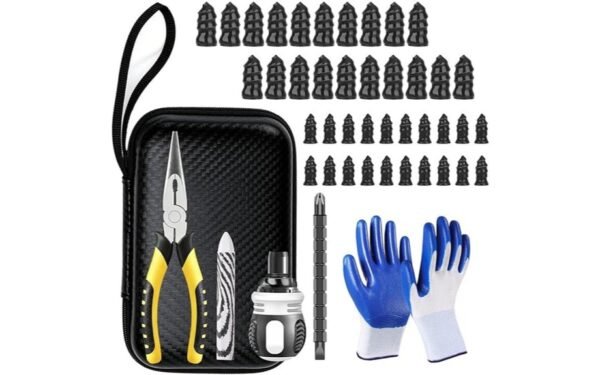
Tire Screw Plug Repair Kit Review
Compact tire screw plug repair kit review reveals fast roadside fixes, but which punctures are truly safe enough to trust?
Read More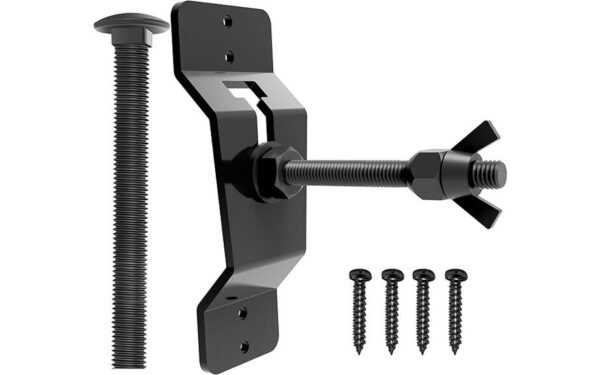
Wall Mount Spare Tire Carrier Mount Review
I review the wall mount spare tire carrier’s fit, strength, and stability—see what could make or break your trailer setup.
Read More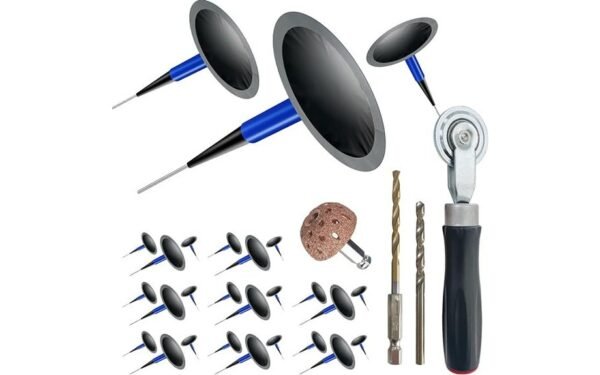
Socpuro Tire Repair Patch Tool Kit Review
Great for quick DIY puncture fixes, the Socpuro Tire Repair Patch Tool Kit has limits and surprises you’ll want to know before buying.
Read More