
Honda Accord Wheel Alignment: When and Why It Matters

A Honda Accord wheel alignment is worth checking when the car pulls on a straight, level road, the steering wheel sits off-center, or the tires wear faster on one edge. Start by checking cold tire pressure and visible tire damage. If those look normal, have a qualified technician measure camber, caster, and toe against the specifications for your Accord’s model year. Proper alignment helps the car track straight and prevents avoidable tire wear; a hard pothole or curb strike is also a good reason to inspect the steering and suspension.
Last updated: August 18, 2026. Cost data and Honda/NHTSA tire guidance were rechecked for this update.
Quick Answer
Your Honda Accord likely needs an alignment check if it pulls to one side on a straight, level road, the steering wheel sits off-center, or the tires show uneven inner- or outer-edge wear. After a hard pothole or curb strike, inspect the tire, wheel, steering, and suspension before alignment. Vibration alone more often points to tire balance, wheel, tire, brake, or suspension problems, so it should be diagnosed rather than assumed to be alignment.
Key Takeaways
- The strongest alignment clues are pulling on a straight, level road, an off-center steering wheel, and uneven tire-edge wear; vibration needs a broader tire, wheel, brake, and suspension check.
- A modern Accord should usually have all four wheels checked, not just the front wheels.
- Check tire pressure and tread first because low pressure or damaged tires can mimic alignment problems.
- Get an alignment after a hard pothole hit, curb strike, suspension repair, new tire installation, or visible uneven wear.
- Ask for the before-and-after alignment printout so you can see what was corrected.
At a Glance
| Time Required | Usually 45 to 90 minutes at a shop, depending on suspension condition and whether extra parts are needed. |
| Difficulty | DIY inspection is easy. Actual alignment adjustment requires professional alignment equipment. |
| Tools Needed | Tire pressure gauge, tread depth gauge or penny, flashlight, and a professional alignment rack for correction. |
| Cost | RepairPal’s Accord estimate was $160–$234 as of August 7, 2026, before taxes, fees, location differences, or related repairs. Local quotes can vary. |
What Is Wheel Alignment and Why Is It Important for Your Honda Accord?
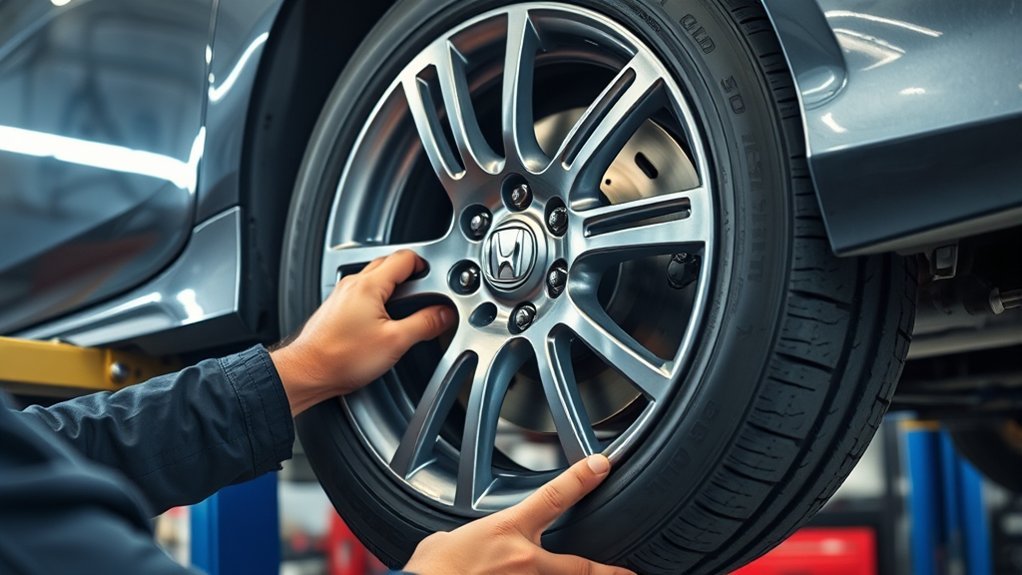
Wheel alignment is the process of measuring and adjusting the angles of the wheels so the tires meet the road correctly and the car tracks straight. On your Honda Accord, the technician checks the alignment against factory specifications instead of guessing by eye.
The three main alignment angles are:
- Toe: Whether the tires point slightly inward or outward when viewed from above. Incorrect toe is a common cause of rapid tire wear.
- Camber: Whether the top of the tire leans inward or outward when viewed from the front. Too much camber can wear the inner or outer tire shoulder.
- Caster: The steering-axis angle that helps the wheel return to center and improves straight-line stability.
Model-year note: Do not use one generic camber, caster, or toe target for every Accord. Acceptable ranges and which angles are adjustable can vary by model year and configuration. The alignment rack or Honda service information should be matched to the exact vehicle.
Proper alignment helps your Accord steer predictably, keeps the steering wheel centered, and reduces abnormal tire scrub. The National Highway Traffic Safety Administration notes that wheel alignment by a qualified technician helps maximize tire life and prevents a vehicle from veering right or left on a straight, level road.
Note: Alignment does not replace tire rotation, tire balancing, or suspension repair. If a control arm, tie rod, bushing, wheel bearing, or tire is damaged, that problem should be fixed before the final alignment is set.
[Products Worth Considering]

EVOULTES heavy duty tire inflator with an integrated gauge delivers accurate pressure readings from 10–120 PSI, helping you inflate, deflate, and check tires in one tool. The 16.5-inch extended dual-head air chuck with swivel base reaches hard-to-access dual wheel valves on trucks and RVs. A brass trigger core and side-mounted air release valve make operation smooth, with standard 1/4" NPT threading and quick-connect compatibility for easy setup.

The JACO FlowPro Tire Inflator measures, inflates, and airs down tires up to 100 PSI with battery-free operation and ±2% accuracy after calibration. It features a glowing pressure dial for night visibility, a heavy-duty steel build with a hybrid hose, and a precision push-to-inflate thumb trigger. The patented Lightning Air Chuck locks on for a secure seal, and the kit includes quick-connect hardware for easy inline use with your air compressor.
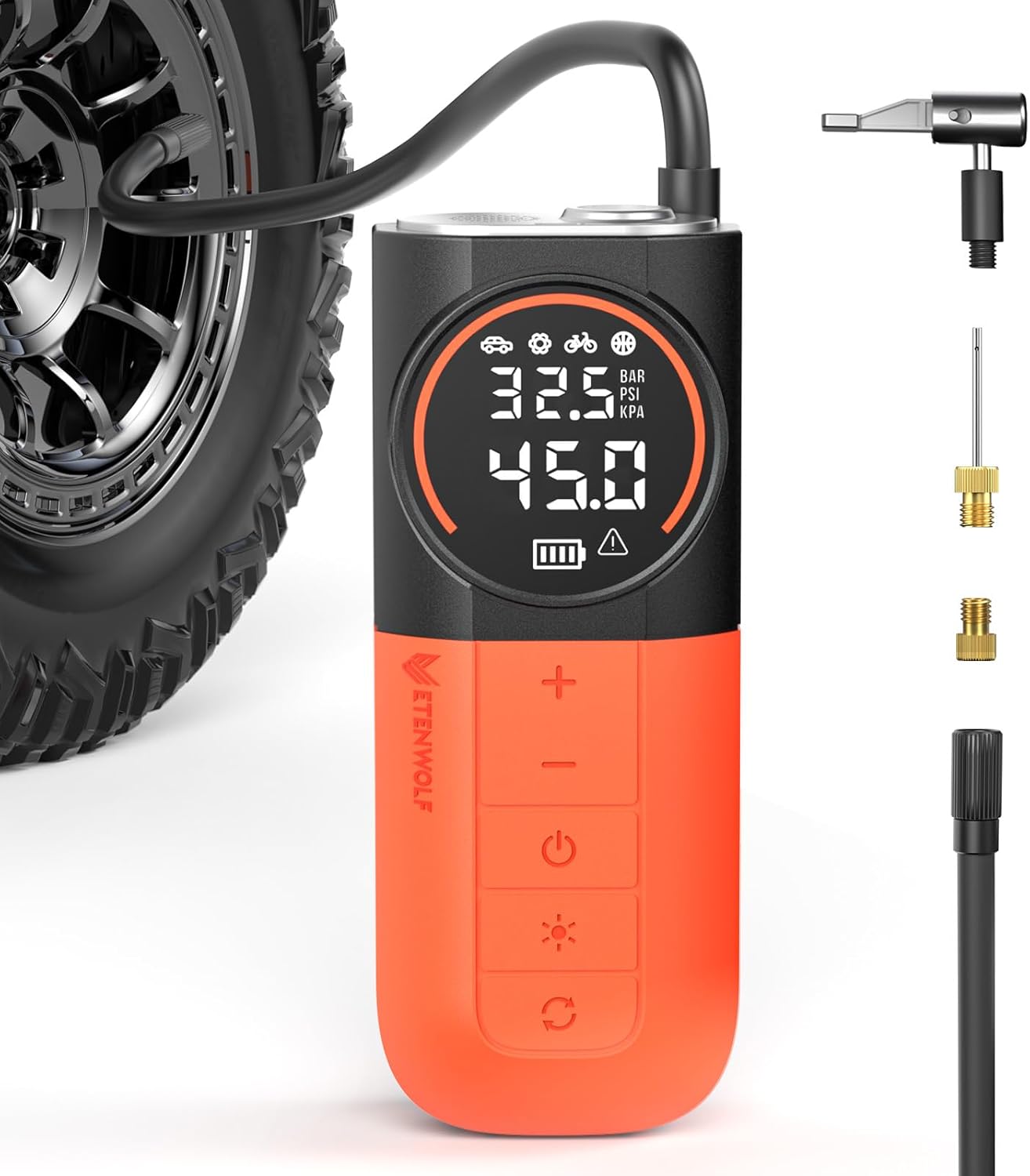
The ETENWOLF S1 cordless tire inflator delivers ultra-fast inflation with up to 160 PSI and a 20 L/min airflow for quicker tire top-offs. Its 5200mAh battery and cooling system support inflating many tires and sports balls on a single charge, while the digital pressure gauge and multi-unit display help you reach the right pressure accurately. With preset modes, pressure memory, an auto-stop feature, and an LED flashlight, it’s built for easy roadside and everyday use.
Signs Your Honda Accord Needs a Wheel Alignment
You do not need to wait for a dashboard warning light. Most alignment problems show up in the way your Accord feels on the road or in the way the tires wear.
Common Driving Symptoms
Your Honda Accord may need an alignment check if it pulls to one side on a straight, level road. A slight drift from road crown can be normal, but a steady pull that makes you hold the wheel against the car is not.
Other common symptoms include:
- Off-center steering wheel: The car drives straight, but the steering wheel is tilted left or right.
- Constant steering correction: You keep nudging the wheel to stay in your lane.
- Loose or nervous highway feel: The car does not feel settled at speed.
- Recent pothole or curb impact: The problem starts soon after a hard hit.
Alignment Symptom Triage: What to Check First
Several problems can feel like bad alignment. Use this quick triage before paying for an adjustment.
| Symptom | Check First | When Alignment Moves Up the List |
|---|---|---|
| Pulls left or right | Cold tire pressure, tire damage, and whether the road is crowned | The pull continues on a straight, level road with correctly inflated tires |
| Steering wheel is off-center | Steering and suspension condition | The car tracks straight but the wheel stays visibly crooked |
| Vibration at speed | Tire balance, bent wheel, tire damage, brakes, and suspension | There are also pulling, crooked-wheel, or uneven-wear symptoms |
| Inner- or outer-edge wear | Pressure, tread depth, and suspension looseness | One edge wears consistently faster after pressure is corrected |
| Cupping or scalloping | Struts/shocks, balance, tire condition, and loose suspension parts | Alignment readings are also outside the model-year specification |
Tire Wear Patterns
Uneven tire wear is one of the clearest clues. Look across each tire, not just at the center tread. Alignment problems often show up as fast wear on the inner shoulder, outer shoulder, or a feathered feel when you run your hand lightly across the tread blocks.
The NHTSA recommends checking tire tread at least once a month when you check tire pressure and replacing tires when tread reaches 2/32 inch. If one tire edge is wearing faster than the rest, schedule an inspection before the tire becomes unsafe.
Steering Wheel Vibration and Position
A steering wheel that sits off-center often points to alignment. A steering wheel that vibrates can come from tire imbalance, a bent wheel, tire damage, brake issues, or worn suspension parts. That is why the shop should inspect the tires and suspension before adjusting the alignment.
Warning: If your Accord pulls suddenly, the steering feels loose, a tire has exposed cords, or the car feels unstable after a hard impact, do not treat it as a normal alignment appointment. Have the vehicle inspected before continuing to drive at highway speed.
How to Check Before Scheduling an Alignment
Before you pay for a Honda Accord wheel alignment, do a quick tire and suspension check. These steps can help you avoid confusing a simple tire issue with a true alignment problem.
- Check cold tire pressure. Use the pressure listed on the driver-side door label or owner’s manual, not the maximum pressure printed on the tire sidewall. FuelEconomy.gov states that proper tire inflation can improve gas mileage by 0.6% on average and up to 3% in some cases.
- Compare tread depth. Look for one tire edge wearing faster than the other side.
- Inspect for tire damage. Bulges, cuts, separated tread, or a bent wheel can cause pulling or vibration.
- Think about recent impacts. A curb strike, pothole, or road debris hit can shift alignment or damage suspension parts.
- Listen for suspension noise. Clunks, rattles, or looseness may mean worn parts must be repaired first.
Pro Tip: Check tire pressure before the appointment. Low pressure on one side can make your Accord pull, and a shop may not be able to judge the alignment accurately until the tires are inflated correctly.
How to Identify and Fix Common Causes of Wheel Misalignment in Hondas
Honda Accord misalignment usually comes from normal driving wear, road impacts, or suspension changes. The solution depends on what caused the angles to move out of spec.
| Cause | Common Signs | Best Fix |
|---|---|---|
| Normal suspension wear | Gradual tire edge wear or slight steering drift | Inspect suspension, then align to factory specs |
| Pothole or curb impact | Sudden pull, crooked wheel, or new vibration | Check for bent wheels or damaged parts before alignment |
| New tires | Old wear pattern is gone, but bad alignment can ruin new tires quickly | Align after installation if old tires showed uneven wear |
| Suspension or steering repair | Tie rods, control arms, struts, or bushings were replaced | Align immediately after the repair |
| Incorrect tire pressure | Pulling, shoulder wear, or poor fuel economy | Set pressure to the door-label specification and recheck symptoms |
How Much Does a Honda Accord Wheel Alignment Cost?
As of August 7, 2026, RepairPal estimates a Honda Accord wheel alignment at $160 to $234. Its estimate excludes taxes and fees, varies by location, and does not include related repairs that may be needed before the alignment can be completed.
Use that range as a benchmark, not a guaranteed quote. Before approving service, ask whether the price includes measuring all four wheels, making the available adjustments, centering the steering wheel, and providing a before-and-after printout. Bent wheels, seized hardware, worn tie rods, damaged control arms, or other suspension faults can increase the total repair cost.
Front-End vs. Four-Wheel Alignment for a Honda Accord
A front-end alignment checks and adjusts only the front wheels. A four-wheel alignment checks all four wheels and compares the front wheels to the rear wheel position. For most modern Honda Accord models, a four-wheel alignment is the better service because rear-wheel angles can affect how straight the car tracks.
Even when some rear angles are not adjustable without extra parts, the shop should still measure them. If the rear readings are far out of range, the technician can look for bent parts, worn bushings, or collision damage instead of only adjusting front toe and sending the car out.
Wheel Alignment vs. Tire Balancing
Wheel alignment and tire balancing are different services, but both affect how your Accord feels.
- Alignment sets the wheel angles so the tires point in the correct direction and contact the road evenly.
- Balancing corrects uneven weight in the tire and wheel assembly so it spins smoothly.
If your Accord pulls or the steering wheel is crooked, think alignment. If the steering wheel shakes at certain speeds, especially after tire installation, think tire balance first. A good shop will check both if the symptoms overlap.
How Wheel Alignment Affects Tire Longevity
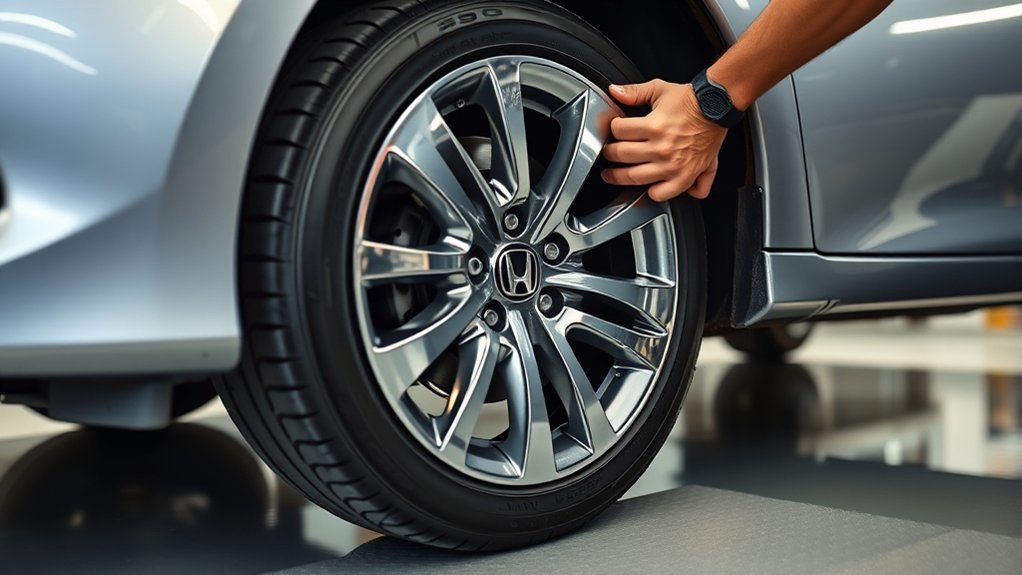
Proper wheel alignment helps prevent uneven tire wear that can force you to replace tires early. When the wheels are not aligned, the tread can scrub across the road instead of rolling cleanly. That extra scrub often shows up on the inner or outer tire edge first.
Uneven Tire Wear Patterns
Watch for these common patterns:
- Inner-edge wear: Often linked to camber or toe issues.
- Outer-edge wear: Can come from alignment, aggressive cornering, or underinflation.
- Feathering: Tread blocks feel smooth in one direction and sharp in the other, often from incorrect toe.
- Cupping or scalloping: May point to worn shocks, struts, balance problems, or loose suspension parts.
If the wear is concentrated on the outside shoulder, see our Honda Accord outside-edge tire wear guide. If the tread has scalloped dips, road noise, or a repeating high-low pattern, use the Honda Accord tire cupping guide to separate alignment problems from balance and suspension causes.
Alignment is only one part of tire care. The NHTSA also recommends checking tire pressure cold at least once a month and rotating tires according to the owner’s manual or manufacturer guidance.
Extended Tire Lifespan
When your Honda Accord is aligned correctly, the tires share the load more evenly. That helps the tread wear at a steadier rate, especially when combined with correct tire pressure and regular rotation. Proper tire pressure also improves safety, durability, and fuel use.
Costly Replacement Expenses
Neglecting alignment can turn a small maintenance issue into a larger tire bill. One badly worn edge can make a tire unsafe even when the center tread still looks usable. If two or four tires wear unevenly, the cost can rise quickly.
A wheel alignment is usually most valuable when it prevents premature tire wear, restores straight tracking, and confirms that no suspension damage is hiding underneath the car.
How Misalignment Affects Handling and Safety
Misalignment can make your Honda Accord harder to control because the tires are not all working in the same direction. The car may pull on the highway, wander during lane changes, or feel less stable during emergency braking.
Bad alignment can also reduce tire contact quality. That matters most during rain, hard braking, or sudden steering inputs. Tires are the only contact between your Accord and the road, so uneven tread wear or unstable tracking should not be ignored.
The NHTSA TireWise guidance connects tire maintenance with safety and notes that poor tire maintenance can contribute to flats, blowouts, or tread separation. Alignment is part of that maintenance picture, along with tire pressure, tread checks, rotation, and balance.
[Products Worth Considering]

This compact capsule-style tire repair kit helps you quickly fix punctures and plug flats with minimal effort. The rugged stainless steel shell protects the contents for reliable roadside use, while the simple plug assembly makes repairs fast and tool-free. Suitable for motorcycles, cars, ATVs, UTVs, and even mountain bikes.

This portable cordless tire inflator delivers up to 160 PSI with fast 17 L/min airflow to help you quickly top up tires and get back on the road. It features dual power mode, running on a 21V rechargeable battery or a 12V DC adapter for convenient roadside use. An automatic shut-off with digital pressure gauge helps prevent overinflation, and a built-in LED light improves visibility in low-light conditions.
How Proper Alignment Affects Fuel Efficiency
When your Accord’s wheels are properly aligned, the tires roll with less unwanted scrub. That can reduce drag, help the car track smoothly, and support better overall efficiency. The exact fuel savings from alignment varies by how far the car was out of spec, tire condition, road conditions, and driving style.
For verified fuel-economy numbers, tire pressure is the stronger documented factor. FuelEconomy.gov states that properly inflated tires can improve gas mileage by 0.6% on average and up to 3% in some cases. It also says underinflated tires can lower gas mileage by about 0.2% for every 1 psi drop in the average pressure of all tires.
That means alignment and tire pressure should be handled together. If your Accord is aligned but the tires are low, you can still lose efficiency and shorten tire life.
How Suspension Affects Wheel Alignment

Your Accord’s suspension holds each wheel in position. Parts such as control arms, struts, springs, bushings, ball joints, and tie rods all influence alignment. If those parts wear, bend, loosen, or change ride height, the alignment angles can move out of spec.
| Suspension Component | How It Can Affect Alignment |
|---|---|
| Control arms | Can shift camber and caster if bent or if bushings wear out |
| Struts | Can affect ride height, camber, and steering stability |
| Tie rods | Directly affect toe and steering-wheel position |
| Bushings | Can allow the wheel to move under load, causing wandering or uneven wear |
| Springs | Sagging or changed ride height can alter camber and toe |
| Wheel bearings | Looseness can mimic alignment or tire-balance symptoms |
Do not align over worn or loose parts. The readings may look correct on the rack, but the car can still wander once the suspension loads up on the road.
When Should You Get Your Honda Accord Aligned?
Honda Accord alignment is best handled by symptoms and service events, not by one fixed mileage rule for every driver. Check your owner’s manual and Maintenance Minder guidance for routine tire service, but schedule an alignment check sooner if the car gives you warning signs.
Get your Accord aligned or inspected when:
- The vehicle pulls to one side on a straight, level road.
- The steering wheel is off-center while driving straight.
- You see uneven inner-edge or outer-edge tire wear.
- You hit a pothole, curb, or road debris hard enough to change how the car drives.
- You replace tires and the old set showed irregular wear.
- You replace struts, control arms, tie rods, ball joints, bushings, or steering parts.
- You lower or raise the vehicle.
- You notice wandering, loose steering, or unstable braking.
Honda’s official 2024 Accord tire-checking guidance tells owners to inspect tire pressure regularly and to have wheel alignment checked when tread wear is uneven. For other model years, use Honda’s owner manual search because tire specifications and service details can vary by year and trim.
What to Expect During a Honda Accord Wheel Alignment Service
During a wheel alignment service, the technician should place your Accord on an alignment rack, attach sensors to the wheels, measure the current angles, and compare them with Honda specifications for your model year and trim.
A proper service should include:
- Initial road-test or symptom review: The shop should understand whether the car pulls, vibrates, or wears tires unevenly.
- Tire and pressure check: Incorrect pressure can distort diagnosis.
- Suspension and steering inspection: Worn or bent parts should be found before adjustment.
- Camber, caster, and toe readings: The rack measures the angles before correction.
- Adjustments where possible: Toe is commonly adjusted; camber and caster adjustability depends on design and parts.
- Steering wheel centering: The steering wheel should sit straight after the repair.
- Before-and-after printout: You should see what was out of range and what was corrected.
Note: If the alignment printout still shows red readings after the service, ask why. Some angles may require extra parts or suspension repair before they can be brought back into range.
What Wheel Alignment Cannot Fix
Wheel alignment is important, but it cannot solve every steering or tire problem. If your Honda Accord still shakes, pulls, or wears tires badly after alignment, one of these issues may be involved:
- Bent wheel or damaged tire
- Out-of-balance tire and wheel assembly
- Separated tire belt
- Worn struts or shocks
- Loose ball joint, tie rod, or control-arm bushing
- Brake caliper drag
- Collision or subframe damage
- Mismatched tires or uneven tire pressure
That is why a good alignment service starts with inspection. Adjusting angles without finding damaged parts can waste money and leave the car unsafe.
How to Maintain Alignment After Service
After your Accord is aligned, a few habits can help the correction last longer:
- Keep tires inflated to the pressure on the driver-side door label.
- Check tread and pressure at least monthly.
- Rotate tires according to the owner’s manual or Maintenance Minder guidance.
- Avoid hard curb contact when parking.
- Slow down for potholes and rough railroad crossings when safe.
- Have suspension noises inspected early.
- Ask for alignment readings whenever you replace major suspension or steering parts.
A short test drive after service is also helpful. The steering wheel should be centered, the car should track straight on a level road, and there should be no new vibration.
Frequently Asked Questions
Does a Honda Accord need a 4-wheel alignment?
In most cases, yes. A four-wheel alignment is the better choice because it checks both front and rear wheel angles. Even if a rear angle is not easily adjustable on your specific model, measuring it helps the technician spot bent parts, worn bushings, or collision damage.
Is an alignment worth it after every 15,000 miles?
It can be worth checking, especially if you drive on rough roads, hit potholes often, or see tire wear starting on one edge. However, symptoms and service events matter more than mileage alone. If the car tracks straight and the tires wear evenly, you may not need adjustment at that exact mileage.
How often does Honda recommend an alignment?
Honda does not use one universal alignment interval for every Accord in every driving condition. Follow your owner’s manual for routine tire service, then get an alignment check when you notice pulling, uneven tire wear, an off-center wheel, after a hard impact, or after steering and suspension repairs.
Can I drive with bad wheel alignment?
You may be able to drive briefly if the pull is mild, but you should not ignore it. Bad alignment can wear tires quickly and reduce stability. If the car pulls sharply, the steering feels loose, or tire cords are visible, have the car inspected before driving at higher speeds.
Will an alignment fix steering wheel vibration?
Sometimes, but vibration is more often linked to tire balance, a bent wheel, tire damage, brake issues, or worn suspension parts. If your steering wheel shakes at certain speeds, ask the shop to inspect tire balance and wheel condition along with alignment.
Should I get an alignment after installing new tires?
Yes, if the old tires had uneven wear, the steering wheel was off-center, or the vehicle pulled before the tire change. New tires can be damaged quickly by a bad alignment, so it is smart to correct the angles before the new tread starts wearing unevenly.
How much does a Honda Accord wheel alignment cost?
RepairPal’s estimate, last updated August 7, 2026, puts a Honda Accord wheel alignment at $160 to $234 before taxes, fees, location differences, and related repairs. Your local quote may be lower or higher, especially if worn or damaged steering and suspension parts must be repaired first.
How long does a Honda Accord wheel alignment take?
A straightforward alignment appointment commonly takes about 45 to 90 minutes. It can take longer when the shop finds worn, bent, loose, or seized steering and suspension parts that must be repaired before the final alignment is set.
Conclusion
Wheel alignment keeps your Honda Accord tracking straight, steering predictably, and wearing tires evenly. Do not rely on mileage alone. If the car pulls on a straight, level road, the steering wheel is off-center, or one tire edge is wearing faster, check cold tire pressure first and then schedule an alignment inspection. After a hard impact, have the tire, wheel, steering, and suspension checked before adjustment. Ask for the before-and-after printout so you can confirm which angles were corrected.
Sources
- NHTSA TireWise — tire pressure, tread depth, tire rotation, balance, alignment, and tire-safety guidance.
- FuelEconomy.gov: Keeping Your Vehicle in Shape — verified fuel-economy effect of proper tire inflation.
- Honda 2024 Accord: Checking Tires — official Honda guidance on regular tire inspection and checking wheel alignment when tread wear is uneven.
- RepairPal: Honda Accord Wheel Alignment Cost — current Accord-specific cost estimate, last updated August 7, 2026.
- Honda Owners Manual Search — model-year owner manual lookup for Accord-specific tire pressure, service, and maintenance information.

Related Articles
How Tall Is a 305 70 R17 Tire? Exact Height, Width & Dimensions
Curious how tall a 305 70 R17 tire really is—and whether it fits your truck?
Read More
Can-Am Defender Tire Size Guide: Stock Specs & Upgrade Options
Just how big can you go on a Can-Am Defender before mods become necessary?
Read More
How Tall Is a 275 65 20 Tire? Exact Height, Width & Dimensions
Check the exact height, width, and hidden fitment effects of a 275/65R20 tire before you buy or upgrade.
Read More