Honda Accord Tire Plus Sizing: What Fits and What Doesnt

When upgrading your Honda Accord’s tires, Tire Plus Sizing matters for better grip and aesthetics. You’ll want to choose a width and diameter that works with your model, typically not exceeding 1-2 inches larger than stock. Keep an eye on wheel offset, load index, and speed ratings to prevent clearance issues. Remember, wider tires may improve handling but could need fender rolling. Want to explore how to maximize your tire upgrade? There’s more to discover!
What Is Tire Plus Sizing and Why Does It Matter for Your Honda Accord?
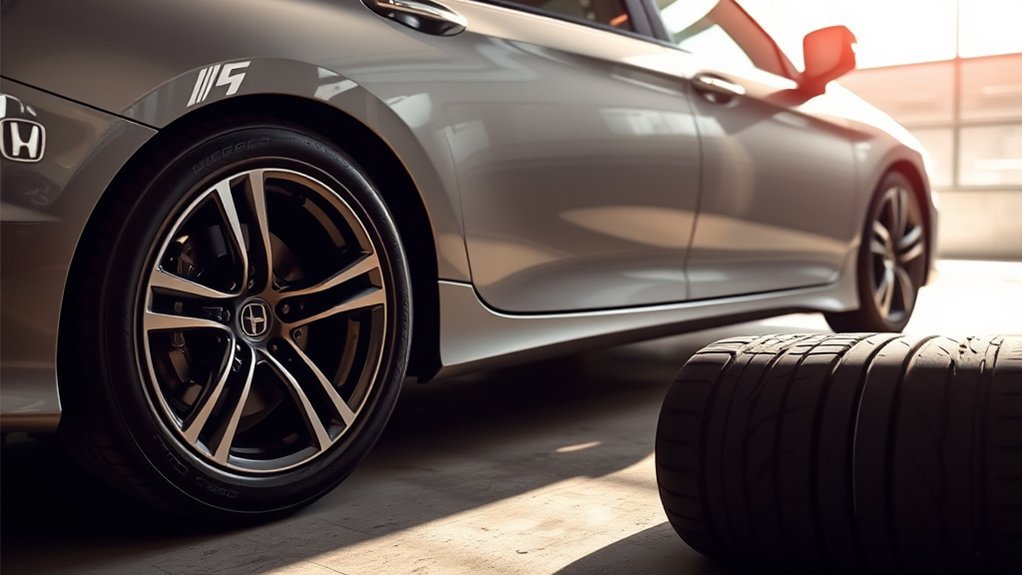
Have you ever wondered how changing your Honda Accord’s tires could affect its performance? Tire Plus Sizing is all about selecting wider or larger diameter tires than the original specifications while keeping safety standards in mind. For your Accord, this might mean upgrading from stock sizes like 235/40R19 to wider options like 255/35R19. This change can boost grip and enhance your car’s aesthetic appeal.
However, it’s essential to guarantee that these new tires fit snugly within the wheel wells, avoiding any rubbing or clearance issues, especially if you’ve modified your suspension. Maintaining the correct aspect ratio is key to preventing speedometer inaccuracies and handling problems. Always check that new tires meet load and speed ratings, as improper specs can lead to performance issues and excessive wear. Additionally, ensure that the recommended tire size aligns with your Accord’s specifications for optimal performance. So, if you want to elevate your driving experience, Tire Plus Sizing offers a path to freedom on the road.
How to Choose the Right Tire Fitment Size and Specifications
Selecting the right tire fitment size and specifications for your Honda Accord can greatly enhance your driving experience. Start by ensuring the tire size aligns with OEM recommendations, like 225/50R17 for LX trims or 235/40R19 for Sport and Touring trims. Consider the overall diameter; smaller tires may boost comfort but can skew speedometer readings, while larger options improve cornering stability at the cost of feeling more road imperfections.
Take note of the aspect ratio, as it affects handling; a 235/40 tire has a lower profile than a 225/50 tire. Don’t overlook the load index and speed rating—your tires must support the vehicle’s weight and suit your driving style. Additionally, evaluate the offset and width of the wheel to avoid rubbing issues. Remember that load index specifications ensure your tires can safely support the weight of your vehicle. Finally, maintain proper tire pressure and consider tread patterns for peak performance, ensuring you enjoy a smooth, liberating ride on every journey.
Identifying and Resolving Compatibility Issues With Aftermarket Tires
When considering aftermarket tires for your Honda Accord, it’s essential to guarantee compatibility to avoid issues like rubbing or clearance problems. Here are four key factors to keep in mind:
- Stock Size: Confirm your current tire size—often 235/40R19 for Sport trims—to ascertain a proper fit.
- Offset: Select wheels with a recommended offset between +20mm and +55mm based on width and diameter.
- Aspect Ratio: Check this measurement; options like 18×9.5 with a +30mm offset may require fender rolling for clearance.
- Bolt Pattern: Verify the aftermarket wheels match the Accord’s 5×114.3mm specification to avoid installation issues.
Additionally, consider how changes in tire size affect tire pressure and speedometer accuracy. Smaller tires, for example, might mislead your speed readings. By addressing these compatibility aspects, you’ll enjoy a smoother, safer ride. Furthermore, ensuring the correct tire size is vital for maintaining optimal performance and stability in your vehicle.
What Are the Performance Benefits of Wider and Larger Tires?
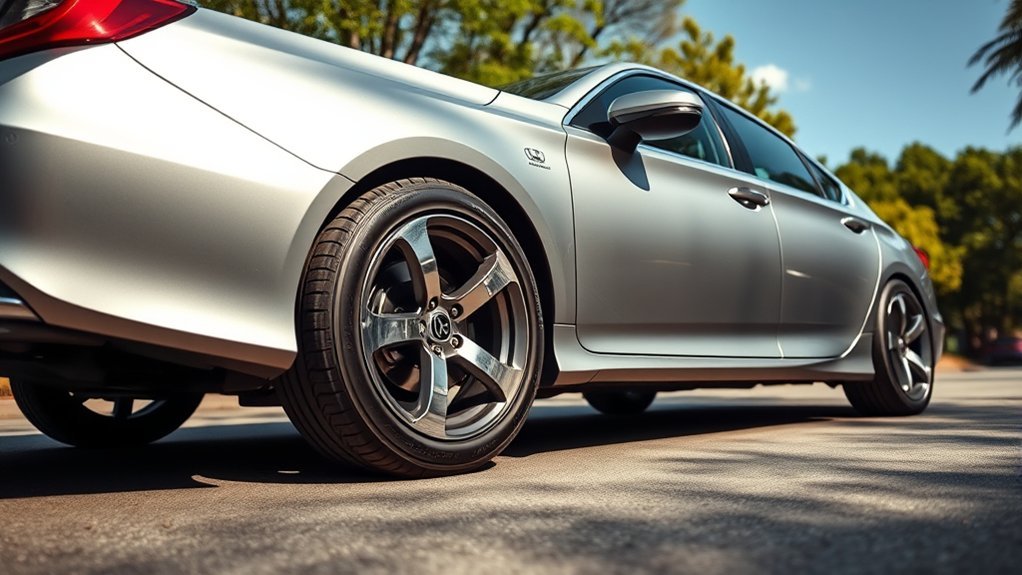
While considering upgrades for your Honda Accord, opting for wider and larger tires can significantly enhance your vehicle’s performance. One of the most significant advantages is traction improvement. Wider tires, like a 255mm width, create a larger contact patch with the road, boosting grip during acceleration and cornering. This means you’ll experience enhanced cornering stability, allowing for sharper handling and reduced body roll, especially when taking tight turns.
Larger tires, such as 20-inch options, not only improve performance but also contribute to better heat dissipation during high-speed driving. This reduces the risk of blowouts and helps extend tire life. Plus, you might find that larger tires can operate effectively at lower pressures, improving ride comfort and shock absorption on rough surfaces. Additionally, all-weather tires offer enhanced traction in various conditions, further elevating your driving experience. With these upgrades, you’ll enjoy a more dynamic driving experience while giving your Accord a sportier, more aggressive appearance.
How to Prevent Rubbing and Ensure Proper Clearance With Aftermarket Tires?
Upgrading to wider and larger tires can elevate your driving experience, but it’s important to confirm they fit your Honda Accord without causing issues like rubbing. Here are some tips to ascertain proper clearance:
- Check Wheel Offset: Make sure the offset is within +20mm to +55mm for the front and +15mm to +55mm for the rear.
- Consider Staggered Setup: Use a staggered configuration, like 19×8.5 +35mm in the front and 19×9.5 +22mm in the rear, to maintain alignment and clearance.
- Mind Suspension Geometry: If you lower your suspension, keep the total wheel diameter within 1-2 inches of stock measurements to avoid clearance issues.
- Inspect Regularly: Regularly check tire pressure and alignment post-modification to catch any potential rubbing early. Additionally, ensure that the bolt pattern matches your new wheels to maintain safe mounting and performance.
Frequently Asked Questions
Can Plus Sizing Affect My Honda Accord’s Warranty?
Plus sizing your tires can impact your warranty coverage, especially if it affects performance implications. It’s wise to check your manufacturer’s guidelines to confirm you maintain your warranty while enjoying enhanced driving experiences.
How Do Tire Pressure Requirements Change With Plus Sizing?
You might think plus sizing means carefree driving, but tire inflation becomes essential. As you alter tire size, adjust pressure for ideal handling characteristics; neglecting this can lead to uneven wear and compromised safety.
Will Plus Sizing Impact My Vehicle’s Resale Value?
Yes, plus sizing can impact your vehicle’s resale value. While aesthetic considerations may attract some buyers, others might see resale implications due to potential handling issues or mismatched performance expectations. Always weigh your choices carefully.
Are There Legal Regulations for Tire Sizing Modifications?
When you’re considering tire modifications, remember there are guidelines to guarantee tire safety. While you might enjoy enhanced performance, keep in mind that local regulations may restrict certain sizes. Always check before making changes!
How Often Should I Rotate Plus-Sized Tires?
You should rotate plus-sized tires every 5,000 to 8,000 miles. This helps optimize tire wear and enhances handling performance, ensuring your vehicle maintains stability and responsiveness, giving you the freedom to drive confidently.
Conclusion
To sum up, understanding tire plus sizing is essential for maximizing your Honda Accord’s performance. By choosing the right fit, addressing compatibility issues, and ensuring proper clearance, you can enhance handling, improve grip, and elevate your driving experience. Whether you’re seeking a sportier look or better traction, remember: the right tires make all the difference. So, embrace the journey, enjoy the ride, and keep your Accord performing at its best with the right tire choices!

Related Articles
Honda Accord Spare Tire Size Compatibility Guide
Get the essential details on your Honda Accord's spare tire size and compatibility—discover what you need to know to stay safe on the road!
Read More
How Rim Width Affects Tire Size on the Honda Accord
By understanding how rim width impacts tire size on your Honda Accord, you can enhance performance and safety, but what are the best options for you?
Read More
Honda Accord Lug Nut Size and Thread Pitch Reference
Learn the essential lug nut size and thread pitch for your Honda Accord to ensure optimal performance and avoid costly mistakes. Discover more details inside!
Read More