When upgrading your Honda Accord’s tires, tire plus sizing can improve the look and steering feel of the car, but only when the new tire and wheel package stays close to the original overall diameter and clears the suspension, fenders, brakes, and steering components. The safest starting point is your Accord’s door-jamb tire placard, owner information, and official Honda specifications, then a careful fitment check before you buy.
Quick Answer
For a Honda Accord, plus sizing means using a larger wheel with a lower-profile tire while keeping overall tire diameter close to stock. Start with the OEM size, match or exceed the factory load index and speed rating, check wheel width and offset, then test for rubbing before driving normally.
Key Takeaways
- Use your Accord’s original tire size as the baseline, not a generic online size.
- Keep the new tire’s overall diameter close to stock to protect speedometer accuracy, ABS, traction control, and clearance.
- Match or exceed the factory load index and speed rating; current Accord examples include 225/50R17 94V and 235/40R19 96V.
- A square setup is best for most daily-driven Accords because it keeps tire rotation simple.
- After installation, set cold tire pressure, check for rubbing, recalibrate TPMS if your model requires it, and recheck alignment.
At a Glance
| Time Required | 30–60 minutes to research and compare sizes; extra time for professional test fitting and alignment. |
| Difficulty | Moderate. The math is simple, but final clearance depends on wheel width, offset, tire brand, suspension height, and alignment. |
| Tools Needed | Owner’s manual or door placard, tire-size calculator, tread-depth gauge, tire-pressure gauge, flashlight, straightedge, torque wrench, and a professional installer for final fitting. |
| Cost | Usually the cost of four tires plus mounting, balancing, alignment, and possibly wheels, TPMS service, or minor clearance work. |
What Is Tire Plus Sizing and Why Does It Matter for Your Honda Accord?
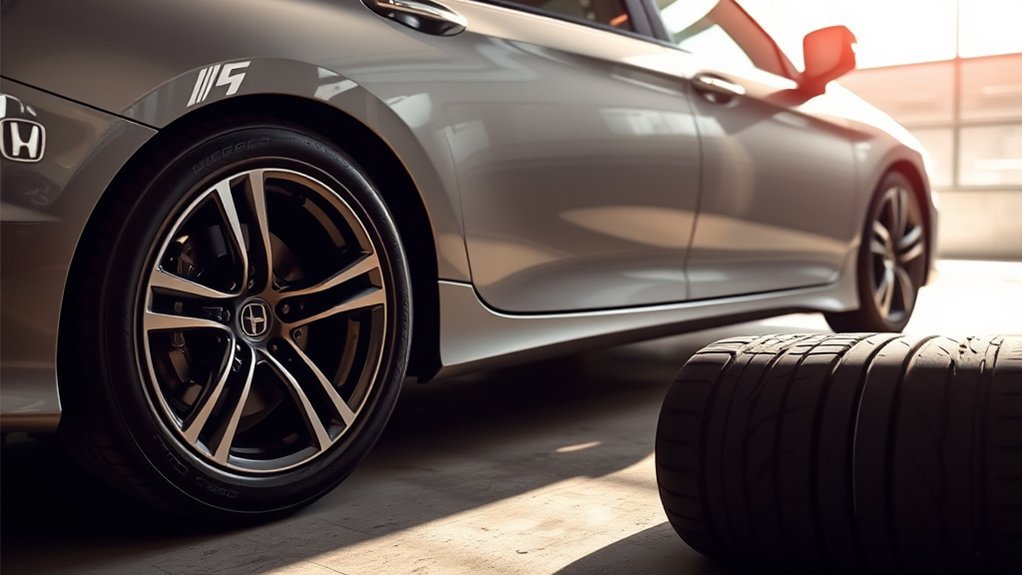
Tire plus sizing means increasing wheel diameter while using a lower-profile tire so the full tire-and-wheel package stays close to the original rolling diameter. For example, a driver moving from a 17-inch Accord wheel to a 19-inch wheel would normally use a shorter tire sidewall to keep the tire diameter close to stock.
This matters because the tire’s outside diameter affects more than appearance. A large change can alter ride height, speedometer accuracy, odometer readings, ABS behavior, traction control, stability control, gearing feel, and tire-to-fender clearance. Tire Rack explains that plus sizing works best when the overall tire diameter is maintained as closely as possible.
Warning: Do not choose a larger tire just because it fits the wheel. The tire must clear the car at full steering lock, under suspension compression, and with passengers or cargo on board. It also must meet the correct load index, speed rating, and wheel-load requirements.
Start With the Factory Honda Accord Tire Size
Your safest baseline is the tire size printed on the driver-side door placard and listed by Honda for your exact year and trim. Current Honda Accord examples show that tire size varies by trim. On the 2026 Honda Accord specification page, Honda lists 17 x 7.5J wheels with 225/50R17 94V tires on some trims and 19 x 8.5J wheels with 235/40R19 96V tires on others.
| Factory example | Wheel size | Tire size | What it means |
| Comfort-focused Accord trims | 17 x 7.5J | 225/50R17 94V | Taller sidewall, smoother ride, more pothole cushion. |
| Sport-style and many hybrid trims | 19 x 8.5J | 235/40R19 96V | Sharper look and response, less sidewall cushion. |
Older Accord generations may use different original sizes, so do not copy a tire size from another model year without verifying it. Even within the same generation, trims and factory wheel packages can differ.
How to Calculate Plus-Size Tire Fitment
Before comparing tires, calculate overall diameter. Use this formula:
Overall tire diameter = wheel diameter + 2 × tire sidewall height. Sidewall height = tire width × aspect ratio.
Here is how common Accord-related sizes compare:
| Tire size | Approx. diameter | Compared with 235/40R19 | Fitment note |
| 225/50R17 | 25.9 in. | About the same | Factory-style comfort size on some trims. |
| 235/40R19 | 26.4 in. | Baseline | Factory 19-inch example on current Accord trims. |
| 245/40R19 | 26.7 in. | Slightly taller | May work with the right wheel, but clearance must be checked. |
| 255/35R19 | 26.0 in. | Slightly shorter | Wider tread; needs correct wheel width, offset, and fender clearance. |
| 245/35R20 | 26.8 in. | Slightly taller | More aggressive look, but harsher ride and higher pothole risk. |
Pro Tip: Compare the new tire’s diameter, width, load index, speed rating, and recommended rim-width range before comparing prices. A tire that looks close in diameter can still rub if it is too wide or mounted on the wrong wheel offset.
How to Choose the Right Tire Fitment Size and Specifications
Selecting the right tire fitment size for your Honda Accord means checking more than the numbers printed on the sidewall. Start with the OEM tire size, then compare the new setup against these requirements:
- Overall diameter: Keep it close to stock so the speedometer, odometer, stability systems, and gearing feel remain predictable.
- Load index: Match or exceed the original tire’s load index. For current Honda examples, that means at least 94 for 225/50R17 examples and 96 for 235/40R19 examples.
- Speed rating: Match or exceed the original speed rating unless a qualified tire professional confirms another rating is appropriate for your use.
- Recommended rim width: The tire must be approved for the wheel width you plan to use.
- Wheel load rating: The wheel itself must be rated to carry the vehicle safely.
- Brake clearance: The wheel barrel and spoke design must clear the brake calipers.
- Offset and backspacing: These determine how far the wheel sits inward or outward. A small offset change can be fine; an aggressive change can cause rubbing or bearing stress.
- Bolt pattern, center bore, lug-seat type, and thread pitch: Verify these for your exact Accord before ordering wheels.
The National Highway Traffic Safety Administration advises drivers to use the original tire size or another size recommended by the vehicle manufacturer, and to check the owner’s manual or tire-and-loading label when choosing tires.
[Products Worth Considering]

Measure tire tread depth quickly and accurately with this LUMITECO dial gauge that reads in 1/32" increments up to 14/32". The color-coded green/yellow/red zones make it easy to judge tire wear and know when replacement is needed. A rugged, compact design with a protective pouch helps keep the gauge ready for use on cars, trucks, motorcycles, and more.

This professional wheel and rim cleaning brush set lifts brake dust, grime, and dirt with soft, scratch-free microfiber and synthetic wool fibers. The rim brush bends up to 360 degrees for easy access to hard-to-reach areas around spokes, lips, and faces. Ideal for thorough cleaning of car, truck, motorcycle, bicycle, RV, and more wheel and tire surfaces.
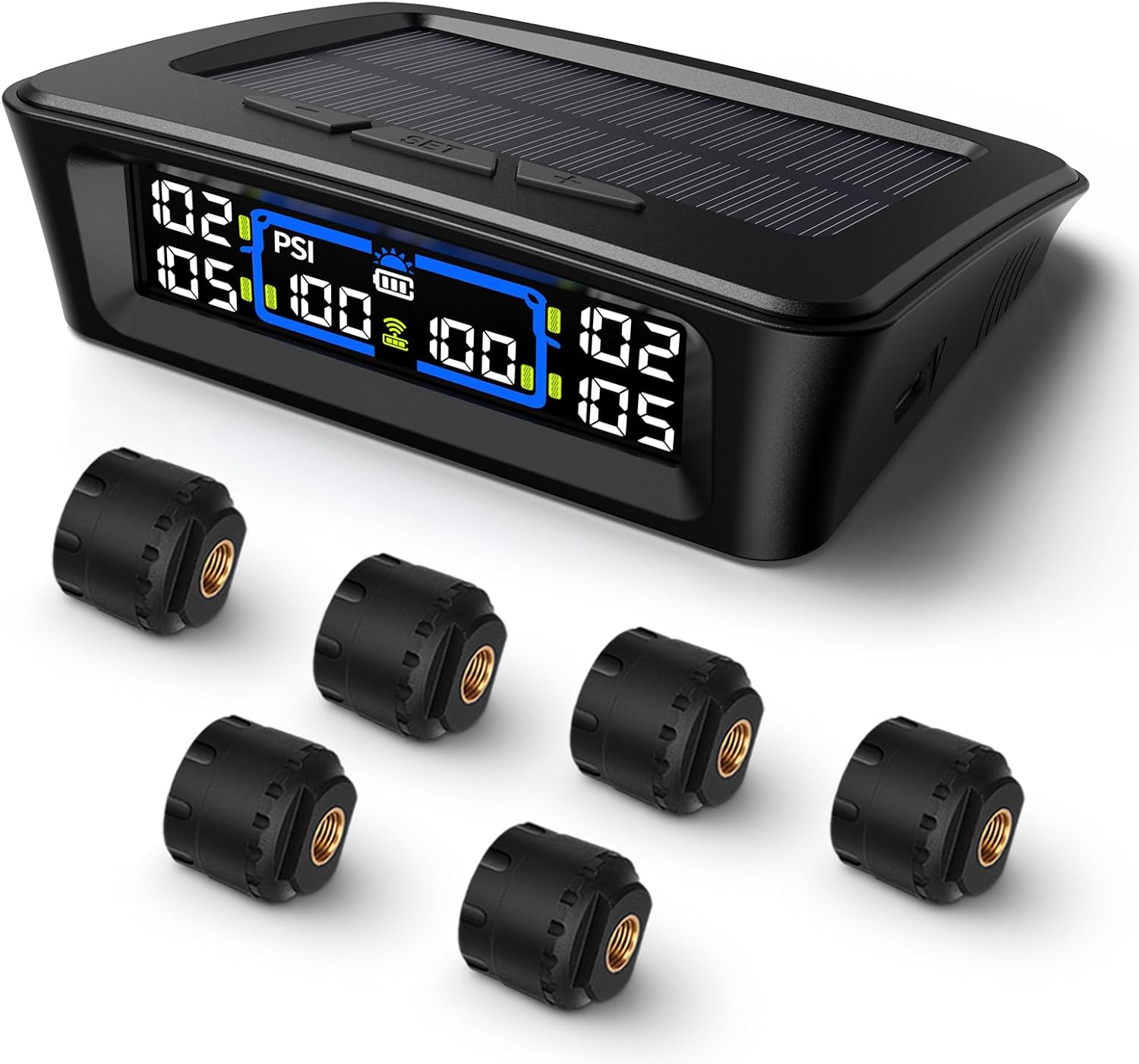
The Tymate TM12 RV TPMS delivers real-time tire pressure and temperature monitoring with a stable 433Hz display for safer long-distance driving. It supports simultaneous monitoring across vehicle and trailer zones, includes six alarm modes for pressure, temperature, leakage, battery, and signal loss, and features easy DIY installation with auto calibration. Power is supplied via USB-C charging or solar recharging, with a wide 0–144 PSI range and up to 50 ft signal coverage for RVs and towable trailers.
Identifying and Resolving Compatibility Issues With Aftermarket Tires
When considering aftermarket tires for your Honda Accord, compatibility comes down to how the tire, wheel, suspension, and body work together. Here are the most important checks before mounting a plus-size setup:
- Confirm the stock size: Use your door placard, owner information, or Honda specs, not just a forum post or another Accord owner’s setup.
- Check the tire’s approved rim-width range: A 255mm tire usually needs a wider wheel than a 225mm or 235mm tire.
- Compare the outside diameter: Large changes can affect speedometer readings and driver-assistance systems.
- Verify wheel offset carefully: Too far inward may hit struts or suspension arms; too far outward may hit fenders.
- Check brake and hub fitment: Confirm center bore, lug hardware, lug-seat style, and caliper clearance.
- Avoid unnecessary staggered setups: Most Accord owners should use a square setup with the same tire and wheel size on all four corners because it supports normal tire rotation.
- Plan for alignment: Lowering springs, coilovers, or aggressive camber settings can change clearance dramatically.
Note: A tire size that fits one Accord may rub on another because tire brands vary in actual section width, tread shape, shoulder profile, and sidewall stiffness.
[Products Worth Considering]

This metal-free wheel and tire cleaning brush uses dense, fluffy synthetic wool to safely clean rims, spokes, fenders, and engine areas without worrying about damaging surfaces. Its flexible, comfortable design helps you reach detailed areas while maintaining durability, and the extra absorbent fibers work well with wheel spray cleaners for faster cleanup. Reusable and washable performance helps prevent grime and build-up for cleaner vehicles and easier maintenance at home.

Steelman white tire marking crayons provide high-contrast, semi-permanent marks for repairing and inspecting tires and equipment. They write on wet or dry, smooth or coarse surfaces including rubber, metal, glass, and wood, making them ideal for puncture location and damage outlining. The lead- and zinc-free crayons resist weather and fading yet wipe away when you no longer need the marks.

The Topeak SmartGauge D2 delivers precise digital tire pressure readings for bikes, motorcycles, and sports equipment up to 250 psi (17 bar). Its rotating SmartHead works with both Presta and Schrader valves, so you can check pressure quickly without adapters. The LCD display makes it easy to read results in psi, bar, or kg/cm² with an included CR2032 battery for immediate use.
What Are the Performance Benefits of Wider and Larger Tires?
Wider and lower-profile tires can make a Honda Accord feel more responsive, especially during steering input and cornering. A wider tread may create a larger contact patch, and a shorter sidewall can reduce sidewall flex. That can improve turn-in feel and make the car look more planted.
However, wider and larger does not automatically mean better in every condition. Extra width can increase tire weight, rolling resistance, road noise, and hydroplaning risk in standing water. Larger wheels with lower-profile tires can also ride more harshly and are easier to damage on potholes, curbs, and sharp road debris. Tire Rack notes that low-profile plus-size tires have less sidewall cushion for impacts than taller tires.
For daily driving, the best setup is usually the one that balances grip, ride quality, replacement cost, and clearance instead of simply choosing the widest tire that can be forced under the fender.
Safe Plus Sizing Examples for a Honda Accord
These examples are starting points for research, not universal guarantees. Final fitment depends on your model year, trim, wheel width, offset, suspension height, alignment, tire brand, and how much clearance your car has.
| Starting size | Possible research size | Why consider it | What to verify |
| 225/50R17 | 235/45R18 | Mild Plus One look with a diameter close to stock. | Wheel width, offset, load index, speed rating, and fender clearance. |
| 225/50R17 | 235/40R19 | Factory-style 19-inch direction used on many current Accord trims. | Correct 19-inch wheel specs, ride comfort, pothole risk, and tire cost. |
| 235/40R19 | 245/40R19 | Small width increase without changing wheel diameter. | Clearance at full lock, strut clearance, and whether the tire is approved for the wheel width. |
| 235/40R19 | 255/35R19 | Wider performance-oriented setup. | Wider wheel, careful offset, fender clearance, steering clearance, and professional test fitment. |
How to Prevent Rubbing and Ensure Proper Clearance With Aftermarket Tires
Upgrading to wider and larger tires can elevate your driving experience, but it’s important to confirm they fit your Honda Accord without rubbing. Use this checklist before and after installation:
- Check inner clearance: Look at the strut, spring perch, control arms, brake lines, and inner fender liner.
- Check outer clearance: Look at the fender lip, bumper tab area, and plastic liners.
- Turn the steering wheel lock-to-lock: Check both directions while the car is on the ground.
- Compress the suspension: A tire that clears while parked may rub over bumps or with passengers.
- Listen during the first road test: Scraping, clicking, or thumping during turns means you should stop and inspect.
- Inspect after 25–50 miles: Look for shiny rub marks, torn liners, sidewall scuffing, or uneven wear.
- Get an alignment: Tire size changes, wheel changes, or suspension changes can reveal alignment problems.
Fender rolling may help some aggressive setups, but it is not a cure-all. Poor rolling can crack paint, trap moisture, or hide a fitment problem that should have been solved with a better wheel and tire choice.
[Products Worth Considering]

Monitor tire tread wear with a smart, color-coded depth gauge that shows clear condition ranges at a glance. The bar is range marked for fast, easy readings, helping you maintain safer traction and performance. Each gauge is portable with a pocket clip, and the set includes 20 units for daily use and sharing.

This 3-piece wheel brush set makes it easy to clean wheels and tires with soft, scratch-free brushes designed for lifting brake dust and grime. The flexible rim brush bends up to 360 degrees to reach hard-to-access areas for a thorough clean, while the comfortable grip helps control during detailing. A dedicated detailing brush supports gentle cleaning for sensitive surfaces, including interior use.

Vigorder rubber cement glue delivers superior adhesion and cures quickly within about 30 seconds for seamless rubber bonding. Once cured, it helps provide a strong, durable, waterproof seal that holds up to vehicle weight, pressure, and heat. Suitable for cars, motorcycles, trucks, bicycles, and off-road tires, it’s designed for emergency patch and maintenance repairs.
Tire Pressure, TPMS, and Maintenance After Plus Sizing
After changing tire size, do not guess tire pressure from the sidewall maximum. The sidewall number is not the recommended operating pressure. NHTSA says the correct cold pressure is the vehicle manufacturer’s recommended pressure on the tire-and-loading label or owner information. If you use a different tire size than the placard size, have a qualified tire professional determine the correct cold inflation pressure for that setup.
Honda Accord TPMS guidance also matters. In Honda’s Accord TPMS instructions, the system may compare rolling radius and wheel rotation rather than directly measuring pressure on some models. Honda also states that TPMS calibration should be started after adjusting pressure, rotating tires, or replacing one or more tires. Follow the procedure for your exact year and trim.
Note: Recheck cold tire pressure after the first few drives. New tires can settle slightly after mounting, and temperature changes can affect pressure readings.
Warranty, Legal, and Resale Considerations
Plus sizing does not automatically void your entire Honda warranty. However, if an incorrect tire or wheel setup causes damage to suspension, steering, wheel bearings, brakes, bodywork, or driver-assistance systems, that related repair may not be covered. The Magnuson-Moss Warranty Act is the key federal warranty law in the United States, but warranty decisions still depend on the facts of the repair claim.
Legal rules also vary by location. Some areas have inspection rules about tire protrusion, fender coverage, speedometer accuracy, or unsafe modifications. Insurance can also be affected if expensive aftermarket wheels are not declared or covered. For resale value, mild OEM-style upgrades may appeal to some buyers, while aggressive fitments can turn buyers away if they see rubbing, uneven wear, or ride-quality issues.
Frequently Asked Questions
Can plus sizing affect my Honda Accord’s warranty?
Yes, but it does not automatically void the whole warranty. If the tire or wheel setup is unsafe or causes related damage, that specific claim may be denied. Keep the setup close to OEM diameter, use the correct load and speed ratings, and keep records from a qualified installer.
How do tire pressure requirements change with plus sizing?
Do not use the tire sidewall maximum as your daily pressure. Start with Honda’s cold tire-pressure placard for the original size, then ask a tire professional to confirm the correct pressure if your new tire size differs. Check pressure cold and recalibrate TPMS when your Accord’s procedure requires it.
Will plus sizing impact my vehicle’s resale value?
It can. A clean OEM-style plus-size setup may attract buyers who like the look, but aggressive fitment, rubbing, harsh ride quality, uneven tire wear, or non-matching wheels can reduce buyer confidence. Keeping the original wheels can help resale.
Are there legal regulations for tire sizing modifications?
Yes, rules vary by state, province, or country. Local regulations may cover tire coverage by fenders, speedometer accuracy, tread condition, wheel spacers, lighting height, and inspection requirements. Check local rules before installing an aggressive tire and wheel setup.
How often should I rotate plus-sized tires?
Follow Honda’s Maintenance Minder or your tire manufacturer’s guidance. For many square setups, rotating every 5,000–7,500 miles is a practical interval. Staggered setups may not allow normal front-to-rear rotation, which can shorten tire life on a front-wheel-drive Accord.
Is 255/35R19 a good plus-size tire for a Honda Accord?
It can be a performance-oriented research size for some 19-inch setups, but it is not a guaranteed fit. You must verify wheel width, offset, inner clearance, fender clearance, load rating, speed rating, and tire-brand dimensions before buying.
Are 20-inch wheels worth it on a Honda Accord?
They can look aggressive, but they usually reduce sidewall height, increase pothole-damage risk, and may make the ride harsher. For most daily drivers, 18-inch or 19-inch setups offer a better balance of appearance, tire cost, comfort, and handling.
Conclusion
Understanding tire plus sizing is essential if you want your Honda Accord to look sharper and feel more responsive without creating clearance, safety, or maintenance problems. Start with the factory tire size, keep the overall diameter close to stock, match or exceed the original load index and speed rating, and verify wheel width, offset, brake clearance, and TPMS requirements before installation. The right tire choices can improve grip and appearance, but the best upgrade is the one that fits correctly, drives safely, and wears evenly.
Sources
- Honda 2026 Accord Sedan Features & Specs — backs up current Accord wheel and tire-size examples.
- NHTSA TireWise Tire Safety — backs up tire-size, pressure, rotation, and tire-maintenance safety guidance.
- Honda Accord TPMS Guide — backs up TPMS calibration and replacement-tire cautions.
- Tire Rack Plus Size Wheels & Tires — backs up overall-diameter and low-profile tire trade-off guidance.
- FTC Magnuson-Moss Warranty Act — backs up warranty-law context for aftermarket modifications.