
What Is Hydroplaning? Causes and How to Prevent It
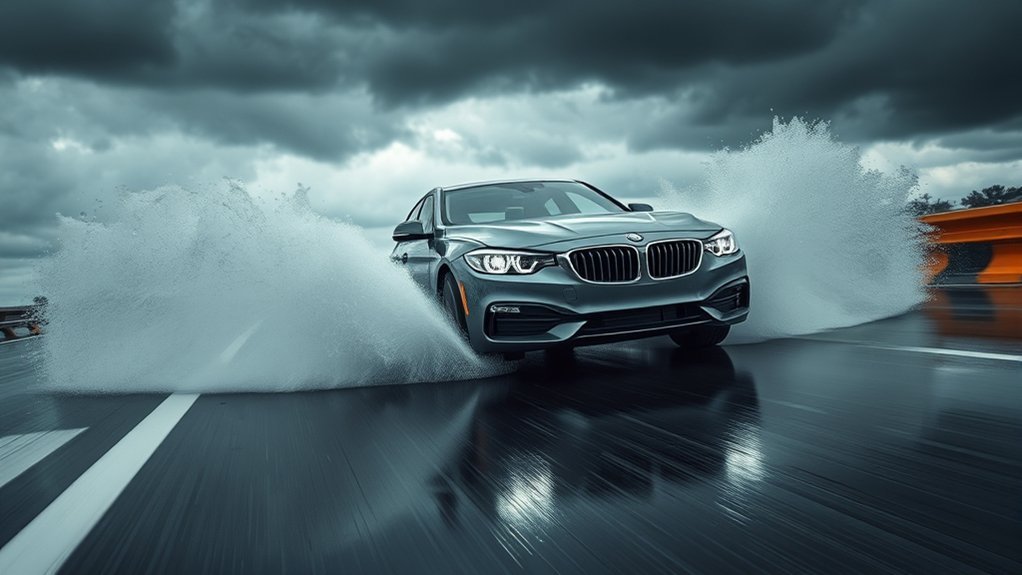
Hydroplaning happens when your tires can’t clear water fast enough, so they ride on a thin film instead of gripping the road. You lose steering, braking, and acceleration control, and the car may feel light, drift, or let the engine rev without gaining speed. You can reduce the risk by slowing down in rain, keeping tires properly inflated, replacing worn tread, and avoiding abrupt steering or braking. Learn the key warning signs and recovery steps next.
Key Takeaways
- Hydroplaning happens when tires lose road contact and ride on water, sharply reducing steering, braking, and acceleration control.
- It is caused by water too deep or fast for tires to channel away, especially at higher speeds.
- Worn tread, improper inflation, and poor tire maintenance increase the risk of hydroplaning.
- Prevent hydroplaning by slowing down in rain, maintaining proper tire tread and pressure, and avoiding sudden steering or braking.
- If hydroplaning occurs, ease off the accelerator, keep the wheel steady, and wait for tire grip to return.
[Products Worth Considering]

Monitor tire tread wear with a smart, color-coded depth gauge that shows clear condition ranges at a glance. The bar is range marked for fast, easy readings, helping you maintain safer traction and performance. Each gauge is portable with a pocket clip, and the set includes 20 units for daily use and sharing.

The SAFELIFE dial tire tread depth gauge measures tread depth in 1/32 inch increments with clear, easy-to-read 2-inch dial face. Color zones using a traffic light system help you quickly judge whether tread is low, marginal, or ample for safer driving. Built with a durable zinc cast body and a metal detect probe for precise, comfortable use across cars, motorcycles, trucks, and buses.

Measure tire tread depth quickly and accurately with this LUMITECO dial gauge that reads in 1/32" increments up to 14/32". The color-coded green/yellow/red zones make it easy to judge tire wear and know when replacement is needed. A rugged, compact design with a protective pouch helps keep the gauge ready for use on cars, trucks, motorcycles, and more.
What Is Hydroplaning?
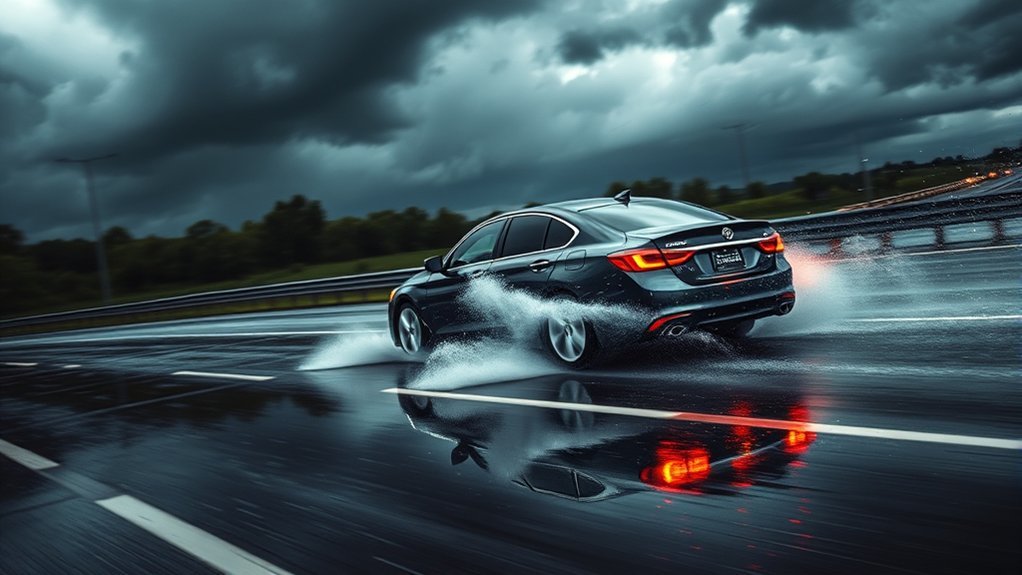
Hydroplaning happens when your tires lose direct contact with the road and ride on a thin layer of water instead. When this occurs, your vehicle can’t transmit steering, braking, or acceleration forces effectively, so control drops sharply.
Hydroplaning occurs when tires lose road contact and skim over water, sharply reducing steering, braking, and acceleration control.
You may notice the wheel feeling light, the engine revving without matching road speed, or the car drifting despite steady steering input. In rainy conditions, even a brief loss of traction can make lane control difficult and increase stopping distance.
Hydroplaning can affect any vehicle, but your risk changes with speed, water depth, and tire condition. Proper tire maintenance helps reduce that risk by preserving tread depth and correct inflation, both of which improve water displacement.
You should treat hydroplaning as a traction failure, not a skid you can correct normally. The key concern is that your tires can’t maintain enough contact with the pavement to support precise vehicle control.
What Causes Hydroplaning?
Several conditions can trigger hydroplaning, and they usually work together rather than acting alone. When your tires can’t evacuate water fast enough, a thin film forms between the tread and the road.
Water physics matters here: standing water increases lift, and speed reduces the time your tires have to channel it away. Worn tread, improper inflation, and poor tire maintenance all reduce water dispersion, so the tire loses contact sooner.
Smooth roads, shallow tread grooves, and ruts that hold water also raise the risk. Your vehicle’s weight distribution and tire width can influence how quickly water builds under each tire.
Hard braking or sharp steering can add instability, but the core problem is always the same: the tire no longer grips the pavement because the water layer separates them.
Keeping tires properly inflated, rotated, and replaced on schedule helps you lower that risk before you drive into wet conditions.
Signs Your Car Is Hydroplaning
When your tires start hydroplaning, you’ll usually feel the car get light, vague, or unresponsive to steering input, even though the wheel is still turning. That loss of road feel is one of the clearest hydroplaning symptoms.
You may also notice the engine revs rise briefly while speed stays steady, or the vehicle drifts without matching your steering angle. If you brake, the pedal can feel ineffective because the tires aren’t gripping the pavement.
In a straight line, the car may wander, and in a turn, it may continue forward instead of following the curve. Sudden changes in wheel feedback, lane position, or traction tell you vehicle control is slipping.
At highway speeds, these signs can appear quickly and without warning. The key clue is the same: your tires aren’t evacuating water fast enough, so the car feels disconnected from the road surface.
[Products Worth Considering]

Accurately measure tire tread depth with a calibrated gauge marked from 0 to 1 inch in 1/32 inch increments. The color-coded bar helps you quickly identify tread condition ranges, supporting safe driving for trucks, motorcycles, automobiles, and passenger vehicles.

Orange Seal regular formula tubeless sealant quickly seals punctures and forms a durable bond inside your tire to help reduce flats. Made with natural latex, it adheres effectively to rubber and seals from the inside out, including the critical bead-to-rim interface for a reliable ride. It seals punctures up to 1/4 inch, slices up to 3/4 inch, and performs in temperatures as low as 11°F across MTB, road, cyclocross, gravel, and e-bike applications.

Black Magic Tire Wet delivers a deep wet-look shine that makes tires appear dark, rich, and freshly detailed. Its long-lasting formula helps resist rain, dust, and road grime for weeks of glossy protection, not days. Apply by spraying onto clean, dry tires—no buffing or wiping required—with a low-sling design to reduce splatter on paint and wheels.
How to Prevent Hydroplaning
The best way to prevent hydroplaning is to give your tires enough time and contact area to shed water. You can do that by controlling speed, maintaining proper tire maintenance, and reading road conditions, especially when standing water builds on curves, lane tracks, and worn pavement.
Use tires with adequate tread depth and correct inflation, because both improve water evacuation and grip. Reduce speed before reaching puddles, and avoid abrupt steering or braking that can overload the tire’s contact patch.
- Check tread depth regularly.
- Keep tires inflated to spec.
- Replace uneven or worn tires.
- Slow down in rain and spray.
- Increase following distance on wet roads.
You should also avoid cruise control in heavy rain, since it can delay speed adjustments.
Choose the driest lane position when possible, and watch for polished asphalt, which sheds water poorly.
What to Do During Hydroplaning?
If your vehicle starts to hydroplane, stay calm and ease off the accelerator so the tires can regain contact with the road.
Keep both hands on the wheel and maintain steering control; don’t jerk the wheel or brake hard, because sudden inputs can worsen the skid. Instead, look where you want to go and hold a steady, straight path until tire grip returns.
Keep both hands on the wheel and steer gently; sudden braking or jerky movements can worsen hydroplaning.
If you need to adjust direction, make small, deliberate corrections only. Avoid cruise control, since you need full manual input during loss of traction.
When the vehicle slows and the tires reconnect with the pavement, resume normal steering and speed gradually. If you must stop, use gentle braking techniques after traction is restored, applying pressure smoothly to avoid another slide.
In heavy rain, increase following distance and reduce speed as soon as possible.
If hydroplaning happens repeatedly, check tire tread, inflation, and vehicle condition before driving again.
Frequently Asked Questions
How Does Tire Tread Depth Affect Hydroplaning Risk?
Deeper tire tread channels water away, so you’re less likely to lose road contact. Worn tread raises hydroplaning risk, especially in wet weather conditions; regular tire maintenance helps preserve grip and drainage performance.
Which Tires Reduce Hydroplaning Most Effectively?
You’ll reduce hydroplaning most with tires featuring advanced tire design and directional tread patterns; they channel water fast, yet grip stays strong. Choose deep grooves, wide circumferential channels, and wet-rated compounds for better control.
Does All-Wheel Drive Prevent Hydroplaning?
No, all wheel drive doesn’t prevent hydroplaning; it only helps you accelerate. You still need hydroplaning prevention: reduce speed, keep tires properly inflated, and avoid standing water, because tire tread and road contact control traction.
Can Road Speed Limits Change During Heavy Rain?
Yes, you can see temporary lower speed limits during heavy rain, because road conditions worsen. You should adjust driving techniques too, but posted limits only change if authorities legally revise signs or enforceable advisories.
How Often Should Tires Be Replaced for Wet Roads?
You should replace tires every 3–6 years, or sooner if tread falls below 4/32 inch. For wet weather, inspect tire maintenance monthly, rotate regularly, and watch for uneven wear or cracks.
Conclusion
Hydroplaning is what happens when your tires decide water is a better road than asphalt. You prevent it by slowing down, keeping tread healthy, inflating tires properly, and avoiding sudden steering or braking in rain. If your car starts gliding like it has ambitions beyond physics, stay calm, ease off the accelerator, and steer gently. In short, you can’t negotiate with water, but you can make it less dramatic.
[Products Worth Considering]

Measure tyre tread depth precisely with a digital gauge that reads in both MM and inches, helping you monitor safe driving conditions. The large LCD screen is easy to operate, and the compact tool fits for cars, trucks, and motorcycles. It provides high accuracy with a 0-25.4mm range and includes a 1-year warranty for added peace of mind.

This tire inflator with pressure gauge delivers long-lasting performance with a durable rubber-protected gauge and sturdy build. The longer hose and 360 swivel air chuck help you seal the valve securely and keep your hands free while measuring, inflating, or deflating. It’s battery-free for reliable use and provides ±2 PSI accuracy in the mid-range for most typical tires, with universal compatibility for 1/4 NPT compressor outputs.

This 9-piece detailing brush set helps you clean interior and exterior vehicle areas with versatile sizes and ergonomic handling. Stiff bristle brushes tackle heavy grime on tires, carpets, and floors, while smaller brushes are suitable for tight engine and cabin gaps. Designed for thorough car care across wheels, vents, seats, and hard-to-reach detailing spots.

Related Articles
Can You Drive on a Tire With a Bulge? Safety Risks
Can you drive on a tire with a bulge, or is a sudden blowout lurking around the corner?
Read More
Is Tire Siping Worth It? Benefits and Drawbacks
Better grip in wet and wintry driving might tempt you—but is tire siping actually worth the tradeoffs?
Read More
Will a Donut Spare Fit Your Car? How to Check
How to tell if a donut spare will fit your car before you risk a dangerous mismatch.
Read More