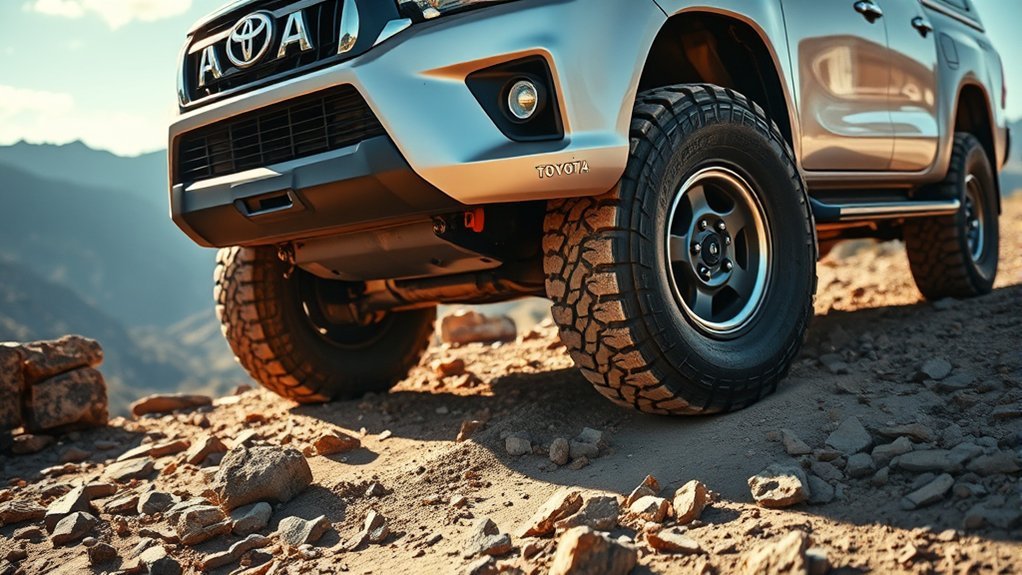
All-terrain tires can make a Toyota Hilux more capable when your driving includes paved roads, gravel, farm tracks, construction sites, sand, and light mud. The right set is not simply the most aggressive tread you can find. It is the tire that matches your Hilux’s size, load rating, towing needs, climate, and daily road use.
Quick Answer
All-terrain tires are worth choosing for a Toyota Hilux if you split your driving between paved roads and unsealed surfaces. They offer better grip on gravel, dirt, light mud, and rough tracks than highway tires, but you must choose the correct size, load index, speed rating, and winter rating for your exact Hilux.
Key Takeaways
- All-terrain tires are a good Hilux upgrade for mixed road, gravel, worksite, camping, and light off-road use.
- Check the tire placard or owner’s manual before buying; do not fit a tire with a lower load index or speed rating than recommended.
- A 3PMSF symbol helps identify tires tested for snow traction, but it does not make every all-terrain tire equal to a dedicated winter tire.
- More aggressive all-terrain tires can add road noise, weight, rolling resistance, and steering feel changes on pavement.
What Are All-Terrain Tires?
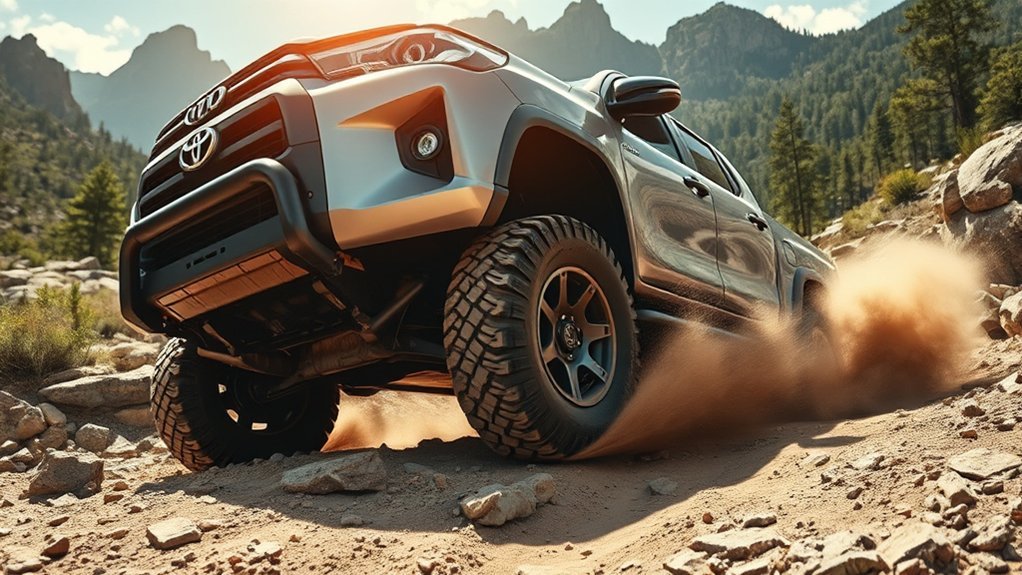
All-terrain tires, often marked as A/T, are designed to work across more than one surface. They usually use deeper tread blocks, wider grooves, stronger shoulders, and extra siping compared with a typical highway-terrain tire. That design helps a Hilux find grip on loose gravel, dirt roads, light mud, wet grass, and rough tracks while still remaining usable for everyday road driving.
The trade-off is that all-terrain tires are not magic. A more open tread can be louder on the highway, heavier to accelerate, and less refined than a road-focused tire. A mild all-terrain tire is usually better for daily driving, while an aggressive all-terrain tire makes more sense if you often drive on rocky tracks, job sites, or remote routes.
Key Features of All-Terrain Tires for the Hilux
Tread Design Characteristics
The tread is the biggest visual difference between all-terrain and highway tires. A good Hilux all-terrain tire normally has open shoulder blocks for loose surfaces, siping for wet-road grip, and enough void space to clear small stones, dirt, and mud. Less aggressive patterns usually ride quieter on the road, while chunkier patterns usually give better bite off-road.
Enhanced Traction Performance
All-terrain tires improve traction by giving the tire more edges to grab loose ground. This helps on gravel, dirt, sand tracks, forest roads, and wet unsealed surfaces. On smooth pavement, however, traction depends on the tire compound, tread depth, water evacuation, and correct tire pressure, not just the “all-terrain” label.
| Feature | Why It Matters on a Hilux |
|---|---|
| Open tread blocks | Help the tire grip loose gravel, dirt, and light mud. |
| Shoulder lugs | Improve bite when the vehicle leans, turns, or climbs out of ruts. |
| Sipes | Add small gripping edges for wet roads and, on 3PMSF-rated tires, snow traction. |
| Stronger construction in some LT sizes | Can help with payload, towing, rough roads, and sidewall resistance when correctly matched to the vehicle. |
Durability and Load Support
Many all-terrain tires are available in light-truck sizes, and some include reinforced sidewalls or tougher tread compounds. This can be useful for a Hilux used for towing, tools, camping gear, farm work, or rough tracks. Still, the important number is the tire’s load index. Follow the size, load index, speed rating, and pressure information on your vehicle’s tire placard or owner’s manual, as recommended by USTMA replacement tire guidance.
Warning: Never choose an all-terrain tire with a lower load index or smaller load-carrying capacity than the original tire specified for your Hilux. Oversized tires can also affect braking, steering, speedometer accuracy, ABS/ESC behavior, clearance, fuel use, and warranty or insurance compliance.
Winter and Wet-Road Suitability
Some all-terrain tires carry the Three-Peak Mountain Snowflake symbol, often called 3PMSF. This means the tire has met a snow-traction test standard, such as the straight-line snow traction testing described in ASTM F1805. It is a helpful sign if you drive in snowy areas, but it does not automatically mean the tire will match a dedicated winter tire on ice, hard-packed snow, or cold wet roads.
Note: If your Hilux sees regular ice, mountain passes, or long winter commutes, compare 3PMSF all-terrain tires with dedicated winter tires before buying.
Why Choose All-Terrain Tires for Off-Road Performance?
Enhanced Traction Capabilities
All-terrain tires make sense when your Hilux regularly leaves clean pavement. The deeper tread and stronger shoulder design help the tire bite into loose surfaces instead of skating across them. This is useful on gravel climbs, wet work sites, rutted farm tracks, beach access roads where permitted, and rocky trails that are not extreme enough to require mud-terrain tires.
Versatile Terrain Handling
The main reason Hilux owners choose all-terrain tires is balance. You can drive to work during the week, tow a trailer when needed, and still have useful grip for weekend tracks or job sites. Compared with mud-terrain tires, all-terrain tires usually keep better manners on the road. Compared with highway-terrain tires, they offer more confidence on loose and uneven ground.
- Better grip than highway tires on gravel, dirt, and light mud.
- More road comfort than most mud-terrain tires.
- Useful for camping, overlanding, farm use, and construction sites.
- Available in many sizes and load ratings for pickup and 4×4 use.
All-Terrain Tires vs. Other Types: A Comparison
Choosing the right tire type depends on where the Hilux spends most of its time. The table below gives a practical comparison.
| Tire Type | Best For | Main Trade-Off |
|---|---|---|
| Highway-terrain | Daily pavement, commuting, lower noise, long highway trips. | Limited grip on mud, ruts, and rough tracks. |
| All-terrain | Mixed road, gravel, dirt, camping, light off-road, and work use. | Can add noise, weight, and rolling resistance compared with highway tires. |
| Mud-terrain | Deep mud, ruts, rocks, and frequent technical off-road driving. | Usually louder, rougher, heavier, and less refined on pavement. |
| Winter tire | Cold climates, ice, packed snow, and winter braking. | Not ideal for year-round hot-weather use or sharp rocky tracks. |
[Products Worth Considering]

Monitor tire tread wear with a smart, color-coded depth gauge that shows clear condition ranges at a glance. The bar is range marked for fast, easy readings, helping you maintain safer traction and performance. Each gauge is portable with a pocket clip, and the set includes 20 units for daily use and sharing.

These universal tire valve stem caps help protect valve cores from dust, debris, and moisture while helping maintain stable tire pressure. The corrosion-resistant metal construction and sealed design provide reliable protection in road grime, mud, and winter conditions. Twist-on installation makes them quick to fit on cars, SUVs, trucks, and motorcycles.

These aluminum alloy tire valve stem caps with an O-ring seal help protect valve stems from corrosion while adding a clean, stylish look to your vehicle. The universal fit works across cars, trucks, motorcycles, bicycles, and more, making them an easy upgrade for everyday driving and off-road use. Installation is quick, and the included four-pack keeps all your tires dressed and protected.
Best All-Terrain Tires for Your Toyota Hilux
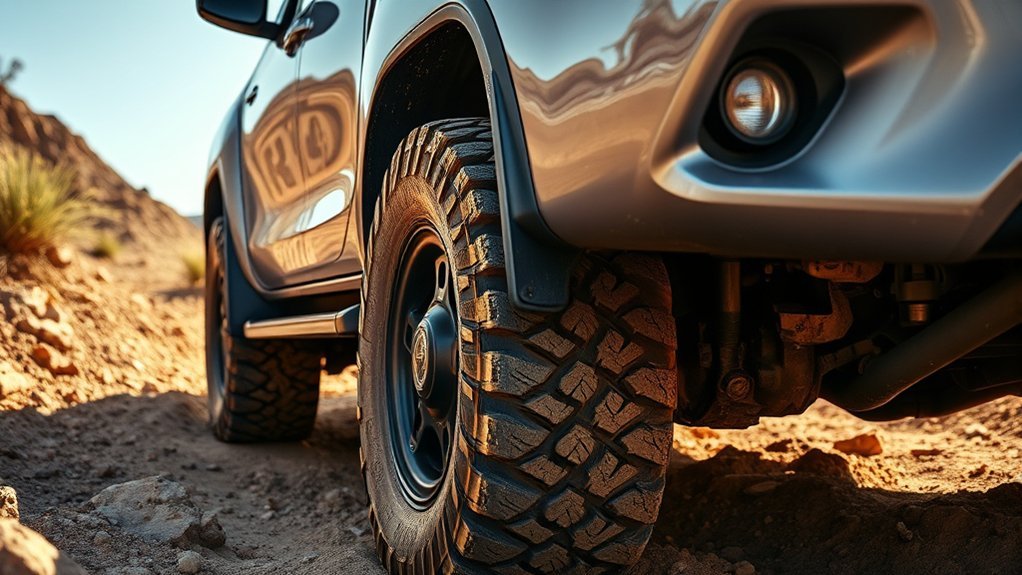
There is no single best all-terrain tire for every Toyota Hilux. The right choice depends on your wheel size, axle load, towing use, local roads, and climate. Some 2026 Toyota Australia HiLux variants list 265/65R17 tires in the official specification table, but tire sizes vary by market, trim, wheel package, and model year, so always check your own tire placard first.
Strong options to compare include the BFGoodrich All-Terrain T/A KO3 for tougher mixed-use and off-road driving, and the Goodyear Wrangler All-Terrain Adventure with Kevlar for drivers who want a balanced on-road and off-road tire. Check the exact size and specification before buying, because winter ratings, load ranges, and tread features can vary by size.
- For mostly pavement with some gravel: choose a mild all-terrain tire with lower road noise and good wet-road ratings.
- For work sites, towing, and payload: focus on correct load index, LT construction where appropriate, and sidewall durability.
- For remote tracks and rocks: choose a tougher off-road all-terrain pattern with stronger shoulders and sidewall protection.
- For snow: look for the 3PMSF symbol, then compare real winter performance and braking reviews for your tire size.
[Products Worth Considering]
This flat-free TICONN wheelbarrow tire features durable polyurethane foam construction that never needs inflation, helping prevent punctures and reducing maintenance on rough outdoor terrain. With a 300 lb max load capacity and stable steel rim design, it supports safer transport for yard work and hauling tasks. An adapter kit with ball bearings and nylon spacers is included for easier fit and customization across common wheelbarrow and cart axle setups.

Upgrade your Toyota’s wheels with durable aluminum alloy valve stem caps that help protect valve cores from corrosion and direct exposure to road grime, clay, water, and snow. Rubber rings improve sealing to help prevent air leakage and maintain stable tire pressure for safer driving. These caps are easy to install or remove without tools and add a unique, stylish look to your car.

The SAFELIFE dial tire tread depth gauge measures tread depth in 1/32 inch increments with clear, easy-to-read 2-inch dial face. Color zones using a traffic light system help you quickly judge whether tread is low, marginal, or ample for safer driving. Built with a durable zinc cast body and a metal detect probe for precise, comfortable use across cars, motorcycles, trucks, and buses.
How to Choose the Right All-Terrain Tire Size and Load Rating
Before comparing tread patterns, confirm the tire’s basic specification. This step matters more than brand preference.
| Check | What to Do |
|---|---|
| Tire size | Match the placard or owner’s manual unless a tire professional confirms an approved alternative. |
| Load index | Meet or exceed the original specification, especially if you tow or carry tools, canopy weight, camping gear, or work equipment. |
| Speed rating | Use a rating suitable for the vehicle and local legal requirements. |
| LT vs passenger construction | LT tires can be useful for load and durability, but they may ride firmer and weigh more. |
| Overall diameter | Large changes can cause rubbing, gearing changes, speedometer error, and clearance issues. |
Pro Tip: If your Hilux spends more than 70% of its time on pavement, start with a road-biased all-terrain tire. If it regularly sees mud, ruts, rocks, or remote tracks, move toward a more aggressive off-road all-terrain pattern.
[Products Worth Considering]

Measure tire tread depth quickly and accurately with this LUMITECO dial gauge that reads in 1/32" increments up to 14/32". The color-coded green/yellow/red zones make it easy to judge tire wear and know when replacement is needed. A rugged, compact design with a protective pouch helps keep the gauge ready for use on cars, trucks, motorcycles, and more.
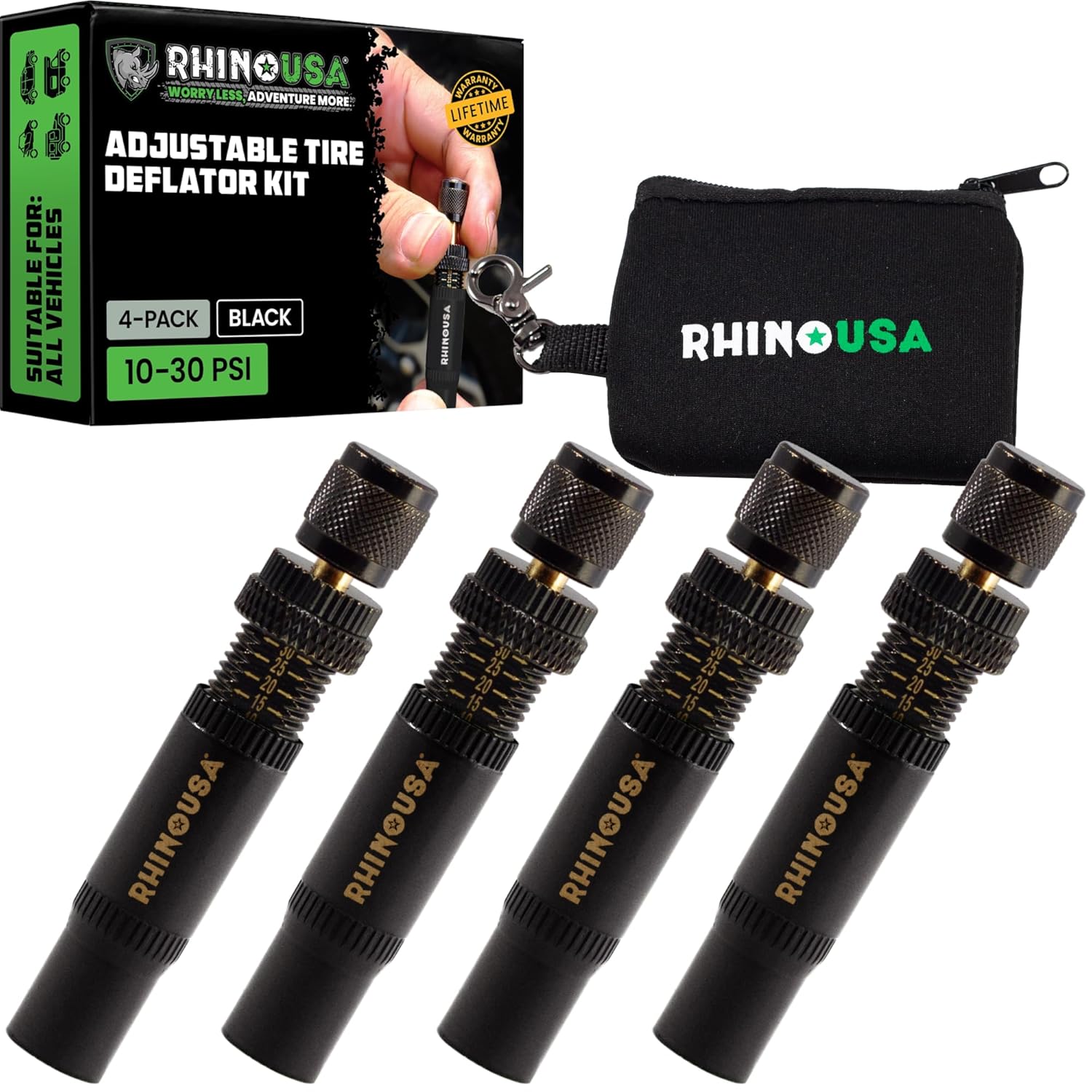
Use the Rhino USA adjustable tire deflators to air down all four tires at once by screwing one deflator onto each valve stem, letting you step away while the tires reach your preset pressure. Each deflator independently adjusts across a 10–30 PSI range with laser-etched indicators for quick setup and verification, making it ideal for beach, sand, and rocky off-road trails.

Replace worn tires quickly with this universal 4.80/4.00-8 tire and inner tube set designed for wheelbarrows and outdoor utility carts. The ribbed tread helps reduce turf damage while the natural rubber construction supports longer service life. Compatible with 15.5-inch outer diameter, 4-inch width, and 8-inch rim diameter wheels, it uses a straight TR-13 valve stem for easy installation. For best results, inflate with a manual pump and do not exceed 25 PSI.
Assessing Your Driving Needs for All-Terrain Tires
Use your real driving conditions to decide how aggressive the tire should be. A Hilux that mostly does school runs and weekend gravel roads needs a different tire from one carrying tools across rough job sites every day.
| Your Driving | Best Tire Direction |
|---|---|
| Mostly highway with occasional dirt roads | Mild all-terrain or highway-terrain tire with good wet braking and low road noise. |
| Regular gravel, farm tracks, and camping roads | Balanced all-terrain tire with good stone ejection and sidewall protection. |
| Towing, canopy, drawers, tools, or heavy loads | Correct load index first; consider LT construction if suitable for your ride comfort and payload needs. |
| Snowy roads | 3PMSF-rated all-terrain tire at minimum; dedicated winter tires for frequent ice or severe winter driving. |
| Deep mud or technical rock work | Consider mud-terrain or rugged-terrain tires instead of a mild all-terrain tire. |
Maintenance Tips for Hilux All-Terrain Tires
All-terrain tires last longer and perform better when maintained correctly. Follow your tire maker’s guidance and your Hilux owner’s manual, and use the vehicle placard as the starting point for cold tire pressure.
- Check pressure when cold: Incorrect pressure can reduce grip, increase wear, and raise the risk of tire damage. The NHTSA TireWise guide explains tire pressure, tread, rotation, and inspection basics.
- Rotate regularly: A Hilux can wear front and rear tires differently, especially with loads, towing, or rough-road driving.
- Inspect sidewalls: Look for cuts, bulges, exposed cords, cracks, and impact damage after rocky or worksite driving.
- Remove trapped stones: Stones stuck in tread grooves can cause noise and may damage the tread over time.
- Reinflate after off-road airing down: Lower pressure can help off-road traction in some conditions, but driving fast or long distances on underinflated tires can overheat and damage them.
Frequently Asked Questions
Can all-terrain tires be used all year round?
Yes, many all-terrain tires can be used year round if they match your climate and vehicle requirements. For snowy regions, choose a tire with the 3PMSF symbol. For frequent ice or severe winter driving, dedicated winter tires may still be the safer choice.
Is there a downside to all-terrain tires?
The main downsides are possible road noise, firmer ride quality, added tire weight, and reduced fuel efficiency compared with highway-terrain tires. The more aggressive the tread, the more noticeable these trade-offs can become.
Are all-terrain tires good in snow?
Some are good in snow, but not all. Look for the Three-Peak Mountain Snowflake symbol on the exact tire size you plan to buy. Even then, remember that snow traction is only one part of winter safety; ice braking and cold-weather grip can still favor dedicated winter tires.
Do I need LT all-terrain tires for a Toyota Hilux?
Not always. LT tires can help with load support and durability, but they may ride firmer and weigh more. If you tow, carry tools, or drive rough tracks often, ask a qualified tire professional whether an LT tire is suitable for your exact Hilux and load needs.
Can I fit bigger all-terrain tires on my Hilux?
Sometimes, but bigger tires can rub on guards or suspension parts and may affect braking, gearing, speedometer accuracy, fuel use, and legal compliance. Check local rules and get professional fitment advice before changing diameter, width, or wheel offset.
Conclusion
All-terrain tires are a smart upgrade for a Toyota Hilux that works and plays beyond smooth pavement. They give you more grip on gravel, dirt, light mud, and rough tracks while staying practical for normal road driving. The best choice is not the most aggressive tire; it is the tire that fits your Hilux correctly, supports your load, suits your climate, and matches how you actually drive.
Start with the tire placard, confirm the correct size and load rating, decide how much off-road grip you truly need, and choose a tire with the right balance of durability, comfort, snow rating, and road manners.
Sources
- NHTSA TireWise — tire pressure, tread, rotation, inspection, and consumer tire safety guidance.
- U.S. Tire Manufacturers Association: Replacing Tires — replacement tire size, load index, speed rating, and vehicle placard guidance.
- Tire Industry Association: Tire Replacement — load index, speed rating, and tire placard replacement advice.
- ASTM F1805-20 — snow and ice driving traction test method relevant to 3PMSF discussion.
- Toyota Australia HiLux Specifications — current-market example of Hilux tire and vehicle specification data.
- BFGoodrich All-Terrain T/A KO3 and Goodyear Wrangler All-Terrain Adventure with Kevlar — manufacturer examples of current all-terrain tire options.