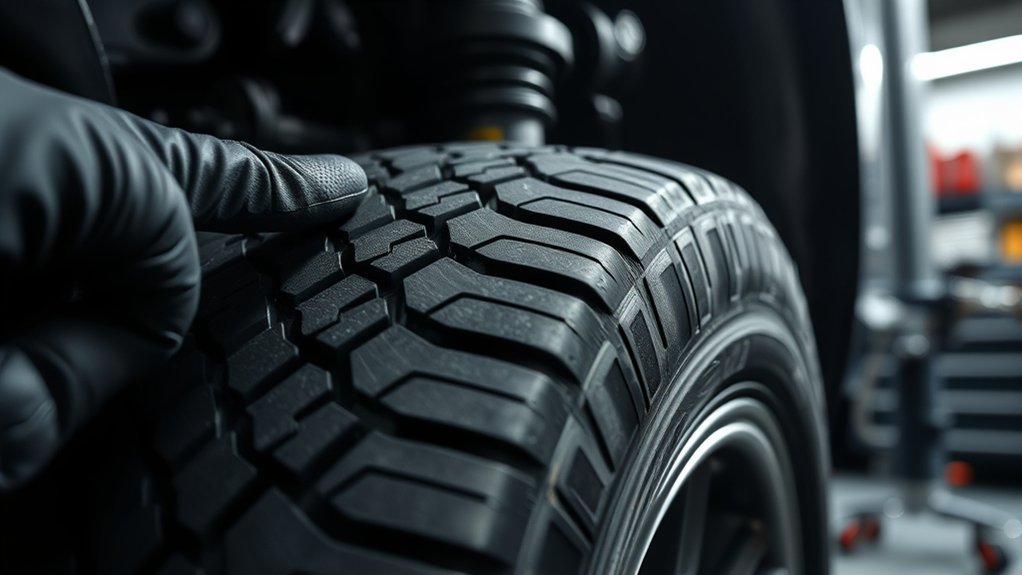
Tire cupping happens when parts of the tread wear into scalloped, high-and-low spots instead of staying smooth. You may hear a growling tire noise, feel vibration through the steering wheel or seat, or see dips along the tread edge. The tire is showing a symptom, not just a cosmetic problem, so you need to check the tire, wheel balance, alignment, suspension, pressure, and load before the wear gets worse.
Quick Answer
Tire cupping is uneven tread wear that creates scooped or scalloped spots around the tire. It usually comes from poor wheel balance, worn shocks or struts, loose suspension parts, incorrect tire pressure, skipped rotations, or alignment problems. Mild cupping needs inspection; severe cupping often means tire replacement.
Key Takeaways
- Tire cupping, also called tire scalloping, creates repeating high and low tread spots.
- Common causes include worn shocks or struts, loose steering parts, wheel imbalance, alignment problems, incorrect pressure, and skipped rotations.
- The most common warning signs are a rhythmic growl, vibration, rough tread edges, and visible tread dips.
- An alignment, balance, or suspension repair may fix the cause, but it will not replace tread that has already worn away.
- Check pressure and tread monthly, rotate tires according to your owner’s manual, and get vibration or uneven wear inspected early.
At a Glance
| Time Required | 10 to 20 minutes for a basic driveway inspection |
| Difficulty | Easy for spotting symptoms; professional inspection is best for diagnosis |
| Tools Needed | Tire pressure gauge, tread depth gauge or penny, flashlight, gloves, and your owner’s manual |
| Cost | Basic inspection can cost nothing at home; balancing, alignment, suspension repair, or tire replacement varies by vehicle and shop |
What Is Tire Cupping?
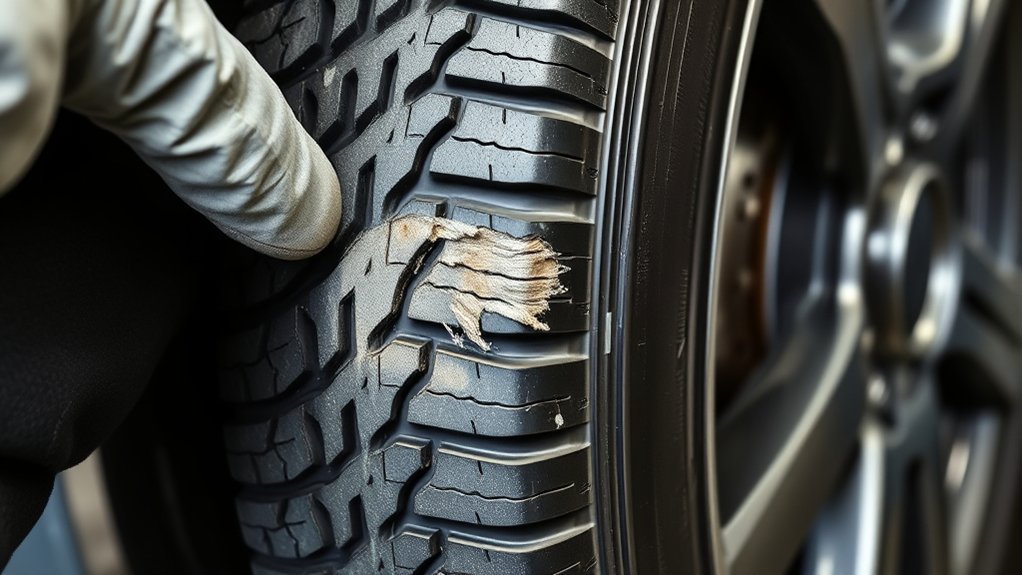
Tire cupping, also called tire scalloping, is an irregular tread wear pattern where sections of tread look scooped out every few inches. Instead of a smooth contact surface, the tire develops alternating high and low spots. You can often feel those dips by running your hand lightly across the tread when the vehicle is parked safely and the tires are cool.
Cupping usually means the tire is not holding steady contact with the road. The tire may be bouncing, skipping, vibrating, or carrying weight unevenly. That uneven motion wears small areas faster than the surrounding tread. The pattern may start on one tire, but it can spread to other tires if the root cause stays unfixed.
Note: Tire cupping is a wear pattern, not a single diagnosis. The real cause may be in the tire, wheel, alignment, steering system, suspension, pressure, or loading setup.
What Causes Tire Cupping?
Most tire cupping starts when the tread cannot roll evenly against the road. One problem can cause it, but several small problems often work together. A shop should check the tire, wheel, suspension, steering, and alignment instead of treating the cupped tread as the only issue.
Worn Shocks, Struts, or Suspension Parts
Worn shocks, struts, bushings, ball joints, tie rods, or wheel bearings can let the tire move too much. When the tire bounces instead of staying controlled, tread blocks hit the road unevenly and wear in patches. This is one of the most common reasons cupping shows up with ride harshness, bouncing, or vibration.
Wheel Imbalance
An out-of-balance tire and wheel assembly can create repeated vibration as the tire spins. That vibration can make cupping worse, especially after new tire installation, a rotation, pothole damage, or wheel service. Tire balancing helps the wheel rotate smoothly and reduces shaking.
Alignment Problems
Alignment controls how the tires meet the road. If toe, camber, or other suspension angles move out of specification, the tire can scrub instead of rolling cleanly. That scrub may show as feathering, one-sided wear, diagonal wear, or cupping-like dips. If your vehicle pulls, the steering wheel sits off-center, or tires wear unevenly, have the alignment checked by a qualified technician.
Incorrect Tire Pressure
Underinflation and overinflation both change the tire’s contact patch. Low pressure can create heat and shoulder wear, while high pressure can reduce the contact area and wear the center faster. NHTSA recommends checking tire pressure at least once a month when tires are cold, using the pressure listed on the driver-side placard or in the owner’s manual.
Skipped Rotations and Heavy Loads
Front, rear, steering, braking, and drive tires do not all wear at the same rate. Skipping rotations lets small wear differences grow. Heavy loads can also stress rear tires and suspension parts, especially if the tires are underinflated for the load. Use the load information on the driver-side placard and follow your owner’s manual for rotation patterns.
Front vs. Rear Tire Cupping
Front tire cupping often feels more obvious through the steering wheel because the front tires handle steering forces. Causes may include worn front struts, loose steering parts, alignment issues, wheel imbalance, or uneven rotation history.
Rear tire cupping may feel more like seat or floor vibration. It can come from worn rear shocks, weak bushings, rear alignment issues on vehicles with adjustable rear suspension, overloaded cargo, or tires that stayed too long in one position. If the rear tires show cupping first, do not assume the tires are the only problem. Ask the technician to inspect rear suspension movement and load-related wear.
Tire Cupping Warning Signs
When cupping starts, you may hear or feel it before you clearly see it. Pay attention to changes that repeat with wheel speed, not engine speed. A tire-related sound usually gets faster as road speed rises.
- Growling, humming, or roaring noise: Cupped tread can sound like a rough wheel bearing or aggressive tire tread.
- Steering wheel vibration: Front tire cupping or imbalance often shows up through the steering wheel.
- Seat or floor vibration: Rear tire cupping may feel stronger through the body of the vehicle.
- Scalloped tread edges: The tire may show repeating dips around the shoulder or across parts of the tread.
- Rough hand-feel: The tread may feel choppy, uneven, or wavy when you move your hand around the tire.
- Handling changes: Pulling, wandering, or reduced wet-road confidence can point to tire or alignment trouble.
Warning: Do not ignore cupping with strong vibration, exposed cords, bulges, cracks, low tread depth, or sudden handling changes. Slow down, avoid hard braking when safe to do so, and have the tire inspected before normal driving continues.
How to Check for Tire Cupping
You can spot many early signs at home, but do the inspection safely. Park on level ground, set the parking brake, let the tires cool, and keep your hands away from sharp debris, exposed wire, or damaged rubber.
- Look across the tread: Use a flashlight and check for repeating dips, smooth patches, or jagged shoulder wear.
- Feel the tread gently: Move your hand around the tire. Cupping often feels like alternating high and low spots.
- Compare all four tires: A pattern on one corner may point to a local suspension, balance, or wheel issue.
- Check tread depth: NHTSA says tires are not safe when tread is worn to 2/32 of an inch. Replace tires at or below that level.
- Check cold pressure: Match the vehicle placard, not the maximum pressure printed on the tire sidewall.
- Note vibration and noise: Tell the shop when it happens, such as at 35 mph, 60 mph, during braking, or after a rotation.
Pro Tip: If the noise started right after a tire rotation, mark which tire moved to which corner. That simple detail can help a technician isolate whether the tire, wheel, or vehicle corner is causing the problem.
Can Tire Cupping Be Fixed?
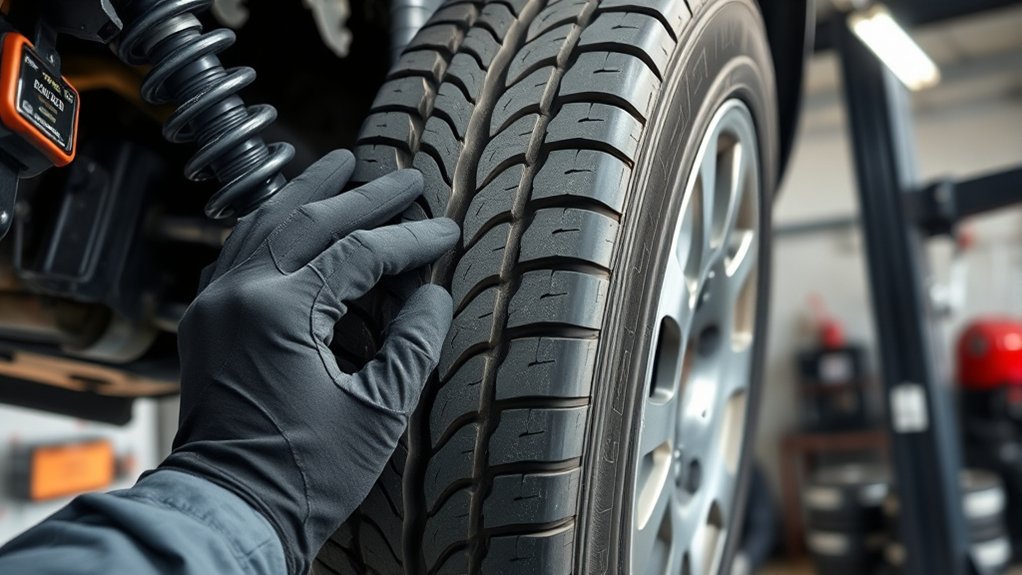
Tire cupping can sometimes be managed, but the worn tread usually cannot be restored to new condition. If the cupping is mild and the tire still has safe tread depth, a technician may correct the cause with balancing, alignment, pressure adjustment, rotation, or suspension repair. The tire may become less noisy over time, but you should not rely on driving to “fix” it.
Severe cupping often means replacement, especially when the tire has low tread depth, visible damage, persistent vibration, or weak wet-road traction. The safest repair depends on the tire’s condition and the cause behind the wear.
| What You Find | Best Next Step |
| Light cupping, good tread depth, minor noise | Inspect balance, alignment, pressure, and suspension before deciding whether to keep the tire in service. |
| Strong vibration or loud growling | Have the vehicle inspected soon. Driving longer can damage tires and make diagnosis harder. |
| Deep scallops, low tread, cords, bulges, or cracks | Replace the tire and repair the cause before the new tire wears the same way. |
[Products Worth Considering]

Monitor tire tread wear with a smart, color-coded depth gauge that shows clear condition ranges at a glance. The bar is range marked for fast, easy readings, helping you maintain safer traction and performance. Each gauge is portable with a pocket clip, and the set includes 20 units for daily use and sharing.

Measure tire tread depth quickly and accurately with this LUMITECO dial gauge that reads in 1/32" increments up to 14/32". The color-coded green/yellow/red zones make it easy to judge tire wear and know when replacement is needed. A rugged, compact design with a protective pouch helps keep the gauge ready for use on cars, trucks, motorcycles, and more.

The Ziopetru adjustable magnetic wheel alignment tool helps you check and restore camber and caster positioning after removing and reinstalling undercarriage components. With a clear leveling/bubble measurement system and an easy zeroing adjustment knob, it supports precise horizontal angle checking. The strong magnetic base mounts to metal surfaces for convenient use at home on cars, motorcycles, trucks, vans, and SUVs.
What a Mechanic Should Check
A proper diagnosis should go beyond the tire surface. Ask for a tire and suspension inspection, especially if the cupping returns after rotation or balancing.
- Wheel balance and bent wheel checks
- Alignment readings, including toe and camber where adjustable
- Shock and strut condition, including leaks and weak damping
- Ball joints, tie rods, bushings, control arms, and wheel bearings
- Tire pressure, tread depth, tire age, and tire load rating
- Rotation history and whether tire sizes differ front to rear
Michelin’s irregular tire wear guide links several uneven wear patterns to alignment, balance, pressure, shocks, bearings, and worn mechanical parts. That is why a full inspection matters more than guessing from the tread pattern alone.
[Products Worth Considering]

The SAFELIFE dial tire tread depth gauge measures tread depth in 1/32 inch increments with clear, easy-to-read 2-inch dial face. Color zones using a traffic light system help you quickly judge whether tread is low, marginal, or ample for safer driving. Built with a durable zinc cast body and a metal detect probe for precise, comfortable use across cars, motorcycles, trucks, and buses.

Accurately measure tire tread depth with a calibrated gauge marked from 0 to 1 inch in 1/32 inch increments. The color-coded bar helps you quickly identify tread condition ranges, supporting safe driving for trucks, motorcycles, automobiles, and passenger vehicles.

This universal wheel alignment tool helps you accurately restore tire tilt angles after tire or suspension repairs using an adjustable camber gauge. It features a powerful magnetic base that firmly attaches to brake rotors for stationary, slip-free readings, improving consistency during measurement. Built from durable PC plastic, it resists wear and corrosion and is compact enough for car, truck, RV, and motorcycle alignment tasks.
How to Prevent Tire Cupping
You prevent tire cupping by keeping each tire rolling smoothly, evenly, and at the correct pressure. A simple maintenance routine catches most problems before they become deep tread damage.
- Check pressure monthly: Use the cold PSI on the driver-side placard or owner’s manual.
- Inspect tread monthly: Look for dips, cracks, bulges, punctures, exposed cords, and uneven wear.
- Rotate on schedule: If your vehicle manufacturer recommends rotation, NHTSA notes that many vehicles use a 5,000 to 8,000 mile interval, or sooner if uneven wear appears.
- Balance tires when needed: Balance new tires at installation and recheck balance if vibration starts.
- Check alignment after symptoms: Get alignment checked if the vehicle pulls, the steering wheel is off-center, tires wear unevenly, or you hit a hard pothole or curb.
- Inspect suspension parts: Replace worn shocks, struts, bushings, joints, and bearings before they damage another set of tires.
- Respect load limits: Do not exceed the load rating on the vehicle placard, and adjust pressure only according to the manufacturer’s guidance.
The best time to stop tire cupping is before the tread becomes visibly scalloped. Monthly pressure and tread checks give you the earliest warning.
[Products Worth Considering]

Measure tyre tread depth precisely with a digital gauge that reads in both MM and inches, helping you monitor safe driving conditions. The large LCD screen is easy to operate, and the compact tool fits for cars, trucks, and motorcycles. It provides high accuracy with a 0-25.4mm range and includes a 1-year warranty for added peace of mind.

Vigorder rubber cement glue delivers superior adhesion and cures quickly within about 30 seconds for seamless rubber bonding. Once cured, it helps provide a strong, durable, waterproof seal that holds up to vehicle weight, pressure, and heat. Suitable for cars, motorcycles, trucks, bicycles, and off-road tires, it’s designed for emergency patch and maintenance repairs.

Replace or upgrade your zero-turn lawn mower tires with a universal fit flat-free tire and wheel assembly in a convenient 2-pack. Smooth tread front-caster style helps turning with reduced turf damage, while flat-free design eliminates the maintenance and downtime of air-filled flats. The included adapter kit supports 5/8-inch axles and hub lengths from 3.4 to 5 inches for compatibility across most ZTR mowers.
Tire Cupping vs. Other Tire Wear Patterns
Not every rough tread pattern is cupping. Knowing the difference helps you describe the problem clearly when you visit a tire shop or mechanic.
- Cupping or scalloping: Repeating scooped dips around the tire, often linked to bounce, vibration, balance, suspension, or alignment issues.
- Feathering: Tread ribs feel smooth in one direction and sharp in the other, often linked to toe alignment problems.
- One-sided wear: One shoulder wears faster than the other, often linked to camber, toe, worn parts, or loading issues.
- Center wear: The center wears faster than both shoulders, often linked to overinflation or load/pressure mismatch.
- Shoulder wear: Both outer edges wear faster, often linked to underinflation or aggressive cornering.
- Flat spotting: One or more localized flat areas, often linked to braking skid, parking storage, or tire lockup.
Is It Safe to Drive on Cupped Tires?
It depends on severity. A lightly cupped tire with safe tread depth and no structural damage may still be usable for a short period after inspection. A deeply cupped tire can reduce ride comfort, increase vibration, lower wet-road grip, and make the vehicle harder to control.
Replace the tire if tread depth is at or below 2/32 inch, cords are exposed, the sidewall is bulging, the tire is cracked, or vibration remains strong after service. If you are unsure, drive cautiously and have the tire inspected before long trips or highway driving.
Frequently Asked Questions
Is it safe to drive on cupped tires?
It depends on how severe the cupping is. Light cupping may be drivable after inspection if tread depth, structure, and traction are still safe. Deep cupping, strong vibration, exposed cords, bulges, cracks, or low tread depth means you should replace the tire and repair the cause.
Can cupped tires fix themselves?
No, cupped tires do not truly fix themselves. Mild cupping may become less noticeable after the cause is corrected and the tire wears more evenly, but the missing tread will not grow back. Severe cupping usually needs tire replacement.
How do I stop my tires from cupping?
Check cold tire pressure monthly, rotate tires according to your owner’s manual, balance tires when vibration appears, and inspect shocks, struts, bushings, joints, bearings, and alignment. The key is fixing the cause before the tread develops deep scallops.
Will an alignment fix tire cupping?
An alignment can fix one possible cause of tire cupping, but it will not restore tread that has already worn away. You may also need wheel balancing, pressure correction, rotation, or suspension repair. If cupping is severe, replacement may still be necessary.
What does tire cupping sound like?
Cupped tires often make a humming, growling, roaring, or chopping sound that gets faster as road speed increases. The noise may sound similar to a bad wheel bearing, so a technician should inspect both the tires and wheel-end parts.
Can only rear tires cup?
Yes. Rear tires can cup from worn rear shocks, weak bushings, wheel imbalance, rear alignment issues, overloading, incorrect pressure, or long rotation intervals. If only one rear tire cups, have that corner inspected for a local mechanical or wheel problem.
Conclusion
Tire cupping is a warning sign that your tire is not wearing evenly. It often points to worn shocks or struts, loose suspension parts, wheel imbalance, alignment issues, incorrect pressure, skipped rotations, or heavy loads. Check the tread, pressure, and vibration symptoms early, then fix the cause before installing new tires. That approach protects tire life, ride comfort, wet-road traction, and overall driving safety.
Sources
- Bridgestone: Tire Cupping: What It Means, Causes, and What to Do — supports the definition, causes, repair limits, and inspection guidance.
- NHTSA TireWise — supports tire pressure, tread depth, balance, alignment, rotation, and tire-safety guidance.
- NHTSA: June Is Tire Safety Month — supports monthly inspections, balancing, alignment, and 5,000 to 8,000 mile rotation guidance when recommended.
- Michelin: Irregular Tire Wear 101 — supports wear-pattern diagnosis and causes linked to pressure, alignment, shocks, bearings, and balance issues.