
Tallew 100 Pcs Tire Patch Kit Review: 5-Size Heavy-Duty Radial Repair Patches
Disclosure: As an Amazon Associate, we earn from qualifying purchases. If you click a link on this page and make a purchase, we may receive a small commission at no extra cost to you.
A tire puncture can stop a trip quickly, but the repair product you carry needs to match the job. The Tallew 100 Pcs Tire Patch Kit gives you a bulk assortment of internal rubber patches in five sizes for radial tire repair work. Its main strength is quantity and size coverage, while its main limitation is just as important: this package does not include adhesive, sealer, injury-channel filler, or preparation tools. This review explains what you receive, who can use it well, and why it should not be treated as a complete roadside repair kit.
Quick Verdict
Rating: 8.2/10, Recommended with caveats
Best For: Tire shops, fleet garages, farm or recreation-vehicle owners, and experienced DIY users who already have compatible repair chemicals and tools
Bottom Line: The 100-piece assortment offers useful size variety and a low cost per patch. It is not an all-in-one kit, and safe highway-tire repair requires proper inspection, preparation, and an approved method that also addresses the puncture channel.
| Specification | Detail |
|---|---|
| Brand | Tallew |
| Product | 100 Pcs Tire Patches, 5 Sizes |
| Product type | Internal rubber tire-patch assortment for radial tire repair work |
| Total quantity | 100 patches |
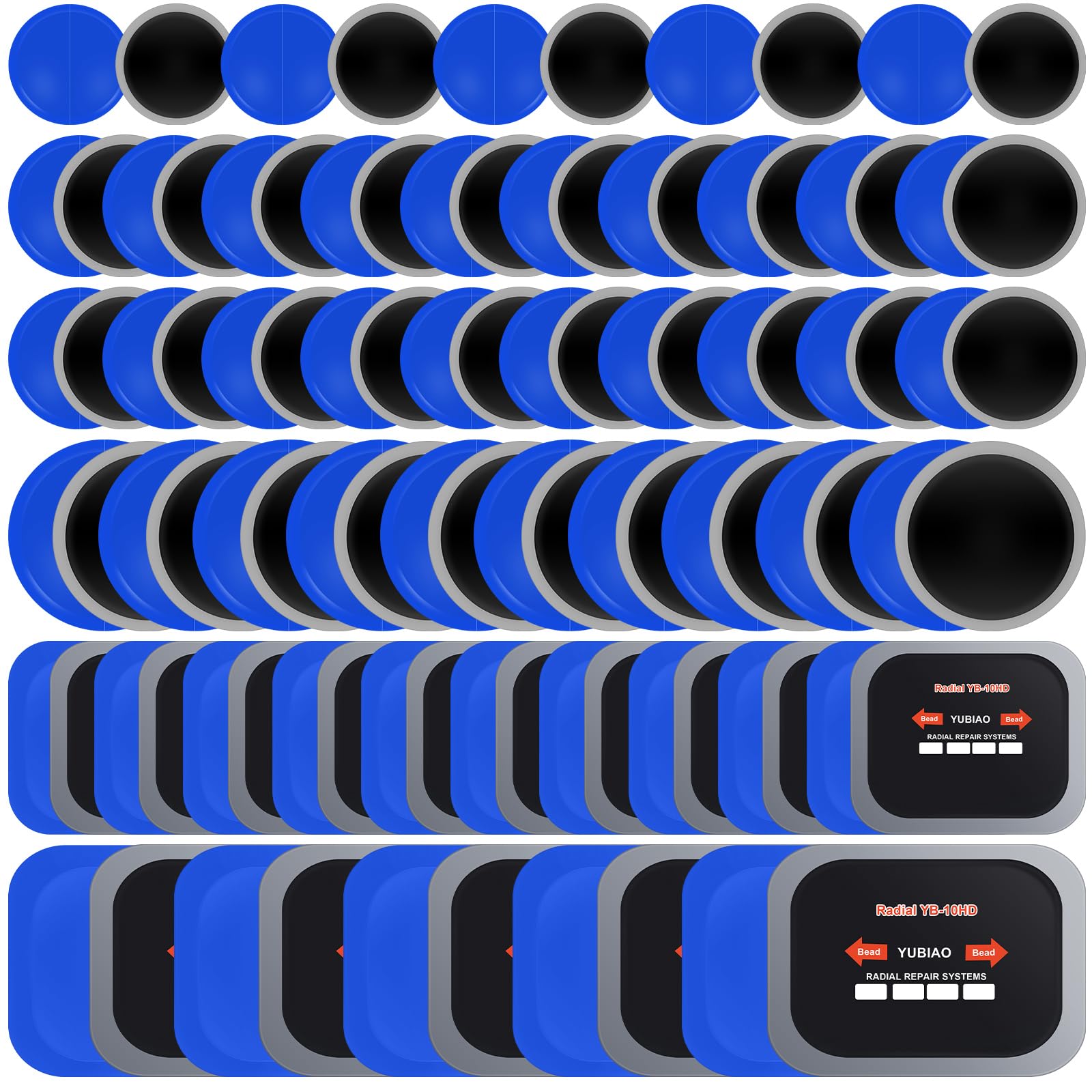
| Size breakdown | 10 at 32 x 32 mm, 40 at 42 x 42 mm, 20 at 58 x 58 mm, 20 at 65 x 80 mm, and 10 at 85 x 120 mm |
| Material | Rubber |
| Listed applications | Radial tires used on cars, trucks, buses, tractors, and motorcycles, subject to tire condition and repair limits |
| Package dimensions | 6.02 x 5.79 x 2.87 inches |
| Item weight | 1.48 pounds |
| Manufacturer part number | UG-Tallew-43789 |
| ASIN | B0DBLG9FMX |
| Not included | Adhesive, sealer, buffing tools, roller or stitcher, tire-removal equipment, and puncture-channel filler |
| Best use | Bulk repair supply for equipped shops, garages, farms, and experienced users |
Tallew 100 Pcs Tire Patch Kit
[Products Worth Considering]

This tire repair patch tool kit helps you quickly seal small punctures using upgraded mushroom plugs and a built-in roller system that presses for even penetration. The tungsten buffing wheel and HSS twist drill bits prepare the damaged surface for stronger adhesion, while the crown-angle friendly plugs are designed to keep water and debris out. Ideal for puncture repairs on many vehicle types, from cars and trucks to bikes and scooters.

This VEVOR tire bead breaker uses a slide-hammer impact and wedge tip to separate tire beads from rims quickly and efficiently without damaging hub surfaces. The long handle and sturdy steel construction help reduce user strain while providing reliable, portable tire changing for cars, trucks, and more. Ideal for home mechanics and repair shops handling multiple vehicle tire sizes.

Wykodra tire plugs provide quick vulcanizing repairs for tubeless tires, helping you seal punctures and get back on the road. The industrial-strength rubber creates a long-lasting, leak-resistant bond and is designed for emergency fixes without removing the tire. Choose between two standard plug sizes with color-matched options for small to larger damage across many vehicles and off-road uses.
What Is the Tallew 100 Pcs Tire Patch Kit?
This Tallew product is a refill-style assortment of rubber patches rather than a complete tire-repair system. You receive 100 patches divided among three square sizes and two rectangular sizes. The larger share consists of 42 x 42 mm patches, while the 65 x 80 mm and 85 x 120 mm pieces give you options for larger repair areas when a trained technician determines that the tire is repairable.
The compact package is useful where several types of tires are serviced. A fleet garage may need smaller patches for routine passenger-tire work and larger units for farm, truck, or recreational equipment. The assortment reduces the need to buy several separate boxes, but you still need compatible chemicals, preparation tools, and the correct repair method for each tire.
Before You Buy: These are patches only. The Amazon listing states that adhesive and sealer are not included, and an internal patch by itself does not fill the puncture channel. Do not use these patches on sidewall damage, exposed cords, bulges, cuts, or a tire that was driven while severely underinflated without professional inspection.
Who Should Buy It?
Best For
- Tire shops or fleet garages that already stock vulcanizing cement, sealer, buffers, rollers, and repair stems
- Farm, tractor, motorcycle, or recreation-vehicle owners with the equipment and experience to remove and inspect a tire
- Multi-vehicle households that want a bulk patch supply for workshop use rather than a stand-alone roadside fix
Skip If
- You need a complete emergency kit with insertion tools, plugs, cement, and an inflator
- You plan to repair sidewall, shoulder, run-flat, or structurally damaged tires without a trained inspection
- You do not have a safe way to remove the tire from the wheel and prepare the inner liner
Patch Sizes and Quantity
The five-size mix is the product’s strongest buying point. You get 10 patches at 32 x 32 mm, 40 at 42 x 42 mm, 20 at 58 x 58 mm, 20 at 65 x 80 mm, and 10 at 85 x 120 mm. That distribution favors the 42 mm size for common shop work while retaining larger patches for repairs that call for more coverage.
Patch dimensions do not tell you whether an injury is safe to repair. The tire type, injury diameter, angle, location, cord condition, previous repairs, and time driven with low pressure all matter. Choose the repair unit only after the tire has been removed, inspected, and matched to the repair-material maker’s chart or instructions.
Materials and Build Quality
Tallew lists rubber construction with sealing performance, elasticity, and resistance to wear or tearing. Flexible rubber helps the patch conform to the prepared inner liner when the correct cement and application pressure are used. The material alone cannot guarantee a lasting repair because surface preparation, compatible chemicals, patch selection, and installation technique all affect the bond.
The patches are practical as consumable shop supplies. Their compact package measures 6.02 x 5.79 x 2.87 inches and weighs 1.48 pounds, so the assortment is easy to store in a cabinet, service vehicle, or workshop bin. Keep the container away from heat, direct sun, moisture, and chemicals that could contaminate the bonding surface.
Buyer Feedback Snapshot
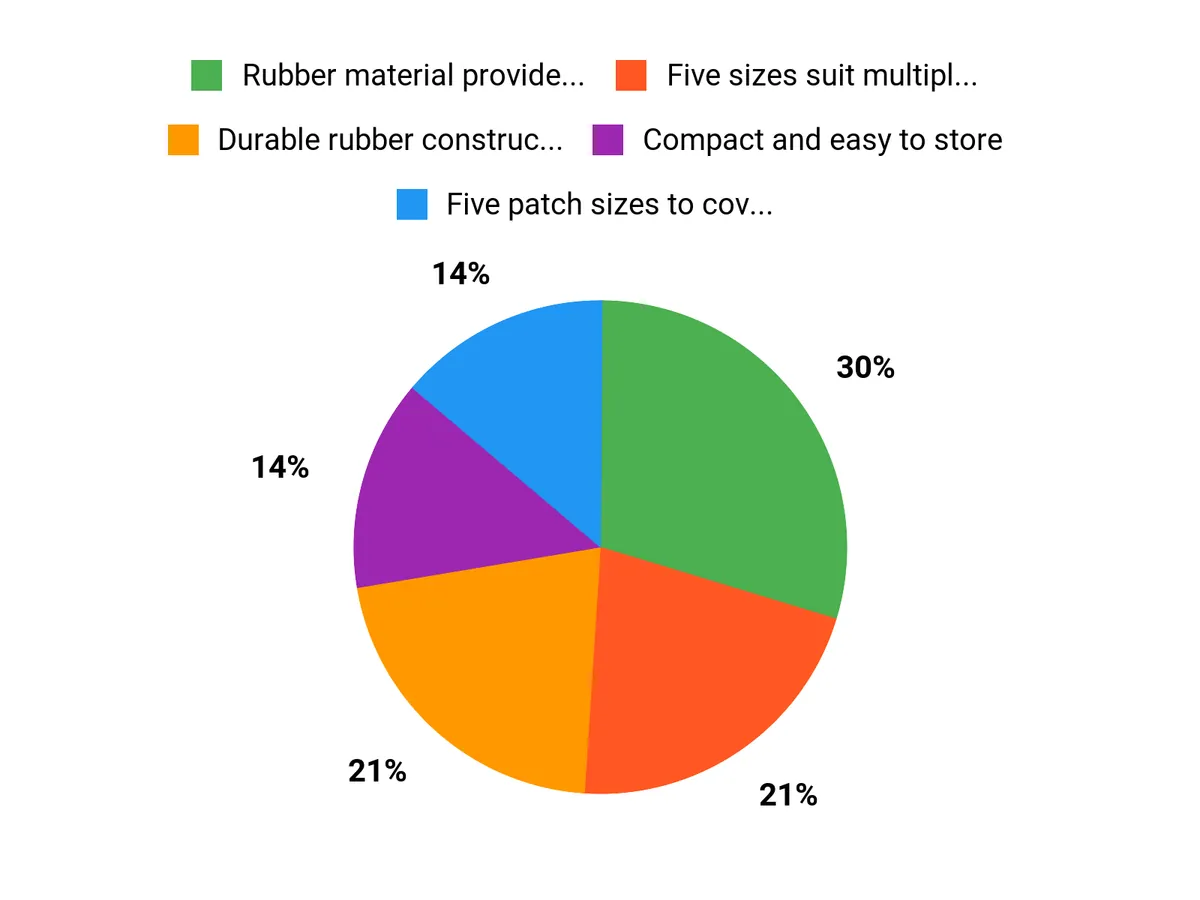
The supplied customer-sentiment summary is positive, with size variety, compact storage, and patch quantity presented as the main reasons buyers choose the set. Those points fit the product’s role as a bulk refill assortment. Buyer feedback should not replace the tire manufacturer’s limits or a trained inspection, especially for highway tires.
Overall Sentiment: Positive

Pros and Cons
Pros
- Includes 100 patches for repeated shop, fleet, farm, or multi-vehicle use
- Five sizes provide more flexibility than a single-size refill pack
- Rubber construction is flexible enough to conform to a correctly prepared inner liner
- Compact package is easy to organize in a garage or service vehicle
- Bulk quantity can lower the consumable cost per repair for users who already own the required equipment
Cons
- Adhesive and sealer are not included
- Patches alone do not fill and seal the puncture channel
- Proper use usually requires tire removal, internal inspection, buffing, cleaning, rolling, and leak testing
How It Performs in Real Use
[Products Worth Considering]
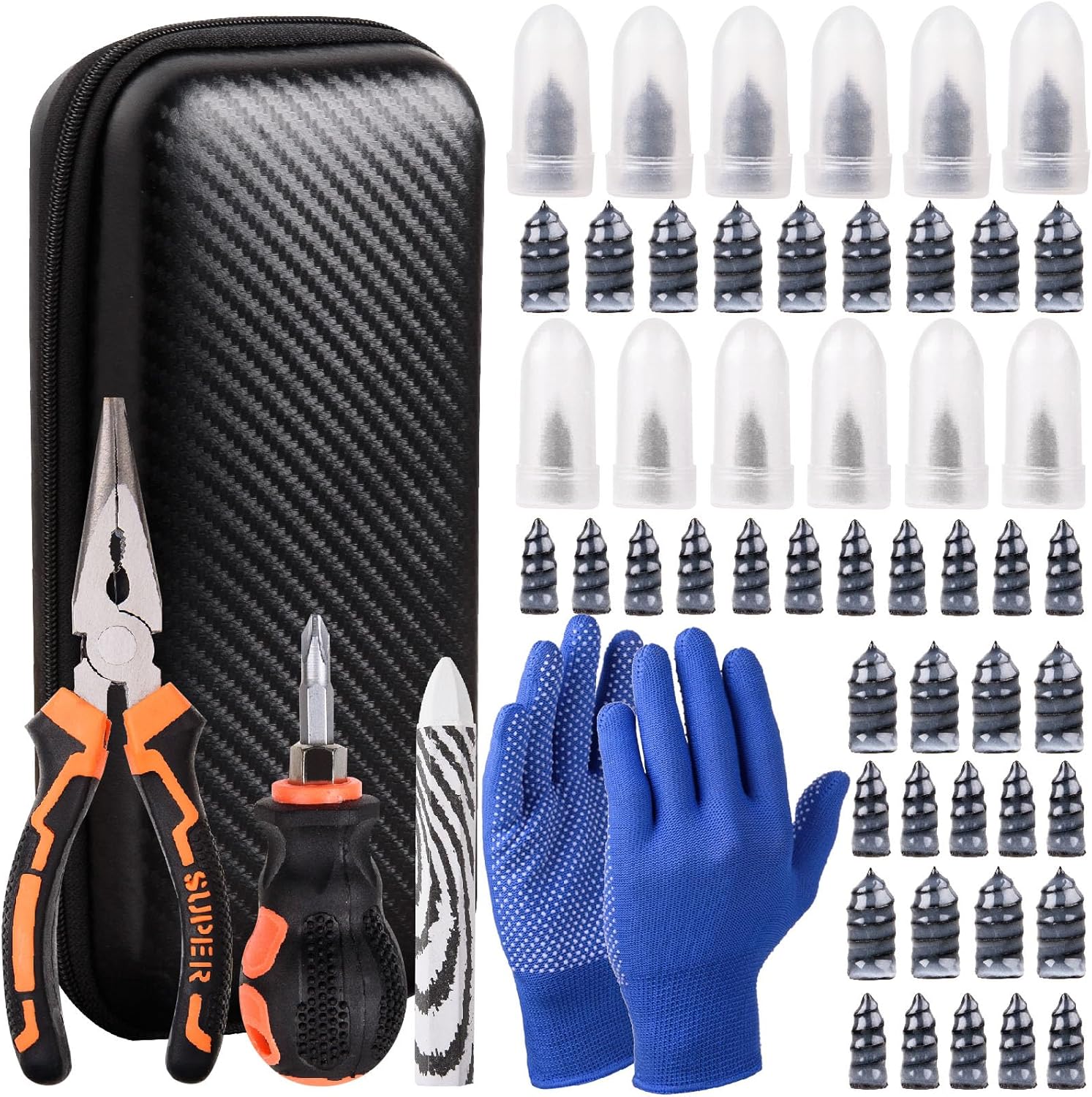
This tire sidewall puncture repair kit fixes flats fast without removing the tire, helping you get back on the road in minutes. It includes self-tapping repair nails, essential tools, gloves, and a portable storage bag for convenient roadside use. Designed for tubeless tires, it helps create a tight, leak-resistant seal for cars, motorcycles, trucks, SUVs, and ATVs.

This AUTOWN flat tire repair kit is designed for quick, reliable puncture repairs using a plug kit and spiral probe tool to simplify installation. Built for durability and safe handling, it offers strong adhesion and flexibility to help maintain tire air tightness. With a portable storage case and a multi-vehicle approach, it’s suitable for cars, motorcycles, ATVs, tractors, lawn mowers, RVs, jeeps, and trucks.
In a Tire Shop or Fleet Garage
This is where the set makes the most sense. A trained user can select among five patch sizes without opening several separate packages. The 100-piece count also supports repeated work, provided the shop already has compatible cement, inner-liner cleaner, a low-speed buffer, a roller or stitcher, sealer, and injury-channel repair materials.
For Farm, Tractor, or Recreation Equipment
The larger rectangular patches may be useful when servicing repairable radial tires on equipment that sees worksite or trail use. You still need to remove the tire, inspect the inside, and follow the repair limits for that tire and repair system. A large patch cannot make a sidewall cut, separated liner, or damaged cord package safe.
For Motorcycle or Multi-Vehicle Maintenance
The smaller square sizes give an equipped home workshop more options across different tires. This can be convenient for owners who maintain several vehicles, but motorcycle tires deserve extra caution because load, speed, heat, and limited contact area can make repair decisions more demanding. Check the tire manufacturer’s repair guidance and use a professional when you are uncertain.
For Roadside Emergencies
The package is compact enough to carry, but it is not a fast external plug kit. Internal patch work generally requires wheel removal, tire demounting, inspection, surface preparation, compatible chemicals, and reinflation equipment. For roadside readiness, pair a safe spare-tire plan or manufacturer-approved mobility solution with professional follow-up.
How to Use the Patches Correctly
Use the following outline only as a buying and preparation guide. The exact process must follow the tire manufacturer’s limits and the instructions for the cement, repair unit, sealer, and puncture-channel material you use.
- Remove and inspect the tire. Deflate it fully, remove it from the wheel, and inspect the inner liner, cords, bead, sidewall, and injury location. Do not repair a tire with structural damage or disqualifying run-flat damage.
- Confirm that the injury is repairable. Measure the puncture, check its angle and location, and compare it with the approved repair chart. A patch should not be chosen by visible hole size alone.
- Prepare the inner liner. Mark the area, clean it with a compatible product, and buff only as directed. Remove debris without contaminating or over-buffing the liner.
- Repair the injury channel. Use an approved stem, plug, or two-piece repair method when required. The Tallew patch is the inner-liner component, not the channel filler.
- Apply the patch and finish the repair. Use compatible vulcanizing cement, press or stitch the patch from the center outward, apply sealer where required, allow the specified drying or cure time, and leak-test the tire before service.
Pro Tip: Before opening a patch container, label your repair chemicals with their expiration dates and keep the patch bonding surfaces clean. A well-stocked kit can still fail if cement is expired, the inner liner is contaminated, or the patch is touched on its prepared surface.
Compatibility and Safety
The listing presents these as radial tire patches for vehicles such as cars, trucks, buses, tractors, and motorcycles. Compatibility does not mean every tire on those vehicles can be repaired. The tire must be removed from the wheel and judged repairable based on injury location, size, angle, internal condition, speed rating, prior repairs, and the tire manufacturer’s rules.
Never patch a sidewall cut, bulge, exposed cord, bead injury, separation, or damage caused by extended driving with little or no pressure. Run-flat and high-performance tires may have tighter limits. When the tire carries people at road speed, a trained tire professional is the safer choice.
Is It Worth the Price?
The value comes from quantity rather than completeness. You receive 100 patches in five sizes, so the cost per patch can be attractive for a garage that already owns the tools, cement, sealer, and channel-repair materials. The assortment is also easier to justify when you service several vehicle types and would otherwise buy multiple single-size packs.
It is less compelling for a driver who only wants one emergency repair option. By the time you add preparation tools, compatible chemicals, tire-removal equipment, inflation gear, and training, a complete professional system or shop repair may be the better buy. Check the current package contents and price before ordering because Amazon listings can change.
How It Compares to Alternatives
A complete patch-plug or two-piece repair kit costs more but includes more of the materials needed to seal both the injury channel and the inner liner. A string-plug kit is faster for certain external emergency uses, but it does not provide the same internal inspection or repair process. A single-size bulk patch box may be more efficient for a shop that performs the same repair repeatedly, while the Tallew assortment is better when size variety matters.
Frequently Asked Questions
Is this a complete roadside tire-repair kit?
No. The package contains 100 rubber patches, and the listing states that adhesive and sealer are not included. You also need preparation tools, tire-removal and inflation equipment, and an approved way to repair the puncture channel.
What patch sizes are included?
You get 10 patches at 32 x 32 mm, 40 at 42 x 42 mm, 20 at 58 x 58 mm, 20 at 65 x 80 mm, and 10 at 85 x 120 mm. The correct size depends on the approved repair chart and the prepared injury area, not only the visible hole.
Can these patches repair a tire sidewall?
Do not use them as a DIY fix for sidewall cuts, bulges, exposed cords, bead damage, or structural separation. Those areas flex heavily and can fail suddenly, so the tire should be inspected and replaced when it falls outside approved repair limits.
Do I need to remove the tire from the wheel?
For a proper internal inspection and patch installation, yes. Tire removal lets you check the liner and cords, confirm the injury location and angle, prepare the surface, and verify that the tire was not damaged while underinflated.
Can I use a patch without filling the puncture channel?
A patch can seal the inner liner, but it does not fill the injury channel. Proper professional methods commonly use a one-piece patch-plug or a two-piece system that fills the channel and reinforces the liner.
Are these suitable for motorcycles, trucks, and tractors?
Those vehicle types appear in the product listing, but the tire itself must still be repairable under its manufacturer’s rules. Load, speed rating, construction, injury location, and internal condition determine whether a repair is appropriate.
How should I store the patches?
Keep them sealed in a clean, cool, dry location away from direct sunlight, heat, moisture, and chemical contamination. Avoid touching the bonding surface, and follow any storage instructions printed on the package.
Who should skip this patch assortment?
Skip it when you need a ready-to-use roadside kit or do not own the tools and chemicals for internal tire repair. It is also the wrong choice for damage outside approved repair areas or any tire that has not been inspected after running low or flat.
Why Customers Choose
The main reasons to choose this set are the 100-piece quantity, five-size assortment, rubber construction, and compact package. It offers the most value to equipped users who want replacement patches on hand and understand that the package is only one part of a complete repair process.
The Bottom Line
The Tallew 100 Pcs Tire Patch Kit is a practical bulk assortment for shops, fleets, farms, and experienced home garages that already have the required repair materials and equipment. Choose it for quantity and size range, but skip it when you need an all-in-one roadside kit or professional help deciding whether a tire is safe to repair.
Ready to Buy?
Check the latest price, package contents, and product details before you decide.

Related Articles
Best Tires for 2500HD Duramax 2026: Heavy-Duty Tires for Towing and Work Trucks
You depend on your 2500HD Duramax to tow heavy loads and handle demanding worksite conditions, so tire choice is not optional. The right tires…
Read More
Best Mastercraft Tires 2026: Reliable Tire Picks for Trucks, SUVs, and Daily Drivers
You need tires that match how you drive, where you live, and what your vehicle carries. This guide highlights Mastercraft models that stand out…
Read More
Best Lionhart Tires 2026: Budget Performance Tires for Cars and SUVs
You want tires that deliver confident handling, predictable braking, and acceptable longevity without stretching your budget. Lionhart’s 2026 lineup focuses on delivering those trade-offs…
Read More