
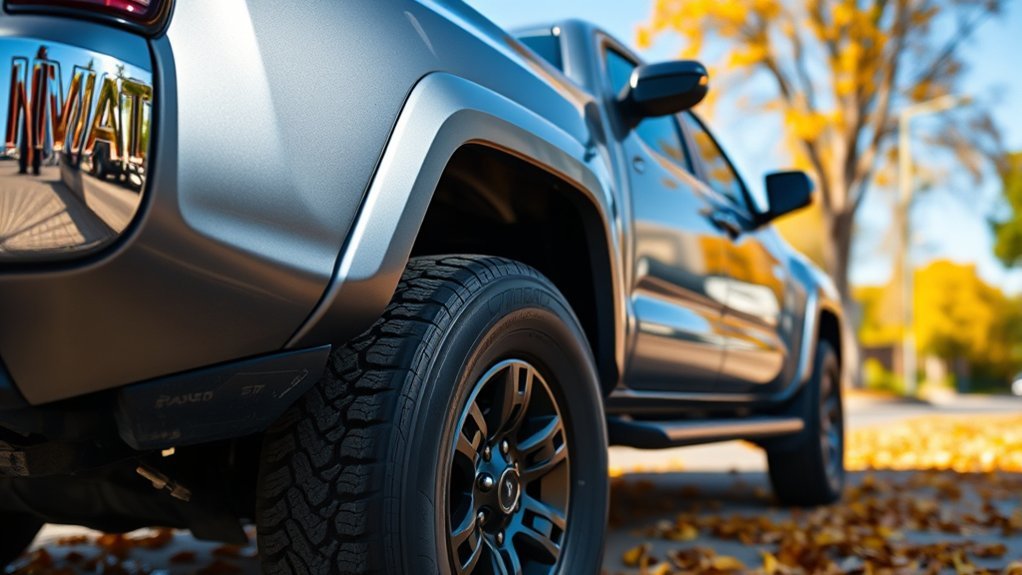
Choosing tires for your Toyota Tacoma is not just about finding the most aggressive tread that fits. For daily driving, the best choice is usually the tire that matches your factory size, load rating, climate, road noise expectations, and how often you leave pavement. Get those basics right first, then compare tread life and warranty.
Quick Answer
For most Toyota Tacoma commuters, the best tire is a highway-terrain or mild all-terrain tire in the factory size shown on the driver-side door placard. Stay close to stock size for speedometer accuracy, fuel economy, ride comfort, and clearance. Choose all-terrain tires only if you regularly drive gravel, dirt, snow, or trails.
Key Takeaways
- Start with the tire size and cold PSI listed on your Tacoma’s driver-side door placard or owner’s manual, not a generic chart.
- Highway-terrain tires are usually quieter and more fuel-friendly; all-terrain tires add dirt, gravel, and light trail capability.
- Match the load index and speed rating of the original tire, especially if you tow, haul, or use LT-rated tires.
- Check pressure monthly, rotate tires on schedule, and replace tires at the legal tread limit or earlier if traction drops.
At a Glance
| Time Required | 10–20 minutes to check size, pressure, tread depth, and sidewall condition; longer if comparing new tires. |
| Difficulty | Easy for inspection; moderate if you are changing tire size or load rating. |
| Tools Needed | Tire pressure gauge, tread-depth gauge or penny, flashlight, and your Tacoma’s door placard or owner’s manual. |
| Cost | Free to inspect; replacement cost depends on tire size, brand, load rating, installation, balancing, and alignment needs. |
Understanding Stock Tire Sizes for Your Tacoma
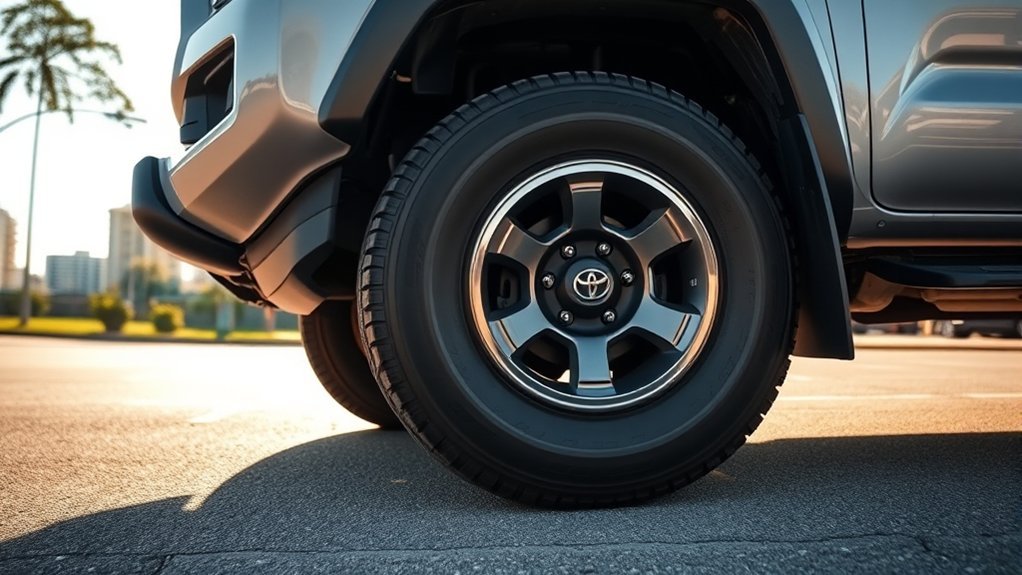
Before choosing commuter tires, confirm the exact tire size on your Tacoma. The safest sources are the driver-side door placard, the tire sidewall currently installed on your truck, and the Toyota owner’s manual for your model year. Generic size advice can be wrong because Tacoma tire sizes vary by generation, trim, wheel package, and drivetrain.
Many 2016–2023 Tacomas used sizes such as 245/75R16, 265/70R16, 265/65R17, or 265/60R18 depending on trim. The 2024–2026 Tacoma generation commonly uses sizes such as 245/70R17, 265/70R17, 265/65R18, and 265/70R18 depending on configuration. Toyota’s current maintenance data also points owners back to official model-specific specifications, so your own placard wins over any online list.
| Tacoma range | Common factory sizes | Best commuter approach |
|---|---|---|
| 2016–2023 Tacoma | 245/75R16, 265/70R16, 265/65R17, 265/60R18 | Stay stock unless you have confirmed wheel clearance and speedometer impact. |
| 2024–2026 Tacoma | 245/70R17, 265/70R17, 265/65R18, 265/70R18 | Match the exact placard size, especially on TRD, Limited, Trailhunter, and TRD Pro trims. |
Note: The number on the tire sidewall that says “Max PSI” is not your daily driving pressure. For normal driving, use the cold tire pressure on the door placard or in the owner’s manual.
Essential Features for Choosing Commuter Tires for Your Tacoma
The best commuter tire for a Tacoma should make the truck feel stable, quiet, predictable in rain, and efficient enough for everyday use. Off-road capability matters only if you actually use it. For a mostly paved commute, prioritize these features first:
- Correct size: Match the factory size unless you understand the clearance, speedometer, and fuel economy effects of upsizing.
- Correct load index: The tire must meet or exceed the original load rating, especially if you tow, haul tools, carry camping gear, or use a camper shell.
- Road noise control: Highway-terrain and mild all-terrain tires are usually quieter than aggressive all-terrain or mud-terrain tires.
- Wet traction: Look for tread patterns and compounds that handle rain well, not just dry pavement or dirt.
- Treadlife warranty: A longer warranty can help, but only if the tire also fits your driving style and maintenance habits.
- Reasonable tire weight: Heavier LT-rated tires can feel tougher, but they can also reduce ride comfort and fuel economy on a daily driver.
[Products Worth Considering]

Accurately measure tire tread depth with a calibrated gauge marked from 0 to 1 inch in 1/32 inch increments. The color-coded bar helps you quickly identify tread condition ranges, supporting safe driving for trucks, motorcycles, automobiles, and passenger vehicles.

These aluminum alloy tire valve stem caps with an O-ring seal help protect valve stems from corrosion while adding a clean, stylish look to your vehicle. The universal fit works across cars, trucks, motorcycles, bicycles, and more, making them an easy upgrade for everyday driving and off-road use. Installation is quick, and the included four-pack keeps all your tires dressed and protected.

Measure tire tread depth quickly and accurately with this LUMITECO dial gauge that reads in 1/32" increments up to 14/32". The color-coded green/yellow/red zones make it easy to judge tire wear and know when replacement is needed. A rugged, compact design with a protective pouch helps keep the gauge ready for use on cars, trucks, motorcycles, and more.
Tire Longevity Considerations
Treadlife depends on tire compound, alignment, inflation, rotation habits, road surface, driving style, and load. A tire with a 50,000- or 55,000-mile limited treadwear warranty is not guaranteed to last that long if it is underinflated, overloaded, misaligned, or used heavily off-road.
If you want an all-terrain tire for commuting and light trail use, compare manufacturer-backed details instead of relying only on reviews. For example, Lexani lists the Terrain Beast AT with a 50,000-mile limited mileage warranty, while Falken lists the Rubitrek A/T with a 55,000-mile limited tread life warranty and severe-snow rating. Those specs can be useful, but the right choice still depends on your Tacoma’s exact size, load rating, and climate.
Noise Reduction Features
Noise matters more on a commuter Tacoma than many buyers expect. Open shoulder blocks and aggressive voids help on dirt and mud, but they can hum on highways. If your Tacoma spends most of its time on pavement, look for a highway-terrain or mild all-terrain tire with a continuous center rib, smaller tread blocks, full-depth siping, and good wet-road reviews.
Pro Tip: If you rarely leave pavement, do not buy a mud-terrain tire for looks alone. You will usually give up ride comfort, wet-road refinement, tread life, and fuel economy.
Benefits of All-Terrain Tires for Daily Use

All-terrain tires can make sense for a Tacoma that commutes during the week and handles gravel roads, camping trips, light snow, job sites, or weekend trails. They usually offer stronger tread blocks and more biting edges than highway tires while staying more livable than mud-terrain tires.
[Products Worth Considering]

Monitor tire tread wear with a smart, color-coded depth gauge that shows clear condition ranges at a glance. The bar is range marked for fast, easy readings, helping you maintain safer traction and performance. Each gauge is portable with a pocket clip, and the set includes 20 units for daily use and sharing.

Keep your tires properly inflated with this analog VONDIOR tire pressure gauge, designed for fast, easy readings without batteries. The swiveling, two-axis hose and large glow dial help you measure at any tire angle with instant visibility. Built with a protective rubber shield, it supports durable, low-maintenance use for cars and trucks.

The SAFELIFE dial tire tread depth gauge measures tread depth in 1/32 inch increments with clear, easy-to-read 2-inch dial face. Color zones using a traffic light system help you quickly judge whether tread is low, marginal, or ample for safer driving. Built with a durable zinc cast body and a metal detect probe for precise, comfortable use across cars, motorcycles, trucks, and buses.
Versatile Performance Across Terrains
A mild all-terrain tire gives your Tacoma a useful middle ground: stable on pavement, more confident on loose surfaces, and tougher-looking without going extreme. This is why many Tacoma owners choose all-terrain tires even when the truck is mostly a daily driver.
The tradeoff is that all-terrain tires can be heavier and louder than highway-terrain tires. The more aggressive the tread, the more you should expect possible road hum, slightly slower steering response, and lower fuel economy.
Enhanced Traction and Stability
All-terrain tires can improve grip on gravel, dirt, wet grass, and light trails. Some all-terrain models also carry the Three-Peak Mountain Snowflake symbol, which means they meet a snow-traction performance standard. That does not make every all-terrain tire a true winter tire, but it can help if your commute includes occasional snow or mountain roads.
Warning: Bigger tires can rub the fender liner, mud flaps, body mount area, or suspension parts. Before upsizing, confirm wheel offset, lift height, clearance at full steering lock, and whether recalibration is needed.
Comparing Tire Types for Your Tacoma
Choosing the right tire type is easier when you start with how your Tacoma is actually driven. A daily commuter that sees rain and highways needs a different tire than a Tacoma used for overlanding or muddy job sites.
| Tire type | Best for | Commuter tradeoff |
|---|---|---|
| Highway-terrain (H/T) | Pavement, commuting, road trips, quiet ride | Less grip on dirt, mud, and rocky trails |
| Mild all-terrain (A/T) | Daily driving plus gravel, dirt roads, light trails | Can be slightly louder and heavier than H/T tires |
| Severe-snow-rated A/T or all-weather | Commuters who see snow but still drive year-round | Still may not match a dedicated winter tire on ice |
| Mud-terrain (M/T) | Mud, rocks, deep ruts, off-road-first builds | Usually louder, heavier, and less refined for commuting |
For most Tacoma commuters, the sweet spot is either a quality highway-terrain tire or a mild all-terrain tire in the factory size. If you want the all-terrain look, choose one designed for quiet pavement manners instead of the most aggressive tread available.
[Products Worth Considering]

This tire inflator with pressure gauge delivers long-lasting performance with a durable rubber-protected gauge and sturdy build. The longer hose and 360 swivel air chuck help you seal the valve securely and keep your hands free while measuring, inflating, or deflating. It’s battery-free for reliable use and provides ±2 PSI accuracy in the mid-range for most typical tires, with universal compatibility for 1/4 NPT compressor outputs.

Upgrade your 2024-2026 Tesla Model 3 Highland with REEVAA all-weather mud flaps designed for seamless fit along the original body lines. The set of four delivers strong splash protection against mud, gravel, and road debris while using OEM-grade durable materials. Installation is non-destructive with original hole positions and snap-in clips, and the aerodynamic design helps minimize impact on efficiency.

ETENWOLF T300 is a calibrated digital tire pressure gauge for accurate readings from 3 to 200 PSI across light and heavy-duty vehicles. It includes thermal compensation for reliable performance in extreme cold or heat, with an auto shut-off to extend battery life and an LED for easier reading. The sturdy design supports rugged everyday use, making it ideal for pickups, RVs, and industrial applications.
Maintenance Tips for Your Toyota Tacoma Tires
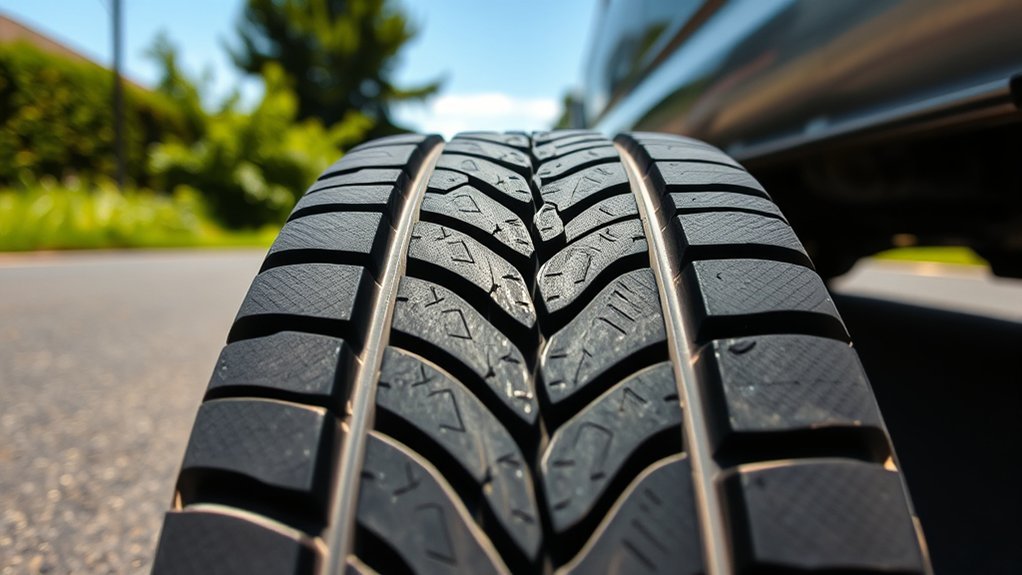
Good maintenance makes more difference than most tire shoppers realize. Even the best Tacoma tire will wear quickly if it is underinflated, misaligned, overloaded, or never rotated.
- Check cold tire pressure monthly: Use the Tacoma’s door placard or owner’s manual. FuelEconomy.gov notes that proper inflation can improve gas mileage by 0.6% on average and up to 3% in some cases.
- Rotate tires on schedule: Follow your Toyota maintenance guide. Many Toyota service schedules include tire rotation at regular 5,000-mile service intervals, but your exact schedule can vary by model year and use.
- Inspect tread depth: Use a tread-depth gauge and check multiple grooves across each tire, not just the outer edge.
- Watch for uneven wear: Feathering, cupping, one-edge wear, or vibration can point to alignment, balance, suspension, or inflation problems.
- Check sidewalls: Replace or professionally inspect tires with cracks, bulges, exposed cords, punctures near the shoulder, or impact damage.
- Recheck after heavy loads: Towing, hauling, and off-road use create more heat and stress, so inspect pressure and tread more often.
Proper inflation is one of the easiest ways to improve safety, tread life, and fuel economy on a daily-driven Tacoma.
When to Replace Your Toyota Tacoma Tires?
Replace your Tacoma tires when they reach the legal tread-depth limit, show visible damage, lose traction, or age out according to the tire manufacturer’s guidance. Under 49 CFR 570.9, passenger-car tire tread must be at least 2/32 inch deep. That is the legal floor, not the ideal target for every driver.
If you commute in heavy rain, snow, or mountain conditions, consider replacing tires before they reach 2/32 inch. Shallow tread has less room to evacuate water and can reduce wet traction. Also replace tires that have sidewall bulges, exposed cords, deep cracks, repeated air loss, or vibration that cannot be corrected by balancing or alignment.
Keeping Your Tire Pressure Right for Safety
Tire pressure affects handling, braking, tread wear, fuel economy, and ride comfort. The correct cold PSI for your Tacoma is listed on the driver-side door placard and in the owner’s manual. Do not inflate to the maximum pressure printed on the tire sidewall for normal daily driving unless the vehicle placard or a qualified tire professional tells you to.
Check pressure when the tires are cold, ideally before driving or after the truck has been parked for several hours. If you recently changed tire size, load range, or wheel setup, ask a tire professional to confirm the right pressure for your new setup.
Note: Tacoma tire pressure can vary by year, trim, tire size, and load. A one-size-fits-all PSI number is less reliable than the placard on your actual truck.
Frequently Asked Questions
Is a Tacoma good for daily driving?
Yes. A Toyota Tacoma can be a dependable daily driver, especially when it has tires that match your commute. For the smoothest and quietest ride, choose highway-terrain or mild all-terrain tires in the factory size and keep them properly inflated.
What tire size is best for a daily-driven Toyota Tacoma?
The best size is usually the factory size on your driver-side door placard. Staying stock helps preserve clearance, speedometer accuracy, braking behavior, ride comfort, and fuel economy.
Are all-terrain tires too noisy for commuting?
Not always. Mild all-terrain tires can be comfortable enough for commuting, but aggressive all-terrain and mud-terrain tires are more likely to create highway hum. If noise matters, compare tire reviews that specifically mention road noise on pavement.
Can I put bigger tires on my Tacoma?
Yes, but bigger tires can rub, add weight, reduce fuel economy, affect speedometer accuracy, and change the way the truck accelerates and brakes. Confirm fitment before buying, especially if your Tacoma is stock height.
What PSI should Toyota Tacoma tires be?
Use the cold tire pressure listed on your Tacoma’s driver-side door placard or in the owner’s manual. Do not use the tire sidewall maximum pressure as your normal daily driving pressure.
How often should I rotate Tacoma tires?
Follow your Toyota maintenance guide. Many Tacoma owners rotate around regular 5,000-mile service intervals, but the right interval can vary with tire type, drivetrain, driving conditions, and whether you tow or haul.
Conclusion
The right commuter tire for your Toyota Tacoma is the one that fits your exact truck, supports your load needs, and matches how you really drive. For most owners, that means staying with the factory tire size, choosing a quiet highway-terrain or mild all-terrain tread, checking pressure monthly, rotating on schedule, and replacing tires before safety becomes a question. Properly inflated tires can also improve fuel economy by up to 3% in some cases, so tire care pays you back every time you drive.
Sources
- Toyota Owners — 2026 Tacoma maintenance data — Tacoma tire size and model-specific specification guidance.
- Toyota Owners — Tire inflation pressure — official tire pressure inspection and adjustment guidance.
- FuelEconomy.gov — Keeping your vehicle in shape — proper inflation, fuel economy, and placard pressure guidance.
- eCFR 49 CFR 570.9 — Tires — 2/32-inch tread-depth minimum and tire condition standards.
- Falken Rubitrek A/T product page — manufacturer tire features and limited tread life warranty information.
- Lexani Terrain Beast AT product page — manufacturer tire features, full-depth sipes/grooves, and limited mileage warranty information.
