
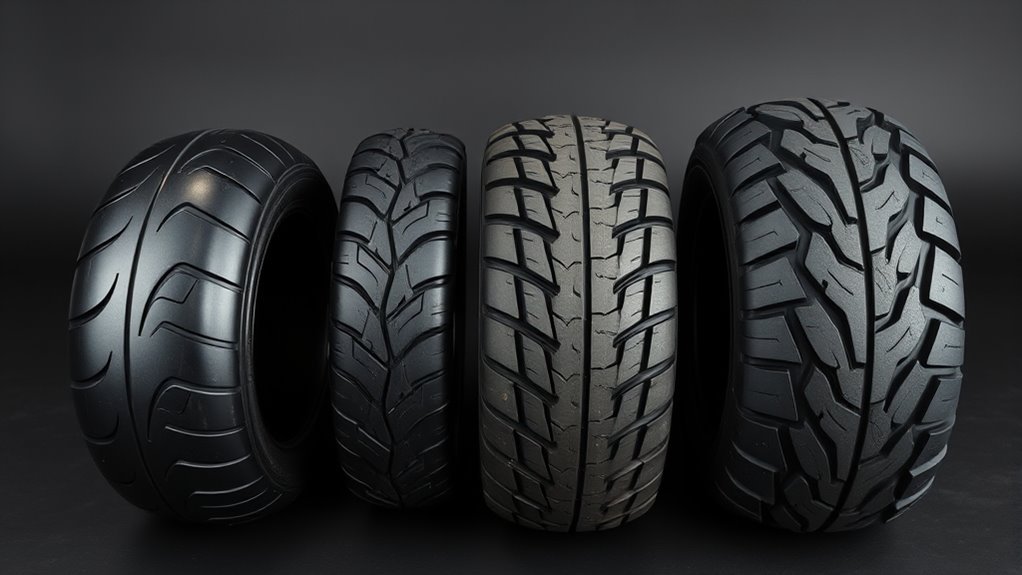
You pick a tire compound to trade grip, heat tolerance, and wear for your specific mission. Soft rubbers give peak mechanical adhesion and lower-temperature grip but wear fast. Mediums balance predictable grip, longer stints, and thermal stability. Hards sacrifice peak adhesion for durability and high-heat resilience. Match compounds to track, street, or off-road demands, adjust pressures and maintenance for temperature-driven hysteresis (energy lost as heat in the rubber), and keep strategy in mind. More details follow below.
Quick Answer
Tire compounds control how your tires grip, wear, and handle heat. Here’s the short version:
- Soft compounds deliver the most grip and the fastest lap times but wear out quickly, especially in heat.
- Medium compounds split the difference between grip and longevity. They work well in most climates and driving styles.
- Hard compounds last the longest and handle high temperatures best, but they offer less traction.
- Pick your compound based on where and how you drive: track days favor softs, daily driving favors mediums or hards, and rough terrain calls for hards.
What a Tire Compound Is and Why It Matters
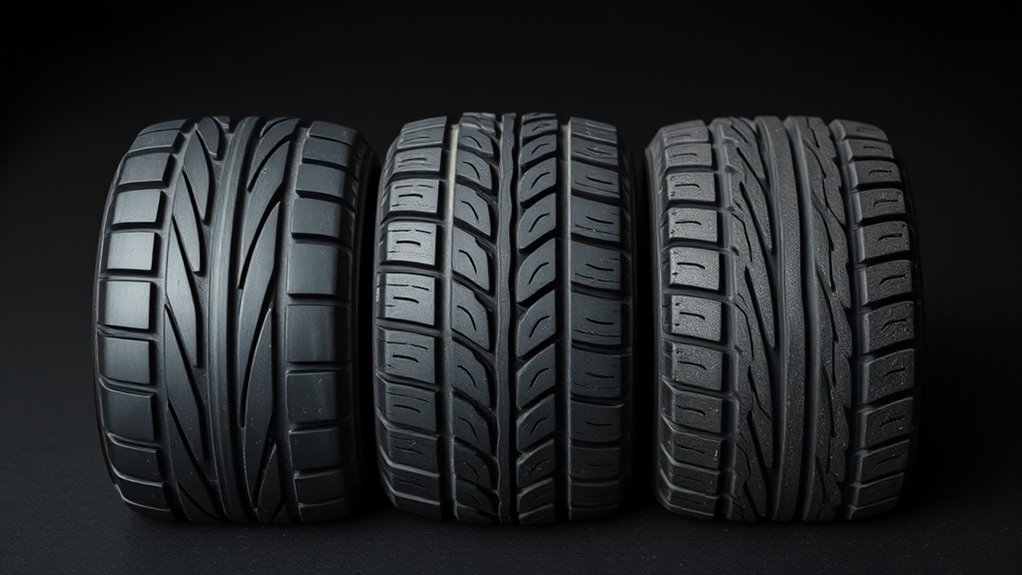
A tire compound is the engineered mix of natural and synthetic rubbers, fillers like silica and carbon black, and chemical additives. Together, these ingredients determine grip, wear resistance, heat tolerance, and fuel efficiency. The compound dictates how a tire responds across temperatures and driving conditions.
Polymer chains provide elasticity. Fillers adjust stiffness and help dissipate heat. Additives tune hysteresis (the energy a tire absorbs and releases as it flexes), which directly affects rolling resistance. These elements produce measurable differences in traction coefficients, tread wear rates, and fuel consumption under defined loads and temperatures.
Your operating environment matters. Colder air stiffens rubber and reduces how well the tire conforms to the road surface. Heat softens rubber and raises wear. Choosing a compound means weighing grip against longevity and efficiency. You’re picking a formulation that fits your mission, whether that’s short-term maximum adhesion or long-haul durability and economy, based on real trade-offs rather than marketing claims.
What Goes Into a Tire Compound
Every tire compound starts with a rubber base. Most modern tires blend natural rubber (from rubber trees) with synthetic rubber (typically styrene-butadiene rubber, or SBR). Natural rubber gives tensile strength and tear resistance. Synthetic rubber lets manufacturers fine-tune grip and heat properties for specific uses.
Fillers do the heavy lifting on performance. Carbon black reinforces the rubber and improves abrasion resistance, which is why tires are black. Silica has become increasingly common because it lowers rolling resistance and improves wet grip. Many modern passenger tires use a silica-heavy mix for better fuel economy.
Sulfur and other curing agents vulcanize the rubber, creating cross-links between polymer chains that give the tire its final shape and elasticity. Softening oils and plasticizers control how pliable the compound stays at different temperatures. A softer compound uses more oil to stay flexible. A harder compound uses less, which increases stiffness and extends tread life.
The exact recipe varies by manufacturer and purpose. A track-focused tire might use a high-grip SBR blend with minimal filler for maximum adhesion. A long-wearing highway tire might lean on silica-reinforced natural rubber with stiffer cross-linking. The ratio of these ingredients is what separates a soft compound from a hard one.
How Soft, Medium, and Hard Compounds Differ in Grip and Wear
Now that you understand how compound chemistry governs the trade-offs between grip, wear, and thermal behavior, here’s how soft, medium, and hard formulations perform in practice.
Soft compounds deliver peak mechanical adhesion and higher friction coefficients at lower temperatures. You get faster cornering and shorter stopping distances. The downside is rapid tread degradation, which means more frequent tire changes as grip falls off.
Medium compounds offer intermediate adhesion. Grip stays predictable over longer stints. They resist abrasion better than softs while still conforming well to the road surface. For most drivers, mediums represent the most practical balance.
Hard compounds reduce surface deformation. Grip is lower, but stability under high thermal loads is strong. They maximize tread longevity and resist thermal breakdown, so you trade ultimate performance for durability. Understanding these differences gives you real control over how you allocate performance and resources.
[Products Worth Considering]

The Airmoto portable tire inflator quickly and accurately fills car, truck, SUV, motorcycle, and bicycle tires up to 120 PSI with auto shut-off when your target pressure is reached. Its large LCD, multi-unit pressure display, and digital gauge make it easy to dial in settings and verify readings, while the built-in LED flashlight helps in low light. The included polyurethane hard carrying case and storage mesh pocket keep the inflator and accessories protected and organized.

The Continental Grand Prix 5000 is an allround road bike tire engineered for faster rolling, improved ride comfort, and enhanced puncture protection. It features a Vectran Breaker cut-protection layer, Lazer Grip micro-profile tread for confident cornering control, and Active Comfort Technology to damp vibration for smoother rides. BlackChili compound optimizes grip and speed for everyday performance and long-lasting confidence.

Keep your tires properly inflated with this analog VONDIOR tire pressure gauge, designed for fast, easy readings without batteries. The swiveling, two-axis hose and large glow dial help you measure at any tire angle with instant visibility. Built with a protective rubber shield, it supports durable, low-maintenance use for cars and trucks.
Choose Compounds by Use Case: Track, Street, and Off‑Road
Each driving environment stresses tires differently. Pick compounds that match the required trade-offs.
For track use, choose soft compounds to maximize grip and reduce lap times. If you need longer stints or better resilience in warmer conditions, select medium compounds that balance track performance with improved durability.
On the street, prioritize medium or hard compounds. These resist wear and maintain predictable handling in daily driving and hot climates, saving you from frequent replacements and limiting performance drop-off over time.
For off-road applications, favor hard compounds that emphasize off road durability and puncture resistance. You accept reduced grip for sustained reliability on rough terrain.
Assess your mission profile. Short, controlled circuits demand grip-focused rubber. Extended road use requires longevity and thermal stability. Rough trails need toughness over traction. Pick the compound whose mechanical trade-offs align with your operational priorities, and minimize constraints like downtime and unplanned maintenance.
[Products Worth Considering]

A concentrated tire and tube mounting compound designed to help simplify mounting rubber tires and tubes on passenger, semi truck, construction, and OTR applications. Its ultra-thick formula packs beads effectively and includes rust inhibitors to help protect against corrosion during use.

The Chemical Guys Gerbil Wheel & Rim Brush is designed to safely clean wheels, rims, exhaust tips, tires, and engine bay components without scratching delicate finishes. Its soft natural bristles help lift brake dust, grime, and buildup while conforming to tight spaces and intricate contours. A comfort grip handle delivers control for extended detailing sessions.

LiQuiTube Premium Heavy Duty Tire Sealant provides permanent flat tire protection to help maintain proper air pressure while sealing punctures and leaks. It seals bead, rim, and porosity weathering leaks and helps prevent flats in heavy ply industrial tires. Designed for versatile use on trailers and off-road equipment, it can be installed in tubeless tires and also inside tubes.
How Temperature and Track Conditions Change Compound Performance
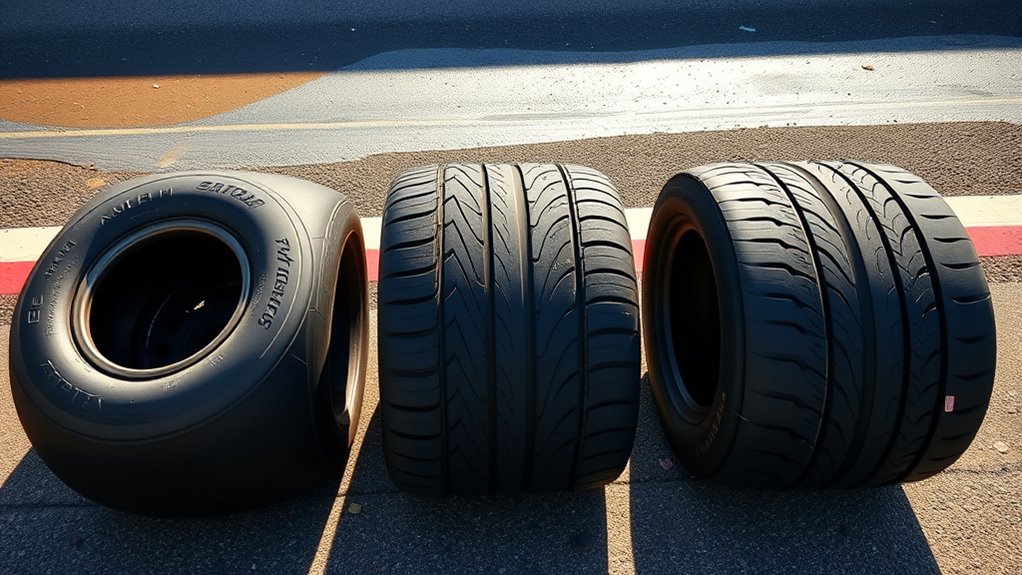
When track temperatures climb or fall, tyre compounds respond in predictable mechanical ways you need to anticipate.
Soft compounds deliver peak conformity and grip in cooler conditions. But they soften further and wear quickly as heat builds. Mediums retain a stable balance across a wider temperature band. Hards keep their structural integrity under high heat, though they sacrifice peak adhesion.
You’ll want to monitor temperature effects on rubber hysteresis, contact patch shape, and micro-slip. This helps you decide when a softer rubber yields extra grip versus when it starts causing accelerated tread abrasion. On a cooling track surface, soft rubber holds ideal adhesion with lower wear. On a heating track surface, you’re better off with hards to preserve structure and stint length, even at the cost of some adhesion.
Mediums give you predictability across variable sessions and reduce the need for overly cautious pit calls. Tracking degradation rates and lap-time deltas under different temperatures and track conditions gives you the data to select compounds that match your performance and endurance goals.
How F1 Tire Rules Shape Racing Strategy (Racer’s Guide)
You must plan stints around the mandatory slick-compound rule, which forces use of at least two different dry compounds and directly shapes pit-stop timing and stint length. With only 13 dry sets per standard weekend (2 hard, 3 medium, 8 soft), you need to optimize allocation across practice, qualifying, and race to balance outright pace against degradation. Tires can’t be shared between teammates, so your strategy has to be individualized and data-driven using practice telemetry and Pirelli degradation curves.
Mandatory Slick Compound Rule
F1’s mandatory slick-compound rule requires you to use at least two different dry compounds in a race. This forces a multi-compound race and shapes every strategic decision from stint length to pit-stop timing.
The rule compels you to balance peak grip against longevity. Softs give qualifying pace. Harder compounds provide stint robustness. You allocate sets across practice and race, keeping in mind the post-practice returns and the 13-set weekend limit. Optimizing stint windows means exploiting temperature and degradation curves.
Because tires are allocated per driver, tyre management is individual by nature. Strategic implications include tighter pit sequencing, split strategies within teams, and bolder risk-taking when degradation models indicate performance drop-offs. As of the 2026 season, Pirelli supplies five slick compounds (C1 through C5), with three selected for each Grand Prix based on circuit characteristics.
Tyre Allocation Limits
Teams get just 13 dry sets for a standard Grand Prix weekend: 2 hards, 3 mediums, and 8 softs. Drivers must return two sets after each practice session. This tyre allocation forces you to treat rubber as a constrained resource that dictates every session plan and race stint, from qualifying gambits to pit-stop sequencing. On Sprint weekends, the dry allocation drops to 12 sets (2 hard, 4 medium, 6 soft).
You plan with precision: conserve softs for qualifying, reserve hards for extended stints, and use mediums as bridge compounds. The two-compound race rule and non-transferable allocations between teammates increase the pressure on load-balancing. For a detailed breakdown of F1 tyre allocations and rules, the official F1 guide is a good reference.
- Prioritize tyre allocation by session value: qualifying, long-run data, race simulation.
- Model pit-stop windows and stint degradation to guide strategic planning under allocation limits.
- Keep contingency sets for weather shifts. Intermediate and wet reserves protect your options when conditions change.
Practical Tips to Pick the Right Compound and Common Mistakes
How should you match a tire compound to your climate and driving habits? Balance tire maintenance and performance optimization by matching compound choice to typical temperatures and how aggressively you drive. Medium compounds suit varied climates. Soft works in cooler, low-abrasion environments but wears fast in heat. Don’t run soft tires daily in hot areas. Keep specified pressure to prevent under-inflation-driven degradation, especially with soft compounds.
| Scenario | Recommended Compound | Key Risk |
|---|---|---|
| Cooler commuter | Soft | Faster wear if aggressive |
| Mixed climate | Medium | Best balance |
| Hot daily use | Hard/medium | Reduced grip with hard |
| Performance track | Soft/medium | Rapid wear vs grip trade-off |
| Heavy abrasion roads | Hard | Lower grip, higher durability |
Don’t assume maximum grip equals maximum safety. Recognize the trade-offs between grip and durability. Inspect pressures and wear patterns frequently. Choose compounds that reduce the need for frequent replacements while preserving enough grip for how you actually drive.
[Products Worth Considering]

Chemical Guys Tire Kicker Sprayable Extra Glossy Tire Shine restores a deep, wet look on tires, rubber, vinyl, and plastic trim. It delivers a rich showroom shine that enhances color and luster while helping protect against fading, cracking, and discoloration. The spray application dries to the touch with a streak-free finish and no greasy sling, for fast results on cars, trucks, motorcycles, RVs, and boats.

Monitor tire tread wear with a smart, color-coded depth gauge that shows clear condition ranges at a glance. The bar is range marked for fast, easy readings, helping you maintain safer traction and performance. Each gauge is portable with a pocket clip, and the set includes 20 units for daily use and sharing.

Measure tire tread depth quickly and accurately with this LUMITECO dial gauge that reads in 1/32" increments up to 14/32". The color-coded green/yellow/red zones make it easy to judge tire wear and know when replacement is needed. A rugged, compact design with a protective pouch helps keep the gauge ready for use on cars, trucks, motorcycles, and more.
Frequently Asked Questions
When to Use Soft, Medium, or Hard Tires?
Use soft for short, cool stints when peak grip matters most. Choose medium for balanced tire performance in varied driving conditions. Pick hard for hot, long races where durability matters and you want to minimize pit stops.
What Is the Difference Between Hard and Soft Compound Tires?
Hard compounds give you greater durability and steadier performance with lower traction levels. Soft compounds deliver superior traction and faster lap times but wear quickly. Choose based on race length, temperature, and strategy.
What Are the Different Types of Tire Compounds?
You get soft, medium, and hard compounds. Soft maximizes grip but has lower durability. Medium balances grip and longevity for versatile performance. Hard sacrifices grip for superior durability and extended stint reliability.
Conclusion
You’ve learned how compounds trade grip for life, and you’ll choose them by use, temperature, and track. Sometimes a warm patch or a stray pebble turns a safe stint into a strategic gamble. Trust data, not intuition. Match compound hardness to load, heat range, and surface. By measuring wear rates and lap-time deltas, you’ll make precise calls that protect pace and tire lifespan, turning small chance events into controlled advantage.

