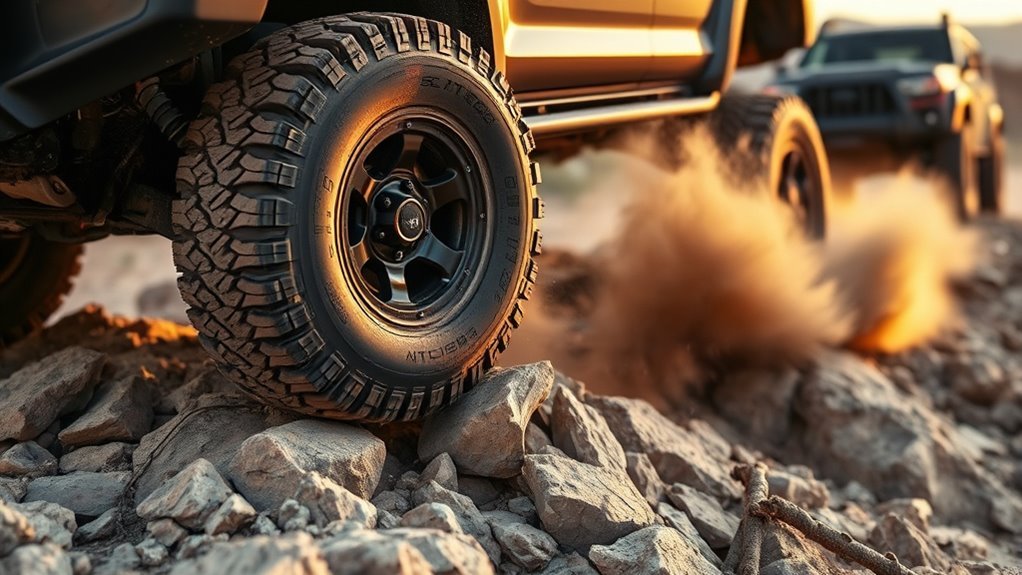
Tire size and tread can change how your Toyota 4Runner feels when A-TRAC intervenes, but they do not rewrite the system’s basic logic. A-TRAC reacts to detected wheel slip by managing engine output and brake pressure. The tire’s grip, rolling diameter, weight, inflation, and condition determine how much help the system needs and how predictable that help feels.
Quick Answer
No single tire size automatically “breaks” A-TRAC. Problems are more likely when tires do not match each other, exceed Toyota’s approved specifications, rub at full steering or suspension travel, or add enough diameter and weight to change braking and vehicle response. Choose four matching tires and verify fitment for your exact year and trim.
Key Takeaways
- A-TRAC reacts to wheel slip; it does not identify whether a tire is all-terrain, mud-terrain, or winter-rated.
- Matching diameter, tread pattern, wear level, load capacity, and inflation across all four tires is especially important on a 4WD 4Runner.
- A suspension lift alone does not change tire rotations per mile, but poor installation can affect alignment, sensor wiring, and handling.
- Larger and heavier tires can change effective gearing, speedometer accuracy, stopping response, clearance, and brake workload.
- Use the tire placard and owner’s manual for your exact model year and trim before changing sizes.
How A-TRAC Actually Works
Toyota describes Active Traction Control as an ABS-based system that controls engine output and brake-fluid pressure during four-wheel-drive operation. When a driven wheel spins, the system can brake that wheel so more usable drive force reaches wheels with traction.
The tire still provides the mechanical grip. A-TRAC cannot create traction where the tire cannot generate it. A suitable tire can reduce wheel spin and make intervention smoother, while a worn, damaged, overinflated, or unsuitable tire may cause the system to work more often.
A-TRAC supports available tire grip; it does not replace the need for the correct tire, pressure, speed, and driving line.
What Tire Size Breaks A-TRAC? (And What Doesn’t)
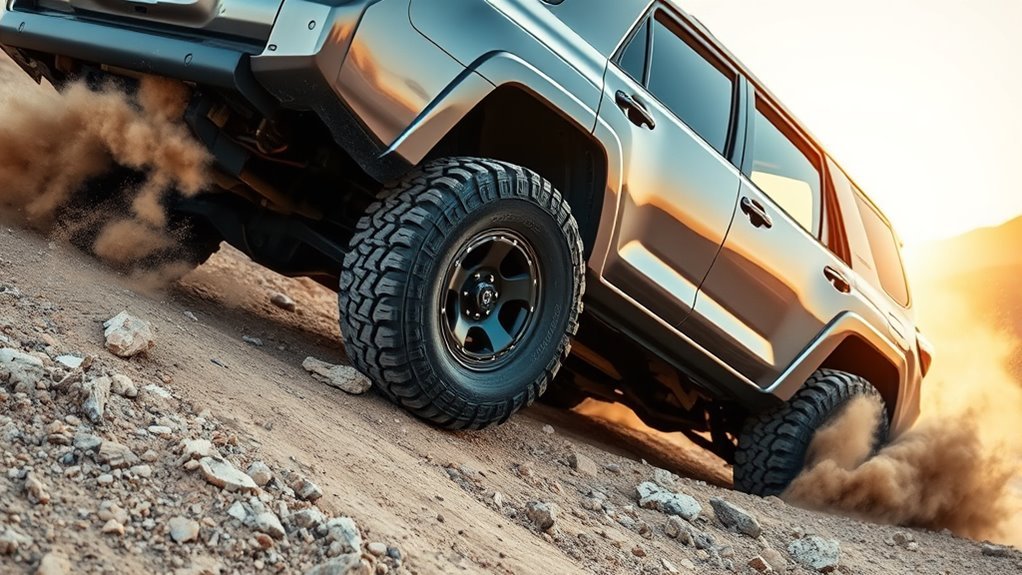
No universal diameter or percentage increase marks the point where A-TRAC stops working. Toyota 4Runner tire sizes vary by generation, trim, wheel package, and market. For example, Toyota’s current specifications list several factory sizes across the lineup, so a size that is standard on one 4Runner may be unsuitable for another.
Wheel-speed sensors measure wheel rotation. If all four tires have the same effective rolling circumference, their relative speeds remain broadly consistent during straight-line driving. A larger diameter can still affect the speedometer, odometer, effective gearing, acceleration, braking response, clearance, and the vehicle dynamics used by stability-control systems.
Mismatched rolling circumference creates a more direct problem. Different sizes, large tread-depth differences, unequal pressures, or mixing a new tire with three heavily worn tires can make one wheel rotate at a different rate. Toyota specifically warns 4WD owners not to mix tire sizes, makes, models, tread patterns, or substantially different treadwear.
| Tire Change | Likely Effect | Best Action |
|---|---|---|
| Factory-listed size for your exact trim | Designed around the vehicle’s original clearances and calibrations | Match the placard’s load and pressure requirements |
| Same-size replacement with a different tread type | Changes grip, noise, ride, and intervention frequency more than sensor scaling | Use four matching tires suited to your terrain |
| Moderate diameter increase | May alter indicated speed, gearing, clearance, and braking feel | Verify fitment, load rating, wheel width, offset, and displayed speed |
| Large or heavy off-road tire | Greater chance of rubbing, sluggish response, added unsprung mass, and higher brake demand | Use a qualified 4×4 shop to assess the full setup |
| Mixed sizes or significantly different wear | Can create inconsistent wheel-speed signals and driveline stress | Correct the mismatch before driving off-road |
Warning: Do not treat a forum-reported tire size as universal approval. Confirm the tire placard, owner’s manual, wheel width, offset, load index, brake clearance, and full-lock/full-compression clearance for your exact 4Runner.
Which Tread Patterns Help A-TRAC Work Better?
A-TRAC does not recognize tread design by name. It responds to wheel slip. Tread pattern and rubber compound affect how quickly that slip begins, how much grip returns after intervention, and how controllable the vehicle feels.
Tread grooves and sipes influence water evacuation and grip, while larger blocks can improve traction on loose surfaces at the cost of road noise and, in some designs, wet-road refinement. Select a tire for the surface you drive most often rather than choosing the most aggressive-looking tread.
| Tread Type | Where It Helps | A-TRAC Consideration |
|---|---|---|
| Highway all-season | Daily pavement, rain, quiet ride, and predictable braking | Usually provides smooth, consistent feedback on-road |
| All-terrain | Mixed pavement, gravel, dirt, and moderate trails | Often offers the best balance for owners who commute and trail-drive |
| Mud-terrain | Deep mud, loose soil, and terrain requiring self-cleaning lugs | Can feel less settled on wet pavement and may add weight and noise |
| Winter tire | Cold weather, packed snow, slush, and ice | Cold-weather compound and siping give the system more usable grip than a warm-weather tire |
Worn tread reduces the tire’s ability to grip wet, snowy, or loose surfaces. The National Highway Traffic Safety Administration says tires should be replaced when tread reaches 2/32 inch and recommends buying the original size or another size recommended by the vehicle manufacturer.
[Products Worth Considering]

Accurately measure tire tread depth with a calibrated gauge marked from 0 to 1 inch in 1/32 inch increments. The color-coded bar helps you quickly identify tread condition ranges, supporting safe driving for trucks, motorcycles, automobiles, and passenger vehicles.

Monitor tire tread wear with a smart, color-coded depth gauge that shows clear condition ranges at a glance. The bar is range marked for fast, easy readings, helping you maintain safer traction and performance. Each gauge is portable with a pocket clip, and the set includes 20 units for daily use and sharing.

The SAFELIFE dial tire tread depth gauge measures tread depth in 1/32 inch increments with clear, easy-to-read 2-inch dial face. Color zones using a traffic light system help you quickly judge whether tread is low, marginal, or ample for safer driving. Built with a durable zinc cast body and a metal detect probe for precise, comfortable use across cars, motorcycles, trucks, and buses.
Do Lift Kits Alone Mess With A-TRAC?
A suspension lift by itself does not change tire circumference or rotations per mile. Therefore, lift height alone does not require a wheel-speed recalibration. The original claim that a lift automatically changes the wheel-speed relationship is incorrect.
A lift can still affect the vehicle indirectly. Installation may alter alignment, caster, steering feel, center of gravity, suspension travel, and wheel-speed-sensor wire routing. Larger tires commonly installed with the lift add a separate set of diameter, weight, clearance, and braking changes.
| Modification | Direct A-TRAC Effect | Required Check |
|---|---|---|
| Mild lift with stock tires | No direct change to tire rotations per mile | Alignment, sensor wiring, brake hoses, and road test |
| Lift plus modest tire upsize | Effects mainly come from the tire’s diameter and mass | Clearance, displayed speed, load rating, and braking response |
| High lift plus large tires or changed offset | Greater change to handling and component loads | Full suspension inspection, alignment, sensor scan, and professional fitment review |
Pro Tip: After a lift or tire change, scan the ABS/VSC module, not only the engine computer. A basic code reader may miss wheel-speed and stability-control faults.
A-TRAC or Rear Locker: Which Do You Actually Need?
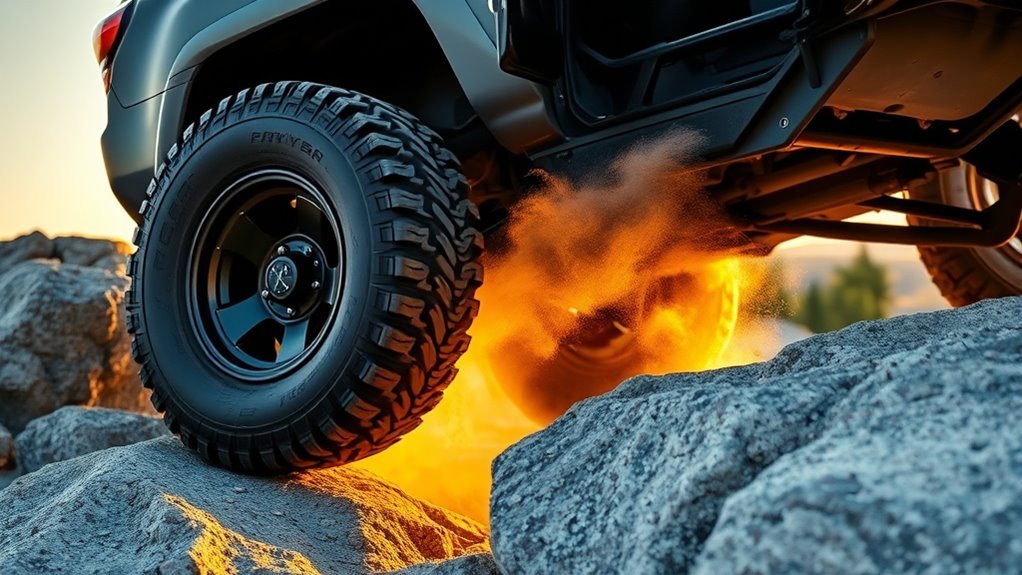
A-TRAC and a rear locker solve traction problems differently. A-TRAC uses selective braking and power management. A rear differential lock mechanically forces both rear axle shafts to turn together, which can keep both rear wheels driving when one is unloaded.
On the current 4Runner, Toyota offers A-TRAC on four-wheel-drive models and an electronic rear locker on selected off-road grades. Toyota states that the available rear locker can split power sent to the rear wheels 50:50 when traction is extremely limited.
[Products Worth Considering]

Measure tire tread depth quickly and accurately with this LUMITECO dial gauge that reads in 1/32" increments up to 14/32". The color-coded green/yellow/red zones make it easy to judge tire wear and know when replacement is needed. A rugged, compact design with a protective pouch helps keep the gauge ready for use on cars, trucks, motorcycles, and more.

This manual duck head tire changer kit makes tire installation and removal simpler by letting you embed the duck head into the tire with applied pressure. The integrated design and durable steel construction help reduce friction and improve efficiency and safety during use. Suitable for 16–21 inch wheels, it’s convenient for cars, trucks, SUVs, and ATV tires, with 24-hour after-sales support.

This professional wheel and rim brush kit makes it easy to lift brake dust, grime, and dirt from wheels and tires without scratching finishes. The brushes feature soft, metal-free wool heads and a flexible 360-degree rim brush design for reaching hard-to-clean areas. Includes multiple brush types plus accessories for thorough car, motorcycle, and general vehicle detailing.
Traction Control Comparison
| Feature | A-TRAC | Rear Locker |
|---|---|---|
| Method | Selective braking plus engine-output control | Locks both rear axle shafts together |
| Best use | Mixed, slippery, uneven terrain where steering flexibility matters | Slow obstacles where one rear wheel may lift or lose nearly all grip |
| Driver input | Mostly automatic when operating conditions are met | Driver-selected and limited to approved operating conditions |
| Turning behavior | Allows normal differential action | Can resist turning on high-traction surfaces |
| Main limitation | Brake-based intervention can add heat during repeated, prolonged use | Not intended for normal high-traction road driving |
Terrain Suitability Analysis
A-TRAC is usually the more flexible choice for changing trail surfaces, loose climbs, snow, and situations where you still need normal steering response. A rear locker becomes valuable during slow rock crawling, cross-axle terrain, deep ruts, or a steep obstacle that unloads one rear wheel.
Multi-Terrain Select can adjust wheel-spin control for selected surfaces on equipped models, but it does not replace correct tires or good judgment. Use the rear locker only according to the owner’s manual for your model year.
Note: More traction hardware is not always better. Tire grip, approach speed, line choice, ground clearance, and recovery equipment often matter more than adding another electronic mode.
Why Big Tires Can Change VSC Behavior and Brake Load
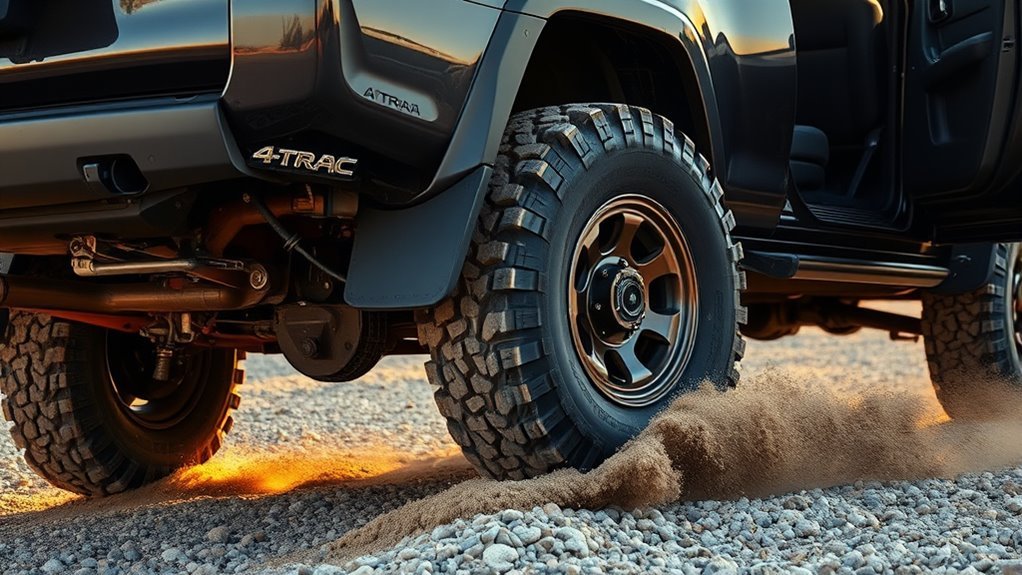
Larger tires do not automatically make VSC “freak out.” Four equal-size tires still rotate together in a predictable relationship. However, a different rolling circumference changes the relationship between actual road speed and the vehicle’s original tire-based calibration. Added height and mass also change acceleration, steering response, body motion, and braking demand.
Heavier tires and wheels have more rotational inertia. The brakes must manage that added rotating mass, and the taller effective gearing can make the vehicle feel slower to accelerate or downshift. The effect depends on the complete wheel-and-tire assembly, not diameter alone.
Repeated brake-based traction intervention can generate heat in loose terrain. That does not mean oversized tires will automatically boil brake fluid, but large, heavy tires can reduce the margin available during long descents, towing, repeated hard stops, or prolonged wheel-slip control.
| Change | What You May Notice | What to Check |
|---|---|---|
| Greater rolling diameter | Displayed speed error, taller effective gearing, and possible rubbing | GPS-verified speed, clearance, gearing, and fitment |
| Heavier tire and wheel | Slower response, firmer ride, and longer or less confident stops | Assembly weight, brake condition, pad choice, and driving load |
| Unequal circumference | Unexpected intervention, warning lights, driveline binding, or vibration | Size, tread depth, pressure, and ABS/VSC fault codes |
| Changed offset or wheel width | Rubbing, altered steering feel, and extra bearing or suspension load | Wheel specification and full-lock articulation clearance |
Warning: Stop and allow the vehicle to cool if you receive a brake-temperature or traction-system warning, smell overheated brakes, or notice pedal fade. Do not continue a difficult climb or descent while braking performance is reduced.
The Tire Shopping Checklist for A-TRAC Owners
- Confirm the original specification. Read the driver-door tire placard and the owner’s manual for the exact year, trim, drivetrain, and wheel package.
- Use four matching tires. Match size, construction, model, tread pattern, and similar tread depth. This is particularly important on 4WD models.
- Meet or exceed the required load capacity. Do not choose a tire only because its diameter fits.
- Choose tread for your real use. Highway tires favor pavement manners, all-terrains balance road and trail use, mud-terrains favor loose terrain, and winter tires are designed for cold-weather grip.
- Check the complete assembly weight. A larger tire can be much heavier even when the diameter increase appears modest.
- Verify physical clearance. Check steering lock, suspension compression, body mounts, liners, upper control arms, brake components, and spare-tire storage.
- Check displayed speed. Compare the speedometer with a reliable GPS reading after changing rolling diameter. Ask a qualified shop whether correction is available for your model.
- Set cold pressure from a valid specification. Start with Toyota’s placard guidance unless the tire or vehicle setup has been professionally evaluated for a different requirement.
- Recheck after installation. Confirm torque, pressure, alignment, rubbing, warning lights, and brake feel after a short road test.
NHTSA recommends checking cold tire pressure at least monthly. Check again before long trips, towing, or carrying heavy loads. The pressure molded on the tire sidewall is a maximum tire rating, not the vehicle’s normal inflation target.
[Products Worth Considering]

The Big Rig Defense Tire Thumper is a truck tire pressure checker that lets you quickly check multiple tires by giving them a firm whack. Listen for a reassuring thump and feel the stick bounce when a tire is fully inflated, helping you get back on the road safely. It features a comfortable, glove-friendly handle and a secure wrist strap for confident use on busy routes.

Milton S-921 pencil tire pressure gauge helps you maintain optimal tire pressure for passenger cars with accurate readings in PSI and kPa. It features a built-in deflator valve for convenient pressure adjustments, plus a single chuck head and nylon indicator bar for easy use on the go. Built from durable plated brass and designed for reliable performance, it’s a practical road trip and cold-weather maintenance tool.

Vigorder rubber cement glue delivers superior adhesion and cures quickly within about 30 seconds for seamless rubber bonding. Once cured, it helps provide a strong, durable, waterproof seal that holds up to vehicle weight, pressure, and heat. Suitable for cars, motorcycles, trucks, bicycles, and off-road tires, it’s designed for emergency patch and maintenance repairs.
Troubleshooting A-TRAC After Tire or Lift Changes
If A-TRAC, ABS, or VSC behaves differently immediately after a modification, do not assume the computer simply needs time to learn. Work through the physical and electronic checks in order.
- Read all warning messages and scan the ABS/VSC module. Record codes before clearing them.
- Compare all four tires. Confirm the exact sidewall size, tread depth, cold pressure, and visible damage.
- Inspect sensor areas. Look for stretched, pinched, unplugged, or damaged wheel-speed-sensor wiring after suspension work.
- Check alignment and steering-center position. A crooked steering wheel or poor alignment can affect stability-control behavior.
- Test for rubbing. Inspect polished spots on liners, body mounts, suspension parts, and tires after full-lock turns and gentle articulation.
- Verify wheel and tire fitment. Confirm wheel width, offset, load rating, lug-seat type, and brake clearance.
- Return to a known-good setup when needed. If symptoms began after the change and no fault is obvious, testing with the original matched wheels and tires can isolate the cause.
Seek professional diagnosis if warning lights remain on, braking changes, the vehicle pulls, a sensor code returns, or the system intervenes on dry, straight roads.
Frequently Asked Questions
Should I drive with TRAC or A-TRAC on?
Yes. Leave the applicable traction and stability systems on during normal driving. Turn them off only when the owner’s manual recommends it, such as briefly allowing wheel spin to free a stuck vehicle. Restore normal operation as soon as the situation ends.
Does tire tread affect acceleration?
Yes. Tread design, compound, surface condition, inflation, and wear affect available grip. More grip can reduce wheel spin and improve usable acceleration, but aggressive tread may add weight and rolling resistance on pavement.
Will 33-inch tires disable A-TRAC?
Not automatically. Some current 4Runner configurations use tires near that class from the factory, while older generations and trims have different specifications. Fitment, weight, rolling diameter, wheel offset, clearance, load rating, and electronic compatibility must be checked for the exact vehicle.
Do larger tires require A-TRAC recalibration?
There is no universal A-TRAC recalibration requirement based only on lift height or tire size. A diameter change may require speedometer correction, and any warning light or abnormal intervention requires diagnosis. Ask Toyota or a qualified specialist what corrections are supported for your model.
Can I mix different tire models on a 4WD 4Runner?
Avoid it. Toyota advises using matching tires and warns against mixing different makes, models, tread patterns, sizes, or substantially different treadwear on 4WD vehicles. A matched set provides more consistent grip and rolling circumference.
Conclusion
Tire choice affects A-TRAC mainly by changing the grip and vehicle dynamics the system must manage. Tread suited to the surface helps the tires maintain traction, while correct size, matching circumference, proper inflation, and adequate load capacity keep the vehicle predictable.
Do not rely on a universal “safe” upsize or assume a lift automatically requires sensor calibration. Verify the exact 4Runner specification, evaluate the complete wheel-and-tire package, and diagnose any ABS, VSC, or A-TRAC warning instead of accepting reduced performance as normal.
Sources
- Toyota: Anti-Lock Braking and A-TRAC — explains Toyota’s ABS, TRAC, VSC, and A-TRAC functions.
- Toyota: 2025 4Runner capability overview — confirms A-TRAC, Multi-Terrain Select, and rear-locker availability and function.
- Toyota 2025 4Runner Hybrid Owner’s Manual: Winter driving — covers specified tire size, matching tires, inflation, and winter-tire precautions.
- Toyota 2026 4Runner Owner’s Manual: Tire specifications — shows that factory tire sizes vary by configuration.
- NHTSA TireWise — supports tire-size, tread-depth, inflation, and maintenance guidance.
- Michelin: How tread design affects performance — explains grooves, sipes, water evacuation, tread blocks, and grip.