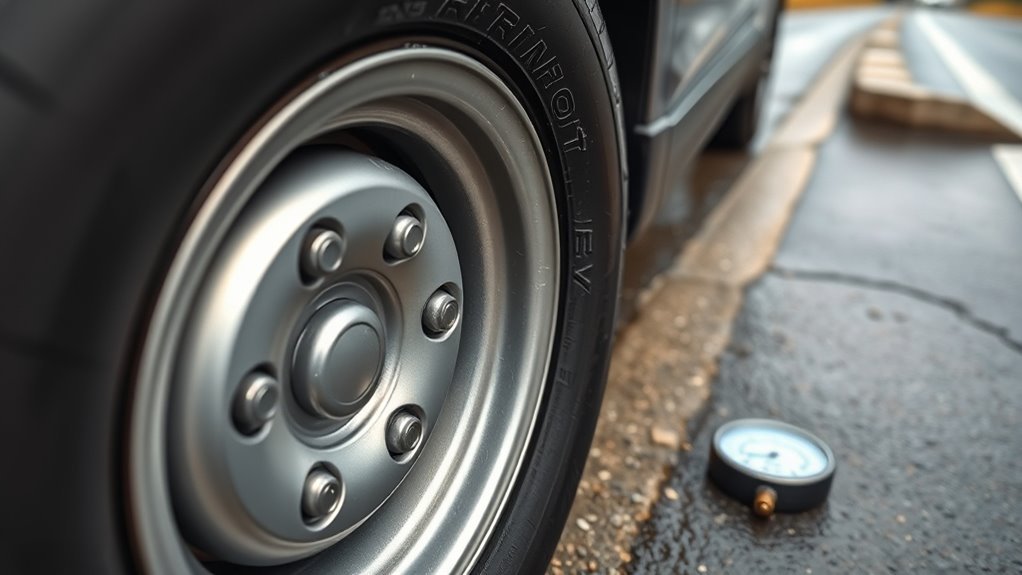
Overinflated tires on your RAV4 can make the SUV feel sharper at first, but that extra pressure can reduce comfort, speed up center tread wear, and make the tires less forgiving over bumps, potholes, and wet pavement. The safe target is not a guessed number and not the maximum PSI printed on the tire sidewall. Use the cold tire pressure listed on your RAV4’s driver-side Tire and Loading Information Label or in the owner’s manual.
Quick Answer
Overinflated RAV4 tires can reduce the tire’s contact with the road, create a harsher ride, accelerate center tread wear, and increase vulnerability to impact damage. If the tires are high when checked cold, release air in short bursts until each tire matches the PSI on your doorjamb placard.
Key Takeaways
- Use the RAV4’s Tire and Loading Information Label or owner’s manual as the final PSI authority.
- Check pressure when tires are cold, ideally before driving or after the vehicle has been parked for at least three hours.
- Do not use the maximum PSI on the tire sidewall as your normal driving pressure.
- If a tire has a bulge, exposed cords, sidewall damage, vibration, or repeated pressure loss, do not rely on a simple air adjustment.
At a Glance
| Time Required | 5–10 minutes for all four tires |
| Difficulty | Easy DIY check |
| Tools Needed | Tire pressure gauge, valve caps, and an air source if any tire is low |
| Cost | Free if you already own a gauge; about $5–$15 for a basic gauge |
How Overinflation Affects Safety and Handling
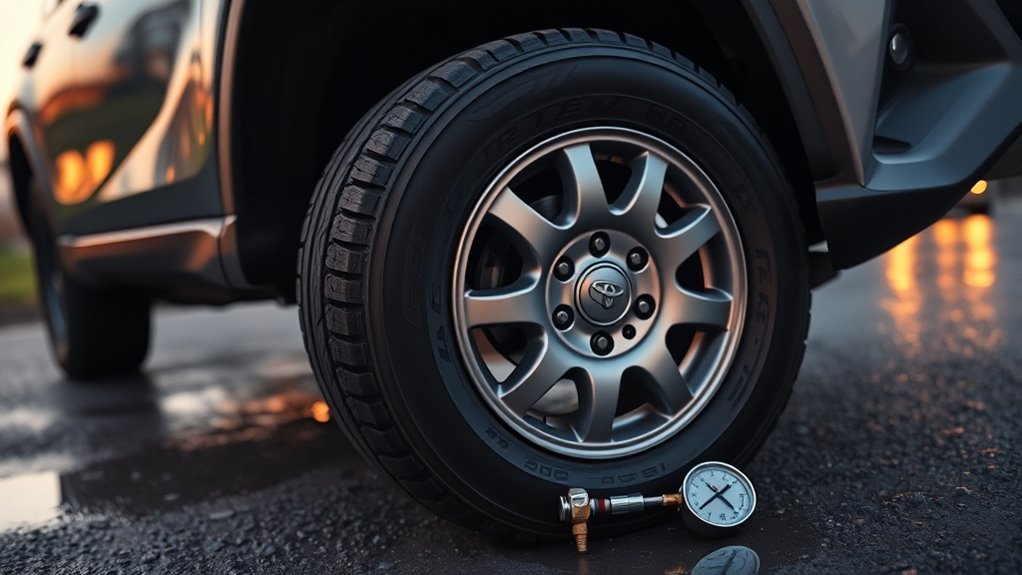
When you overinflate the tires on your RAV4, the tire can become too stiff and may ride more on the center of the tread. That can reduce the contact patch, which is the part of the tire touching the road. Less usable contact can mean less grip, especially during sharp turns, wet-road braking, rough pavement, or emergency maneuvers.
The National Highway Traffic Safety Administration says proper tire pressure affects safety, tire durability, and fuel consumption. NHTSA also notes that the correct pressure is the vehicle manufacturer’s listed pressure, not the number molded into the tire sidewall.
Overinflated tires also make the RAV4 feel harsher over bumps because the tire cannot flex as designed. That extra stiffness can transfer more shock into the suspension and cabin. It may also make the tire more vulnerable to impact damage from potholes, curbs, and road debris.
Warning: Do not keep driving normally if a tire has a sidewall bulge, deep cut, exposed cords, strong vibration, or a pressure reading that keeps changing. Install the spare if safe to do so, or contact roadside assistance or a tire professional.
[Products Worth Considering]

Measure tire tread depth quickly and accurately with this LUMITECO dial gauge that reads in 1/32" increments up to 14/32". The color-coded green/yellow/red zones make it easy to judge tire wear and know when replacement is needed. A rugged, compact design with a protective pouch helps keep the gauge ready for use on cars, trucks, motorcycles, and more.

The TYAMATE TM8 solar-powered wireless TPMS delivers real-time tire pressure and temperature monitoring with six alarm modes for safer driving. A vibrant color LCD display shows readings clearly while windshield mounting keeps it hands-free and easy to read. With a wide 0–87 PSI range, strong 433.92 MHz signal transmission, and quick sensor pairing, it’s ideal for RV, sedan, SUV, MPV, and truck use.
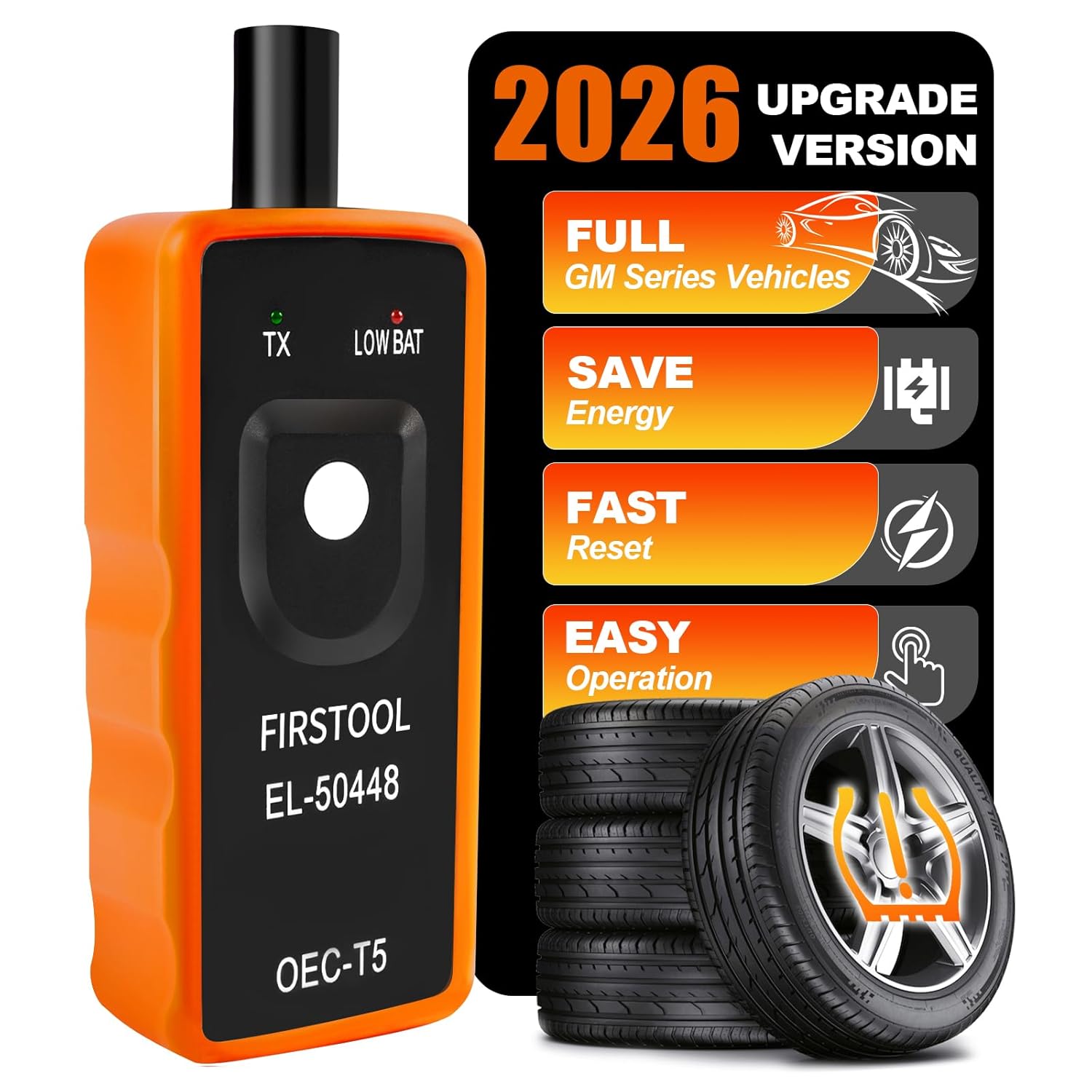
This TPMS relearn tool helps you quickly activate, match, and reset GM tire pressure sensors to keep the vehicle monitoring system working properly. It clears tire pressure alarms and dashboard warning lights after sensor replacement or tire rotation, and supports learning for common 315/433 MHz TPMS sensors. Designed for simple one-button operation, it can help you avoid unnecessary trips to repair shops.
Signs of Overinflated Tires
Recognizing the signs of overinflated tires on your RAV4 helps protect the tires and keeps the vehicle easier to control. The most reliable sign is simple: the cold PSI reading is higher than the front or rear pressure printed on the RAV4’s doorjamb placard.
- Pressure above the placard PSI: Check the front and rear values separately because they may not always be the same.
- Center tread wear: Over time, too much pressure can cause the center of the tread to wear faster than the outer edges.
- Harsher ride: The vehicle may feel bouncy, stiff, or less settled over rough pavement.
- Reduced wet-road confidence: The tires may feel less planted when turning or braking on slick roads.
- More road noise or vibration: A tire that is too stiff may transmit more noise and feedback into the cabin.
Note: Your RAV4’s TPMS is not a replacement for a tire gauge. Toyota’s TPMS warning is mainly designed to alert you when tire pressure is seriously low, so it may not warn you when a tire is overinflated.
What Happens When Tires Wear Unevenly?
Uneven tire wear can shorten tire life and make your RAV4 less predictable. With overinflation, the most common pattern is center tread wear, where the middle of the tread wears faster than the shoulders. That means you may have to replace tires earlier even if the outer edges still look usable.
| Effect on Vehicle | What It Can Lead To | Best Fix |
|---|---|---|
| Reduced contact patch | Less grip during cornering or wet-road braking | Set cold pressure to the doorjamb placard PSI |
| Center tread wear | Shorter tire life and earlier replacement | Check tread monthly and correct pressure early |
| Harsh tire response | More impact shock from potholes and rough roads | Inspect for bulges, cuts, cracks, and vibration |
| Irregular wear pattern | Pulling, vibration, or noisy tires | Rotate, balance, and align as recommended |
Do not treat overinflation as a fuel-saving trick. Even if a very stiff tire can reduce rolling resistance in some situations, the tradeoff in comfort, wear, braking, and impact protection is not worth it. Your RAV4 was engineered around the pressure listed by Toyota for that vehicle and tire size.
[Products Worth Considering]
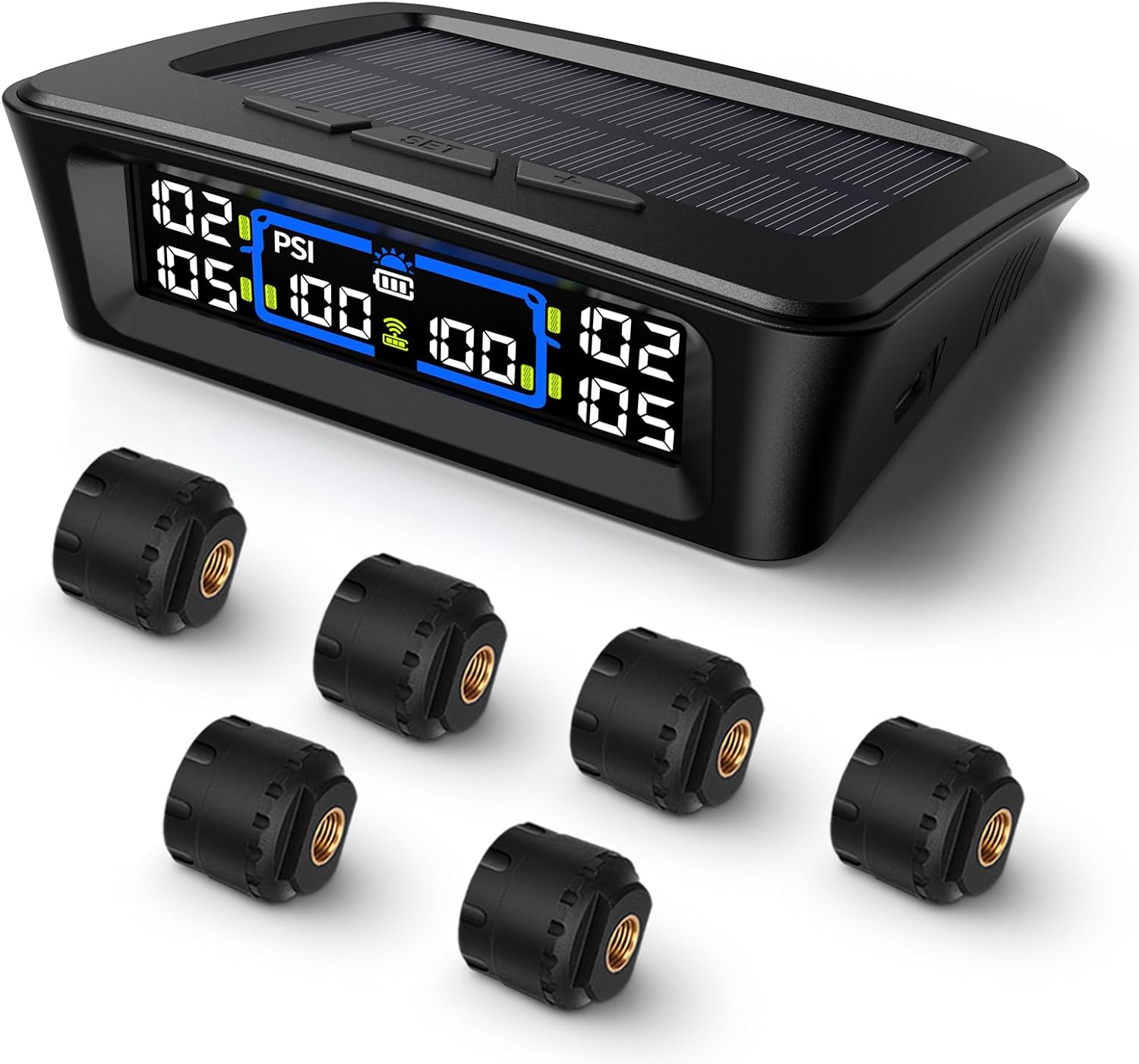
The Tymate TM12 RV TPMS delivers real-time tire pressure and temperature monitoring with a stable 433Hz display for safer long-distance driving. It supports simultaneous monitoring across vehicle and trailer zones, includes six alarm modes for pressure, temperature, leakage, battery, and signal loss, and features easy DIY installation with auto calibration. Power is supplied via USB-C charging or solar recharging, with a wide 0–144 PSI range and up to 50 ft signal coverage for RVs and towable trailers.

The VEHLIVE SU-50448 II TPMS relearn tool provides a fast activation reset to restore accurate tire pressure monitoring after sensor replacement or tire rotation. It supports 315 MHz and 433 MHz GM series sensors and helps clear dashboard pressure warnings. With simple two-button operation and horn-confirmed relearning order, you can reprogram sensors conveniently at home.

Milton S-921 pencil tire pressure gauge helps you maintain optimal tire pressure for passenger cars with accurate readings in PSI and kPa. It features a built-in deflator valve for convenient pressure adjustments, plus a single chuck head and nylon indicator bar for easy use on the go. Built from durable plated brass and designed for reliable performance, it’s a practical road trip and cold-weather maintenance tool.
Correcting Overinflated Tires Safely
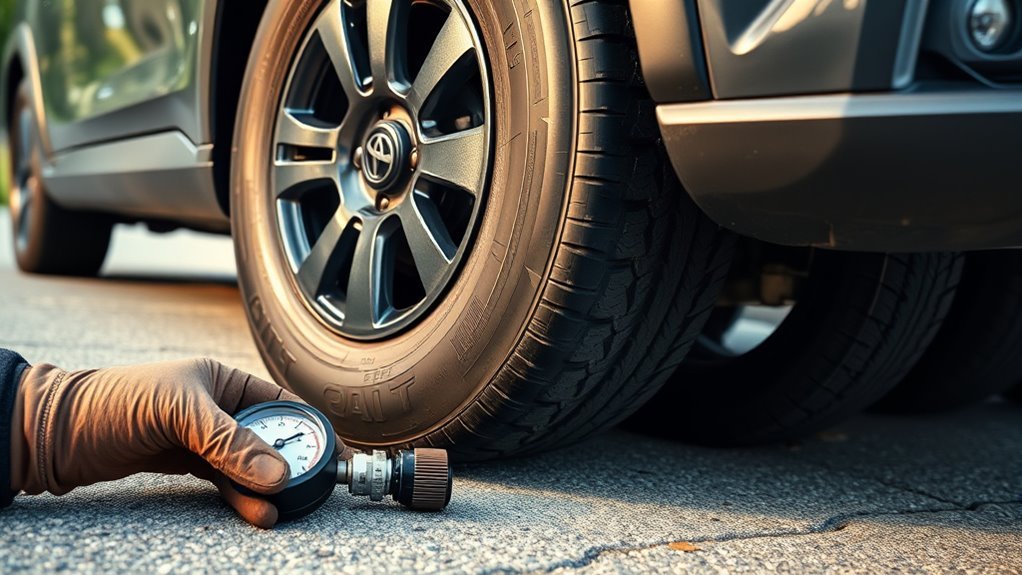
To correct overinflated tires, work slowly and check each tire with a reliable gauge. The goal is not to make all four tires match a guessed number; it is to match the cold front and rear PSI values printed on your specific RAV4’s label.
[Products Worth Considering]

The Milton S-693 straight foot dual head air chuck is designed for accurate tire pressure checks and quick, secure valve-core engagement with lock-on threads on both ends. With a 1/4" FNPT connection and a maximum 150 PSI rating, it’s built for use on inner duals and common vehicle tires, including trucks and RVs.
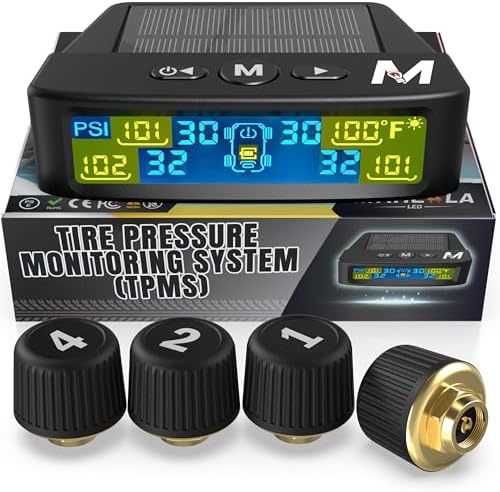
Marcala’s TPMS set of four sensors helps you monitor tire pressure and temperature in real time while driving, with updates every second. The bright color LCD uses auto-dimming for easy viewing, powered by dual solar and USB charging, and offers six alarm modes. Built for trailers, RVs, campers, trucks, and towing setups, the sensors support monitoring 1-4 wheels up to 98 PSI with IP67 waterproof protection.

Upgrade your Toyota tire setup with these corrosion-resistant, leak-proof valve stem caps designed to help protect the valve core from water, snow, and road grime. The caps feature a snug rubber seal and durable copper alloy construction to resist rust and oxidation while maintaining stable tire pressure. Ideal for replacing worn original caps and keeping your wheels looking clean and stylish.
Find the Correct RAV4 PSI First
Open the driver’s door and look for the Tire and Loading Information Label on the door edge or doorjamb. You can also check the Toyota owner’s manual or the Toyota RAV4 tire inflation pressure manual page. Many recent RAV4 models use pressures in the low-to-mid 30 PSI range, but the label on your vehicle is the final authority.
Pro Tip: Check tire pressure before driving in the morning. If you just drove at highway speed, the tires will be warm and the PSI reading will normally be higher than the true cold pressure.
Step-by-Step Safe Pressure Correction
- Park on level ground. Let the RAV4 sit for at least three hours if the tires are warm.
- Read the placard PSI. Note the front and rear values because they may be different.
- Remove the valve cap. Keep it in your pocket so it does not roll away.
- Press the gauge straight onto the valve stem. A hissing sound usually means the gauge is not seated correctly.
- Release air in short bursts. If the tire is high, gently press the center valve pin for one second at a time.
- Recheck the PSI. Repeat until the pressure matches the placard value for that tire position.
- Inspect the tire. Look for cuts, bulges, cracks, nails, uneven wear, or exposed cords.
- Replace the valve cap. The cap helps keep dirt and moisture out of the valve stem.
Warning: Do not bleed air from hot tires just because the gauge reads a few PSI above the placard after driving. Heat raises pressure naturally. Recheck when the tires are cold unless the tire is extremely overinflated or unsafe to drive.
How Much Overinflation Is Too Much?
A small pressure difference is not the same as a dangerously overfilled tire, but you should still correct cold readings that are above the placard. NHTSA research notes that even a few PSI away from the vehicle manufacturer’s recommended inflation pressure can affect handling and stopping distance.
- 1–2 PSI high when cold: Recheck with a reliable gauge. If it remains high, release a small amount of air.
- 3 PSI high when cold: Adjust it back to the placard value, especially before a road trip or highway driving.
- 5 PSI high when cold: Correct it promptly. Expect harsher ride quality and more center-wear risk.
- 10 PSI high when cold: Do not ignore it. Lower the pressure carefully before normal driving and inspect the tire for damage.
NHTSA reported that 511 people died in tire-related crashes in 2024, which is a strong reminder that tire pressure, tread, rotation, and inspection are safety items—not just maintenance chores.
Why Regular Tire Maintenance Matters
Regular tire maintenance keeps your RAV4 safer, smoother, and more predictable. NHTSA recommends checking all tires, including the spare if equipped, at least once a month when the tires are cold. Tire pressure also changes with temperature. Bridgestone notes that tire pressure changes by about 1 PSI for every 10°F change in ambient temperature.
That means a RAV4 that was set correctly during warm weather can read low after a cold front, and a tire adjusted after highway driving can read artificially high until it cools. Make pressure checks part of your routine before road trips, after big temperature swings, and whenever the ride suddenly feels harsher or less stable.
Rotation matters too. Toyota maintenance guidance commonly includes tire rotation at regular service intervals, and the Toyota RAV4 Warranty & Maintenance Guide lists tire rotation as part of scheduled maintenance. Regular rotation helps even out tread wear and can make pressure-related wear easier to spot early.
Consequences of Overinflation on Performance and Safety
Overinflated tires can affect your RAV4’s performance and safety in several ways. The main issue is not that the tire instantly becomes unsafe the moment it is slightly high; the issue is that the tire no longer works exactly as Toyota and the tire manufacturer intended.
- Reduced traction: A smaller contact patch can reduce grip on wet or uneven roads.
- Longer stopping distance risk: Incorrect pressure can affect handling and braking performance.
- Center tread wear: The middle of the tread may wear faster than the shoulders.
- Harsher ride: The tire absorbs less road shock, making bumps feel sharper.
- Impact vulnerability: A stiff, overinflated tire may be less forgiving when it hits potholes or road debris.
- False confidence from TPMS: The warning system may not alert you to overinflation, so a manual gauge still matters.
Braking and stability systems depend on the tire’s grip. Overinflation does not “break” your ABS, but it can reduce the tire’s ability to stay planted during braking, cornering, or emergency maneuvers. Correct cold PSI gives those systems the tire contact they were designed around.
When Not to Drive on an Overinflated Tire
Most overinflation problems can be corrected with a gauge and a careful air release. However, some tire problems need professional attention before you drive normally.
- The tire has a visible bulge, bubble, or sidewall cut.
- You can see exposed cords or deep cracking.
- The RAV4 shakes, pulls, or vibrates after the pressure is corrected.
- The tire loses pressure again within a day or two.
- The TPMS light blinks or stays on after pressure is corrected.
- The tire was driven while extremely overinflated or after a hard pothole impact.
If any of these signs appear, have the tire inspected by a qualified tire shop or Toyota service center. A damaged tire can fail even if the pressure reading looks normal.
Frequently Asked Questions
Is it okay to overinflate RAV4 tires by 3 PSI?
If the tire is 3 PSI over the placard value when checked cold, release air until it matches the recommended PSI. If the tire reads 3 PSI high right after driving, let it cool and recheck before bleeding air.
Is it okay to overinflate tires by 5 PSI?
A cold reading 5 PSI above the RAV4’s placard is too high for normal use. It can make the ride harsher, increase center tread wear, and reduce the tire’s ability to absorb road impacts. Correct it before regular driving.
What happens if you overfill your tires by 10 PSI?
A cold tire that is 10 PSI over the recommended pressure should be corrected right away. The tire may ride too stiffly, wear down the center faster, grip less predictably, and be more vulnerable to pothole or road-hazard damage.
Should I use the maximum PSI printed on the tire sidewall?
No. The sidewall number is the tire’s maximum inflation pressure, not the recommended pressure for your RAV4. Use the Toyota Tire and Loading Information Label on the driver-side doorjamb or the owner’s manual.
Can I rely on the RAV4 TPMS instead of checking with a gauge?
No. TPMS is helpful, but it is mainly a low-pressure warning system. It may not warn you when a tire is overinflated, and it does not replace a monthly cold-pressure check with a gauge.
Do I need to reset or initialize TPMS after correcting tire pressure?
If you only release air to correct a high tire, the warning light may clear after the system reads normal pressure. After tire rotation, tire replacement, or some TPMS service, follow the RAV4 owner’s manual for initialization so the system uses the correct benchmark pressure.
Conclusion
Overinflated RAV4 tires are easy to overlook, but they can affect ride comfort, tread wear, traction, and braking feel. The safest fix is simple: check the tires cold, use the PSI on the driver-side placard, release air slowly if needed, and inspect for damage before driving. A few minutes with a gauge can help your RAV4 ride smoother, handle better, and protect the tires you rely on every mile.
Sources
- Toyota Owners — 2024 RAV4 Tire Inflation Pressure — backs up using Toyota’s owner-manual tire inflation guidance.
- NHTSA TireWise — Tire Safety Ratings and Awareness — backs up tire pressure, tread, TPMS, rotation, and safety guidance.
- NHTSA CrashStats — Tire Pressure Maintenance Statistical Investigation — backs up the point that a few PSI can affect handling and stopping distance.
- Toyota 2023 RAV4 Warranty & Maintenance Guide — backs up scheduled maintenance and tire-rotation context.
- Bridgestone Americas — Proper Tire Inflation — backs up monthly checks, cold-tire checks, temperature effects, and sidewall PSI caution.
- Toyota Support — Tire Pressure Monitoring System — backs up TPMS low-pressure warning behavior.