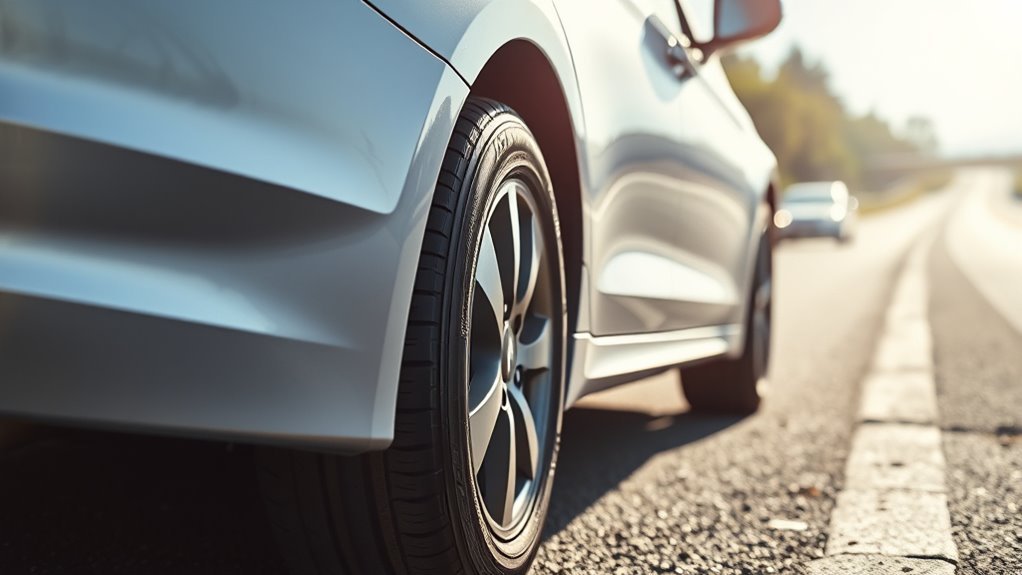
If you overinflate your Hyundai Sonata’s tires, the tire can ride more on the center of the tread instead of using the full tread width. That smaller usable contact patch can make the car feel sharper at first, but it also reduces ride comfort, can hurt traction, and speeds up center tread wear. The safest fix is simple: check the pressure when the tires are cold, use the PSI printed on your Sonata’s driver-door tire label, and adjust with a reliable gauge.
Quick Answer
Overinflated Hyundai Sonata tires can cause a harsher ride, faster center tread wear, reduced traction, and a higher chance of damage from potholes or road debris. Lower the pressure only after checking cold tires, and use the exact PSI on the driver-door placard or owner’s manual.
Key Takeaways
- Use the cold tire pressure on your Sonata’s driver-door tire label, not the maximum PSI molded into the tire sidewall.
- Overinflation commonly shows up as a stiff ride and faster wear down the center of the tread.
- Do not bleed warm tires down to the placard PSI; warm tires normally read higher than cold tires.
- Check tire pressure at least monthly, before long trips, and after big temperature swings.
At a Glance
| Time Required | 5–10 minutes for all four tires |
| Difficulty | Easy |
| Tools Needed | Accurate tire pressure gauge, air pump if needed, valve cap, and a tread-depth gauge or penny for inspection |
| Cost | Usually free if you own a gauge; about $10–$25 for a basic quality gauge |
What Overinflation Means for a Hyundai Sonata
Overinflation means the tire pressure is above the vehicle manufacturer’s recommended cold tire pressure. For a Hyundai Sonata, that recommended pressure is listed on the tire and loading information label on the driver’s door jamb or center pillar, and it may also appear in the owner’s manual. Hyundai notes that the label shows the original tire size, the recommended cold tire pressures, seating capacity, and vehicle capacity weight.
Do not use the tire sidewall maximum as your normal target. The sidewall number is the tire’s maximum rated pressure under specific conditions, not the Sonata’s recommended driving pressure. Many newer Sonata models use a cold pressure around 35 PSI, but year, trim, tire size, market, and load can vary. The door-jamb placard is the number to trust.
Note: Hyundai defines cold tires as tires on a vehicle that has been parked for at least three hours or driven less than about 1 mile. Warm tires normally read higher than cold tires, so the timing of the check matters.
How Overinflation Changes Hyundai Sonata Handling and Contact Patch
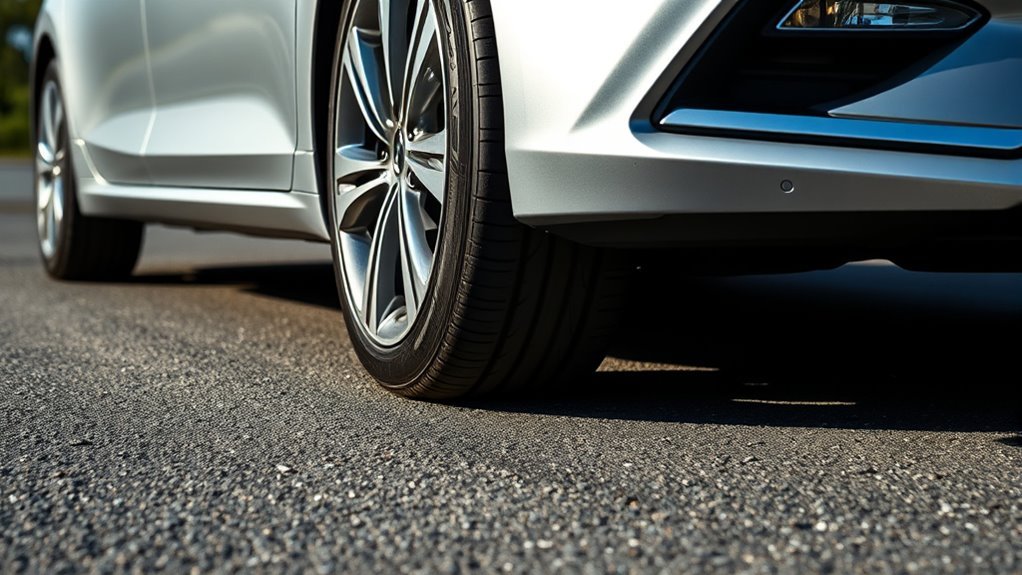
When a Sonata tire carries too much air pressure, the tread can crown slightly toward the center. That makes the center tread carry more of the vehicle’s load, which can reduce the usable contact patch and make the tire less able to conform to small road irregularities.
You may notice these changes first as a firmer ride, sharper steering response, more vibration through the cabin, or a skittish feel over broken pavement. The car may still track normally on smooth roads, but the margin for grip can shrink on wet roads, rough pavement, gravel, or during emergency maneuvers.
Hyundai’s owner guidance says recommended pressures should be maintained for the best ride, vehicle handling, and minimum tire wear. It also warns that overinflation or underinflation can reduce tire life, affect handling, and contribute to sudden tire failure. You can review Hyundai’s cold-pressure guidance in the Hyundai owner manual tire-pressure section.
Hyundai Sonata Safety Risks From Overinflated Tires
The biggest safety problem is not that the tire instantly fails the moment it is a few PSI high. The real risk is that excess pressure changes how the tire meets the road and makes it less forgiving when it hits potholes, sharp edges, or debris. Hyundai notes that overinflation can produce a harsh ride, excessive center tread wear, and a greater possibility of damage from road hazards.
With less usable tread contact, your Sonata may have less traction during hard braking, quick lane changes, and wet-road driving. That can make the car feel less planted and can reduce the grip available before the tires slide. The braking system still works, but it has less tire-road friction to work with if the tires are not properly inflated.
Warning: Do not keep driving on a tire with a bulge, exposed cords, deep cuts, severe center wear, or pressure above the tire’s sidewall maximum. Install the spare if equipped and safe to use, or call roadside assistance.
Quick Fix: Check and Lower Hyundai Sonata Tire Pressure Step-by-Step
Start with cold tires whenever possible. Park on level ground, turn the vehicle off, and check the placard on the driver’s door jamb for the exact front and rear cold PSI. Then use a calibrated gauge to check each tire before you release any air.
| Step | Action | Why It Matters |
|---|---|---|
| 1 | Find the cold PSI on the driver-door placard. | This is the correct target for your specific Sonata setup. |
| 2 | Remove the valve stem cap and press the gauge firmly onto the valve. | A firm seal prevents a false low reading. |
| 3 | Record the PSI for each tire. | Tracking readings helps spot a slow leak or uneven pattern. |
| 4 | If a cold tire is above the placard PSI, briefly press the valve pin to release small bursts of air. | Small adjustments prevent accidentally dropping too low. |
| 5 | Recheck with the gauge, then reinstall the valve cap. | The cap helps keep dirt and moisture out of the valve. |
| 6 | Repeat on all four tires and check the spare if your Sonata has one. | A spare tire may not be monitored by TPMS and can lose air over time. |
Warning: If you just drove, do not bleed the tires down to the cold placard number. Hyundai notes that warm tires commonly read 4–6 PSI higher than cold tires. Let the vehicle sit, then recheck when the tires are cold.
Pro Tip: Keep a small digital or dial gauge in the glove box and use the same gauge each time. Gas-station gauges can be damaged or inaccurate, especially when they are dropped or used heavily.
[Products Worth Considering]

Monitor tire tread wear with a smart, color-coded depth gauge that shows clear condition ranges at a glance. The bar is range marked for fast, easy readings, helping you maintain safer traction and performance. Each gauge is portable with a pocket clip, and the set includes 20 units for daily use and sharing.

Measure tire tread depth quickly and accurately with this LUMITECO dial gauge that reads in 1/32" increments up to 14/32". The color-coded green/yellow/red zones make it easy to judge tire wear and know when replacement is needed. A rugged, compact design with a protective pouch helps keep the gauge ready for use on cars, trucks, motorcycles, and more.

The SAFELIFE dial tire tread depth gauge measures tread depth in 1/32 inch increments with clear, easy-to-read 2-inch dial face. Color zones using a traffic light system help you quickly judge whether tread is low, marginal, or ample for safer driving. Built with a durable zinc cast body and a metal detect probe for precise, comfortable use across cars, motorcycles, trucks, and buses.
Why Overinflation Speeds Center Tread Wear and Shortens Tire Life
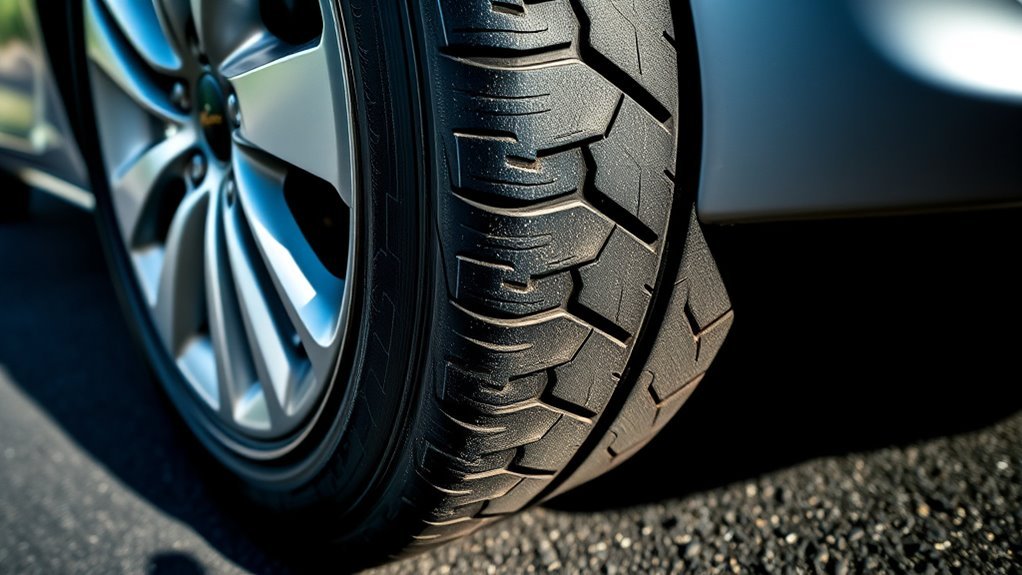
Because excess pressure can crown the tread, the center ribs may carry more of the load than the inner and outer shoulders. Michelin describes center tread wear as a common symptom of overinflation because the center of the tread bears most of the load and wears faster than the outside edges. You can compare that with Michelin’s center-wear tire guide.
Center wear reduces usable tread depth where the tire is doing much of its work. As the center smooths out, wet traction can get worse and the tire may reach replacement condition sooner than a tire wearing evenly across the tread. The tire can also feel harsher because it is less able to absorb impacts.
Center tread wear is a warning sign, not just a cosmetic issue. It tells you the tire may not be sharing load evenly across the full tread width.
How to Tell If Your Sonata Tires Are Overinflated
Look for a pattern, not just one symptom. A tire can feel firm for many reasons, but several clues together point toward overinflation:
- Stiff ride: bumps and expansion joints feel sharper than usual.
- Center tread wear: the middle tread grooves look shallower than the shoulders.
- Nervous steering: the car feels light or twitchy over uneven pavement.
- Higher-than-placard cold PSI: the gauge reading is above the driver-door label when the tires are cold.
- Road-hazard sensitivity: impacts feel harsher, and the tire may be more vulnerable to cuts or impact damage.
If the wear is mostly on one edge, the issue may be alignment, camber, or rotation-related wear instead of pressure alone. If the tread has scalloped or cupped low spots, have the tires, suspension, and balance inspected.
Prevent Overinflation: Recommended Pressures, Seasonal Adjustments, and Maintenance Tips
Although it is easy to overlook, maintaining the correct tire pressure prevents the center-tread bulging and premature wear that overinflation can cause. Hyundai says the recommended cold tire pressure is found in the manual and on the tire label located on the driver’s side center pillar, and that you should always use a tire pressure gauge to measure pressure. See Hyundai’s tire and wheel safety guidance for the official warning.
Temperature also matters. The U.S. Tire Manufacturers Association notes that tire pressure can increase in warm weather or decrease in cold weather by about 1–2 PSI for every 10°F change. Hyundai guidance for some models gives a similar rule of about 1 PSI for every 12°F. That is why a tire set correctly in the morning can read higher after driving or sitting in direct sun.
Use this routine to stay ahead of problems:
- Check all four tires at least once a month.
- Check before long trips, heavy loads, or big weather changes.
- Measure when tires are cold whenever possible.
- Do not depend on visual inspection; a tire can look normal and still be several PSI high or low.
- Rotate tires at the interval in your owner’s manual so wear stays even.
- Inspect tread and sidewalls for cuts, bulges, embedded objects, and uneven wear.
[Products Worth Considering]

Milton S-921 pencil tire pressure gauge helps you maintain optimal tire pressure for passenger cars with accurate readings in PSI and kPa. It features a built-in deflator valve for convenient pressure adjustments, plus a single chuck head and nylon indicator bar for easy use on the go. Built from durable plated brass and designed for reliable performance, it’s a practical road trip and cold-weather maintenance tool.

ETENWOLF’s tire pressure gauge helps you quickly and accurately check tire PSI across cars, trucks, motorcycles, bikes, and more. It’s manually calibrated to ANSI B40.1 Grade A for reliable readings, includes a large glow dial for easy nighttime viewing, and features a 360-degree swivel chuck for use at any valve angle. The gauge also works consistently in extreme hot or cold weather.
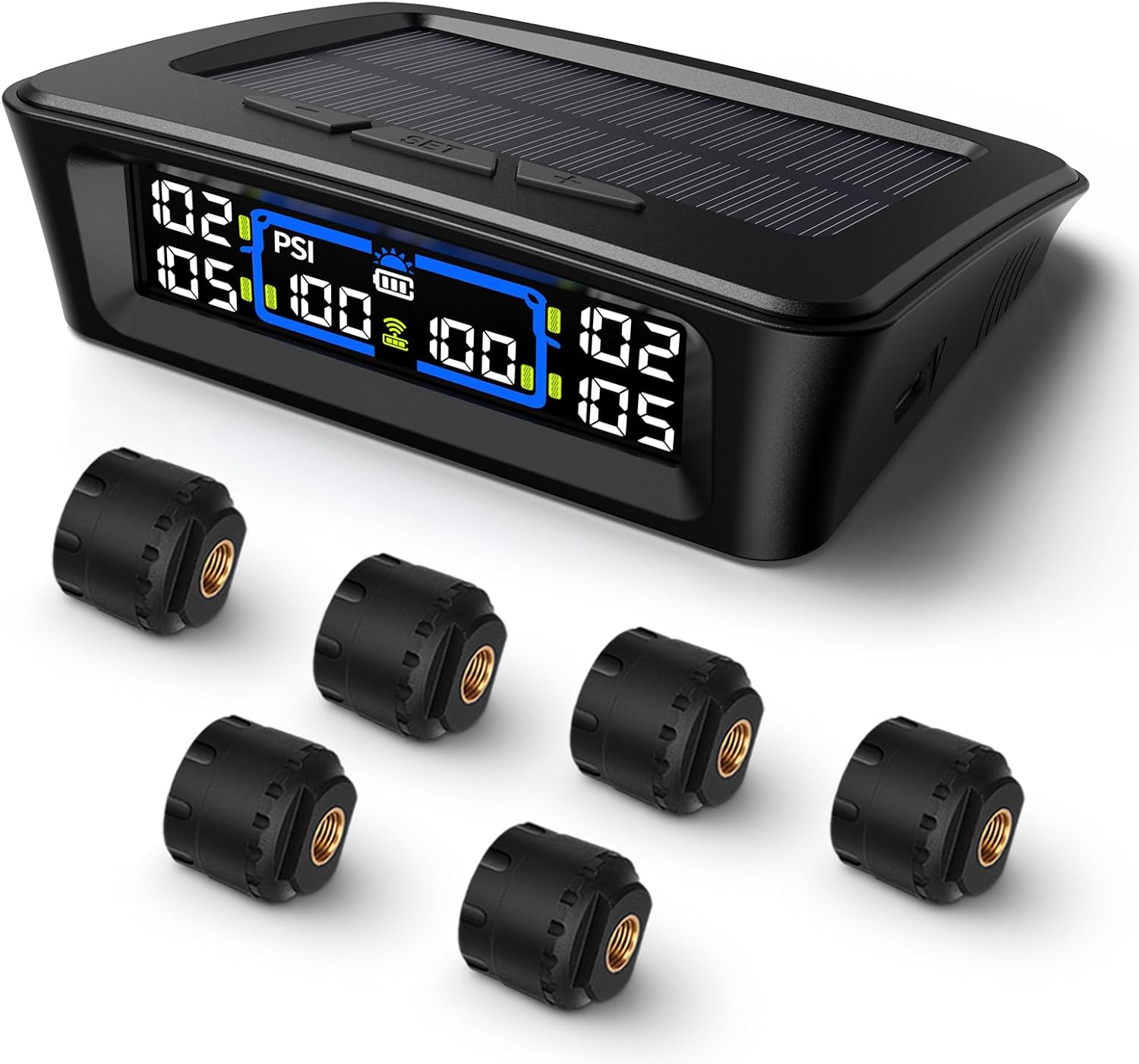
The Tymate TM12 RV TPMS delivers real-time tire pressure and temperature monitoring with a stable 433Hz display for safer long-distance driving. It supports simultaneous monitoring across vehicle and trailer zones, includes six alarm modes for pressure, temperature, leakage, battery, and signal loss, and features easy DIY installation with auto calibration. Power is supplied via USB-C charging or solar recharging, with a wide 0–144 PSI range and up to 50 ft signal coverage for RVs and towable trailers.
TPMS Does Not Replace a Tire Pressure Gauge
Your Sonata’s tire pressure monitoring system is helpful, but it should not be your only check. USTMA explains that TPMS is designed to detect significant pressure loss and is not a replacement for monthly tire pressure checks with a gauge. TPMS also may not warn you when every tire is only slightly high or when a spare tire is low.
Use the dashboard reading as a helpful clue, then confirm with a gauge when the tires are cold. If one tire repeatedly reads different from the others, loses air, or needs frequent adjustment, have it inspected for a leak, valve-stem problem, wheel damage, or puncture.
When to Get the Tire Inspected or Replaced
Lowering the PSI fixes pressure, but it does not repair tire damage. Get the tire inspected by a qualified tire shop if you see any of these signs:
- Bulges, bubbles, or sidewall cracks
- Exposed cords or fabric
- Deep cuts, punctures near the sidewall, or repeated air loss
- Severe center tread wear that remains after pressure correction
- Vibration, pulling, or thumping after a pothole hit
- Tread at or below 2/32 inch, or wear bars flush with the tread
The National Highway Traffic Safety Administration’s TireWise program stresses that tires are the only contact between your vehicle and the road, and tire maintenance is a key part of safe driving. You can review NHTSA’s tire-safety information at NHTSA TireWise.
[Products Worth Considering]

Vigorder rubber cement glue delivers superior adhesion and cures quickly within about 30 seconds for seamless rubber bonding. Once cured, it helps provide a strong, durable, waterproof seal that holds up to vehicle weight, pressure, and heat. Suitable for cars, motorcycles, trucks, bicycles, and off-road tires, it’s designed for emergency patch and maintenance repairs.

The TYAMATE TM8 solar-powered wireless TPMS delivers real-time tire pressure and temperature monitoring with six alarm modes for safer driving. A vibrant color LCD display shows readings clearly while windshield mounting keeps it hands-free and easy to read. With a wide 0–87 PSI range, strong 433.92 MHz signal transmission, and quick sensor pairing, it’s ideal for RV, sedan, SUV, MPV, and truck use.

Accurately measure tire tread depth with a calibrated gauge marked from 0 to 1 inch in 1/32 inch increments. The color-coded bar helps you quickly identify tread condition ranges, supporting safe driving for trucks, motorcycles, automobiles, and passenger vehicles.
Frequently Asked Questions
Is it okay to overinflate Hyundai Sonata tires by 5 PSI?
No. A cold tire that is 5 PSI above the driver-door placard is too high for normal driving. It may cause a harsher ride, faster center wear, and less forgiving impact protection. Adjust it back to the placard PSI when the tire is cold.
Is it okay to overinflate Hyundai Sonata tires by 3 PSI?
A temporary 3 PSI rise after driving is normal because warm tires read higher. But if the tire is 3 PSI high when cold, set it back to the placard pressure. For cold-weather adjustments, follow the owner’s manual rather than guessing.
What are signs of overinflated tires?
Common signs include a stiff ride, sharper impact feel, center tread wear, reduced grip on wet or rough roads, and a cold gauge reading above the recommended PSI on the door-jamb label.
What happens if you overfill your tires by 10 PSI?
A cold tire that is 10 PSI over the recommended placard pressure can ride harshly, wear the center tread quickly, reduce traction, and become more vulnerable to pothole or road-debris damage. Lower it carefully when cold and inspect the tire for damage.
What PSI should Hyundai Sonata tires be?
Use the cold PSI printed on your Sonata’s driver-door tire and loading label. Many newer Sonata trims are around 35 PSI, but the exact number can vary by model year, tire size, market, and load. The door label is the best source for your car.
Should I use the maximum PSI on the tire sidewall?
No. The sidewall maximum is not the recommended driving pressure for your Sonata. Use the vehicle manufacturer’s cold tire pressure on the driver-door placard or in the owner’s manual.
Should I let air out if my tires are hot?
Do not bleed warm tires down to the cold placard PSI after normal driving. Warm tires normally read higher. Let the car sit for at least three hours, then recheck and adjust when the tires are cold.
Will TPMS warn me if my Sonata tires are overinflated?
Not always. TPMS is mainly designed to warn about significant pressure loss, and it does not replace manual monthly checks. Use a tire pressure gauge to confirm cold PSI.
Conclusion
Overinflated tires can make your Hyundai Sonata feel firmer, lighter over bumps, and less settled when the road gets rough or wet. The main long-term clue is center tread wear, which means the tire may be carrying too much load through the middle of the tread.
You can prevent most overinflation problems with a simple routine: check tires cold, use the PSI on the driver-door placard, avoid bleeding warm tires down to cold pressure, and inspect tread and sidewalls monthly. If the tire shows damage, severe uneven wear, or repeated pressure loss, have it inspected before relying on it for daily driving.
Sources
- Hyundai Owner’s Manual — Recommended cold tire inflation pressures — cold-tire definition, warm tire warning, and overinflation effects.
- Hyundai Owner’s Manual — Tires and wheels — tire pressure gauge use, monthly inspection, and tire safety guidance.
- Hyundai Owner’s Manual — Tire and loading information label — driver-door label details for tire size, cold PSI, and load limits.
- U.S. Tire Manufacturers Association — Tire Care Essentials — monthly pressure checks, temperature effects, TPMS limitations, tread depth, and rotation guidance.
- Michelin — Symptom: Wear in Center — center tread wear as a symptom of overinflation.
- NHTSA TireWise — tire safety, maintenance, labeling, aging, and consumer tire-safety guidance.