
Presta vs Schrader Valve: Differences Every Rider Must Know
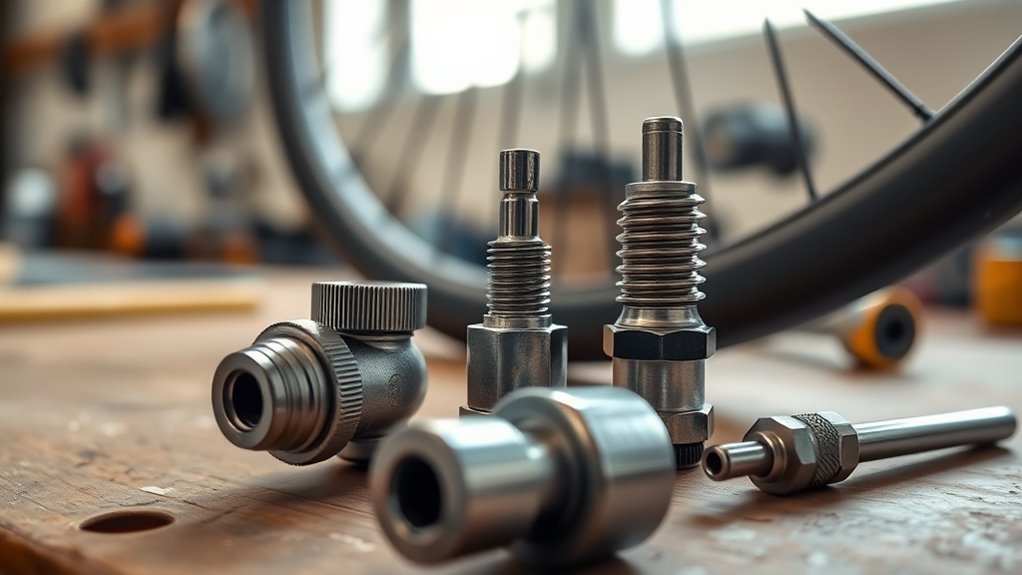
You’ll pick Presta for high-pressure road tires and narrow rims—its slim, threaded metal stem holds pressure well and lets you make fine adjustments, though you’ll need a compatible pump or an adapter. Go Schrader for everyday bikes and easy fills; its wider, spring-loaded stem works with most pumps but can leak more and needs thicker rims. Carry adapters, spare cores, and the right stem lengths for deep rims, and keep tools handy to learn the full maintenance details.
Presta vs Schrader: Quick Verdict for Bike Owners
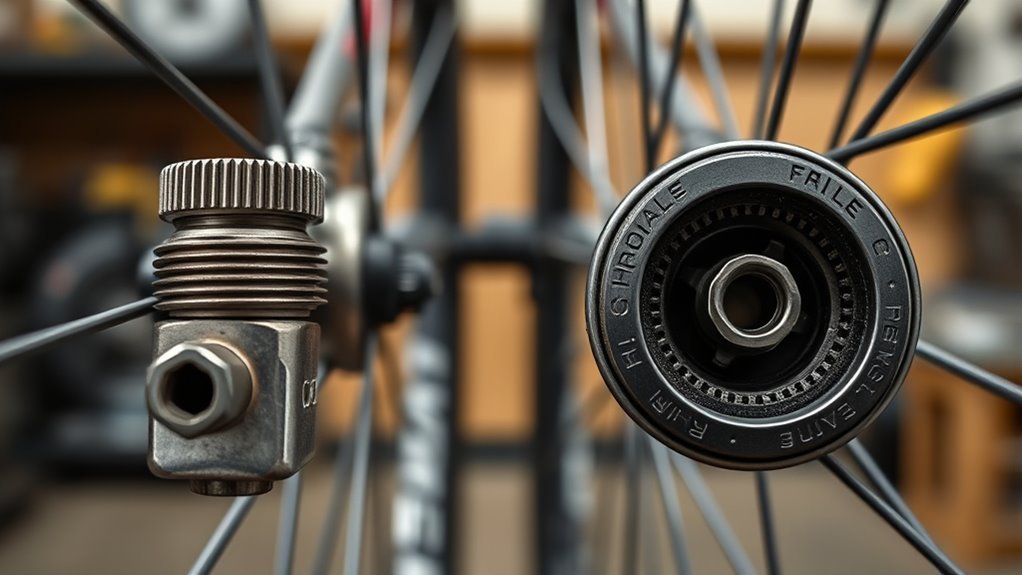
While both valve types get you rolling, Presta valves suit performance bikes—they seal better, fit narrower rims, and handle higher pressures (up to ~125 psi)—whereas Schrader valves are bulkier, simpler, and work with most pumps and gauges. You’ll pick based on riding preferences and wheel design: choose Presta when you want higher pressure, finer inflation control, rim integrity, and removable cores for maintenance. Opt for Schrader if you value universal pump compatibility, simplicity, and robustness—just keep a cap fitted to prevent dirt. Practically, carry a pump head or adapter that handles both valve types so you stay autonomous on the road or trail. For liberating self-reliance, learn to swap cores, use a pressure gauge, and recognize rim hole sizing needs. That technical know-how minimizes downtime and keeps you rolling to your next objective, whether sprinting, touring, or commuting, without being constrained by incompatible equipment.
How Presta and Schrader Valves Look and Work
Look at the valves: Presta are taller and slimmer with a metal tapered top and captive nut, while Schrader are shorter, wider, and resemble car-tire valves. Unscrew the Presta’s nut to open the airway and use a spring-loaded poppet on the Schrader for direct inflation. Note that Presta’s 6 mm diameter fits narrow rims and holds higher pressures, whereas Schrader’s 8 mm bore makes pumping and station service easier.
Physical Appearance Differences
Think of the valve stem as a quick visual and functional cue: Presta stems are tall, slim (about 6 mm diameter), fully metal and usually fully threaded, while Schrader stems are shorter, wider (around 8 mm), rubber-wrapped and lack full threading. You’ll spot valve materials at a glance: Presta’s all-metal finish reads precision and lightness; Schrader’s rubber sleeve signals rugged, multipurpose use. Aesthetic differences matter — slender Presta stems give a sleek, performance look; Schrader’s stubby profile feels utilitarian. You’ll also notice the tapered Presta silhouette versus the uniform Schrader cylinder. Threading on Presta stems lets you secure pumps and extenders neatly; Schrader relies on a single central valve pin. These physical cues guide choice: pick the look and build that frees your ride.
Inflation Mechanism Explained
Because they use different internal parts, Presta and Schrader valves operate and handle pumps differently. You unscrew the Presta’s captive nut to allow airflow; its narrow 6 mm bore and threaded top keep pressure sealed after inflation, letting you reach up to ~125 psi. With Schrader you press the spring-loaded poppet and most standard pumps or station inflators will work; its 8 mm diameter is more universal but holds lower max pressure. For reliable inflation, follow inflation tips: use a Presta-specific pump or adapter, monitor pressure, and avoid forcing pumps onto mismatched valves. For valve care, keep Presta threads clean and snug, and always use a cap on Schrader to prevent dirt ingress. Stay deliberate and free in your maintenance.
Pros and Cons of Presta Valves (Road & Performance)
You’ll appreciate Presta valves for their lightweight performance advantage and narrow 6 mm profile, which preserves rim strength on road and performance wheels. They’re built to hold high pressures with a secure metal seal and often removable cores for tubeless maintenance. Be aware they can complicate inflation—requiring specific pumps or adapters and offering finer pressure control that demands more precise handling.
Lightweight Performance Advantage
When you’re chasing grams and tire pressure consistency on road or performance wheels, Presta valves give a measurable edge: they’re lighter than Schrader valves, fit through smaller rim holes that preserve rim strength, and handle higher pressures (commonly up to 125 psi) while their self-sealing action reduces mid-ride leakage—tradeoffs are the need for Presta-compatible pumps or adapters and slightly more fiddly valve cores. You get clear performance benefits: reduced rotating mass improves acceleration and rolling resistance, and smaller rim cutouts maintain structural integrity on shallow, lightweight rims. Expect precise pressure control and less frequent top-offs. The cost is logistical: you’ll carry a pump or adapter, and deal with delicate cores when servicing. For liberated riders, the marginal gains compound into real speed and control.
High-Pressure Sealing
Keeping weight and rim integrity in mind leads naturally to the valve’s sealing behavior under pressure, which is where Presta valves really shine for road and performance use. You get metal construction and a narrow profile that preserves rim strength while tolerating pressures up to ~125 psi. The self-sealing mechanism uses internal pressure to hold the valve closed, delivering superior pressure retention and sealing efficiency during hard efforts and long rides. You can also dial pressure finely to tune rolling resistance and comfort.
- Metal body — durable under racing stresses, improves sealing efficiency.
- Narrow stem — smaller rim hole, maintains rim integrity.
- Self-sealing action — enhances pressure retention without extra parts.
- Fine adjustment — precise PSI control for liberated performance.
Compatibility And Inflation Challenges
Although Presta valves protect rim strength with a narrow bore, they demand compatible pumps or adapters, so you’ll need the right gear to inflate them reliably. You’ll face valve compatibility issues at many service stations where Schrader-only heads dominate; carry a Presta-specific pump or a compact adapter. Use the captive nut to prebend pressure control—open it, attach the head, then tighten briefly to seal after inflation. Match stem length (48–80 mm) to rim depth before repairs to avoid pinching or inability to reach the valve core. Presta tolerates higher pressures (to ~125 psi), so check pump gauges and tire specs. Inflation tips: bleed small bursts to avoid overpressure, secure the head firmly, and practice the sequence so roadside repairs stay fast and free.
Pros and Cons of Schrader Valves (Commuter & Casual)
Because Schrader valves are wider and shorter, you’ll find them easier to inflate at gas stations and with most household pumps, which makes them a pragmatic choice for commuters and casual riders. You get clear Schrader valve advantages: universal pump compatibility, a spring-loaded check valve for simple inflation/deflation, and a removable core for cleaning and maintenance. That simplicity supports freedom—less gear, fewer barriers to ride.
- Faster roadside fills: fits station and household pumps without adapters.
- User-friendly operation: spring check valve reduces fuss for novices.
- Easy maintenance: removable core lets you clear debris or replace parts.
- Leakage risk: more prone to slow leaks than Presta, requiring periodic checks.
You’ll trade a bit of air-holding efficiency for accessibility. For daily riders seeking liberation from technical hassles, Schrader valve disadvantages (higher leak tendency) are often acceptable. Keep a basic pressure check habit and you’ll stay rolling with minimal friction.
Pump and Gauge Compatibility: What to Carry
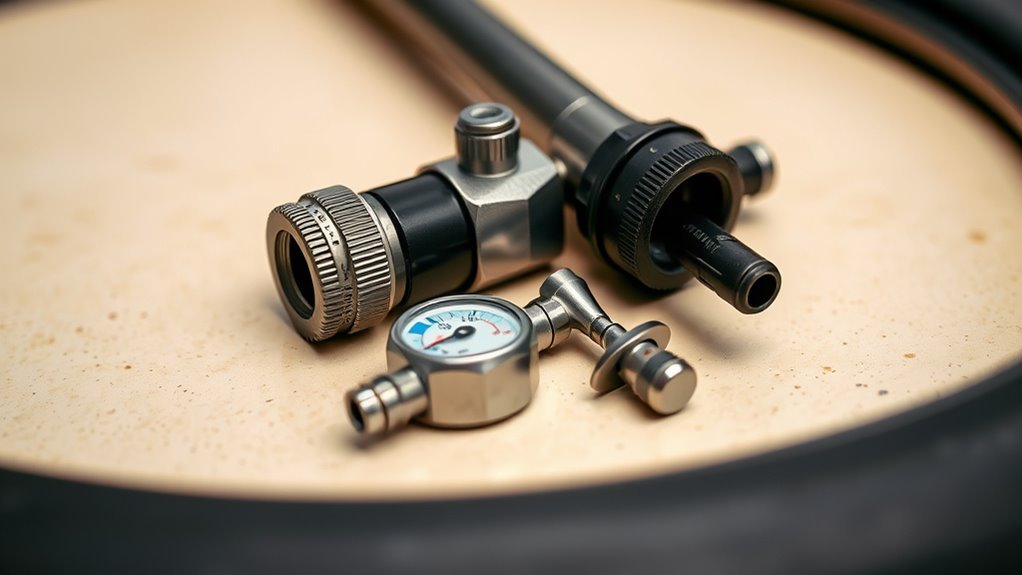
Need a pump that handles both valve types? Choose a twin-head or adjustable-head pump so you can switch between Presta’s 6 mm stem and Schrader’s 8 mm stem without adapters. Carry a small Presta-to-Schrader adapter as insurance for pumps that aren’t truly universal.
Prioritize gauge accuracy: pick pumps or inline gauges rated for the pressure range you ride. Many gauges work with both valve types, but low-cost units can misread high-pressure road tires. Test gauge accuracy during pump maintenance—compare with a trusted floor gauge and recalibrate or replace if readings drift.
For portability, pack a compact pump with a secure head and a lightweight adapter; for longer rides, a mini-pump plus a small digital gauge gives more reliable readings. Maintain threads and seals, keep heads free of grit, and check valve cores periodically. That practical discipline keeps you free to ride, confident your pump and gauge will perform when you need them.
Valve Stem Length, Rim Fit, and Using Extenders
When you’re fitting Presta valves to modern rims, valve stem length matters — choose stems long enough to clear the rim bed so you can access the valve and attach a pump without struggling. You’ll assess valve length considerations against rim profile compatibility: Presta stems range 40–80 mm, so pick a length that clears standard or deep-section rims. Schrader’s standard length removes that variable but limits aero use.
- Measure rim depth and match Presta length; 80 mm suits deep-section or aero rims.
- Use valve extenders when you run long-profile rims and want to keep high-performance tubes.
- Carry spare tubes with appropriate stem lengths to avoid repair delays and maintain autonomy.
- Verify rim profile compatibility with your pump head and frame clearance before riding.
Be deliberate: correct valve length simplifies inflation, preserves freedom on long rides, and prevents stranded situations from mismatched stems.
Adapters, Swapping Tubes, and Emergency Fixes
If you run into a mismatch on the road, valve adapters and the right spare tube let you get rolling again fast: carry a Presta-to-Schrader adapter for inflating Presta valves on common pumps, and keep at least one spare tube whose stem length matches your deepest rim (or a long Presta up to ~80 mm) to avoid fiddly extenders. You’ll use adapters as a deliberate emergency solutions tool: they let you inflate or temporarily fit mismatched tubes, but don’t treat them as permanent fixes.
| Situation | Quick Action |
|---|---|
| Presta pump only | Use Presta-to-Schrader adapter |
| Schrader rim, Presta tube | Use adapter; verify stem seating |
| Deep rim | Carry long Presta tube (≤80 mm) |
| No matching tube | Fit Schrader with adapter (temporary) |
| Inflation issue | Check valve stem length, reseat tube |
When swapping tubes, prioritize tube compatibility: match stem length to rim depth, secure the valve, and ride free knowing your emergency solutions are reliable, minimal, and reversible.
Maintenance and Replacing a Valve Core
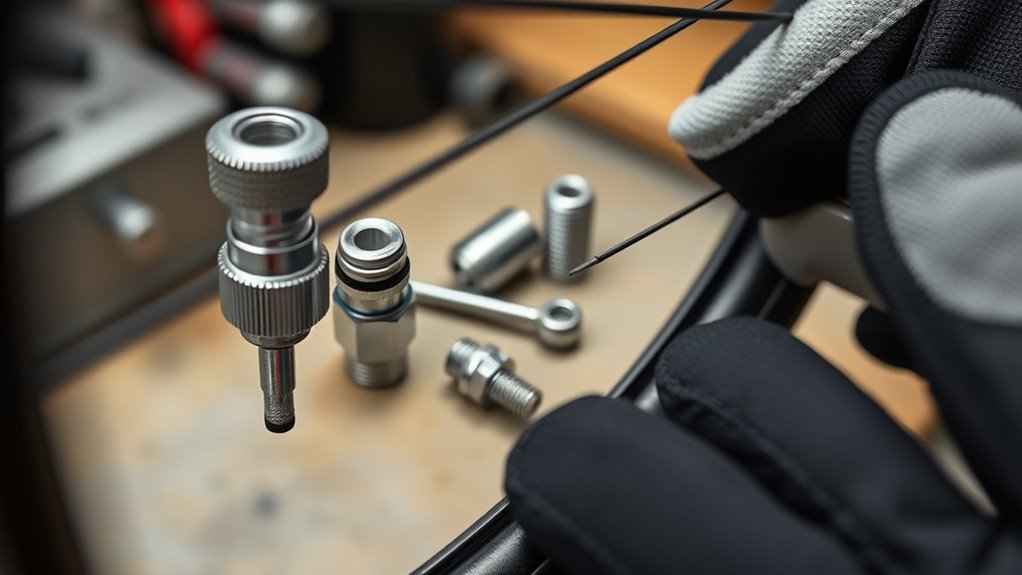
Although valve cores usually hold up, you should inspect and replace Presta cores periodically to prevent clogs and air loss. You’ll want a small compatible core remover and spare cores from your local shop. Follow valve maintenance tips: check for corrosion, dried sealant in tubeless setups, and loose cores before every long ride. When a core’s clogged or leaking, use core replacement techniques: unscrew with the tool, pull the core straight, drop in the new unit, and tighten snugly—don’t over-torque.
Inspect and swap Presta cores regularly—carry a remover and spares, check for corrosion, sealant clogs, and leaks before long rides.
- Inspect: visually and by feeling for leaks after pumping; prioritize tubeless seal areas.
- Remove: depress the stem, engage the core tool, turn counterclockwise until free.
- Install: insert new core, hand-start threads, torque to gentle snugness; test with soapy water.
- Carry spares: keep cores and a remover in your pack for liberation on the road.
These steps keep air retention reliable and let you maintain independence from the shop during rides.
Choosing the Right Valve for Your Bike and Riding Style
After you’ve kept cores clean and spares at the ready, pick the valve that matches how and where you ride: choose Presta for high-pressure road setups, deep-section rims, and riders who need precise inflation control, while Schrader suits casual bikes and anyone who values pump compatibility and quick roadside fills. You’ll prioritize Presta when you chase speed, need up to 125 psi, or fit long valves to deep rims; it gives a secure seal and supports valve longevity under high stress. Choose Schrader if you want universal pump access, fast fills at the trailhead, and simple swaps on everyday rigs. Match valve choice to riding terrain: hard, smooth surfaces and racing demand Presta precision; mixed paths, commuting, and gravel favor Schrader practicality. Carry a dual-head or adjustable pump so you’re not limited by valves. Make a deliberate selection—liberate your ride by aligning valve function with performance needs, maintenance habits, and where you actually roll.
Frequently Asked Questions
What Are the Disadvantages of Presta Valves?
You’ll face limited pump compatibility, trickier inflation without adapters, increased damage risk from impacts, higher valve maintenance needs, and greater susceptibility to dirt causing air loss—so you’ll need tools, care, and quick improvisation to stay liberated.
Do Presta Valves Hold Air Better?
Yes — you’ll practically never babysit pressure: Presta’s air retention is superior thanks to its self-sealing metal valve, higher-pressure tolerance, and less clogging, though you’ll still check valve compatibility when swapping pumps or tubes.
Conclusion
Choose the valve that fits your bike and ride: Presta for high-pressure road tires and lighter rims, Schrader for robust commuter wheels and easy pump access. Fun fact: roughly 70% of road bikes use Presta valves, reflecting their performance edge. Keep a pump or adapter that matches your valve, carry a spare tube, and learn core removal—it’s a two-minute skill that prevents roadside headaches. Match valve length to rim depth and you’ll stay rolling.
Related Articles
Vulcanizing Patch Kit: Step-by-Step Tube Repair
A quick, reliable guide to using a vulcanizing patch kit—learn the essential steps, tips, and fixes to get your tube sealed and riding again.
Read More
Signs of a Bad Inner Tube: When Repair Won’t Work
Find out which cuts, bulges, or repeated patch failures mean you must replace your inner tube—and why patching might not save it.
Read More
Golf Cart Tire & Tube Guide: Sizes, Pressure & Care
Practical tips on golf cart tire sizes, pressures, tubes, and maintenance to save wear and avoid flats—discover what pros adjust next.
Read More