
Golf Cart Tire Pressure: 15–25 PSI Guide by Type
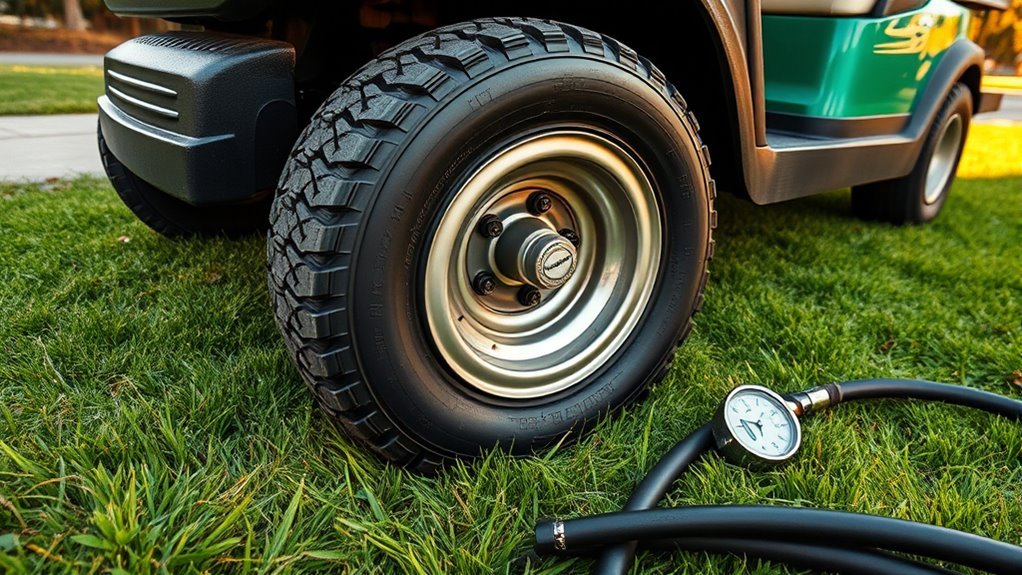
Low tire pressure can make your golf cart feel sluggish, unstable, and harder to steer. Too much pressure can make the ride harsh and reduce traction. This guide gives you clear PSI targets for common golf cart tires, plus simple checks for load, terrain, temperature, tire life, and replacement.
What’s in This Article
- What PSI Should My Golf Cart Tires Have?
- Recommended PSI by Tire Type and Size
- Check and Set Golf Cart Tire Pressure Step by Step
- Adjust Pressure for Terrain, Load, and Temperature
- Signs of Wrong Pressure and Troubleshooting
- Tire Life, Rotation, and Replacement Tips
- Choosing Golf Cart Tires and Tubes: Buying Checklist
- Frequently Asked Questions
- References
Quick Answer
Most golf cart tires work best between 15 and 25 PSI, but the right setting depends on tire type, tire size, load, and terrain. Many standard turf and street tires feel balanced near 18 to 22 PSI, while all-terrain tires often need less pressure for grip. Always check the tire sidewall and your cart manual before you set final pressure.
Key Takeaways
- Set most standard golf cart tires within the 15 to 25 PSI range shown on the tire or manual.
- Use about 18 to 22 PSI for many turf or mixed-use tires when the sidewall allows it.
- Lower pressure can improve grip on soft ground, while higher pressure can improve pavement handling.
- Check pressure when tires are cold so heat does not raise the reading.
- Replace tires when you see cracks, bulges, punctures, exposed cords, or poor traction.
What PSI Should My Golf Cart Tires Have?
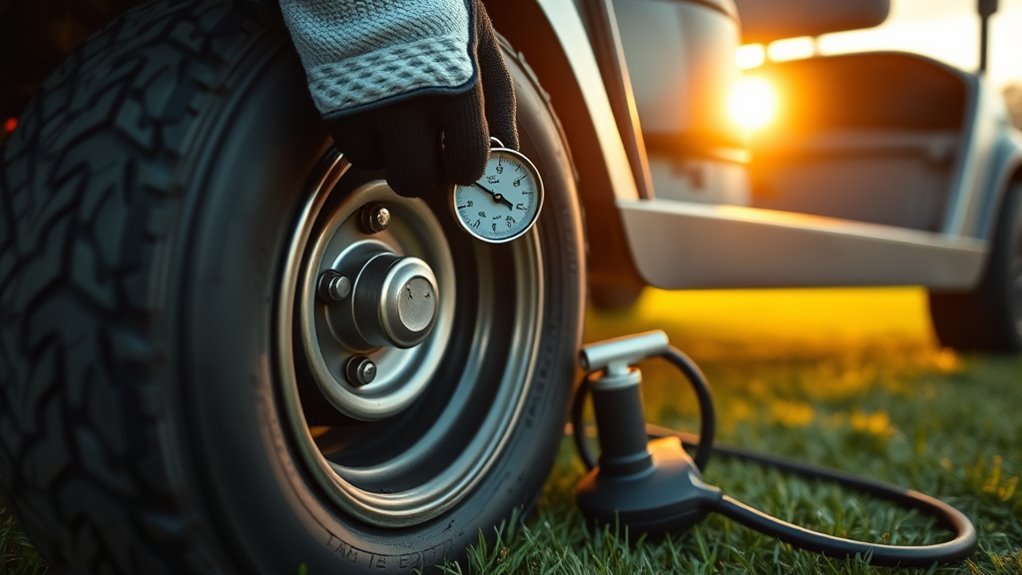
You should usually keep golf cart tires within the pressure range printed on the sidewall or listed in your owner’s manual. Many common tires fall between 15 and 25 PSI. For mixed use, many carts ride well around 18 to 22 PSI.
For common sizes such as 18×8.50-8 or 23×10.50-12, 20 PSI often works as a practical starting point. Turf or street tires may need 20 to 24 PSI for firm surfaces. All-terrain tires often use 12 to 18 PSI to improve grip on rough ground.
You should check tire pressure monthly when the tires feel cold. Cold checks give you more accurate readings and help you spot slow leaks. Incorrect tire pressure can cause uneven wear, poor handling, and tire failure.
Warning: Never exceed the maximum PSI printed on the tire sidewall, even if the cart feels heavy or unstable.
[Products Worth Considering]

This portable cordless tire inflator delivers up to 160 PSI with fast 17 L/min airflow to help you quickly top up tires and get back on the road. It features dual power mode, running on a 21V rechargeable battery or a 12V DC adapter for convenient roadside use. An automatic shut-off with digital pressure gauge helps prevent overinflation, and a built-in LED light improves visibility in low-light conditions.

EVOULTES heavy duty tire inflator with an integrated gauge delivers accurate pressure readings from 10–120 PSI, helping you inflate, deflate, and check tires in one tool. The 16.5-inch extended dual-head air chuck with swivel base reaches hard-to-access dual wheel valves on trucks and RVs. A brass trigger core and side-mounted air release valve make operation smooth, with standard 1/4" NPT threading and quick-connect compatibility for easy setup.

The JACO FlowPro Tire Inflator measures, inflates, and airs down tires up to 100 PSI with battery-free operation and ±2% accuracy after calibration. It features a glowing pressure dial for night visibility, a heavy-duty steel build with a hybrid hose, and a precision push-to-inflate thumb trigger. The patented Lightning Air Chuck locks on for a secure seal, and the kit includes quick-connect hardware for easy inline use with your air compressor.
Recommended PSI by Tire Type and Size
Match tire pressure to tire type, size, load, and terrain. Turf and street tires often run best at 20 to 24 PSI on smooth paths. All-terrain or off-road tires often work better at 12 to 18 PSI when you need more grip.
Check the specific tire size and sidewall rating before you adjust pressure. For example, many 18×8.50-8 tires run well near 20 to 22 PSI, but your tire maker may recommend a different range. Measure pressure cold and adjust in small steps.
Turf Vs. Off-Road
Pick turf or street tire pressure near 20 to 24 PSI for smooth surfaces. Drop off-road or all-terrain tires toward 12 to 18 PSI when you need more traction on rough or loose ground. Lower pressure increases the contact patch, while higher pressure improves rolling efficiency.
Start near 20 PSI if you want balanced handling for mixed use. Lower pressure slightly for wet grass, sand, or loose soil. Raise pressure within the tire’s safe range for pavement, heavy loads, or long rides.
Pressure By Tire Size
Start by matching your target PSI to the tire size and sidewall rating. Most golf cart tires fit a 15 to 25 PSI operating window. Standard turf and street models often work best around 18 to 22 PSI.
Use this table as a starting guide, then confirm the final setting with your tire sidewall and cart manual.
| Tire Type | Recommended PSI |
|---|---|
| Standard (18×8.50-8 / 23×10.50-12) | About 20 |
| Turf/Street | 20 to 24 |
| All-Terrain / Off-Road | 12 to 20 |
Seasonal Pressure Adjustments
Temperature changes can shift tire pressure. As a general rule, tire pressure changes about 1 PSI for every 10°F change in air temperature. Check more often when weather moves from hot to cold or cold to hot.
In cooler weather, you may need to add a small amount of air to stay within range. In hot weather, check cold pressure before the cart has been driven. Do not bleed air from a hot tire unless it exceeds the safe sidewall limit.
Check and Set Golf Cart Tire Pressure Step by Step
Check tire pressure when the tires feel cold. Monthly checks work for normal use, while weekly checks make sense for heavy use. Use a reliable gauge and follow the tire maker’s recommended PSI.
Check Tires Cold
Because tire pressure rises with use and heat, measure your golf cart’s tires before you drive. Remove each valve cap and press the gauge squarely onto the valve stem. Record the PSI for each tire.
Compare each reading with the manufacturer’s recommended range, which often falls between 15 and 25 PSI. Inflate or deflate each tire so the readings match from side to side. Reinstall each valve cap once you finish.
Use A Quality Gauge
Use a quality tire pressure gauge that reads accurately at low PSI. Many automotive gauges work, but digital gauges can make low-pressure readings easier to read. Press the gauge firmly so air does not leak during the check.
Keep a simple pressure log if your cart gets regular use. Dates and readings help you spot slow leaks before they cause damage. This habit also helps you keep ride quality and battery range more consistent.
Inflate And Recheck
Start by confirming each tire’s cold pressure with your gauge. Add air in short bursts until you reach the target PSI. Recheck after each small adjustment so you do not overshoot the safe range.
Wait a few hours or overnight, then check pressure again. A drop in the same tire may point to a slow leak, loose valve core, or puncture. Fix leaks before you put the cart back into regular use.
| Task | Action |
|---|---|
| Initial check | Gauge cold PSI |
| Inflate | Add air gradually |
| Recheck | Verify stability after a few hours |
Adjust Pressure for Terrain, Load, and Temperature
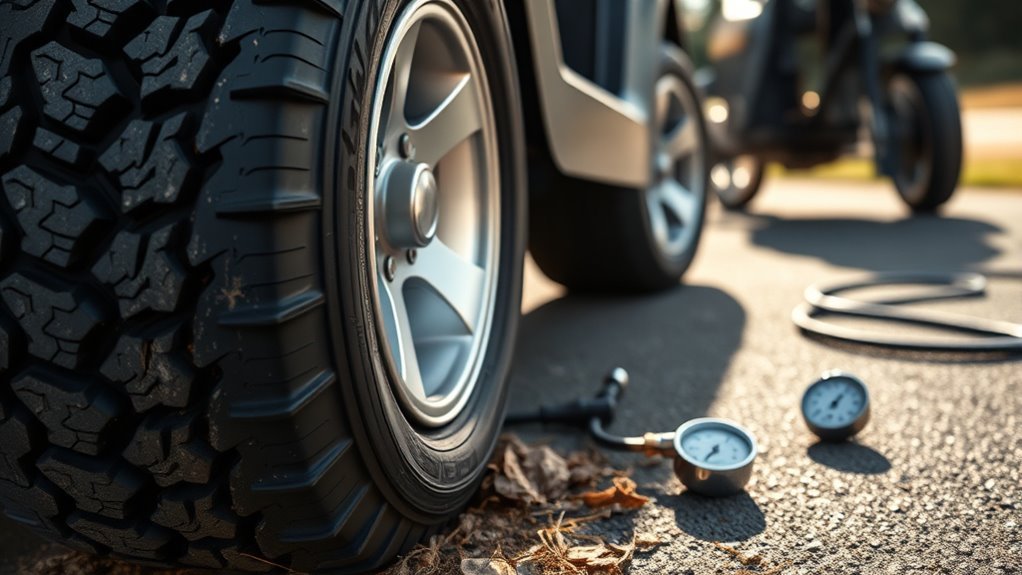
Adjust tire pressure for terrain, load, and temperature without leaving the tire’s safe range. For soft grass or uneven ground, many turf tires grip better around 16 to 18 PSI. For paved paths, many street tires feel more stable around 22 to 24 PSI.
Use 18 to 22 PSI for many mixed-surface rides. Off-road and all-terrain tires may work best at 12 to 18 PSI, depending on tread design and terrain. Softer pressure helps on sand, rocks, and loose soil, while firmer pressure helps on hardpack and pavement.
Increase pressure slightly within the recommended range when you carry heavy passengers, tools, or cargo. Extra load can flex the sidewall and increase heat. Keep a reliable gauge and portable inflator nearby if your cart moves between turf, pavement, and trails.
Pro tip: Adjust all four tires in matching pairs so your cart tracks straight and wears evenly.
Signs of Wrong Pressure and Troubleshooting
If your cart feels bouncy, harsh, or unstable, check the tires first. Overinflation can reduce traction and wear the center of the tread faster. Underinflation can flex the sidewall too much and build heat.
Watch for uneven tread wear, poor steering, reduced grip, and a cart that pulls to one side. Center wear often points to too much pressure. Edge wear, sidewall bulging, or sluggish handling often points to too little pressure.
Troubleshoot with a cold pressure check and a visual inspection. Adjust to the recommended PSI, then drive a short distance and let the tires cool before you check again. If pressure drops again, inspect the valve stem, tread, rim seal, and tube if your tire uses one.
[Products Worth Considering]
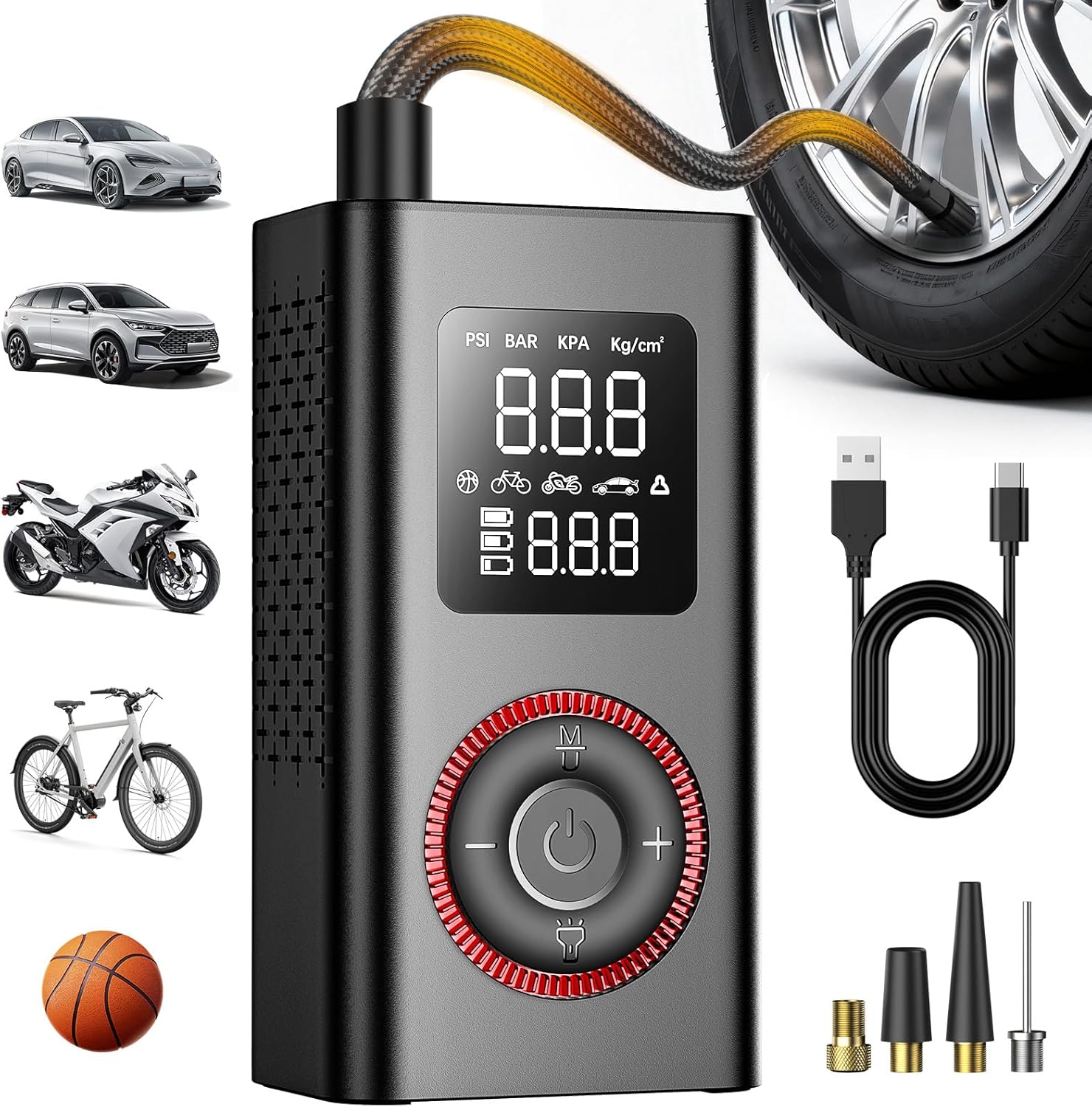
This portable tire inflator delivers fast, efficient inflation with a maximum 150 PSI rating and accurate pressure control for cars, motorcycles, bikes, and more. It features preset modes with automatic shutoff to help prevent overinflation, plus a real-time digital gauge and bright LED light for roadside use. Powered by a rechargeable 6000mAh battery with Type-C charging and a USB output, it’s also useful as an emergency power source for devices.

This portable cordless tire inflator delivers fast, efficient inflation for cars, motorcycles, bikes, and sports balls with a digital pressure gauge. Use the one-click PSI preset with auto shut-off for accurate, hands-free topping to your target pressure up to 150 PSI. It’s compact and rechargeable with a built-in emergency LED light plus valve adapters and accessories for quick, ready-to-go use.
Tire Life, Rotation, and Replacement Tips
A well-maintained golf cart tire can last several years, but use, storage, terrain, and weather all affect life span. Correct pressure helps the tread wear evenly and protects the sidewalls. Rotation also helps you avoid early replacement.
Rotate tires every 3,000 to 5,000 miles if your cart sees frequent road or utility use. Rotate sooner if you notice uneven wear. Keep tires clean, dry, and out of long sun exposure when you store the cart.
Replace tires when you see visible damage or clear performance loss. Cracks, cuts, punctures, bulges, exposed cords, and poor traction all signal replacement. Do not keep riding on a tire that loses pressure after repair.
- Check pressure cold each month, or weekly during heavy use.
- Rotate tires every 3,000 to 5,000 miles when use is frequent.
- Adjust PSI within the safe range for terrain, season, and load.
- Replace tires when damage, age, or poor grip affects safety.
Choosing Golf Cart Tires and Tubes: Buying Checklist
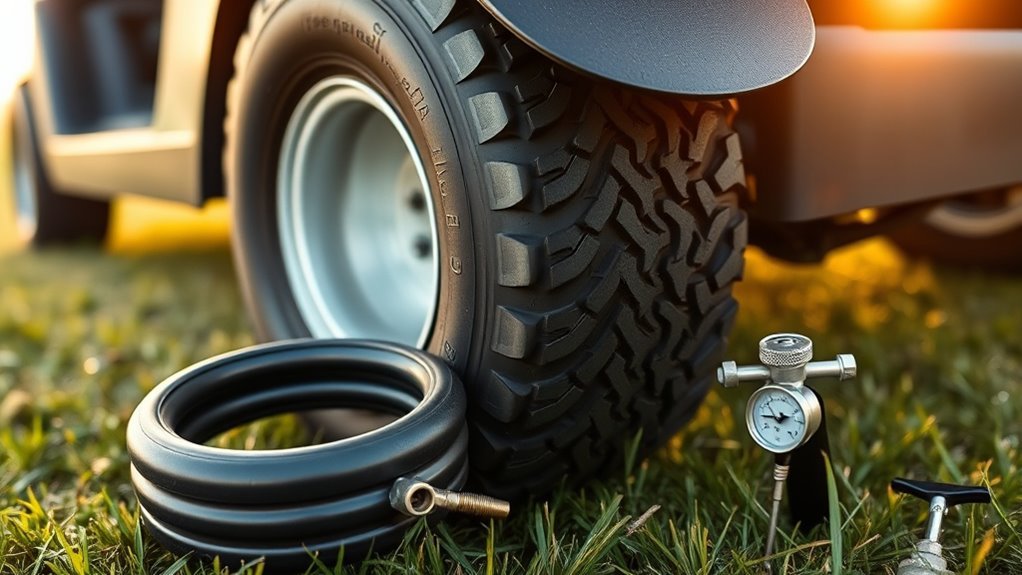
Tire choice affects comfort, traction, clearance, and tread life. Match the tire type to your main surface: turf for fairways, street tires for paved paths, and all-terrain or off-road tires for rough ground. Confirm the sidewall PSI before you buy.
Check tire size, load rating, rim diameter, and clearance against your cart’s specifications. Standard tires suit most carts, while low-profile tires can change ride feel and clearance. Reinforced sidewalls can help if you carry loads or ride on rough ground.
When you replace tubes, match the valve type and tube size to the wheel and tire. A mismatched valve can leak or sit at the wrong angle. Choose sellers that provide clear specs, warranty terms, and return details.
Frequently Asked Questions
What PSI Should My Golf Cart Tires Be?
Most golf cart tires use about 15 to 25 PSI, but you should follow the tire sidewall and owner’s manual first. Many standard turf tires feel balanced near 18 to 22 PSI. Off-road tires may need 12 to 18 PSI for better grip.
How to Tell Golf Cart Tire Size?
Read the markings on the tire sidewall. A size such as 205/30-12 shows tire width, sidewall ratio, and rim diameter. You can also check your cart manual or measure the tire and rim before ordering replacements.
What Are Common Golf Cart Tire Problems?
Common problems include uneven tread wear, air leaks, cracks, punctures, sidewall damage, and poor traction. Wrong pressure often makes these problems worse. Regular cold pressure checks and visual inspections help you catch issues early.
How Many Pounds for a Golf Cart Tire?
Most golf cart tires need about 15 to 25 pounds per square inch, also called PSI. Turf and street tires often run around 20 to 24 PSI. All-terrain tires may need less pressure when you ride on rough or loose ground.
Can You Drive a Golf Cart With Low Tire Pressure?
You should avoid driving with low tire pressure. Low pressure can damage the sidewall, increase heat, reduce battery range, and make steering feel heavy. Inflate the tire to the correct range before you ride.
Conclusion
Correct tire pressure gives your golf cart better grip, smoother handling, and longer tire life. Check each tire cold, set the PSI within the safe range, and adjust for terrain, load, and temperature. Inspect tread and sidewalls often so small problems do not turn into unsafe rides. A few minutes with a gauge can keep your cart ready for the next trip.
References
- Tires — National Highway Traffic Safety Administration
- Tire Safety Basics — U.S. Tire Manufacturers Association
- Tire Pressure Guide — Michelin

Related Articles
305 Tire Size Explained: How Big Is It?
I explain how big a 305 tire really is—and why the exact fit can surprise you.
Read More
Tire Ply Rating Explained: What the Numbers Mean
Tire ply ratings reveal more than numbers, hinting at strength, load capacity, and hidden tradeoffs you’ll want to understand before choosing.
Read More
2 Ply Vs 4 Ply Tires: What’s the Real Difference?
I’ll explain the real difference between 2-ply and 4-ply tires, and the choice may surprise you depending on where you drive.
Read More