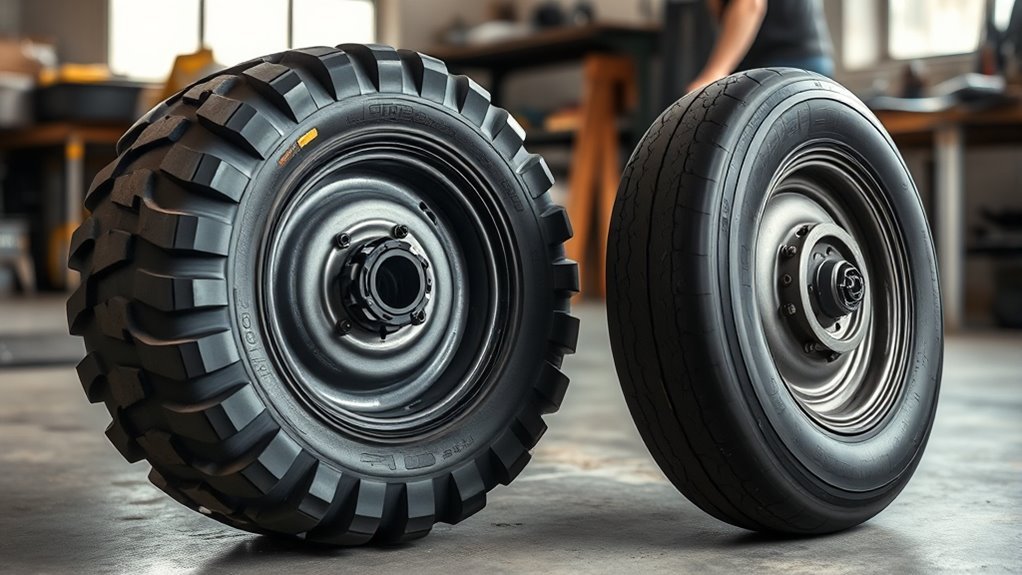
Choosing the wrong skid steer tire can raise downtime, repair costs, and operator fatigue fast. Pneumatic tires give you a smoother ride and better grip on soft or uneven ground, while solid tires help you avoid flats in sharp debris and heavy-duty work areas. This guide compares both options by terrain, comfort, durability, maintenance, load capacity, and cost per hour so you can match the tire to the job.
Quick Answer
Pick pneumatic tires when cushioning, traction on soft or uneven ground, and lower upfront cost matter most. Choose solid tires when puncture resistance, longer service life, and less downtime matter more. The best choice depends on terrain, load weight, maintenance access, and total cost of ownership.
Key Takeaways
- Choose pneumatic tires for soft ground, uneven terrain, turf, snow, and operator comfort.
- Choose solid tires for debris-heavy sites, sharp objects, heavy loads, and limited maintenance access.
- Compare tire cost by hour, not just by upfront price.
- Check load ratings and machine compatibility before switching tire types.
- Use total cost of ownership to weigh repairs, downtime, replacement cycles, and ride quality.
What’s in This Article
- Match Tire Type to Job Site: Debris, Turf, and Loads
- Quick Decision Checklist: When to Pick Pneumatic vs Solid
- Quick Verdict: Pneumatic vs Solid Tires
- Choose Pneumatic Tires If…
- Choose Solid Tires If…
- Comfort & Ride Quality: Why Pneumatics Absorb Bumps Better
- Durability & Downtime: When Solid Tires Save Money
- Real Cost Comparison: Upfront Price, CPH, and TCO Math
- Traction & Handling: Which Tire Works on Which Terrain
- Weight, Load Ratings & Safety: Impacts on Equipment Capacity
- Maintenance & Operational Simplicity: Pneumatic vs Solid Tires
- Frequently Asked Questions
- Conclusion
Match Tire Type to Job Site: Debris, Turf, and Loads
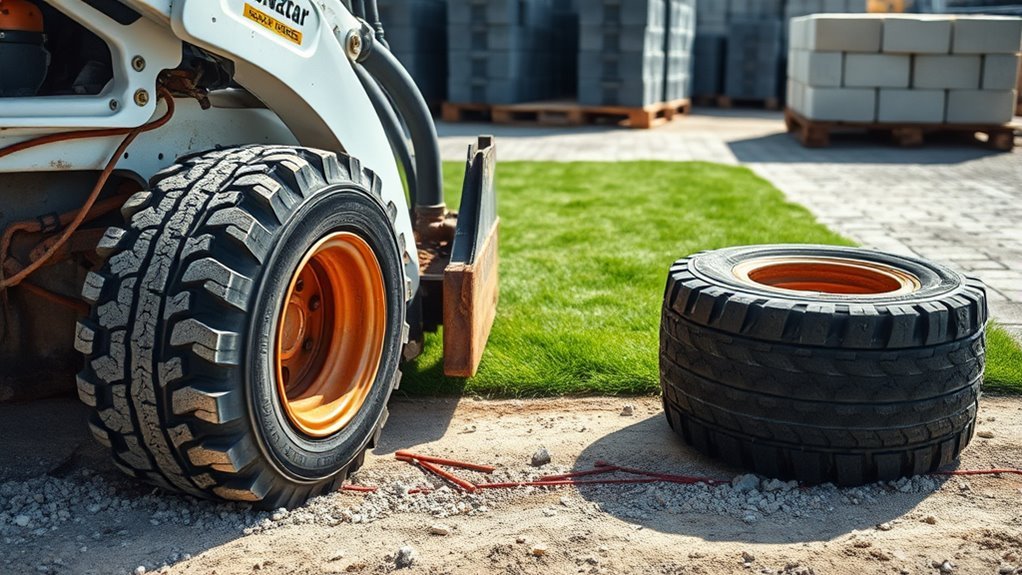
Match tire type to the job site by looking first at surface conditions and load demands. Choose solid tires for debris-heavy, high-load areas because they resist punctures and support stable handling. Choose pneumatic tires for turf and off-road work because they cushion impacts, protect grass, and adjust to uneven terrain.
Compare tire performance against the job. Solids spread heavy loads well and reduce downtime where nails, scrap, rebar, or sharp stone can damage tires. Pneumatics improve grip and steering on soft ground, but they need careful pressure checks.
Also weigh maintenance needs and waste. Solids often last longer and reduce tire changes, while pneumatics may need more repairs and more frequent replacement. Align the choice with your crew’s workload, uptime goals, and safety needs.
Quick Decision Checklist: When to Pick Pneumatic vs Solid
Start with the jobsite and terrain. If you work on rough, debris-filled, or high-load surfaces, favor solids for durability and puncture resistance. If you work on uneven or soft ground, favor pneumatics for traction, shock absorption, and comfort.
Then weigh cost versus comfort. Pneumatics often cost less upfront but need more repairs and replacements. Solids cost more at purchase, but they can lower downtime and tire service costs over time.
[Products Worth Considering]

Replace worn wheelbarrow, mower, or hand truck inner tubes with the TICONN 4.80/4.00-8 tube designed for 8-inch rims. Built from 100% natural rubber, it helps improve durability, impact absorption, and air retention while supporting self-sealing leak protection. The TR-13 straight valve stem makes it a straightforward fit for common yard equipment wheels.
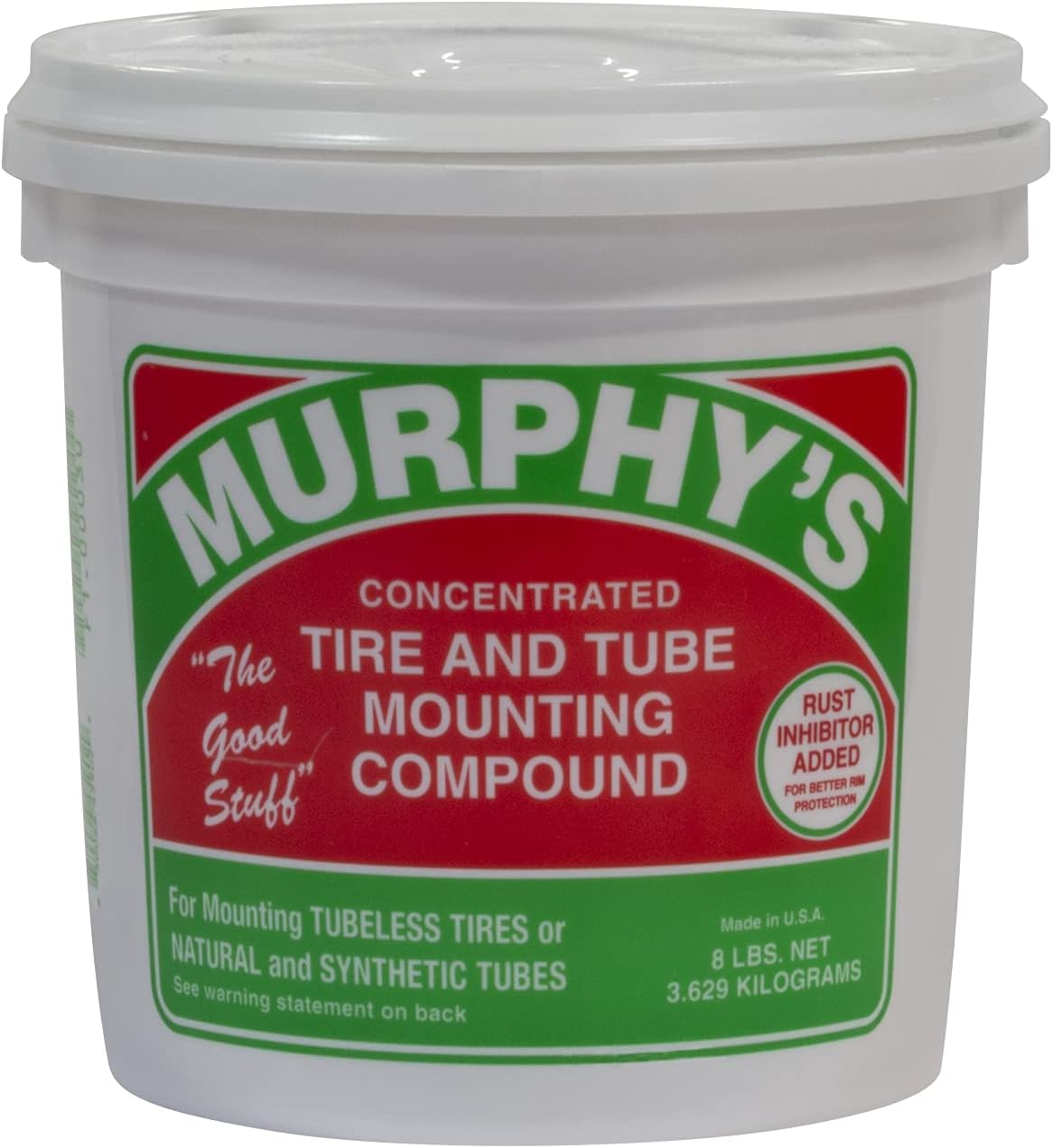
A concentrated tire and tube mounting compound designed to help simplify mounting rubber tires and tubes on passenger, semi truck, construction, and OTR applications. Its ultra-thick formula packs beads effectively and includes rust inhibitors to help protect against corrosion during use.

Replace worn tires quickly with this universal 4.80/4.00-8 tire and inner tube set designed for wheelbarrows and outdoor utility carts. The ribbed tread helps reduce turf damage while the natural rubber construction supports longer service life. Compatible with 15.5-inch outer diameter, 4-inch width, and 8-inch rim diameter wheels, it uses a straight TR-13 valve stem for easy installation. For best results, inflate with a manual pump and do not exceed 25 PSI.
Jobsite & Terrain
Jobsite conditions shape performance and downtime risk. Choose pneumatic tires when you need shock absorption and traction on uneven or soft surfaces. Pick solid tires when puncture hazards, heavy loads, and low maintenance matter more.
Landscaping, snow removal, and soft ground favor pneumatics because they improve comfort and steering. Demolition, rebar-filled zones, and heavy lifting favor solids because they reduce flat-tire risk. Consider machine weight too, because heavier solid tires can affect rated capacity.
| Situation | Recommendation |
|---|---|
| Soft or uneven ground | Pneumatic |
| Snow or landscaping | Pneumatic |
| Debris or rebar | Solid |
| Heavy continuous loads | Solid |
| Maintenance-limited sites | Solid |
Cost vs Comfort
Every tire choice should weigh upfront price against ongoing operating costs. Pneumatic tires often cost less to buy, but punctures, air checks, and shorter replacement cycles can raise long-term costs. Solid tires cost more upfront, yet they often reduce service calls and unplanned downtime.
Pneumatics give you better cushioning, which can reduce operator fatigue on rough ground. Solids give you a harsher ride, but they help stabilize service schedules and fleet availability. Choose comfort when it improves productivity, and choose durability when downtime hurts the job more.
Quick Verdict: Pneumatic vs Solid Tires
Choose pneumatic tires if your machine works on turf, mud, gravel, snow, or uneven ground where grip and ride comfort matter. Choose solid tires if your machine works around scrap metal, broken concrete, rebar, nails, or heavy loads where flats cause costly delays.
| Factor | Pneumatic Tires | Solid Tires |
|---|---|---|
| Best terrain | Soft, uneven, or loose ground | Paved, sharp, or debris-heavy ground |
| Ride comfort | Higher | Lower |
| Puncture risk | Higher | Very low |
| Maintenance | Air checks and flat repairs | Less routine tire service |
| Upfront cost | Lower | Higher |
| Typical use case | Landscaping and off-road work | Demolition and industrial work |
[Products Worth Considering]

Upgrade your outdoor equipment with TICONN 10-inch solid replacement tires designed for smooth, reliable rolling. Each wheel uses double-sealed bearings for reduced friction and improved maneuverability, while the solid construction helps handle rough surfaces like gravel, grass, and pavements. Built for a secure fit with a 5/8 in axle bore, these wheels provide stable traction and strong load support for carts and lawn equipment.
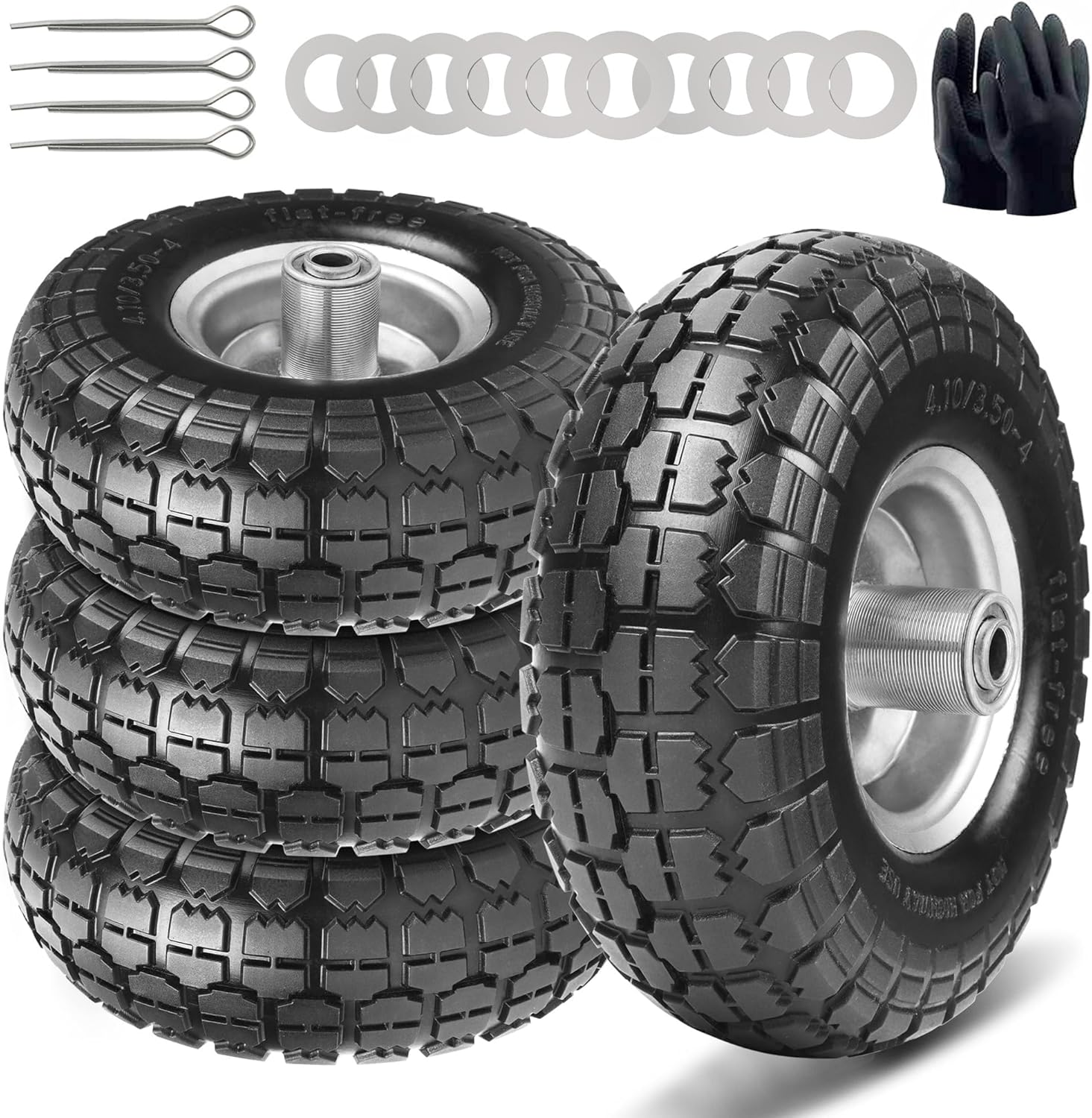
Upgrade your hand truck, garden cart, or yard wagon with flat-free solid rubber tires that eliminate blowouts and maintenance. The serrated tread delivers excellent traction and stable rolling, while double sealed bearings help keep movement smooth on many terrains. Heavy-duty steel rims and 200kg max load support durable performance for demanding outdoor use.

Upgrade your wheelbarrow, garden wagon, hand truck, or trolley with solid flat-free 13 inch replacement tires designed to avoid punctures and eliminate inflation time. Built with durable polyurethane and thickened steel for impact resistance and smooth rotation, the serrated tread improves traction on wet or slippery surfaces. Includes spacers and pins for easier installation and a universal 5/8 inch axle bore hole for a stable fit.
Choose Pneumatic Tires If…
Choose pneumatic tires if you need a smoother ride, better surface contact, and more grip on soft ground. They work well when your crew handles landscaping, snow removal, grading, farm work, or mixed off-road tasks.
- Your machine runs on turf, mud, gravel, snow, or loose soil.
- Your operator spends long hours on uneven ground.
- Your work depends on traction more than puncture resistance.
- Your site has few sharp objects or tire hazards.
- Your budget favors a lower upfront tire price.
Choose Solid Tires If…
Choose solid tires if flats cause more trouble than a rougher ride. They work well in demolition, recycling, waste handling, scrap yards, warehouses, and heavy-duty construction areas.
- Your site has nails, scrap metal, rebar, broken concrete, or sharp stone.
- Your team needs steady uptime with fewer tire repairs.
- Your machine carries heavy loads for long shifts.
- Your crew has limited access to tire service during work hours.
- Your budget can support a higher upfront tire cost for fewer interruptions.
Warning: Always confirm tire size, load rating, and machine compatibility before switching between pneumatic and solid tires.
Comfort & Ride Quality: Why Pneumatics Absorb Bumps Better
Pneumatic tires use an air-filled chamber that compresses and rebounds as the tire moves over bumps. That air cushion reduces vibration before it reaches the machine frame and operator. Solid tires carry the load without that same air spring effect, so they send more shock through the machine.
Tire flexibility and shock absorption work together. The pneumatic tire flattens slightly under weight, increases the contact patch, and helps soften sharp impacts. That can reduce operator fatigue and improve control on rough ground.
| Property | Pneumatic | Solid |
|---|---|---|
| Shock absorption | High | Low |
| Contact adaptation | Variable | Fixed |
| Vibration transmission | Low | High |
You can also adjust pneumatic tire pressure within the approved range to tune ride feel and traction. Never exceed the machine or tire maker’s pressure limits. A tire that runs too low or too high can wear faster and handle poorly.
Durability & Downtime: When Solid Tires Save Money
Solid tires can save money when your crew needs maximum uptime in harsh areas. They resist punctures and cuts, so they remove many flat-tire service calls from your schedule. They also eliminate routine air-pressure checks.
This durability helps in industrial settings where one flat tire can stop a machine, delay a crew, or interrupt a shift. Predictable tire life also makes spare parts and replacement planning easier. You can schedule service instead of reacting to jobsite damage.
Solid tires do not fit every use case, though. Their firm ride can increase vibration, and their extra weight may affect handling, fuel use, and rated capacity. Use them when fewer tire failures matter more than ride softness.
Real Cost Comparison: Upfront Price, CPH, and TCO Math
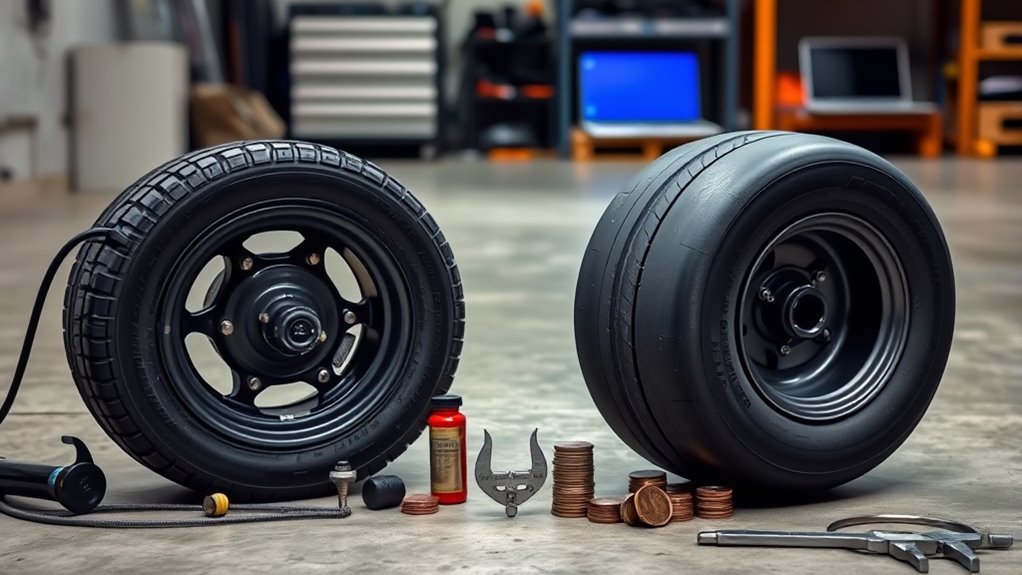
Compare upfront purchase cost with expected tire life before you choose. A cheaper tire can cost more if it needs frequent repair, replacement, or downtime. A higher-priced tire can cost less per hour if it runs longer with fewer interruptions.
Use cost per hour (CPH) to compare both tire types. Divide purchase price by usable hours, then add repair labor, replacement labor, downtime, and disposal costs. This gives you a clearer total cost of ownership (TCO).
[Products Worth Considering]

LiQuiTube Premium Heavy Duty Tire Sealant provides permanent flat tire protection to help maintain proper air pressure while sealing punctures and leaks. It seals bead, rim, and porosity weathering leaks and helps prevent flats in heavy ply industrial tires. Designed for versatile use on trailers and off-road equipment, it can be installed in tubeless tires and also inside tubes.

The Trivd Frol 1/2" air impact wrench delivers high performance torque up to 1500 ft-lbs with a twin hammer impact mechanism for strong, balanced blows. It features an ergonomic grip, compact lightweight design, and quick-stop control with 3 forward speeds up to 8000 RPM plus a reverse speed. Built for demanding automotive repair and tire shop work, the rear exhaust helps keep debris away from the surface.

ETENWOLF T300 is a calibrated digital tire pressure gauge for accurate readings from 3 to 200 PSI across light and heavy-duty vehicles. It includes thermal compensation for reliable performance in extreme cold or heat, with an auto shut-off to extend battery life and an LED for easier reading. The sturdy design supports rugged everyday use, making it ideal for pickups, RVs, and industrial applications.
Upfront Purchase Cost
Upfront price matters when your budget is tight. Pneumatic tires usually have a lower purchase price, while solid tires usually cost more at the start. The lower price helps short-term budgets, but it may not reflect the full operating cost.
| Metric | Typical Range |
|---|---|
| Pneumatic upfront | $250–$500 each |
| Solid upfront | $800–$1,200 each |
Use these ranges as planning examples, not fixed quotes. Actual prices vary by tire size, ply rating, tread design, brand, machine type, and supplier. Always price the exact tire that matches your equipment.
Cost-Per-Hour Analysis
Start by turning price and lifespan into one cost-per-hour metric. This helps you compare tire types on equal terms. Then add maintenance and downtime so the number reflects real jobsite use.
- Pneumatic example: $250–$500 divided by 500–1,000 hours equals $0.25–$1.00 per hour before repairs.
- Solid example: $800–$1,200 divided by 3,000–4,000 hours equals $0.20–$0.40 per hour before other costs.
- Add puncture repairs, air checks, and tube service to pneumatic costs.
- Add replacement labor and any ride-related wear concerns to solid tire costs.
- Include downtime cost when tire service stops production.
Total Cost Of Ownership
| Metric | Pneumatic | Solid |
|---|---|---|
| Upfront | $250–$500 | $800–$1,200 |
| Lifespan (hrs) | 500–1,000 | 3,000–4,000 |
| Maintenance pattern | More frequent checks and repairs | Fewer tire-related service stops |
| Best cost case | Low-hazard sites where comfort helps output | High-hazard sites where flats stop work |
TCO works best when you use your own numbers. Track purchase price, tire hours, repair costs, service labor, and downtime for each machine. After one full replacement cycle, you’ll know which tire type fits your work.
Pro tip: