Disclosure: As an Amazon Associate, we earn from qualifying purchases. If you click a link on this page and make a purchase, we may receive a small commission at no extra cost to you.
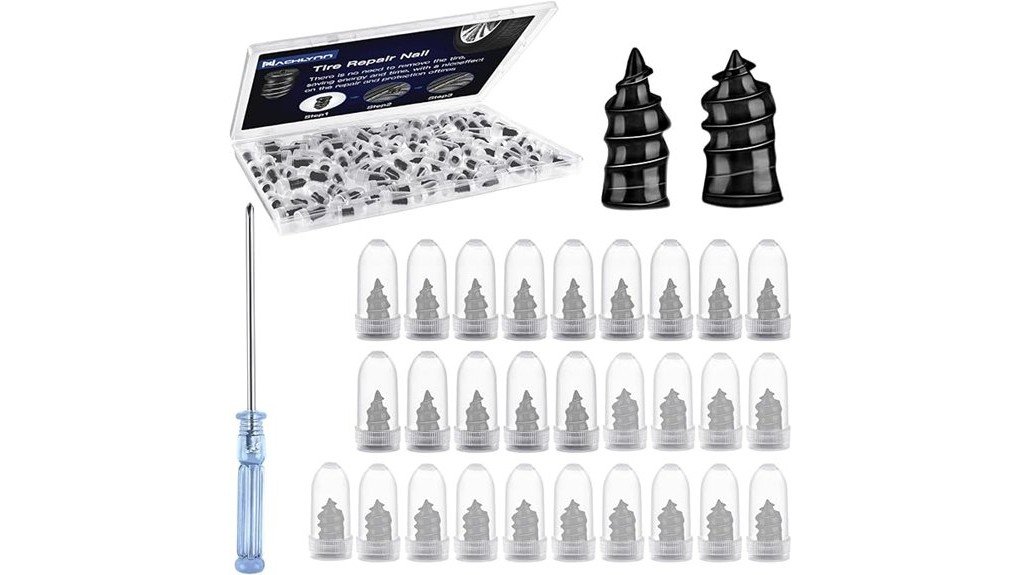
A small tread puncture can leave you deciding between a tow, a spare tire, or a quick roadside workaround. The NACHLYNN Tire Repair Screws kit packs 30 self-tapping rubber repair screws, two screw sizes, a 125 mm screwdriver, and a storage case into a compact package. Its main appeal is speed and portability, but an outside-in screw is not the same as an industry-standard internal plug-and-patch repair. This review helps you decide where the kit may be useful, where it falls short, and when professional tire service is the safer choice.
Quick Verdict
Rating: 5.5/10, Recommended with strong caveats
Best For: A compact emergency kit for small punctures in compatible tubeless tires when a safer roadside option is unavailable.
Bottom Line: The small case, two screw sizes, and included driver make the kit easy to store and deploy. However, it should not be treated as a permanent passenger-vehicle tire repair, and damaged tires still need professional inspection.
| Specification | Detail |
|---|---|
| Brand | NACHLYNN |
| Model / ASIN | B0DZXHKM65 |
| Product type | Self-tapping tubeless tire repair screws |
| Screw quantity | 30 black repair screws |
| Screw sizes | Approximately 5.8 mm and 6.5 mm diameter |
| Material | Metal and rubber with a sealant-coated surface |
| Included tool | 125 mm screwdriver |
| Storage | Compact storage box |
| Listed compatibility | Tubeless tires on cars, bicycles, e-bikes, motorcycles, trucks, buses, and similar vehicles |
| Safety note | Not a substitute for professional inspection and a proper internal repair on passenger and light-truck tires |
Before You Buy: Do not use this kit on a sidewall or shoulder puncture, a cut, a bulge, a hole larger than about 6 mm, or a tire that was driven while flat. For passenger and light-truck tires, industry guidance calls for removing the tire, inspecting it internally, filling the puncture channel, and sealing the inner liner with a patch.
Key Takeaways
- The NACHLYNN kit includes 30 repair screws, a 125 mm screwdriver, and a compact storage box.
- Two diameters, approximately 5.8 mm and 6.5 mm, give you options for different small puncture openings.
- The metal-and-rubber screws use a sealant-coated surface intended to reduce air and moisture entry.
- The listed compatibility is broad, but the tire must be tubeless and the damage must be in an appropriate location.
- For road-going passenger and light-truck tires, treat an outside-in screw as an emergency measure, not a permanent repair.
What Are NACHLYNN Tire Repair Screws?
NACHLYNN Tire Repair Screws are threaded rubber-and-metal plugs designed to enter a small puncture from the outside of a tubeless tire. The threads help the plug grip the puncture channel, while the rubber and surface sealant are intended to slow or stop air loss.
The B0DZXHKM65 package contains 30 black screws in two diameters, one 125 mm screwdriver, and a storage case. It is made for buyers who want a compact emergency option that takes less space than a traditional T-handle plug kit.
The kit’s strongest feature is convenience. Its main limitation is equally important: because the tire stays on the wheel, you cannot inspect the inner liner, belts, or hidden damage before relying on the repair.
Who Should Buy It?
Best For
- Drivers or riders who want a very small emergency puncture kit in a trunk, pannier, or tool bag.
- Owners of compatible tubeless tires who understand that the screw is a temporary outside-in measure.
- Buyers who already carry a pressure gauge, inflator, spare tire, or roadside-assistance plan.
Skip If
- You want a permanent, industry-standard passenger-tire repair.
- Your tire has sidewall, shoulder, structural, or run-flat damage.
- You need a complete kit with an inflator, pressure gauge, pliers, reamer, or internal patching tools.
What’s in the NACHLYNN Tire Repair Kit?
The package keeps the parts list simple: 30 self-tapping repair screws, one 125 mm screwdriver, and one storage box. The screws are black and come in approximately 5.8 mm and 6.5 mm diameters.
The two sizes are useful because puncture channels are not all identical. A smaller screw may suit a narrow opening, while the larger screw may provide a tighter fit in a slightly wider channel. You should not enlarge a puncture simply to make a screw fit.
The kit does not include an air compressor, pressure gauge, pliers, soapy-water leak detector, jack, or wheel-removal equipment. You may still need those tools to locate the puncture, restore pressure, and confirm whether the tire is holding air.
[Products Worth Considering]

This tire repair screw set includes self-tapping plugs and a screwdriver to help you quickly complete tubeless tire repairs for many vehicle types. The set provides two rubber screw diameters for different puncture needs and uses a sealant-coated screw tip to help prevent air leakage and water entry. It’s designed for secure fixing with wear-resistant metal-and-rubber construction.

This 61-piece tire repair screw kit helps you fix punctures quickly by aligning the screw plugs and twisting clockwise, finishing the repair in seconds. The self-sealing plugs create a reliable seal for many roadside situations without needing a jack, wrench, or glue. It includes two plug sizes and a screwdriver in a portable case, making it a convenient option for cars, motorcycles, trucks, bikes, ATVs, and tractors.

This screw-in tire plug kit offers quick, DIY tire repairs for punctures from nails, screws, and sharp debris. Simply screw the vacuum tire mending nail into the puncture for a fast roadside fix, designed to create a strong, air-tight seal. It fits most tubeless tires for cars, trucks, motorcycles, and more, helping you avoid costly replacements until professional service is available.
Materials and Build Quality
Each repair screw combines a metal core with rubber and a sealant-coated exterior. The metal section provides the stiffness needed for threading, while the rubber and coating are intended to compress against the puncture channel.
The small tip can make initial placement easier than a thick rope plug. However, a self-tapping design also makes correct alignment important. Driving the screw at a poor angle, choosing the wrong size, or overtightening it may worsen the opening or create an unreliable seal.
The storage box is a practical addition because loose screws are easy to lose in a trunk or tool drawer. Keep the case dry, closed, and away from high heat so the rubber and coating are less likely to collect dirt or degrade before use.
Fit and Compatibility
The listing describes the kit for tubeless tires on cars, bicycles, mountain bikes, e-bikes, motorcycles, trucks, buses, and similar vehicles. That list describes possible tire types, not automatic approval for every tire in those categories.
Tire construction, load, speed rating, puncture location, and manufacturer repair policy all matter. A repair method that seems workable on a low-speed utility tire may be inappropriate for a high-speed motorcycle, a heavily loaded truck, or a run-flat passenger tire.
Before using any emergency plug, check the tire maker’s guidance and inspect the visible damage. If the puncture touches the shoulder or sidewall, appears angled, exposes cords, or sits near another repair, replace the tire or have a trained technician assess it.
Pro Tip: Pair this kit with a reliable pressure gauge and inflator. Sealing the hole does not restore lost air, and visual inspection alone cannot confirm that the tire is at the vehicle maker’s specified pressure.
How the Screw Design Works
The screw enters the puncture channel from the tread surface. As you turn it, the threads pull the rubber-coated body into the opening and compress it against the surrounding rubber. The coating is intended to help reduce air leakage and moisture entry.
| Stage | What It Does | Main Risk |
|---|---|---|
| Align | Centers the tip in the existing tread puncture | A poor angle may enlarge or redirect the channel |
| Thread | Draws the coated plug into the tire | The wrong size may not seal or may damage the opening |
| Check | Confirms pressure and watches for continuing leakage | A surface seal can hide internal tire damage |
This method may slow air loss, but it does not inspect or seal the tire’s inner liner from inside. That is why professional passenger-tire repair uses both a stem to fill the injury and a patch to seal the inner liner after the tire is removed from the wheel.
How to Use It More Safely
Start by moving away from traffic and following your vehicle or tire maker’s roadside procedure. Do not work beside moving traffic, under an unsupported vehicle, or on a tire with obvious sidewall or structural damage.
- Confirm the tire is tubeless. This product is not designed to repair an inner tube.
- Check the damage location. Limit consideration to a small, straight puncture in the main tread area. Do not attempt a sidewall or shoulder repair.
- Choose the closest fitting size. Do not force a large screw into a narrow hole or widen the damage to match the plug.
- Follow the supplied instructions. Insert the screw straight and avoid overtightening.
- Restore and measure pressure. Inflate only to the pressure specified by the vehicle or tire maker, then check for continued leakage.
- Arrange professional inspection. Use a spare tire, towing service, or prompt tire-shop visit rather than treating the screw as a permanent repair.
Do not assume that a tire is safe because the pressure appears stable for a few minutes. The tire may have inner-liner damage, belt contamination, or heat damage from being driven underinflated.
How It Performs in Real Use
For Trunk or Glovebox Storage
The compact box is the kit’s clearest advantage. It takes little space and keeps 30 plugs organized, making it easy to store beside a gauge, inflator, flashlight, and gloves. The box alone does not make the setup complete, so plan the rest of your roadside equipment separately.
For a Small Tread Puncture
The threaded format can be faster and less bulky than a traditional reamer-and-rope kit. It may reduce air loss from a clean, appropriately located puncture, but the result depends on correct sizing, tire condition, and the path of the injury.
For Bicycle and E-Bike Use
The listed compatibility includes tubeless bicycles and e-bikes. Actual suitability depends on tire casing thickness, sealant system, pressure, and the tire maker’s repair guidance. A 5.8 mm screw may still be large relative to some bicycle punctures, so do not assume the smaller option fits every setup.
For Repeated or Long-Term Use
Thirty screws provide plenty of spares, but repeated punctures are a warning sign rather than a reason to keep adding plugs. Multiple repairs, aging rubber, low tread, internal damage, or punctures close together can make a tire unsuitable for service.
Compatibility and Safety
For passenger and light-truck tires, the U.S. Tire Manufacturers Association limits repair consideration to tread-area injuries no larger than 1/4 inch, or 6 mm. It also says the tire should be removed from the wheel for inspection and repaired with both a plug or stem and an internal patch. An outside-in repair performed while the tire remains mounted does not meet that standard.
That guidance is especially relevant here because the kit’s larger listed diameter is about 6.5 mm. Screw diameter is not the same as puncture diameter, but you should not interpret the larger plug as approval to repair an injury beyond the tire industry’s normal limit.
Never attempt to repair sidewall or shoulder damage with these screws. Replace or professionally inspect tires with bulges, exposed cords, cuts, bead damage, severe cracking, overlapping repairs, or damage caused by driving while flat.
Motorcycle, bus, commercial-truck, run-flat, bicycle, and specialty tires may have different manufacturer rules. Follow the tire maker’s instructions and seek qualified service instead of relying on the broad compatibility list alone.
Safety reference: U.S. Tire Manufacturers Association puncture repair procedures.
Pros and Cons
Pros
- Compact storage box is easy to keep in a vehicle or tool bag.
- Thirty screws provide multiple emergency spares.
- Two diameters help address different small puncture channels.
- Included 125 mm screwdriver means you do not need a separate driver for the plug.
- Metal-and-rubber construction with a coated surface is designed to reduce air and moisture entry.
Cons
- Outside-in installation does not allow internal inspection of the tire.
- Not an industry-standard permanent repair for passenger and light-truck tires.
- No inflator, gauge, pliers, reamer, internal patch, or wheel-removal tools are included.
Is It Worth the Price?
The NACHLYNN kit sits in the budget emergency-tool category. You receive 30 plugs, two sizes, a screwdriver, and a case, so the parts count is reasonable for buyers who want an inexpensive backup in more than one vehicle or tool bag.
Its value depends on your expectations. It is worth considering if you want compact emergency equipment and already understand its limits. It is not the best fit if you want a complete roadside system or a repair method that meets passenger-tire industry standards.
You may get better practical value by combining the kit with a quality inflator, pressure gauge, spare-tire plan, and professional repair budget. Those additions address the problems this small box cannot solve.
[Products Worth Considering]

Use this tire repair rubber screw kit for fast, self-service flat fixes on the road. Choose the matching short or long nail size and twist it into the puncture without removing the tire from the rim. Compact storage keeps the emergency set organized for cars, motorcycles, electric bikes, and bicycles, helping you seal tubeless leaks quickly and reliably.

This tire repair screw plug kit includes 60 pieces in two sizes to help you fix punctures quickly on the road. Choose the right screw by puncture size, then drive it in with a screwdriver for an effective seal without needing a flaring tool. The coated screws help prevent leaks and are designed for convenient emergency use across cars, trucks, ATVs, motorcycles, and bicycles.

This tire repair kit provides fast emergency puncture repair without removing the tire from the rim, helping you get back on the road quickly. Its screw plug system is designed for punctures in both tread and sidewall and includes a complete patch plug tool set with essential accessories. A portable storage bag makes it easy to carry for cars, trucks, SUVs, motorcycles, and heavy-duty applications.
How It Compares to Alternatives
A professional internal combination repair is the better choice when a passenger or light-truck tire is repairable. The technician removes the tire, checks the inside, fills the puncture channel, and patches the inner liner, which addresses damage that an outside-in screw cannot reveal.
A conventional rope-plug kit usually includes a reamer and insertion tool, giving you more control over plug preparation, but it is still generally an emergency outside-in method. A full-size spare, temporary spare, or towing service avoids relying on a questionable puncture seal when the damage location or tire condition is uncertain.
[Products Worth Considering]

ATQYZLM’s screw-in tire plug kit provides quick self-service emergency puncture repair for tubeless tires without removing the tire. Choose a suitable plug nail, align it to the puncture, and tighten with the included screwdriver for minute-level roadside use. The rubber and metal plugs help form a durable airtight seal to reduce air loss and water seepage for reliable short-term travel.

This flat tire repair kit lets you handle punctures quickly with two plug sizes for different damage, helping restore drivability on the spot. It includes T-handle insertion and spiral probe tools plus lubricant and a utility knife, all packed in a compact bag for easy carry. Universal compatibility makes it suitable for tubeless tires across cars, motorcycles, ATVs, trucks, jeeps, and more.

This 60-piece tire repair nail kit provides a fast, do-it-yourself way to seal punctures on tubeless car, motorcycle, and SUV tires without removing the tire. Simply align, twist clockwise, and finish in seconds for a reliable sealing effect that helps prevent water intrusion. The kit includes tire glue and durable rubber-and-steel repair nails for strong adhesion and long-lasting repairs.
Frequently Asked Questions
Are NACHLYNN Tire Repair Screws a permanent fix?
Do not treat them as a permanent passenger or light-truck tire repair. Industry guidance calls for removing the tire, inspecting it internally, filling the puncture channel, and sealing the inner liner with a patch.
Can I use the screws on a sidewall or shoulder puncture?
No. Sidewall and shoulder areas flex heavily and fall outside the normal repair zone for passenger and light-truck tires. Replace the tire or have a trained tire professional inspect it.
How do I choose between the 5.8 mm and 6.5 mm sizes?
Choose the size that fits the existing puncture channel without forcing or enlarging it. Because the larger screw is about 6.5 mm wide, do not assume it makes a puncture larger than the normal 6 mm passenger-tire repair limit acceptable.
Do I need an air compressor with this kit?
The box does not include an inflator, and sealing a puncture does not replace lost air. Carry a compatible inflator and pressure gauge, then use the vehicle or tire maker’s specified pressure.
Can the repair screws be reused?
Use a fresh screw rather than reinstalling one that has been removed. Its rubber, coating, and threads may be contaminated or damaged, which can reduce sealing reliability.
Will the screws work on tube-type bicycle tires?
No. The product is listed for tubeless tires, while a tube-type setup requires repairing or replacing the inner tube. Check your bicycle tire and rim system before using any plug.
Who should skip this kit?
Skip it if you expect a permanent road-tire repair, do not carry an inflator, or cannot safely identify the puncture location. It is also unsuitable for sidewall damage, large holes, cuts, bulges, or tires driven while flat.
The Bottom Line
The NACHLYNN Tire Repair Screws kit makes sense as a compact emergency backup for owners of compatible tubeless tires who understand its limits. Its 30-piece supply, two diameters, included driver, and storage case are convenient, but the outside-in design cannot replace an internal inspection and proper repair. Skip it as your only roadside plan or as a permanent solution for passenger, motorcycle, truck, or bus tires.
Ready to Buy?
Check the current listing, package details, and seller information before you decide.