Disclosure: As an Amazon Associate, we earn from qualifying purchases. If you click a link on this page and make a purchase, we may receive a small commission at no extra cost to you.
A small tread puncture can leave you choosing between roadside assistance, a spare tire, or a fast temporary seal. The Opvixi Tire Repair Screws kit gives you 60 individually wrapped screw-in plugs in two sizes for tubeless tires, so it is compact enough to keep with your emergency gear. Installation is simple with a screwdriver, but the biggest limitation matters: an outside-in screw is not an industry-approved permanent repair for a passenger or light-truck tire. This review explains what the kit includes, where it may help, and when you should stop and call a tire professional.
Quick Verdict
Rating: 6/10, Recommended with caveats
Best For: Emergency kits for tubeless tires when you need a compact, simple temporary option for a small tread puncture.
Bottom Line: The two sizes, individual wrapping, and screwdriver-only installation make the Opvixi kit convenient to store and use. However, you should treat a screw-in plug as temporary emergency equipment and arrange a professional internal inspection and approved repair as soon as possible.
| Specification | Detail |
|---|---|
| Brand | Opvixi |
| Product type | Screw-in tire plug kit for emergency puncture sealing |
| Quantity | 60 tire repair screws |
| Small size | 11.7 × 5.3 mm |
| Large size | 12.7 × 6.8 mm |
| Construction | Carbon steel core with rubber coating and sealant |
| Listed compatibility | Tubeless tires on cars, trucks, ATVs, motorcycles, and bicycles |
| Installation tool | Screwdriver required |
| Package contents | 60 screw-in plugs; a screwdriver and air pump are not listed in the box contents |
| Item weight | 4.2 ounces |
| Package dimensions | 9.17 × 5.83 × 0.59 inches |
| Best use | Temporary emergency response to a small puncture in the repairable tread area, followed by professional inspection |
Key Takeaways
- The Opvixi kit includes 60 individually wrapped screw-in plugs in two sizes, 11.7 × 5.3 mm and 12.7 × 6.8 mm.
- A carbon steel core gives each plug structure, while the rubber coating and sealant are designed to press against the puncture channel.
- You only need a suitable screwdriver to insert a plug, but the listing does not state that a screwdriver, pliers, gauge, or inflator is included.
- The kit is listed for tubeless tires on cars, trucks, ATVs, motorcycles, and bicycles.
- For passenger and light-truck tires, use it only as temporary emergency equipment. A proper repair requires tire removal, internal inspection, and an approved patch-and-plug procedure.
What Is the Opvixi Tire Repair Screw Kit?
The Opvixi kit is a compact set of spiral screw-in plugs intended to slow or stop air loss from a small puncture in a tubeless tire. Each plug uses a carbon steel core for stiffness, plus a rubber coating and sealant that are designed to fill space around the puncture channel.
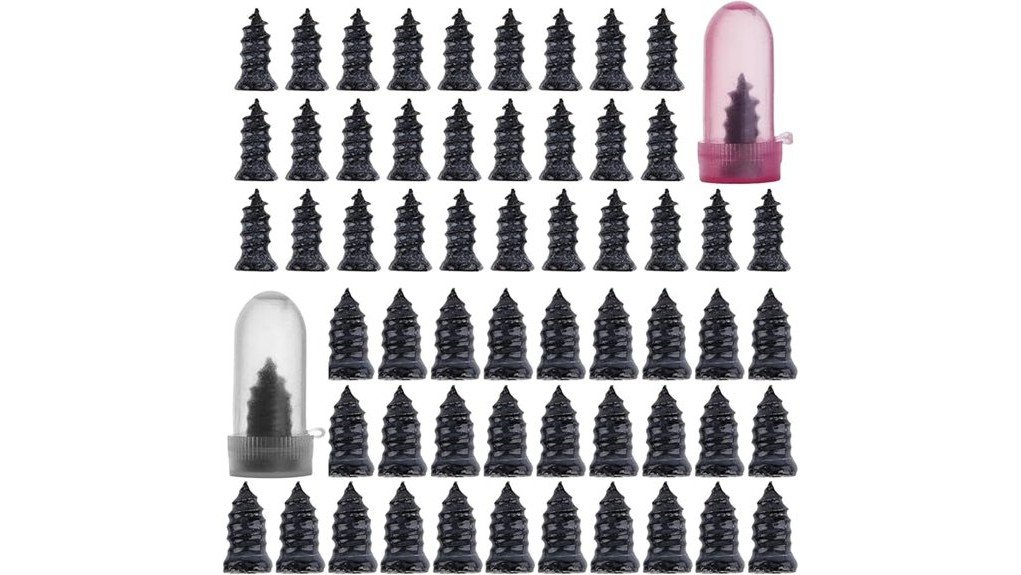
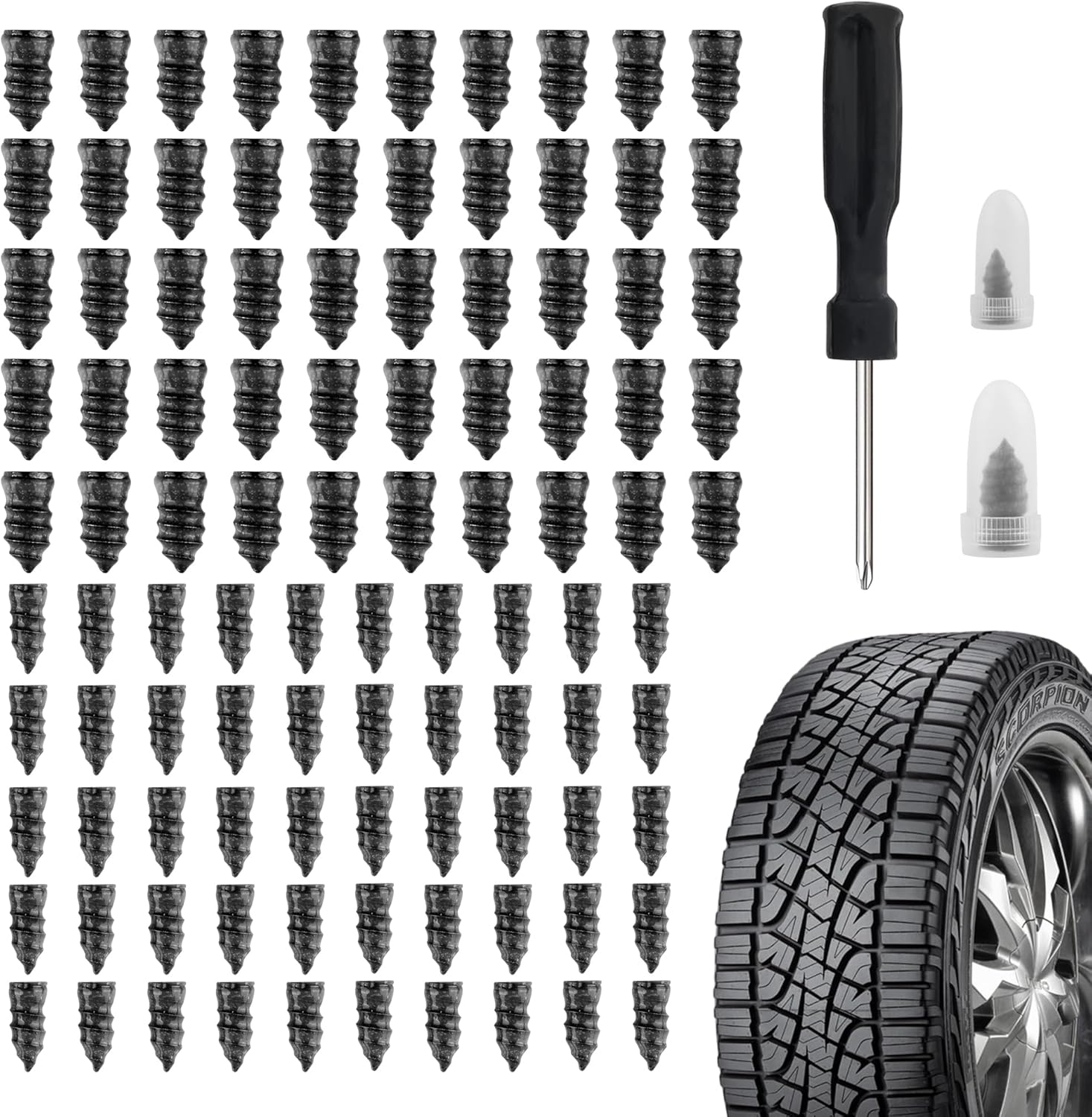
You receive 60 plugs split across two physical sizes. The smaller 11.7 × 5.3 mm screws are intended for narrower punctures, while the 12.7 × 6.8 mm screws provide a wider option. The plugs are individually wrapped, which helps keep the sealing surface clean while the kit sits in a trunk, tool bag, motorcycle case, or ATV storage box.
This is not a complete roadside inflation kit. You still need a screwdriver, a reliable tire-pressure gauge, and an air source. You may also need pliers to remove the object that caused the puncture.
Who Should Buy It?
Best For
- Drivers building a compact emergency kit for tubeless tires.
- ATV, motorcycle, or bicycle owners who travel away from nearby repair shops.
- Buyers who want two plug sizes instead of a single-size pack.
Skip If
- You want an industry-approved permanent repair for a passenger or light-truck tire.
- The damage is in the shoulder or sidewall, is larger than 6 mm, or the tire was driven while flat.
- You need a complete kit with a screwdriver, pressure gauge, pliers, and inflator included.
Before You Buy: Do not treat this outside-in screw as a permanent repair for a passenger or light-truck tire. The U.S. Tire Manufacturers Association says the tire should be removed for inspection and repaired with both a stem or plug and an inner-liner patch. Do not use it on sidewall or shoulder damage.
[Products Worth Considering]

This tire repair kit provides fast emergency puncture repair without removing the tire from the rim, helping you get back on the road quickly. Its screw plug system is designed for punctures in both tread and sidewall and includes a complete patch plug tool set with essential accessories. A portable storage bag makes it easy to carry for cars, trucks, SUVs, motorcycles, and heavy-duty applications.

This 61-piece tire repair screw kit helps you fix punctures quickly by aligning the screw plugs and twisting clockwise, finishing the repair in seconds. The self-sealing plugs create a reliable seal for many roadside situations without needing a jack, wrench, or glue. It includes two plug sizes and a screwdriver in a portable case, making it a convenient option for cars, motorcycles, trucks, bikes, ATVs, and tractors.

This screw-in tire plug kit offers quick, DIY tire repairs for punctures from nails, screws, and sharp debris. Simply screw the vacuum tire mending nail into the puncture for a fast roadside fix, designed to create a strong, air-tight seal. It fits most tubeless tires for cars, trucks, motorcycles, and more, helping you avoid costly replacements until professional service is available.
Fit and Compatibility
The listing describes the Opvixi screws for tubeless tires on cars, trucks, ATVs, motorcycles, and bicycles. That does not mean every puncture or every tire can be repaired. Tire construction, manufacturer policy, the injury angle, previous repairs, tread wear, and internal damage all affect whether a tire remains serviceable.
Use the smaller 11.7 × 5.3 mm plug for a narrow puncture that can be filled without forcing an oversized screw into the tread. Use the larger 12.7 × 6.8 mm plug only when the smaller size cannot seat firmly. The goal is a snug fit, not widening the hole to make a plug fit.
Do not use these screws on a tubed tire unless the tire or tube manufacturer specifically allows it. A screw inserted through the casing may damage the inner tube rather than seal it.
Pro Tip: Before a trip, place a screwdriver, pliers, tire gauge, gloves, valve-core tool, and a charged portable inflator beside the plugs. The screws alone cannot restore safe pressure or confirm that the tire is holding air.
Materials and Sealing Design
Each plug combines a carbon steel core with a rubber exterior and sealant coating. The steel gives the plug enough stiffness to turn into the puncture channel, while the rubber surface can compress against irregular edges that a bare metal screw would not seal.
The spiral shape helps the plug stay seated during a temporary emergency response. The individual wrappers are also useful because dirt, lint, and dried debris can reduce the sealing surface’s contact with the tire.
The design still has a basic limitation: you cannot inspect the inner liner while the tire remains mounted. A puncture may hide impact damage, liner damage, separation, or evidence that the tire was driven underinflated. That is why an outside-in repair should not replace a professional inspection.
How to Use It Correctly
Only attempt a temporary seal when the vehicle is parked in a safe, level location away from traffic. Turn on hazard lights, set the parking brake, follow the vehicle owner’s manual, and use a spare tire or roadside assistance when conditions are unsafe.
- Find the leak. Confirm that the injury is in the central tread area, not the shoulder or sidewall.
- Check the damage. Do not continue if the hole appears larger than 6 mm, the tire is visibly cut or bulged, or the tire was driven flat.
- Remove the object carefully. Use pliers when needed and note the angle of the puncture.
- Select the closest plug size. Start with the smaller screw when it can seat securely without enlarging the puncture.
- Insert the plug. Turn it with a suitable screwdriver until the rubber-coated portion sits snugly in the tread. Do not overtighten or drive it so deeply that it disappears into the tire.
- Inflate and check pressure. Use the vehicle or tire manufacturer’s specified cold pressure, then check for continued leakage.
- Drive cautiously to service. Avoid high speed, hard braking, heavy loads, and long-distance use. Arrange professional inspection promptly.
Do not trim the head away unless the product instructions specifically direct you to do so. The head gives you control during installation and helps a technician identify and remove the temporary plug later.
Compatibility and Safety
Industry guidance for passenger and light-truck tires limits repairable injuries to the tread area and to punctures no larger than 1/4 inch, or 6 mm. The tire should be removed from the wheel so a technician can inspect the inside. A proper repair fills the injury channel and seals the inner liner with a patch.
Do not use a screw-in plug on sidewall or shoulder damage, overlapping repairs, a tire worn below its service limit, a tire with a bulge or exposed cords, or a tire that has been driven while flat. Run-flat tires and some specialty tires may have additional restrictions from the manufacturer.
For detailed safety guidance, review the U.S. Tire Manufacturers Association tire repair basics and the Michelin guidance on puncture damage and repair.
How It Performs in Real Use
For a Slow Leak in a Parking Area
This is the kit’s strongest use case. When you find a small tread puncture in a safe parking area, the screw format is simpler than a traditional reamer-and-string kit. You can select a size, turn it into place, reinflate, and check whether pressure stabilizes before driving carefully to a tire shop.
For Highway Travel
The plugs are compact and individually wrapped, so they take little storage space. However, the shoulder of a highway is a hazardous place to work. Use roadside assistance or a spare tire when you cannot move the vehicle to a protected area, and do not rely on a screw repair for continued highway-speed travel.
For ATVs and Off-Road Equipment
The two sizes can be useful when sharp debris causes a small puncture in a tubeless ATV tire far from a service point. Lower-speed off-road use does not remove the need to inspect the tire, especially after a hard impact, visible casing damage, or repeated pressure loss.
For Motorcycles and Bicycles
A loss of tire pressure has greater balance consequences on two wheels. Use the plug only on a compatible tubeless setup and only as an emergency measure. Check pressure closely, ride conservatively, and arrange inspection or replacement rather than assuming the seal is permanent.
Pros and Cons
Pros
- Includes 60 plugs for repeated emergency-kit use.
- Two sizes cover narrow and wider small punctures.
- Carbon steel, rubber, and sealant combine structure with a compressible sealing surface.
- Individual wrapping helps keep unused plugs clean in storage.
- Screwdriver-only insertion is simpler than reaming and installing a string plug.
Cons
- Not an approved permanent repair for passenger or light-truck tires.
- The box listing includes plugs only, so you need separate tools and an inflator.
- Not suitable for sidewall, shoulder, large, angled, or internally damaged punctures.
Is It Worth the Price?
The Opvixi kit fits the budget emergency-tool category. Its value comes from the 60-count pack, two sizes, compact package, and simple insertion method rather than from a complete set of roadside tools.
It is worth considering when you already carry a screwdriver, pliers, pressure gauge, and inflator and want an extra temporary option. It is not the best value when you need a self-contained kit or when you expect the plugs to replace a proper internal tire repair.
[Products Worth Considering]
Salior’s tire plug kit provides a fast, reliable self-service fix for punctured or leaking tires without the need for flaring tools. Choose the correct plug size, then screw the nail into the puncture using the included screwdriver for an enhanced seal. The set is durable and convenient for on-the-go maintenance across multiple vehicle types.

Get back on the road fast with this compact tire plug repair kit for tubeless tires. It includes self-vulcanizing rubber plugs, T-handle rasp and insert tools, and a storage box that fits in your glove compartment for easy access. Also included are a 4-way valve steam tool set with valve cores and caps for added roadside convenience.

This tire repair screw plug kit includes 60 pieces in two sizes to help you fix punctures quickly on the road. Choose the right screw by puncture size, then drive it in with a screwdriver for an effective seal without needing a flaring tool. The coated screws help prevent leaks and are designed for convenient emergency use across cars, trucks, ATVs, motorcycles, and bicycles.
How It Compares to Alternatives
A conventional T-handle string-plug kit usually includes a reamer and insertion tool and may create a more substantial temporary fill, but it takes more force and practice. A professional combination patch-and-plug repair requires the tire to be removed, yet it is the appropriate long-term approach for a repairable passenger or light-truck tread puncture.
The Opvixi kit makes the most sense when storage space and fast screwdriver-based insertion matter most. Choose a full string-plug kit when you want more complete roadside tools, and choose professional service when safety, inspection, and long-term repair matter.
[Products Worth Considering]

This ETENWOLF tire plug repair kit helps you quickly fix punctures for reliable rides. It includes two plug sizes to match different damage widths, plus essential tools and lubricant for a smoother repair process. Designed for tubeless tires, it’s a convenient on-the-go solution for cars, motorcycles, ATVs, trucks, jeeps, and tractors.

Rhino USA’s 86-piece tire repair kit provides everything you need for quick, emergency flat repairs, including a reamer and plug insertion tool plus 60 reusable tire plugs. The heavy-duty, metal-handled design helps you fix punctures from nails and screws on tubeless tires for cars, trucks, motorcycles, ATVs, UTVs, and more. A high-visibility compact case stores easily for on-the-go use, with illustrated instructions to help you complete repairs with confidence.

This screw-in tire plug kit seals punctures fast using the included screwdriver, letting you repair tread damage without removing the tire or using messy glue. It includes two plug sizes for different puncture types and uses high-density rubber for an airtight, heat-resistant temporary seal that helps you reach a tire shop safely. Compact and universal, it works on tubeless tires across cars, trucks, motorcycles, tractors, and more.
Frequently Asked Questions
Can Opvixi tire repair screws be used as a permanent repair?
No. For passenger and light-truck tires, treat them as temporary emergency equipment. An approved repair requires tire removal, internal inspection, a filled injury channel, and an inner-liner patch.
What punctures can this kit handle?
The kit is intended for small punctures in the repairable tread area of a compatible tubeless tire. Do not use it on a sidewall or shoulder injury, a visible cut, a bulge, exposed cords, or a puncture larger than 6 mm.
How do you choose between the two screw sizes?
Use the smaller 11.7 × 5.3 mm plug for a narrow puncture and the larger 12.7 × 6.8 mm plug when a wider fit is needed. Choose the closest snug fit and do not enlarge the hole simply to accept a larger screw.
Does the kit include a screwdriver or inflator?
The Amazon box contents list 60 screw-in plugs. A screwdriver, pliers, pressure gauge, and inflator are not listed, so plan to carry those items separately.
Can these screws be used on tubed tires?
The product is listed for tubeless tires. Inserting a screw through a tubed tire may damage the inner tube, so use a tube-specific patch or replacement method recommended by the tire or tube manufacturer.
Do tire repair screws work in wet weather?
The rubber coating and sealant are designed to limit air leakage, but rain makes roadside work less safe and can contaminate the puncture area. Move to a protected location when possible, check pressure carefully, and seek professional service promptly.
Can a tire repair screw be reused?
No. Once removed, the rubber and sealant may be distorted or contaminated. Use a new plug for an emergency attempt, and do not insert another outside-in plug into a tire that already has an improper repair.
What should you carry with the Opvixi kit?
Carry a suitable screwdriver, pliers, gloves, a pressure gauge, and a charged portable inflator. A flashlight, reflective vest, and roadside-assistance contact details also make the kit more useful in an emergency.
The Bottom Line
The Opvixi 60-piece tire repair screw kit is a practical backup for buyers who want compact, individually wrapped plugs and two sizes for small tubeless tread punctures. Skip it as your only repair plan or when the damage reaches the shoulder, sidewall, or internal structure. Its main strength is fast, simple installation, while its main limitation is that it cannot replace professional inspection and an approved internal repair.