
Disclosure: As an Amazon Associate, we earn from qualifying purchases. If you click a link on this page and make a purchase, we may receive a small commission at no extra cost to you.
A low tire can turn a normal commute into a stressful search for a working air pump. The KUXISA 180 PSI Tire Inflator gives you a compact way to check pressure and add air from your vehicle, with a digital gauge, preset pressure control, automatic shut-off, an LED light, and several adapters. Its main appeal is convenience for routine top-offs and roadside preparation. Its main limitation is that it is a small portable unit, not a repair tool or a heavy-duty shop compressor.
Quick Verdict
Rating: 7.5/10, Recommended with caveats
Best For: Drivers who want a compact inflator for passenger-vehicle tire top-offs, bikes, motorcycles, sports balls, and small inflatables.
Bottom Line: The digital gauge, automatic shut-off, LED light, and included adapters make routine inflation easier. You should skip it if you need fast recovery of large truck tires, long continuous run time, or a tool that can repair a puncture.
Key Specifications
| Specification | Detail |
|---|---|
| Brand | KUXISA |
| Product type | Portable tire inflator and air compressor |
| Maximum advertised pressure | 180 PSI |
| Power connection described | 12V DC vehicle connection, with a USB charging cable listed in the kit |
| Pressure control | Digital pressure gauge, preset target pressure, and automatic shut-off |
| Advertised airflow | 30 L/min in the supplied article; confirm the current listing because KUXISA variants may differ |
| Advertised noise level | About 60 dB |
| Useful features | LED work light, compact storage, and multiple inflation adapters |
| Best use | Routine tire top-offs, pre-trip pressure checks, bikes, motorcycles, balls, and small inflatables |
| Important limitation | Not intended for continuous commercial pumping or as a substitute for tire repair |
KUXISA 180 PSI Tire Inflator
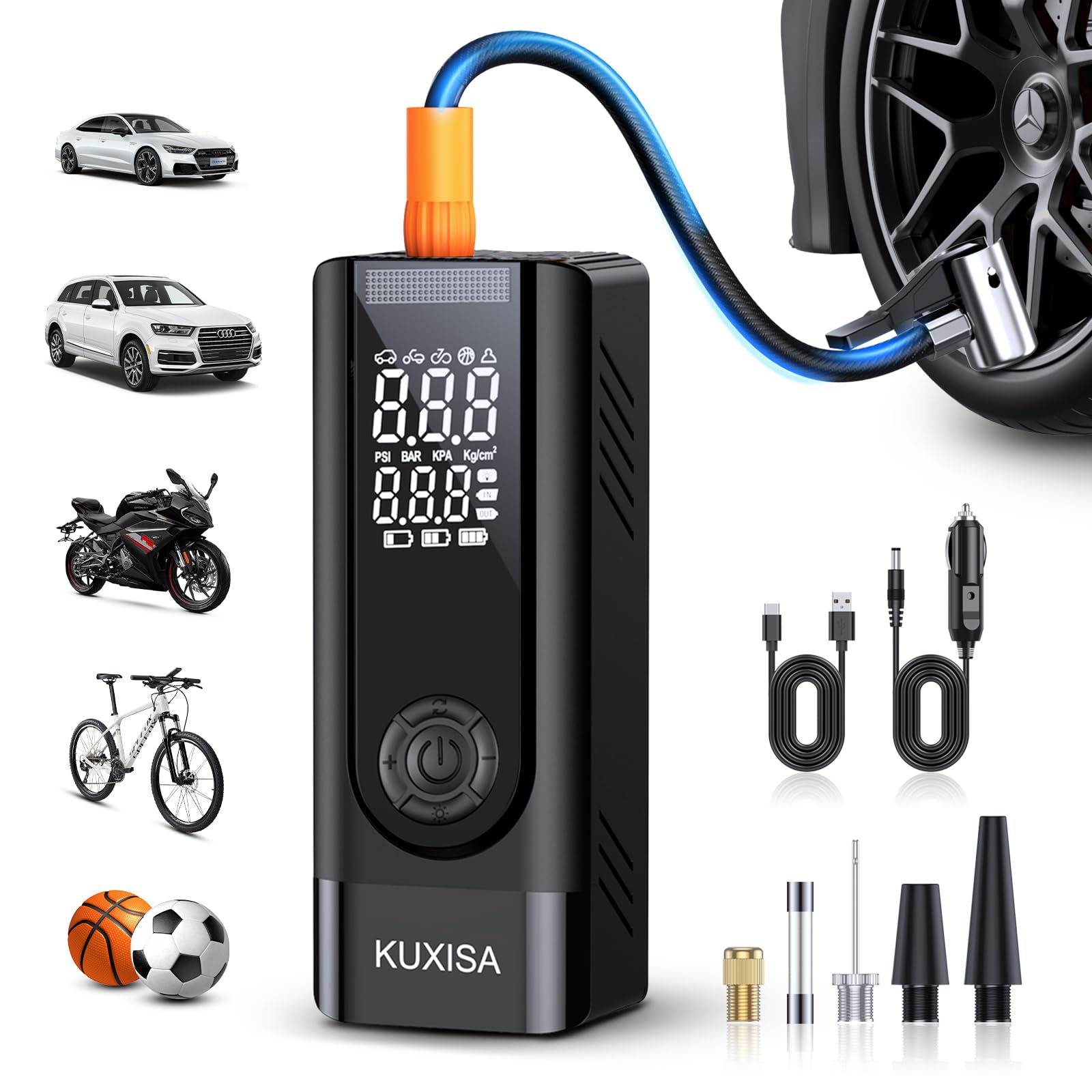
Portable air compressor with a digital pressure gauge, preset shut-off, LED lighting, and adapters for common tire and recreational inflation tasks.
Best for routine top-offs and travel kits
Check Price on Amazon →What Is the KUXISA 180 PSI Tire Inflator?
The KUXISA is a compact compressor made for adding air without visiting a public pump. You connect the hose to a valve, choose a target pressure on the digital display, and start inflation. Automatic shut-off is designed to stop the unit when it reaches the preset value, which reduces the need to watch the gauge every second.
The kit is aimed at drivers, riders, cyclists, and families who want one portable tool for several inflation jobs. The included adapters expand its use beyond Schrader tire valves, while the LED light helps you see the valve and controls in a dark garage or at the roadside.
The 180 PSI figure is the unit’s maximum advertised capability, not a recommended pressure for your tires. Your correct target comes from the vehicle door-jamb label, tire or equipment instructions, or the manufacturer’s manual.
Who Should Buy It?
Best For
- Drivers who want to correct low pressure before a commute or road trip
- Motorcycle and bicycle owners who need a compact multi-use pump
- Households that also inflate sports balls and small recreational items
Skip If
- You need a high-volume compressor for large truck, RV, or off-road tires
- You expect long, uninterrupted commercial use
- You need a puncture repair kit rather than an inflator
Before You Buy: Confirm the exact power setup, included accessories, hose reach, and airflow shown on the current Amazon listing. KUXISA sells similar-looking inflator variants, and specifications can differ between models.
[Products Worth Considering]

AstroAI AIRUN H is a compact 12V tire inflator designed for fast, convenient inflation with an easy-to-read digital pressure gauge. Set your target pressure with programmable controls and let the auto shut-off turn off the pump when the preset is reached. It also includes a backlit screen and LED flashlight for nighttime use, with a ToughUltra durability design for longer service life.

The Powools cordless tire inflator delivers fast inflation up to 150 PSI with a built-in digital display and auto shut-off to prevent over-inflation. Powered by rechargeable batteries, it works without an external power source and includes multiple preset modes plus a custom mode for different inflatables. A set of interchangeable nozzles and a multi-mode LED light (lighting, alarm, SOS) make it useful for cars, motorcycles, bicycles, and sports balls.

This portable cordless tire inflator delivers rapid inflation up to 150 PSI with a built-in pressure gauge for accurate readings. It offers multiple preset modes for car, bike, motorcycle, and ball inflation, plus an LED light system for visibility in dark conditions. The auto shut-off helps stop pumping when your preset pressure is reached, and it supports several pressure units for convenience.
Feature-by-Feature Review
Inflation Performance
The supplied article lists a 180 PSI maximum and 30 L/min airflow, along with a claim of faster inflation than basic mini compressors. Those figures suggest the unit is intended to handle common top-off jobs rather than only sports equipment. Because the exact ASIN specifications could not be independently confirmed, treat the airflow and speed claim as advertised performance rather than a measured test result.
For passenger-car use, the more important question is how efficiently it raises a tire by a few PSI. A compact inflator can be useful for seasonal pressure drops, slow leaks, and pre-trip checks, but filling a fully deflated large tire will create more heat and take longer.
Digital Gauge and Automatic Shut-Off
The digital gauge lets you see pressure while you work and set a target before inflation. Automatic shut-off adds convenience because the compressor can stop at the selected value instead of relying only on manual timing.
You should still compare the reading with a separate tire-pressure gauge from time to time. Portable digital gauges can vary, and a poor valve connection may cause an inaccurate or unstable reading.
Power, Portability, and Storage
The article describes a 12V DC vehicle connection, a USB charging cable, a cigarette-lighter plug, and a storage case. That combination is useful for a trunk kit because you can keep the hose, adapters, and power pieces together instead of searching for loose parts during an emergency.
The compact format is easier to carry than a garage compressor, but small housings have less room to manage heat. Give the unit time to cool after demanding inflation jobs and follow the run-time limits in the manual.
LED Light and Included Adapters
The built-in LED is practical when a valve sits in shadow or you need to work after dark. It does not replace roadside warning lights, reflective gear, or a safe parking position, but it can make the inflation task easier to see.
Multiple nozzles allow you to use the pump with bicycle tires, motorcycles, sports balls, and small inflatables. Check that you have the correct adapter before leaving home, especially when your bike uses a Presta valve.
Noise and Build
The supplied article lists a noise level of about 60 dB. You should still expect the mechanical sound and vibration common to small compressors. The noise is usually less important outdoors, but it may be distracting in a quiet garage or campground.
The portable housing keeps weight and bulk down, though it will not feel as substantial as a heavy-duty metal compressor. Protect the hose, power lead, display, and fittings from crushing loads in your trunk.
What the Supplied Buyer Summary Says
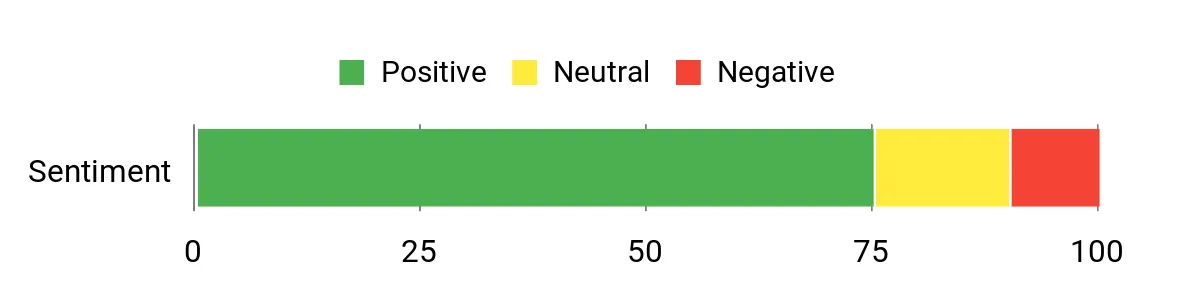
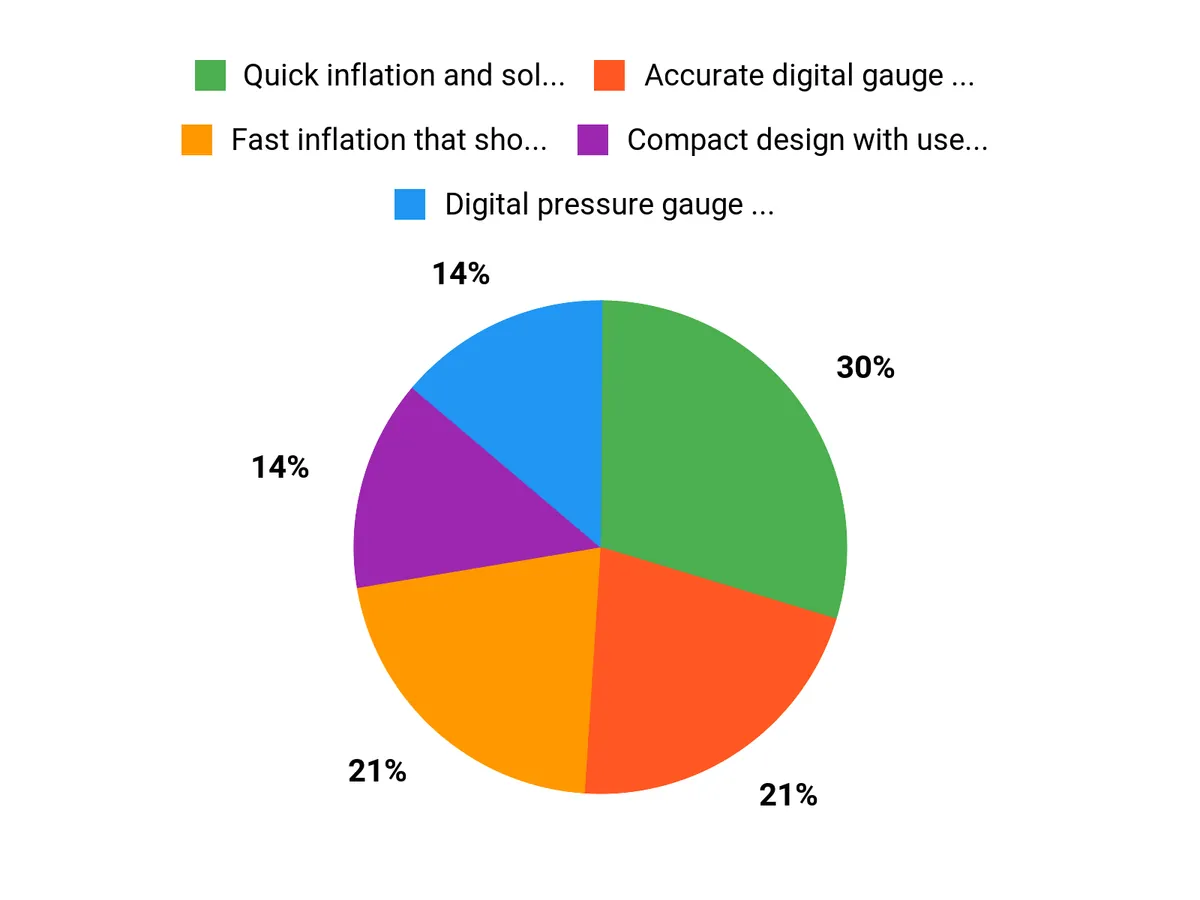
The original review summary describes buyer sentiment as positive. It highlights easy pressure setting, convenient accessories, and quick top-offs as common strengths, while noting hose reach and continuous-use limits as potential concerns.
Overall Sentiment: Positive, based on the summary supplied with the article. No independent review count or customer-rating claim is added here.
How It Performs in Real Use
Routine Weekly Tire Checks
The inflator makes the most sense when you find a tire a few PSI below its recommended cold pressure. Set the correct target, connect the hose firmly, and let the automatic shut-off handle the final stop. This is faster and more convenient than driving to a public air station for a small adjustment.
Roadside Low-Pressure Situations
The LED and compact storage format can help when a tire loses pressure away from home. However, adding air does not repair a puncture, damaged sidewall, bent wheel, or failed valve. If pressure drops again quickly, stop driving and arrange proper tire service.
Pre-Trip Preparation
You can use the unit to check all four tires before a long drive and correct small differences. Proper pressure supports predictable handling and even tire wear, but you should measure tires when they are cold and use the vehicle maker’s specified PSI.
Bikes, Motorcycles, and Recreation
The adapters add value when you also maintain bicycle tires, motorcycle tires, or sports balls. These smaller jobs need less air volume, so they are generally a better match for a compact compressor than large off-road or commercial tires.
How to Use It Correctly
- Park on a stable surface away from traffic and apply the parking brake.
- Find the recommended cold-tire pressure on the vehicle’s door-jamb label or in the owner’s manual.
- Connect the correct hose or adapter firmly so air does not leak at the valve.
- Set the target pressure on the digital display. Do not use 180 PSI as a default target.
- Start inflation and watch the hose, connector, and display for leaks or unusual behavior.
- After shut-off, remove the connector carefully and spot-check pressure with a separate gauge when accuracy matters.
- Let the compressor cool as directed before another demanding inflation cycle, then store every accessory in the case.
Pro Tip: Test the inflator at home before relying on it for a trip. Confirm that the power connection reaches every wheel and that each adapter, the hose, and the light work correctly.
Compatibility and Safety
Use the inflator only within the pressure and duty-cycle limits stated in its manual. Keep the air path clear, stop if the housing or hose becomes excessively hot, and never leave the unit running unattended.
Do not rely on the compressor when a tire has visible sidewall damage, exposed cords, smoke, severe vibration, or rapid pressure loss. Move to a safe location when possible and contact roadside assistance or a tire professional.
The LED is a work light, not a full roadside safety system. Use hazard lights, reflective markers, and a safe location away from moving traffic when you need to stop beside a road.
Pros and Cons
Pros
- Digital gauge and preset shut-off simplify routine top-offs
- 180 PSI advertised maximum covers a wide pressure range
- LED light helps you see controls and valves in low light
- Multiple adapters support tires, balls, and small inflatables
- Compact storage format suits a trunk or travel kit
Cons
- Exact airflow and power details should be checked against the current ASIN listing
- Hose reach may be limiting for some vehicle layouts
- Not designed for long continuous use or large high-volume tires
Is It Worth the Price?
The KUXISA can offer strong value when you want one compact tool for occasional tire maintenance and several small inflation tasks. The automatic shut-off, display, light, and adapters are more useful than a bare pump when convenience matters.
Its value depends on your expectations. It is a smart buy for everyday top-offs and emergency preparation, but not the best fit when you need rapid inflation of large tires, long duty cycles, or professional-grade durability. Check the current listing for the exact package and power configuration before comparing it with another model.
[Products Worth Considering]
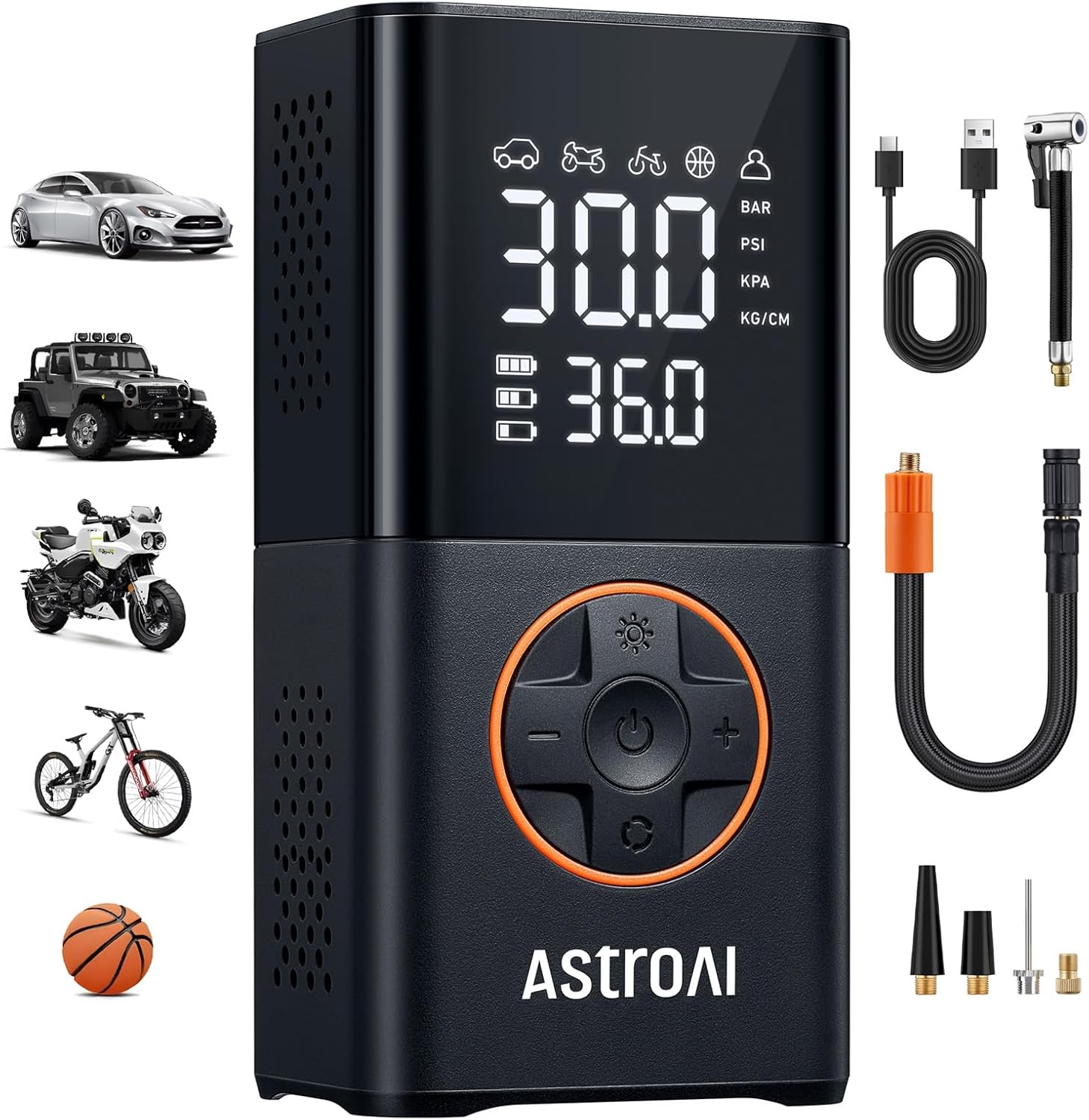
AstroAI L7 provides fast, cordless inflation for cars, motorcycles, bicycles, e-bikes, and sports balls with preset smart modes and a custom pressure option. Its compact design, dual digital display, and built-in auto-off make it easy to use for quick road-trip top-offs and emergency roadside inflation. The unit includes LED lighting and an SOS strobe flashlight for visibility, plus USB-C/USB ports for charging devices.

The Airmoto portable tire inflator quickly and accurately fills car, truck, SUV, motorcycle, and bicycle tires up to 120 PSI with auto shut-off when your target pressure is reached. Its large LCD, multi-unit pressure display, and digital gauge make it easy to dial in settings and verify readings, while the built-in LED flashlight helps in low light. The included polyurethane hard carrying case and storage mesh pocket keep the inflator and accessories protected and organized.

This portable tire inflator delivers fast, efficient inflation with a smart cooling design that helps prevent overheating during extended use. It features a digital pressure gauge with ±1 PSI accuracy, four preset modes for quick setup, and auto shut-off at your target pressure. You can power it either with the built-in 6000mAh battery or your vehicle’s 12V outlet for flexible use on the go or at home.
How It Compares to Alternatives
A basic corded 12V inflator may cost less and avoid battery concerns, but it keeps you tied to the vehicle power outlet. A battery-only cordless inflator is easier to carry around a bike or campsite, though its usefulness depends on charge level and battery capacity. A heavy-duty compressor is better for trucks and repeated use, but it takes more space and usually costs more.
The KUXISA makes the most sense when you want a compact middle option with preset pressure control, a light, and multiple adapters rather than maximum airflow or commercial durability.
[Products Worth Considering]

This dual power portable tire inflator lets you run from a 12V vehicle cigarette lighter or a 110V/120V wall outlet for flexible roadside and home use. It delivers up to 150 PSI with quick inflation, including a fast fill example from 0 to 36 PSI, and features auto shutoff with pressure memory plus a backlit LCD display with unit switching. Designed for multiple inflations, it includes extra nozzles for cars, motorcycles, bikes, sports equipment, and inflatables, while compact storage and a carry bag make it easy to keep on hand.

The AstroAI L7 Mini tire inflator delivers fast, reliable inflation with a 5+4 smart inflation system, including preset modes for car, motorcycle, bicycle, ball, and custom pressure. A true gauge smart screen and advanced sensor provide accurate pressure readings to help prevent overinflation or low-pressure risk. Built-in 3-mode flashlight (flashlight, strobe, SOS) adds safety for roadside emergencies, while auto shut-off and long-lasting battery performance support repeated inflations.

This tire repair kit provides fast emergency puncture repair without removing the tire from the rim, helping you get back on the road quickly. Its screw plug system is designed for punctures in both tread and sidewall and includes a complete patch plug tool set with essential accessories. A portable storage bag makes it easy to carry for cars, trucks, SUVs, motorcycles, and heavy-duty applications.
Why You’d Choose It
You would choose the KUXISA for its combination of portable storage, digital pressure control, automatic shut-off, LED lighting, and multi-purpose adapters. Those features reduce the hassle of routine tire maintenance, provided you stay within the unit’s size and run-time limits.
Frequently Asked Questions
Does 180 PSI mean I should inflate my car tires to 180 PSI?
No. The 180 PSI figure is the inflator’s advertised maximum pressure. Set your tire to the cold-pressure specification on the vehicle door-jamb label or in the owner’s manual.
Can the KUXISA repair a flat tire?
No. It can add air, but it cannot seal a puncture, repair sidewall damage, or replace a failed valve. A tire that loses air quickly needs proper inspection and repair.
What can I inflate with the included adapters?
The supplied article lists cars, motorcycles, bicycles, sports balls, and small inflatables. Match the adapter to the valve and stay within the item’s recommended pressure range.
Is the digital gauge accurate enough to trust?
The gauge is useful for setting and monitoring pressure, but you should spot-check it with a separate gauge occasionally. A loose valve connection can also affect the displayed reading.
Can I use it for SUV, truck, or RV tires?
It may handle small pressure corrections when the tire and required PSI are within the unit’s limits. Large tires need much more air volume, so a heavy-duty compressor is a better choice for frequent or major inflation.
How long can I run the compressor continuously?
Follow the exact duty-cycle and cooling instructions in the included manual. Stop if the unit becomes excessively hot, and allow it to cool before another demanding inflation job.
What should I confirm on Amazon before ordering?
Check the exact model, power arrangement, airflow, hose length, included adapters, charging cable, vehicle plug, storage bag, and return or warranty information. Similar KUXISA models may not use identical specifications.
Who should skip this inflator?
Skip it when you need professional daily use, high-volume truck inflation, or a complete puncture-repair solution. It is better suited to occasional maintenance and portable backup use.
The Bottom Line
The KUXISA 180 PSI Tire Inflator is recommended with caveats for drivers and riders who want a compact tool for routine top-offs, pressure checks, and small recreational inflatables. Its digital controls, automatic shut-off, LED light, and adapters are useful, but buyers who need heavy-duty airflow or long continuous use should choose a larger compressor.
Ready to Buy?
Check the latest price, exact specifications, and included accessories before you decide.

![[2026NEW] 5000A Jump Starter with Air Compressor (150PSI)](https://m.media-amazon.com/images/I/71oG4PFNsmL._AC_SL1500_.jpg)