
If you are comparing Toyota Camry tire sizes, the smoother ride usually comes from the setup with the taller sidewall, not simply the larger wheel. In most Camry fitments, 16-inch tires ride the softest, 17-inch tires are the balanced middle ground, and 18-inch tires feel firmer and sportier. The best choice depends on your model year, trim, road quality, tire model, and the size listed on your driver-door tire placard.
Quick Answer
Seventeen-inch Camry tires usually ride better than 18-inch tires because they normally have a taller sidewall and more impact cushion. They usually do not ride softer than 16-inch tires. Choose 17s if you want a comfort-and-control compromise; choose 16s for maximum comfort and 18s for sharper steering.
Key Takeaways
- For ride comfort, the usual order is 16-inch softest, 17-inch balanced, and 18-inch firmest.
- A 17-inch setup usually has more cushion than an 18-inch setup, but less cushion than a 16-inch setup.
- Larger wheels can sharpen steering feel, but they can also increase road noise, harshness, pothole risk, and tire cost.
- Always confirm tire size, load index, speed rating, rim width, and inflation pressure from your Camry’s tire placard or owner’s manual before changing sizes.
16-Inch, 17-Inch, Or 18-Inch Camry Tires: Which Ride Better?

For most drivers, a Camry on 16-inch tires will feel smoother and quieter than the same car on 17-inch or 18-inch tires, because the tire usually has more sidewall to flex over cracks, potholes, and rough pavement. A 17-inch setup is the practical middle ground. It gives up some cushion compared with many 16-inch setups, but it usually rides better than 18-inch tires while still feeling more responsive than 16s.
An 18-inch setup shifts the Camry toward a firmer, sportier feel. You may notice quicker steering response and a more connected feel through corners, but you will also feel more road texture. That trade-off is normal with lower-profile tires because the shorter sidewall has less room to absorb impacts before they reach the suspension and cabin.
| Wheel Size | Typical Camry Role | Ride Feel | Best For |
| 16-inch | Comfort-focused trims and many hybrid/base setups | Softest and most forgiving | Rough roads, quiet commuting, lower replacement cost |
| 17-inch | Middle-ground fitment on many older Camry trims and common upgrades | Balanced: firmer than 16s, softer than 18s | Drivers who want comfort plus sharper control |
| 18-inch | Sportier trims and appearance-focused upgrades | Firmest of these three sizes | Sharper steering, sportier look, smoother pavement |
Model year matters. For example, Toyota’s 2025 Camry brochure lists all-season P205/65R16 tires for LE, P235/45R18 tires for SE and XLE, and P235/40R19 tires for XSE. Older Camrys can use different factory sizes, so do not assume one chart applies to every year. Use the tire placard on your own car as the final authority.
Why 17-Inch Camry Tires Can Ride Softer Than 18-Inch Tires
You will usually notice 17-inch Camry tires riding softer than 18-inch tires because the 17-inch setup normally uses a taller sidewall. That extra rubber between the wheel and the road gives the tire more room to flex when it hits broken pavement, seams, and small potholes.
Larger Sidewall Cushion Than 18s
A 17-inch tire usually gives the Camry more sidewall cushion than an 18-inch tire with a similar overall diameter. That extra sidewall flex helps absorb small impacts before they become sharp jolts in the cabin. It can also make the car feel calmer on patched pavement, concrete expansion joints, and older city streets.
Better Bump Absorption Than 18s
Compared with 18-inch tires, 17-inch tires usually absorb bumps better because the sidewall is not as short or stiff. You still get reasonably direct steering, but the ride is less brittle. This is why 17s often feel like the sweet spot for daily drivers who want comfort without making the Camry feel loose or disconnected.
Warning: Do not choose a tire size only because it sounds more comfortable. Before changing from 16s to 17s or 17s to 18s, confirm the tire size, load index, speed rating, rim width, rolling circumference, and body clearance with your owner’s manual, tire placard, or a qualified tire professional.
How 18-Inch Camry Tires Change Ride Quality
When you move to 18-inch Camry tires, the ride usually feels firmer. The shorter sidewall improves response, but it also leaves less cushion between the wheel and the pavement. On smooth roads, that can feel controlled and confident. On rough roads, it can feel busy, noisy, or harsh.
Firmer Ride Feel
Upgrading a Toyota Camry to 18-inch tires usually gives you a firmer ride because the lower-profile sidewall flexes less over bumps. You may feel more of the road through the seat, steering wheel, and floor. That is not always bad; some drivers like the added feedback. But if your roads are cracked, patched, or full of potholes, 18s can make the car feel less relaxed.
Sharper Steering Response
An 18-inch tire setup can sharpen steering response by reducing sidewall flex. The car may react more quickly during lane changes, cornering, and quick steering corrections. That added precision can make the Camry feel sportier, especially if the tires are also wider or built with a performance-focused compound.
More Road Noise
Moving from 17-inch to 18-inch tires can also increase road noise and vibration. Shorter, stiffer sidewalls transmit more road texture into the cabin, and wider tires can make more noise on coarse asphalt. Tire model matters here: a quiet touring tire may still ride better than a noisy performance tire, even if both are the same size.
Handling Differences Between 17-Inch And 18-Inch Tires
Seventeen-inch tires usually give the Camry balanced handling. The steering remains predictable, but the tire still has enough sidewall to smooth out rough surfaces. Eighteen-inch tires usually feel more immediate. They can improve road feel and reduce the delay between steering input and tire response.
For normal commuting, the handling difference is usually modest. You may notice it most during quick lane changes, freeway ramps, and brisk cornering. If you drive mainly on smooth roads and like a sportier feel, 18s can be satisfying. If you drive on rough pavement or want less fatigue on long trips, 17s are usually easier to live with.
How Tire Size Affects Noise And Harshness
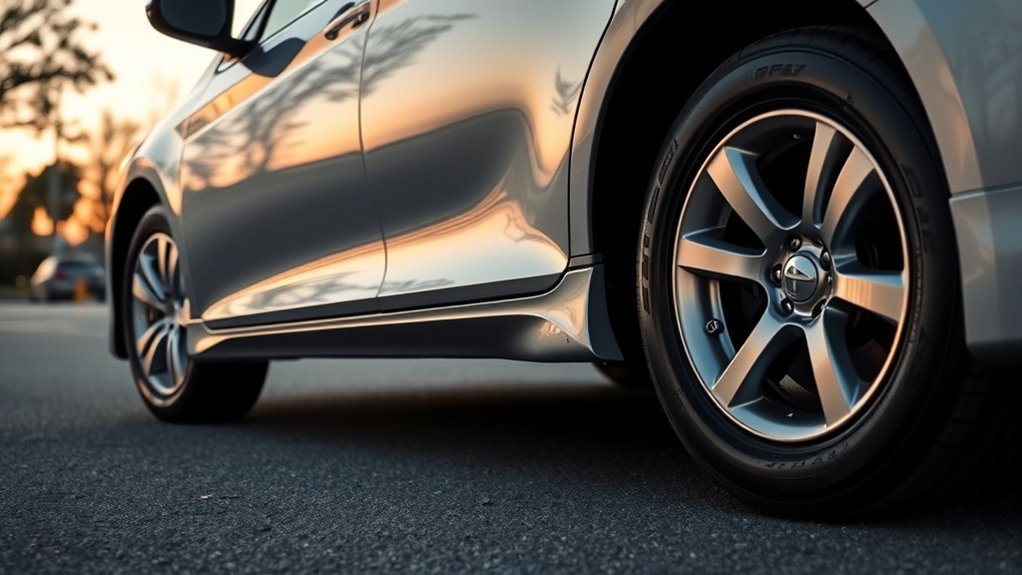
Tire size affects noise and harshness mainly through sidewall height, tread design, tire construction, and inflation pressure. A taller sidewall can flex and cushion impacts. A shorter sidewall reacts faster but passes more vibration into the suspension and body.
This is why 16-inch Camry tires usually feel the most isolated, 17-inch tires feel balanced, and 18-inch tires feel the firmest. However, size is not the only factor. A premium touring tire in an 18-inch size may ride quieter than a budget tire in a 17-inch size. Tire pressure also matters. Overinflated tires can feel harsh, while underinflated tires can overheat, wear poorly, and reduce safety.
Note: The correct tire pressure is the cold pressure listed by Toyota on the driver-side tire placard or in the owner’s manual, not the maximum pressure molded into the tire sidewall.
How 17s And 18s Affect MPG And Tire Prices
Going from 17-inch to 18-inch tires can affect fuel economy, but the change is not caused by wheel diameter alone. Tire weight, wheel weight, tread pattern, width, compound, rolling resistance, and inflation pressure all matter. A heavier wheel-and-tire package can take more energy to accelerate, while a low-rolling-resistance tire can help reduce energy loss.
NHTSA explains that tire design affects fuel efficiency and that low-rolling-resistance tires reduce energy loss. In real shopping terms, compare the exact tire model, not just the wheel size. Look at the tire’s category, rolling-resistance claims, warranty, wet traction, winter rating if needed, and total installed cost.
Tire prices also vary too much to rely on one fixed number. Eighteen-inch tires often cost more than 17-inch tires in the same model line, but brand, speed rating, load rating, rebates, and retailer installation charges can change the final bill. The cleanest comparison is to price a full installed set in your exact size.
[Products Worth Considering]

These aluminum alloy tire valve stem caps with an O-ring seal help protect valve stems from corrosion while adding a clean, stylish look to your vehicle. The universal fit works across cars, trucks, motorcycles, bicycles, and more, making them an easy upgrade for everyday driving and off-road use. Installation is quick, and the included four-pack keeps all your tires dressed and protected.

Keep your tires properly inflated with this analog VONDIOR tire pressure gauge, designed for fast, easy readings without batteries. The swiveling, two-axis hose and large glow dial help you measure at any tire angle with instant visibility. Built with a protective rubber shield, it supports durable, low-maintenance use for cars and trucks.

This manual duck head tire changer kit makes tire installation and removal simpler by letting you embed the duck head into the tire with applied pressure. The integrated design and durable steel construction help reduce friction and improve efficiency and safety during use. Suitable for 16–21 inch wheels, it’s convenient for cars, trucks, SUVs, and ATV tires, with 24-hour after-sales support.
How To Check The Right Camry Tire Size Before Changing Wheels
Before moving from 16-inch to 17-inch wheels or from 17-inch to 18-inch wheels, confirm the basics. This protects ride quality, safety systems, wheel clearance, and tire life.
- Check the driver-door tire placard. It lists Toyota’s recommended tire size and cold inflation pressure for your specific vehicle.
- Match or exceed the original load index. The replacement tire must be able to carry the vehicle’s required load.
- Match the correct speed rating. Do not downgrade unless a tire professional confirms it is appropriate for your use.
- Keep overall diameter close to the original. A large change can affect speedometer accuracy, ABS, traction control, and clearance.
- Use an approved rim width. The tire must be approved for the wheel width you plan to use.
- Check clearance under load and steering lock. A tire that fits while parked can still rub during turns, bumps, or heavy loading.
Pro Tip: If comfort is your goal, shop for a grand-touring or comfort-focused all-season tire first. Tire model choice can change ride comfort as much as the move from 17-inch to 18-inch wheels.
[Products Worth Considering]

Upgrade your Toyota’s wheels with durable aluminum alloy valve stem caps that help protect valve cores from corrosion and direct exposure to road grime, clay, water, and snow. Rubber rings improve sealing to help prevent air leakage and maintain stable tire pressure for safer driving. These caps are easy to install or remove without tools and add a unique, stylish look to your car.

Black Magic Tire Wet delivers a deep wet-look shine that makes tires appear dark, rich, and freshly detailed. Its long-lasting formula helps resist rain, dust, and road grime for weeks of glossy protection, not days. Apply by spraying onto clean, dry tires—no buffing or wiping required—with a low-sling design to reduce splatter on paint and wheels.

Adam’s Pro Tire Hex Grip applicators are molded foam sponges designed for precise, even tire dressing application. The ergonomic grip helps you spread product without overapplying, reducing sling that can splash onto paint and helping keep your hands clean during wheel and trim detailing. They’re durable, washable, and reusable for repeated detailing sessions.
Which Camry Tire Size Should You Choose?
If you want the softest ride, choose the smallest factory-approved wheel and tire size for your Camry. On many older Camry LE models, that means a 16-inch setup such as 205/65R16. This type of tire gives you more sidewall cushion, calmer impact absorption, and usually a lower replacement cost.
If you want a balanced setup, 17-inch tires are often the best compromise. They normally ride better than 18s while giving the car a little more steering precision than 16s. This is a smart choice if you want everyday comfort but do not want the softest possible feel.
If you want a sportier look and sharper steering, 18-inch tires can make sense. Just expect a firmer ride, more road texture, and potentially higher replacement cost. For rough roads, long commutes, potholes, or winter driving, 17s are usually easier to recommend than 18s.
[Products Worth Considering]

Monitor tire tread wear with a smart, color-coded depth gauge that shows clear condition ranges at a glance. The bar is range marked for fast, easy readings, helping you maintain safer traction and performance. Each gauge is portable with a pocket clip, and the set includes 20 units for daily use and sharing.

Upgrade your wheels with MIKKUPPA M12x1.5 mag seat lug nuts built for secure, corrosion-resistant performance. These closed-end chrome lug nuts are a direct replacement for select Toyota models, including Camry, Corolla, RAV4, Sienna, Avalon, Highlander, Matrix, Venza, and Prius. Triple-chromium plating and cold-forged, heat-treated steel help deliver strength for daily driving and replacement needs.

TIRESHIELD PRO RV tire covers in a set of four deliver year-round protection against UV rays, cracking, fading, water, and snow. The StormLock-System helps keep the covers securely fastened through high wind, while heavy-duty, double-stitched construction supports long-lasting performance. Designed for universal fit, they’re intended for RV, camper, truck, car, and trailer tires within the 26–28.75 inch diameter range, with easy wipe-clean care and storage in the included bag.
Frequently Asked Questions
What are the disadvantages of 17-inch wheels?
Compared with 16-inch wheels, 17-inch wheels usually ride a little firmer because the tire has less sidewall cushion. They can also cost more to replace. Compared with 18-inch wheels, though, 17s usually ride smoother, protect wheels better from pothole impacts, and keep road noise more controlled.
What size wheels give the smoothest ride on a Camry?
The smoothest ride usually comes from the smallest factory-approved wheel size with the tallest sidewall. For many Camrys, that means a 16-inch setup. A 17-inch setup is usually the best middle ground, while 18-inch and larger setups tend to feel firmer.
Does the Toyota Camry have a smooth ride?
Yes. The Camry is generally tuned for a comfortable, composed ride. Tire choice can change that feel. Comfort-focused tires on 16-inch or 17-inch wheels will usually make the Camry feel smoother than low-profile tires on 18-inch or 19-inch wheels.
Are 18-inch Camry tires bad for rough roads?
They are not bad, but they are less forgiving. The shorter sidewall gives potholes and sharp edges less rubber to compress before the impact reaches the wheel and suspension. If your roads are rough, 16-inch or 17-inch tires are usually more comfortable.
Can I change my Camry from 16-inch to 17-inch wheels?
Usually yes, if you use a compatible tire size, wheel width, offset, load index, speed rating, and rolling diameter. Check your tire placard and owner’s manual first, then confirm the setup with a tire professional before buying wheels or tires.
Conclusion
For a Toyota Camry, 17-inch tires usually ride better than 18-inch tires, but they are not usually softer than 16-inch tires. Think of the sizes this way: 16s are the comfort choice, 17s are the balanced choice, and 18s are the sportier choice. If your roads are rough or you value quiet commuting, stay smaller. If you want sharper steering and a stronger visual stance, 18s can work, but they ask you to give up some comfort.
Sources
- Toyota 2025 Camry brochure — current Camry tire sizes, trim context, and EPA-estimated mileage table.
- Toyota 2024 Camry brochure — model-year context for Camry trims, features, and mileage estimates.
- NHTSA TireWise — tire placard guidance, tire pressure safety, tire sizing, treadwear, and rolling-resistance fuel-economy information.
- Continental Tires upsizing guide — load capacity, inflation pressure, speed rating, rolling circumference, rim fitment, and clearance checks.
- Tire Rack plus-sizing guide — sidewall, steering-response, overall-diameter, and pothole-risk trade-offs.
- Bridgestone tire-size guide — tire width, aspect ratio, construction, and wheel-diameter definitions.