
If your Hyundai Sonata’s tire pressure warning light stays on, do not ignore it. The most common cause is still low pressure in one or more tires, but the light can also stay on because of cold weather, a slow leak, a recent tire rotation, a spare tire, or a TPMS sensor problem. Start with a cold tire-pressure check, then follow the correct reset or relearn procedure for your Sonata’s model year.
Quick Answer
If your Hyundai Sonata tire pressure light stays on, check all four tires with a gauge when they are cold, inflate them to the driver-door placard PSI, then drive a few minutes or use the TPMS reset menu if your model has one. If the light flashes before staying solid, have the TPMS system inspected.
Key Takeaways
- A solid TPMS light usually means at least one tire is significantly underinflated.
- A TPMS light that flashes for about a minute and then stays on usually points to a system malfunction, sensor issue, incompatible wheel, or spare-tire situation.
- Always use the tire-pressure number on the Hyundai Sonata’s driver-door placard, not the maximum PSI printed on the tire sidewall.
- Some Sonata TPMS systems reset through the instrument-cluster menu, while others clear after correct inflation and driving. Check your owner’s manual for your exact model year.
At a Glance
| Time Required | 5–20 minutes for a basic pressure check and reset; longer if a tire has a leak or sensor fault |
| Difficulty | Easy for checking and inflating tires; professional help may be needed for TPMS sensor faults |
| Tools Needed | Accurate tire pressure gauge, air compressor, valve-cap tool if needed, owner’s manual |
| Cost | Usually free to a few dollars for air; TPMS sensor diagnosis or replacement varies by shop |
Warning: If the Sonata pulls to one side, feels unstable, has a visibly flat tire, or you hear thumping, slow down gradually and pull over safely. Do not keep driving on a severely underinflated or damaged tire.
What the Hyundai Sonata Tire Pressure Light Means
The tire pressure warning light is part of the Tire Pressure Monitoring System, or TPMS. A solid tire pressure light usually means one or more tires are below the safe pressure range. A light that flashes for about one minute and then stays on usually means the TPMS has detected a system malfunction or cannot read one of the wheel sensors correctly.
TPMS is helpful, but it is not a replacement for checking tires manually. Hyundai and federal safety guidance both stress that drivers are still responsible for keeping tires inflated to the recommended cold pressure.
Immediate Steps When Your Tire Pressure Light Stays On

When your tire pressure warning light stays on, start with the basics before assuming the sensor is bad. Tire pressure can look normal by eye and still be low enough to trigger the warning.
- Park safely and inspect the tires. Look for a visibly flat tire, bulging sidewall, nail, screw, cracked valve stem, or wheel damage.
- Find the correct PSI. Use the Tire and Loading Information label on the driver’s door edge or pillar. Do not use the maximum PSI printed on the tire sidewall.
- Check all four tires when cold. A cold tire means the car has been parked for at least three hours or driven less than about 1 mile.
- Inflate each tire to the placard pressure. If front and rear pressures differ, follow the placard exactly.
- Recheck with the gauge. Do not rely only on the air pump display.
- Drive normally if the tires are safe. Some TPMS systems need several minutes of driving to update the display and turn the light off.
Note: On cold mornings, the TPMS light may appear because tire pressure drops as temperature falls. A common rule of thumb is about 1 PSI for every 10°F drop in temperature.
How Do You Check Tire Pressure?
Use a reliable tire pressure gauge and check the tires before the Sonata has been driven for the day. Warm tires read higher because driving heats the air inside the tire.
- Remove the valve cap from the tire.
- Press the tire pressure gauge squarely onto the valve stem.
- Read the PSI on the gauge.
- Compare it with the PSI listed on the driver-door placard.
- Add air if the tire is low, or release a small amount if it is overinflated.
- Check the pressure again and reinstall the valve cap.
Check the spare tire too if your Sonata has one. Some Sonata models, especially hybrids or newer trims, may use a tire mobility kit instead of a spare. If you do have a temporary spare, its required PSI may be much higher than the road tires, so check the spare tire sidewall, placard, or owner’s manual.
Pro Tip: Keep a small digital or pencil-style gauge in the glove box. Gas-station gauges are convenient, but they can be dropped, worn, or inaccurate.
[Products Worth Considering]

Replace worn or malfunctioning GM TPMS sensors with this 433MHz pre-programmed sensor set designed for compatibility with many Chevrolet, Buick, GMC, and Cadillac models. It includes guidance for proper OBDII relearning/pairing after installation and supports reliable long-term operation with a high-performance CR2032 battery. Quality tested for durability and performance to help restore accurate tire pressure monitoring.
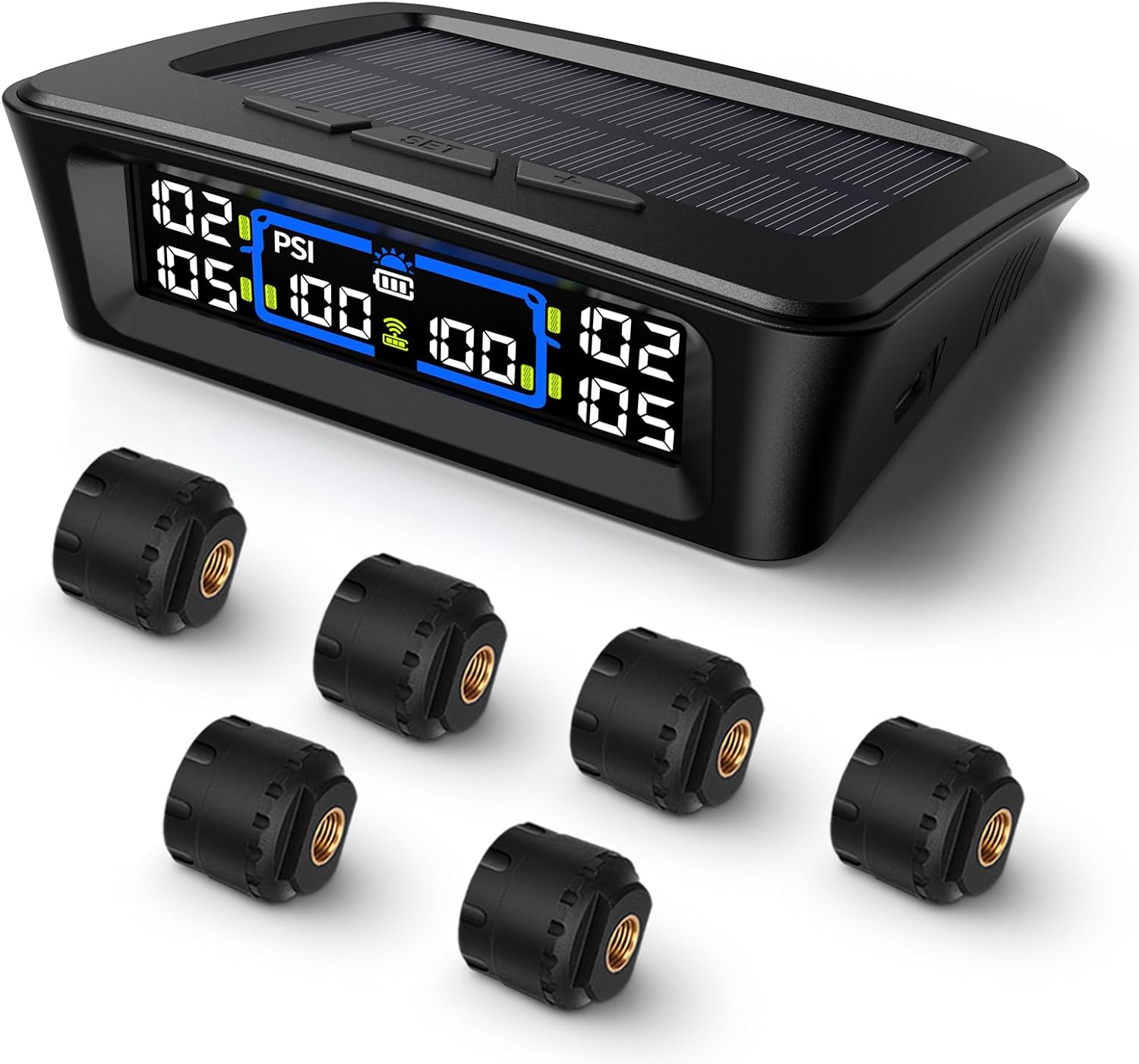
The Tymate TM12 RV TPMS delivers real-time tire pressure and temperature monitoring with a stable 433Hz display for safer long-distance driving. It supports simultaneous monitoring across vehicle and trailer zones, includes six alarm modes for pressure, temperature, leakage, battery, and signal loss, and features easy DIY installation with auto calibration. Power is supplied via USB-C charging or solar recharging, with a wide 0–144 PSI range and up to 50 ft signal coverage for RVs and towable trailers.
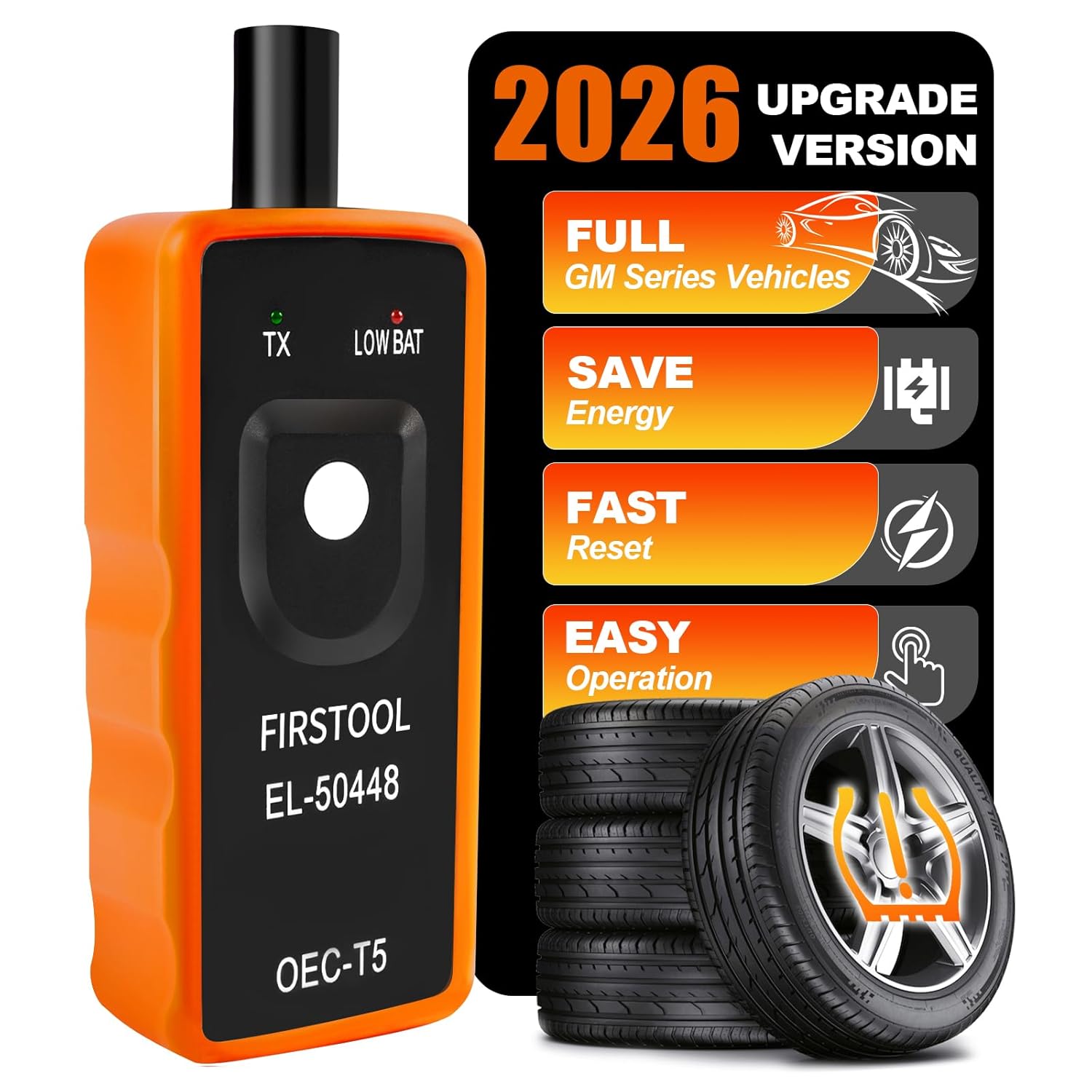
This TPMS relearn tool helps you quickly activate, match, and reset GM tire pressure sensors to keep the vehicle monitoring system working properly. It clears tire pressure alarms and dashboard warning lights after sensor replacement or tire rotation, and supports learning for common 315/433 MHz TPMS sensors. Designed for simple one-button operation, it can help you avoid unnecessary trips to repair shops.
How Do You Reset the TPMS in Your Hyundai Sonata?
The correct TPMS reset process depends on the Sonata’s model year, trim, market, and TPMS type. Do not assume every Hyundai Sonata has a physical TPMS reset button under the steering wheel.
For Hyundai systems that use the instrument-cluster reset menu, the general process is:
- Set all four tires to the recommended cold inflation pressure.
- Park the vehicle and turn the ignition or Start/Stop button to ON, following the owner’s manual.
- Use the steering-wheel controls to open the tire pressure or TPMS screen in the cluster.
- Press and hold the OK button or select the TPMS set/reset option if your model provides one.
- Confirm that the warning light blinks or the cluster shows a stored-pressure message, depending on the system.
- Drive normally so the system can confirm the pressure readings.
On some Sonata years with direct TPMS sensors, the light may clear automatically after the tires are inflated correctly and the vehicle is driven for several minutes. If the light remains on after correct cold inflation and normal driving, keep troubleshooting instead of repeatedly resetting it.
[Products Worth Considering]
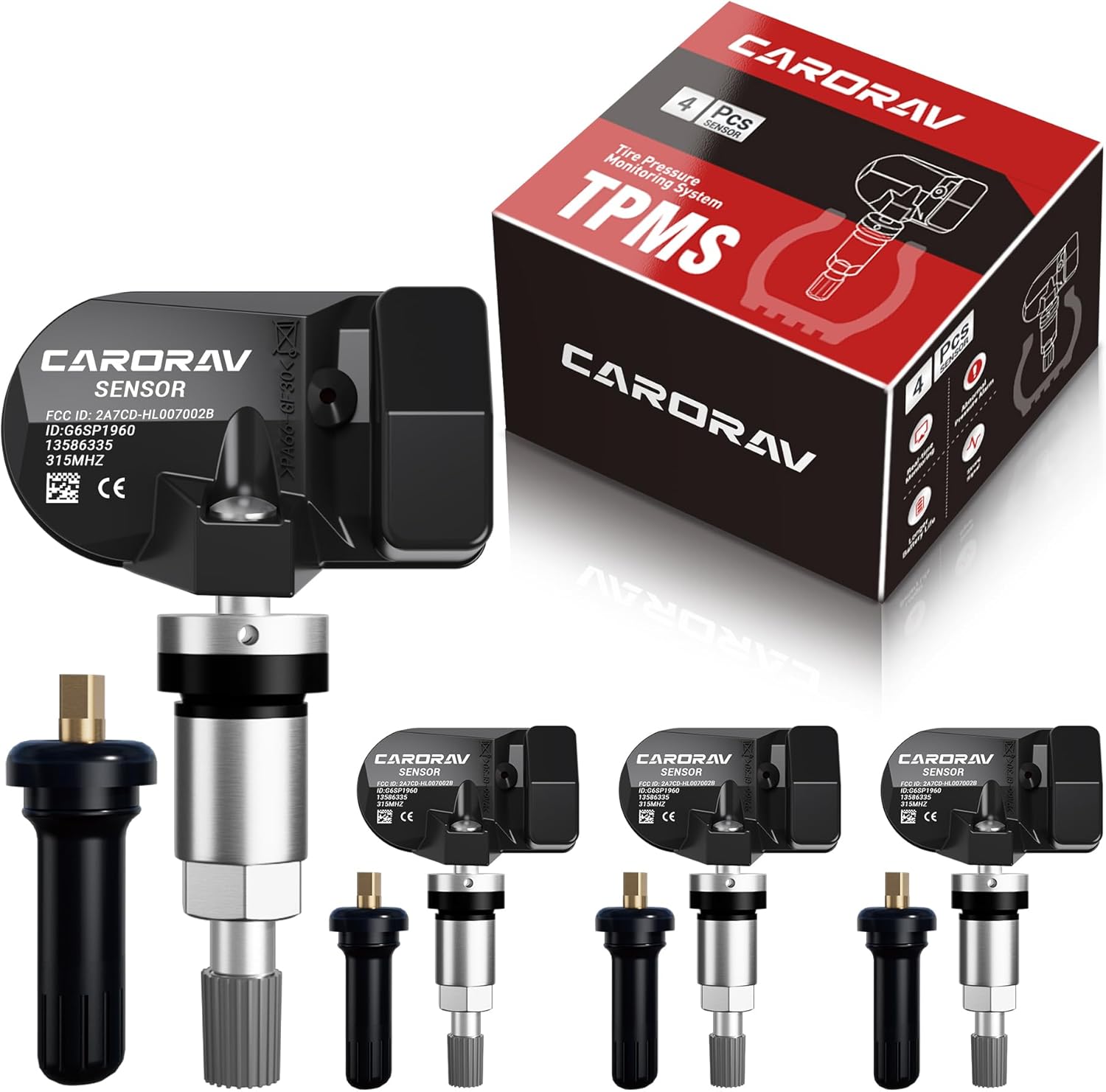
Replace worn or missing TPMS sensors with CARORAV pre-programmed GM-compatible sensors for a smoother installation experience. These 315MHz replacement sensors help monitor tire pressure in real time with long battery life, and they are designed to withstand harsh temperatures. Manual or OBDII relearn may be required to reset the system for proper recognition.

Milton S-921 pencil tire pressure gauge helps you maintain optimal tire pressure for passenger cars with accurate readings in PSI and kPa. It features a built-in deflator valve for convenient pressure adjustments, plus a single chuck head and nylon indicator bar for easy use on the go. Built from durable plated brass and designed for reliable performance, it’s a practical road trip and cold-weather maintenance tool.
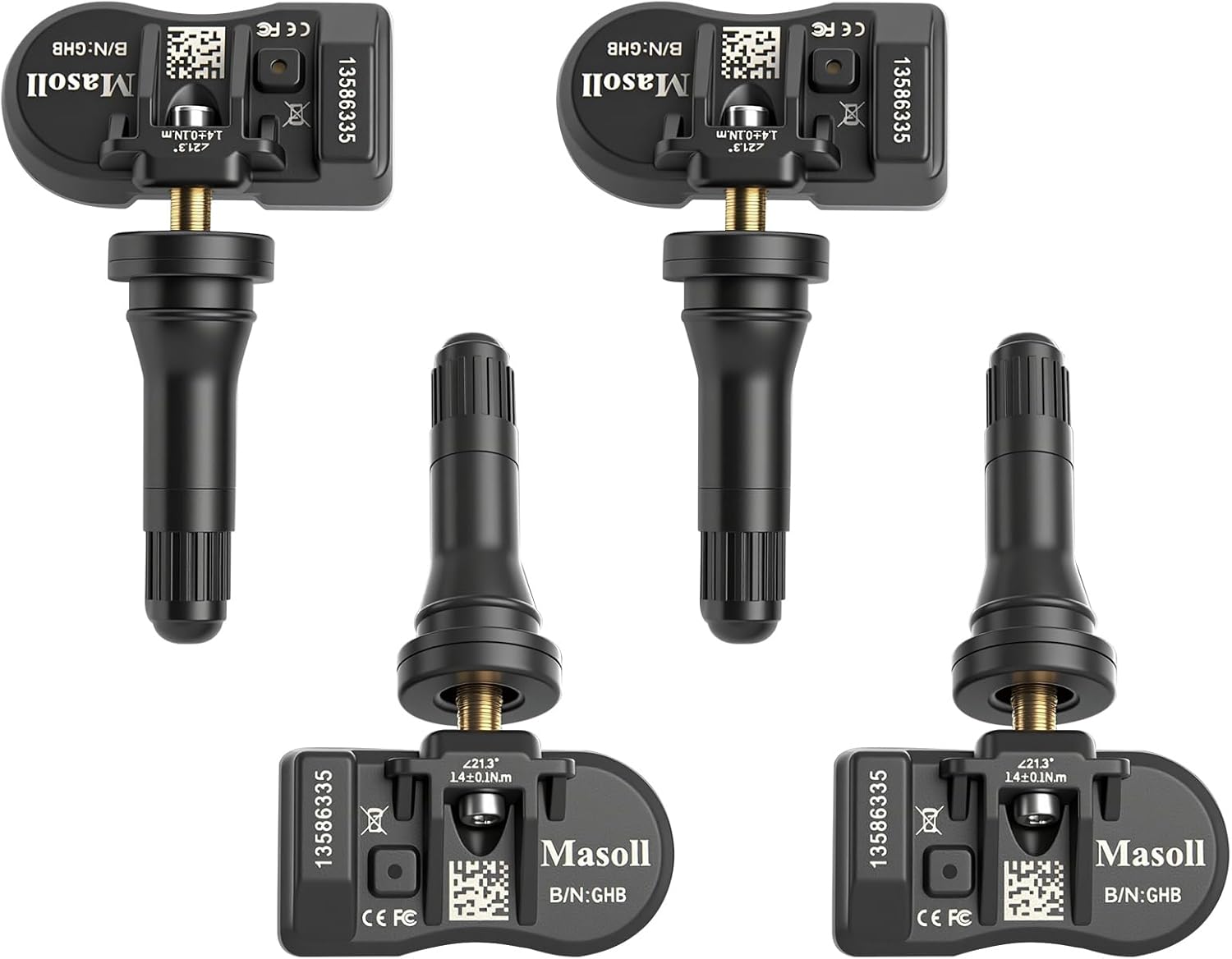
Masoll TPMS sensors are designed for most GM vehicles after 2006, helping you clear tire pressure warnings with OEM-level 315/433MHz compatibility. The 4-pack includes pre-programmed sensors, but re-learning is required after installation using a GM TPMS relearn tool or scan tool. Built with a dual-antenna design and a long-life CR2050 battery, these sensors deliver reliable performance in extreme temperatures with corrosion-resistant valve construction.
Top Causes for Persistent TPMS Warning Lights

If the tire pressure light stays on after adding air, one of these problems is usually responsible.
One Tire Is Still Below the Correct Cold PSI
This is the most common reason. Recheck every tire with a gauge when cold. If one tire is only slightly low, it can still trigger the TPMS light, especially during cold weather.
A Tire Has a Slow Leak
If the same tire keeps losing pressure, inspect it for a nail, screw, damaged valve stem, cracked rubber, or rim leak. A slow leak may let you inflate the tire temporarily, but the light will return as pressure drops again.
The Light Is Flashing Before It Stays On
A flashing TPMS light that turns solid usually means the system is not operating correctly. Possible causes include a dead or damaged wheel sensor, a sensor that was not relearned after tire service, signal interference, or an incompatible replacement wheel.
Spare Tire or Tire Mobility Kit Issue
If your Sonata has a temporary spare installed, the TPMS light may stay on because the spare may not have a TPMS sensor. Hyundai warns that the low tire pressure light and TPMS malfunction indicator can remain on while the spare is installed. Repair and reinstall the original sensor-equipped wheel as soon as possible.
If your Sonata uses a tire mobility kit, avoid sealants that are not approved for the vehicle. Unapproved tire sealant can damage TPMS sensors and create a more expensive repair.
Recent Tire Rotation, New Tires, or Wheel Replacement
After a tire rotation, tire repair, wheel replacement, or TPMS sensor replacement, the system may need a reset, relearn, or scan-tool procedure. Some systems relearn after driving; others require a shop or Hyundai dealer to register the sensor positions.
What to Do After a Tire Rotation, New Tires, or a Flat
If the TPMS light appeared right after tire service, do not assume the tire shop made a mistake, but do check the basics.
- Confirm that all tires are inflated to the driver-door placard PSI.
- Ask whether any TPMS sensors were replaced or moved.
- Make sure replacement wheels are TPMS-compatible.
- If the vehicle was driven on a spare, reinstall the repaired original wheel with its TPMS sensor.
- If the light flashes and then stays solid, ask for a TPMS scan to identify the sensor or communication fault.
When Should You Get Professional Help for TPMS Problems?

Get professional help if the warning light does not clear after you have verified the correct cold pressure in all tires. A tire shop or Hyundai dealer can scan the sensors, check sensor batteries, confirm wheel compatibility, and identify TPMS fault codes.
Schedule service sooner if:
- The TPMS light flashes for about one minute and then remains on.
- The same tire keeps losing pressure after inflation.
- The light started after new tires, wheel replacement, or sensor replacement.
- You are driving on a spare tire and the light will not clear.
- The tire cannot hold air long enough to reach a service station safely.
- The Sonata feels unstable, pulls, vibrates, or makes thumping noises.
[Products Worth Considering]

Keep your tires properly inflated with this analog VONDIOR tire pressure gauge, designed for fast, easy readings without batteries. The swiveling, two-axis hose and large glow dial help you measure at any tire angle with instant visibility. Built with a protective rubber shield, it supports durable, low-maintenance use for cars and trucks.

Replace your worn or missing TPMS sensors with pre-programmed, direct-fit sensors for compatible Ford, Lincoln, and select Mazda models. Each sensor comes ready to activate with a scan tool, helping restore accurate tire pressure monitoring and trouble-free installation. Built with a long-life CR2032 battery and tested before factory release, this set provides dependable performance with a one-year warranty.

This TPMS sensor training and relearn reset tool is customized for Ford, Lincoln, and Mercury vehicles to help activate tire pressure programming after sensor replacement or tire rotation. It can activate individual tire pressure sensors with one-button operation, helping prevent TPMS warning light illumination. It is not a sensor programming tool and cannot program replacement sensors—use it to trigger/activate sensors only.
Tips for Maintaining Optimal Tire Pressure Year-Round
Good tire maintenance prevents most TPMS warnings and helps the Sonata drive, brake, and handle properly.
- Check pressure monthly. Include the spare if your Sonata has one.
- Check before long trips. A tire that is barely low around town can become a bigger problem on the highway.
- Recheck after major temperature swings. Cold weather can lower tire pressure enough to trigger the light.
- Keep valve caps installed. They help keep dirt and moisture out of the valve stem.
- Rotate tires on schedule. Follow the owner’s manual or service schedule for your Sonata.
- Inspect tread and sidewalls. Look for uneven wear, cracks, bulges, punctures, or exposed cords.
Why Is Regular Tire Maintenance Crucial?
Regular tire maintenance is not only about turning off a dashboard light. Correct tire pressure helps protect the tires, improves fuel economy, and keeps the Sonata more predictable during braking and cornering.
Safety Risks Involved
Underinflated tires flex more than properly inflated tires. That extra flex can create heat, reduce handling, increase stopping distance, and raise the risk of tire failure. Overinflation is also a problem because it can reduce ride comfort, cause uneven wear, and make the tire more vulnerable to road impacts.
Fuel Efficiency Benefits
Keeping tires at the proper pressure can improve gas mileage. FuelEconomy.gov says proper tire inflation improves fuel economy by about 0.6% on average and up to 3% in some cases. It also says underinflated tires can lower gas mileage by about 0.2% for every 1 PSI drop in the average pressure of all tires.
| Tire Condition | What It Can Do | Best Action |
|---|---|---|
| Properly inflated | Supports safer handling, even wear, and better fuel economy | Check monthly and before trips |
| Underinflated | Can increase heat, wear, stopping distance, and fuel use | Inflate to the placard PSI when cold |
| Overinflated | Can cause center tread wear, harsh ride, and impact damage risk | Lower to the recommended cold PSI |
| Pressure changes with weather | Cold snaps can trigger the TPMS light | Recheck after large temperature swings |
Legal and Safety Requirements
In the United States, federal TPMS rules require newer passenger vehicles to warn drivers when tires are significantly underinflated. TPMS is a warning system, not permission to skip manual tire checks. You should still check the recommended cold inflation pressure on the Sonata’s tire placard and keep the tires properly inflated.
Frequently Asked Questions
How do you reset the tire pressure light on a Hyundai Sonata?
First, inflate all four tires to the recommended cold PSI on the driver-door placard. Then follow the reset or relearn method in your Sonata owner’s manual. Some models use the instrument-cluster Tire Pressure menu and OK button, while others clear the light after correct inflation and several minutes of driving.
How do I get rid of the Hyundai tire pressure light?
Use a tire gauge to check every tire when cold, inflate each tire to the placard PSI, and drive normally so the TPMS can update. If the light comes back, look for a slow leak. If it flashes before staying on, have the TPMS system scanned.
Why is my tire pressure light still on after filling the tires?
The tires may still be low when checked cold, one tire may have a slow leak, the system may need a reset or relearn, or a TPMS sensor may not be communicating. A spare tire or incompatible replacement wheel can also keep the warning light on.
What does it mean if the Hyundai TPMS light flashes and then stays on?
A flashing TPMS light followed by a solid light usually means the TPMS has a malfunction. Common causes include a failed sensor, sensor battery issue, incompatible wheel, signal interference, or driving on a spare without a TPMS sensor.
Can cold weather turn on the Hyundai Sonata tire pressure light?
Yes. Tire pressure drops as temperature falls, and a cold morning can push a borderline tire below the TPMS warning threshold. Check and adjust pressure when the tires are cold instead of waiting for the light to turn off by itself.
Conclusion
A Hyundai Sonata tire pressure light that stays on is usually easy to solve, but the fix starts with an accurate cold-pressure check. Inflate all tires to the driver-door placard PSI, use the correct reset or relearn method for your model, and watch the light pattern. A solid light usually points to low pressure, while a flashing-then-solid light often needs TPMS diagnosis. If the light keeps returning, treat it as a possible leak, sensor fault, spare-tire issue, or wheel compatibility problem and have it inspected promptly.
Sources
- Hyundai Owner’s Manual — Resetting TPMS — backs up cluster-based TPMS reset steps for applicable Hyundai systems.
- Hyundai Owner’s Manual — Changing a Tire with TPMS — backs up spare-tire, sensor, sealant, and service guidance.
- NHTSA TireWise — Tire Safety Ratings and Awareness — backs up cold tire-pressure checks, placard PSI, TPMS light meaning, and monthly tire checks.
- 49 CFR § 571.138 — Tire Pressure Monitoring Systems — backs up federal TPMS performance and warning requirements.
- FuelEconomy.gov — Keeping Your Vehicle in Shape — backs up fuel-economy effects of proper tire inflation.
- AAA Club Alliance — Temperature and Tire Pressure — backs up the 1 PSI per 10°F temperature-change rule of thumb.