

Tire blowouts in a Hyundai Sonata are usually preventable when you catch pressure loss, tire damage, uneven wear, and overloading early. A blowout can still happen without much warning, so the safest approach is to inspect your tires often, use the correct cold tire pressure, and know how to react if a tire suddenly fails while you are driving.
Quick Answer
To prevent Hyundai Sonata tire blowouts, check cold tire pressure monthly, inspect for bulges, cracks, punctures, uneven tread, and repeated pressure loss, and follow your model-year tire rotation schedule. If a blowout happens, hold the wheel firmly, avoid slamming the brakes, ease off the accelerator, and pull over safely.
Key Takeaways
- Underinflation, overloading, road hazards, tire age, and uneven wear are the biggest blowout risks.
- Check tire pressure when the tires are cold, using the Sonata’s door-jamb placard or owner’s manual pressure, not the maximum PSI on the tire sidewall.
- A flashing TPMS light that stays on usually points to a TPMS malfunction, while a steady low-pressure warning means at least one tire needs attention.
- Do not drive on a tire with a sidewall bulge, exposed cord, repeated air loss, or severe vibration.
At a Glance
| Time Required | 5–10 minutes for a basic tire pressure and visual inspection |
| Difficulty | Easy for pressure and tread checks; professional help is needed for bulges, alignment, vibration, leaks, or exposed cord |
| Tools Needed | Tire pressure gauge, tread depth gauge or penny, flashlight, and access to an air pump |
| Cost | Usually $0–$15 for a gauge or air refill; repair, alignment, or replacement costs vary by tire and shop |
What Is a Tire Blowout and How Does It Happen?
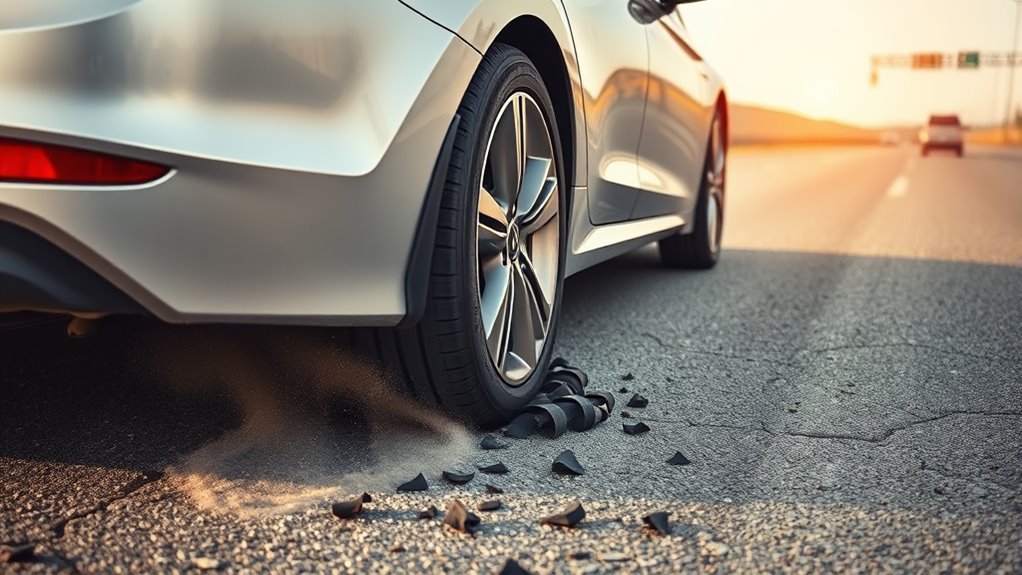
A tire blowout is a sudden tire failure that causes a rapid loss of air pressure. It can make the Sonata pull, shake, drop on one corner, or become harder to control, especially at highway speed.
The most common causes include underinflation, overloading, pothole damage, sidewall cuts, old tires, worn tread, and heat buildup from long high-speed driving. The National Highway Traffic Safety Administration says proper tire pressure, load limits, road-hazard avoidance, and routine tire inspection are key ways to reduce tire failure.
Warning: Do not keep driving on a tire with a sidewall bulge, exposed fabric or cord, a deep cut, repeated air loss, or severe vibration. These signs can point to internal tire damage that may fail suddenly.
Preventing Common Causes of Tire Blowouts in Hyundai Sonatas
Preventing tire blowouts starts with four habits: keep the correct cold pressure, avoid overloading, rotate and inspect the tires on schedule, and deal with damage quickly.
- Use the correct cold tire pressure. Check the driver-side door-jamb placard or your Sonata owner’s manual. Do not use the maximum PSI molded into the tire sidewall as your target pressure.
- Check pressure monthly and before long trips. Hyundai’s owner maintenance guidance includes checking the inflation pressures of all tires at least monthly, and NHTSA TireWise also recommends regular pressure checks.
- Stay within load limits. Passenger and cargo weight should stay within the vehicle’s tire and loading label. Overloading increases heat and stress in the tire.
- Rotate on the correct schedule. Follow your Sonata model-year maintenance schedule. Hyundai schedules commonly list tire rotation with tread and pressure inspection around 7,500–8,000 miles or 12 months, depending on model and manual version.
- Slow down for potholes and debris. A hard impact can damage the sidewall or belt package even if the tire does not go flat immediately.
Pro Tip: Set a monthly phone reminder to check tire pressure in the morning before driving. A “cold” tire reading is the most useful reading because driving warms the tire and raises the pressure temporarily.
Key Warning Signs of a Potential Tire Blowout
Not every blowout gives an obvious warning, but these signs should make you slow down and inspect the tires as soon as it is safe:
- Vibration or thumping: May point to internal tire damage, belt separation, imbalance, or uneven wear.
- Pulling to one side: Can be caused by low pressure, alignment problems, tire damage, or brake issues.
- Bulges or blisters: Usually mean the tire structure is weakened. Replace the tire instead of trying to repair the sidewall.
- Cracks, cuts, or exposed cord: These are serious safety concerns and need immediate professional inspection.
- Repeated pressure loss: A slow leak, bad valve stem, rim leak, or puncture can leave the tire underinflated and overheated.
- Noisy tires or uneven tread: Cupping, feathering, or bald spots can point to alignment, suspension, balance, or inflation problems.
What to Do If a Tire Blows Out While Driving
If a tire blows out in your Hyundai Sonata, your first job is to keep the car stable. Do not panic and do not slam on the brakes.
- Hold the steering wheel firmly with both hands. Keep the Sonata pointed straight and avoid sudden steering movements.
- Do not brake hard. Hard braking can make the car harder to control.
- Ease off the accelerator gradually. Let the vehicle slow down in a controlled way.
- Steer toward a safe shoulder or exit. Move only when the vehicle is stable and you have room.
- Turn on hazard lights. Stop as far from traffic as safely possible.
- Do not stand near traffic to inspect the tire. Call roadside assistance if the location is unsafe or if you do not have the right equipment.
If your Sonata is equipped with a tire mobility kit, spare tire, or temporary spare, follow the instructions in your owner’s manual. A tire sealant kit is only for certain tread punctures and should not be used for sidewall damage, blowouts, large cuts, or a tire that has been driven flat.
Identifying and Addressing Uneven Tire Wear
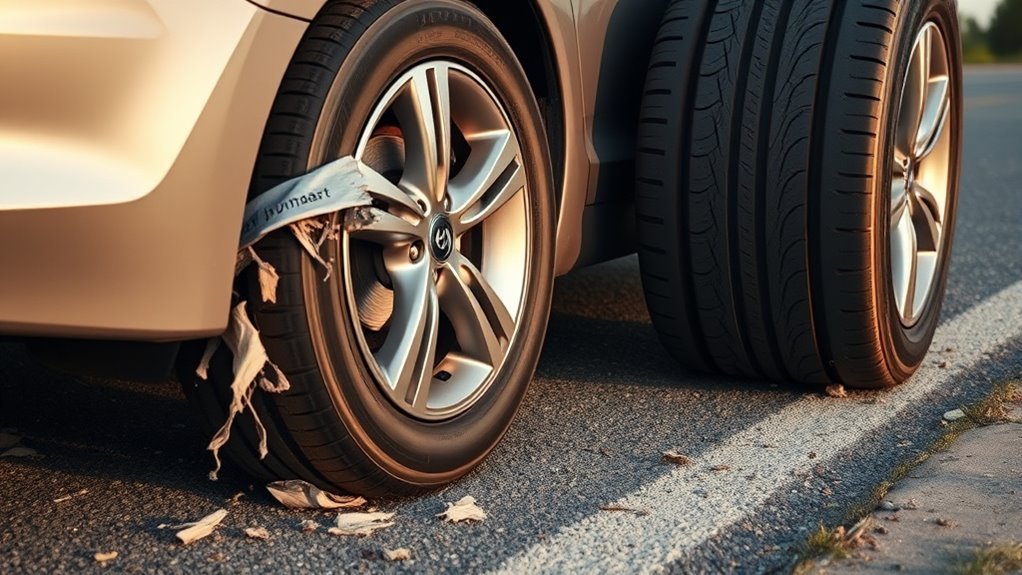
Uneven tire wear is one of the clearest signs that your Sonata needs attention. It can come from wrong pressure, poor alignment, worn suspension parts, wheel imbalance, or aggressive braking and cornering.
- Outer-edge wear: Often points to underinflation or hard cornering.
- Center wear: Often points to overinflation.
- One-sided wear: Often points to alignment or suspension issues.
- Cupping or scalloping: May point to worn shocks, struts, or balance problems.
- Bald spots: Can come from locking brakes, suspension issues, or tire damage.
Use a tread depth gauge for the most accurate reading. NHTSA says tires should be replaced when tread reaches 1/16 inch, which is 2/32 inch. If you use the penny test and can see the top of Lincoln’s head when the penny is inserted upside down into the tread, the tire is at the replacement point.
[Products Worth Considering]

TireJect Off-Road Tire Sealant Kit provides 5-in-1 sealing to help fix tread punctures up to 3/8", sidewall punctures up to 3/8", bead leaks, slow leaks, and minor dry rot on low-speed tires. It permanently seals with liquid rubber, recycled tire particles, and Aramid fibers, making it ideal for flats caused by thorns, nails, and screws. The included dispensing cap attaches to the valve stem for a no-mess installation, along with a metal valve core remover tool and valve stem cap. This kit is for off-road use only.

Monitor tire tread wear with a smart, color-coded depth gauge that shows clear condition ranges at a glance. The bar is range marked for fast, easy readings, helping you maintain safer traction and performance. Each gauge is portable with a pocket clip, and the set includes 20 units for daily use and sharing.

Measure tire tread depth quickly and accurately with this LUMITECO dial gauge that reads in 1/32" increments up to 14/32". The color-coded green/yellow/red zones make it easy to judge tire wear and know when replacement is needed. A rugged, compact design with a protective pouch helps keep the gauge ready for use on cars, trucks, motorcycles, and more.
Why Regular Tire Pressure Checks Matter
Correct tire pressure helps your Sonata stop, steer, carry weight, resist heat buildup, and wear evenly. Hyundai warns that overinflation and underinflation can reduce tire life and handling, and that severe underinflation can lead to heat buildup, blowouts, tread separation, and loss of control.
Temperature changes also matter. AAA notes that tire pressure changes by about 1 PSI for every 10°F change in temperature. That means a tire that was correct during warm weather may become low after a cold night.
For the most accurate check:
- Park the vehicle for at least three hours, or check before driving more than a short distance.
- Find the recommended cold PSI on the Sonata’s tire and loading label or in the owner’s manual.
- Check all four tires with a reliable pressure gauge.
- Add air if low, or release small amounts if high.
- Recheck the pressure after adjustment.
- Replace valve caps to help keep dirt and moisture out of the valve stem.
Note: TPMS is helpful, but it does not replace manual pressure checks. NHTSA explains that TPMS usually warns only when pressure is already significantly low, so monthly gauge checks are still important.
[Products Worth Considering]

The SAFELIFE dial tire tread depth gauge measures tread depth in 1/32 inch increments with clear, easy-to-read 2-inch dial face. Color zones using a traffic light system help you quickly judge whether tread is low, marginal, or ample for safer driving. Built with a durable zinc cast body and a metal detect probe for precise, comfortable use across cars, motorcycles, trucks, and buses.

Steelman white tire marking crayons provide high-contrast, semi-permanent marks for repairing and inspecting tires and equipment. They write on wet or dry, smooth or coarse surfaces including rubber, metal, glass, and wood, making them ideal for puncture location and damage outlining. The lead- and zinc-free crayons resist weather and fading yet wipe away when you no longer need the marks.

The Tymate TM12 RV TPMS delivers real-time tire pressure and temperature monitoring with a stable 433Hz display for safer long-distance driving. It supports simultaneous monitoring across vehicle and trailer zones, includes six alarm modes for pressure, temperature, leakage, battery, and signal loss, and features easy DIY installation with auto calibration. Power is supplied via USB-C charging or solar recharging, with a wide 0–144 PSI range and up to 50 ft signal coverage for RVs and towable trailers.
Understanding the TPMS Light on Your Hyundai Sonata
The tire pressure warning light can mean different things depending on how it behaves:
- Steady low-pressure warning: One or more tires may be significantly underinflated. Check all tires with a gauge and inflate to the recommended cold pressure.
- Light appears after a temperature drop: Cold weather may have lowered the PSI. Check and adjust the pressure when the tires are cold.
- Flashing light that then stays on: Hyundai’s TPMS guidance says the malfunction indicator flashes for about one minute and then remains illuminated when the system detects a malfunction. Have the TPMS inspected if this happens.
- Light stays on after inflation: Recheck pressure when cold. If the tire keeps losing air, have the tire, valve stem, and wheel inspected for leaks or damage.
[Products Worth Considering]

Milton S-921 pencil tire pressure gauge helps you maintain optimal tire pressure for passenger cars with accurate readings in PSI and kPa. It features a built-in deflator valve for convenient pressure adjustments, plus a single chuck head and nylon indicator bar for easy use on the go. Built from durable plated brass and designed for reliable performance, it’s a practical road trip and cold-weather maintenance tool.

ETENWOLF’s tire pressure gauge helps you quickly and accurately check tire PSI across cars, trucks, motorcycles, bikes, and more. It’s manually calibrated to ANSI B40.1 Grade A for reliable readings, includes a large glow dial for easy nighttime viewing, and features a 360-degree swivel chuck for use at any valve angle. The gauge also works consistently in extreme hot or cold weather.
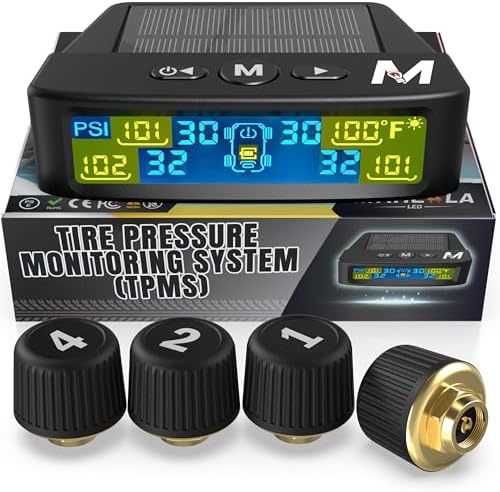
Marcala’s TPMS set of four sensors helps you monitor tire pressure and temperature in real time while driving, with updates every second. The bright color LCD uses auto-dimming for easy viewing, powered by dual solar and USB charging, and offers six alarm modes. Built for trailers, RVs, campers, trucks, and towing setups, the sensors support monitoring 1-4 wheels up to 98 PSI with IP67 waterproof protection.
When to Get Professional Help for Your Tires
Some tire problems are not safe to diagnose or repair at home. A tire shop, Hyundai dealer, or qualified technician should inspect the tire if you notice internal damage signs, unusual wear, or frequent pressure loss.
Signs of Internal Damage
Get professional help right away if you see bulges, blisters, exposed cord, deep cuts, or a tire that looks distorted. These can point to structural failure inside the tire. A tire with sidewall damage is usually not repairable.
Unusual Tire Wear Patterns
Uneven wear such as cupping, one-sided wear, bald spots, or rapid tread loss can indicate alignment, balance, suspension, or inflation problems. Rotating the tires may help prevent future uneven wear, but it will not fix a tire that is already damaged or unsafe.
Frequent Pressure Loss Issues
If one tire needs air again and again, treat it as a safety issue. A slow leak can come from a nail, valve stem, bead leak, cracked wheel, or previous repair problem. Hyundai advises inspection if a tire frequently needs refilling.
Preventive Measures to Avoid Tire Blowouts
Use this simple checklist to lower your risk of a Hyundai Sonata tire blowout:
- Check cold tire pressure monthly and before long trips.
- Inspect tread, sidewalls, and valve stems during every pressure check.
- Look for nails, glass, screws, cracks, bulges, and uneven wear.
- Measure tread depth instead of relying only on a visual check.
- Rotate tires according to your Sonata model-year maintenance schedule.
- Keep the vehicle within its passenger and cargo load rating.
- Avoid curbs, potholes, and road debris when possible.
- Replace tires that are worn to 2/32 inch, structurally damaged, repeatedly leaking, or too old for safe use.
A tire that looks “fine” from the side can still be unsafe if it is underinflated, worn unevenly, too old, or damaged inside.
Tire Age and DOT Date Check
Tread depth is not the only factor. Tires age from heat, sunlight, ozone, storage conditions, and use. NHTSA notes that some vehicle and tire manufacturers recommend replacing tires that are six to 10 years old, regardless of treadwear.
To check age, find the DOT Tire Identification Number on the sidewall. The last four digits show the week and year the tire was made. For example, “3023” means the tire was manufactured in the 30th week of 2023. If the full code is only visible on the inner sidewall, ask a tire shop to help check it during service.
Final Safety Checklist for Your Hyundai Sonata
Before a long drive, after a big temperature swing, or whenever the TPMS light comes on, take a few minutes to check your tires. Confirm pressure, inspect the tread and sidewalls, remove visible debris from the tread, and make sure the car is not overloaded.
If the Sonata pulls, vibrates, loses pressure repeatedly, or shows sidewall damage, do not wait for the next scheduled service. Have the tire inspected before driving at highway speed.
Frequently Asked Questions
What are the warning signs of a tire blowout?
Warning signs can include vibration, thumping, pulling to one side, repeated pressure loss, sidewall bulges, cracks, exposed cord, uneven tread wear, or a tire that feels unusually hot. Some blowouts happen without much warning, so regular pressure and tread checks matter.
Why is my tire pressure light on when my tires look fine on my Hyundai?
A tire can be significantly low without looking flat. The light may come on because of cold weather, a slow leak, a puncture, a valve stem problem, or a TPMS malfunction. Check all tires with a gauge when cold. If the TPMS light flashes for about a minute and then stays on, have the system inspected.
How often should I check tire pressure on a Hyundai Sonata?
Check tire pressure at least once a month, before long trips, and after major temperature changes. Use a tire pressure gauge when the tires are cold and inflate to the PSI listed on the door-jamb tire label or in the owner’s manual.
Can I drive if my Sonata has a tire bulge?
No. A bulge usually means the tire’s internal structure is damaged. Avoid highway driving and have the tire replaced or inspected as soon as possible. Sidewall bulges are not safe to patch.
What should I do immediately after a tire blowout?
Hold the steering wheel firmly, keep the vehicle straight, avoid slamming the brakes, ease off the accelerator, and pull over only when it is safe. Turn on hazard lights and call roadside assistance if you are near traffic or the tire is badly damaged.
Conclusion
Keeping your Hyundai Sonata safe from tire blowouts comes down to routine checks and fast action when something looks wrong. Check cold tire pressure monthly, watch for uneven tread wear, take TPMS warnings seriously, avoid overloading the car, and never ignore bulges, cracks, severe vibration, or repeated air loss. A few minutes of tire care can prevent a dangerous roadside emergency.
Sources
- NHTSA TireWise — tire pressure checks, TPMS basics, recalls, tire aging, and consumer tire safety guidance.
- NHTSA Tire Safety: Everything Rides on It — tire pressure, load limits, tread depth, road hazard prevention, and inspection guidance.
- Hyundai Recommended Cold Tire Inflation Pressures — underinflation, overinflation, heat buildup, blowout risk, and handling effects.
- Hyundai Normal Maintenance Schedule — tire rotation interval with tread wear inspection and tire pressure check.
- Hyundai Tire Pressure Monitoring System — TPMS warning and malfunction indicator behavior.
- AAA Auto Club Group: Tire Pressure and Temperature Change — seasonal temperature effects on tire PSI.


1 thought on “Hyundai Sonata Tire Blowout: Causes, Warning Signs & Prevention”