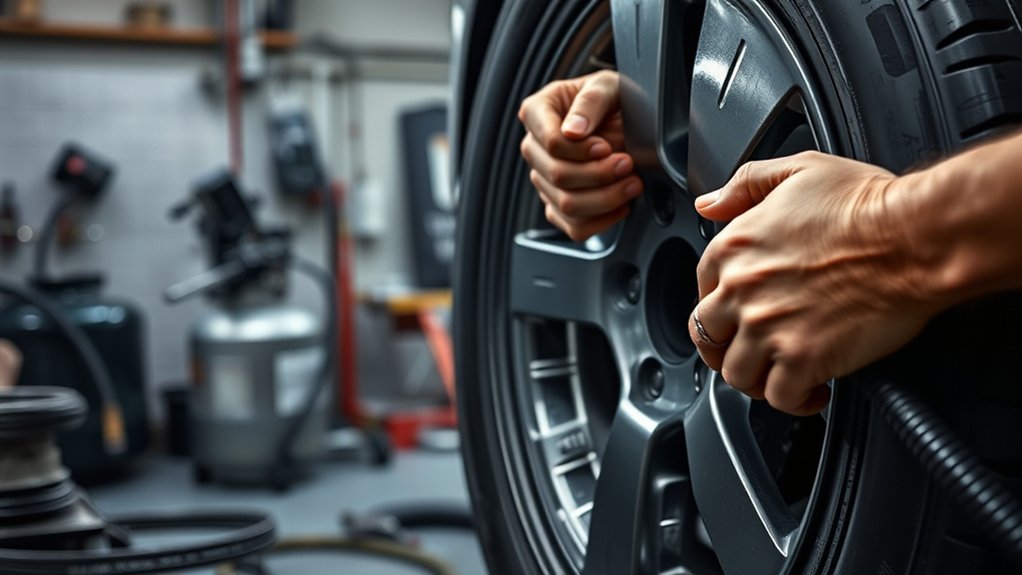
A slow leak at the tire bead usually means air is escaping where the tire edge seals against the rim. Before you add any sealer, confirm the leak with soapy water, inspect the valve stem and tread, then clean the rim and bead seat until both surfaces are smooth, dry, and free of corrosion. If the rim is cracked, bent, badly pitted, or the tire bead is torn, stop and have the tire or wheel replaced.
Quick Answer
To seal a tire bead leak, find the leak with soapy water, deflate and break the bead, clean corrosion from the rim and tire bead, apply approved bead sealer in a thin coat, reseat the bead safely, inflate to the vehicle placard pressure, and recheck for bubbles.
Key Takeaways
- Confirm the leak first with soapy water on the bead, valve stem, tread, and sidewall.
- Clean the rim bead seat and tire bead before applying any sealer, because rust, dirt, and old residue can keep air leaking.
- Use approved tire bead sealer for bead leaks and approved bead lubricant for mounting; they are not the same product.
- Do not exceed the tire maker’s bead seating limit. For many passenger and light truck tires, industry guidance uses 40 psi as the stop point.
- Do not try to seal sidewall damage, a torn bead, a cracked rim, or severe corrosion. Those need professional repair or replacement.
At a Glance
| Time Required | 30 to 60 minutes for one wheel, depending on corrosion and access to tire tools |
| Difficulty | Moderate; safer with a tire machine, clip-on air chuck, and proper restraints |
| Tools Needed | Soapy water, tire pressure gauge, valve core tool, bead breaker or tire machine, wire brush, sandpaper, clean cloths, approved bead sealer, approved tire mounting lubricant, air compressor, clip-on chuck, eye protection, gloves |
| Cost | Low if you already have tools; a tire shop is usually the safer choice if you lack bead-breaking and inflation equipment |
Warning: Tire inflation can injure you if the bead, rim, or tire fails. Use eye protection, keep your body out of the inflation path, use a clip-on air chuck when available, and stop if the bead does not seat by the tire maker’s limit. Michelin and USTMA warn against exceeding 40 psi when seating many passenger tire beads.
Find the Cause of the Leak
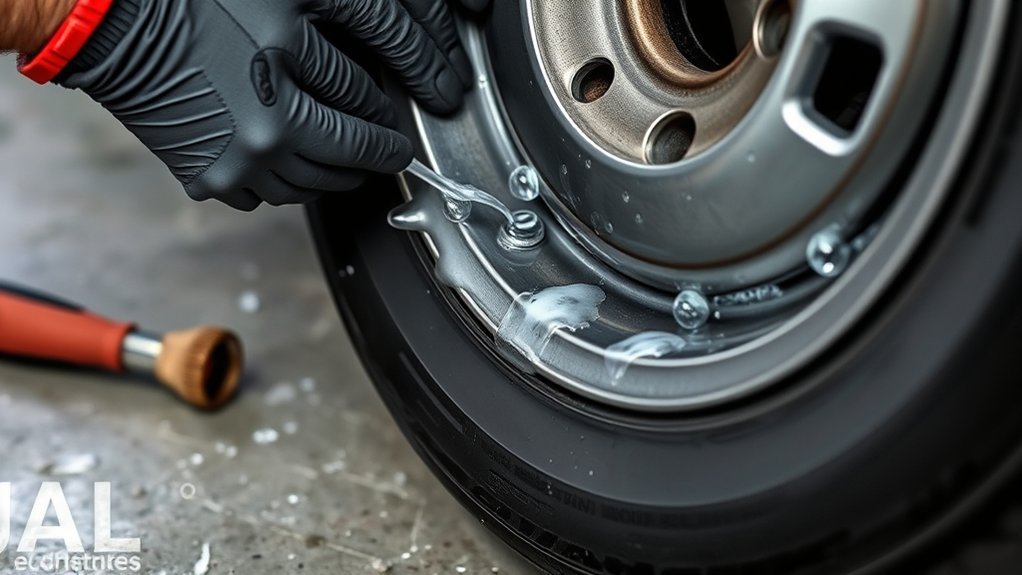
Start with the tire mounted and inflated enough to test. Spray soapy water over the tread, valve stem, sidewall, rim edge, and bead area. Bubbles mark escaping air, so take your time and follow the bubble stream to the exact source.
If bubbles come from the tread, you may have a puncture instead of a bead leak. If bubbles come from the valve stem, check the valve core and stem seal before you disturb the bead. If bubbles come from the sidewall, shoulder, torn bead, cracked rim, or a bent wheel lip, do not seal it as a DIY bead repair. The Tire Industry Association says puncture repairs are limited to the center tread area, not the shoulder or sidewall.
Note: A tire pressure monitoring light does not always tell you where air is leaking. Use a pressure gauge and soapy water to confirm the leak before you choose a repair.
Know When Not to Seal the Bead Yourself
Bead sealer is useful only when the tire and wheel are still structurally sound. It can help close small air paths caused by light corrosion, minor pitting, or a bead seat that is no longer perfectly smooth. It cannot repair damaged tire structure or unsafe wheel damage.
Stop and use a tire shop if you find a cracked rim, deep pitting, a bent bead seat, a torn tire bead, visible cords, sidewall bubbles, sidewall cuts, or repeated pressure loss after cleaning and sealing. A shop can dismount the tire, inspect the inside, clean the rim with proper equipment, replace the valve stem, and confirm whether the tire is safe to reuse.
Gather the Right Supplies
You need more than sealer to do this safely. Gather soapy water, a tire pressure gauge, valve core tool, clean cloths, wire brush, fine sandpaper, approved bead sealer, approved tire mounting lubricant, gloves, and eye protection. If you need to break the bead, use a proper bead breaker or tire machine instead of prying against the rim with random tools.
Use bead sealer only on the bead sealing area. Use bead lubricant only to help mount and seat the tire. USTMA guidance recommends commercially available lubricants made for bead seating. Do not use petroleum oils, silicone, WD-40, or household sprays as tire mounting lubricant.
[Products Worth Considering]

Vigorder rubber cement glue delivers superior adhesion and cures quickly within about 30 seconds for seamless rubber bonding. Once cured, it helps provide a strong, durable, waterproof seal that holds up to vehicle weight, pressure, and heat. Suitable for cars, motorcycles, trucks, bicycles, and off-road tires, it’s designed for emergency patch and maintenance repairs.

Malco tire mounting and demounting lubricant is a ready-to-use tire lube formulated to reduce friction during tire installation for passenger cars, light trucks, farm tires, and heavy-duty equipment. It provides rust-inhibiting protection to help reduce corrosion on rims and wheels, and helps support proper tire bead seating during inflation to reduce air leakage. The silicone-free, soap-free formula is whitewall safe to help prevent discoloration on whitewall tires and sensitive sidewall markings.
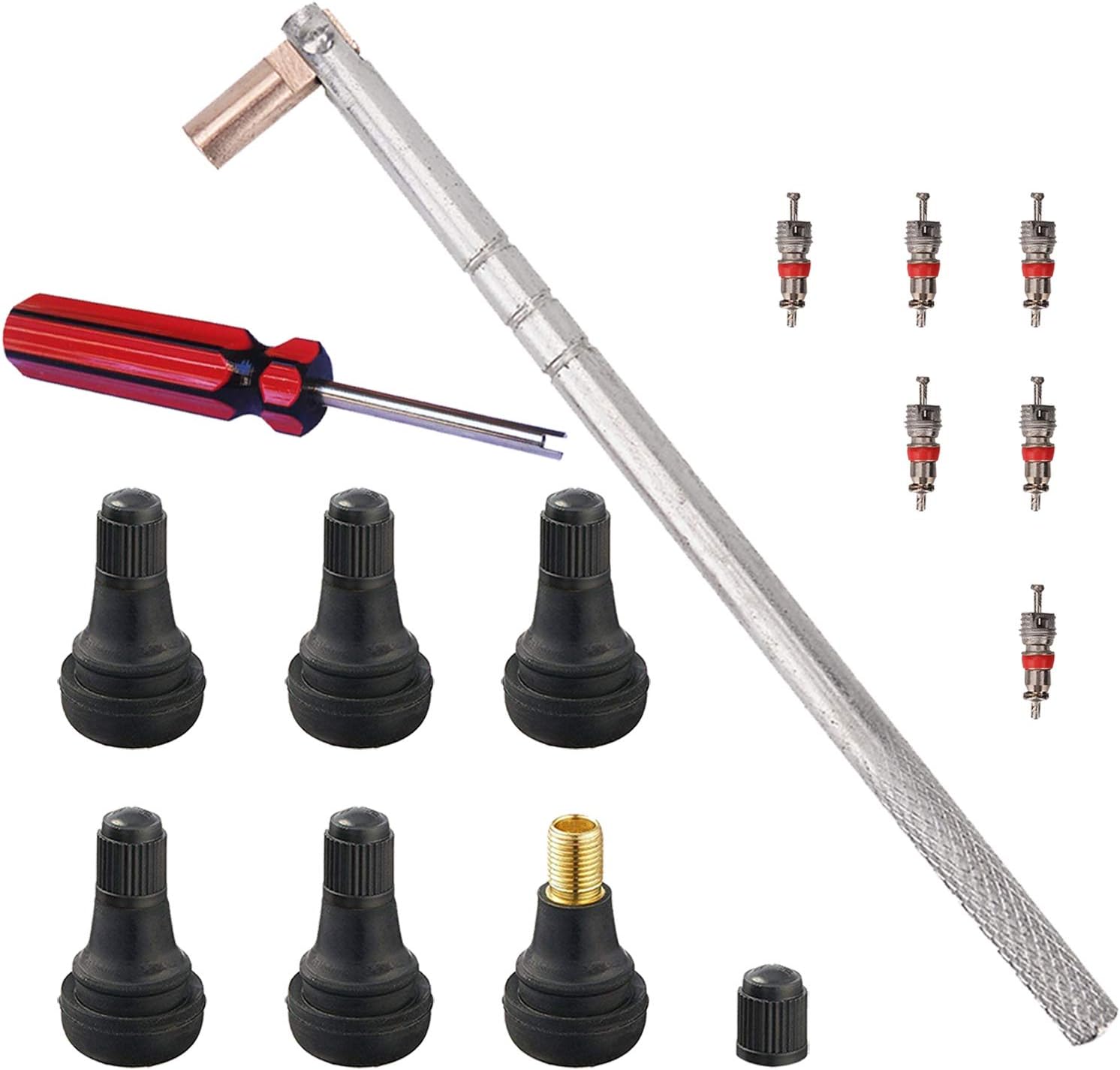
This FEBRYTOLD tire valve stem tool set makes it easy to remove and install standard 0.453 inch snap-in valve stems for tubeless tires. It includes valve stem cores and a single-head valve core remover/installer tool to help you complete repairs quickly. Designed to help avoid scratching wheels and damaging valve stems during service.
Clean the Rim and Bead Area
Deflate the tire, remove the valve core, and break the bead loose from the rim if you have the right tools. Clean the rim bead seat and the tire bead until both surfaces are free of dirt, rubber residue, old sealer, rust, and corrosion. A bead leak often returns if you seal over contamination.
[Products Worth Considering]
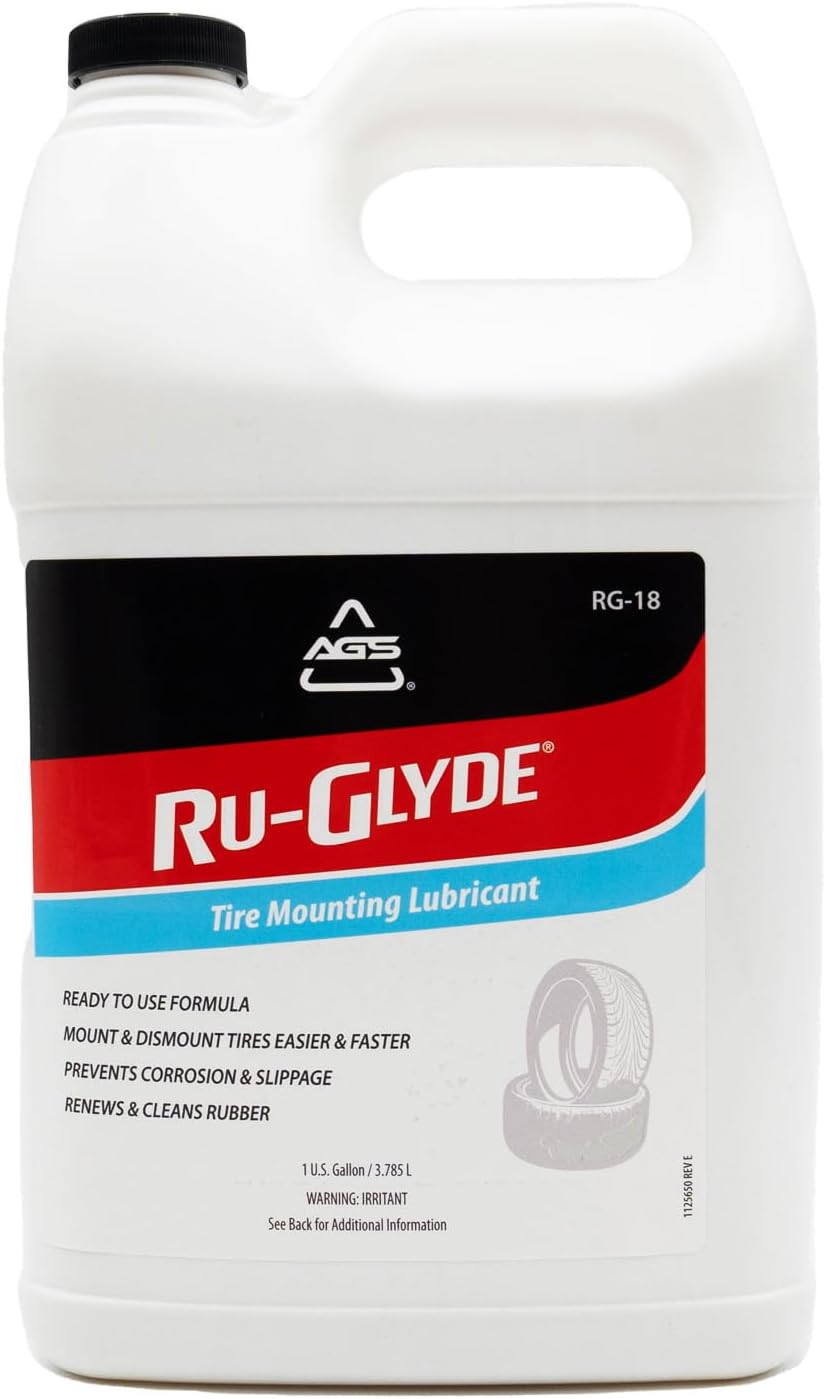
Ru-Glyde tire mounting lubricant from AGS seats tire beads smoothly on the first try with a thick, stay-put formula. It is ready to use with no mixing or dilution, helps prevent rim rust, and dries completely without causing bead slip residue. The water-based formula also conditions aged rubber, making it useful for sidewalls, gaskets, and door seals while remaining safe for tire, wheel, and technicians.

This tire inflator with pressure gauge delivers long-lasting performance with a durable rubber-protected gauge and sturdy build. The longer hose and 360 swivel air chuck help you seal the valve securely and keep your hands free while measuring, inflating, or deflating. It’s battery-free for reliable use and provides ±2 PSI accuracy in the mid-range for most typical tires, with universal compatibility for 1/4 NPT compressor outputs.

This VEVOR tire bead breaker uses a slide-hammer impact and wedge tip to separate tire beads from rims quickly and efficiently without damaging hub surfaces. The long handle and sturdy steel construction help reduce user strain while providing reliable, portable tire changing for cars, trucks, and more. Ideal for home mechanics and repair shops handling multiple vehicle tire sizes.
Remove Dirt and Corrosion
Scrub the rim bead seat with a wire brush or fine sandpaper until the surface feels smooth. Remove loose corrosion, old bead sealer, grease, and debris from the full circumference. Work gently on alloy wheels so you do not gouge the metal or create a new leak path.
Inspect the rim as you clean. Light pitting may seal after cleaning and bead sealer, but deep pits, cracks, heavy flaking, or bends need wheel repair or replacement. Also check the tire bead for cuts, flat spots, or torn rubber. A damaged bead will not seal reliably.
Dry Surfaces Before Sealing
Wipe the bead seat and tire bead with a clean cloth until both are dry. Moisture, grease, and dust weaken the bond between the bead sealer and the sealing surfaces. Let the rim air dry if needed before you apply any product.
Do a final fingertip check around the bead seat. It should feel smooth, clean, and dry. If you still feel grit, rust flakes, raised corrosion, or sticky old sealer, clean again before moving forward.
Apply Bead Sealer
Apply a dedicated tire bead sealer in a thin, even coat around the rim bead seat or the tire bead area, following the product label. Do not glob it on. Thick buildup can make mounting messy and may stop the bead from sitting evenly against the rim.
| Step | Action | Purpose |
|---|---|---|
| 1 | Clean and dry the rim and bead | Remove leak paths and improve adhesion |
| 2 | Brush on a thin bead sealer coat | Fill small gaps at the bead seat |
| 3 | Seat and inflate safely | Press the tire bead evenly against the rim |
Keep sealer away from the valve core and TPMS sensor area. If the wheel has a TPMS sensor, avoid flooding the inside of the tire with extra product. Too much residue can make the next service harder and may require extra cleaning.
Pro Tip: Mark the leak spot with chalk before you deflate the tire. After cleaning, you can pay extra attention to that section of the rim and bead seat.
[Products Worth Considering]
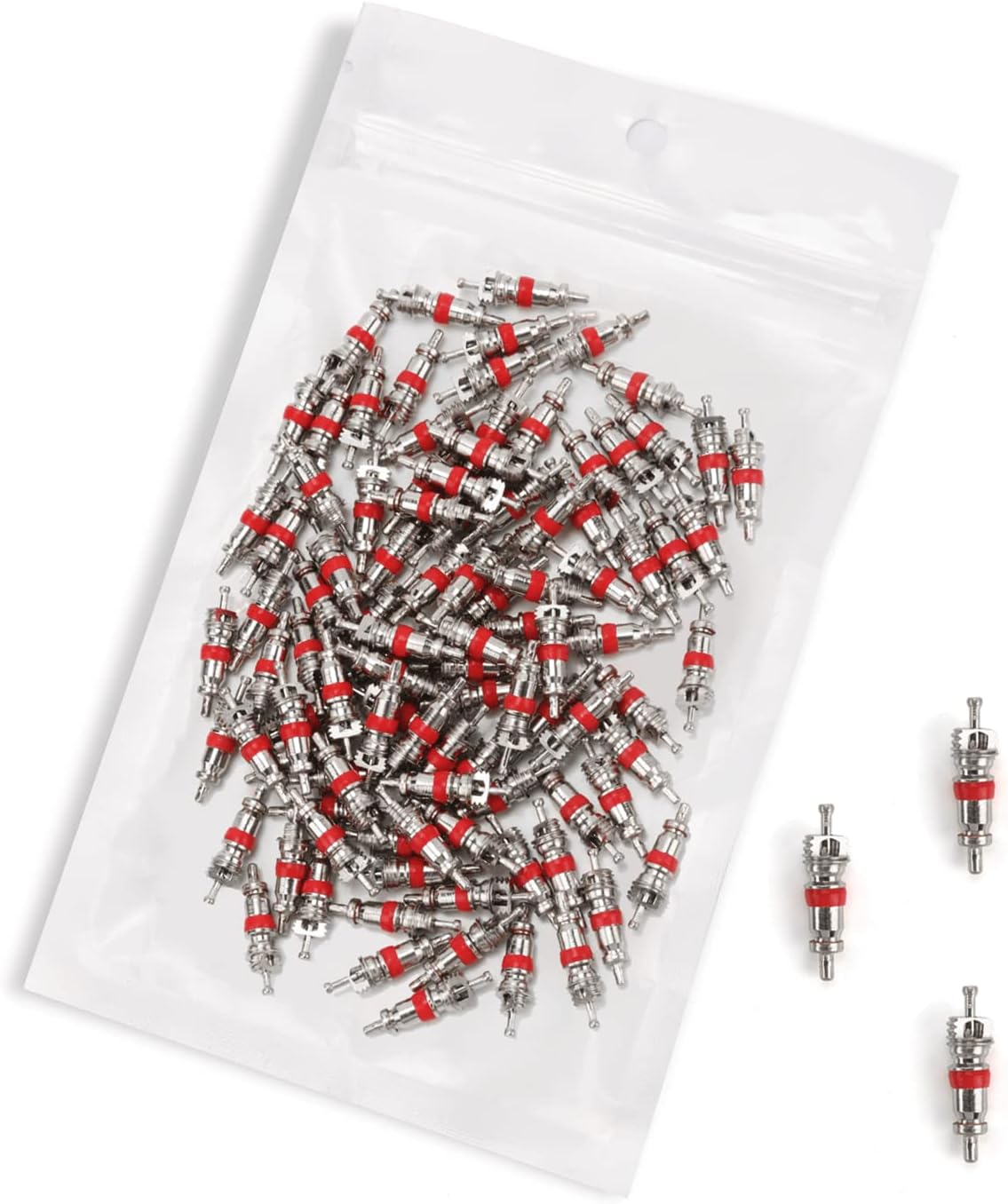
Replace worn Schrader valve cores with durable, nickel-plated replacements designed to resist rust and corrosion for a longer service life. Each core is 100% leakage tested and rated for up to 300 PSI, helping maintain a safe, reliable tire pressure system. Universal fit makes them suitable for cars, RVs, ATVs, motorcycles, bicycles, and many refrigeration/air conditioning applications.

TireJect Off-Road Tire Sealant Kit provides 5-in-1 sealing to help fix tread punctures up to 3/8", sidewall punctures up to 3/8", bead leaks, slow leaks, and minor dry rot on low-speed tires. It permanently seals with liquid rubber, recycled tire particles, and Aramid fibers, making it ideal for flats caused by thorns, nails, and screws. The included dispensing cap attaches to the valve stem for a no-mess installation, along with a metal valve core remover tool and valve stem cap. This kit is for off-road use only.

Get back on the road fast with this compact tire plug repair kit for tubeless tires. It includes self-vulcanizing rubber plugs, T-handle rasp and insert tools, and a storage box that fits in your glove compartment for easy access. Also included are a 4-way valve steam tool set with valve cores and caps for added roadside convenience.
Seat the Bead Safely, With a Tie Strap Only as a Last Resort
A tie strap can sometimes help a loose tire push its sidewalls outward so the bead starts contacting the rim. Treat it as a last-resort positioning aid, not a substitute for a tire machine, safety cage, or proper inflation equipment. Never use flammable sprays, starting fluid, or heat to pop a tire bead into place.
For road tires, the safer option is a tire shop. If you are working on a small utility, mower, ATV, or off-road tire and you understand the risk, use the strap only with the tire already mounted on the rim but not fully seated. Keep your hands and face away from the bead area during inflation.
Strap Placement
Wrap the tie strap around the center of the tread, not around the rim edge or sidewall bead. Keep the strap flat and centered so it compresses the tread evenly and pushes both sidewalls outward.
| Check | What to do | Why it matters |
|---|---|---|
| Tire position | Keep the tire mounted on the rim and centered | Helps the bead rise evenly |
| Strap path | Wrap around the center tread | Pushes sidewalls outward without pinching the bead |
| Strap tension | Tighten only enough to spread the sidewalls | Avoids casing distortion and unsafe force |
Tighten the Strap Carefully
Tighten the strap slowly until the tire sidewalls move outward and touch the rim bead seats. Do not crush or distort the tire. If the strap slips, twists, or pulls the tire off-center, release it and reset before adding air.
Use approved bead lubricant if the tire needs help moving into position. Do not use WD-40, grease, silicone, or hair spray as mounting lubricant. These products can contaminate the bead area, attract dirt, or create a poor long-term seal.
Check the Bead Set
Watch the molded bead indicator line near the rim. It should sit the same distance from the rim all the way around on both sides. If one section sits low, the bead is not fully seated.
- Inflate slowly while standing clear of the bead and sidewall path.
- Stop at the tire manufacturer’s bead seating pressure limit.
- If the bead does not seat by that limit, deflate the tire, reposition it, relubricate, and try again or take it to a tire shop.
After the bead is fully seated, remove the strap and adjust pressure to the vehicle manufacturer’s recommended cold pressure. You can find this on the driver’s door placard or in the owner’s manual, as explained by NHTSA TireWise.
Use Hair Spray Only as an Emergency Backup
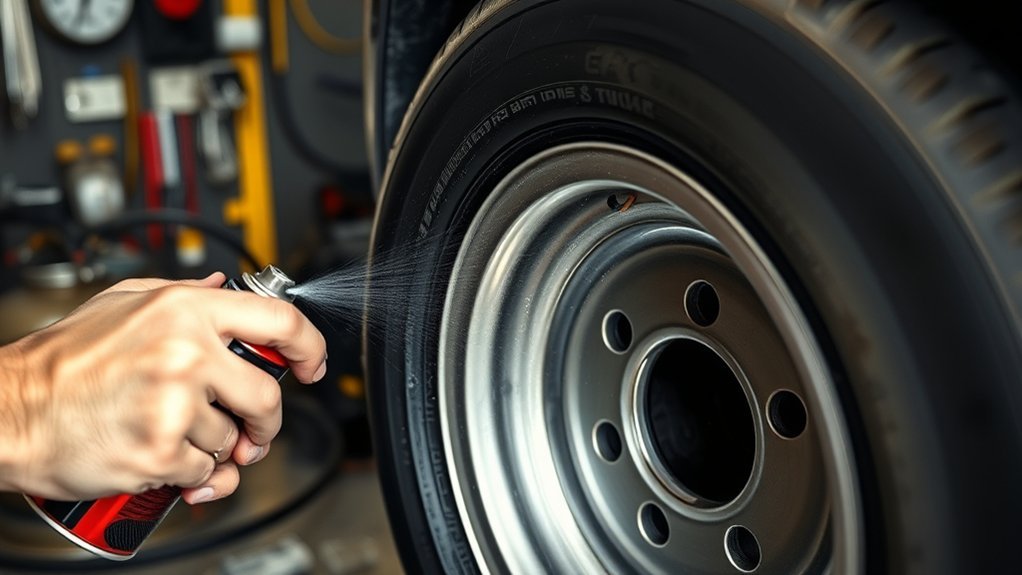
Hair spray is not an approved tire bead repair. It may leave a tacky film, but it is not a real bead sealer, it is not a mounting lubricant, and it should never be used to seat a bead with heat or flame. Treat it only as a short-term emergency trick for a low-speed, non-highway tire when proper repair supplies are not available.
If you use it in that limited situation, clean and dry the bead area first, mist lightly, inflate carefully, and check for leaks. Do not soak the bead, spray near ignition sources, or keep driving as if the tire is repaired. Clean the area later and redo the job with proper bead sealer or have the tire serviced.
- Use it only as a temporary emergency measure.
- Keep it away from flame, sparks, and hot surfaces.
- Replace it with a proper bead repair as soon as possible.
Inflate and Check for Leaks
Once the bead is seated, inflate the tire to the vehicle placard pressure, not the number molded as the tire’s maximum pressure. The sidewall maximum is not the normal setting for most vehicles. Check the pressure when the tire is cold for the most accurate reading.
Spray soapy water around both bead edges, the valve stem, and the tread repair area if one exists. No bubbles usually means the seal is holding. A steady bubble stream means air is still escaping and you need to fix that exact point before driving.
| Check Point | What You See | Action |
|---|---|---|
| Bead | No bubbles | Recheck pressure after 10 to 15 minutes |
| Valve stem | Bubbles near stem or core | Tighten or replace the valve core or stem |
| Sidewall | Bubbles, crack, cut, or bulge | Do not repair as a bead leak; replace or inspect professionally |
| Rim edge | Bubbles at a bend or crack | Repair or replace the wheel |
Check the pressure again after 24 hours. If the tire loses pressure, the leak was not fully fixed or another leak is present. Do not keep adding air and driving on a tire that continues to lose pressure.
Frequently Asked Questions
What can I use to seal a bead on a tire?
Use a dedicated tire bead sealer after you clean and dry the rim bead seat and tire bead. For mounting and seating, use approved tire bead lubricant, not household oil or spray. If the rim is cracked, bent, or badly corroded, sealer is not enough; the wheel needs repair or replacement.
Can you use WD-40 to seal a tire bead?
No. WD-40 Multi-Use Product is made to displace moisture, lubricate, penetrate stuck parts, and protect metal from corrosion. It is not a tire bead sealer. It can also leave residue on the bead area, which may make a proper repair harder.
Will Tire Slime stop a bead leak?
No, not reliably. Slime’s own support page says Slime will not seal bead leaks. It is mainly for temporary emergency puncture repair. A bead leak needs cleaning, bead sealer, valve service, wheel repair, or tire replacement depending on the cause.
What is an alternative to bead sealer?
The best alternative is not another household product; it is fixing the cause. Clean corrosion from the bead seat, replace a leaking valve stem, repair or replace a damaged wheel, or replace a tire with a damaged bead. Hair spray, duct tape, silicone, and rubber cement are not durable road-tire bead repairs.
How do I know the tire bead is fully seated?
Look at the molded bead indicator line near the rim on both sides of the tire. It should be even all the way around. If part of the line dips closer to the rim, the bead is not fully seated. Deflate, reposition, relubricate, and try again safely or take it to a tire shop.
Can I drive after sealing a tire bead leak?
Only drive after the bead is fully seated, the tire is inflated to the vehicle placard pressure, and soapy water shows no bubbles. Recheck pressure after 10 to 15 minutes and again after 24 hours. If pressure drops again, do not keep driving until the leak is fixed.
Conclusion
You can fix some tire bead leaks at home, but only when the tire and wheel are still safe. Find the exact leak, clean the bead seat, apply proper bead sealer, seat the bead within safe pressure limits, and confirm the repair with soapy water and a pressure recheck.
Do not use shortcuts for damaged tires, cracked rims, sidewall leaks, or beads that will not seat safely. In those cases, a tire shop is the safer and usually cheaper choice than risking another leak, damaged wheel, or tire failure on the road.
Sources
- NHTSA TireWise — supports checking tire pressure and using the vehicle manufacturer’s recommended pressure.
- U.S. Tire Manufacturers Association bead seating warning — supports the 40 psi bead seating safety limit and stop procedure.
- USTMA tire bead lubricant bulletin — supports using approved lubricants made for bead seating.
- Michelin tire safety guidance — supports using authorized tools and avoiding excessive bead seating pressure.
- Slime puncture and bead leak guidance — supports that Slime will not seal bead leaks.
- Tire Industry Association tire repair guidance — supports avoiding sidewall and shoulder puncture repairs.