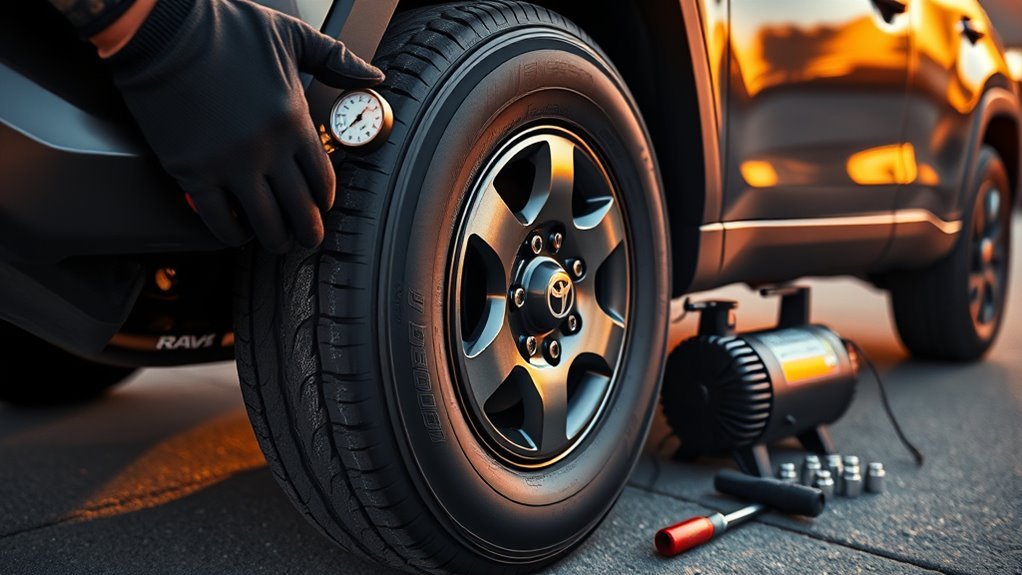
A tire blowout in your RAV4 can happen fast, but most risk factors are easy to reduce with a few regular checks. The biggest habits are simple: use the correct cold tire pressure from your RAV4’s door placard, inspect tread and sidewalls monthly, avoid overloading, and slow down around potholes, curbs, debris, and construction zones.
Quick Answer
To prevent tire blowouts on your RAV4, check cold tire pressure monthly, use the PSI on the driver-door placard or owner’s manual, replace tires at 2/32 inch of tread, inspect for cracks or bulges, avoid overloading, and slow down around potholes and road debris.
Key Takeaways
- Use the cold PSI listed on your RAV4’s tire placard or owner’s manual, not the maximum PSI printed on the tire sidewall.
- Check pressure, tread, sidewall damage, valve caps, and the spare tire at least once a month and before long trips.
- Replace tires at 2/32 inch of tread or sooner if you find bulges, exposed cords, deep cuts, or major cracking.
- Never overload your RAV4; extra cargo, passengers, roof loads, and towing weight increase tire heat and stress.
- If a blowout happens, hold the wheel firmly, avoid slamming the brakes, ease off the accelerator, stabilize the vehicle, and pull over only when safe.
At a Glance
| Time Required | 5–10 minutes for a monthly pressure and visual inspection |
| Difficulty | Easy for basic checks; professional help needed for bulges, vibration, uneven wear, or tire replacement |
| Tools Needed | Tire pressure gauge, tread depth gauge or penny, flashlight, and your RAV4 owner’s manual or tire placard |
| Cost | Usually $5–$20 for basic gauges; tire rotation, alignment, repair, or replacement varies by shop and tire size |
Why Tire Condition Matters on Your RAV4
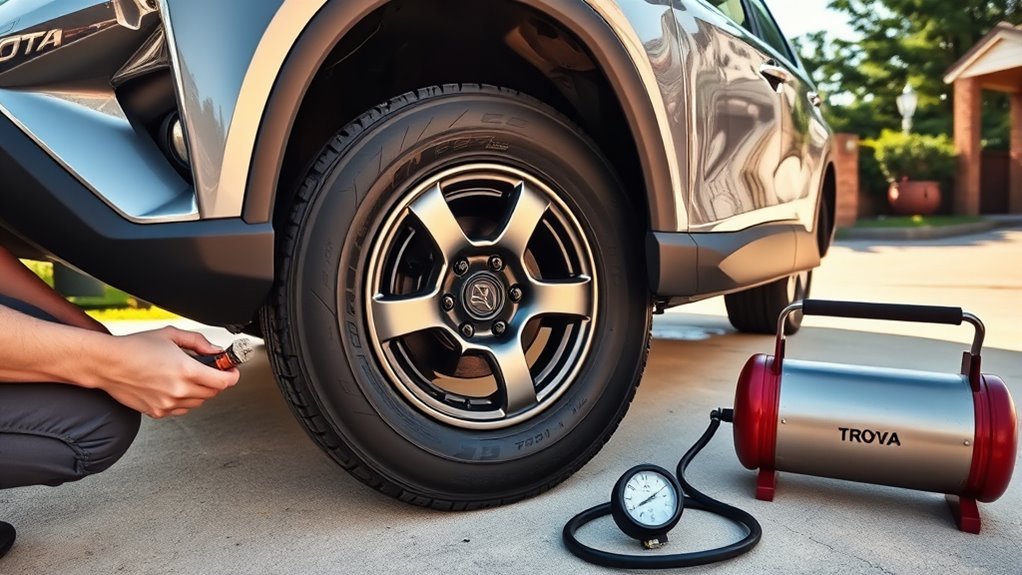
Your RAV4’s tires carry the full weight of the vehicle, passengers, cargo, and any towing load. When a tire is underinflated, overloaded, badly worn, or damaged, it can build heat, lose strength, and fail suddenly.
The National Highway Traffic Safety Administration notes that many tire-related crashes can be prevented with proper tire maintenance, including inflation, rotation, tire aging awareness, and recall checks.
Blowout prevention is not only about adding air. You also need to inspect tread depth, check for sidewall damage, rotate tires on schedule, avoid overloading, and replace aging or damaged tires before they become unsafe.
Check the Correct RAV4 Tire Pressure
The safest tire pressure for your RAV4 is the cold inflation pressure listed for your exact vehicle. Toyota says to check the Specifications section of your Owner’s Manual or the Tire Information placard, usually on the driver’s side door post. Do not use the maximum PSI printed on the tire sidewall as your normal setting.
[Products Worth Considering]

Measure tyre tread depth precisely with a digital gauge that reads in both MM and inches, helping you monitor safe driving conditions. The large LCD screen is easy to operate, and the compact tool fits for cars, trucks, and motorcycles. It provides high accuracy with a 0-25.4mm range and includes a 1-year warranty for added peace of mind.

Monitor tire tread wear with a smart, color-coded depth gauge that shows clear condition ranges at a glance. The bar is range marked for fast, easy readings, helping you maintain safer traction and performance. Each gauge is portable with a pocket clip, and the set includes 20 units for daily use and sharing.

Measure tire tread depth quickly and accurately with this LUMITECO dial gauge that reads in 1/32" increments up to 14/32". The color-coded green/yellow/red zones make it easy to judge tire wear and know when replacement is needed. A rugged, compact design with a protective pouch helps keep the gauge ready for use on cars, trucks, motorcycles, and more.
How to Find the Right PSI
- Open the driver’s door and look for the Tire and Loading Information placard on the door edge or door jamb.
- Match the pressure to the tire size installed on your RAV4.
- Check your Toyota owner’s manual if the placard is missing, damaged, or hard to read.
- Ask a Toyota service department or tire professional if your RAV4 has non-original tire sizes.
Note: Many RAV4s may fall near the low-to-mid 30 PSI range, but the exact number can vary by model year, trim, tire size, and load. Always follow your own placard or manual.
How to Check Cold Tire Pressure
- Park the RAV4 for at least three hours, or check the tires before driving more than a short distance.
- Remove the valve cap and press a reliable tire gauge firmly onto the valve stem.
- Compare the reading with the cold PSI on the placard.
- Add air if the tire is low, then recheck with the gauge.
- If the tire is overinflated, release air slowly and recheck.
- Reinstall the valve cap to help keep dirt and moisture out of the valve.
- Repeat the check on all four tires and the spare tire if your RAV4 has one.
The NHTSA recommends checking tire pressure at least once a month and before long trips. A Tire Pressure Monitoring System can warn you when a tire is significantly low, but it is not a replacement for regular gauge checks.
Adjust for Seasonal Changes
Cold weather can make tire pressure drop, and warm weather can raise pressure after driving. Check pressure more often during big temperature swings, before highway trips, and when your RAV4 is carrying extra cargo. Always adjust pressure based on a cold reading whenever possible.
Pro Tip: Keep a small tire gauge in the glove box. Gas-station pumps are useful for adding air, but your own gauge gives you a consistent reading every time.
Inspect Tread, Sidewalls, and Tire Age
Pressure is only one part of blowout prevention. A tire can be correctly inflated and still be unsafe if the tread is worn, the sidewall is damaged, or the rubber has aged.
[Products Worth Considering]

The SAFELIFE dial tire tread depth gauge measures tread depth in 1/32 inch increments with clear, easy-to-read 2-inch dial face. Color zones using a traffic light system help you quickly judge whether tread is low, marginal, or ample for safer driving. Built with a durable zinc cast body and a metal detect probe for precise, comfortable use across cars, motorcycles, trucks, and buses.
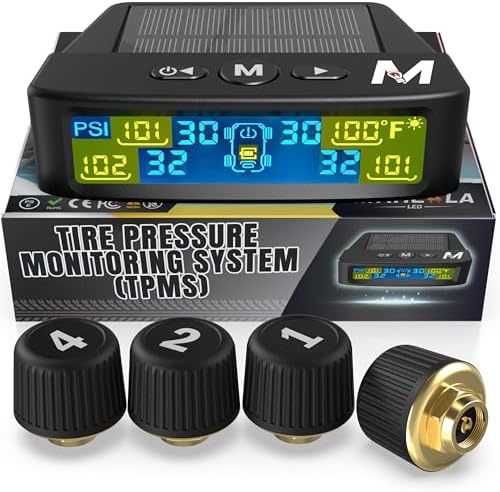
Marcala’s TPMS set of four sensors helps you monitor tire pressure and temperature in real time while driving, with updates every second. The bright color LCD uses auto-dimming for easy viewing, powered by dual solar and USB charging, and offers six alarm modes. Built for trailers, RVs, campers, trucks, and towing setups, the sensors support monitoring 1-4 wheels up to 98 PSI with IP67 waterproof protection.

These aluminum alloy tire valve stem caps protect the valve core from corrosion and help prevent air leakage for more stable tire pressure. The rubber ring design helps support a secure, safe seal while adding a stylish look to your Honda wheels. Easy to install by hand, these caps are ideal for everyday driving and weather exposure.
Tread Depth Inspection
Tire tread provides grip, especially in rain. The NHTSA says tires are not safe and should be replaced when tread reaches 2/32 of an inch. You can use a tread depth gauge or the penny test: place a penny into the tread with Lincoln’s head upside down and facing you. If you can see the top of Lincoln’s head, the tire is too worn.
| Tread Depth | Action Needed | Urgency |
|---|---|---|
| 4/32 inch or deeper | Usually usable, but keep checking for uneven wear | Low |
| 3/32 inch | Plan replacement soon, especially before wet-season driving | Medium |
| 2/32 inch or less | Replace immediately | High |
Visible Damage Signs
Walk around your RAV4 once a month and before long drives. Look for:
- Bulges or bubbles on the sidewall
- Cracks, splits, cuts, or exposed cords
- Nails, screws, glass, or stones lodged in the tread
- Uneven wear across the tread
- Vibration, pulling, humming, or thumping while driving
Warning: Do not keep driving on a tire with a bulge, exposed cord, or deep sidewall cut. Install the spare if safe to do so or call roadside assistance.
Age of Tires
Tread depth does not tell the full story. Rubber can weaken with age, heat, sunlight, storage conditions, and poor maintenance. NHTSA says some vehicle and tire manufacturers recommend replacing tires that are six to 10 years old, regardless of treadwear. To check age, find the DOT Tire Identification Number on the sidewall; the last four digits show the week and year the tire was made.
For example, a tire code ending in “2321” was made in the 23rd week of 2021. If the full DOT code is only visible on the inner sidewall, ask a tire shop to check it during rotation or inspection.
Manage Weight, Cargo, and Towing Loads
Overloading your RAV4 makes tires flex more, build more heat, and wear faster. Check the Tire and Loading Information placard, your owner’s manual, and the Gross Vehicle Weight Rating before loading passengers, luggage, tools, roof cargo, or towing equipment.
| Weight Tip | Action Needed |
|---|---|
| Follow the load label | Check the combined weight of passengers and cargo shown on the door placard. |
| Distribute weight evenly | Keep heavy items low and centered instead of stacked high or pushed to one side. |
| Avoid unnecessary cargo | Remove heavy items you do not need for the trip. |
| Be careful with towing | Follow Toyota towing limits, trailer tire pressure guidance, and trailer load ratings. Do not add an arbitrary 10 PSI. |
| Watch roof loads | Roof cargo changes handling and can add stress when the vehicle is already packed. |
Recognizing and Avoiding Road Hazards
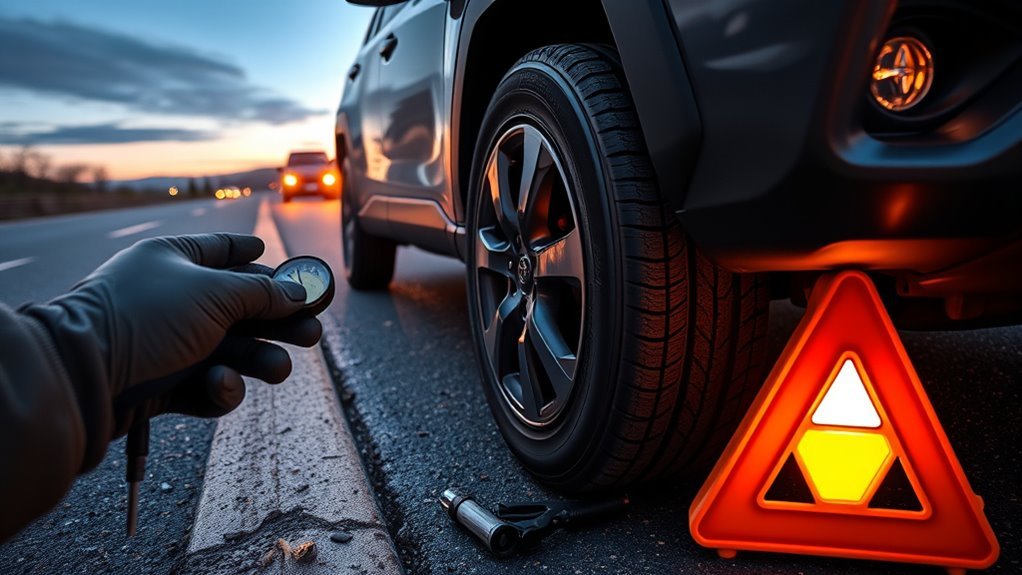
Potholes, curbs, sharp debris, metal scraps, broken pavement, and construction-zone edges can damage a tire instantly. Slow down when the road surface looks rough, leave more space behind vehicles that may hide potholes, and avoid swerving sharply unless it is necessary to prevent a crash.
After a hard pothole hit or curb strike, stop in a safe place and inspect the tire and wheel. Look for a new bulge, cut, pressure loss, bent rim, vibration, or steering pull. If anything feels different, have the tire, wheel, suspension, and alignment checked before taking a long trip.
Rotate, Balance, and Align Your Tires
Rotation, balancing, and alignment help tires wear evenly. Uneven wear can leave one shoulder of the tire thin even when the center tread still looks acceptable. NHTSA recommends checking your owner’s manual for the correct rotation schedule and pattern.
- Rotate tires: Follow Toyota’s maintenance schedule or your tire shop’s recommendation.
- Balance wheels: Balance when installing new tires or when vibration appears.
- Check alignment: Get alignment checked if the RAV4 pulls, the steering wheel is off-center, or tread wear is uneven.
- Match tire size and load rating: Replacement tires should match Toyota’s recommended size and load requirements unless a qualified tire professional approves an alternative.
[Products Worth Considering]

Accurately measure tire tread depth with a calibrated gauge marked from 0 to 1 inch in 1/32 inch increments. The color-coded bar helps you quickly identify tread condition ranges, supporting safe driving for trucks, motorcycles, automobiles, and passenger vehicles.
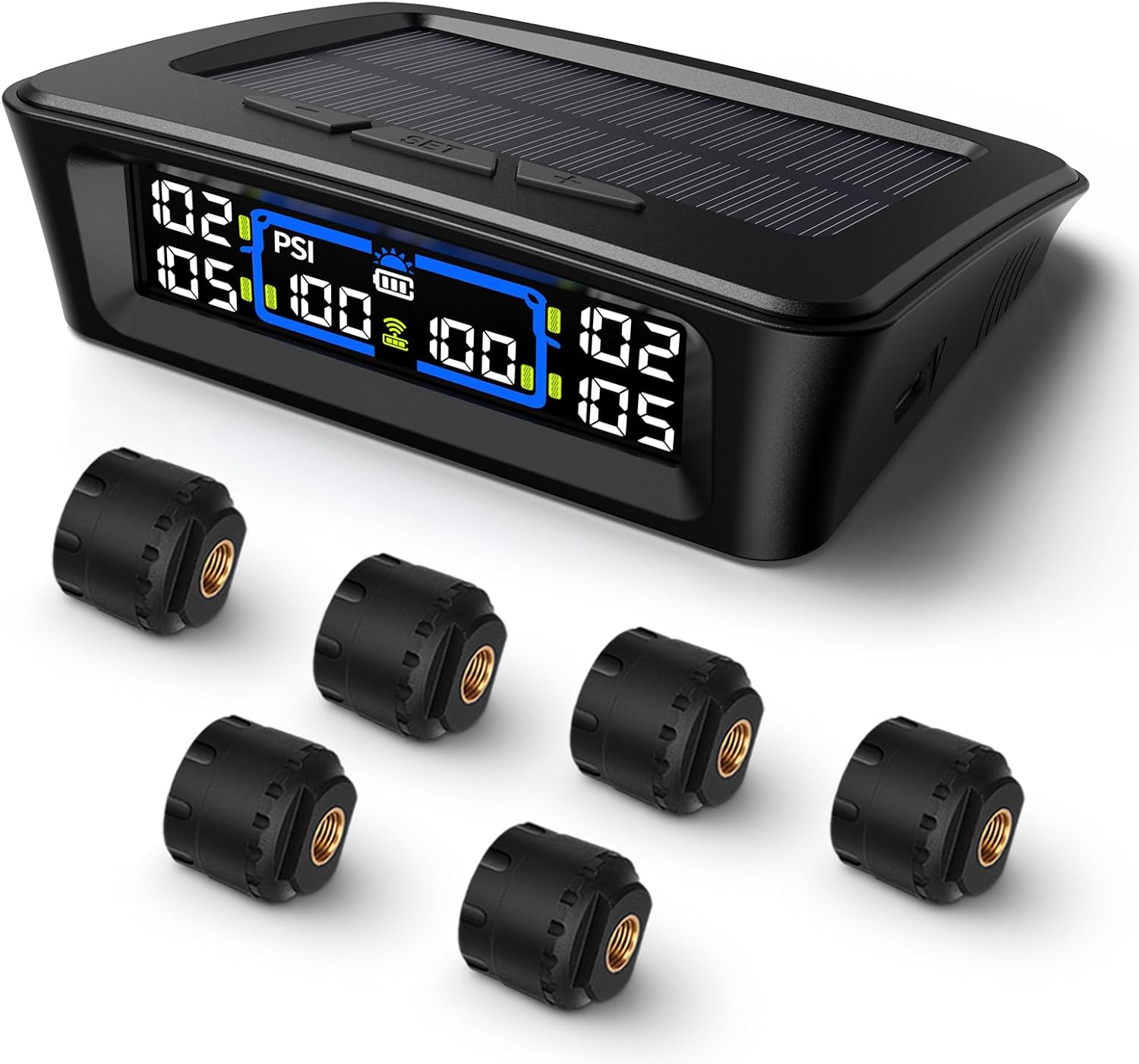
The Tymate TM12 RV TPMS delivers real-time tire pressure and temperature monitoring with a stable 433Hz display for safer long-distance driving. It supports simultaneous monitoring across vehicle and trailer zones, includes six alarm modes for pressure, temperature, leakage, battery, and signal loss, and features easy DIY installation with auto calibration. Power is supplied via USB-C charging or solar recharging, with a wide 0–144 PSI range and up to 50 ft signal coverage for RVs and towable trailers.

The TYAMATE TM8 solar-powered wireless TPMS delivers real-time tire pressure and temperature monitoring with six alarm modes for safer driving. A vibrant color LCD display shows readings clearly while windshield mounting keeps it hands-free and easy to read. With a wide 0–87 PSI range, strong 433.92 MHz signal transmission, and quick sensor pairing, it’s ideal for RV, sedan, SUV, MPV, and truck use.
What to Do in Case of a Tire Blowout?
A blowout can sound like a bang, followed by pulling, vibration, or a sudden change in steering. The goal is to keep the RAV4 stable and avoid overreacting.
- Hold the steering wheel firmly with both hands.
- Do not slam on the brakes. Sudden braking can make the vehicle harder to control.
- Keep the vehicle pointed straight. Make small steering corrections only.
- Ease off the accelerator gradually.
- Let the RAV4 slow down while staying in your lane if possible.
- Signal and pull off the road only when the vehicle is stable and there is a safe shoulder or exit.
- Turn on hazard lights.
- Stay away from traffic. If changing the tire is unsafe, stay belted inside the vehicle or move to a protected area and call roadside assistance.
Warning: A front-tire blowout may pull through the steering wheel, while a rear-tire blowout may feel like the back of the RAV4 is swaying. The response is the same: hold steady, avoid sudden braking, slow gradually, and pull over only when safe.
After the Blowout: What to Check Before Driving Again
After a blowout, do not assume replacing the tire is the only repair needed. A failed tire can damage the wheel well, fender liner, brake line area, suspension parts, TPMS sensor, or wheel. Have a professional inspect the tire, rim, valve stem, TPMS sensor, alignment, and nearby body or suspension damage before returning to highway speeds.
If you install a temporary spare, follow the speed and distance limits printed on the spare or in the owner’s manual. A temporary spare is for emergency use, not regular driving.
Frequently Asked Questions
Is damage from a tire blowout covered by insurance?
It depends on your policy, the cause of the blowout, and whether the damage came from a covered event. Comprehensive or collision coverage may help when a covered incident causes tire or vehicle damage, but normal wear, aging, slow leaks, and routine flats are commonly excluded. Keep maintenance records, photos, repair invoices, and the damaged tire until your insurer reviews the claim.
What tire pressure should I use for my RAV4?
Use the cold tire pressure printed on your RAV4’s Tire and Loading Information placard or listed in the owner’s manual. The correct PSI can vary by model year, tire size, and trim, so avoid using a generic PSI range or the maximum pressure printed on the tire sidewall.
Can I rely on the TPMS warning light?
No. TPMS is a helpful warning system, but it is not a substitute for monthly pressure checks with a gauge. A tire can be low, damaged, or aging before a warning appears, and some spare tires may not have TPMS sensors.
When should I replace RAV4 tires to prevent blowouts?
Replace tires when tread reaches 2/32 inch, when treadwear indicators are flush with the tread, or when you see bulges, exposed cords, deep cuts, or serious cracking. Also check tire age; some manufacturers recommend replacing tires after six to 10 years even if tread remains.
Should I replace one tire or all four on a RAV4?
It depends on tread depth, tire age, drivetrain, and tire type. For all-wheel-drive RAV4 models, large tread-depth differences can create drivetrain stress. Ask Toyota service or a qualified tire shop before mixing new and worn tires.
Conclusion
Preventing tire blowouts on your RAV4 comes down to routine, not luck. Check cold tire pressure monthly, use the PSI from your Toyota placard or manual, inspect tread and sidewalls, respect load limits, rotate tires on schedule, and slow down for road hazards. If a blowout happens anyway, stay calm, avoid hard braking, stabilize the vehicle, and get safely off the road before calling for help.
Sources
- NHTSA Tire Safety Ratings and Awareness — tire pressure, tread depth, TPMS, tire aging, and blowout response guidance
- Toyota Support: Recommended Tire Pressure — use the owner’s manual or driver-side tire placard for the correct PSI
- Toyota Owners Manuals and Warranties — official owner’s manual lookup for model-specific information
- NHTSA TireWise — tire-related crash prevention and maintenance guidance
- Progressive: Does Car Insurance Cover Tire Damage? — policy-dependent tire damage coverage and wear-and-tear exclusions