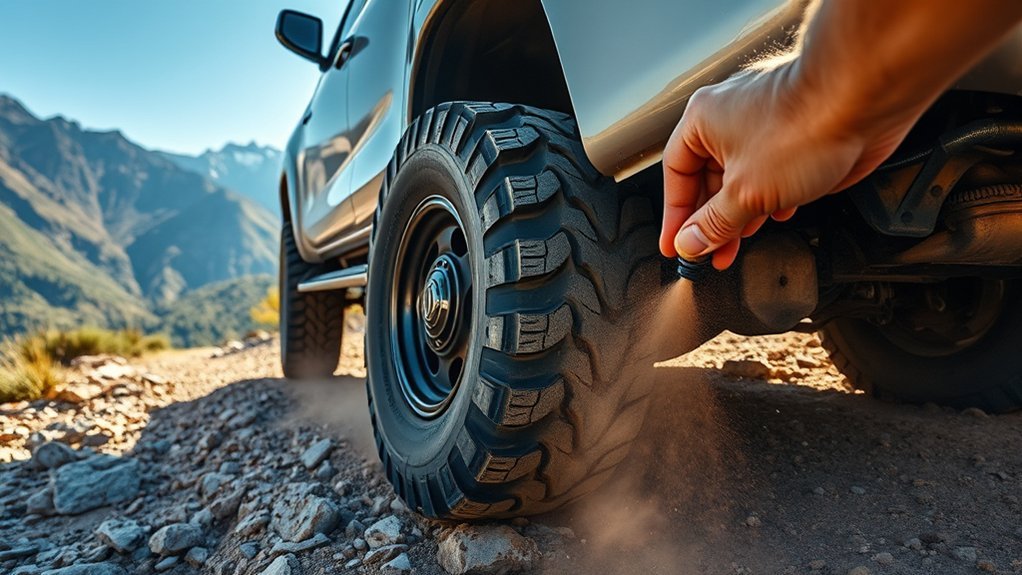
Airing down your Toyota Hilux tires can make off-road driving smoother, safer, and easier to control, especially on sand, corrugations, mud, snow, and rocky tracks. The goal is not to run “flat” tires. The goal is to lower pressure enough for more tire flex and footprint, then reinflate to the correct road pressure before driving at normal paved-road speeds.
Quick Answer
Air down your Toyota Hilux tires before low-speed off-road sections where traction and comfort matter. As a safe starting point, use about 15–20 PSI for soft sand, 18–25 PSI for rocky or corrugated tracks, and return to the pressure on your tire placard or owner’s manual before driving on pavement.
Key Takeaways
- Airing down helps your Hilux tires spread out, grip loose surfaces, and absorb bumps at low off-road speeds.
- Use terrain-based starting pressures, then adjust slowly instead of dropping straight to an extreme PSI.
- Do not use aired-down tires for highway driving, towing on pavement, or long paved-road sections.
- Reinflate all four tires to the pressure shown on your Hilux tire placard or owner’s manual before returning to normal road speeds.
At a Glance
| Time Required | 10–20 minutes to deflate all four tires; 10–30 minutes to reinflate depending on compressor size. |
| Difficulty | Easy, but accuracy matters because tire pressure affects handling, braking, tire heat, and bead security. |
| Tools Needed | Tire pressure gauge, tire deflator, portable air compressor, valve caps, tire repair kit, gloves, and recovery gear. |
| Cost | $0 if you already carry the tools; roughly $20–$250+ for a gauge, deflator, and portable compressor setup. |
Why You Should Air Down Your Toyota Hilux Tires
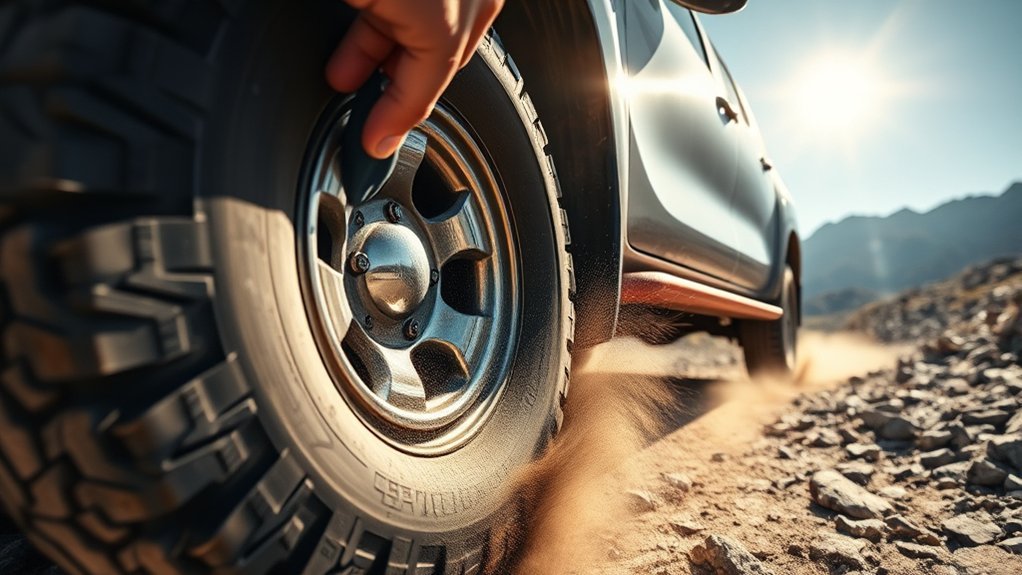
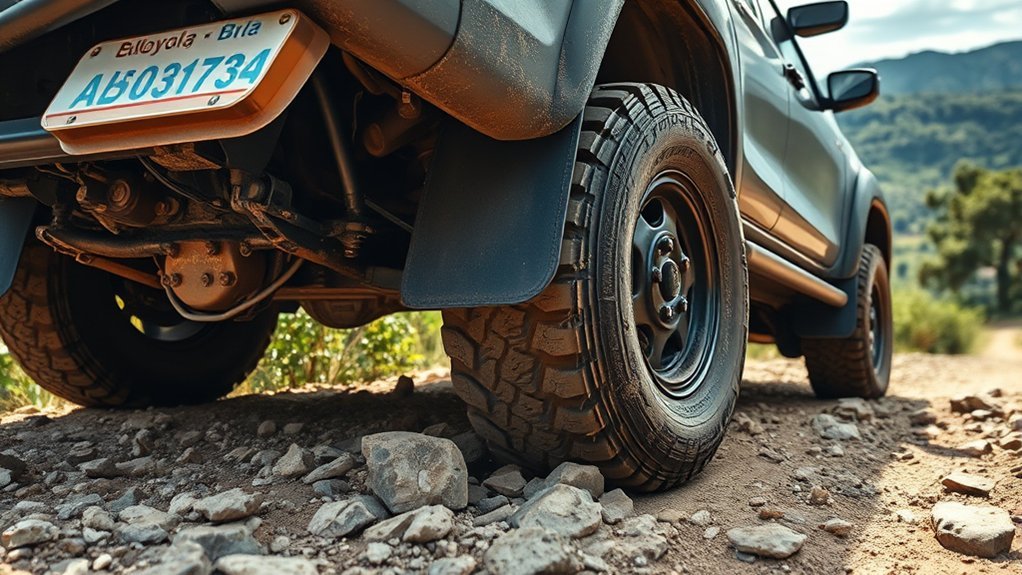
When you air down your Toyota Hilux tires, the tire sidewalls flex more and the tread sits flatter on the ground. That larger footprint can help the tire float over soft sand, conform to rocks, and reduce wheelspin on loose surfaces.
This matters because off-road traction is usually limited by surface strength, not engine power. On sand or mud, too much throttle with hard tires can dig holes. On rocks or corrugated tracks, very firm tires can bounce, skip, and transfer more shock into the suspension and cabin.
Lower pressure is an off-road tool, not a road-driving setting. Use it at low speeds on suitable terrain, then air back up before pavement.
Official beach-driving guidance from the National Park Service also recommends lowering pressure for soft sand and reinflating to normal pressure as soon as possible after returning to paved roads.
Benefits of Lower Tire Pressure for Off-Roading
Lower tire pressure can improve your Hilux’s off-road behavior in four main ways:
- Better traction: A longer, flatter tire footprint helps the tread grip loose sand, mud, snow, gravel, and rock.
- More flotation on sand: A softer tire is less likely to cut down through soft sand and bury itself.
- Smoother ride: More sidewall flex helps absorb corrugations, small rocks, washouts, and trail chatter.
- Less wheelspin: More grip means you can often drive with lighter throttle, which is better for control and trail preservation.
Note: Airing down does not make every trail safe. Tire condition, wheel size, tire load rating, vehicle weight, speed, and driver technique still matter.
Recommended Toyota Hilux Tire Pressure by Terrain
There is no single perfect off-road PSI for every Toyota Hilux. A stock Hilux on highway-terrain tires, a loaded overlanding Hilux, and a modified Hilux on light-truck all-terrain tires may all need different pressures. Use the chart below as a starting point, then adjust in small steps.
| Terrain | Safe Starting Pressure | Best Use |
| Pavement / highway | Use the tire placard or owner’s manual | Normal driving, towing, heavy loads, and highway speeds |
| Gravel roads / corrugations | 24–28 PSI | Reducing harshness while keeping good steering response |
| Rocky trails | 18–25 PSI | More grip and comfort at low speeds without excessive sidewall bulge |
| Soft sand / beach driving | 15–20 PSI | More flotation and less digging in soft sand |
| Deep mud / snow | 16–22 PSI | More footprint and lower wheelspin at slow speeds |
Warning: Do not drive at highway speeds on aired-down tires. Underinflation can affect handling and stopping distance, increase heat buildup, and raise the risk of tire damage. The National Highway Traffic Safety Administration notes that even a few PSI away from the manufacturer’s recommended pressure can affect handling and stopping distance.
[Products Worth Considering]
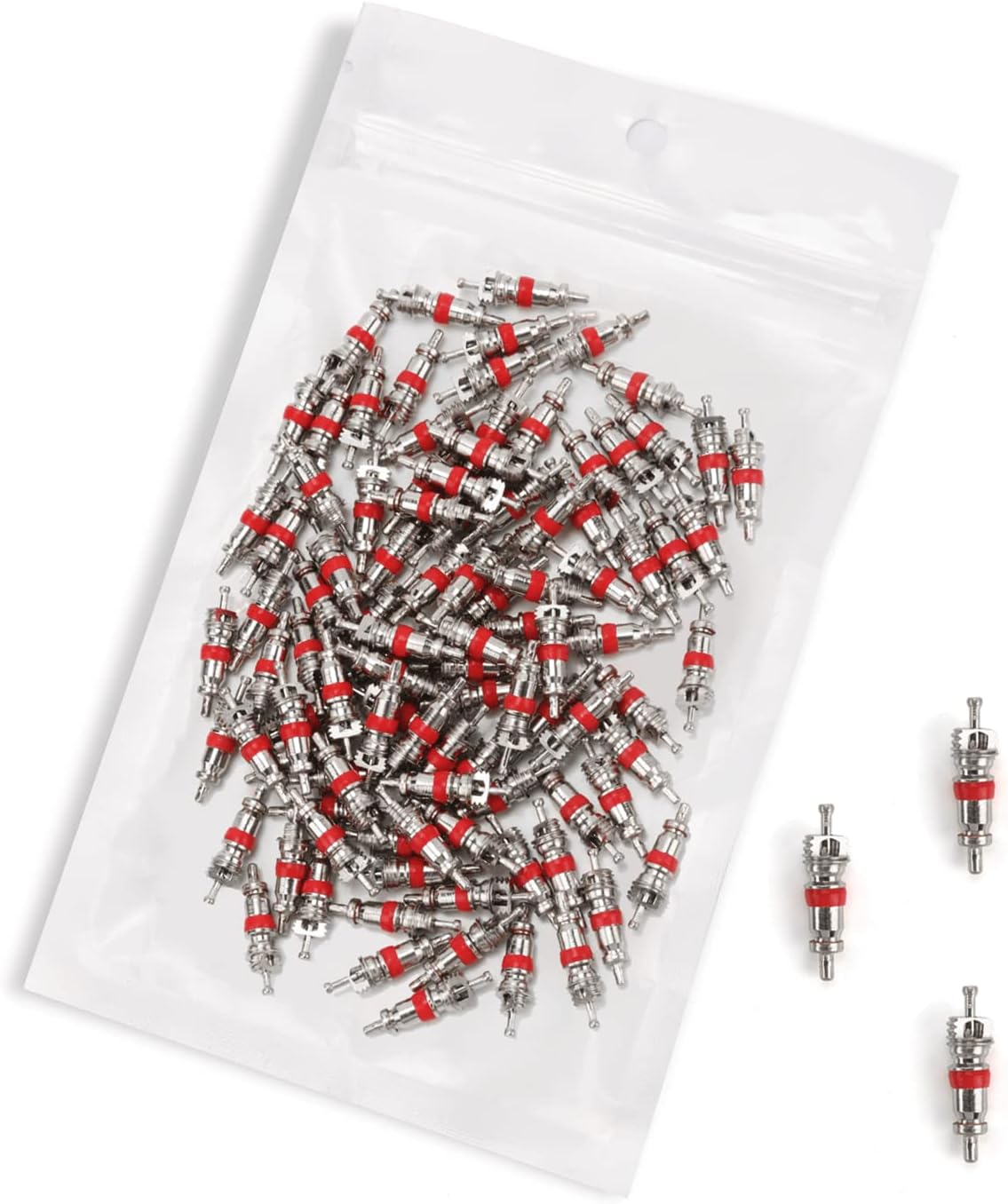
Replace worn Schrader valve cores with durable, nickel-plated replacements designed to resist rust and corrosion for a longer service life. Each core is 100% leakage tested and rated for up to 300 PSI, helping maintain a safe, reliable tire pressure system. Universal fit makes them suitable for cars, RVs, ATVs, motorcycles, bicycles, and many refrigeration/air conditioning applications.
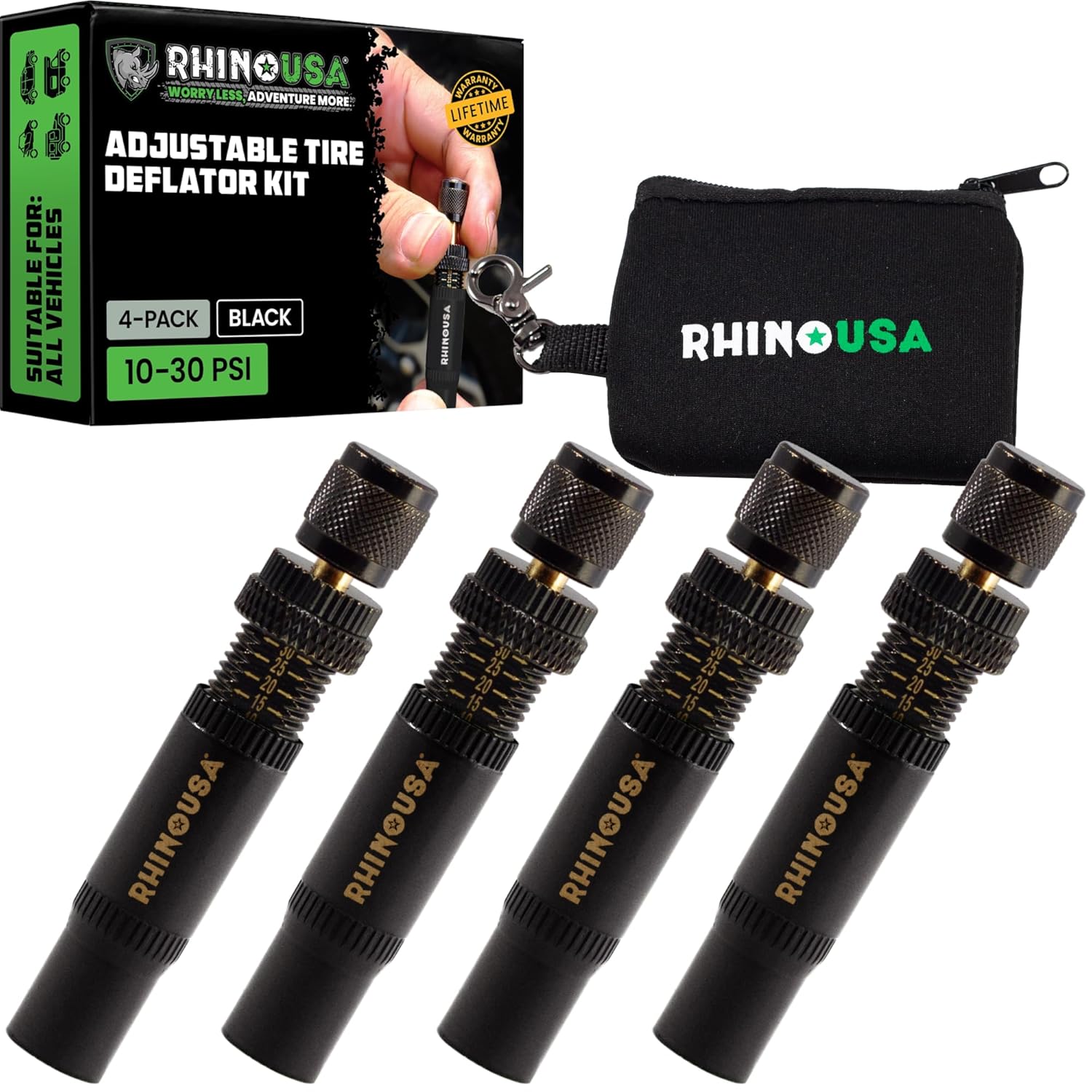
Use the Rhino USA adjustable tire deflators to air down all four tires at once by screwing one deflator onto each valve stem, letting you step away while the tires reach your preset pressure. Each deflator independently adjusts across a 10–30 PSI range with laser-etched indicators for quick setup and verification, making it ideal for beach, sand, and rocky off-road trails.

This ALL-TOP auto-stop tire deflator valve kit lets you air down off-road tires quickly without watching pressure, automatically stopping when your preset PSI is reached. Each valve is individually calibrated for reliable performance with an acceptable +/- 2 PSI tolerance. The adjustable deflator range covers 10 to 30 PSI and includes four valves plus valve caps and a zipper pouch for easy setup on trucks, SUVs, RVs, UTVs, and powersports.
When to Air Down Your Tires?
Air down before you enter the difficult terrain, not after you are already stuck. Good times to reduce pressure include:
- Before soft sand: Lower pressure helps the Hilux float instead of digging down.
- Before corrugated roads: A moderate reduction can soften the ride and reduce bouncing.
- Before rocky tracks: More sidewall flex helps the tire wrap around small rocks at low speeds.
- Before mud or snow: A larger footprint can help reduce wheelspin, but smooth throttle matters just as much.
Do not air down for normal paved roads, long highway sections, high-speed dirt roads, or towing on pavement. Also avoid airing down if a tire has visible sidewall damage, a slow leak, a missing valve cap, or an unknown load rating.
Pro Tip: If you are unsure where to start, reduce pressure gradually. Drop 4–5 PSI, drive a short low-speed section, then adjust again if traction or comfort still feels poor.
How to Air Down and Reinstate Tire Pressure
[Products Worth Considering]

This multi-function tire valve stem removal tool set makes it fast to remove, install, bleed, and clean valve cores for easier tire maintenance. It includes valve core removers, a 4-way spool tool, replacement valve caps, and spare cores to handle replacements and repairs with confidence. Universal compatibility suits cars, trucks, motorcycles, bicycles, and more for roadside convenience.
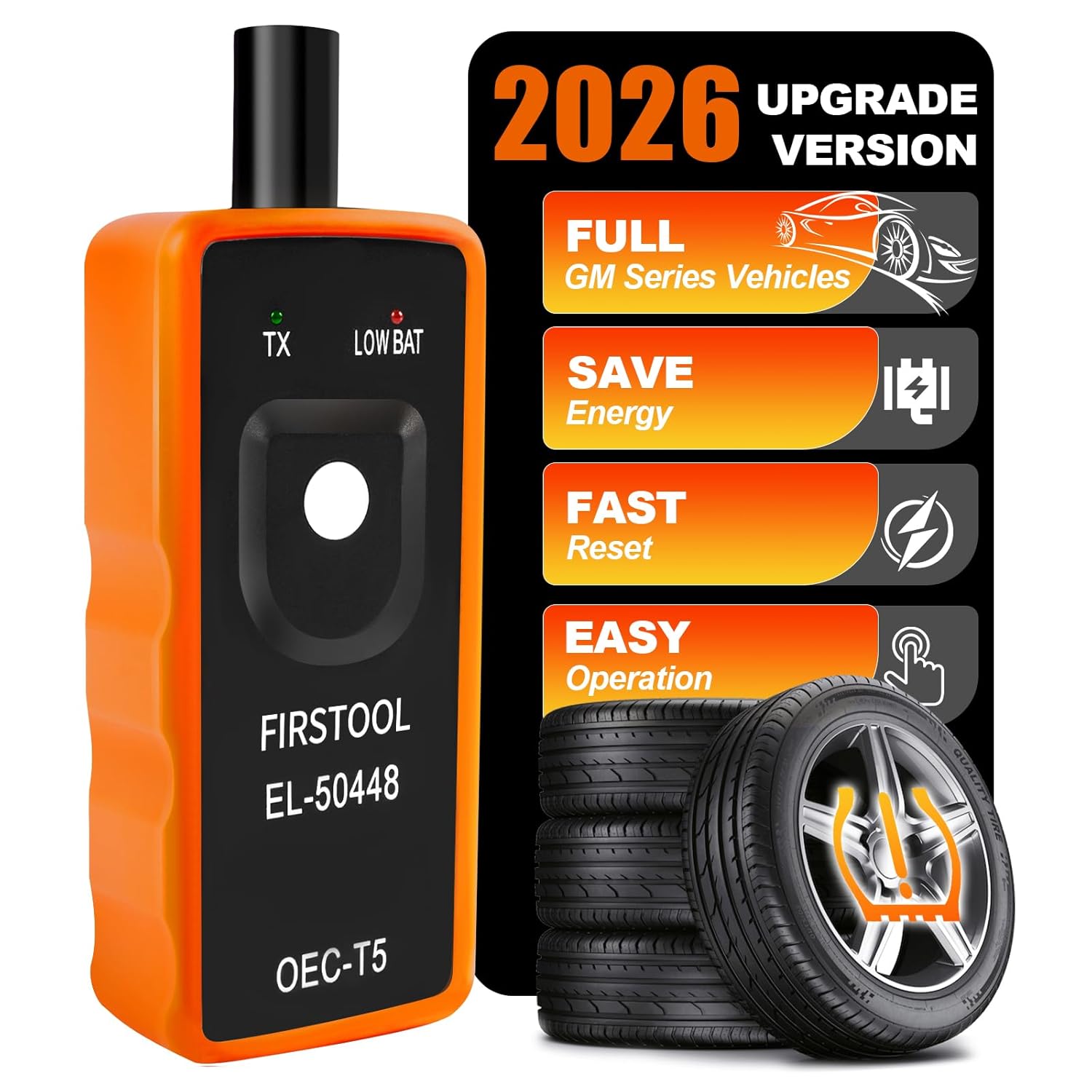
This TPMS relearn tool helps you quickly activate, match, and reset GM tire pressure sensors to keep the vehicle monitoring system working properly. It clears tire pressure alarms and dashboard warning lights after sensor replacement or tire rotation, and supports learning for common 315/433 MHz TPMS sensors. Designed for simple one-button operation, it can help you avoid unnecessary trips to repair shops.

TireJect Off-Road Tire Sealant Kit provides 5-in-1 sealing to help fix tread punctures up to 3/8", sidewall punctures up to 3/8", bead leaks, slow leaks, and minor dry rot on low-speed tires. It permanently seals with liquid rubber, recycled tire particles, and Aramid fibers, making it ideal for flats caused by thorns, nails, and screws. The included dispensing cap attaches to the valve stem for a no-mess installation, along with a metal valve core remover tool and valve stem cap. This kit is for off-road use only.
How to Air Down Your Hilux Tires
- Park safely: Stop on firm, level ground before the trail or beach entrance. Keep clear of traffic.
- Check your starting pressure: Use a reliable tire pressure gauge on all four tires.
- Choose a target PSI: Pick a safe starting point from the terrain chart above.
- Deflate one tire at a time: Attach your tire deflator to the valve stem and release air slowly.
- Recheck with a gauge: Stop slightly above your target, then fine-tune the pressure.
- Repeat evenly: Set all four tires to the same pressure unless your load setup requires a specific front/rear difference.
- Replace valve caps: Valve caps help keep dust, sand, and moisture out of the valve.
- Drive slowly at first: Listen for unusual tire noise and watch for excessive sidewall bulge.
How to Reinflate After Off-Roading
- Stop before the pavement: Air up at the trail exit, beach ramp, or nearest safe pull-off.
- Find the correct road pressure: Use the tire placard or owner’s manual, as Toyota recommends.
- Connect your compressor: Attach it securely to the valve stem and monitor the gauge as pressure rises.
- Let the compressor cool: Small portable compressors can overheat. Follow the duty-cycle instructions for your model.
- Check all four tires twice: A final gauge check helps prevent one tire from being left too low.
- Inspect the tires: Look for cuts, stones in the tread, leaking valves, or sidewall damage before driving home.
Note: A warm tire can show a higher reading after driving. For normal road setup, follow the cold tire pressure listed on your Hilux placard or owner’s manual when the tires have cooled.
Must-Have Tools for Airing Down Your Toyota Hilux Tires
Having the right tools makes airing down faster, safer, and more accurate. Carry these before you head off-road:
- Tire Pressure Gauge: A separate gauge is useful even if your deflator or compressor has a built-in gauge. It lets you confirm the final pressure.
- Tire Deflators: A quality deflator saves time. Tools such as the ARB E-Z Tire Deflator are designed for controlled pressure adjustment and real-time readings.
- Portable Air Compressor: Choose a compressor that can handle four light-truck tires without overheating.
- Tire Repair Kit: Carry plugs, reamer, insertion tool, lubricant, spare valve cores, and valve caps.
- Recovery Gear: For sand and mud, carry a shovel, recovery boards, rated recovery points, and a jack base or board.
- Gloves and Light: These help when working near hot brakes, dust, mud, or night-time trail exits.
[Products Worth Considering]

Upgrade your Toyota’s wheels with durable aluminum alloy valve stem caps that help protect valve cores from corrosion and direct exposure to road grime, clay, water, and snow. Rubber rings improve sealing to help prevent air leakage and maintain stable tire pressure for safer driving. These caps are easy to install or remove without tools and add a unique, stylish look to your car.
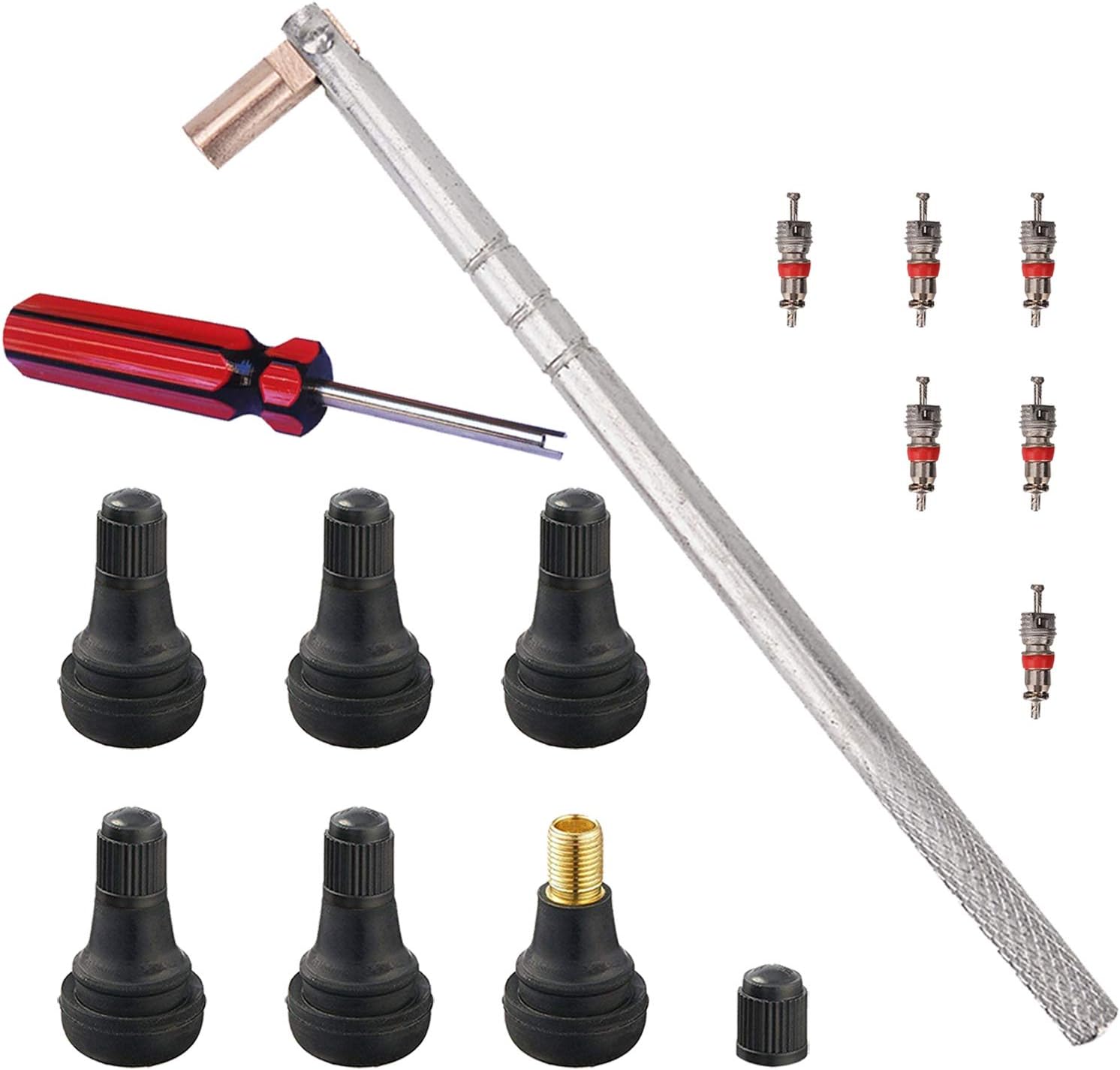
This FEBRYTOLD tire valve stem tool set makes it easy to remove and install standard 0.453 inch snap-in valve stems for tubeless tires. It includes valve stem cores and a single-head valve core remover/installer tool to help you complete repairs quickly. Designed to help avoid scratching wheels and damaging valve stems during service.

These aluminum alloy tire valve stem caps with an O-ring seal help protect valve stems from corrosion while adding a clean, stylish look to your vehicle. The universal fit works across cars, trucks, motorcycles, bicycles, and more, making them an easy upgrade for everyday driving and off-road use. Installation is quick, and the included four-pack keeps all your tires dressed and protected.
Common Airing-Down Mistakes to Avoid
- Going too low too soon: Very low pressure can increase the chance of rolling a tire off the bead, especially during sharp steering or side-slope driving.
- Driving too fast: Aired-down tires build heat faster and can feel vague at speed.
- Forgetting to air back up: This is the biggest safety mistake. Reinflate before normal paved-road driving.
- Ignoring vehicle load: A heavily loaded Hilux may need more pressure than an empty one, even off-road.
- Using only the TPMS: TPMS is helpful, but a proper gauge is more precise when setting off-road pressures.
- Not checking the spare: Your spare should be usable and inflated before the trip starts.
Troubleshooting Airing-Down Problems
The TPMS warning light comes on
This is normal when you intentionally air down. Use your gauge, drive slowly off-road, and reset or allow the system to relearn after reinflating if your Hilux model requires it.
The tire looks too flat
Stop and check the pressure. If the sidewall is folding sharply, the steering feels vague, or the tire looks like it may unseat from the rim, add air immediately.
You are stuck in sand or mud
Do not spin the tires. Stop, clear material from in front of the tires, reduce pressure slightly if it is still safe, use recovery boards, and drive out with smooth throttle.
A tire loses air after airing down
Check the valve core, valve cap, bead area, and tread for leaks. If pressure keeps falling, repair the tire or swap to the spare before continuing.
The compressor is getting hot
Turn it off and let it cool according to the manufacturer’s instructions. Reinflate in stages if needed, especially with larger all-terrain or light-truck tires.
Frequently Asked Questions
What is the correct tyre pressure for a Toyota Hilux?
For road driving, the correct Hilux tyre pressure is the cold pressure listed on your tire placard or in your owner’s manual. Do not rely on one universal number because pressure changes by model, tire size, load, and towing use.
What PSI should I use for sand in a Toyota Hilux?
For soft sand, 15–20 PSI is a sensible starting range for many Hilux setups. If the sand is very soft and you are still digging in, reduce pressure in small steps and keep speed low.
Can I drive on the road after airing down?
Only for a short, slow transfer if absolutely necessary. Aired-down tires are not meant for highway speeds. Reinflate to the placard or owner’s manual pressure before normal paved-road driving.
How low is too low without beadlock wheels?
For most non-beadlock wheels, going below about 15 PSI increases the risk of unseating a tire bead, especially with sharp steering, side loads, or heavy vehicle weight. Experienced drivers may go lower in special situations, but it is not a good default setting.
Should front and rear tires be the same pressure off-road?
Equal pressure is a good starting point. If your Hilux is heavily loaded in the tray or towing off-road at low speed, the rear tires may need slightly more pressure to support the load and protect the sidewalls.
Conclusion
Airing down your Toyota Hilux tires is one of the most useful off-road adjustments you can make. Lower pressure can improve grip, flotation, and ride comfort on rough or loose terrain, but it must be done with care. Choose a sensible PSI for the terrain, drive slowly, watch the sidewalls, and reinflate to the correct placard pressure before returning to normal road speeds.
Sources
- Toyota Support: Recommended Tire Pressure — backs the instruction to use the owner’s manual or tire information placard.
- Toyota Australia HiLux Owner’s Manual Landing Page — confirms official Hilux owner-manual availability and model coverage.
- National Park Service: Cape Hatteras ORV Conditions — supports lowering pressure for sand and reinflating after returning to paved roads.
- National Park Service: Assateague Over Sand Vehicle Use — supports 15–20 PSI as common beach-driving guidance.
- NHTSA: Tire Pressure Maintenance — A Statistical Investigation — supports the safety warning about incorrect tire pressure affecting handling and stopping distance.
- ARB E-Z Tire Deflator — supports the tire-deflator tool example and product capability reference.