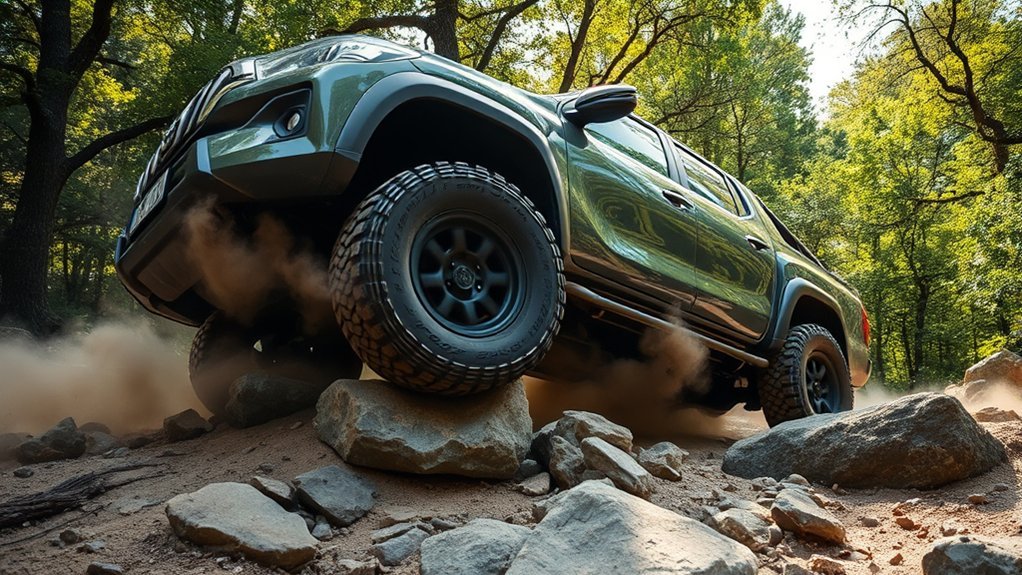
All-terrain tires can make a Toyota Hilux more capable on gravel roads, rutted tracks, sand, light mud, and rocky trails while still keeping the truck usable on pavement. They are not magic, though. Their real performance depends on the tire model, size, load rating, tread depth, pressure, vehicle weight, and how tough the trail gets.
Quick Answer
All-terrain tires perform well off-road on a Hilux when the terrain is mixed: gravel, dirt, rocks, sand, wet tracks, and moderate mud. They give better bite and sidewall toughness than highway tires, but dedicated mud-terrain tires still work better in deep mud, clay, and extreme off-road conditions.
Key Takeaways
- All-terrain tires are the best match for Hilux drivers who split time between roads, worksites, farms, trails, and weekend off-road trips.
- They usually ride quieter and last longer than mud-terrain tires, but they do not clear deep mud as aggressively.
- Fitment matters: choose the correct size, load index, speed rating, and rim compatibility for your Hilux.
- Tire pressure should always return to the vehicle placard or owner’s manual recommendation before highway driving.
- Regular pressure checks, rotation, alignment, and sidewall inspection are essential if you use your Hilux off-road.
At a Glance
| Time Required | 10–20 minutes to check pressure, inspect tread, and prepare before a trail drive |
| Difficulty | Easy for basic checks; professional help is recommended for fitment, balancing, alignment, or upsizing |
| Tools Needed | Tire-pressure gauge, portable compressor, tread-depth gauge, flashlight, torque wrench, and a full-size spare |
| Cost | Varies widely by tire size, brand, load rating, region, mounting, balancing, alignment, and whether you buy five matching tires |
Understanding All-Terrain Tires and Their Key Benefits
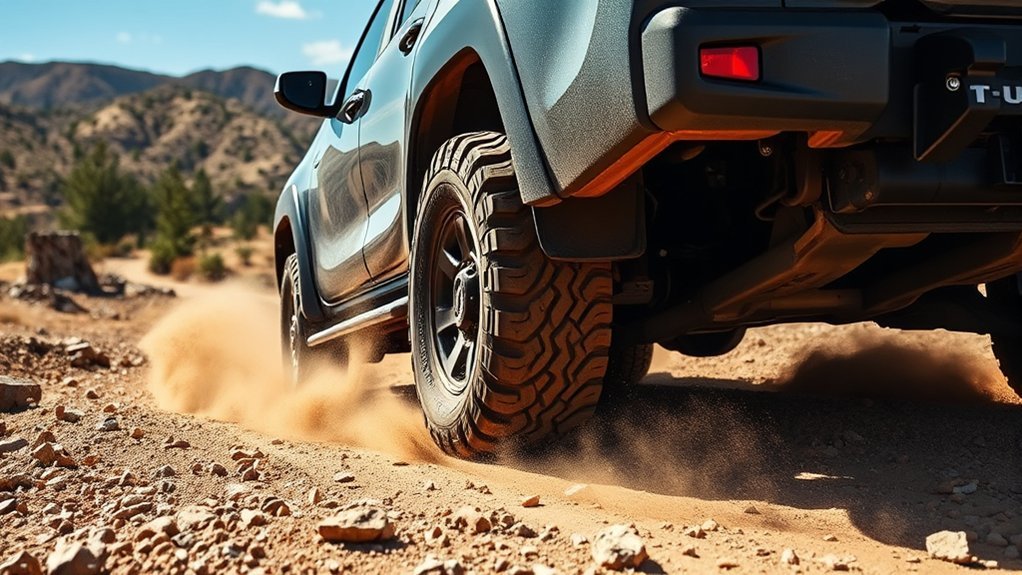
All-terrain tires are built to sit between highway tires and mud-terrain tires. On a Hilux, that means they can handle daily road driving while adding more grip and durability for gravel, dirt, wet grass, corrugations, light mud, and rocky tracks.
The biggest advantage is versatility. A good all-terrain tire has deeper tread blocks, wider grooves, stronger shoulders, and tougher construction than a normal highway tire. That helps the Hilux keep moving when the road becomes loose, uneven, or slippery.
Popular examples include the BFGoodrich All-Terrain T/A KO3, General Grabber AT3, Goodyear Wrangler DuraTrac RT, Cooper Discoverer AT3 XLT, and Toyo Open Country A/T III. Each model has different sizes, warranties, noise levels, and load ratings, so compare the exact tire size you plan to fit.
Note: Do not judge all all-terrain tires as one category. A mild all-terrain tire may feel close to a highway tire, while an aggressive all-terrain tire may behave closer to a rugged-terrain tire.
All-Terrain vs. Mud Tires: Which Is Best for Off-Roading?
The best tire depends on where your Hilux spends most of its time. All-terrain tires are better for mixed use. Mud-terrain tires are better for deep mud, sticky clay, and more aggressive trails.
| Tire Type | Best For | Main Trade-Off |
|---|---|---|
| Highway Terrain | Road comfort, low noise, fuel economy, towing on pavement | Limited grip and sidewall protection off-road |
| All-Terrain | Daily driving, gravel, dirt, sand, light mud, moderate trails | Less mud clearing than a mud-terrain tire |
| Rugged-Terrain | Drivers wanting a more aggressive look and stronger off-road bite | Often noisier and heavier than mild all-terrain tires |
| Mud-Terrain | Deep mud, ruts, clay, rocks, severe off-road use | More road noise, faster wear, heavier feel, reduced wet-road comfort |
For most Hilux owners, all-terrain tires are the more practical choice because they handle work, commuting, camping, towing, and weekend trails without making the truck harsh on the highway. If your Hilux regularly faces deep mud, sharp rocks, or technical tracks, mud-terrain or rugged-terrain tires may be worth the extra noise and wear.
[Products Worth Considering]

This tire inflator with pressure gauge delivers long-lasting performance with a durable rubber-protected gauge and sturdy build. The longer hose and 360 swivel air chuck help you seal the valve securely and keep your hands free while measuring, inflating, or deflating. It’s battery-free for reliable use and provides ±2 PSI accuracy in the mid-range for most typical tires, with universal compatibility for 1/4 NPT compressor outputs.

Keep your tires properly inflated with this analog VONDIOR tire pressure gauge, designed for fast, easy readings without batteries. The swiveling, two-axis hose and large glow dial help you measure at any tire angle with instant visibility. Built with a protective rubber shield, it supports durable, low-maintenance use for cars and trucks.
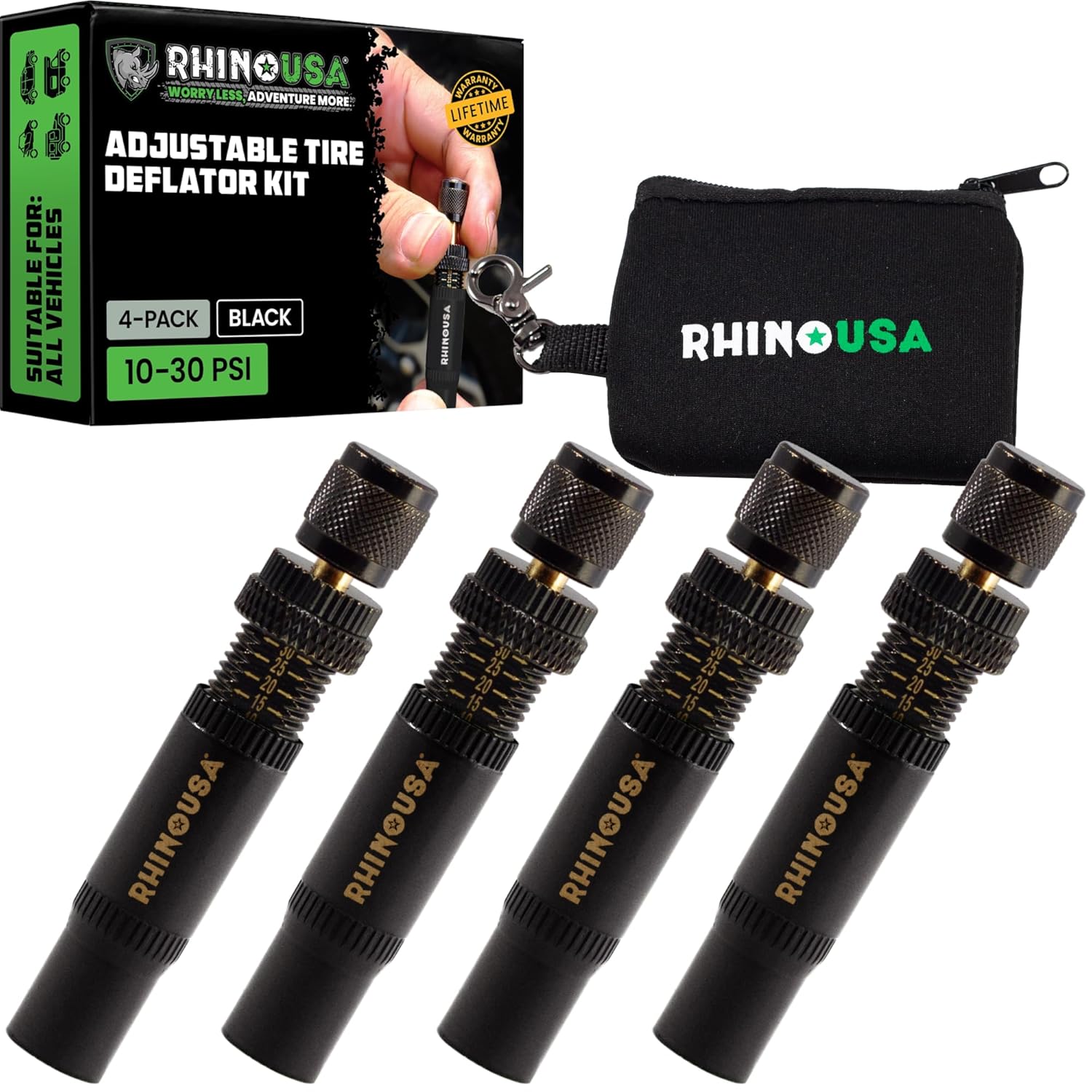
Use the Rhino USA adjustable tire deflators to air down all four tires at once by screwing one deflator onto each valve stem, letting you step away while the tires reach your preset pressure. Each deflator independently adjusts across a 10–30 PSI range with laser-etched indicators for quick setup and verification, making it ideal for beach, sand, and rocky off-road trails.
Essential Features for Optimal All-Terrain Tire Performance
All-terrain tire performance comes from more than tread pattern alone. The best tire for your Hilux should match your terrain, load, wheel size, driving speed, and comfort expectations.
[Products Worth Considering]

This ALL-TOP auto-stop tire deflator valve kit lets you air down off-road tires quickly without watching pressure, automatically stopping when your preset PSI is reached. Each valve is individually calibrated for reliable performance with an acceptable +/- 2 PSI tolerance. The adjustable deflator range covers 10 to 30 PSI and includes four valves plus valve caps and a zipper pouch for easy setup on trucks, SUVs, RVs, UTVs, and powersports.

Monitor tire tread wear with a smart, color-coded depth gauge that shows clear condition ranges at a glance. The bar is range marked for fast, easy readings, helping you maintain safer traction and performance. Each gauge is portable with a pocket clip, and the set includes 20 units for daily use and sharing.

Measure tyre tread depth precisely with a digital gauge that reads in both MM and inches, helping you monitor safe driving conditions. The large LCD screen is easy to operate, and the compact tool fits for cars, trucks, and motorcycles. It provides high accuracy with a 0-25.4mm range and includes a 1-year warranty for added peace of mind.
Tread Design Importance
Tread design controls how the tire grips loose ground, clears mud, brakes on wet roads, and stays stable on pavement. When comparing all-terrain tires for a Hilux, look at these features:
- Open shoulder blocks: Help the tire find grip in loose dirt, mud, and gravel.
- Siping: Small cuts in the tread blocks can improve wet-road and snow traction.
- Stone ejectors: Help reduce stone drilling in the tread on gravel roads.
- Sidewall lugs: Add extra grip and protection when the tire rubs against rocks or rut edges.
- Tread voids: Wider spaces help clear mud, but they can increase road noise.
Rubber Compound Durability
A durable compound helps an all-terrain tire resist cuts, chips, and chunking. This is important on rocky tracks and sharp gravel. A tire that is too soft may grip well but wear faster, while a tire that is too hard may last longer but feel less confident on wet roads.
| Feature | Why It Matters on a Hilux |
|---|---|
| Cut-and-chip resistance | Helps protect tread blocks on gravel, rocks, and construction tracks |
| Wet-grip compound | Improves confidence during rain, wet roads, and slippery worksite surfaces |
| Reinforced construction | Helps when carrying loads, towing, or driving over rough tracks |
Fitment, Load Rating, and Size
Before buying all-terrain tires, check your Hilux tire placard, owner’s manual, rim size, and local regulations. The tire must have the right diameter, width, load index, and speed rating for your vehicle and how you use it.
- Load index: Important if you carry tools, tow, use a canopy, or run a tray setup.
- LT construction: Light-truck tires can add strength, but they may ride firmer and weigh more.
- Overall diameter: Upsizing can affect speedometer accuracy, gearing, clearance, braking, and legality.
- Rubbing: Wider or taller tires may contact guards, mud flaps, suspension, or body mounts.
- Spare tire: Ideally, keep a matching full-size spare if you travel off-road.
Warning: Never choose a tire with a lower load rating than your Hilux requires. A tire that looks aggressive but lacks the correct load capacity can be unsafe, especially when towing or carrying heavy gear.
Pressure Management Techniques
Tire pressure has a huge effect on off-road performance. Lower pressure can help the tire flex and create a longer contact patch on sand, rocks, and corrugations. But too little pressure can damage the sidewall, unseat the bead, overheat the tire, or make steering unpredictable.
For road driving, use the recommended pressure shown on your Hilux tire placard or owner’s manual. The National Highway Traffic Safety Administration also advises drivers to use the vehicle tire label or owner’s manual for correct tire size and pressure guidance.
- Check pressure when cold: Measure before driving far, because heat raises pressure readings.
- Air down only for off-road use: Use conservative pressure changes unless you have experience, proper wheels, and recovery gear.
- Drive slower when aired down: Lower pressure is not suitable for highway speeds.
- Reinflate before pavement: Always return to the correct road pressure before normal driving.
- Adjust for load: A loaded Hilux may need different pressure than an empty one.
Pro Tip: Carry a quality pressure gauge and compressor. Aired-down tires can transform traction off-road, but only if you can reinflate them safely before returning to the highway.
Top Off-Road Scenarios for All-Terrain Tire Performance
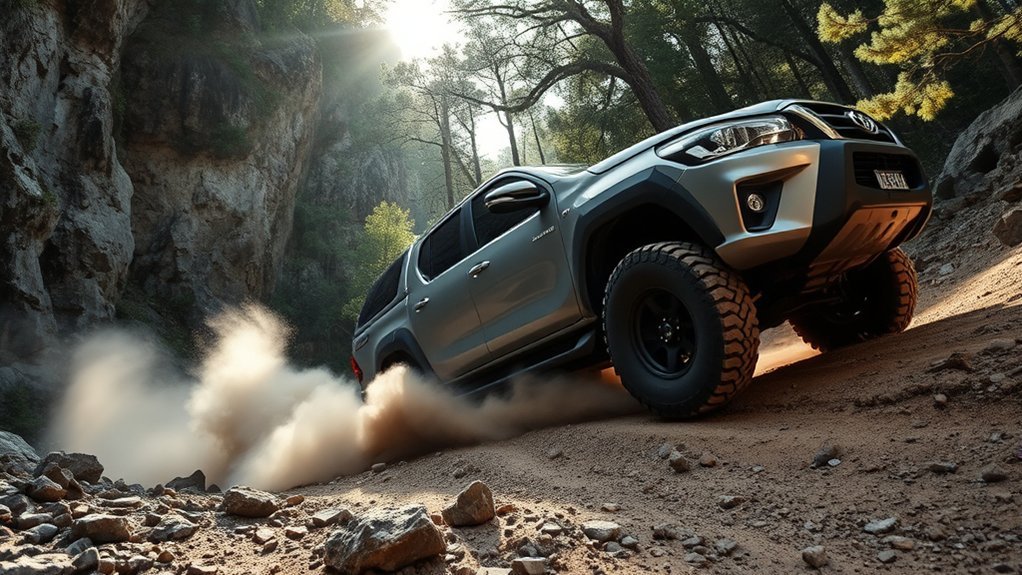
All-terrain tires are strongest when the terrain changes often. That is why they suit many Hilux owners who use the same vehicle for commuting, work, camping, towing, and exploring.
| Terrain | How All-Terrain Tires Perform | Hilux Driving Tip |
|---|---|---|
| Gravel roads | Very good grip, stability, and puncture resistance compared with highway tires | Avoid sharp steering and check for stone damage afterward |
| Dirt tracks | Strong performance, especially with open shoulders and good tread depth | Use smooth throttle to avoid wheelspin |
| Sand | Good when aired down correctly, but heavy tires can dig if pressure is wrong | Keep momentum steady and reinflate before road driving |
| Light mud | Adequate to good, depending on tread voids and mud-clearing ability | Avoid spinning the tires until the tread packs solid |
| Deep mud or clay | Limited compared with mud-terrain tires | Choose mud-terrain tires if this is your normal terrain |
| Rocky trails | Good if the tire has strong sidewalls and cut-resistant tread | Drive slowly and avoid pinching sidewalls against sharp edges |
| Snow | Varies widely by tire; 3PMSF-rated tires are better for severe snow than basic M+S tires | Check the exact tire’s winter rating before buying |
Real-World User Experiences With All-Terrain Tires on the Hilux
In everyday Hilux use, all-terrain tires usually feel like a practical middle ground. They are tougher and more confident off-road than highway tires, but they are still comfortable enough for school runs, job sites, towing, and long highway trips.
Hilux owners who mostly drive on pavement but regularly visit farms, campsites, beaches, gravel roads, or forest tracks are usually the best match for all-terrain tires. The truck gains off-road grip without turning into a noisy, heavy, mud-focused build.
Model choice matters. For example, the BFGoodrich All-Terrain T/A KO3 is positioned as a durable all-terrain tire with a 50,000-mile limited mileage warranty in many listed fitments. The General Grabber AT3 focuses on off-road traction and muddy-terrain grip. The Goodyear Wrangler DuraTrac RT is a more aggressive all-terrain option with extra tread-damage protection and a 50,000-mile warranty in listed sizes. The Cooper Discoverer AT3 XLT and Toyo Open Country A/T III are also strong options for drivers who want mixed on-road and off-road ability.
The best tire is not always the most aggressive one. If your Hilux spends 80% of its time on sealed roads, a quieter, lighter all-terrain tire may be better than a heavy, deep-lug option. If you carry heavy loads, choose construction and load rating before appearance.
How to Maintain All-Terrain Tires for Top Performance
All-terrain tires work harder than highway tires, especially on a Hilux used for towing, carrying gear, or driving rough tracks. Maintenance keeps them safer, quieter, and longer-lasting.
Regular Pressure Checks
Check pressure at least monthly, before long trips, before towing, and after off-road driving. Use the Hilux tire placard or owner’s manual for normal road pressure, and check pressures when the tires are cold.
- Before off-roading: Check pressure, tread depth, sidewalls, valve stems, and the spare.
- During the trip: Watch for vibration, pulling, sidewall bulges, or sudden pressure loss.
- After the trail: Reinstate road pressure, clean mud from the wheels, and inspect for cuts.
Tire Rotation Importance
Regular tire rotation helps even out wear, especially on a 4×4 Hilux that sees mixed surfaces. A common rotation interval is around 5,000 to 7,500 miles, but you should follow the schedule from your vehicle or tire manufacturer. The Tire Industry Association notes that rotation is also a good time to check tread depth, tire pressure, and visible damage.
If your Hilux has a matching full-size spare, ask your tire shop whether a five-tire rotation is suitable. This can help spread wear across all tires, but it must be done with matching size, tread type, and compatible wear depth.
Cleaning and Storage Tips
Mud, clay, salt, and sharp stones can shorten tire life. After off-road use, rinse the tires, wheels, brakes, and underbody. Pay close attention to stones trapped in the tread and mud packed inside the wheel barrels.
- Clean after muddy trips: Packed mud can hide cuts and cause wheel imbalance.
- Inspect sidewalls: Look for slices, bulges, exposed cords, and impact damage.
- Check tread depth: Off-road grip drops as tread depth wears down.
- Store loose tires properly: Keep them cool, dry, clean, and away from direct sunlight or chemicals.
Alignment, Balancing, and Damage Checks
Rough tracks can knock alignment out or bend a wheel. If your Hilux pulls to one side, vibrates at speed, wears tires unevenly, or feels unstable after a trail trip, book a professional inspection.
- Cupping or scalloping: May point to worn suspension, imbalance, or poor rotation habits.
- Outer-edge wear: Often linked to alignment, cornering, or underinflation.
- Center wear: May suggest overinflation for the load.
- Sidewall cuts: Need immediate inspection because sidewall repairs are often unsafe.
What Challenges Can You Expect With All-Terrain Tires Off-Road?
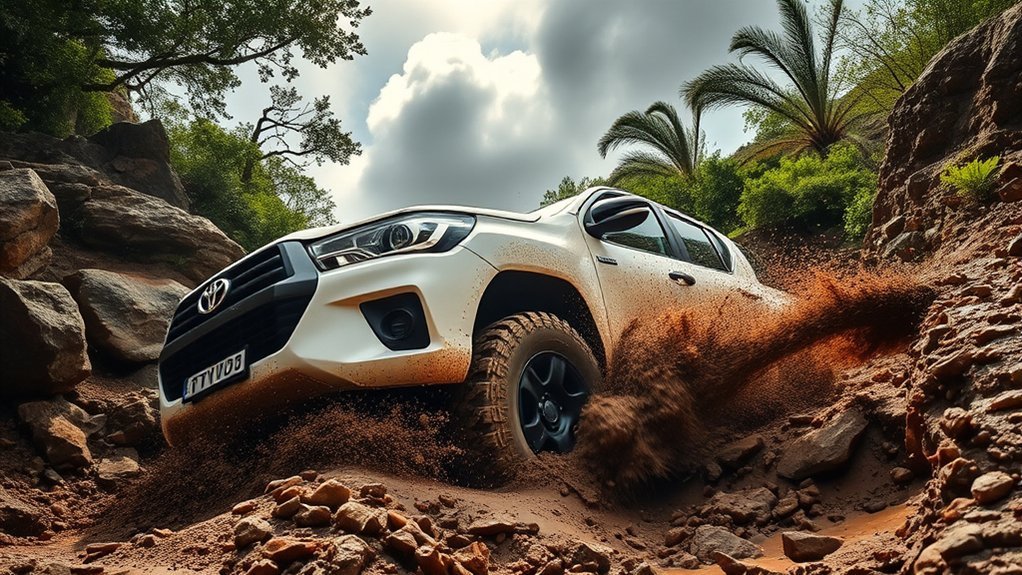
All-terrain tires are versatile, but they still involve trade-offs. Understanding those limits helps you choose the right setup for your Hilux.
| Challenge | Impact on Performance | Best Fix |
|---|---|---|
| Deep mud | Tread can pack with mud and lose bite | Use mud-terrain tires for frequent mud driving |
| Road noise | Aggressive tread can hum at highway speed | Choose a milder tread if road comfort matters most |
| Fuel economy | Heavier, wider tires can increase rolling resistance | Avoid unnecessary upsizing and keep correct pressure |
| Wet-road braking | Some aggressive tires trade wet grip for off-road bite | Check wet-performance reviews and ratings before buying |
| Uneven wear | Can cause vibration, noise, and reduced traction | Rotate, balance, align, and inspect regularly |
Making the Right Choice: When to Choose All-Terrain Tires
Choose all-terrain tires for your Hilux if you want one tire that can handle daily driving and regular off-road use. They make the most sense when your driving includes gravel roads, worksites, farms, beaches, camping tracks, forest roads, towing, and long-distance touring.
Before buying, use this checklist:
- Match the tire to your real terrain: Gravel and touring need a different tire than deep mud and rock crawling.
- Confirm fitment: Check size, load index, speed rating, rim width, and clearance.
- Consider load and towing: A loaded Hilux needs a tire built for the job.
- Check road comfort: More aggressive tread usually means more noise and weight.
- Look for snow rating if needed: Choose a 3PMSF-rated tire for severe snow conditions.
- Budget for five tires: A matching spare is valuable for remote travel.
- Plan maintenance: Rotation, pressure checks, and alignment matter more with off-road use.
Note: If your Hilux is mostly a highway vehicle, a less aggressive all-terrain tire may be the smarter choice. If it regularly sees deep mud, a mud-terrain tire may be the safer and more capable option.
[Products Worth Considering]

Accurately measure tire tread depth with a calibrated gauge marked from 0 to 1 inch in 1/32 inch increments. The color-coded bar helps you quickly identify tread condition ranges, supporting safe driving for trucks, motorcycles, automobiles, and passenger vehicles.

These aluminum alloy tire valve stem caps with an O-ring seal help protect valve stems from corrosion while adding a clean, stylish look to your vehicle. The universal fit works across cars, trucks, motorcycles, bicycles, and more, making them an easy upgrade for everyday driving and off-road use. Installation is quick, and the included four-pack keeps all your tires dressed and protected.

The Trivd Frol 1/2" air impact wrench delivers high performance torque up to 1500 ft-lbs with a twin hammer impact mechanism for strong, balanced blows. It features an ergonomic grip, compact lightweight design, and quick-stop control with 3 forward speeds up to 8000 RPM plus a reverse speed. Built for demanding automotive repair and tire shop work, the rear exhaust helps keep debris away from the surface.
Frequently Asked Questions
Is the Toyota Hilux good for off-road driving?
Yes, the Toyota Hilux is a strong off-road platform, especially in 4×4 form. Its capability improves with the right tires, correct pressure, good ground clearance, suitable recovery gear, and careful driving technique.
What is the weakness of the Toyota Hilux off-road?
The Hilux can feel firm or bouncy when lightly loaded, and stock tires may limit traction on mud, rocks, or sand. Like any pickup, it also depends heavily on tire choice, suspension condition, load distribution, and driver technique.
Are all-terrain tires better than mud-terrain tires for a Hilux?
All-terrain tires are better for mixed driving because they are usually quieter, more comfortable, and more efficient on pavement. Mud-terrain tires are better if your Hilux regularly drives in deep mud, ruts, clay, or technical off-road tracks.
What tire pressure should I use off-road?
There is no single safe pressure for every Hilux. Pressure depends on tire size, load, terrain, speed, wheel setup, and tire construction. Airing down can improve off-road grip, but it should be temporary and followed by reinflation to the correct road pressure before highway driving.
Do all-terrain tires make a Hilux louder on the highway?
They can. Mild all-terrain tires may be close to highway tires for noise, while aggressive all-terrain and rugged-terrain designs usually create more hum. Road noise also increases as tread wears unevenly.
How often should I rotate all-terrain tires on a Hilux?
A common interval is every 5,000 to 7,500 miles, but follow your vehicle or tire manufacturer’s guidance. Rotate sooner if you see uneven wear, drive rough tracks often, tow heavy loads, or notice vibration.
Conclusion
All-terrain tires are a smart upgrade for a Toyota Hilux that sees both pavement and off-road use. They improve traction, durability, and confidence on gravel, dirt, sand, rocks, and light mud while staying more road-friendly than mud-terrain tires.
The right choice depends on your real driving. For touring, work, camping, and mixed terrain, all-terrain tires are usually the best balance. For deep mud and extreme trails, choose something more aggressive. Whatever tire you choose, fit the correct size and load rating, manage pressure safely, rotate regularly, and inspect the tires after every serious off-road trip.
Sources
- NHTSA TireWise — tire pressure, tire size, tread, rotation, and safety guidance
- Toyota Europe Owner’s Manuals — vehicle owner manual reference for model-specific tire and vehicle guidance
- BFGoodrich All-Terrain T/A KO3 — current all-terrain product positioning and warranty information
- General Grabber AT3 — off-road traction and muddy-terrain product claims
- Goodyear Wrangler DuraTrac RT — rugged all-terrain features and warranty information
- Tire Industry Association: Tire Rotation — rotation, tread-depth, pressure, and inspection guidance