Choosing tires for a Honda Accord LX is simple once you separate the LX from the sportier Accord trims. For current U.S. Accord LX models, the key number to know is 225/50R17 94V. After that, confirm the cold tire pressure on your driver’s door-jamb label, match or exceed the original load and speed rating, and inspect tread and sidewalls regularly.
Quick Answer
The current Honda Accord LX uses 225/50R17 94V tires. For the 2025 Accord with this tire size, Honda lists 33 psi front and 32 psi rear as the regular cold pressure, but always use your own driver’s door-jamb tire label as the final source.
Key Takeaways
- For current U.S. Honda Accord LX models, the OEM tire size is 225/50R17 94V.
- The 235/40R19 size is used on selected non-LX Accord trims, not the standard LX setup.
- For 2025 Accord models with 225/50R17 94V tires, Honda lists 33 psi front / 32 psi rear; your door-jamb label is still the final authority.
- Do not inflate tires to the maximum PSI printed on the tire sidewall unless it matches the vehicle placard.
- Replace tires at or before 2/32 inch tread depth, and sooner if you see cracks, bulges, exposed cord, vibration, or uneven wear.
At a Glance
| Time Required | 5–10 minutes to confirm tire size and pressure |
| Difficulty | Easy |
| Tools Needed | Tire pressure gauge, tread-depth gauge or penny, and your driver’s door-jamb label |
| Cost | Free to check; a basic pressure gauge usually costs little, and tire replacement cost varies by brand and shop |
OEM Tire Specifications for Honda Accord LX
For current U.S. Honda Accord LX models, the factory tire size is 225/50R17 94V. Honda’s current Accord specifications list 225/50R17 94V for the LX, while 235/40R19 96V appears on selected higher or sport-oriented trims.
Note: Tire size can vary by model year, market, trim, and wheel package. The tire and loading label on your driver’s door jamb lists the original tire sizes and the proper cold tire pressure for your specific Accord.
| Accord trim example | OEM tire size | What it means |
|---|---|---|
| Accord LX | 225/50R17 94V | Standard current LX size; this is the size most LX owners should match. |
| Selected non-LX trims | 235/40R19 96V | Used on selected trims with 19-inch wheels; do not assume it fits your LX without the correct wheels and clearance. |
If you are also changing wheels, confirm wheel width, offset, bolt pattern, center bore, lug-seat style, and brake clearance with the wheel maker or a qualified installer. Tire size alone does not prove a wheel package is safe.
[Products Worth Considering]

The SAFELIFE dial tire tread depth gauge measures tread depth in 1/32 inch increments with clear, easy-to-read 2-inch dial face. Color zones using a traffic light system help you quickly judge whether tread is low, marginal, or ample for safer driving. Built with a durable zinc cast body and a metal detect probe for precise, comfortable use across cars, motorcycles, trucks, and buses.

Monitor tire tread wear with a smart, color-coded depth gauge that shows clear condition ranges at a glance. The bar is range marked for fast, easy readings, helping you maintain safer traction and performance. Each gauge is portable with a pocket clip, and the set includes 20 units for daily use and sharing.

Keep your tires properly inflated with this analog VONDIOR tire pressure gauge, designed for fast, easy readings without batteries. The swiveling, two-axis hose and large glow dial help you measure at any tire angle with instant visibility. Built with a protective rubber shield, it supports durable, low-maintenance use for cars and trucks.
How to Read 225/50R17 94V
The tire code tells you the tire’s physical size plus its service rating. Honda’s tire-labeling guide explains the same format using P225/50R17 94V as an example.
| Code part | Meaning | For Accord LX |
|---|---|---|
| 225 | Tire width in millimeters | 225 mm wide |
| 50 | Sidewall height as a percentage of width | Sidewall height is 50% of 225 mm |
| R | Radial construction | Standard passenger-car construction |
| 17 | Wheel diameter in inches | Fits a 17-inch wheel |
| 94V | Load index and speed symbol | 94 is about 670 kg per tire; V is rated to 240 km/h under test conditions |
Understanding Load Capacity and Speed Ratings
Load index and speed rating are not decorative numbers. They tell you the minimum strength and speed capability your replacement tire should meet. When replacing Accord LX tires, choose a tire that matches 225/50R17 94V or exceeds the original load and speed rating. Do not go lower unless Honda or a qualified tire professional confirms it is safe and legal for your exact vehicle.
| Tire specification | Typical load index | Approx. max load per tire | Speed symbol |
|---|---|---|---|
| 225/50R17 94V | 94 | About 670 kg | V = 240 km/h |
| 235/40R19 96V | 96 | About 710 kg | V = 240 km/h |
For load and speed conversions, a tire manufacturer chart such as Bridgestone’s speed and load rating guide is a helpful reference. Still, your Accord’s tire placard and owner’s manual should guide the final tire choice.
Optimal Tire Pressure for Performance
For 2025 Honda Accord models with 225/50R17 94V tires, Honda’s owner specifications list 33 psi front and 32 psi rear. Honda’s hybrid specifications list the same regular pressure for models with 225/50R17 tires and 35 psi front / 32 psi rear for 235/40R19 models. Your own door-jamb label is the best source because it matches your model year, trim, market, and equipment.
Warning: Do not use the maximum PSI printed on the tire sidewall as your normal Accord tire pressure. That number is a tire limit, not the vehicle’s recommended cold inflation pressure.
[Products Worth Considering]

This tire inflator with pressure gauge delivers long-lasting performance with a durable rubber-protected gauge and sturdy build. The longer hose and 360 swivel air chuck help you seal the valve securely and keep your hands free while measuring, inflating, or deflating. It’s battery-free for reliable use and provides ±2 PSI accuracy in the mid-range for most typical tires, with universal compatibility for 1/4 NPT compressor outputs.

Measure tire tread depth quickly and accurately with this LUMITECO dial gauge that reads in 1/32" increments up to 14/32". The color-coded green/yellow/red zones make it easy to judge tire wear and know when replacement is needed. A rugged, compact design with a protective pouch helps keep the gauge ready for use on cars, trucks, motorcycles, and more.

Accurately measure tire tread depth with a calibrated gauge marked from 0 to 1 inch in 1/32 inch increments. The color-coded bar helps you quickly identify tread condition ranges, supporting safe driving for trucks, motorcycles, automobiles, and passenger vehicles.
Recommended Pressure Guidelines
Check tire pressure when the tires are cold. Honda defines cold tires as tires on a vehicle that has been parked for at least three hours or driven less than 1 mile. If you check pressure when the tires are hot, the reading can be 4–6 psi higher than a cold reading.
At least once a month and before long trips, use a quality gauge to check all tires. According to Honda, even tires in good condition can lose 1–2 psi per month. After adjusting pressure, follow the TPMS calibration instructions for your Accord if your model requires calibration.
Effects on Tire Longevity
Correct pressure helps balance handling, comfort, tread life, and fuel economy. Underinflated tires can wear unevenly, hurt handling, reduce fuel economy, and fail from heat buildup. Overinflated tires can ride harshly, wear unevenly, and become more vulnerable to road damage.
| Condition | What you may notice | What to do |
|---|---|---|
| Low pressure | Soft steering, shoulder wear, lower fuel economy, heat buildup | Inflate to the cold PSI on the placard, then recalibrate TPMS if required |
| Correct pressure | Best mix of tread life, comfort, and handling | Recheck monthly and before trips |
| High pressure | Harsher ride, uneven center wear, more road-impact sensitivity | Release air only when safe to do so, and return to the placard PSI |
Adjustments for Load Variability
Do not guess pressure changes just because the car is full. First, check the Tire and Loading Information label and owner’s manual. Honda lists the maximum load for the 2025 Accord at 850 lb, including occupants, cargo, accessories, and trailer tongue load if applicable. Overloading can reduce stability and braking control.
Pro Tip: Check pressure in the morning before driving. That gives you a true cold reading and helps avoid accidentally underinflating tires that are already warm.
Recognizing When to Replace Your Tires
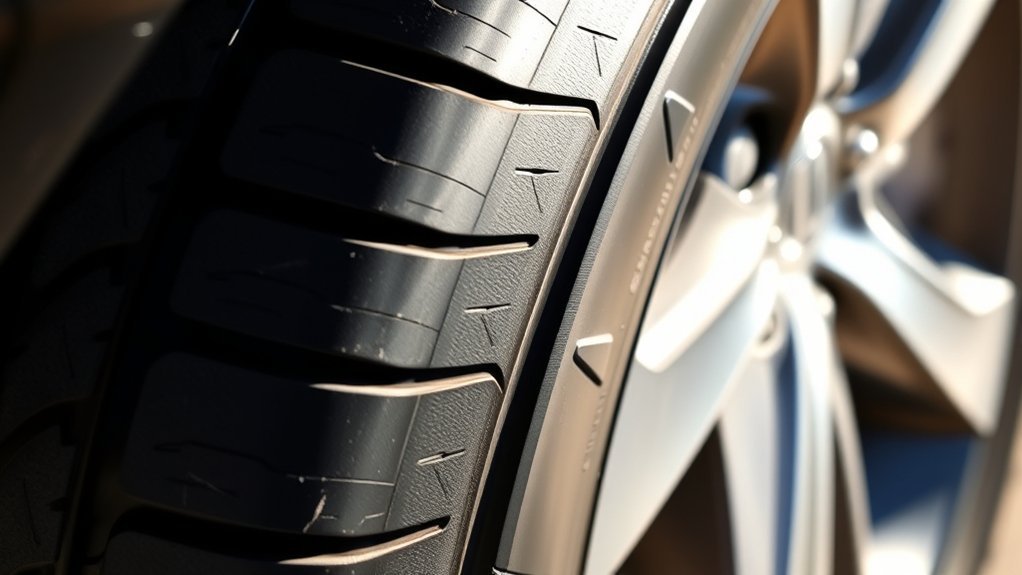
Replace your Accord LX tires when they no longer have safe tread depth, show damage, or cannot hold pressure. The common U.S. minimum tread threshold is 2/32 inch, and the federal inspection rule says tire tread shall not be less than two thirty-seconds of an inch. In wet climates, planning replacement before that point can improve traction and confidence.
| Indicator | Action Needed | Reason |
|---|---|---|
| Tread depth at or below 2/32 inch | Replace tires | Poor wet-road traction and minimum tread concern |
| Uneven shoulder or center wear | Inspect pressure, alignment, and rotation history | Can signal underinflation, overinflation, or alignment issues |
| Visible cracks, cuts, bulges, or exposed cord | Replace or have inspected immediately | Structural damage can lead to failure |
| Persistent vibration or road noise | Have tires and wheels balanced and inspected | May indicate tire damage, imbalance, or wheel issue |
| Older tires with dry rot or repeated air loss | Inspect and replace if unsafe | Rubber condition matters even before tread is fully worn |
Top Tire Brands for Honda Accord LX Owners
For a Honda Accord LX, the best tire is less about the logo and more about matching the correct size, load rating, speed rating, climate, and driving style. Start with 225/50R17 94V, then choose a tire type that suits your roads.
- Daily commuting: Grand-touring or all-season tires usually give a comfortable ride and long tread life.
- Rain-heavy areas: Prioritize wet braking, hydroplaning resistance, and tread depth.
- Cold or snowy climates: Use true winter tires if you regularly drive in snow, ice, or freezing temperatures.
- Quiet highway driving: Look for touring tires with strong comfort and noise ratings.
Trusted tire brands for Accord owners often include Michelin, Goodyear, Bridgestone, Continental, Pirelli, Yokohama, and others. Compare current tire models by size, warranty, wet traction, noise, and verified reviews before buying.
[Products Worth Considering]

This metal-free wheel and tire cleaning brush uses dense, fluffy synthetic wool to safely clean rims, spokes, fenders, and engine areas without worrying about damaging surfaces. Its flexible, comfortable design helps you reach detailed areas while maintaining durability, and the extra absorbent fibers work well with wheel spray cleaners for faster cleanup. Reusable and washable performance helps prevent grime and build-up for cleaner vehicles and easier maintenance at home.

ETENWOLF’s calibrated tire pressure gauge delivers accurate readings for cars, trucks, motorcycles, bikes, SUVs, RVs, and ATVs across a 0–75 PSI range. The large glow dial improves visibility in low light, while the 360° swivel chuck makes it easy to check valve pressure from any angle. It’s designed to stay accurate even in extreme hot or cold weather.

This tire inflator extension hose helps your air chuck quickly connect and disconnect from the tire nozzle with minimal leakage, supporting more accurate tire pressure. It uses a high-pressure resistant inflatable tube and durable brass chuck adapter for long-lasting performance. The quick-connect 90-degree thumb press chuck converts to a locking style and is easy to operate for car, motorcycle, and bicycle inflations.
Essential Maintenance Tips for Prolonging Tire Life
Choosing the right tires is only the first step. Good maintenance helps your Accord LX tires last longer and perform safely.
- Check pressure monthly: Use the cold PSI on the door-jamb label.
- Inspect tread every time you check pressure: Look for wear bars, uneven wear, punctures, bulges, and cracks.
- Rotate tires on schedule: Many drivers use a 5,000–7,500 mile rhythm, but your owner’s manual and tire warranty should guide the final interval.
- Balance when needed: Have the tires checked if you feel vibration at speed.
- Check alignment: Uneven wear or pulling to one side can mean the wheels need alignment.
- Avoid overload: Do not exceed the load limit on the driver’s door-jamb label.
Keeping tires inflated to the proper pressure can improve gas mileage by 0.6% on average and up to 3% in some cases, according to FuelEconomy.gov.
Frequently Asked Questions About Honda Accord Tires
These quick answers cover the questions Accord LX owners usually have before buying or maintaining tires.
Frequently Asked Questions
What tire size does a Honda Accord LX use?
Current U.S. Honda Accord LX models use 225/50R17 94V tires. Always confirm with the Tire and Loading Information label on your driver’s door jamb because model year, market, and wheel package can change the exact specification.
What is the correct tire pressure for a Honda Accord LX?
For 2025 Accord models with 225/50R17 94V tires, Honda lists 33 psi front and 32 psi rear as the regular cold tire pressure. Use your door-jamb label as the final number for your exact car.
Can I put 235/40R19 tires on a Honda Accord LX?
Not by tire size alone. The 235/40R19 size is used on selected Accord trims with 19-inch wheels. To use it safely on an LX, you would need compatible wheels, correct offset, brake clearance, load rating, speed rating, and a professional fitment check.
Should I inflate Accord tires to the PSI printed on the tire sidewall?
No. The sidewall number is the tire’s maximum pressure limit, not the vehicle’s recommended pressure. Use the cold PSI on the driver’s door-jamb placard or in the Honda owner information for your model.
When should I replace Honda Accord LX tires?
Replace tires when tread reaches 2/32 inch, when wear bars are exposed, or when you see unsafe damage such as cracks, bulges, exposed cord, or repeated air loss. If you often drive in heavy rain, consider replacing before the legal minimum.
Why did my TPMS light come on after I filled the tires?
Some Accord models require TPMS calibration after tire pressure is adjusted, tires are rotated, or tires are replaced. Check pressure cold first, inflate to the placard PSI, then follow your Accord’s TPMS calibration procedure.
What’s the best oil to put in a Honda Accord?
For many recent Honda Accord models, Honda specifies 0W-20 engine oil, such as Honda Genuine Motor Oil or an API service SN or higher 0W-20 oil. Always confirm the oil specification in your owner’s manual because engine and model year matter.
Sources
- Honda 2026 Accord Sedan Features & Specs — confirms LX and other trim tire sizes.
- Honda 2025 Accord Owner’s Manual Specifications — confirms 225/50R17 94V tire size and 33/32 PSI pressure for the regular tire.
- Honda Tire and Loading Information Label — explains that the door-jamb label contains original tire sizes and proper cold tire pressure.
- Honda Checking Tires — supports cold-pressure checks, monthly pressure checks, and underinflation/overinflation warnings.
- FuelEconomy.gov Tire Inflation Guidance — supports the fuel-economy benefit and warns not to use sidewall maximum pressure as the vehicle PSI.
- eCFR 49 CFR § 570.9 Tires and Bridgestone Speed & Load Rating Charts — support minimum tread depth and load/speed rating conversions.
Conclusion
For a current Honda Accord LX, start with 225/50R17 94V tires and confirm the exact cold PSI on the driver’s door-jamb label. For 2025 Accord models with that tire size, Honda lists 33 psi front and 32 psi rear. Keep the pressure correct, stay within the load limit, rotate and inspect the tires regularly, and replace them when tread or tire condition is no longer safe. Proper inflation can also improve fuel economy, making this one of the easiest maintenance habits for a smoother and safer ride.