Disclosure: As an Amazon Associate, we earn from qualifying purchases. If you click a link on this page and make a purchase, we may receive a small commission at no extra cost to you.
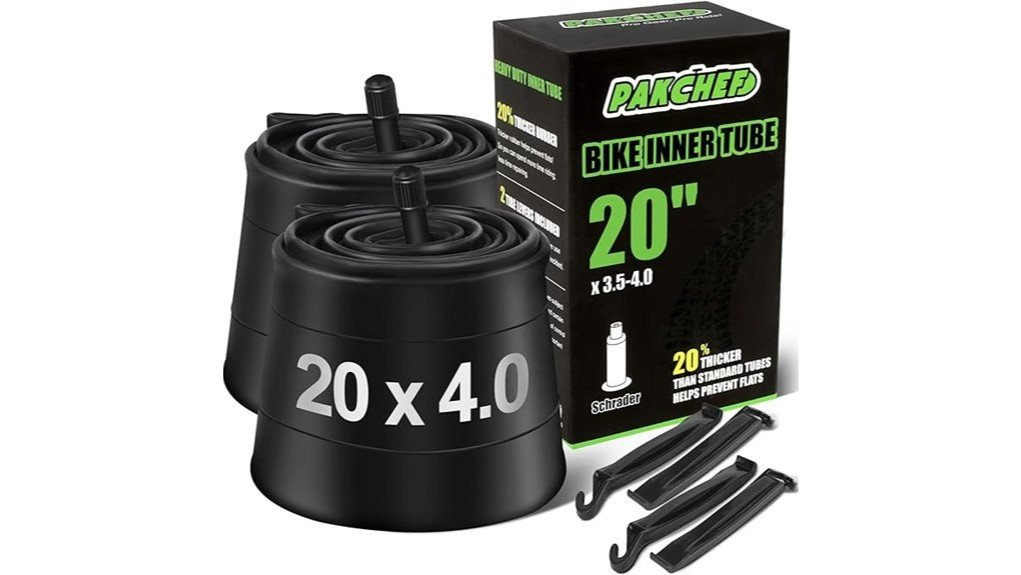
A replacement tube can get your fat-tire bike moving again, but only when the diameter, width range, and valve match your wheel. The PAKCHEF Heavy Duty 20×4.0 Fat Tire Tube is a two-tube set for 20-inch tires from 3.5 to 4.0 inches wide, and it includes four tire levers. Its thick butyl-rubber construction favors durability and air retention over minimum weight. This review explains the fit requirements, installation process, real-use strengths, and limits so you can decide whether it belongs in your repair kit.
Quick Verdict
Rating: 8.2/10, recommended with fit and weight caveats
Best For: Riders who need durable replacement or spare tubes for compatible 20-inch fat-tire e-bikes and mountain bikes
Bottom Line: The two-tube bundle, thick butyl rubber, 32 mm Schrader valves, and four included levers make this a practical repair set. Its limited 20 x 3.5 to 4.0 fit range and heavier construction mean you should verify the tire sidewall and rim setup before ordering.
Key Specifications
| Specification | Detail |
|---|---|
| Brand | PAKCHEF |
| Model / ASIN | B0DQDTV3BH |
| Product type | Heavy-duty bicycle inner tube |
| Reviewed variant | 2-pack, 20 x 4.0 class |
| Tire compatibility | 20-inch fat tires from 3.5 to 4.0 inches wide |
| Valve | 32 mm Schrader valve |
| Material | Thick butyl rubber |
| Tube quantity | 2 |
| Included tools | 4 tire levers |
| Typical use | Compatible fat-tire e-bikes, mountain bikes, commuting bikes, and emergency spares |
| Main limitation | Not suitable for other wheel diameters, tires outside the stated width range, or rims requiring a different valve type |
What Is the PAKCHEF Heavy Duty Fat Tire Tube?
This PAKCHEF set contains two replacement inner tubes for 20-inch fat tires measuring 3.5 to 4.0 inches wide. Each tube uses a standard 32 mm Schrader valve, which works with common bicycle pumps and many automotive-style pump heads.
The main selling point is the thick butyl-rubber construction. Butyl rubber is commonly used for bicycle tubes because it holds air well and tolerates normal flexing inside the tire. The thicker build can better resist friction and wear than a lightweight tube, although it also adds more rotating weight.
Four tire levers are included to help remove and reinstall the tire bead. That makes the bundle useful as a home repair set or as a backup kit for a garage, vehicle, or workshop.
Key Takeaways
- The reviewed variant fits 20-inch fat tires from 3.5 to 4.0 inches wide.
- A 32 mm Schrader valve simplifies inflation with common pumps.
- Two tubes and four tire levers provide enough parts for one repair plus a spare, or for replacing both tubes.
- Thick butyl rubber favors durability, air retention, and shock absorption over low weight.
- The tube may reduce the chance of some pinch and abrasion failures, but it is not puncture-proof.
- Correct sizing, careful bead seating, and proper tire pressure matter more than brand name alone.
Who Should Buy It?
Best For
- Owners of 20-inch fat-tire e-bikes with 3.5 to 4.0-inch tires and Schrader-compatible rims
- Riders who prefer a durable spare tube over the lightest possible setup
- Home mechanics who want two tubes and basic bead-removal tools in one package
Skip If
- Your tire sidewall does not show a 20-inch diameter and a width between 3.5 and 4.0 inches
- Your rim needs a Presta valve, a longer valve stem, or another valve configuration
- You are building a lightweight performance bike where every ounce of rotating weight matters
[Products Worth Considering]

This heavy duty 20-inch bike inner tube is designed for a perfect fit across 20x1.75, 1.95, 2.10, and 2.125 tires with a Schrader valve. The tube features 20% thicker construction for improved puncture resistance and longer-lasting performance. Butyl material helps with shock absorption, and included tire levers make installation and removal easier and safer.

This heavy-duty fat bike inner tube is built for secure fit on 20-inch wheels with 3.5 to 4.0 inch wide tires, including e-bikes and mountain bikes. It uses thick butyl rubber for improved durability, air tightness, and a smoother, more comfortable ride. A standard Schrader valve makes inflation easy and helps keep pressure stable for safer rides, with tire levers included for simpler installation.
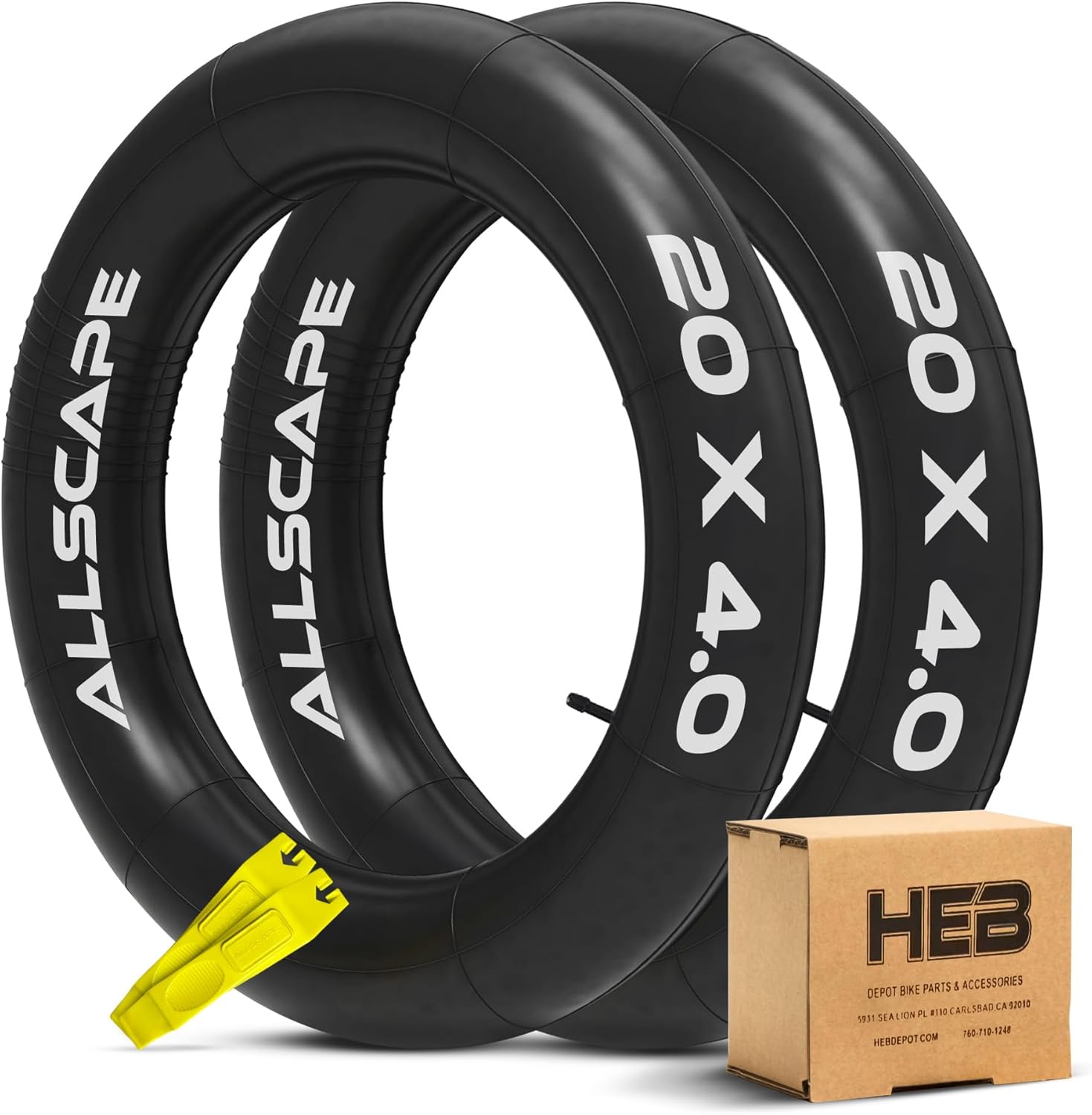
HEB heavy duty inner tubes deliver reliable puncture resistance for fat tire electric bikes and mountain bikes running 20x4 or 26x4 tires. Built for rugged backcountry trails, they help prevent flats from rocks and thorns while providing stability and traction. Choose a single tube or multi-packs for better value and keep your ride running smoothly in all seasons.
Compatibility and Sizing
The most important check is the size molded or printed on your tire sidewall. This tube is intended for 20-inch tires from 3.5 to 4.0 inches wide. Common matching markings may include 20 x 3.5, 20 x 3.8, or 20 x 4.0, but you should use the actual range stated on your tire and compare it with the tube listing.
Next, inspect the valve hole and your current tube. The PAKCHEF tube uses a 32 mm Schrader valve, which is wider than a Presta valve. A Schrader tube should not be forced into a rim drilled only for Presta valves, and a 32 mm stem must extend far enough through the rim for secure inflation.
Before You Buy: “20 x 4.0” describes the tire class, not every part of the wheel. Confirm the tire diameter, tire-width range, valve type, valve length, and rim condition before ordering. A mismatched tube can wrinkle, stretch too far, pinch during installation, or fail early.
This is a replacement inner tube, not a complete tire. You still need a sound tire casing, an undamaged rim, and rim tape that fully covers the spoke holes. If a previous tube failed, find and remove the cause before installing the new one.
Build Quality and Materials
The tube is made from thick butyl rubber. Compared with a thin, weight-focused tube, the extra material is designed to tolerate more rubbing, flexing, and everyday wear. It can also help the tube retain air between pressure checks.
That thickness is useful on heavy e-bikes, utility bikes, and trail bikes, where the wheel may carry more load and encounter rough surfaces. The tradeoff is added mass inside the tire. You may notice slightly slower acceleration or a less lively wheel feel compared with a lighter tube, especially if you replace both tubes.
The Schrader valve includes a protective cap. The cap keeps dirt away from the valve opening, but it does not seal a damaged valve core. Check for leaks at the valve and around the base before riding.
Puncture Resistance and Ride Comfort
PAKCHEF describes the tube as heavy duty and puncture resistant. The thicker rubber can provide more material between a sharp object and the air chamber, but no conventional inner tube can prevent every puncture. Nails, glass, thorns, rim pinch, damaged rim tape, and underinflation can still cause flats.
A wider butyl tube also adds a small amount of cushioning inside a fat tire. Most ride comfort still comes from tire volume, casing design, tread, and pressure. The tube can support a stable feel, but it should not be treated as suspension or used to justify pressure outside the tire or bike maker’s recommended range.
For riders who regularly cross debris, a tire liner, sealant-compatible setup, or tubeless conversion may add protection, but each option has its own fit and maintenance requirements.
How It Performs in Real Use
For Daily Commuting
On a compatible 20-inch fat-tire e-bike, the thick tube suits riders who value fewer pressure checks and a sturdy spare. The two-pack is convenient because one tube can be installed while the second stays at home or in a vehicle for the next repair.
For Gravel and Moderate Trails
The butyl construction can handle normal flexing over gravel, packed dirt, roots, and rough pavement. It does not protect the tire sidewall or tread from cuts, so you still need to choose lines carefully and inspect the tire after hard impacts.
For Emergency Backup
A fat-bike tube is bulky, but carrying one can turn a ride-ending puncture into a field repair when the tire itself remains usable. The included levers help, although you will also need a compatible pump, a way to remove the wheel, and the tools required by your axle system.
For Long-Term Use
Long service life depends on installation and maintenance. A tube trapped under the bead, stretched into the wrong tire size, or run at low pressure may fail quickly even when the rubber is thick. Regular pressure checks and tire inspections remain necessary.
How to Install the Tube With Tire Levers
Start by switching off the e-bike and removing the battery when the bike manufacturer recommends it. Support the bike securely, then remove the wheel using the correct tools for its axle, brake, and motor-cable setup. Take a photo of washers, spacers, and cable routing before disassembly if the rear hub motor has several small parts.
- Deflate the old tube fully and push the tire beads toward the center channel of the rim.
- Use a tire lever to lift one bead over the rim. Add a second lever only as needed, and avoid metal tools that can scratch the rim or cut the tube.
- Remove the old tube, then inspect the tire inside and out for glass, thorns, wire, cuts, or sharp casing damage.
- Check that the rim tape is centered and fully covers every spoke hole and sharp edge.
- Add just enough air to the new tube for it to take shape. Insert the valve straight through the rim, then place the tube evenly inside the tire.
- Reinstall the bead by hand where possible. Use a lever carefully near the final section, keeping the tube away from the lever tip.
- Inspect both sides of the wheel to confirm that no tube is visible between the tire bead and rim.
- Inflate gradually, checking that the bead seats evenly. Use the pressure range specified by the tire and bike manufacturer.
Pro Tip: After adding a small amount of air, squeeze the tire around its full circumference and look at both bead lines. This helps reveal a trapped tube before full inflation creates a pinch flat.
Compatibility and Safety
Never inflate the tube outside a tire. An unsupported inner tube can expand unevenly and burst. Inflate only after the tube is fully contained by a compatible tire and rim.
Use the pressure guidance on the tire and in the bike manual. The correct pressure depends on rider load, tire construction, rim width, terrain, and the bike maker’s limits. Do not use the tube listing as a substitute for those limits.
Replace a tire with exposed cords, deep cuts, a damaged bead, or a bulge. Also repair or replace damaged rim tape before installing the tube. If you are unsure about a hub-motor wheel, brake alignment, axle hardware, or torque requirements, have a qualified bicycle technician perform the work.
Pros and Cons
Pros
- Fits a useful 20 x 3.5 to 4.0-inch fat-tire range
- Thick butyl rubber favors durability and air retention
- Standard 32 mm Schrader valves work with common pumps
- Two tubes provide a replacement plus a spare
- Four included tire levers add practical installation value
Cons
- Limited to compatible 20-inch tires and Schrader-valve rims
- Heavy-duty construction adds more rotating weight than a lightweight tube
- Puncture resistance does not make the tube puncture-proof
Is It Worth the Price?
This set offers strong value for riders who need the exact size. You receive two tubes and four levers, so the package covers an immediate replacement and leaves a spare for another wheel or future flat.
The value is less compelling when your priority is minimum weight or when you already own high-quality tire levers. It is also not a smart buy unless the 20-inch diameter, 3.5 to 4.0-inch width range, and 32 mm Schrader valve all match your bike.
For a compatible e-bike or fat bike used for commuting, recreation, or moderate trail riding, the bundle is worth considering because it combines the core repair parts in one purchase.
[Products Worth Considering]

Protect your inner tube with this universal bike tire liner designed to block thorns, glass, nails, and sharp trail debris. It installs easily by measuring and trimming to fit, creating a durable barrier between tire and tube. Lightweight polyurethane construction helps reduce sudden flats for more confident rides.

FANSPRO’s 2-pack 26-inch bicycle inner tubes are built for reliable performance on road and mountain bikes. They fit tire widths from 2.125 to 2.40 inches and use a 48mm Schrader valve for convenient inflation. The set includes two durable tire levers to help you remove and install tubes quickly after a flat.

Upgrade your ride with a 2-pack set of 26x1.95 folding mountain bike tires built for dependable traction on mud, rocks, and trail surfaces. A reinforced puncture-resistant layer helps protect against sharp debris, while included butyl inner tubes provide strong sealing and shock absorption. Ready for fast swaps with included tire levers and universal sizing for most bikes.
How It Compares to Alternatives
A standard-thickness 20 x 4.0 butyl tube may feel lighter and cost less, but it may provide less material against abrasion and pinch damage. A self-sealing tube adds liquid sealant for small tread punctures, though it can be heavier and messier to service.
A tubeless conversion can reduce pinch flats and allow sealant to close some small punctures, but it requires a compatible tire, rim, tape, valve, and ongoing sealant maintenance. The PAKCHEF set makes the most sense when you want a conventional, easy-to-understand tube setup with two replacements and basic installation tools.
[Products Worth Considering]

Upgrade your 20x4.0 fat tire ebike with these perfectly fitting inner tubes designed for 20-inch fat tires. The Schrader valve makes inflation easy and the premium butyl construction helps resist everyday wear. Each pack includes two tubes, making it simple to be ready for flats and keep your ride moving.

Ride with confidence using these fat tire inner tubes designed for 26-inch e-bikes and bikes. The butyl rubber construction delivers good airtightness, durability, and shock absorption for a smoother ride. Each tube fits 26x3.5 to 4.0 tires with an AV 32mm Schrader valve, and the kit includes tire levers for easier installation.

This 2-pack bicycle inner tube set is designed for kids, road, and MTB bikes with 20-inch tires in the 1.75 to 2.125 width range, using a 32mm AV Schrader valve. Each tube includes two tire levers for easier installation and safer handling while swapping tubes. Butyl rubber delivers reliable air retention, elasticity, and comfort for everyday rides.
Frequently Asked Questions
What tire sizes fit this PAKCHEF tube?
The reviewed variant is designed for 20-inch fat tires from 3.5 to 4.0 inches wide. Check the size on your tire sidewall before ordering because a 20-inch diameter alone is not enough to confirm compatibility.
What valve type and length does it use?
Each tube uses a 32 mm Schrader valve. Confirm that your rim is drilled for Schrader valves and that the stem will extend far enough through the rim for your pump head.
How many tubes and levers are included?
The reviewed package includes two inner tubes and four tire levers. Check the selected Amazon variant before checkout because the listing may also display other sizes or pack configurations.
Is the tube puncture-proof?
No. The thick butyl rubber may improve resistance to abrasion and some punctures, but nails, glass, thorns, underinflation, rim pinch, and tire damage can still cause a flat.
Can I use it on a 20 x 4.5 tire?
The verified range for this variant ends at 4.0 inches. A 4.5-inch tire falls outside that range, so choose a tube that specifically lists 20 x 4.5 compatibility.
Can I install it on an e-bike rear wheel?
Yes, when the tire and valve specifications match. Rear hub-motor wheels can have cables, torque washers, spacers, and axle hardware that require careful reassembly, so follow the bike manual or use a qualified technician.
What pressure should I use?
Use the pressure range stated by the tire and bike manufacturer, then adjust within that safe range for load and terrain. Do not inflate based only on the tube size, and never exceed the lowest applicable limit for the tire, rim, or bike.
What common installation mistake causes early failure?
The most common mistake is trapping part of the tube between the bead and rim. Lightly shape the tube with air, keep it away from the lever tip, inspect both bead lines, and inflate gradually.
The Bottom Line
The PAKCHEF Heavy Duty 20×4.0 Fat Tire Tube set is a practical choice for riders whose 20-inch fat tires, 3.5 to 4.0-inch width, and Schrader-valve rims match the listing. Its best strengths are the thick butyl construction, two-tube quantity, and four included levers, while its main limits are added weight and narrow compatibility. Skip it when your wheel uses another diameter, a wider tire, a Presta valve, or a performance-focused lightweight setup.
Ready to Buy?
Check the selected size, pack quantity, price, and product details before you decide.