
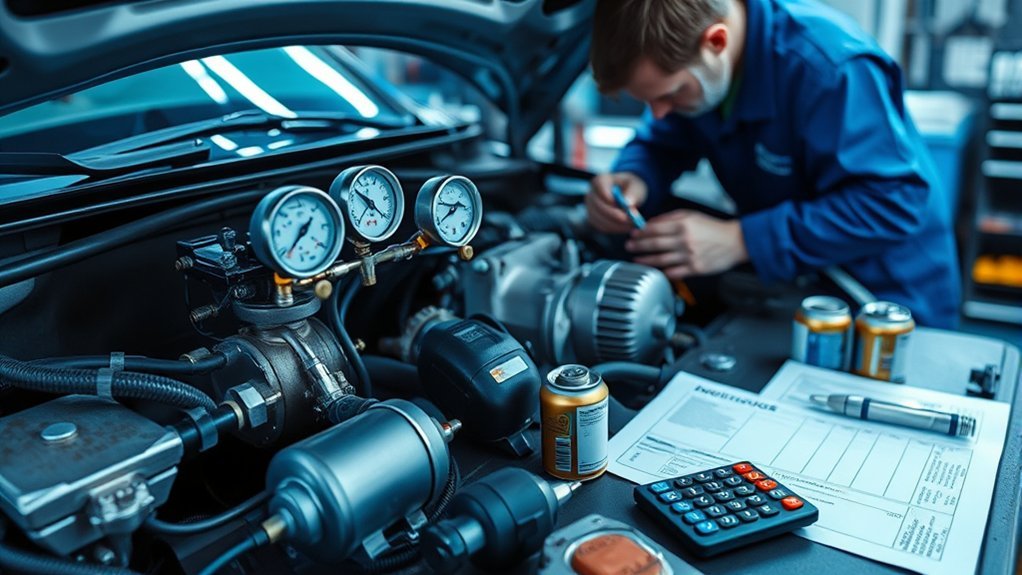
Car AC repair cost depends far more on the failed component than on the symptom you feel at the vents. In the U.S., a basic inspection or refrigerant service can cost a few hundred dollars, while compressor, condenser, or evaporator replacement can move well into four figures. Knowing what the shop actually diagnosed is the best way to judge whether the quote makes sense.
Quick Answer
In the U.S., Kelley Blue Book currently lists average car A/C repair at $384–$445, but specific jobs vary widely. A leak inspection averages $122–$179 and a recharge $285–$369, while compressor, condenser, or evaporator replacement can cost roughly $841 to nearly $1,900 before taxes, fees, or related repairs.
Last checked: September 30, 2026. Dates and figures were verified against official and current industry sources.
Key Takeaways
- A general AC repair average is useful for budgeting, but the failed part determines the real bill.
- Current national estimates put a refrigerant recharge around $285–$369 and a leak inspection around $122–$179.
- Compressor and evaporator replacement are among the more expensive common jobs, often exceeding $1,000.
- Adding refrigerant can restore cooling, but it does not permanently repair a refrigerant leak.
- Ask for an itemized estimate showing diagnosis, parts, labor, refrigerant, fees, and warranty coverage before approving a major repair.
How Much Does Car AC Repair Cost?

There is no single price for an AC failure. Kelley Blue Book lists average car A/C repair at $384–$445, but that figure can be much lower than the bill for replacing a major component.
For example, a diagnostic leak inspection may cost only a fraction of a compressor or evaporator replacement. Your final price also depends on the vehicle, refrigerant, labor rate, component access, and whether the shop finds related damage.
“AC blows warm” is a symptom, not a diagnosis. The price becomes meaningful only after the shop identifies the failed component.
A written estimate should separate parts, labor, refrigerant, diagnostic charges, taxes, and other fees. Ask whether the diagnostic charge is separate or credited toward the repair if you approve the work.
What Affects Car AC Repair Cost?
The biggest cost factor is what actually failed. A relay, electrical connection, or small seal may be relatively simple to address, while a compressor, condenser, or dashboard-mounted evaporator can require expensive parts and much more labor.
Vehicle design matters too. Two cars with the same AC symptom can have very different labor charges because one component may be easy to reach while another requires extensive disassembly.
Refrigerant Type
Your vehicle must be serviced with the refrigerant specified for its AC system. The U.S. Environmental Protection Agency says HFO-1234yf is now used in the majority of light-duty vehicles, while many existing older vehicles still use HFC-134a.
Different refrigerants require the correct service equipment, fittings, procedures, and charge amount. This is one reason you should not approve a generic “Freon top-off” without knowing what refrigerant your vehicle actually uses.
Labor and Component Access
Labor rates vary by shop and region, but access time can matter just as much. An evaporator buried behind the dashboard usually requires far more labor than a component that is readily accessible under the hood.
Parts and Related Damage
OEM and aftermarket parts can have different prices and warranties. A failed component may also create additional work, so ask whether the estimate includes seals, refrigerant, oil, flushing, or any other parts needed to complete the repair correctly.
Pro Tip: Compare itemized estimates rather than comparing only the final total. Two quotes can look very different because one includes diagnosis, refrigerant, related seals, and warranty coverage while another does not.
Car AC Recharge Cost Vs. Repair
An AC recharge restores the correct amount of refrigerant; a repair fixes the fault that caused the system to lose refrigerant or stop working. A recharge can restore cooling, but it is not the same thing as repairing a leak.
RepairPal’s current national AC recharge estimate is $285–$369, excluding taxes, location differences, and related repairs.
The EPA explains that topping off or recharging an automotive AC system can improve cooling but does not permanently fix a refrigerant leak. Repairing or replacing the leaking component and then charging the system provides the longer-lasting solution.
A proper diagnosis may include system-pressure checks, visual inspection, electronic leak detection, dye testing, or other tests appropriate for the vehicle. That prevents you from paying for repeated recharges when a leaking hose, seal, condenser, evaporator, or other component is the real cause.
Note: Refrigerant service requires the correct equipment and procedures. In the U.S., technicians who service motor-vehicle AC systems for payment must meet EPA Section 609 certification requirements. If you cannot safely recover, identify, and charge the refrigerant correctly, use a qualified shop.
[Products Worth Considering]

Keep your tires properly inflated with this analog VONDIOR tire pressure gauge, designed for fast, easy readings without batteries. The swiveling, two-axis hose and large glow dial help you measure at any tire angle with instant visibility. Built with a protective rubber shield, it supports durable, low-maintenance use for cars and trucks.

This 39-piece AC valve core accessories kit helps technicians efficiently remove and install Schrader valve cores for R12 and R134a automotive air conditioning and HVAC systems. It includes multiple single and dual-head removal tools for versatile service, plus replacement valve cores and seal caps to maintain a reliable seal and reduce leakage. Built for durable, secure handling, the kit is suitable for home and commercial maintenance and repair.
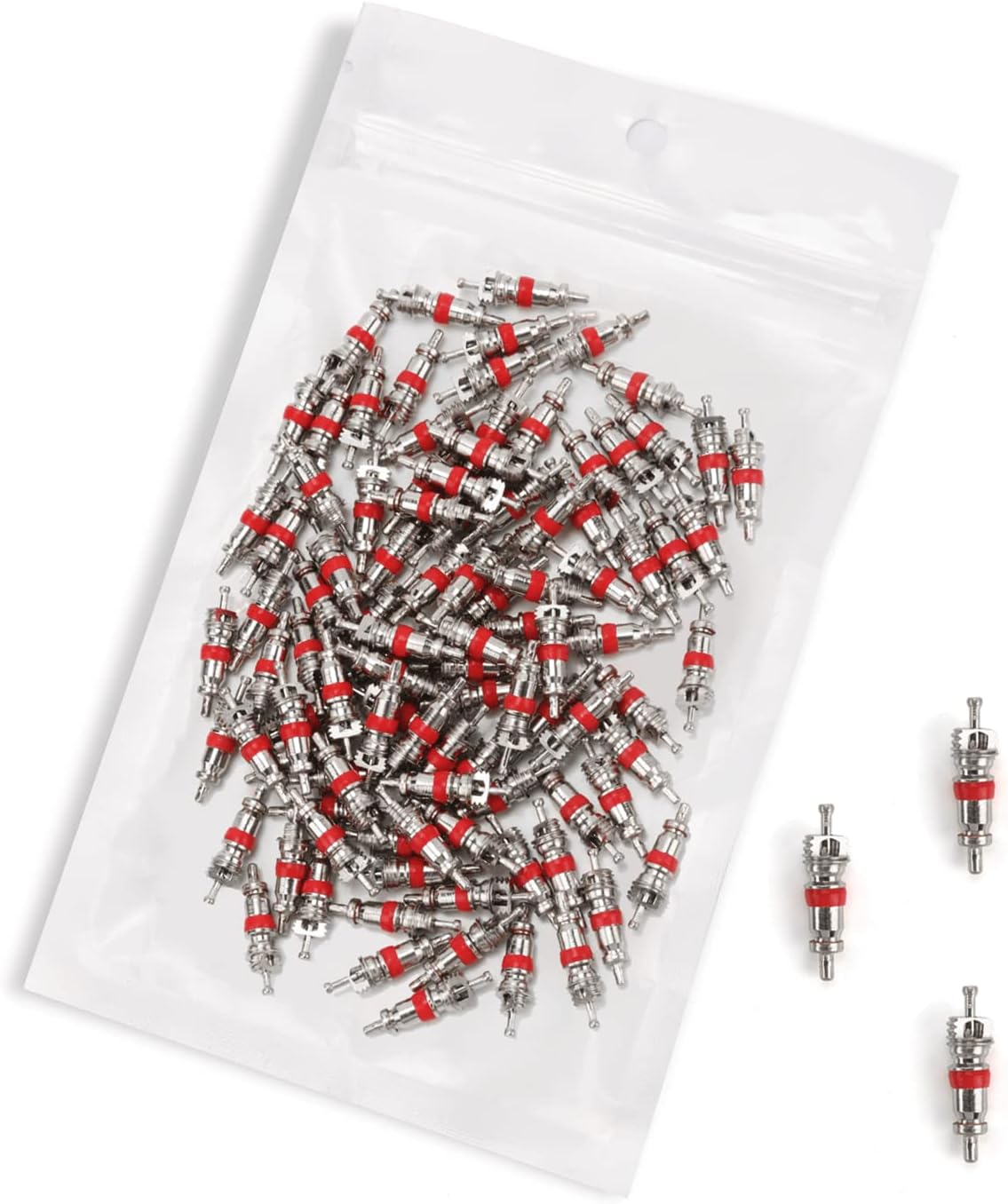
Replace worn Schrader valve cores with durable, nickel-plated replacements designed to resist rust and corrosion for a longer service life. Each core is 100% leakage tested and rated for up to 300 PSI, helping maintain a safe, reliable tire pressure system. Universal fit makes them suitable for cars, RVs, ATVs, motorcycles, bicycles, and many refrigeration/air conditioning applications.
Common Car AC Repairs And Prices
Current national estimates show how dramatically the price changes depending on the repair. These figures are useful for planning, but they are not guaranteed quotes for your exact vehicle.
RepairPal’s current common repair estimates place compressor, clutch, condenser, and evaporator replacement well above the cost of a basic refrigerant service.
| Service or Repair | Current U.S. Estimate | What the Price Covers |
|---|---|---|
| General A/C repair average | $384–$445 | Kelley Blue Book general repair range; the specific fault can cost much more. |
| AC leak inspection | $122–$179 | Diagnosis only; repairing the leaking part is additional. |
| AC recharge | $285–$369 | Evacuation/recharge and refrigerant service; related repairs can add cost. |
| Compressor clutch replacement | $691–$826 | Applies when the clutch assembly can be serviced separately. |
| Condenser replacement | $841–$988 | Part and labor; taxes, location, and related work can change the total. |
| Compressor replacement | $1,081–$1,463 | One of the more expensive common AC repairs because both the part and labor are significant. |
| Evaporator replacement | $1,351–$1,891 | Labor is a major factor because the evaporator can require extensive interior or dashboard access. |
RepairPal also lists an average AC leak inspection cost of $122–$179. That is the diagnostic portion, not the cost of replacing the hose, seal, condenser, evaporator, or other part that is actually leaking.
Electrical problems can also stop the compressor or blower from working. A technician should test the circuit before replacing an expensive mechanical component because a relay, switch, module, wiring fault, or low refrigerant level can sometimes create similar symptoms.
[Products Worth Considering]

Steelman white tire marking crayons provide high-contrast, semi-permanent marks for repairing and inspecting tires and equipment. They write on wet or dry, smooth or coarse surfaces including rubber, metal, glass, and wood, making them ideal for puncture location and damage outlining. The lead- and zinc-free crayons resist weather and fading yet wipe away when you no longer need the marks.

The SPTA wheel and tire brush kit makes it easy to remove dirt from wheels, rims, and hard-to-reach areas without needing a high pressure washer. Ergonomic handles and soft, chemical-resistant bristles help you clean faster while reducing the risk of scratching. The set is versatile for cars, trucks, motorcycles, bicycles, RVs, boats, and more.

Monitor tire tread wear with a smart, color-coded depth gauge that shows clear condition ranges at a glance. The bar is range marked for fast, easy readings, helping you maintain safer traction and performance. Each gauge is portable with a pocket clip, and the set includes 20 units for daily use and sharing.
What Do Different Car AC Symptoms Usually Mean?
AC symptoms can narrow the search, but they rarely identify the failed part by themselves. Warm air, weak airflow, unusual noises, or intermittent cooling can each have several possible causes.
- Warm air from the vents: Low refrigerant, a leak, compressor trouble, control problems, or another system fault can prevent proper cooling.
- Weak airflow: A clogged cabin filter, blower problem, blocked duct, or HVAC door issue may reduce airflow even if the refrigerant circuit is working.
- Grinding, squealing, or rattling: Stop using the AC and have the compressor, clutch, pulley, and drive belt inspected.
- Cooling that comes and goes: Electrical faults, pressure-related problems, icing, compressor-control issues, or an incorrect refrigerant charge can cause intermittent performance.
- Visible oily residue near AC fittings: Refrigerant oil can sometimes appear around a leaking connection, although proper leak testing is still needed.
A diagnosis is especially important before approving compressor replacement. A compressor that does not engage is not automatically a failed compressor; the system may be preventing operation because of low refrigerant pressure or an electrical fault.
When To Repair Or Replace AC Parts
Repair usually makes sense when one clearly identified component has failed and the rest of the system is in good condition. Replacement becomes a broader financial decision when expensive components repeatedly fail, several parts need work at once, or the repair approaches what you are comfortable investing in the vehicle.
Start with the diagnosis rather than the vehicle’s age alone. A relatively old car with a simple relay or seal problem may still be inexpensive to fix, while a newer vehicle with an evaporator buried behind the dashboard can require substantial labor.
For a major repair, compare these points before approving the job:
- The exact failed component and how the shop confirmed the diagnosis.
- The total price for parts, labor, refrigerant, taxes, and fees.
- Whether related parts must be replaced at the same time.
- The parts and labor warranty.
- Whether the system has had repeated AC failures.
- The vehicle’s overall condition and how long you plan to keep it.
Ask for a written estimate and keep the diagnosis with your service records. If the quote involves a compressor, evaporator, or several major components, comparing a second professional diagnosis can be worthwhile before committing to a four-figure repair.
[Products Worth Considering]

The Trivd Frol 1/2" air impact wrench delivers high performance torque up to 1500 ft-lbs with a twin hammer impact mechanism for strong, balanced blows. It features an ergonomic grip, compact lightweight design, and quick-stop control with 3 forward speeds up to 8000 RPM plus a reverse speed. Built for demanding automotive repair and tire shop work, the rear exhaust helps keep debris away from the surface.

Malco tire mounting and demounting lubricant is a ready-to-use tire lube formulated to reduce friction during tire installation for passenger cars, light trucks, farm tires, and heavy-duty equipment. It provides rust-inhibiting protection to help reduce corrosion on rims and wheels, and helps support proper tire bead seating during inflation to reduce air leakage. The silicone-free, soap-free formula is whitewall safe to help prevent discoloration on whitewall tires and sensitive sidewall markings.

The SAFELIFE dial tire tread depth gauge measures tread depth in 1/32 inch increments with clear, easy-to-read 2-inch dial face. Color zones using a traffic light system help you quickly judge whether tread is low, marginal, or ample for safer driving. Built with a durable zinc cast body and a metal detect probe for precise, comfortable use across cars, motorcycles, trucks, and buses.
Frequently Asked Questions
Can I Drive With a Broken Car AC Compressor?
You may be able to drive if only the AC function has failed, but do not ignore grinding, squealing, smoke, or a damaged pulley or belt. On many vehicles, the serpentine belt drives several accessories, so a seized compressor or pulley can become more than a cooling problem.
How Often Should Car AC Filters Be Replaced?
Follow your vehicle’s maintenance schedule because cabin-filter intervals vary. AAA suggests considering cabin-filter replacement every 15,000 to 30,000 miles. Dusty conditions, odors, or reduced airflow may justify inspection sooner.
Does Car AC Repair Affect Fuel Efficiency?
AC operation uses energy, but repairing the system does not guarantee a noticeable MPG improvement. A fault that creates extra compressor drag or other abnormal load may affect efficiency, but the main reasons to repair the AC are reliable cooling, correct system operation, and preventing related damage.
Can a Car AC Leak Be Fixed Permanently?
Yes, many AC leaks can be repaired by finding the source and replacing or repairing the leaking seal, hose, condenser, evaporator, or other component. Simply adding refrigerant does not permanently repair the leak, so repeated recharges should prompt proper leak diagnosis.
How Long Does a Typical Car AC Repair Take?
A simple recharge may take less than an hour, while component replacement can take several hours or longer depending on access and the repair. Evaporator work is often more labor intensive because the component may be located deep inside the HVAC housing.
Why Does a Car AC Need a Recharge?
A recharge is needed when the refrigerant charge is too low for the system to operate correctly. Because adding refrigerant does not repair a leak, a vehicle that repeatedly loses cooling should be inspected for the source of the refrigerant loss instead of receiving repeated top-offs.
How Do I Know Which Refrigerant My Car Uses?
Check the under-hood AC refrigerant label or your owner’s manual before servicing the system. Do not assume every vehicle uses the same refrigerant because existing vehicles may use different approved refrigerants and require different fittings, equipment, and service procedures.
Conclusion
Car AC repair cost can range from a relatively inexpensive diagnosis or refrigerant service to a four-figure compressor or evaporator replacement. Get the fault diagnosed first, ask for an itemized written estimate, and compare the repair price, warranty, and vehicle condition before approving major work.
Sources
- Kelley Blue Book — Car A/C Repair Costs: General U.S. A/C repair pricing and recharge-service timing.
- RepairPal — AC Recharge Cost Estimate: Current national recharge estimate.
- RepairPal — Common Repair Estimates: Compressor, compressor clutch, condenser, and evaporator replacement estimates.
- RepairPal — Air Conditioning System Leak Inspection Cost: Current national leak-inspection estimate.
- U.S. EPA — Options for Recharging Your Air Conditioner: Recharge, leak detection, and leak-repair guidance.
- U.S. EPA — Acceptable Refrigerants and Their Impacts: HFC-134a, HFO-1234yf, and current MVAC refrigerant information.
- U.S. EPA — Section 609 Technician Training and Certification: Certification requirements for paid motor-vehicle AC service technicians.
- AAA Automotive — Car Maintenance Tips: Cabin air filter replacement guidance.
